Conference Highlights Scientific Cooperation in the Americas
Feature Story
By Solomon Self
Last update October 1, 2025
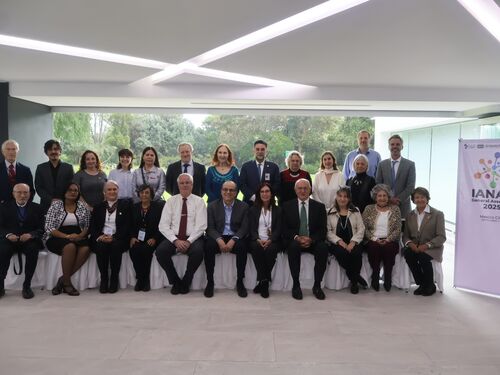
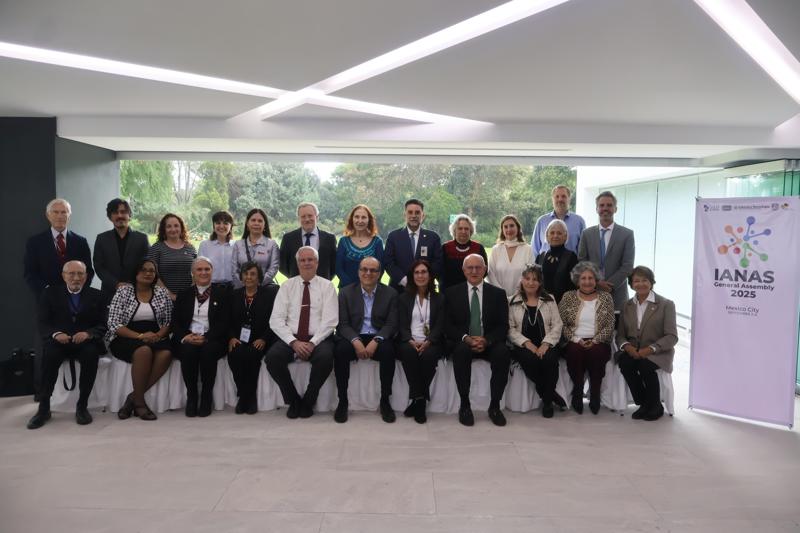
Representatives of science academies across the Americas gathered recently at the Inter-American Network of Academies of Sciences (IANAS) General Assembly meeting to explore how to strengthen science in the region as a tool for tackling critical social, environmental, and technological challenges facing the hemisphere. The meeting was organized by José Antonio Seade Kuri, president of the Mexican Academy of Sciences, and hosted at the National Autonomous University of Mexico.
Founded in 2004, the IANAS comprises 23 national academies and contributes to the promotion of scientific capacity and excellence for sustainable development in the Americas. Thematic initiatives of IANAS include water resources, engagement and participation of women in science, science education, energy, and — most recently — an initiative to promote sustainable policies in the Amazon basin.
Karen Strier, a member of the U.S. National Academy of Sciences, has served as co-chair of IANAS since 2022 and spoke to the importance of its work and the continued commitment of IANAS to strengthening regional scientific cooperation.
“Our role is to contribute to strengthening science and technology as tools for advancing resilience, prosperity, and equity in the Americas,” Strier said in her remarks to the assembly. “We need science and technology to address many pressing global concerns. This is a responsibility we share as a scientific community."
Strier highlighted the need to advance the role of science in international policy and forums, citing the organization’s participation with the S20, the G20’s science and technology engagement group, and its collaboration with the Brazilian Academy of Sciences in organizing the pre-COP30 conference, A Scientific Call for COP30: Science Academies United for Climate Action, to be held this October in Manaus.
Helena Nader, president of the Brazilian Academy of Sciences, emphasized, “In the lead-up to COP30 in Belém, we are proud to convene science academies from across the Americas and around the world for a united scientific call to action. Our goal is to underscore the urgent need for science to help society confront climate change, deforestation, biodiversity loss, and the pursuit of social justice. Science must guide global decision-making, and Manaus will serve as a powerful setting to reaffirm that knowledge and cooperation are essential to building a sustainable future for all.”
Meeting attendees from Latin American nations stressed the growing importance of IANAS as a space for collaboration and information sharing. They noted that meetings put on by the organization could strengthen not only the field of science but also democracy, equity, and multilateral relations between countries.
Additional topics discussed included reducing inequalities in research and development in the region, expanding IANAS programs, and building the STEM pipeline for young talent from across the Americas.
At the meeting, Strier was re-elected to a second term as co-chair of IANAS, alongside Alberto Gago, president of the National Academy of Sciences of Peru, who was elected to replace outgoing co-chair, Helena Nader. “One of our key objectives is to empower science as an indispensable decision-making tool for our governments, ensuring evidence-based policies. This means placing science at the center of national agendas as a cornerstone of sustainable development and long-term societal well-being,” Gago said.
Visit the IANAS website to learn more about IANAS and its work.