Do wildfires pose serious risks to human health?
Based on Science
Fires pose serious health risks even when they are not deadly. People in fire zones can suffer burns, breathing problems due to smoke inhalation, injuries, and other trauma from evacuations.
Last update September 8, 2025
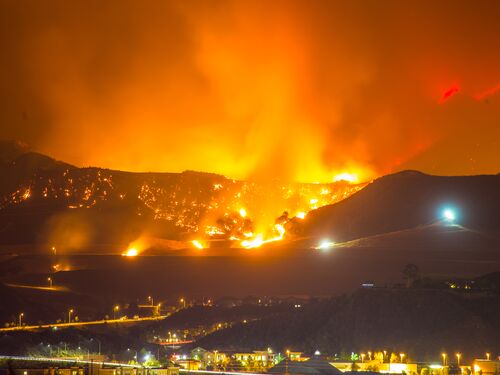
Night long exposure photograph of the Santa Clarita wildfire in CA. The Santa Clarita Valley mountains has drawn firefighters and emergency crews in the hills toward Acton. So far, the fire has burned 38,346 acres.
Health effects can be long term and spread far beyond the fire zone.
Wildfire smoke contains fine particles that can travel deep into the lungs and even enter the bloodstream. Exposure to these pollutants can cause or worsen respiratory and cardiovascular conditions, trigger asthma attacks, and increase the risk of heart attacks and strokes. In the long term, fire-affected communities report increases in mental health effects, including anxiety, posttraumatic stress disorder, and depression.
When wildfires burn homes, vehicles, electronics, and household chemicals, the smoke becomes especially toxic. It can carry a dangerous mix of pollutants like heavy metals, volatile organic compounds, and cancer-causing chemicals not usually found in forest fires. This “toxic soup” can linger in the air, seep into the soil, and contaminate the water supply for months after the fires. As wildfires become more frequent, people are breathing smoke for longer stretches each year. In many places it has become a recurring form of air pollution. But scientists still do not fully understand what repeated exposure means for long-term health.
Smoke also travels far beyond the fire line. In fact, fine particles and other harmful pollutants can affect air quality for millions of people who live far from the fire’s origin. For example, the 2018 Camp Fire in Northern California caused hazardous air conditions for about 7 million people in the San Franscisco Bay Area, which was more than 150 miles away.
Disclaimer: Initial brainstorming and outlining for articles in this series, produced in 2025, may include input generated with the assistance of ChatGPT. Human experts review all AI-supported content to ensure factual accuracy, relevancy and the appropriate context.