Safety and Security of Commercial Spent Nuclear Fuel Storage: Public Report (2006)
Chapter: 4.2 EVALUATION OF POTENTIAL RISKS OF DRY CASK STORAGE
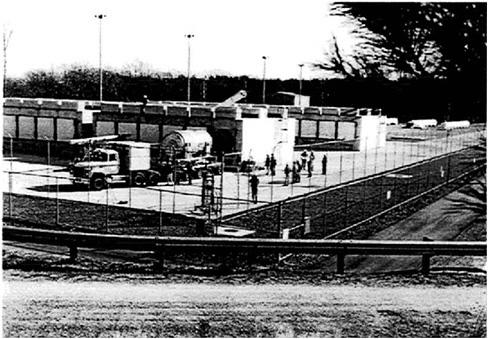
FIGURE 4.2 Photo showing a canister being loaded into a NUHOMS horizontal storage module. SOURCE: Courtesy of Transnuclear, Inc., an Areva Company.
4.2 EVALUATION OF POTENTIAL RISKS OF DRY CASK STORAGE
Dry casks were designed to ensure safe storage of spent fuel,10 not to resist terrorist attacks. The regulations for these storage systems, which are given in Title 10, Part 72 of the Code of Federal Regulations (i.e., 10 CFR 72), are designed to ensure adequate passive heat removal and radiation shielding during normal operations, off-normal events, and accidents. The latter include, for example, accidental drops or tip-overs during routine cask movements. The robust construction of these casks provides some passive protection against external assaults, but the casks were not explicitly designed with this factor in mind.11
The regulations in 10 CFR 72 require that dry cask storage facilities (formally referred to as Independent Spent Fuel Storage Installations, or ISFSIs) be located within a protected area of the plant site (see FIGURE 2.1). However, the protection requirements for these installations are lower than those for reactors and spent fuel pools. The guard force is required to carry side arms, and its main function is surveillance: to detect and assess threats and to summon reinforcements. If the ISFSI is within the protected area of the plant
