Transforming the Workforce for Children Birth Through Age 8: A Unifying Foundation (2015)
Chapter: 12 A Blueprint for Action
Children’s development from birth through age 8 is rapid and cumulative, and the environments, supports, and relationships they experience have profound effects. Their health, development, and early learning provide a foundation on which later learning—and lifelong progress—is constructed. Young children thrive and learn best when they have secure, positive relationships with adults who are knowledgeable about how to support their individual progress, and consistency in high-quality care and education experiences as children grow supports their continuous developmental achievements. Thus, the adults who provide for the care and education of young children bear a great responsibility. Indeed, the science of child development and early learning makes clear the importance and complexity of working with children from birth through age 8.
Although they share the same objective—to nurture young children and secure their future success—the various professionals who contribute to the care and education of these children are not perceived as a cohesive workforce, unified by their contributions to the development and early learning of young children and by the shared knowledge base and competencies needed to do their jobs well. An increasing public understanding of the importance of early childhood is reflected by greater emphasis on this age group in policy and investments. Yet the sophistication of the professional roles of those who work with children from infancy through the early elementary years is not consistently recognized and reflected in practices and policies that have not kept pace with what the science of child development and early learning indicates children need.
A growing base of knowledge describes what adults should be doing to
support children from the beginning of their lives. Much is known about how children learn and develop, what professionals who provide care and education for children need to know and be able to do, and what professional learning supports are needed for prospective and practicing care and education professionals. Although that knowledge increasingly informs standards and other statements and frameworks articulating what should be, it is not fully reflected in what is—the current capacities, practices, and policies of the workforce, the settings and systems in which they work, the infrastructure and systems that set qualifications and provide professional learning, and the governmental and other funders that support and oversee those systems. As a result, knowledge is not consistently channeled to adults who are responsible for supporting the development and early learning of children, and those adults do not consistently implement that knowledge in their professional practice and interactions with children. This gap exists in part because current policies and systems do not place enough value on the knowledge and competencies required of professionals in the workforce for children from birth through age 8, and the expectations and conditions of their employment do not adequately reflect their significant contribution to children’s long-term success.
The breakdowns that have led to this gap include the lingering influence of the historical evolution of the expectations and status of various professional roles that entail working with young children; limited mutual understanding, communication, and strategic coordination across decentralized and diverse communities of practice and policy; and limited resources for concerted efforts to review and improve professional learning systems. These disconnects and limitations serve as barriers to both improving how the current workforce is supported and transforming how the workforce needed for the future is prepared.
Better support for care and education professionals will require mobilizing local, state, and national leadership; building a culture in higher education and ongoing professional learning that reflects the importance of establishing a cohesive workforce for children from birth through age 8; ensuring practice environments that enable and reinforce the quality of their work; making substantial improvements in working conditions, well-being, compensation, and perceived status or prestige; and creating consistency across local, state, and national systems, policies, and infrastructure. As with multiple sets of complex gears, many interconnected elements need to move together to support a convergent approach to caring for and teaching young children—one that allows for continuity across settings from birth through elementary school, driven by the shared core of the science of child development and early learning (see Figure 12-1).
Yet strengthening the workforce is challenging because the systems, services, and professional roles that contribute to supporting the health,
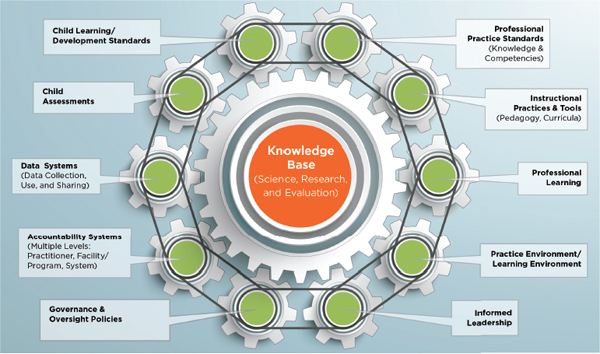
FIGURE 12-1 Interacting elements of supporting quality professional practice for the care and education of children from birth through age 8.
development, and early learning of children from birth through age 8 are diverse and often decentralized. Those who care for and educate young children work in disparate settings such as homes, childcare centers, preschools, educational programs, and elementary schools. Their work relates directly to those who provide such services as home visiting, early intervention, and special education, and is also closely connected to the work of pediatric health professionals and social services professionals who work with children and families. Oversight and influence are complicated, and achieving coherence is challenging, because the care and education of young children take place in so many different contexts with different practitioner traditions and cultures; funded through multiple governmental and nongovernmental sources; and operating under the management or regulatory oversight of diverse agencies with varying policies, incentives, and constraints.
At the same time, this means that there are many diverse ways to drive changes to strengthen the workforce at the community, state, and national levels. Some opportunities are centralized, such as federally funded programs for early childhood care and education or federal programs that support elementary education. Others are predominantly local, such as public education. Still others are in the private sector, although often subject to state-level regulation, such as childcare centers and family childcare, as well as private elementary schools. Education professionals, the organizations that support and train them, and administrators and leaders can identify and create opportunities for improvement in numerous ways. State and federal policy makers can help by eliminating barriers to a well-qualified professional workforce and to a streamlined and aligned system of services for children from birth through age 8. National organizations outside of government can inform changes by providing guidance and support.
Synchronous changes at all of these levels, and carried out within and across different systems, will require coordinated, strategic systems change in which stakeholders work more collectively and with better, mutually beneficial alignment among policies, resource allocation, infrastructure, professional learning, leadership, and professional practice.
This chapter presents the committee’s recommendations, together with considerations for their implementation, as a blueprint for action that can be taken by stakeholders at the local, state, and national levels to help achieve this systems change and close the gap between what is known and what is done. These recommendations are based on the findings and conclusions, presented in depth in the preceding chapters of this report, that resulted from the committee’s review of evidence, analysis and interpretation, and deliberations.
This blueprint for action is based on a unifying foundation that encompasses essential features of child development and early learning, shared
knowledge and competencies for care and education professionals, and principles for effective professional learning. This foundation is meant to help provide coherence in informing the coordinated change that is needed across systems. Because this will require a collective approach among multiple sectors and a range of stakeholders, the blueprint also offers a framework for collaborative change of this kind.
As the core of the blueprint, the committee offers recommendations for specific actions to improve professional learning systems and policies and practices related to the development of the early care and education workforce. Figure 12-2 illustrates how changes in the committee’s major areas of recommendations are interconnected and unified by a shared foundation. The two leftmost circular arrows show how local, state, and national changes need to work in synchronicity, while the central circular arrows show how changes in different aspects of professional learning and workforce development need to work together to lead to quality professional practice, including qualification requirements, higher education, profes-
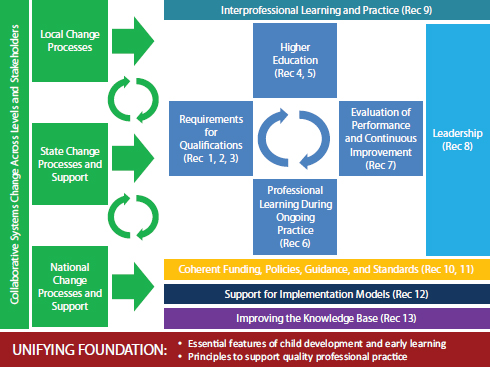
FIGURE 12-2 A blueprint for action with a unifying foundation, a framework for collaborative systems change, and interrelated recommendations.
sional learning during ongoing practice, and evaluation and assessment of professional practice. Several important elements—including interprofessional practice; well-informed and capable leadership; coherent policies, guidance, and standards; support for implementation; and a connection to the evolving knowledge base—make up a frame for workforce development and professional learning and provide the coherence needed to align specific actions.
The committee recognizes the challenges of the complex, long-term systems change that will be required to implement its recommendations. Full implementation in some cases could take years or even decades; at the same time, the need to improve the quality, continuity, and consistency of professional practice for children from birth through age 8 is urgent. Balancing this reality and this urgent need will require strategic prioritization of immediate actions as well as long-term goals with clearly articulated intermediate steps as part of pathways over time. The pace of progress will depend on the baseline status, existing infrastructure, and political will in different localities. Significant mobilization of resources will be required, and therefore assessments of resource needs, investments from government at all levels and from nongovernmental sources, and financing innovations will all be important.1
The foundation for a workforce that can truly meet the needs of children from birth through age 8 is based on essential features of child development and early learning and on principles that guide support for high-quality professional practice with respect to individual practitioners, leadership, systems, policies, and resource allocation.
_____________
1 While acknowledging that the availability of resources is an important reality that would affect the feasibility of the committee’s recommendations, the sponsors specified in clarifying the study charge that this committee not conduct analyses addressing funding and financing. The sponsors did not want the committee to be swayed by foregone conclusions about the availability of resources in interpreting the evidence and the current state of the field and in carrying out deliberations about its recommendations. The sponsors also recognized that the breadth of expertise required to fulfill this committee’s broad and comprehensive charge precluded assembling a committee with sufficient additional breadth and depth of expertise in economics, costing and resource needs assessment, financing, labor markets, and other relevant areas to address funding and financing issues (public information-gathering session, December 2013).
Essential Features of Child Development and Early Learning
Several essential features of child development and early learning inform not only what children need but also how adults can meet those needs, with support from the systems and policies that define and support their work:
- Children are already learning actively at birth, and the early foundations of learning inform and influence future development and learning continuously as they age.
- A continuous, dynamic interaction among experiences (whether nurturing or adverse), gene expression, and brain development underlies the capacity for learning, beginning before birth and continuing throughout life.
- Young children’s development and early learning encompass cognitive development; the acquisition of subject-matter knowledge and skills; the development of general learning competencies; socioemotional development; and health and physical well-being. Each of these domains is crucial to early learning, and each has specific developmental paths. They also are overlapping and mutually influential: building a child’s competency in one domain supports competency-building in the others.
- Stress and adversity experienced by children can undermine learning and impair socioemotional and physical well-being.
- Secure and responsive relationships with adults (and with other children), coupled with high-quality, positive learning interactions and environments, are foundational for the healthy development of young children. Conversely, adults who are underinformed, under-prepared, or subject to chronic stress themselves may contribute to children’s experiences of adversity and stress and undermine their development and learning.
Principles to Support Quality Professional Practice
The following principles are based on what the science of child development and early learning reveals about the necessary competencies and responsibilities of practitioners in meeting the needs of young children. They encompass the high-quality professional learning and supports needed for practitioners to acquire, sustain, and update those competencies. Yet adults who master competencies can still be constrained in applying them by the circumstances of their settings and by the systems and policies of governance, accountability, and oversight that affect their practice. Thus, the following principles also apply to the characteristics of practice environments,
settings, systems, and policies that are needed to ensure quality practice and to support individual practitioners in exercising their competencies.
For the diverse agencies, institutions, funders, and professionals involved in the care and education of young children, coming together to adopt these principles across sectors, systems, settings, and professional roles will create a shared identity. This identity will be based not on historical traditions or practice settings, but on integrally related and mutually supportive contributions to sustained positive outcomes for the development and early learning of young children. The emergence of this shared identity and unified purpose has the potential to be transformative if accompanied by a willingness to develop shared strategies for investment and to share both responsibility and credit for long-term outcomes.
- Professionals need foundational and specific competencies. Care and education professionals are best able to help young children from birth through age 8 develop and learn when they have a shared foundation of knowledge and competencies related to development and early learning across this age span (see Box 12-1). This foundation needs to be augmented by shared specialized knowledge and competencies within a type of profession (see Box 12-2 for educators and Box 12-3 for education leadership), as well as further differentiated competencies that depend on specialty or discipline and age group.
- Professionals need to be able to support diverse populations. Care and education professionals, with the support of the systems in which they practice, need to be able to respectfully, effectively, and equitably serve children from backgrounds that are diverse with respect to family structure, socioeconomic status, race, ethnicity, culture, language, and ability.
- Professional learning systems need to develop and sustain professional competencies. To foster high-quality practice, care and education professionals need access to high-quality professional learning that supports them in the acquisition and application of the competencies they need, both in degree- and certificate-granting programs and during ongoing practice throughout their career. High-quality professional learning systems encompass a coherent series of activities that prepare professionals for practice, assess and ensure their competency to practice, and enhance the quality of their ongoing professional practice. High-quality professional learning activities are intentional, ongoing, coherent, collaborative and interdisciplinary, tied to practice experience, and responsive (see Box 12-4).
- Practice environments need to enable high-quality practice. Care and education professionals are best able to engage in high-quality professional practice when the settings in which they work are safe and well maintained, provide a high-quality learning environment for children, maintain a reasonable class size and ratio of adults to children for substantial and consistent group and individualized interactions to support learning, are well resourced with materials and supplies, and are guided by informed and competent leadership.
- Practice supports need to facilitate and sustain high-quality practice. Care and education professionals are best able to engage in high-quality professional practice when they experience the support of supervisors, mentors, and a community of peers; regularly assess and reflect on the effectiveness of their practices in order to improve them; are guided by thoughtfully designed workplace and oversight policies that support their practices; are compensated in a manner that recognizes their important role with young children; and have access to and time and resources for ongoing professional learning and career development.
- Systems and policies need to align with the aims of high-quality practice. Children benefit from consistency and continuity in high-quality learning experiences over time. This results when policies are aligned in accord with principles for high quality across the professional roles and settings that provide care and education for different age groups/grade levels, as well as across the sectors that provide closely related services for young children, especially health and social services.
- Professional practice, systems, and polices need to be adaptive. Research will continue to provide new information about how children learn and develop; how adults can best support them; and how adults can best be supported in their professional learning, practice environments, and practice supports. Accordingly, the systems that support children, the professionals who work within them, and their professional learning systems all need to adapt iteratively, with evaluative components that are embedded in continuous improvement processes.
BOX 12-1
Foundational Knowledge and Competencies for All Adults with Professional Responsibilities for Young Children
The committee identifies the following general knowledge and competencies as an important foundation for all adults with professional responsibilities for young children.
All adults with professional responsibilities for young children need to know about
- How a child develops and learns, including cognitive development, specific content knowledge and skills, general learning competencies, socioemotional development, and physical development and health.
- The importance of consistent, stable, nurturing, and protective relationships that support development and learning across domains and enable children to fully engage in learning opportunities.
- Biological and environmental factors that can contribute positively to or interfere with development, behavior, and learning (for example, positive and ameliorative effects of nurturing and responsive relationships, negative effects of chronic stress and exposure to trauma and adverse events; positive adaptations to environmental exposures).
All adults with professional responsibilities for young children need to use this knowledge and develop the skills to
- Engage effectively in quality interactions with children that foster healthy child development and learning in routine everyday interactions, in specific learning activities, and in educational and other professional settings in a manner appropriate to the child’s developmental level.
- Promote positive social development and behaviors and mitigate challenging behaviors.
- Recognize signs that children may need to be assessed and referred for specialized services (for example, for developmental delays, mental health concerns, social support needs, or abuse and neglect); and be aware of how to access the information, resources, and support for such specialized help when needed.
- Make informed decisions about whether and how to use different kinds of technologies as tools to promote children’s learning.
BOX 12-2
Knowledge and Competencies for Educators of Children Birth Through Age 8
In addition to the foundational knowledge and competencies in Box 12-1, the committee identifies the following as important shared competencies that all professionals who provide direct, regular care and education for young children need to support development and foster early learning with consistency for children on the birth through age 8 continuum.
Core Knowledge Base
- Knowledge of the developmental science that underlies important domains of early learning and child development, including cognitive development, specific content knowledge and skills, general learning competencies, socioemotional development, and physical development and health.
- Knowledge of how these domains interact to facilitate learning and development.
- Knowledge of content and concepts that are important in early learning of major subject-matter areas, including language and literacy, mathematics, science, technology, engineering, arts, and social studies.
- Knowledge of the learning trajectories (goals, developmental progressions, and instructional tasks and strategies) of how children learn and become proficient in each of the domains and specific subject-matter areas.
- Knowledge of the science that elucidates the interactions among biological and environmental factors that influence children’s development and learning, including the positive effects of consistent, nurturing interactions that facilitate development and learning as well as the negative effects of chronic stress and exposure to trauma and adversity that can impede development and learning.
- Knowledge of the principles for assessing children that are developmentally appropriate; culturally sensitive; and relevant, reliable, and valid across a variety of populations, domains, and assessment purposes.
Practices to Help Children Learn
- Ability to establish relationships and interactions with children that are nurturing and use positive language.
- Ability to create and manage effective learning environments (physical space, materials, activities, classroom management).
- Ability to consistently deploy productive routines, maintain a schedule, and make transitions brief and productive, all to increase predictability and learning opportunities and to maintain a sense of emotional calm in the learning environment.
- Ability to use a repertory of instructional and caregiving practices and strategies, including implementing validated curricula, that engage children through nurturing, responsive interactions and facilitate learning and
-
development in all domains in ways that are appropriate for their stage of development.
- Ability to set appropriate individualized goals and objectives to advance young children’s development and learning.
- Ability to use learning trajectories: A deep understanding of the subject, knowledge of the way children think and learn about the subject, and the ability to design and employ instructional tasks, curricula, and activities that effectively promote learning and development within and across domains and subject-matter areas.
- Ability to select, employ, and interpret a portfolio of both informal and formal assessment tools and strategies; to use the results to understand individual children’s developmental progression and determine whether needs are being met; and to use this information to individualize, adapt, and improve instructional practices.
- Ability to integrate and leverage different kinds of technologies in curricula and instructional practice to promote children’s learning.
- Ability to promote positive social development and self-regulation while mitigating challenging behaviors in ways that reflect an understanding of the multiple biological and environmental factors that affect behavior.
- Ability to recognize the effects of factors from outside the practice setting (e.g., poverty, trauma, parental depression, experience of violence in the home or community) that affect children’s learning and development, and to adjust practice to help children experiencing those effects.
Working with Diverse Populations of Children
- Ability to advance the learning and development of children from backgrounds that are diverse in family structure, socioeconomic status, race, ethnicity, culture, and language.
- Ability to advance the learning and development of children who are dual language learners.
- Ability to advance the development and learning of children who have specialized developmental or learning needs, such as children with disabilities or learning delays, children experiencing chronic stress/adversity, and children who are gifted and talented. All early care and education professionals—not just those in specialized roles—need knowledge and basic competencies for working with these children.
Developing and Using Partnerships
- Ability to communicate and connect with families in a mutually respectful, reciprocal way, and to set goals with families and prepare them to engage in complementary behaviors and activities that enhance development and early learning.
- Ability to recognize when behaviors and academic challenges may be a sign of an underlying need for referral for more comprehensive assessment, diagnosis, and support (e.g., mental health consultation, social services, family support services).
- Knowledge of professional roles and available services within care and education and in closely related sectors such as health and social services.
- Ability to access and effectively use available referral and resource systems.
- Ability to collaborate and communicate with professionals in other roles, disciplines, and sectors to facilitate mutual understanding and collective contribution to improving outcomes for children.
Continuously Improving Quality of Practice
- Ability and motivation to access and engage in available professional learning resources to keep current with the science of development and early learning and with research on instructional and other practices.
- Knowledge and abilities for self-care to manage their own physical and mental health, including the effects of their own exposure to adversity and stress.
Comparison to National and State Statements of Core Competencies
A scan across national and state statements of core competencies for educators suggests that there is broad agreement on what educators who work with children from infancy through age 8 need to know and be able to do.a However, there are variations in emphasis and gaps. Organizations and states that issue statements of core competencies for these educators would benefit from a review aimed at improving consistency in family engagement and assessment and enhancing their statements to reflect recent research on how children learn and develop and the role of educators in the process. Areas likely in need of enhancement in many existing statements include teaching subject matter–specific content, addressing stress and adversity, fostering socioemotional development, promoting general learning competencies, working with dual language learners, and integrating technology into curricula.
_____________
a See Chapter 7 for an in-depth discussion of the example competency statements.
BOX 12-3
Knowledge and Competencies for Leadership in Settings with Children Birth Through Age 8
In addition to the foundational knowledge and competencies in Box 12-1, center directors, childcare owners, principals, and other leaders and administrators who oversee care and education settings for young children birth through age 8 need both specific competencies and overlapping general competencies with the roles of the specific professionals they supervise. The committee identifies the following important competencies that are needed by these leaders across settings:
Practices to Help Children Learn
- Understanding the implications of child development and early learning for interactions of care and education professionals with children, instructional and other practices, and learning environments.
- Ability to keep current with how advances in the research on child development and early learning and on instructional and other practices inform changes in professional practices and learning environments.
Assessment of Children
- Knowledge of assessment principles and methods to monitor children’s progress and ability to adjust practice accordingly.
- Ability to select assessment tools for use by the professionals in their setting.
Fostering a Professional Workforce
- Knowledge and understanding of the competencies needed to work with children in the professional setting they lead.
- Ability to use knowledge of these competencies to make informed decisions about hiring and placement of practitioners.
- Ability to formulate and implement policies that create an environment that enhances and supports quality practice and children’s development and early learning.
- Ability to formulate and implement supportive and rigorous ongoing professional learning opportunities and quality improvement programs that reflect current knowledge of child development and of effective, high-quality instructional and other practices.
- Ability to foster the health and well-being of their staff and seek out and provide resources for staff to manage stress.
Assessment of Educators
- Ability to assess quality of instruction and interactions, to recognize high quality, and to identify and address poor quality through evalua-
-
tion systems, observations, coaching, and other professional learning opportunities.
- Ability to use data from assessments of care and education professionals appropriately and effectively to make adjustments to improve outcomes for children and to inform professional learning and other decisions and policies.
Developing and Fostering Partnerships
- Ability to support collaboration among the different kinds of providers under their leadership.
- Ability to enable interprofessional opportunities for themselves and their staff to facilitate linkages among health, education, social services, and other disciplines not under their direct leadership.
- Ability to work with families and support their staff to work with families.
Organizational Development and Management
- Knowledge and ability in administrative and fiscal management, compliance with laws and regulations, and the development and maintenance of infrastructure and an appropriate work environment.
Comparison to Statements of Leadership Competencies
A review of examples of statements of core competencies from early childhood organizations and elementary education leadership organizations suggests that there is a distinction in the stated expectations for these two categories of leaders whose professional roles fall within the birth through age 8 range.a Those for principals include competencies for organizational management but are mainly focused on knowledge and competencies needed for instructional leadership to create working environments and supports for educators that help them improve their instructional practice. Those representing leaders in early childhood settings focus on how well a leader can develop and manage a well-functioning organization.
To create a more consistent culture of leadership expectations better aligned with children’s need for continuous learning experiences, states’ and organizations’ statements of core competencies for leadership in elementary education would benefit from a review of those statements to ensure that the scope of competencies for instructional leadership encompasses the early elementary years, including prekindergarten as it increasingly becomes included in public school systems. States and organizations that issue statements of core competencies for leadership in centers, programs, family childcare, and other settings for early childhood education would benefit from a review of those statements to ensure that competencies related to instructional leadership are emphasized alongside administrative and management competencies.
_____________
a See Chapter 7 for an in-depth discussion of the example competency statements.
BOX 12-4
Principles for Professional Learning Systems
A high-quality professional learning system provides practitioners with coherent, interrelated, and continuous professional learning activities and mechanisms that are aligned with each other and with the science of child development. These activities and mechanisms need to be sequenced to prepare practitioners for practice, assess and ensure their competency to practice, continuously enhance the quality of their ongoing professional practice throughout their career, and provide opportunities for career development and advancement. High-quality professional learning activities and mechanisms have the following characteristics:
Intentional
- Guided by the available science on child development and early learning, instructional and other practices, and adult learning.
- Guided by alignment between the developmental needs of children and professional learning needs for acquiring and sustaining core competencies and professional practice standards.
- Guided by the context of the diverse settings in which professionals might practice and the diverse populations of children and families with whom they might work.
Ongoing
- Designed to support cumulative and continuous learning over time, with preparation experience that leads to a period of supervised practice, followed by independent practice with ongoing, individualized supports from supervisors, coaches, mentors, and/or peers.
Coherent
- Coherent in the types and sequence of professional learning to which individual practitioners have access and in which they engage to support a continuum of growth, as opposed to discrete, potentially disjointed learning experiences.
- Coherent and aligned with a shared foundation of knowledge of child development across professional roles.
A FRAMEWORK FOR COLLABORATIVE SYSTEMS CHANGE
The collective insight, expertise, and action of multiple stakeholders are needed to guide the implementation of changes to policies and systems that affect workforce development across settings and roles involved in the care and education of children from birth through age 8. Important work related to the principles and recommendations in this report is currently being carried out by many strong organizations. However, much of this work is being done in relative isolation or as part of collaborations that are not comprehensive in encompassing all that is needed to support de-
- Coherent and comprehensive in what professional learning is available in a given local system.
- Coherent and aligned in content and aims across the full breadth of supports and mechanisms that contribute to improving professional practice, including higher education, ongoing professional learning, the practice environment, opportunities for professional advancement, systems for evaluation and support for ongoing quality improvement, and supports for the status and well-being of the workforce.
- Coherent and coordinated with respect to professional learning activities for professional roles across practice settings and age ranges within the birth through age 8 span.
Collaborative and Interdisciplinary
- Based on an ethic of shared responsibility and collective practice for promoting child development and early learning.
- Providing shared professional learning opportunities for professional roles across practice settings and age ranges within the birth through age 8 span (e.g., cross-disciplinary courses and professional learning communities).
- Leveraging collaborative learning models (e.g., peer-to-peer learning and cohort models).
Tied to Practice
- Designed to provide field experiences and/or to tie didactic learning to applied practice experience with ongoing, individualized feedback and support.
Responsive
- Designed to take into account variations in entry points and sequencing for accessing professional learning.
- Designed to take into account career stage, from novice to experienced.
- Designed to take into account challenges faced by practitioners with respect to accessibility, affordability, scheduling/time/logistics constraints, baseline skills, and perceptions about professional learning activities and systems.
velopment and early learning for these young children. This existing work can be leveraged to accomplish more effective, widespread, and lasting change if knowledge and expertise are shared and efforts are coordinated through a more comprehensive framework. The persistently diffuse nature of the many systems and organizations that serve these children calls for approaches that are more collaborative and inclusive, and many of the committee’s recommendations rely on a collective approach of this kind.
Drawing on the unifying foundation presented in the preceding section and best practices for collaborative approaches to systems change,
BOX 12-5
Features of Collaborative Systems Change for the Birth Through Age 8 Workforce
All systems change efforts are grounded in professional competencies for child development and early learning.
Collective efforts need to be guided by the science of child development and early learning and aligned with the core competencies for care and education professionals outlined in Boxes 12-2 and 12-3 and with the principles for professional learning listed in Box 12-4. Therefore, an important part of the formative work for agencies and organizations involved in supporting children from birth through age 8 at the national, state, and local levels is to assess and revise as needed any current statements of professional competencies for both practitioners and leaders, and to review the extent to which all professional learning and workforce development opportunities, policies, and supports are informed by and aligned with those competencies.
A comprehensive view of the workforce is taken across professional roles, settings, and age ranges.
Attention to the workforce for early childhood education often centers on the preschool years, and discussion of improving continuity often focuses on children entering kindergarten. This focus is due in part to the relative strength of central oversight for publicly funded or subsidized preschools through Head Start and the emergence of preschool as part of public elementary school systems. Attention to these settings and age ranges continues to be important, but to be successful, collective efforts need to place similar emphasis along the full birth through age 8 range and across professional roles and settings. In particular, concerted attention is needed to incorporate into these efforts the workforce development needs of those who provide care and education for infants and toddlers. These professionals have historically had the weakest, least explicit and coherent, and least resourced infrastructure for professional learning and workforce supports. Practitioners in settings outside of centers and schools, such as family childcare, have historically had even less infrastructure for professional learning and workforce supports. A critical role of these collective efforts, then, is to create this much-needed infrastructure for these professionals. At the other end of the age spectrum, concerted attention is also needed to incorporate educators and other professional roles in early elementary schools. For them, professional learning is already supported through a more explicit and robust infrastructure. However, the practices entailed in educating the youngest elementary students can be insufficiently emphasized in the context of the broader K-12 professional learning systems that incline toward the education of older children. The collective efforts envisioned by the committee therefore need to inform and improve this existing infrastructure.
A comprehensive view is taken of professional learning and factors that affect professional practice.
A number of factors contribute to workforce development and to quality professional practice for both practitioners and leaders. Higher education programs, mentoring and coaching, and in-service professional development are all important mechanisms for developing and sustaining the knowledge and competencies of professionals. Other elements not always treated as an integrated part of professional learning, such as agencies that regulate licensure and credentialing systems and program quality assurance systems, also can contribute directly to the quality of professional practice. All of these elements need to be represented in collaborative efforts to develop a comprehensive and more coordinated system of professional learning so that goals are aligned across the elements, and each contributes to systems that are better coordinated and less disparate. Other factors also are important and are influenced or controlled by stakeholders other than the professionals themselves or the systems that provide their education and training. These include the practice environment, such as staffing structures, working conditions, and staff-to-child ratios; the availability of supplies, instructional materials, and other resources; the policies that affect professional requirements, opportunities for professional advancement, and assessment systems; and the status and well-being of the workforce, such as incentives that attract and retain these professionals, perceptions of care and education professions, compensation, and stressors and the availability of supportive services to help manage them. To achieve the ultimate aim of ensuring sustained systems change, it is important to see these factors as working collectively and to engage stakeholders with influence across these various elements.
Diverse stakeholders are engaged in collaborative efforts.
In addition to comprehensive representation of practice communities across professional roles, settings, and age ranges as described above, engaging diverse stakeholders means representing the multiple relevant disciplines in the research community, policy research and analysis, policy makers and government leadership, higher education, agencies that oversee licensure and credentialing as well as accreditation, and organizations that provide ongoing professional learning. For some areas of action, it may also be important to collaborate or consult with organizations whose mission relates to the professionals who work with children and families in the closely related sectors of health and social services, as well as with organizations that represent family perspectives.
In addition, the workforce itself and the children and families it serves represent a racially, ethnically, linguistically, and socioeconomically diverse population. The entities that assume responsibility and leadership for changes that will affect them need to ensure that this diversity is considered and reflected in their decision making and actions and to include perspectives from individuals that reflect a similar diversity. Similarly, circumstances vary widely in different localities, which makes geographic diversity another important dimension to consider, especially
for national coordination efforts or for state efforts in states with a wide range of local contexts.
Context matters.
The steps needed for change will depend on factors that are specific to the context of different state and local environments, and different strategies and timelines will be needed accordingly. Different localities will have different strengths and different gaps in their professional learning infrastructure at the outset, and the amount and sources of their financial and other resources will vary. Education levels in the population and the labor market also will vary, which affects the supply and demand characteristics of both the current workforce and the pipeline for the potential future workforce. Solutions may vary as well according to population density and the availability and accessibility of services and institutions.
A backbone infrastructure is established.
A key factor in the success and sustainability of collaborative efforts is having some form of backbone infrastructure. The role of a backbone organization is to convene the various stakeholders; to maintain and refine the collaborative strategy; and to facilitate, coordinate, and monitor the progress of collaborative efforts. There currently exists no such backbone organization to represent workforce development comprehensively across professional roles, settings, and age ranges entailed in care and education for children from birth through age 8.
One approach would be to create a new backbone organization to facilitate collective efforts, such as a new coalition at the national, state, or local level. Such a backbone organization could provide sustainable leadership for the change process—a challenge for diverse stakeholders that each are understandably driven by their own priorities based on the oversight mechanisms and incentive structures that inform their routine responsibilities and functioning. However, forming a new organization would require significant financial resources. Another approach would be for an existing organization to assume the leadership role in facilitating the collaborative change process. This approach would not eliminate the resource requirement, but would limit the need for investment in new organizational infrastructure. With this approach, however, the direction of collective efforts could be drawn toward the core priorities of the lead organization, which also could lack credibility or have difficulty gaining the confidence of other sectors or disciplinary perspectives. Therefore, the lead organization would need to commit to inclusivity and neutrality. For example, a lead organization whose primary or historical focus was early childhood education would need to commit to being inclusive of early elementary perspectives and stakeholders. Similarly, a lead organization typically focused on higher education would need to commit to being inclusive of other components that contribute to ongoing professional learning.
A smaller-scale alternative to a full-scale collaborative initiative would be to establish periodic convenings and other mechanisms for communication among stakeholders doing related work. This approach would require fewer resources,
but might also be less likely to lead to concrete collaborative actions and might be difficult to sustain.
One way individual organizations could enhance their commitment to ongoing collaboration and inclusivity would be to broaden their internal guidance and oversight mechanisms, such as their boards of directors or advisory committees, to include expertise and representation across the birth through age 8 continuum, even if their core mission is related to a subset of roles, age ranges, or settings. Doing so would reinforce the importance of aligning across professional roles and settings, facilitate communication with collaborative partners, and hold the organization accountable for a commitment to an inclusive and collaborative approach.
Another important aspect of coordinated systems change is that not every action taken to improve professional learning and workforce development will require the collective action of all stakeholders. Some actions will be specific to a subset of professional roles, such as infant-toddler specialists, early elementary teachers, Head Start center directors, or mental health consultants. Some actions can be taken at the level of smaller collaborations or at the level of institutions or even individuals. But through the facilitation of a backbone infrastructure, these cascading levels of implementation can be linked to contribute to the ultimate common agenda so that each aspect of professional practice strengthens and is improved by advances in other aspects.
Duplication of effort is avoided.
Collaborative systems change will be most effective when it draws on available resources, frameworks, and guidance and builds on any collaborative efforts already under way—engaging established organizations and leveraging current efforts to avoid creating entirely new infrastructure and solutions. In some cases, existing national-, state-, or community-level efforts already cover some elements of the comprehensive systems change that is needed. For example, many states and communities already have early learning councils or coalitions or similar organizations. Implementation of this report’s recommendations can serve to inform and reinforce the importance of those efforts, to strengthen their infrastructure and resources, and to catalyze a more comprehensive approach. Where coalitions have not yet been formed, local communities can learn from the experiences of other communities that share similar characteristics.
To avoid unnecessary duplication while also more effectively supporting consistency and continuity for children from birth through age 8, existing coalitions could benefit from reviewing their efforts in light of the principles put forth in this report, the specific actions laid out in the recommendations and implementation considerations that follow in this chapter, and the scope of their current coalition partners. For example, are current early learning coalitions focused on workforce development and professional learning? Are they adequately inclusive of both early childhood and early elementary settings? Are current collaborative efforts that focus primarily on services for children inclusive of what is needed to support the adults who work with children? Are these collaborative efforts reaching out to collaborate and coordinate with the health and social services sectors?
Box 12-5 provides a framework for collaborative systems change consisting of features that are key to improving workforce development for care and education professionals who work with children from birth through age 8. In brief, for collaborative change to achieve lasting success it is important to be inclusive in recruiting stakeholders who need to be involved; to establish a backbone infrastructure; to conduct an assessment of baseline capacities, activities, and needs; and to develop a common agenda, mutually reinforcing activities, continuous communication, and a shared measurement approach that can be applied to track progress and course correct as needed.
Appendix F provides examples of references, tools, and resources for best practices in implementing collaborative systems change as a process in general and in particular for early care and education. Examples are also provided of existing initiatives using collaborative approaches; additional examples can be found in the discussion of continuity in Chapter 5 (see Boxes 5-1 and 5-2). The tools and resources described do not represent a comprehensive review, and the committee did not draw conclusions to endorse particular exemplars. Rather, these examples are provided as a prompt to explore available options and resources that can assist in collaborative systems change efforts.
The committee’s recommendations to improve professional learning and policies and practices related to the development of the workforce that provide care and education for children from birth through age 8 address the following key areas: qualification requirements for professional practice (Recommendations 1-3), higher education (Recommendations 4 and 5), professional learning during ongoing practice (Recommendation 6), evaluation and assessment of professional practice (Recommendation 7), the critical role of leadership (Recommendation 8), interprofessional practice (Recommendation 9), support for implementation (Recommendations 10-12), and improving the knowledge base to inform professional learning and workforce development (Recommendation 13). Considerations for implementing these recommendations are highlighted throughout.
Qualification Requirements for Professional Practice
All care and education professionals have a similarly complex and challenging scope of work. However, this fact is not consistently reflected in practices and policies regarding requirements for qualification to practice. Instead the requirements and expectations for educators of children from birth through age 8 vary widely for different professionals based on their role, the ages of the children with whom they work, their practice setting, and what agency or institution has jurisdiction or authority for set-
ting qualification criteria. The result is a mix of legally required licensure qualifications and voluntary certificates, endorsements, and credentials that employers may adopt as requirements or professionals may pursue to augment and document their qualifications.
These different standards for qualification, which often are based more on historical professional traditions or what systems can afford than on what children need, drive differences among professional roles in terms of professional learning, hiring prospects, and career pathways—and ultimately can lead to significant variations in knowledge and competencies and in the quality of professional practice in different settings. This lack of consistency is dissonant with what the science of early learning reveals about the foundational core competencies that all care and education professionals need and the importance of consistency in learning experiences for children in this age range. Greater coherence in qualification requirements across professional roles would improve the consistency and continuity of high-quality learning experiences for children from birth through age 8.
The analogy of a tree is a useful way to characterize the currently diffuse landscape of professional roles in a more coherent way, with both shared and specialized standards for knowledge and competencies (see Figure 12-3). The tree has roots that represent how individuals enter into a role working with young children in different ways with different preexisting qualifications, yet all need access to learning supports to achieve a shared foundation of knowledge and competencies. The trunk represents that shared foundation, from which branches extend to represent the specialized knowledge and competencies needed as individuals pursue differentiated professional roles. As the branches extend, they reflect further differentiation into specialized roles, as well as progression from novice to experienced, including potential advanced education and certification. Even as these roles differentiate, they also need to maintain connections to and alignment with each other to support continuity of care and education and linkages to professionals in other sectors.
A tiered trunk represents first the child development fundamentals that everyone working with children should have (tier 1 in Figure 12-3; see also Box 12-1 earlier in this chapter). From this lower tier as a foundation, professionals in health and social services branch off to their own specific professional qualifications, which both encompass and extend beyond the birth through age 8 range. The middle tier of the trunk represents a core of qualifications related to fostering development and learning that are shared across all professional roles within the care and education sector (tier 2 in Figure 12-3). From this tier extend branches for specialist and consultant professionals who see children for periodic or referral services, such as home visitors, early intervention specialists, and mental health consultants, and who in addition have existing qualification systems specific to their
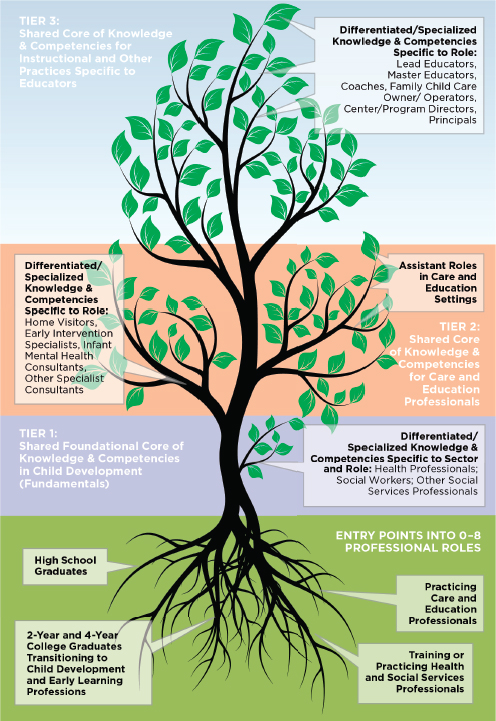
FIGURE 12-3 Tiered representation of shared and specialized standards for knowledge and competencies of professionals who work with young children.
roles. This core is shared with those professionals who are responsible for regular, daily care and education of children from birth through age 8. Branches also extend from this core for closely supervised assistant roles in care education settings, such as aides and assistant teachers. For other roles, the trunk first extends to another tier with a more specialized set of shared knowledge and competencies related to instructional and other practices that foster development and early learning (tier 3 in Figure 12-3; see also Boxes 12-2 and 12-3 earlier in this chapter). This tier represents those responsible for planning and implementing activities and instruction or those in a leadership position overseeing the professionals who plan and implement instruction, such as the lead educator in classroom settings, the owner/operator in family childcare, the center director/program director, and the principal and assistant principal in schools that include early elementary students. The branches that extend from this trunk represent differentiated competencies and practice experience relevant and specific to subsets within the birth through age 8 continuum of settings; age ranges; roles; and content, subject matter, or other specialization.
Recommendation 1: Strengthen competency-based qualification requirements for all care and education professionals working with children from birth through age 8.
Government agencies2 and nongovernmental resource organizations3 at the national, state, and local levels should review their standards and policies for workforce qualification requirements and revise them as needed to ensure they are competency based for all care and education professionals. These requirements should be consistently aligned with the principles delineated in this report to reflect foundational knowledge and competencies shared across professional roles working with children from birth through age 8, as well as specific and differentiated knowledge and competencies matched to the practice needs and expectations for specific roles.
_____________
2 Government agencies when referred to in this report, whether national (federal), state, and/or local, include those with responsibilities for education (early childhood, elementary, higher education), health and human services, social welfare, and labor, as well as elected officials in executive offices and legislatures.
3 Nongovernmental resource organizations when referred to in this report include those that provide funding, technical assistance, voluntary oversight mechanisms, and research and policy guidance, such as philanthropic and corporate funders, national professional associations for practitioners and leadership, unions, research institutions, policy and advocacy organizations, associations that represent institutions of higher education, and associations that represent providers of professional learning outside of higher education.
The current requirements and expectations for educators of children from birth through age 8 vary widely not only for different professional roles but also by what agency or institution has jurisdiction or authority for setting qualification criteria. Differing standards for qualification drive differences among professional roles in terms of education, training, and infrastructure for professional learning during ongoing practice, and hence differences in knowledge and competencies in different settings.
A review process guided by mutual alignment with the principles set forth in this report across agencies and organizations and across the national, state, and local levels would lay the groundwork for greater coherence in the content of and processes for qualification requirements, such as those for credentialing and licensure. As a result, even when different systems or localities have policies that are organized differently by age ranges and roles, those policies could still work in concert to foster quality practice across professional roles and settings that support more consistent high-quality learning experiences for children from birth through age 8. The scan of example competency statements in Chapter 7, summarized previously in Boxes 12-2 and 12-3, highlights areas likely to be most in need of review in policies for licensure and credentialing.
At the national level, for example, multiple federal programs provide funding, technical assistance, and other support for young children. Examples include the Maternal and Child Health Services Block Grant Program; the Child Care and Development Fund; Head Start/Early Head Start; Maternal, Infant, and Early Childhood Home Visiting Programs; Preschool Development Grants; Race to the Top funds; and grants through the Individuals with Disabilities Education Act and the Elementary and Secondary Education Act. An effort among the agencies responsible for these programs to use the principles of this report to review and revise expectations for the qualifications of the workforce hired using federal funds would contribute to greater consistency and quality in the experiences that affect the development and early learning of young children. A similar review by national nongovernmental credentialing systems, such as the Child Development Associate (CDA) and National Board for Professional Teaching Standards (NBPTS), would likewise yield opportunities for revisions to optimize continuity for children without disrupting existing specialized and differentiated credentialing systems.
At the state level, there is wide variation in licensure, and licensure commonly has overlap within the birth through age 8 continuum. Review processes within states—driven by mutual alignment with the principles laid out in this report—would ensure that professional practice expectations are more widely in keeping with the science of child development and early learning and more consistent across professional roles and from state to state.
Recommendation 2: Develop and implement comprehensive pathways and multiyear timelines at the individual, institutional, and policy levels for transitioning to a minimum bachelor’s degree qualification requirement, with specialized knowledge and competencies, for all lead educators4 working with children from birth through age 8.
Currently, most lead educators in care and education settings prior to elementary school are not expected to have the same level of education—a bachelor’s degree—as teachers leading elementary school classrooms. A transition to a minimum bachelor’s degree requirement for all lead educators—if implemented through a comprehensive approach alongside other related changes—is likely to contribute to improving the quality of professional practice, creating coherence in qualification systems such as credentialing and licensure, stabilizing the workforce, and improving consistency in high-quality learning experiences and optimal outcomes for children from birth through age 8.
Recommendation 2a: State leadership and licensure and accreditation agencies, state and local stakeholders in care and education, and institutions of higher education should collaboratively develop a multiyear, phased, multicomponent, coordinated strategy to set the expectation that lead educators who support the development and early learning of children from birth through age 8 should have at a minimum a bachelor’s degree and specialization in the knowledge and competencies needed to serve as a care and education professional. This strategy should include an implementation plan tailored to local circumstances with coordinated pathways and timelines for changes at the individual, institutional, and policy levels.
Recommendation 2b: Federal government agencies and nongovernmental resource organizations should align their policies with a multiyear, phased strategy for instituting a minimum bachelor’s degree requirement. They should develop incentives and dedicate resources from existing and new funding streams and technical assistance programs to support individual, institutional, systems, and policy pathways for meeting this requirement in states and local communities.
_____________
4 Lead educators are those who bear primary responsibility for children and are responsible for planning and implementing activities and instruction and overseeing the work of assistant teachers and paraprofessionals. They include the lead educator in classroom and center-based settings, center directors/administrators, and owner/operators and lead practitioners in home-based or family childcare settings (tier 3 in Figure 12-3).
Policy decisions about qualification requirements are complex, as is the relationship among level of education, high-quality professional practice, and outcomes for children. Given that empirical evidence about the effects of a bachelor’s degree is inconclusive, a decision to maintain the status quo and a decision to transition to a higher level of education as a minimum requirement entail similar uncertainty and as great a potential consequence for outcomes for children. In the absence of conclusive empirical evidence, the committee draws on its collective expert judgment to make this recommendation on the following grounds:
- Existing research on this question has important limitations and has produced mixed findings, and as a result it does not provide conclusive guidance. The research does not discount the potential that a high-quality college education can better equip educators with the sophisticated knowledge and competencies needed to deliver high-quality educational practices that are associated with better child outcomes at all ages.
- Holding lower educational expectations for early childhood educators than for elementary school educators perpetuates the perception that educating children before kindergarten requires less expertise than educating K-3 students, which helps to justify policies that make it difficult to maximize the potential of young children and the early learning programs that serve them.
- Disparate degree requirement policies create a bifurcated job market, both between elementary schools and early care and education as well as within early care and education as a result of degree requirements in Head Start and other settings as well as publicly funded prekindergarten programs. Educators who are more able to seek higher education, continue their professional growth, and acquire credentials that qualify them for better-compensated positions leave programs that serve young children and work in schools with older children, or leave less well-resourced preschool and childcare settings for young children for better resourced ones. This situation potentially perpetuates a cycle of disparity in the quality of the learning experiences of young children.
- The current differences in expectations across professional roles are largely an artifact of the historical traditions and perceived value of these jobs, as well as the limited resources available to the care and education sector, rather than being based on the needs of children. These expectations lag behind the science of child development and early learning, which shows clearly that the experiences of children in the earliest years—including their interactions with care
-
and education professionals—have profound effects, building the foundation for lifelong development and learning.
- The high level of complex knowledge and competencies that the science of child development and early learning indicates is necessary for educators working with young children of all ages is a strong rationale for equal footing among those who share similar lead educator roles and responsibilities for children. Few would argue, for example, that current expectations for early elementary school teachers should be lowered, and if the work of lead educators for younger children is based on the same science of child development and early learning and the same foundational competencies, it follows that they should be expected to have the same level of education.
- Greater consistency in the minimum educational expectations for similar professional roles regardless of the age of the child will bring the care and education sector in line with other sectors, which do not vary in minimum expectations based on the age of the child. For example, neonatologists and physicians who work with older children have the same minimum education requirement, and the minimum education requirement is the same for social workers who work with young children and their families and those who work with elementary-age children and their families.
The committee is cognizant of the complex issues that accompany a minimum degree requirement. Most important for this recommendation is that simply instituting policies requiring a minimum bachelor’s degree is not sufficient, and this recommendation is closely interconnected with those that follow. A more consistent bachelor’s degree requirement will be feasible and its potential benefits will be realized only if it is implemented carefully over time in the context of efforts to address other interrelated factors and with supportive federal, state, and local policies and informed, supportive leadership. These multiple factors, to return to the metaphor used earlier, are like interconnected gears that will not function if moved in isolation (see Figure 12-4). Therefore, strategies and implementation plans should include
- Pathways and timelines for lead educators, differentiated by individual needs, to acquire the necessary education in child development and early learning. Considerations should include
- – differentiation between pathways for current professionals with practice experience and those for the pipeline of prospective future professionals entering the field;
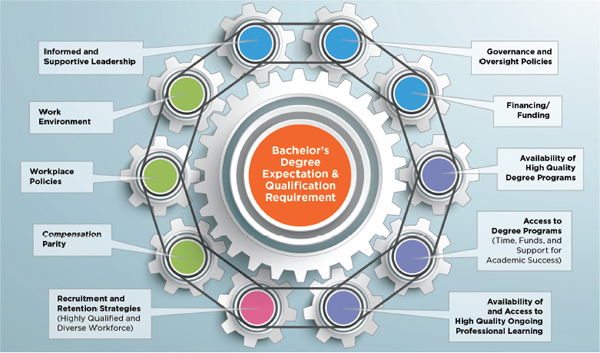
FIGURE 12-4 Interrelated components involved in implementing a minimum bachelor’s degree requirement.
-
- – strategies for improving the affordability of higher education programs by mitigating the financial burden of obtaining a degree through, for example, scholarships, tuition subsidies, tuition reimbursement as a benefit of employment, loans for degree-granting programs, and loan forgiveness for care and education professionals who work in underresourced programs; – strategies for improving the feasibility of accessing higher education programs, such as providing adequate time in work schedules and other ways to give those who need to maintain full-time income opportunities to complete degree programs;
- – strategies to provide academic supports that bolster baseline competencies for prospective educators to enter and succeed in college programs; and
- – adaptive considerations for potential evolution in the nature and format of higher education degree and credentialing systems, including potential future alternative equivalents to the bachelor’s degree—as long as the same general level of education is ensured and is accompanied by the specialized education and training in the knowledge and competencies needed to serve as an educator of young children. Such evolution in higher education might derive from the use of remote courses and other technology-driven changes as well as explorations of competency-based fulfillment of degree requirements.
- Pathways and timelines for higher education institutions to
- – improve the quality of specialized training related to practices that foster child development and early learning;
- – build the capacity to absorb the number of students who will need access to those programs; and
- – recruit a pool of educators-in-training that reflects the diversity of the children and communities they serve.
- Pathways and timelines for systems and policy changes to licensure and credentialing.
- Pathways and timelines for systems and policy changes to effect parity in compensation across professional roles within the care and education sector; in workplace policies; and in workplace environments and working conditions, including adequately resourced and high-quality learning environments in practice settings.
- Pathways and timelines to improve the availability, accessibility, and quality of professional learning during ongoing practice. This professional learning should encompass specialized training related to knowledge and competencies needed to engage in instructional
-
and other practices that foster childhood development and early learning, following the principles laid out earlier.
- Assessments of resource needs, followed by resource mobilization plans and innovative financing strategies such as scholarships and stipends for individuals, subsidies for higher education programs, and adjustments to the increased labor costs that will result from parity in compensation and benefits in the care and education sector.5
- Assessments to examine and plans to monitor and mitigate possible negative consequences, such as workforce shortages, reduced diversity in the professions, increased disparities among current and future professionals, upward pressure on out-of-pocket costs to families for care and education (creating a financial burden and potentially driving more families into the unregulated informal sector), and disruptions to the sustainability of operating in the for-profit and not-for-profit care and education market.
- Recruitment plans to engage a new, diverse generation of care and education professionals, highlighting the prospect of a challenging and rewarding career.
- Assessment plans to monitor progress and adapt implementation strategies as needed.
Successful strategies will require cooperative efforts that involve sectors beyond those involved directly in early childhood and elementary education, such as those focused on economic development and postsecondary education. At the federal level, for example, current interagency efforts organized around early learning programs should consult and coordinate with the Office of Postsecondary Education and the U.S. Department of Labor. A similar diversity of sectors will need to be represented in efforts at state and local levels. The range and complexity of factors that need to be coordinated also means that changes to degree requirement policies will need to be implemented over time with careful planning, and as a result, concurrent steps need to be taken to ensure that specialized training related to early childhood development and the core competencies that are critical for quality practice can be achieved through a range of professional learning mechanisms.
If implemented successfully, the shift that will result from this recommendation has the transformative potential to develop a more coherent
_____________
5 As noted earlier, while acknowledging that the availability of resources and the implications of increased costs are an important reality that would affect the feasibility of the committee’s recommendations, in clarifying the study charge the sponsors specified that the committee should exclude from its task conducting analyses about funding and financing.
workforce across all professional roles that support children from birth through age 8, with easier recruitment and better retention of well-qualified individuals for all of these professional roles as well as less competition among settings for the best-prepared employees. In addition, when professionals who work with children prior to elementary school and those working in elementary school settings are expected to have the same credentials and receive comparable rewards, these professionals will be better able to see themselves as part of a continuum with mutual respect and expectations that enable better connections, communication, and collaboration.
Implementation Considerations for Recommendation 2
Phased Approach
This recommendation will need to be implemented through a phased approach. Pathways should be developed as long-term strategies with immediate steps and short-term actions matched to the most critical needs. Phases of implementation should be planned with specific ambitious yet feasible timeline benchmarks for percentages of care and education professionals with a bachelor’s degree. Specific timeline benchmarks for quality improvements and the capacity to absorb more students in degree-granting programs in institutions of higher education will also need to be set and aligned with the timeline for degree requirements. Similarly, timeline benchmarks for changes to related policies will need to be set and aligned. These timelines will also need to be aligned with resource mobilization and financing strategies.
The Importance of Context
Context will be of utmost importance in implementing this recommendation. This is why the committee recommends that pathways and benchmarks be developed at the local level with support, guidance, and incentives from national organizations and from government at the federal and state levels, as well as consequences that can be tied to funding and other oversight mechanisms. Setting overall state and national goals will be important, but it is critical to tailor specific timeline benchmarks to the local context (at the district/municipality/county level). The actions needed and the pace that is feasible will vary based on such community characteristics as population density, baseline requirements and trends in the number of educators with a bachelor’s degree, the general education level of the population, local socioeconomic conditions and labor markets, the availability of higher education, and local resources for financing options. In addition, local targets will help counter the possibility that progress toward an overall
benchmark will mask inequitable distribution across the state/nation when some geographic locations accelerate beyond the benchmark and those lagging significantly behind are not supported sufficiently because the overall average is on target.
Considerations for the Content and Quality of Degree Programs That Meet the Qualification Requirement
It is important for the degree requirement to acknowledge and be responsive to the many different pathways through which individuals enter this field, as well as to those already practicing in the field who will enter degree-granting programs as a result of this requirement. For this reason, the important criterion is not that the degree itself be in a specified major but that to be qualified to practice as a care and education professional, a candidate both have a bachelor’s degree and complete a formally defined, accredited course of study in child development, early learning, and instruction. Such a course of study cannot just be related to child development in some way but should be appropriately designed to provide the knowledge and competencies associated with being a care and education professional and to meet the standards for components of a high-quality higher education program. Thus, the program should include, for example, coursework in development, subject-matter content, and instructional and relationship-building and other practices that foster development and early learning; field experiences; and documented demonstration of mastery of practice. Additional considerations for an appropriate course of study are outlined in the implementation considerations for Recommendation 5 later in this chapter.
In some cases, this defined, accredited course of study could be a specified degree or major, but it could also be a program or concentration or certificate in child development, early learning, and instruction that a student would complete along with another major or as a postbaccalaureate certificate program. Different options will best suit different types of degree candidates. For example, a currently practicing care and education professional might be best suited to pursuing a higher education program with a very targeted major in order to complete the new requirement to have a degree. On the other hand, a prospective candidate entering the field might pursue a broader undergraduate education with a different major while also completing the specific program or concentration in order to be qualified to practice upon graduation. And someone entering the field who became interested in working in the care and education of young children after already having completed a bachelor’s degree might be best suited to a program or concentration that could be completed as a postbaccalaureate option instead of completing a second bachelor’s degree. The criteria for a
quality program would be the same for each of these scenarios, so that all programs would lead to assurances and documentation that the candidate has the necessary knowledge and competencies for quality professional practice.
Supply and Demand
The pathways to completing this transition will not succeed unless supply and demand move together. Higher education will need to absorb a larger number of degree candidates, creating the “supply,” and at the same time policies need to have an aligned trajectory for requiring the hiring of lead educators with a bachelor’s degree to create the “demand,” and to support that requirement with the necessary incentives and financing. To ensure that qualified individuals remain in the professional roles that need to be filled, lead educators will need to be compensated at a level expected for those having a college degree and with parity across roles and settings. Federal and state policies need to support a shift in compensation standards that is tied to funding, resource mobilization, and financing strategies to garner the financial support, subsidies, or revenue necessary for governmental and nongovernmental centers, programs, and schools to be able to increase compensation levels.
Attention to Other Professional Learning Supports
As changes to degree requirements are being implemented over time with careful planning, efforts to improve the quality of other current professional learning mechanisms cannot be abandoned. In parallel, the quality and accessibility of all professional learning needs to be improved so that better-quality practice for today’s children is not dependent on long-term change. Concurrent steps such as those outlined in the recommendations that follow need to be taken to ensure that specialized training in child development and early learning, including the knowledge and competencies necessary for quality practice, can also be achieved through a range of professional learning mechanisms, as long as they are of sufficient quality and are accessible to the workforce.
Recommendation 3: Strengthen practice-based qualification requirements, including a supervised induction period, for all lead educators working with children from birth through age 8.
Agencies and organizations at the national, state, and local levels should develop standards and implementation guidance for expanding qualification requirements for all lead educators to incorporate an
induction period with closely supervised practice before final qualification for autonomous practice is acquired.
The opportunity for supervised practice is important to ensure that practitioners have mastered the competencies necessary to work with children from birth through age 8, yet many professional roles in care and education currently are not required to have a supervised induction period as a transition to autonomous practice.
In introducing this requirement, it will be necessary in parallel to consider and develop strategies for addressing such implications as the need to develop a greater number and diversity of field placements capable of providing this kind of professional learning with appropriately qualified supervisors and mentors. It will also be necessary to consider how to differentiate and apply this requirement for experienced practitioners who are acquiring this qualification while already practicing.
Higher Education
Recommendation 4: Build an interdisciplinary foundation in higher education for child development.
The goal of this recommendation is for higher education to foster a fundamental shared knowledge base and competencies around child development for professionals in all sectors who work with young children, based on requirements for core coursework, other learning activities, and field-based learning experiences. Guided by the science of child development, this could serve as a baseline prerequisite for further study or as a child specialization enhancement. This would support preparation for various professional roles working with children from birth through age 8 in care and education, social services, and health/allied health professions. Additional coursework, learning, and practicum requirements would be differentiated according to the specific professional pathway students follow. The conceptual basis for this structure closely follows that for the core and differentiated professional qualifications previously visualized in Figure 12-3.
Recommendation 4a: To improve the consistency of the knowledge base for professionals working with young children, institutions of higher education, including leadership, administrators, and faculty, should review and revise their programs, policies, and infrastructure so they support child development as a cross-departmental, cross-disciplinary foundation that feeds into specialized degree and certificate programs for multiple specific professional roles.
Recommendation 4b: Federal and state government agencies and nongovernmental resource organizations that fund initiatives in higher education should incentivize an interdisciplinary approach in programs that award degrees or certificates in fields related to young children.
Recommendation 4c: Voluntary accrediting agencies and governmental oversight mechanisms for educational and research institutions should include in their review criteria the extent to which an interdisciplinary approach is used in programs that award degrees or certificates in fields related to young children.
Implementation Considerations for Recommendation 4
Considerations for the Goals and Content of the Foundational Baseline
This foundational baseline across professional roles and sectors should
- orient students to the field through an interdisciplinary introduction that incorporates content and context from multiple fields associated with the science of childhood, team taught across disciplines;
- include requirements for core coursework that are designed to establish a more continuous and comprehensive understanding of child development;
- inform students about the broad range of professional roles from which to choose a future career;
- provide advising for students to learn about and select pathways starting from the core prerequisites to their chosen professional role;
- lay the foundation for competencies in interprofessional practice to support communication and collaboration across professional roles, settings, and sectors;
- provide opportunities for students to build relationships with individuals preparing for multiple professional roles and to understand the implications of the science across those roles;
- provide cross-disciplinary field experiences so that students pursuing professions in health, mental health, and social work can experience the realities of health and social service needs in childcare, kindergarten, and early elementary settings, and educators can experience the health settings and social service agencies where children they support are referred for services; and
- provide incentives and reduced administrative barriers for faculty and student participation in degree-granting pathways that cross departments and majors.
Considerations for Leadership and Administration in Institutions of Higher Education
The active participation of administrative and departmental leadership will be needed to address barriers resulting from the silos that commonly exist today among disciplines in institutions of higher education. These leaders should take steps to create infrastructure that will support cross-disciplinary work. For example, they should create opportunities for teams of faculty and students to come together based on common interests, opportunities for faculty from different disciplines to interact, seeded projects that cross disciplinary lines, agreements between administrators that underscore the value of group and cross-disciplinary efforts, faculty rewards and incentives for cross-departmental and cross-disciplinary work, and benchmarks for promotion and tenure documentation that account for and value excellence in group work. Mechanisms to support interdisciplinary faculty might include
- enabling faculty to readily cross departments, campuses, and schools in their teaching and research by
- – developing “professional learning communities” throughout campuses with joint appointments across departments,
- – incentivizing cross-departmental participation, and
- – using learning institutes that address teaching, research, and community engagement;
- using team teaching to provide students with both breadth and depth of expertise in a course and to model cross-disciplinary collaboration for students;
- facilitating knowledge sharing among faculty by supporting them in working in teams within and across programs; and
- educating people at the graduate school level who are rooted in the sciences of child development and pedagogy but are interdisciplinary in their training and approach.
Considerations for Incentives from Funders
To be feasible, implementing an interdisciplinary approach in higher education programs will require resources and incentives tied to funding. Government agencies and other organizations that fund initiatives in higher education should include
- funding mechanisms for institutions and faculty that are linked to participation in cross-department institutes, which should be formed with a core focus on developmental science and with a mis-
-
sion to foster interaction among faculty from different departments and among students interested in a wide range of professional roles that entail working with young children;
- funding mechanisms for institutions that are linked to building strong relationships with practice settings in their communities to create opportunities for field experiences for students and for practice-based research projects; and
- multidisciplinary training grants that bring developmental psychologists and other developmental scientists, health care professionals, educators, and social workers into a common training arena.
Recommendation 5: Develop and enhance programs in higher education for care and education professionals.
Building on the cross-disciplinary foundation described in Recommendation 4, high-quality programs in higher education are needed that further ensure and document the acquisition of the knowledge and competencies needed for quality professional practice in care and education for children from birth through age 8. As described previously, these programs need to provide a formally defined, accredited course of study in child development, early learning, and instruction. Such a course of study needs to provide students with coursework in development, subject-matter content, and instructional and other practices to foster development and early learning; field experiences; and methods to document demonstrated mastery of practice. In some cases this defined, accredited course of study could be a specified degree or major, but it could also be a concentration or certificate in child development, early learning, and instruction that a student would complete alongside another major or as a postbaccalaureate program. Programs that are differentiated for specific age ranges, subject-matter specialization, or responsibilities should also ensure adequate knowledge of the development and learning of children across the birth through age 8 continuum so that care and education professionals will be prepared to support consistent learning experiences for children.
Recommendation 5a: Institutions of higher education, including leadership, administrators, and faculty, should review and revise the requirements and content of programs for students pursuing qualification to practice as care and education professionals working with children from birth through age 8.
Recommendation 5b: Institutions of higher education should work with local practice communities to contribute a practice-based perspective to
the design of higher education programs; to facilitate cross-institutional relationships that bolster the quality, availability, and accessibility of programs; and to facilitate the identification of appropriate and diverse field placements capable of contributing to the training of students.
Implementation Considerations for Recommendation 5
Considerations for Improving Content, Curriculum, and Pedagogy for Students Pursuing Care and Education Professions
The following considerations should guide efforts to improve higher education programs for those pursuing professions entailing the care and education of children from birth through age 8:
- Align content, curriculum, and pedagogy with the core knowledge and competencies identified in this report.
- Provide training that integrates knowledge with behaviors and practices.
- Enable students to develop the following in parallel rather than sequentially:
- – knowledge of the fundamentals of the science of early childhood development and learning;
- – general pedagogical knowledge;
- – subject-matter knowledge; and
- – pedagogical content knowledge, including all three aspects of learning trajectories—the goal (the subject-matter knowledge), the developmental progression of levels of thinking, the instructional activities corresponding to each level, and especially their connections.
- Enable students to develop competencies in child assessment (including formative assessment) and in the use of information from child assessments to modify and improve their instructional practice.
- Enable students to develop competencies to communicate and collaborate appropriately and productively with other practitioners working with a child, as well as with the child’s parents or primary caretaker/guardian. To this end, students will need to develop
- – knowledge of the different nomenclature and terminology used in different care and education systems, as well as in the health and social services sector, to enable mutual understanding in interprofessional communications;
- – knowledge and skill in the use of discussion protocols and other tools for structured, facilitated information sharing that will
-
-
support appropriate analysis and interpretation of child data and avoid misuse and misinterpretation of data with potential negative consequences, such as assigning diagnoses to children incorrectly or prematurely and introducing biased expectations for children; and
- – skills to recognize and work to mitigate, to the extent possible as an individual practitioner, systemic barriers to communication so that the sharing of knowledge and information among professionals will benefit students, parents, and educators.
-
- Provide high-quality practice-based and field-based learning experiences that enable students to
- – access practice experience in the field to apply and build instructional and other competencies;
- – experience supportive supervision, mentoring, coaching, and reflective practice;
- – gain experience working with populations of children and families that are diverse in family structure, socioeconomic status, race, ethnicity, culture, language, and ability;
- – gain experience engaging with families in practice settings and through home and community visits; and
- – gain exposure to a range of different settings and systems across the age continuum from birth through age 8 (not limited to the practice settings they will enter in their professional role) so they can gain the understanding needed to support continuity for children across settings and professional roles in care and education.
Pathways for Transitioning Professionals
Institutions of higher education should develop tailored pathways for transitioning professionals, including differentiated pathways for practicing professionals in care and education seeking additional levels of qualification and for those in other sectors who decide late in their training or while in practice to focus on care and education for children from birth through age 8.
Considerations for Faculty (Full Time, Part Time, and Adjunct)
Implementing this recommendation will require faculty development. There is a need not only for faculty who are rooted in the sciences of child development and pedagogy but also for faculty whose primary valued competencies are in teaching students how to practice. Institutions of higher education therefore need to make a commitment to treating science and
research related to practice, as well as faculty competencies in teaching students how to practice, with the same deference as that accorded theory and developmental research. Options to this end might include
- valuing and developing these skills equally in individual faculty hires and ensuring a balance; and
- establishing two separate but equally valued tracks for faculty (research faculty and applied/practice/instructional faculty)—tensions in which practice faculty are traditionally seen as less prestigious or less rigorous than research faculty will need to be addressed.
Considerations Across Institutions
As described above, a quality program relies on having sufficient depth and breadth of faculty to cover the range and diversity of expertise required to impart to students the scope of knowledge and competencies they need to acquire. Meeting this need is particularly challenging for smaller institutions and departments. Collaborations and connections across institutions are one way to meet this challenge by allowing students in smaller institutions to access courses and learning experiences with the necessary depth and specificity at institutions with greater faculty capacity. Such coordination is crucial both to ensure higher and more consistent quality in higher education and to provide higher education programs at the scale necessary to accommodate increasing enrollment in bachelor’s degree programs when Recommendation 2 is implemented. Mechanisms for collaborations across institutions include
- establishing agreements between and among 2- and 4-year colleges in the same locality to develop consistent pathways and efficient transitions between institutions and into specialized programs—for example:
- – articulation agreements regarding credit transfers,
- – agreements about cross-enrollment of students in courses,
- – collaborative program development,
- – convening of faculty across institutions to share information about programs and to participate in joint planning and implementation of cross-institutional agreements; and
- building professional communities for faculty across institutions in the same locality through such mechanisms as
- – sharing of faculty through cross-appointments or teaching of courses across institutions,
- – joint faculty development activities,
- – coordinated identification and vetting of field experiences, and
- – coordination to identify efficiencies and reduce duplication during the scale-up that will be necessary to accommodate increasing enrollment in bachelor’s degree programs.
Professional Learning During Ongoing Practice
Recommendation 6: Support the consistent quality and coherence of professional learning supports during ongoing practice for professionals working with children from birth through age 8.
The goal of this recommendation is to incentivize greater quality, consistency, and parity in learning opportunities across settings and roles for care and education professionals who work with children from birth though age 8 through technical assistance; funding mechanisms such as interagency pooling of resources; and support for clearinghouses, quality assurance systems, and other means of better coordinating professional learning systems.
Recommendation 6a: State and local governmental and nongovernmental stakeholders should collaboratively develop a clearinghouse and quality assurance system for locally available services and providers that can offer opportunities for professional learning during ongoing practice. These tools should serve to promote access to consistent quality and content in professional learning and to promote joint participation in professional learning activities across settings and professional roles for care and education professionals who work with children birth though age 8.
This clearinghouse and quality assurance system should
- define local gaps and needs in the availability and accessibility of professional learning activities;
- draw on the related efforts of existing organizations and initiatives and on resources already developed;
- provide guidance for individuals and employers or institutions on how to set professional learning objectives, select and prioritize professional learning activities, map out a sequence of professional learning activities, and access financial and other supports;
- coordinate with state accreditation or regulatory mechanisms for professional learning providers to create a quality assurance, accreditation, or endorsement infrastructure;
- coordinate with state quality rating and improvement systems or other quality improvement systems that apply to programs and
-
services provided to children to ensure that standards and opportunities for professional learning and support for quality practice are aligned and strategically coordinated;
- promote joint professional learning opportunities among care and education professionals across roles, age groups, and settings, and provide a forum to facilitate collaborations; and
- develop assessment plans to monitor and continuously improve the availability and quality of professional learning activities, as well as the availability of services adequate to meeting the needs of the workforce.
Recommendation 6b: Federal and state government agencies and nongovernmental resource organizations that fund or provide technical assistance for professional learning during ongoing practice should incentivize greater consistency and parity in learning opportunities across settings and roles for care and education professionals who work with children from birth though age 8. These efforts should include interagency pooling of resources to support clearinghouses, quality assurance systems, and other means of better coordinating professional learning systems.
Implementation Considerations for Recommendation 6
Taking into Account the Current Status of Professional Learning Across Professional Roles, Settings, and Age Ranges
To be successful, collective efforts to improve systems for professional learning during ongoing practice must place equal emphasis along the birth through age 8 continuum and across professional roles and settings. Particular attention is needed to those who provide care and education for infants and toddlers and to practitioners in settings outside of centers and schools, such as family childcare. These care and education professionals have historically had the weakest, least explicit and coherent, and least resourced infrastructure for professional learning. The collective efforts proposed in this recommendation should serve to create much-needed infrastructure for these professionals.
For educators of children in the middle and upper range of the birth through age 8 continuum, professional learning is currently supported through a more explicit and robust infrastructure—this is most true for early elementary school educators in school systems, and also to a lesser extent for preschool educators, especially those supported through, for example, federal programs or in elementary schools. For these educators,
the goals may be twofold. The first is to promote professional learning that is specialized for birth through age 8 and may need to occur outside of those existing professional learning systems. The second is to identify more clearly what professional learning activities are available within existing systems; to broaden that availability to other professionals who could benefit; and to improve the content of what is available so it is more relevant for educating younger children, such as content for the early elementary grades in the broader K-12 professional learning systems, which sometimes incline toward practices for the education of older children.
Elements of Quality Assurance, Guidelines, and Criteria
Quality assurance, guidelines, and criteria for professional learning should include the following elements. These elements should inform the actions of both those who provide professional learning activities and leaders in care and education settings, who need to understand how to select and structure effective professional learning activities for the practitioners and settings they oversee:
- Standards for quality that are based on best practices and evidence-based strategies to support the acquisition and maintenance of core competencies and accord with the principles for professional learning outlined earlier in Box 12-4.
- – Effective professional learning during ongoing practice should encompass active learning involving the details of setting up, conducting, and formatively evaluating experiences and activities for children, including a focus on review of children’s progress and small-group instructional activities.
- – Professional learning related to instructional strategies for specific subject areas should develop knowledge of the content to be taught, including deep conceptual knowledge of the subject and its processes. It should give corresponding attention to specific pedagogical content knowledge, including all three aspects of learning trajectories: the goal, the developmental progression of levels of thinking, and the instructional activities corresponding to each level. This also helps build common understanding for care and education professionals to employ in working with each other and professionals in other sectors.
- – Professional learning also should focus on common actions and problems of practice, which, to the extent possible, should be situated in the classroom and allow for care and education professionals to actively implement what they are learning and discuss their experiences in doing so.
-
- – Professional learning should include coaching embedded in the practice setting. The knowledge and skill of coaches are of critical importance. Coaches must have knowledge of instructional and other practices to foster development and learning, as well as knowledge and competencies in effective coaching.
- – Approaches used should include peer study groups or networks and collective participation by care and education professionals who work together.
- – Sustained and intensive professional learning experiences are preferable to stand-alone professional learning activities.
- – Professional learning activities (e.g., trainings, adoption of new curricula, implementation of new standards) should be interconnected and consistent in content and approach, with a shared language and goal structure that promote peer communication and collaboration.
- – Professional learning should be tied to the science of adult learning and recognize the importance of multiple, comprehensive domains of knowledge and learning for adults.
- – Economic, institutional, and regulatory barriers to the availability of and access to professional learning, including equity and diversity concerns, should be addressed.
- Guidance on how to design professional learning portfolios that build on the entire range of learning activities and training mechanisms available, cover the full scope of knowledge and competencies that need to be supported, and are linked to incentives and career advancement.
- Guidance on balancing professional learning activities that provide deep specificity for particular roles and specializations and those that are comprehensive and relevant across professional roles, settings, and ages.
- Guidance on when to implement joint professional learning and when to focus on professional learning for specific roles.
- Guidance on effective joint professional learning that
- – promotes professional practice with greater continuity across age ranges and settings;
- – promotes participation of professionals from different roles and settings in the same professional learning activities;
- – offers activities specifically designed to bring together professionals who work with different age ranges within the birth through age 8 span and in different settings and to provide training in better supporting children as they move from infant/toddler services to preschool to kindergarten to grades 1-3, such
-
-
as by developing more continuous and aligned curricula and learning environments;
- – supports professional learning communities and other partnerships and convenings across roles, settings, and age ranges; and – provides incentives for professionals across roles, settings, and age ranges to participate in the same activities and systems for ongoing professional learning.
-
- Guidance on the effective the use of technology and remote learning as a way to deliver professional learning services.
The Need to Improve Systemic Supports for Access to Professional Learning
High-quality professional learning during ongoing practice needs to be not only available but also accessible. Therefore, access needs to be a fundamental aspect of quality assurance systems. Factors that affect access for diverse professional roles and diverse populations of practitioners include affordability and financial support, geographic location and convenience, and time available to participate. Although barriers in these areas affect care and education professionals across settings and roles, they are particularly challenging for those in smaller organizations or family childcare, as well as those in rural areas or in urban areas with limited transportation.
A comprehensive systems change approach therefore needs to include such actions as cataloging (and developing if needed) sources for scholarships and subsidies or tuition and fee reimbursement incentive programs, and encouraging supervisors to allow employees time to participate without jeopardizing their income or placing an undue burden on their time outside of work. Employers, especially those in small organizations with low revenue margins, also need supports to help them facilitate participation in professional learning, such as subsidies to cover paid employee time away from work to participate and assistance in accessing and paying qualified substitutes.
Evaluation and Assessment of Professional Practice
Based on the science of child development and early learning and its implications for professional competencies, current systems for measuring the performance of educators—and even current reforms to those systems—are not sufficient for those who work with children in the early elementary years and younger; indeed, they may produce unreliable data about children’s learning and development and the quality of instruction. Current reforms focus on student outcomes and instructional practices in one or two areas, instead of capturing the developmental nature of early learning
and the full range of domains that are important. In addition, evaluation and assessment systems fail to capture important competencies such as trauma-informed practice, family engagement, and collaboration and communication with other professionals. As a result, current evaluation and assessment policies and systems may reinforce and reward a narrow view of effectiveness while missing best practices that should be fostered and recognized in professionals working with children from birth through age 8.
Recommendation 7: Develop a new paradigm for evaluation and assessment of professional practice for those who work with children from birth through age 8.
Recommendation 7a: Federal and state policy makers, school district leadership, and school, center, and program leadership, in partnership with representatives of professionals and of families whose children are served in their settings, should review and improve their current policies and systems for evaluation and assessment of care and education professionals.6 The goal should be to improve the extent to which current evaluation and assessment procedures, including portfolios of assessment and observation tools, achieve the following: (1) assess children’s progress in all domains of development and early learning, (2) assess a broad range of professional knowledge and competencies, (3) account for setting-level and community-level factors, and (4) are incorporated in a continuous system of supports to inform and improve professional practice and professional learning systems.
Developing and implementing more appropriate systems for evaluating and assessing the performance of care and education professionals will require a shift from the current paradigm. Because of the variable nature of learning and development from birth through age 8, considering multiple sources of evidence derived with multiple methods and at multiple times is important when evaluating and assessing educator performance. A continuous improvement system of evaluation and assessment should align with research on the science of how young children develop and learn, be comprehensive in its scope of early developmental and learning objectives, reflect day-to-day practice competencies and not just single-point assessments that may be subject to misrepresentation or manipulation, reflect what
_____________
6 Federal and state policy makers include those in elected office as well as those in education and health agencies that administer early childhood care and education and early elementary education. School district leadership includes such roles as school superintendents and school boards. School, center, and program leadership includes such roles as principals and center directors. Representatives of professionals include professional associations, unions, and practitioner groups. Representatives of families include advocacy organizations and parent groups.
professionals do in their practice settings and also how they work with professional colleagues and with families, be tied to access to professional learning, and account for setting-level and community-level factors beyond the control of practitioners that affect their capacity to practice effectively.
It may not be feasible for education systems and settings to incorporate every element of a fully comprehensive evaluation and assessment approach. Nonetheless, to make more informed decisions about priorities in reforming evaluation and assessment systems, district and state leaders would benefit from taking stock of which outcomes and practices their current evaluation and assessment policies favor, which they omit, and how these decisions affect the professional growth of care and education professionals and children’s progress in learning and development. This review should be informed by whether evaluation and assessment systems are able to answer the following questions:
- How effective are professionals at knowing and implementing practices that support the development of general cognitive skills, academic skills and content knowledge in specific subject areas, socioemotional skills, learning competencies and dispositions, executive function, and mental and physical health in developmentally appropriate ways for the age group and population with which they work?
- How effective are professionals at conducting ongoing formative assessment in each of these domains for the age group and population with which they work? How effective are professionals at using the data from these assessments to inform their interactions with children and their caregiving, instructional, and other practices?
- How are the children with whom professionals are working developing in each of these domains?
- Do professionals demonstrate knowledge and capacity for trauma-informed practice when working with young children who have experienced or are experiencing significant stress or chronically adverse environments?
- Do professionals demonstrate knowledge and capacity for best practices in working with dual language learners to support their growth across all learning and developmental domains?
- Do professionals demonstrate knowledge and capacity for best practices in working with children with disabilities to support their growth across all learning and developmental domains?
- How skilled are professionals at collaborating with their colleagues both within and beyond their fields (e.g., health, social work) to
-
support the success and well-being of the children with whom they work?
- How skilled are professionals at engaging family members from diverse cultural and socioeconomic backgrounds as partners in supporting students’ learning and development, and at connecting family members with services and resources that support their own well-being?
In addition, more research and development is needed to inform the design of evaluation and assessment systems for practitioners working with young children that distinguish high-quality from poor practice, provide data to inform improvement efforts, and are integrated with professional learning strategies.
Recommendation 7b: Federal and state policy makers in education and health, along with nongovernmental resource organizations, should invest in research and development to improve or create new tools for evaluating and assessing the practice of professionals who provide care and education for children from birth through age 8. The priority focus areas for this research and development should include (1) improving assessment of children across all domains of development and early learning, (2) improving assessment of instructional and other practices that foster childhood development and early learning in care and education settings, (3) developing tools with which to assess family engagement and collaboration with other professionals, and (4) assessing what portfolios of evaluation and assessment tools contribute to comprehensive effective evaluation systems.
Research is needed to yield a better understanding of what combinations of sources and tools can help evaluation systems produce more reliable and valid assessments of both educator performance and student achievement or growth during this age span, while also being feasible within the time and other constraints faced by educators and leaders. A few areas of research are particularly needed. One such area is efforts to develop more valid and reliable assessments for content knowledge development, for socioemotional development, and for learning competencies and dispositions that are appropriate for children from birth through age 8. Domains of development and learning for these ages have received less attention from assessment researchers and developers than is warranted. Research also is needed to better understand the appropriateness of these assessments as measures of the performance of adult practitioners. In addition, such tools may need to leverage technology and other approaches to minimize the practitioner’s role in the assessment process and prevent
significant conflicts of interest when child assessments are used as a metric in determining rewards or punitive measures.
More research also is needed on effective methods for assessing instructional and other practices that foster child development and early learning in care and education settings, especially the extent to which commonly used observation instruments are validated for educators in prekindergarten through third grade and for educators of younger children in settings outside of school systems. Findings of this research would inform specific adaptations of these instruments to make them effective at distinguishing good and poor practice in such settings. These findings also would help identify other instruments or inform the development of new tools that might be a better fit for these settings. Importantly, observation tools should be able to identify practices that are effective for children with specific learning needs, such as dual language learners, children who have experienced trauma, and children with disabilities.
In addition, what care and education professionals do outside their immediate practice setting can be critical to student success. Research and innovation are needed for ways to assess how effectively these professionals collaborate with their peers and with professionals in other sectors and engage with and support family members, as well as how these activities are related to children’s learning and development.
Implementation Considerations for Recommendation 7
Practitioner-Level Considerations
As part of their professional learning, practitioners need to be taught about assessment tools that can be used to capture how children are doing and how that information can be used to improve their practice. Evaluation and assessment systems should be designed and implemented to encourage a comprehensive approach to practice across all domains of child development and early learning that affect child outcomes.
Setting-Level and Community-Level Considerations
Evaluation and assessment systems need to take into account that setting-level factors outside of the practitioner’s control can affect both the outcomes of the children with whom they are working and their own performance and quality of practice. Examples of such factors include overcrowded classrooms, poorly resourced settings, lack of access to professional learning supports, quality and quantity of supportive community factors, and quality of home environments. There is a risk that evaluation and assessment systems will hold individual practitioners accountable for
effects on children due to such factors, and thereby contribute to challenges with equitable recruitment and retention of quality professionals across diverse practice settings.
Leadership-Level Considerations
As part of their professional learning, center/program directors, principals, and administrators need training and support to understand appropriate expectations for the knowledge and competencies needed by professionals who work with children from birth through age 8 so they know how to assess them. These leaders also need to understand what constitutes appropriate assessment tools and multicomponent evaluation systems and how to use the information thus gained to improve the practice of the workforce they supervise.
Policy- and Systems-Level Considerations
Program and reporting, oversight, and quality improvement requirements need to be aligned with each other and with what is feasible and valid through multicomponent measurement and accountability systems that reflect comprehensively what is needed to have a quality practice environment and high-performing practitioners. Therefore, evaluation systems should be developed, evaluated, and improved with meaningful involvement of early learning practitioners and experts. In addition, even if evaluation policies and systems successfully capture the needed information, they will serve their purpose—to improve professional practice and ultimately to improve outcomes for children—only if the information they produce is used to shape local-, district-, and state-level professional learning activities, investments, and policies.
Finally, those engaged in the review and redesign of evaluation and assessment policies and systems should be mindful of the potential to inform and be informed by, and to coordinate with when possible, ongoing efforts throughout the systems of care and education for young children so as to improve alignment with what is known about child development and early learning, effective instruction in the early grades, and best practices in early childhood assessments.
The Critical Role of Leadership
Elementary school principals, early care and education center directors or program directors, and other administrators are an important factor in the quality of early learning experiences for the children in the settings they oversee. These leaders play an instrumental role in helping care and educa-
tion professionals strengthen their core competencies and in creating a work environment in which they can fully use their knowledge and skills. Principals and directors often take a lead role in selecting content and activities for professional learning. In addition, leaders—including not only principals and directors but also superintendents and other administrators—have a major influence because they are responsible for workforce hiring practices and for the systems used for evaluating the performance of the professionals they oversee. They need to have the knowledge and competencies to hire and supervise educators who are capable of working with children in the settings they lead. In addition, leaders play an important role in facilitating the necessary communication and collaboration among different kinds of professionals to improve both continuity within the care and education sector for children as they transition among settings and continuity with other sectors, such as health and social services.
While the importance of school and program leadership is unequivocal, current policies for training or certifying elementary school principals are not well aligned with the interests of children. Even though most principals work in elementary schools and the science clearly indicates the importance of the early years for future academic success, public education policies tend not to emphasize early childhood development for elementary school principals. Because of the way they are prepared, recruited, and licensed, principals often lack understanding of research on early childhood development and best practices in instruction in preschool and the primary grades. For early childhood center and program directors, education and certification requirements are inconsistent across states, credentialing is largely voluntary, and the current standards and expectations are insufficient for the knowledge and competencies needed for instructional leadership in learning environments for young children.
Recommendation 8: Ensure that policies and standards that shape the professional learning of care and education leaders encompass the foundational knowledge and competencies needed to support high-quality practices for child development and early learning in their organizations.
States and organizations that issue statements of core competencies and other policies related to professional learning and qualifications for leadership in public education would benefit from a review to ensure that the scope of instructional leadership is inclusive of the early elementary years, including prekindergarten as it increasingly becomes included in public school systems. States and organizations that issue statements of core competencies and other policies related to professional learning and qualifications for leadership in centers, programs, family childcare, and
other settings for early childhood education would benefit from a review to ensure that competencies related to instructional leadership are emphasized alongside administrative and management competencies.
Recommendation 8a: The nation’s major early childhood policy and research organizations and major governmental and nongovernmental funders should review existing statements of core competencies and qualification requirements for early care and education leaders and establish updated and comprehensive standards that reflect what these leaders need to know and be able to do, especially in the area of instructional leadership. These standards should be accompanied by guidance on the implications for qualifications and professional learning for leaders.
Recommendation 8b: Federal, state, and local departments of education, voluntary accrediting and certification entities, and institutions of higher education should integrate early learning principles and best practices throughout the principal development pipeline, including policies and accreditation standards for certification programs for school administrators; coursework, practicum, and evaluation requirements for principal candidates; and ongoing professional learning support systems and recertification requirements.
Implementation Considerations for Recommendation 8
Both elementary school principals and early childhood program leaders support staff whose work should be informed by the science of early childhood development. Thus, statements about what these two types of professionals should know and be able to do should be aligned in terms of both specific competencies and the general principles on which they are based. In addition, both types of leaders need specific competencies for collaboration and communication because of their important role in bridging systems to support greater continuity in early learning experiences before and after young children enter school systems.
Considerations for Leaders in Early Childhood Settings
The effort to develop a consensus statement of core competencies for early childhood leaders should be undertaken in collaboration with organizations that have developed similar statements for principals, such as the Council of Chief State School Officers and the National Association of Elementary School Principals. Better statements of core competencies are only the beginning; realizing those competencies in practice is where the
contribution to improving early learning for children will occur. Federal programs and state policy leaders should use these national standards to align their competency standards and qualification requirements, and states should develop criteria for licensing or credentialing early childhood leaders so as to acknowledge the specialized knowledge and competencies needed to be both leaders in instruction and experts in organizational development and management. Thus, it will be necessary to rethink requirements for such leaders related to education, credentials, coursework, and professional experience. In turn, any reform in this system will require building the capacity of institutions of higher education to provide the needed preparation.
Any benefits of retooling these policies will be difficult to realize without also addressing more systemic issues discussed elsewhere in this report, including how early childhood education is funded, low levels of compensation for educators and leaders who work with young children, and the supports needed for the existing workforce to meet higher expectations. For these reasons, the considerations for this recommendation are parallel to those articulated for Recommendation 2 on implementing a minimum bachelor’s degree requirement for lead educators.
Considerations for Early Elementary Principals
To better connect the foundational knowledge and core competencies elementary school principals need to policies that govern their training and ongoing professional learning, state policy leaders can look to states such as Illinois that have made progress in improving the expectations and supports for integrating instructional leadership for early learning into the principal development pipeline. Existing avenues for developing instructional leadership competencies could be expanded to integrate considerations and best practices for principals with leadership responsibilities in the early elementary years, which now includes prekindergarten in many school systems. The U.S. Department of Education, in collaboration with relevant national organizations and professional associations, could support state efforts to reflect differentiated instructional leadership competency by developing a definition of a “highly qualified principal” for elementary, middle, and high schools. Such a definition could be integrated into existing federal and state accountability and school improvement policies (e.g., the Elementary and Secondary Education Act). The definition of a “highly qualified principal” would include both core competencies and past teaching and leadership experiences specific to the age range the principal has been responsible for and has knowledge of working with. In this way, the recruitment, hiring, and placement of these principals could better reflect a match between the candidate and the job, with equal value being placed across grades and settings instead of elementary schools being placed at the bottom of
a hierarchy of positions. As a result, recruitment and placement decisions for elementary school principals would be made in a more intentional and evidence-based fashion.
Any effort to revise policies for principal development also needs to reflect the increasing array of responsibilities, regulations, and pressures to which principals must respond, such as more rigorous teacher evaluation protocols, the implementation of new learning standards and assessments, and new accountability measures at both the state and federal levels. To the extent possible, policies and programs that help elementary school principals become more effective early education leaders need to be aligned with and contribute to these existing responsibilities.
Interprofessional Practice
A critical factor in providing consistent support for children from birth through age 8 is the ability of care and education professionals to work in synergy with other professionals both across settings within the care and education sector and in other closely related sectors, especially health and social services.
Recommendation 9: Improve consistency and continuity for children from birth through age 8 by strengthening collaboration and communication among professionals and systems within the care and education sector with closely related sectors, especially health and social services.
Continuity across care and education settings and among diverse services and agencies is important not only to provide more consistent and better-coordinated services for individual children and their families but also to create shared understanding of the interconnected quality of developmental processes that each practitioner, focused on a specialized scope of practice, may see only in part.
Recommendation 9a: To improve continuity within the care and education sector, practitioners, leaders, and policy makers at the state and local levels should develop strategies and mechanisms for strengthening collaboration and communication among professionals and systems across care and education professional roles and practice settings.
Strategies and mechanisms to support interprofessional practice should include the following:
- Create structures and provide training for facilitated sharing and interpretation of data and other information on children’s status
-
and progress among practitioners, especially as children are moving from one setting or learning environment to another. These structures should include the use of discussion protocols and other tools for structured, facilitated information sharing that will support appropriate analysis and interpretation of child data and avoid misuse and misinterpretation of data with potential negative consequences, such as assigning diagnoses to children incorrectly or prematurely and introducing biased expectations for children.
- Encourage professional associations of educators and leaders to create partnerships and conduct meetings that allow for sharing information and activities across settings and age groups.
- Support a specific professional role for facilitating connections for children and families (such as navigators or case managers) so that the entire burden of collaboration does not fall on practitioners.
- Assess and develop plans to address policy and systems barriers to coordination and collaboration, such as conflicting eligibility criteria and time periods, redundant paperwork for accessing services, and limitations and variability in policies on reimbursable services.
- Create mechanisms for interaction and collaboration at the level of agencies and institutions, not just individual practitioners.
One particularly important area of collaboration is in infant and child mental health. Educators benefit from consultation with mental health experts to best understand how to work with children in need of specialized support in their classrooms. Child mental health consultants can provide teachers with guidance and ongoing support for classroom management and instructional practices for all children as well as individualized consultation and referral services for particular children. Unfortunately, most communities lack sufficient capacity in child mental health services and consultation, and national infrastructure is insufficient for training developmentally oriented clinicians in providing these services.
Recommendation 9b: To improve linkages that support children’s mental health and socioemotional development, leaders in care and education settings should facilitate greater availability of child mental health professionals to assist care and education professionals with consultation and referrals for comprehensive services.
Recommendation 9c: To address shortcomings in the availability of mental health consultants to assist care and education professionals, the National Institute of Mental Health and the Substance Abuse and Mental Health Services Administration, in coordination with other agencies in the U.S. Department of Health and Human Services, the
U.S. Department of Education, and professional organizations concerned with both mental health and education, should establish as a priority the funding of integrated training programs focused on both early learning and early childhood mental health.
Although the conclusions and recommendations in this report were not developed to be specific to the professional learning systems for the health and social services sectors, many of the core principles that inform the committee’s recommendations for developing the care and education workforce would also inform a review of professional learning for these other sectors.
Recommendation 9d: Given their critical connections to child development and early learning and to the early childhood care and education sector, decision makers and leaders in health, mental health, and social services should review their standards, practices, and systems for professional learning to better incorporate expectations for fundamental knowledge in child development, as well as the competencies needed to work with young children and to collaborate with care and education professionals.
The foundational competencies (see Box 12-1) and principles presented earlier offer guidance that could be generalized to incorporate into existing processes for workforce development, education, and training specific to these professions. The relevant leaders and stakeholders in these sectors are encouraged to consider using this report as a basis and a catalyst for reviewing their current workforce development, with the aim of better supporting the appropriate knowledge, competencies, and professional practice of those professionals in their sectors who work with children from birth through age 8.
Support for Implementation
Implementing the preceding recommendations will require better, more inclusive coordination and alignment among the major funders, oversight agencies, and other stakeholders that influence children from birth through age 8.
Recommendation 10: Support workforce development with coherent funding, oversight, and policies.
To support efforts to transform the professional workforce for children from birth through age 8, national, state, and local government agencies and nongovernmental resource organizations should review and
revise their policies, guidelines, programmatic portfolios, oversight provisions, and incentives for professional learning and quality professional practice to ensure that they are oriented to the primary aim of optimal support for child development and early learning (aligned with the unifying foundational principles in this report). These efforts should include revision of categorical policies and funding streams to identify and remove barriers to continuity across practice settings, professional roles, and age ranges for the birth through 8 age span. The review and alignment process within each agency or organization should be achieved in part through collaborative efforts, such as interagency working groups, technical consultations across governmental and nongovernmental organizations, and support from elected officials to facilitate these collaborations.
Recommendation 11: Collaboratively develop and periodically update coherent guidance that is foundational across roles and settings for care and education professionals working with children from birth through age 8.
Recommendation 11a: To provide guidance and support for efforts at the local, state, and national levels, national nongovernmental organizations that offer resources and support for the care and education workforce should collaborate to provide and periodically update shared, coherent foundational guidance for care and education professionals working with children from birth through age 8. This collaborative effort should represent professional roles across settings and age ranges to improve the consistency and continuity of high-quality developmental support and learning experiences for children as they age.
Recommendation 11b: Local, state, and national governmental and nongovernmental organizations, institutions of higher education, and those who provide professional learning should use this guidance to align and augment their own standards for care and education professionals who work with children from birth through age 8.
Clarity and agreement are needed among stakeholders on standards for qualification requirements, higher education, ongoing professional learning, and evaluation of quality practice. To achieve this, ongoing, credible, practical, evidence-based guidance is needed on how diverse stakeholders can align and implement their standards and policies. The aim of this recommendation is to promote consistency among the various entities with oversight and influence over the many professional roles that entail working with children from birth through age 8. Providing comprehensive guidelines
drawing on collective expertise in the field will improve the availability of high-quality, continuous developmental support and learning experiences for children as they age. Guided by the science of child development and early learning, research on instructional and other professional practices, the principles laid out in this report, and the framework for collaborative systems change, this effort should include the following actions:
- Garner, coordinate, build on, and mutually inform and support the work of organizations across professional roles, settings, and age ranges, and avoid duplicating or competing against existing efforts and organizations.
- Periodically review the science of child development and early learning and translate its findings into updated guidance to serve as a foundation for quality professional practice across professional roles, practice settings, and age ranges. The products of these efforts should inform competency standards, qualification requirements, standards for higher education programs and other professional learning activities, and standards for evaluation of quality practice.
- Support funders or regulatory and oversight agencies in offering incentives for adherence to the national guidance.
- Disseminate the guidance and provide technical assistance for its use.
- Provide coherent expert assistance for the review and revision of existing national, state, and local systems of credentialing and licensing to align them with the national foundational guidelines.
- Periodically review research and implementation science and translate it into guidance for establishing and maintaining professional learning systems.
- Develop and implement national supports for professional learning to fill gaps in currently available institutions and agencies.
- Develop and administer an “early development fundamentals” endorsement to augment existing qualification requirements for professional roles that currently have no mechanism for documenting competencies in child development yet whose responsibilities require core knowledge and competencies for working with children from birth through age 8.
- Assess national progress on this effort, and regularly produce a public report.
Recommendation 11c: The U.S. Department of Education and the U.S. Department of Health and Human Services, in partnership with national philanthropic and other private-sector funders, should support
the establishment of the above collaborative effort to provide national guidance by jointly convening an initial meeting among relevant national nongovernmental organizations. The aim of this meeting should be to catalog current related activities, develop a plan for a more permanent organizational infrastructure, identify the needed participants, develop a common agenda and initial priorities, and solicit funding commitments for ongoing support.
Implementation Considerations for Recommendation 11
Considerations for Participating Organizations
As described in the framework for collaborative systems change, the success of collective efforts depends on having balanced representation among the professional roles and settings involved in care and education across the birth through age 8 continuum from infancy through early elementary school. The representation in such efforts also should reflect practice communities, the research community, policy research and analysis, policy makers and government leadership, higher education, agencies that oversee licensure and credentialing as well as accreditation, and organizations that provide ongoing professional learning. For guidance in some areas, it will also be important to collaborate or consult with organizations whose mission relates to the professionals who work with these children and their families in the closely related sectors of health and social services. These collaborators might include, for example, professional associations for pediatricians, family physicians, school nurses, and social workers. Finally, as discussed previously, another key consideration for representation both within and across participating organizations is to reflect the racial, ethnic, and linguistic diversity of the workforce itself and the children and families served, as well as geographic diversity that captures the varied circumstances in different local contexts.
Considerations for Collaborative Infrastructure
As described in the framework for collaborative systems change, a collaborative effort of this kind will require some form of backbone infrastructure. One option would be to create a new organization to facilitate the collective effort as an independent national coalition. Another option would be for an existing organization to assume the leadership role in facilitating the collaborative process, committing to an inclusive and neutral approach. For either option, a key criterion is that the organizational lead must have trust and credibility across the professional roles, settings, disci-
plinary perspectives, and sectors/systems engaged in the development and early learning of children from birth through age 8.
Avoidance of Duplication of Effort
This collaborative effort will be most effective if it draws and builds on the existing resources of participating organizations instead of creating new solutions and infrastructure. The aim is to build both a more robust and coherent platform for what is common across professional roles and a shared foundation that consistently informs the work of collaborating organizations in their specialized areas of workforce development.
Considerations for Use of the National Collaborative Guidelines
The aim of the proposed national collaborative guidelines is to promote consistency among the various entities with oversight and influence over the many professional roles that entail working with children from birth through age 8. Providing comprehensive guidelines based in evidence and drawing on collective expertise in the field will improve the consistency and continuity of high-quality developmental support and learning experiences for children as they age. Considerations for use of these guidelines include the following:
- Work closely with state agencies with oversight over higher education and existing accrediting organizations such as the National Association for the Education of Young Children and the Council for the Accreditation of Educator Preparation to develop or review and revise as needed national standards for high-quality programs in higher education that prepare students to work with children from birth through age 8.
- Disseminate knowledge of the latest research and development in professional learning activities.
- Develop and regularly update (1) guidelines for quality professional learning across settings and roles for care and education professionals who work with children from birth though age 8 and (2) criteria for assessing and endorsing providers of professional learning.
- Provide guidance and technical assistance for the development and implementation of the recommended individual, institutional, systems, and policy pathways and timelines for transitioning to a requirement for a minimum bachelor’s degree for lead educators.
Not only should agencies and organizations either align with or adopt the national guidelines, but regulators and funders should also use them to create new incentives that promote a more continuous approach to care and education across the birth through age 8 continuum. For example, states could require that care and education professionals can qualify for licensure only if they have graduated from programs that adhere to the national guidelines. Similarly, grants and other funding mechanisms could be contingent on adherence to the national guidelines for professional qualifications.
Documentation of Adherence to the National Guidelines
High standards will be required for the documentation demonstrating alignment with or successful voluntary adoption of the national guidelines. The standards for documentation will have to be aligned with the full breadth of expected competencies and draw on best practices in the types of evidence used to document those competencies, including observed performance.
Considerations for the “Early Development Fundamentals” Endorsement
The proposed “early development fundamentals” endorsement is not intended to replace or duplicate existing credentialing systems—such as state licensure systems or the national CDA or the NBPTS credentials—as they already apply to professionals working with children from birth through age 8. Rather, the purpose of the endorsement is to create a new credential for those professional roles that currently have no mechanism for documenting competencies in child development yet whose responsibilities require core knowledge and competencies for working with children from birth through age 8. These roles include those professions whose current licensure systems cover their field broadly but lack a specific specialization in these young children—for example, some health and social services professions. The endorsement also could be used to augment the credentialing for those care and education professional roles not already covered by the CDA or by state licensure for birth through age 8. Examples include elementary school teachers or principals who live in states that do not offer licenses for prekindergarten through third grade or birth through age 8 and may be transitioning to early elementary settings. Instead of creating a new license, states or districts could require these professionals to obtain this national endorsement to augment their existing broader licenses.
This endorsement should be developed collaboratively, drawing on the collective expertise and experience of existing organizations that credential and certify care and education professionals (e.g., Council for Professional
Recognition and the NBPTS), as well as professional associations that represent the types of practitioners to whom the endorsement would be applicable. To that end, close collaboration will be warranted with the professional associations and licensing institutions for professionals working in health and social services for children and families so that the endorsement will be comprehensive in covering all facets of child development without duplicating existing credentialing and licensure requirements.
Another consideration in administering this endorsement will be the costs and additional training entailed in obtaining it, and whether those costs will be the burden of practitioners or their employers. Government policies and public–private partnerships will need to be mobilized to offer subsidies and scholarships. Paying out of pocket for these costs might be more acceptable to practitioners if their employers offered incentives related to career advancement or salary bonuses; to this end, employers would need incentives for recognizing the endorsement.
Recommendation 12: Support comprehensive state- and local-level efforts to transform the professional workforce for children birth through age 8.
Federal and state government agencies and national nongovernmental resource organizations should support collective efforts at the state and local levels to transform the professional workforce for children from birth through age 8. To this end, they should collaborate to provide technical support and cross-sector financial resources, including public–private partnerships, that can be combined with local resources. To model this approach, the U.S. Department of Education and the U.S. Department of Health and Human Services, in partnership with national philanthropic and other private-sector funders, should jointly fund at least 10 local or state coalitions7 to undertake 10-year initiatives for a collective effort to review, assess, and improve professional learning and workforce development for the care and education workforce for children from birth through age 8.
_____________
7 The coalitions should comprise relevant leaders and stakeholders at the level of the district, municipality, county, region within a state, or state. Coalition representatives might include government agencies in health, human services, and education (early childhood, elementary, and higher education); governmental and nongovernmental workforce and economic development agencies and organizations; elected officials in executive offices and legislatures, local councils, or school boards; philanthropic and private-sector funders; representatives of practitioners and leaders across practice settings and age groups within the birth through age 8 range (direct representation and professional associations and unions); institutions of higher education; representatives of providers of professional learning services outside of higher education; and local research, policy, and advocacy organizations that focus on young children.
The pilot initiatives should
- Be selected through a competitive federal funding initiative that leverages existing federal funding streams for workforce development in the education sector, including for example those available through the Child Care Development Block Grant, Head Start, Race to the Top, and programs authorized under the Elementary and Secondary Education Act. Given the cross-sectoral nature of care and education and the major current challenges with diverse funding streams, this recommended funding initiative may be a natural candidate for funding mechanisms that allow states and localities to pool discretionary funds received through multiple federal streams, for example through expansion of the federal Performance Partnership to apply to care and education for children birth through age 8.
- Be collaboratively funded as a public–private partnership with national philanthropic and private-sector funders.
- Include a matching funding requirement drawing on state or local governmental and nongovernmental resources.
- Include at least four localities with existing early childhood or other related collaborative bodies that can be built on and at least four localities with no existing collaborative mechanism, so as to provide models and lessons learned for a range of baseline levels of infrastructure for collaborative systems change.
- Represent diverse regions of the country.
- Include resources and mechanisms for process and outcome evaluations with interim reporting.
- Facilitate regular knowledge exchange so that other localities implementing such initiatives can learn from the pilots iteratively and in real time.
Guided by the science of child development and early learning, these initiatives should implement a collective effort to build a more coherent infrastructure of professional learning supports; improve the quality, availability, and accessibility of professional learning activities; and revise and align policies, incentives, and financial and technical support. To that end, these state or local coalitions should be supported in carrying out the following efforts:
- Ascertain the current status and landscape of the local care and education workforce for children from birth through age 8 across professional roles, settings, and age ranges (including demograph-
-
ics, practice settings, practice requirements and qualifications, salaries, and participation in current professional learning systems).
- Map the local landscape of stakeholders with a role in professional learning and workforce development, including the activities they are undertaking and/or the policies and practices for which they have oversight.
- Identify the strengths, gaps, unmet needs, and fragilities in current systems.
- Establish and clearly articulate an organizational and decision-making structure, priorities, goals, planned activities and policy changes, timelines, and benchmarks for progress.
- Estimate resource needs, and develop a plan for financing and resource mobilization to increase, diversify, and strategically allocate funding that takes into account public investments at the federal, state, and local levels; investments from private philanthropic and corporate sources; and out-of-pocket spending by families.
- Facilitate ongoing stakeholder coordination and sharing of information related to funding, activities, and data collection and use.
- Document and share actions undertaken and lessons learned.
Improvement of the Knowledge Base
Recommendation 13: Build a better knowledge base to inform workforce development and professional learning services and systems.
Several of the preceding recommendations for workforce development hinge on the ability of local, state, and national stakeholders and policy makers to understand the current status, characteristics, and needs of the workforce across professional roles and settings that serve children from birth through age 8, and to monitor the progress over time that results from change efforts. This information also is essential for mobilizing resources and galvanizing public support for new initiatives. However, the sources for this information are dispersed, inconsistent, and often simply unavailable. There is a need for a more systematic approach to gathering and using information of this kind.
Recommendation 13a: State and municipal governments, in collaboration with nongovernmental resource organizations and with the financial and technical support of federal agencies, should establish data systems for systematically gathering information on the workforce across professional roles and settings that serve children from birth through age 8. This information should include demographics, education, qualifications, experience, income, and participation in pro-
fessional learning. These data systems should be developed in coordination with data systems that gather information on children.
An important component of the knowledge base for workforce development and professional learning is the dynamic cycle of continuously learning about child development and best practices and translating that knowledge into widespread professional practice. If emerging science is not reflected in instructional practice and in professional learning activities and systems, familiar but possibly inappropriate instructional practices and learning environments will be reinforced and maintained.
This is a shared responsibility: support is required to advance the research itself, and mechanisms are also needed to connect that research to the practice community. The latter might include involving the practice community in research, as well as making research findings and their implications more timely, accessible, and available to practicing professionals. Professionals in turn need to understand the importance of continuously updating their knowledge and competencies and to have the motivation and incentives to do so.
Recommendation 13b: Federal, state, and nongovernmental research funders should expand and develop grantmaking portfolios to improve the knowledge base for supporting quality professional practice and improving professional learning for those who work with children from birth through age 8. Research grant funding mechanisms should be structured so that a greater proportion of requests for proposals and awarded grants incentivize and encourage interdisciplinary teams, as well as research and evaluation that bridges disciplines and research and practice partnerships and environments.
Recommendation 13c: Funders should accompany research investments with funding for dissemination and knowledge exchange efforts designed to facilitate connections between the research and practice communities. Examples of such efforts include regional meetings, publications, registries of practice-based evidence, and technical assistance for incorporating research-driven changes into professional learning systems.
Throughout this study, the committee identified areas in which continued expansion of the knowledge base is needed. Although not a comprehensive research agenda, Box 12-6 provides examples of some of the ongoing major areas of inquiry that warrant new or enhanced investments in evaluation and research as part of the funding portfolios of governmental and nongovernmental research funding sources. Given the complexity of
child development and of the systems of professional practice, evaluation and research approaches also will need to keep pace with the state of the art in research designs that are suited to understanding effects in complex systems. Such designs include multidisciplinary and mixed-methods approaches, as well as long-term studies that reflect the realities of practice environments. As evidenced by the examples in Box 12-6, improving the knowledge base will also require expertise not only in disciplines traditionally involved in child development, health, and education, but also in other disciplines related to workforce development, such as labor economics, systems financing, and law.
BOX 12-6
Examples of Ongoing Evaluation and Research Needs
Basic and Applied Developmental Science
- Better understanding of the manner in which early social experience contributes to the development of very early implicit understanding and explicit knowledge in infants and toddlers
- Better understanding of the processes that can help mitigate the effects of chronic stress on child development and early learning
- Better understanding of how executive function and cognitive and emotional self-regulation can be strengthened in young children, especially those growing up in adversity
- Better understanding of the connections between the mental health of young children and the mental health of those who teach and care for them in settings outside the home
- Better understanding of the use of digital media in concert with direct teaching practices to foster early learning, including studies of various types of content (e.g., characters, concepts, storylines, imagery, animations, game mechanics, functionality), various types of contexts (joint engagement with adults versus solo use, the type of settings in which media are used), and various groups of children (differentiating by age and stage of development, social demographics, native language, etc.)
- Better understanding of the development of digital and media literacy to determine the age at which children should gain exposure to various
- technologies and learn to interpret content from various types of media
- Better understanding of the impact of “digital divides” that reflect disparities in access to technology among young children
Improving Professional Practice and Practice Environments
- What are the general and age- or setting-specific components of high-quality care and education for infants and toddlers, for children in preschool settings, and for children in early elementary classrooms? How
-
can this knowledge be used to improve professional practice, develop curricular materials and other instructional tools, and inform the content of professional learning supports? How can those components of quality be measured in ways relevant to improving how the quality of early care and education programs is assessed and systems for continuous quality improvement are instituted?
- How do different staffing structures in different practice settings compare in supporting the learning and development of young children across age groups?
- How should technology be integrated into curricula at various ages to augment instruction in subject matter and provide children with foundations for technological fluency?
Understanding the Effectiveness of Qualification Requirements
- How do different models for components included and methods of documentation for qualification requirements compare in leading to a qualified and sustainable workforce?
Understanding the Effectiveness of Professional Learning
- What characteristics of educational pathways and programs of study—such as coursework content and field-based learning experiences, the pedagogy used for adult learning, and the dosage and sequencing of different aspects of a program—are most likely to lead to care and education professionals whose practice will support children’s development and improve child outcomes and academic achievement in the short and long terms?
- What are the best approaches to training prospective and current care and education professionals to integrate knowledge and competencies across the developmental continuum from birth through age 8?
- What are the best approaches for training prospective and current care and education professionals and improving settings to best support children with special needs?
- How can technology be used effectively to enable professional learning?
- How do changes to institutional infrastructure (e.g., to reduce fragmentation and promote interdisciplinary approaches) and faculty hiring practices, supports, and incentives affect the quality of higher education programs for care and education professionals?
- What institutional and policy changes (e.g., financial assistance, technology for remote education, academic supports, cohort/network models) are most effective for addressing geographic, socioeconomic, racial, ethnic, and cultural disparities in access to higher education?
- What are the best methods and approaches for evaluating the effectiveness of professional learning activities in higher education and during ongoing practice for their alignment with the science of child development,
their effects on the quality of professional practice, and their effects on child outcomes?
Evaluating Assessment and Accountability Systems (see also Recommendation 7b)
- How effective are current accountability measures and systems for assessing the ability of professionals to facilitate a child’s development and early learning in all domains?
- How can measures of children’s outcomes and achievement from birth through age 8 be used appropriately to contribute to assessments as measures of the performance of adult practitioners?
- How can evaluation systems and tools for assessing the practice of professionals who provide care and education for children from birth through age 8 be improved?
- What combination of tools and measures is needed for appropriate and feasible assessment and continuous quality improvement of the performance of care and education professionals and the systems in which they work?
Evaluating Systems and Systems Change
- How can the link between what care and education professionals learn (knowledge and skills) and what they do (competencies in practice) be strengthened?
- How effective are approaches and initiatives for improving coordination and collaboration both within the care and education sector and between it and other sectors, especially health and social services? What new professional roles and responsibilities, competencies, and professional learning supports are needed to implement these approaches successfully?
- What are successful models and best practices for financing sustainable workforce development efforts and for financing care and education programs in ways that better support workforce needs?
- What strategies can affect the intersections among labor markets, market costs for high-quality care and education, and other factors to adequately support compensation parity while sustaining publicly funded and private enterprises in the early care and education market?
- How are systems changes affecting the quality of practice, the status of the workforce, and outcomes for children?
Significant resources will be needed for the comprehensive changes in workforce development the committee believes are required to achieve the quality of professional practice that is needed to better support children
from birth through age 8. Although there has been growing attention to and investment in the care and education of young children, it falls far short of the need. The shortfall is not just in the resources expended but also in how those resources are allocated and used to ensure the desired outcomes for children. Strategic, coordinated investments are needed across all components of the system, and critical among these are investments in the workforce.
This committee was not charged with making recommendations about specific funding sources or financing mechanisms for its recommended actions.8 Nonetheless, as demonstrated in many of the considerations for implementation described previously, the committee recognizes that implementing its recommendations will require the allocation of new or reallocation of existing resources and therefore some discussion of this issue is warranted.
To transform workforce development and professional learning for those who provide care and education for children from birth through age 8, all of the relevant stakeholders will have to come to terms with the true costs of high-quality professional practice that accord with the importance of these professional roles. These costs include, for example, making investments in scholarships, subsidies, and other financial support to make professional learning available and accessible, and building a compensation structure that attracts and retains talented individuals and makes upgrading the expectations and education of those entering and already in the workforce feasible. These costs need to be reviewed relative to the budgets and revenue of education programs and services for children from birth through age 8. Currently, the market for care and education services in early childhood is inadequate to support the costs of high-quality professional practice, and supporting those costs out of pocket would be prohibitive for many families—a fact that contributes to socioeconomic disparities in access to high-quality supports for child development and early learning. Similarly, adequate resources commonly are not allocated for high-quality professional practice in early elementary grades, where investments in professional learning and compensation may be higher than in settings outside of schools but still do not adequately reflect the value and importance of these educators.
Evolving strategies for financing services for children that support their development and early learning must adequately account for the higher costs of quality professional practice while still making quality services
_____________
8 As noted earlier, while acknowledging that the availability of resources is an important reality that would affect the feasibility of the committee’s recommendations, in clarifying the study charge the sponsors specified that the committee should exclude from its task conducting analyses about funding and financing.
available to all children and addressing current geographic and socioeconomic disparities in access to such services. Although the quality of services that children can access may inevitably vary, financing strategies are needed to ensure equitable access to a minimum standard of quality that is much higher than the current system supports so that no young children are in substandard learning environments as a result of their family’s geographic location and/or economic resources.
One strategy for increasing funding is to simply increase allocations for the existing programs and funding streams described in Chapter 2. However, this approach is unlikely to yield the level of new investment that is necessary or to fully eliminate current barriers to collaborative approaches. Therefore, it is worthwhile to explore multiple complementary funding approaches that strategically combine federal, state, and local government funding sources with philanthropic and corporate funding and revenue from out-of-pocket spending by families on care and education.
Appendix G provides some examples of innovative approaches and promising strategies for generating resources to improve the quality of care and education for children from birth through age 8, illustrated in brief in Box 12-7. The committee did not conduct a comprehensive review
BOX 12-7
Innovative Funding Strategies
The reality of limited resources for children from birth through age 8 has been a consistent feature of the landscape of early care and education for decades. These resource limitations constrain the compensation of educators, the resources available to them for their work with children, the recruitment of capable and motivated individuals into this workforce, the training they can obtain, and other essential features of building a high-quality system that best serves young children. Recognizing this shortfall, many cities and states have embarked on locally initiated, innovative funding strategies to provide capital for investment in young children. Examples of innovative funding strategies under way in many communities, described briefly here, are detailed further in Appendix G.
Targeted public investments are designed to provide specific resources for improving workforce training or infrastructure to enhance quality. Such strategies include
- subsidies to improve professional training, services, and compensation, which can occur through individual or program grants from public funds (e.g., the Vermont Early Education Initiative Grants, Wisconsin’s REWARD program, and the Professional Development System administered by the state of Washington);
- refundable tax credits to early childhood programs, funders, and/or providers based on quality improvement metrics (e.g., Louisiana’s School Readiness Tax Credits and Maine’s Child Care Investment Tax Credit programs);
- local or state tax initiatives to improve early care and education services (e.g., those approved by voters in Seattle, San Antonio, and elsewhere, and California’s First 5 initiative, which has provided hundreds of millions of dollars in enhanced funding for early childhood programs since 1998 through a voter-approved tobacco tax); and
- revenues from lottery or gaming activities devoted to supporting high-quality early care and education programs (e.g., in Georgia and Missouri).
Public–private partnerships aim to improve the quality or accessibility of early care and education programs by pooling public and private resources in local communities through
- program development, with combined contributions from local business leaders, public officials, local and national philanthropies, and other groups (e.g., Boston’s Thrive in Five program, the contributions of the George Kaiser Family Foundation to expanding high-quality early education programs in Tulsa, and the Educare program);
- loan subsidies that enable early education programs to obtain funds for program improvement at significantly reduced cost (e.g., through qualified section 501(c)(3) bonds and general credit enhancement strategies);
- redevelopment funding, such as through developer impact fees or Tax Increment Financing districts created by local governments; and
- public land trust revenue (e.g., an initiative approved by Nebraska voters in 2006 to create the Nebraska Early Childhood Education Endowment through a combination of public funding from allocated public land trusts and private-sector funds).
Business investments used as seed funding can spur public support through demonstration projects that enhance the quality of early care and education programs. One example is the Minnesota Early Learning Foundation/St. Paul Early Childhood Scholarship Pilot, which was funded with $20 million in corporate donations to support scholarships for young children from low-income families to attend high-quality early education programs. The Minnesota legislature subsequently expanded the scholarship program.
Social impact contracts or bonds entail public or private investments in the development of high-quality early care and education programs that are later repaid by the return on those investments in the form of reduced special education costs, higher tax revenues, or other benefits.
Shared service systems enable local early care and education programs to create economies of scale by collaborating on infrastructure costs, professional development, and other shared concerns, often with the assistance of public agencies. Examples can be found in Fairfax, Virginia, and Seattle, Washington.
and analysis of financing options, and evidence currently is insufficient to warrant specific conclusions and recommendations about which options to employ under what local circumstances. Nonetheless, local communities can examine the examples provided in considering how they might mobilize the necessary resources to improve the quality of the care and education of young children. These examples could be considered as ways to improve the salaries and benefits of care providers, to strengthen infrastructure and improve practice environments, to fund or subsidize the costs of professional learning, and to support efforts for collective action to achieve systems change.
The professionals who care for and educate children from birth through age 8 have an enormous influence on their lifelong success. Thanks to significant advances in understanding of child development, the idea that “the early years matter” is becoming more widely accepted. In the meantime, however, workforce policies have lagged behind the science and the growing consensus on the importance of fostering development and early learning for young children from infancy through early elementary school. Implementing the committee’s recommendations will produce substantive changes that elevate the perception of the professionals who work with children from birth through age 8 and improve the quality of professional practice, the quality of the practice environment, and the status and well-being of the workforce—and ultimately, outcomes for children.
Changes to the Workforce: Necessary But Not Sufficient
This report focuses on recommendations related to the workforce, especially on changes to professional learning and other supports that contribute to the quality of professional practice. However, it is important to note that to promote the development and early learning of all children, it will not be sufficient to change how the workforce is developed and supported. Other factors that influence child development include, for example, the availability of and equitable access to services and programs for children and their families; the funding and financing that affect the allocation of resources to and among those services and programs; the quality of implementation on a large scale; the policies for oversight, evaluation, and accountability for those services and programs; and the facilitation of interactions across settings and sectors.
Many of the same principles articulated in this report with respect to supporting the workforce apply not only to systems components that affect the quality of professional practice but also across the rest of the elements
that make up the landscape of policies, resources, systems, and stakeholders affecting young children. For change to be successful, relevant stakeholders and leaders in federal, state, and local governments; in the philanthropic sector; in the corporate and business sector; and in nongovernmental organizations will need not only to improve support for the professional workforce but also to comprehensively review and reform their portfolio of investments, policies, programs, and services to align with the principles of child development and early learning set forth in this report. This effort will reflect the recognition that a healthy, well-educated population is important to the economic and social prosperity of local communities and the nation, which in turn requires successful investments in getting and keeping the care and education of young children on the right track.
A Call to Action
Many of the challenges discussed in this report are not new. For too long, the nation has been making do with the systems and policies for the care and education workforce that are rather than envisioning the systems and policies that are needed, and committing to the strategies necessary to achieve them. The committee hopes that this report will move practitioners, leaders, policy makers, and other stakeholders to make that commitment. Comprehensive implementation of these recommendations will not happen quickly and will not come cheaply. It will require a strategic, progressive trajectory of change over time to transform the professional landscape, accompanied by significant commitment and investment of financial and other resources. Yet persisting with the status quo for the professionals who do this important, complex work will only perpetuate today’s fragmented approach. The ultimate result will be inadequate learning and development of young children, especially among the nation’s most vulnerable families and communities. Devoting attention to the adults who work with young children is one of the most important channels available for improving the quality of their care and education.
The committee expects that building on a unified foundation, driven by the science of child development and early learning, will introduce a self-perpetuating cycle of excellence, supported by policy makers and a society that recognize the complex and important role of early care and education professionals; the intellectually, physically, and emotionally challenging nature of their work; and the deep, extensive, and ongoing professional learning required for them to be successful. These changes hold promise for helping to retain highly effective practitioners in these professional roles and to bolster the recruitment of a robust and viable pipeline of new professionals. It is through the quality work of these adults that the nation can make it right from the very beginning for all of its children.
This page intentionally left blank.


