Action Collaborative on Preventing Sexual Harassment in Higher Education: Year Two Annual Report of Activities (2021)
Chapter: Year 2 Annual Report: June 2020 to June 2021
Year 2 Annual Report
June 2020 to June 2021
About The Action Collaborative
The Action Collaborative on Preventing Sexual Harassment in Higher Education is an initiative where over 60 colleges, universities, and other research and training institutions1 are identifying, researching, developing, and implementing efforts that move beyond basic legal compliance to evidence-based policies and practices for addressing and preventing all forms of sexual harassment and promoting a campus climate of civility and respect. The Action Collaborative model brings together a coalition of the willing to work on a systemwide problem and to identify and develop innovative and evidence-based solutions. It does this by facilitating the exchange of information, ideas, and strategies around topics of mutual interest and concern, and by inspiring and supporting collective action among its member organizations, partner network organizations, and the broader higher education community.
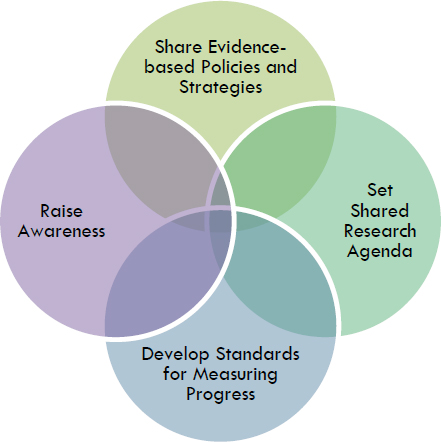
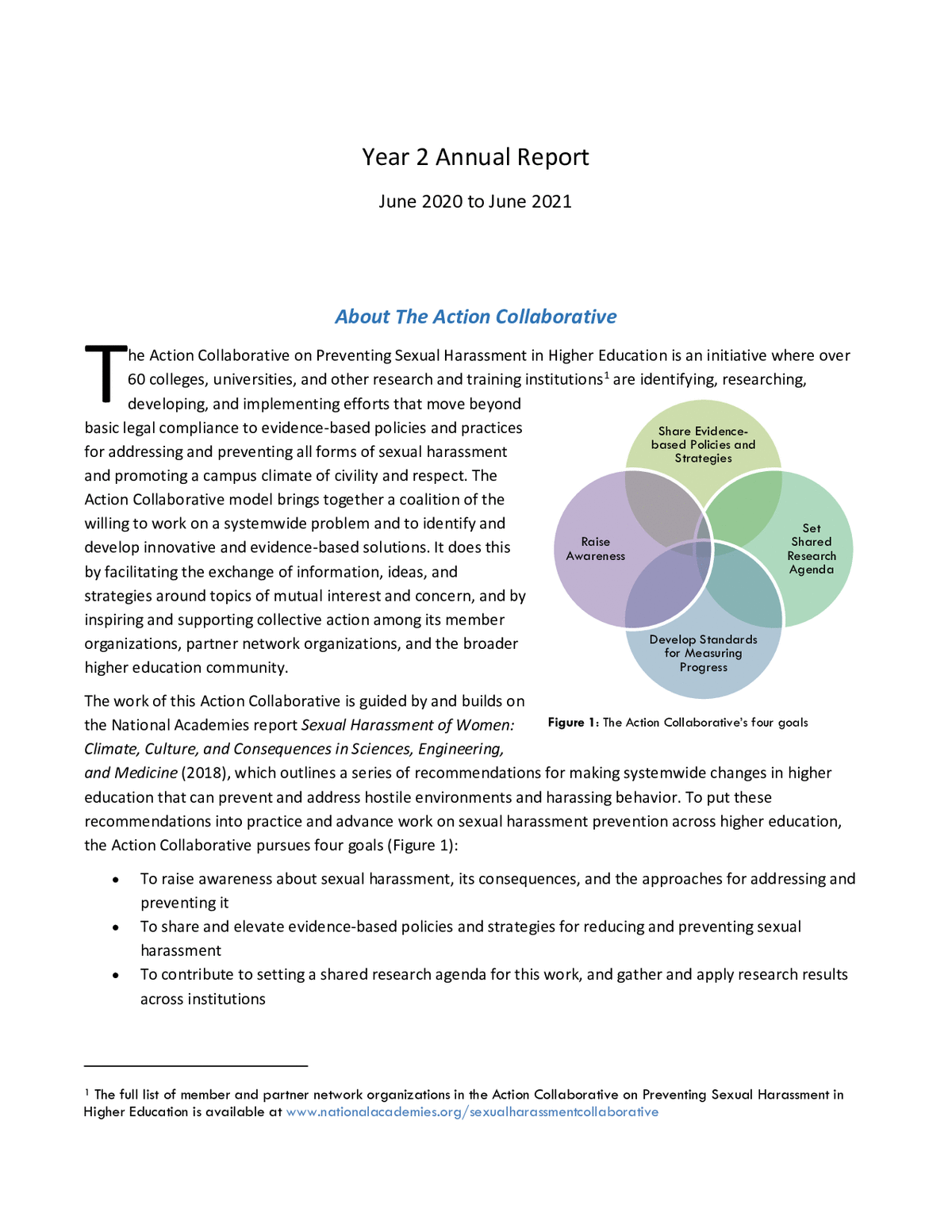
The work of this Action Collaborative is guided by and builds on the National Academies report Sexual Harassment of Women: Climate, Culture, and Consequences in Sciences, Engineering, and Medicine (2018), which outlines a series of recommendations for making systemwide changes in higher education that can prevent and address hostile environments and harassing behavior. To put these recommendations into practice and advance work on sexual harassment prevention across higher education, the Action Collaborative pursues four goals (Figure 1):
- To raise awareness about sexual harassment, its consequences, and the approaches for addressing and preventing it
- To share and elevate evidence-based policies and strategies for reducing and preventing sexual harassment
- To contribute to setting a shared research agenda for this work, and gather and apply research results across institutions
__________________
1 The full list of member and partner network organizations in the Action Collaborative on Preventing Sexual Harassment in Higher Education is available at www.nationalacademies.org/sexualharassmentcollaborative
- To develop a standard for measuring progress toward reducing and preventing sexual harassment in higher education
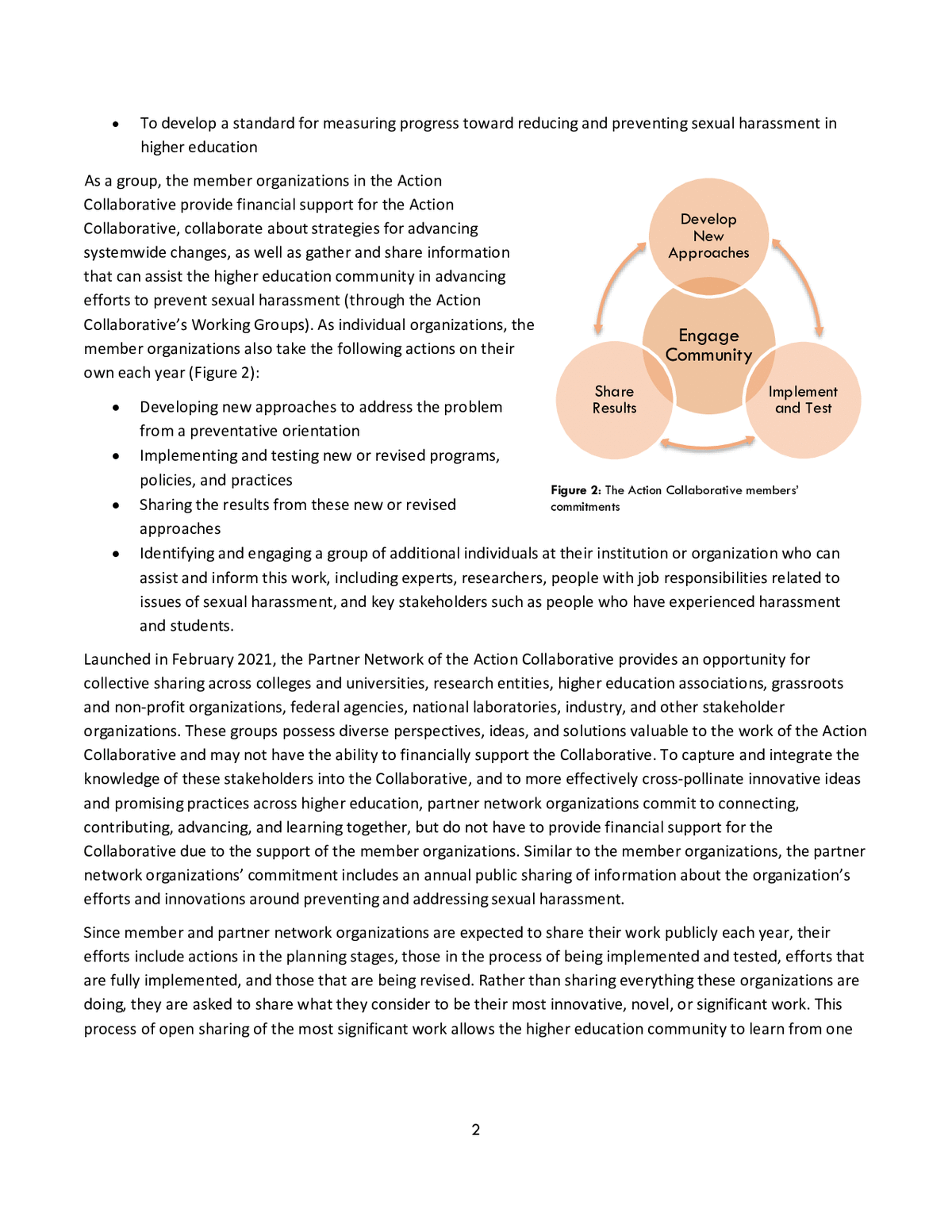
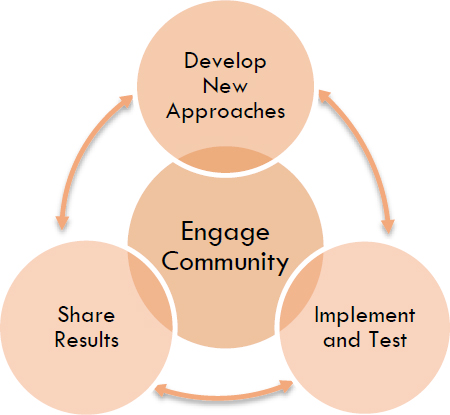
As a group, the member organizations in the Action Collaborative provide financial support for the Action Collaborative, collaborate about strategies for advancing systemwide changes, as well as gather and share information that can assist the higher education community in advancing efforts to prevent sexual harassment (through the Action Collaborative’s Working Groups). As individual organizations, the member organizations also take the following actions on their own each year (Figure 2):
- Developing new approaches to address the problem from a preventative orientation
- Implementing and testing new or revised programs, policies, and practices
- Sharing the results from these new or revised approaches
- Identifying and engaging a group of additional individuals at their institution or organization who can assist and inform this work, including experts, researchers, people with job responsibilities related to issues of sexual harassment, and key stakeholders such as people who have experienced harassment and students.
Launched in February 2021, the Partner Network of the Action Collaborative provides an opportunity for collective sharing across colleges and universities, research entities, higher education associations, grassroots and non-profit organizations, federal agencies, national laboratories, industry, and other stakeholder organizations. These groups possess diverse perspectives, ideas, and solutions valuable to the work of the Action Collaborative and may not have the ability to financially support the Collaborative. To capture and integrate the knowledge of these stakeholders into the Collaborative, and to more effectively cross-pollinate innovative ideas and promising practices across higher education, partner network organizations commit to connecting, contributing, advancing, and learning together, but do not have to provide financial support for the Collaborative due to the support of the member organizations. Similar to the member organizations, the partner network organizations’ commitment includes an annual public sharing of information about the organization’s efforts and innovations around preventing and addressing sexual harassment.
Since member and partner network organizations are expected to share their work publicly each year, their efforts include actions in the planning stages, those in the process of being implemented and tested, efforts that are fully implemented, and those that are being revised. Rather than sharing everything these organizations are doing, they are asked to share what they consider to be their most innovative, novel, or significant work. This process of open sharing of the most significant work allows the higher education community to learn from one
another’s plans, practices, and results, informing the development of new approaches to addressing and preventing sexual harassment, and informing the implementing and testing of such approaches.
This annual report for year 2 highlights the Action Collaborative’s overall progress toward its four goals and summarizes the work shared by member and partner network organizations during the second year of the collaborative. A complete collection of member and partner network authored “descriptions of work” is available at www.nationalacademies.org/sexual-harassment-collaborative-repository.
The Action Collaborative’s Progress in Year 2
Below is a list of significant accomplishments for the Action Collaborative organized along its four main goals. A fifth area is added to note the collaborations that the Action Collaborative has facilitated.
Summary of Work by Action Collaborative Member and Partner Network Organizations in Year 2
To facilitate the sharing of actions taken, innovative ideas, and research on the effectiveness of actions, Action Collaborative member and partner network organizations were also asked to provide at least one and up to five descriptions of their most significant, innovative efforts. These efforts could be either in the planning stages or actively under way, but must be consistent with an area of the Year 2 Rubric and new for either the organization or higher education overall. A summary of this shared work is provided below and the full descriptions of work can be found in the filterable repository at www.nationalacademies.org/sexual-harassment-collaborative-repository.
It should be noted that some institutions have made plans or taken action in more areas than what they summarized in their descriptions of work. Given the challenges society and higher education experienced in 2020 and 2021, we are pleased that 36 of 56 member organizations and 8 of 17 partner network organizations were able to share at least one description of work in time for the publication of this year’s annual report and the announcement of additions to the Action Collaborative’s Repository of Shared Work. In addition, we are pleased that 7 member organizations who were unable to share work in time for last year’s annual report were able to provide descriptions of work by the end of 2020, and these were added to the repository for sharing. Given the continued challenges in higher education due to the pandemic, organizations that were unable to meet this year’s publication deadline expect to share their work by the end of the 2021 calendar year.
The following sections are based on the one to five descriptions of work that member and partner network organizations shared with the Action Collaborative. These sections provide a brief summary of the kind of work the organizations shared and highlight some particularly novel work being done in the four major areas of prevention, response, remediation, and evaluation.
Trends in Work Shared by Members
In the second year of the Action Collaborative, member and partner network organizations shared over 70 descriptions of work across all four areas of prevention, response, remediation, and evaluation. About a fifth of descriptions of work cover efforts that aim to address more than one of these major areas at the same time, which emphasizes the overlapping nature of the work and the way that efforts can be designed to achieve multiple goals. The majority of the work covered prevention efforts or response efforts, followed by evaluation efforts, with remediation efforts being the smallest group of work shared. Several organizations shared that they used the requirement to comply with the 2020 Title IX rules from the Department of Education as an opportunity to make additional changes that contribute to preventing sexual harassment and remediating harm. Another trend is an increase in descriptions of work on prevention, response, or remediation efforts that include information and consideration of how such efforts will be evaluated to assess effectiveness and value to the community, as well as an increase in descriptions of work that are focused primarily on evaluation plans for prevention programs or policies and practices. This suggests that in future years there may be data to share on the effectiveness of practices and approaches for doing evaluation of this kind of work. These efforts might also
be encouraged and supported over the next year by the proceedings from a recent National Academies workshop on Evaluating the Effectiveness of Interventions to Prevent and Address Sexual Harassment.
Prevention
Preventing sexual harassment was the area with the most work shared by member and partner network organizations in the Action Collaborative. As detailed in the Rubric, the 2018 Sexual Harassment of Women report, and the 2020 National Academies report on Promising Practices for Addressing the Underrepresentation of Women, this work includes efforts around the following:
- Embedding the values of diversity, inclusion, and respect into recruitment, hiring, admissions, retention, promotion, and advancement
- Programs promoting civility or respect
- Leadership education and skill development
- Bystander intervention programs (specific to higher education, a field, and/or an audience)
- Audience-specific anti-sexual harassment education
- Ally or ambassador programs
- Prevention programs or toolkits
- The identification and reinforcement of community values
Action Collaborative participants shared new efforts within their organizations to embed the values of diversity, inclusion, and respect in their institutional processes, many of which align with research and practices described in the 2020 National Academies report on Promising Practices for Addressing the Underrepresentation of Women. These efforts focused on hiring practices (Cold Spring Harbor Laboratory, Harvard University-1, Utah State University-1, Northwestern University-1, and University of Washington-1), advancement and promotion practices (Boston University-1 and University of Washington-1), retention (Icahn School of Medicine at Mount Sinai-1, Oregon State University, and Massachusetts Institution of Technology), and approaches for checking applicant’s references related to past harassing behavior (Cornell University and The Ohio State University). Additionally, two universities (University of Washington-1 and Oregon State University) shared efforts designed to address inequities created by the COVID-19 pandemic.
This year, efforts to provide or improve leadership education included workshop and education programs that aim to increase knowledge, awareness, collaboration, and discussion among leaders about general diversity, equity, and inclusion issues (Argonne National Laboratory-1); about respectful medical care for sexual and gender diverse communities (Harvard University-2); and about addressing and preventing sexual harassment (University of Washington-2). One university shared about a new program to develop skills among leaders for addressing inappropriate and harmful behaviors at the onset (Michigan State University). A partner network organization, the Center for Institutional Courage, contributed to leadership education by establishing a bimonthly newsletter, The Courage Brief, that provides information about research on and examples of institutional courage. The Center for Institutional Courage also shared about a newly launched research grant
program that includes a focus on researching what guidance should be provided to leaders to show or demonstrate institutional courage.
Ten organizations shared new work on creating or improving bystander intervention programs, audience-specific anti-sexual harassment education, and/or ally programs. Some programs combined two of these approaches, such as ally programs that used bystander intervention approaches or audience-specific anti-sexual harassment education that was combined with bystander intervention. Some notable new efforts in these areas include a longitudinal bystander intervention training series that takes place over one academic year for more sustained engagement (Boston University-2); revised training to utilize a more intersectional lens and to incorporate trauma-informed practices (Rutgers University-1); and plans to develop toolkits that can be utilized following a training (Icahn School of Medicine-2 and Rutgers University-1).
Additional prevention-focused work shared this year that is notable includes
- The development of a Field Safety and Prevention Guide that expands illness and injury prevention in field placements to include prevention of sexual harassment and violence, stalking, relationship violence, and retaliation protection against retaliation for reporting. The guide defines “field” as consisting of “off-campus work, internships, educational trips, professional conferences, data collection, expeditions, living at sea, visiting a local farm or garden, urban or rural environments, hospitals, corporate settings, as well as domestic and international travel” (University of California, Berkeley-1).
- The use of focus groups to adjust and improve its diversity, equity, and inclusion strategic plan in light of recent societal events such as the COVID-19 pandemic, the killing of George Floyd and the civil unrest that followed, and anti-Asian violence (Argonne National Laboratory-2).
- The development LGBTQ+ resource guides or toolkits to equip faculty and staff with education, tools, and resources to improve the climate for LGBTQ+ students, staff, and faculty (Columbia University and University of Southern California-1).
Response
The Action Collaborative’s focus on response efforts is centered around responding in ways that can help prevent future harassing behavior and can contribute to creating a climate where the community believes that (1) reports of sexual harassment are taken seriously, (2) reporting sexual harassment is not risky, and (3) offenders face sanctions.2 As identified by the Rubric and the 2018 Sexual Harassment of Women report, this work includes efforts around the following:
- Improve policies
- Create trauma-informed response and education programs
- Provide anonymous and non-mandatory reporting resources and tools
- Implement restorative or transformative justice and alternative means of resolution
__________________
2 National Academies of Sciences, Engineering, and Medicine, Sexual Harassment of Women: Climate, Culture, and Consequences, 121.
- Improve communication and increase transparency
- Address gender harassment and other harmful behaviors
- Treat sexual harassment as a violation of research integrity
Several organizations shared about efforts to improve communication and increase transparency. One university shared about work to improve communication by creating a liaison program that develops a cohort of local leaders embedded across the institution who are trained to assist in identifying complaints that should be elevated, applying consequences evenly, reinforcing policies, and being a local resource for knowledge and trust building (Duke University). Two universities shared about efforts to reorganize offices to improve communication with the community such that it is more clear what resources and services were available to those experiencing harassment and discrimination, and so that responses can be consistent, appropriate, and/or timely (Harvard University-3 and University of Southern California-2). Two universities shared about revised or new websites to improve communication about resources available to the community (California Institute of Technology-1 and University of New Mexico). One organization shared about an effort to increase transparency by sharing with employees for the first time a report on the number and nature of reports and corrective actions, as well as an overview of the investigation process (Argonne National Laboratory-3). Lastly, in a sign that more higher education organizations are working to increase transparency to address the “pass the harasser” problem (when new organizations hire people without being aware of past harassment behavior), one organization shared that they are exploring strategies to share information about results of past investigations involving their current employees with those seeking references (Los Angeles Community College District-1).
Three organizations shared about work to provide anonymous or non-mandatory reporting options to the community (California Institute of Technology-1, University of Kansas and University of Kansas Medical School-1, and University of Washington-3). The University of Kansas and University of Kansas Medical School specifically designed their anonymous reporting system to encourage the reporting of many types of concerning and harmful behavior that can accompany sexual harassment and can contribute to an organizational climate that conveys tolerance of sexual harassment (i.e., unprofessional behavior, discrimination, or research misconduct). The University of Washington, in addition to having an anonymous reporting option, revised policy to enable most employees to be non-mandatory reporters to prioritize survivor choice, while still ensuring that there is a smaller group of senior leaders and key staff who are considered “officials required to report.”
Three organizations shared about trauma-informed education programs that focused on how previous and ongoing trauma affects faculty, staff, and students (Rutgers University-1); how gender-based harassment and sexual misconduct intersect with mental wellbeing (Yale University); and how to be resilient in the face of past and ongoing trauma, especially recent trauma related to the COVID-19 pandemic (Fort Lewis College). Two other organizations shared work to provide a trauma-informed response services for LGBTQ+ students (University of Southern California-1) and to create a trauma-informed website that provides information on the resources and support available to those experiencing harassment (University of New Mexico).
One organization shared how they are working to develop policies and processes to address gender harassing behavior or gender biased behavior that may not qualify for a formal investigation under imposed local or federal rules (Los Angeles Community College District-2).
Work shared this year on improving policies included efforts to more clearly state how gender harassment and unwanted or unwelcome sexual attention are prohibited (University of Illinois Urbana Champaign-1); add a definition for sexual exploitation (University of Wisconsin System); and create an option and system for informal resolution (Vanderbilt University). One partner network organization, focused on the United Kingdom, shared about the development of guidance for UK higher education institutions to revise their policies and processes to accord equal rights to complainants and respondents, and to follow a process more akin to civil justice rather than criminal justice (The 1752 Group).
It is worth noting that no organizations shared work this year on treating sexual harassment as a violation of research integrity.
Remediation
Work on remediating the harm from sexual harassment is in need of significant attention and has historically not been a focus for organizations, both inside and outside of higher education. As described in the Rubric and the 2018 Sexual Harassment of Women report, remediation work includes efforts around the following:
- Provide confidential resources and support services
- Honor survivors, victims, and those targeted with sexual harassment
- Prevent retaliation against those who have experienced sexual harassment
- Develop reintegration strategies and programs
- Reduce power differentials between members of a campus community
Four organizations shared about effort to provide or enhance confidential support services and resources, including services that provide advisors that can advocate for the survivor and/or accompany the survivor to meetings (University of Illinois Urbana Champaign-2 and California Institute of Technology-2), and external services that are independent of the higher education institution (University of Miami and Los Angeles Community College District-3).
Notably, this year three organizations shared about efforts to either prevent retaliation, reduce power differentials, or reintegrate people following harassing behavior. One university developed and is implementing a process for creating customizable anti-retaliation plans that acknowledge and address a reporting party’s concerns about retaliation (Johns Hopkins University). Another university developed and implemented a respondent education process aimed at building respondents’ skills to not engage in the same behavior in the future and to foster empathy for the harmed individual (Utah State University-2). A third university
implemented an institution-wide program for providing graduate students guaranteed transitional funding should they wish to change advisors or groups (Massachusetts Institute of Technology).
Evaluation
While evaluation efforts related to sexual harassment have historically focused on using climate surveys to assess the prevalence of sexual harassment experiences among students, there are several additional areas of evaluation work that will assist higher education in advancing efforts to prevent and respond to sexual harassment. Importantly, all evaluation efforts need to take into account and examine the experiences of individuals in underrepresented and/or vulnerable groups, including Black, Asian, Hispanic, Latinx, Native American, and multi-race individuals; sexual and gender diverse populations; people with disabilities; immigrants; graduate students; and postdoctoral trainees, who often experience multiple forms of harassment or discrimination combined with sexual harassment. As described in the Rubric and the 2018 Sexual Harassment of Women report, evaluation work includes efforts around the following:
- Measure the prevalence of sexual harassment
- Conduct qualitative research on the experiences of sexual harassment
- Evaluate prevention programs
- Evaluate policies and procedures
- Monitor climate on an ongoing basis
- Share publicly the results/data from evaluation work
- Use climate assessments to inform action
Four organizations shared about efforts to plan and/or conduct an evaluation of prevention programs or policies and processes (Dartmouth College, University of Kansas and University of Kansas Medical School-2, West Virginia University-1, and West Virginia University-2) – an encouraging development that will hopefully provide data and evidence that can inform efforts within those organizations and across higher education.
Some organizations shared work they did to either conduct a survey to measure the prevalence of sexual harassment for the first time at their institution or for the first time for a specific group (such as employees or faculty and staff) (Salk Institute of Technology, Utah State University-3, and University of California, Davis). One university shared the results of qualitative research on the experiences of LGBTQ+ undergraduate students to inform campus prevention efforts (University of Minnesota-1), and another described how they shared the results of previous climate survey research through the development of a dashboard so that members of the community could more easily access the data and results (Northwestern University-2).
Other organizations shared about the development of a survey to better examine the experiences of a group within their organization, such as faculty, staff, and individuals with multiple marginalized identities (Rutgers University-2, Soteria Solutions, and University of California, Davis). One organization shared about a plan to
develop a tool to enable groups within their organization to customize and use climate surveys to assess how people are experiencing specific environments (University of California, Berkeley-2).
Finally, a couple of organizations shared about how they are using climate surveys and other climate assessments to inform changes within the organization and to identify what changes should be made for different groups or within different parts of the organization (University of Minnesota-2, Soteria Solutions, and Rutgers University-2).
Plans and Goals for the Future
As the Action Collaborative continues its work, it seeks to develop ideas and strategies to address important gaps where more effort is critically needed and to identify approaches that are particularly effective and evidence based. The 2018 Sexual Harassment of Women report makes clear that addressing and preventing sexual harassment requires a multipronged approach to make the systemwide changes that go beyond compliance and toward tackling the systems, cultures, and climates that enable sexual harassment to thrive.3 Thus the Collaborative’s goal is to facilitate this work across higher education such that universities and organizations can learn from each other, apply and adapt practices that have been successful elsewhere, and pursue research and information gathering together for the benefit of the broader higher education ecosystem. Specific areas that the Action Collaborative is focusing on in the coming year include
- Identifying and publishing innovative and promising practices
- Identifying areas where research is needed, making the higher education and research communities aware of the need, and facilitating collaboration to advance research in these areas
- Compiling research to provide guidance and information on specific types of efforts (e.g., civility promotion programs, preventing retaliation, reducing power differentials, and using climate assessments to inform action)
- Examining research on how sexual harassment, systemic racism, heterosexism, and other forms of discrimination combine to create hostile environments
- Examining research on how hostile environments can be addressed and corrected so all groups can thrive
- Examining how academic leaders can encourage and practice institutional courage and make decisions that contribute to preventing sexual harassment over time
- Gathering examples of evaluation approaches, metrics, and mechanisms to assess efforts intended to address and prevent hostile environments and harassing behavior
- Sharing results from efforts to evaluate the effectiveness and consequences of novel actions, programs, or policies on communities within higher education, such as targets of sexual harassment; specific
__________________
3 National Academies of Sciences, Engineering, and Medicine, Sexual Harassment of Women: Climate, Culture, and Consequences, 123–124, 169.
marginalized populations; and positional groups with less power like staff, postdoctoral scholars, students, adjunct faculty, instructors, and early-career faculty
As the Action Collaborative continues its work, we hope more organizations within higher education will learn from this work and share their own work through the Collaborative. We also encourage organizations such as research entities, higher education associations, grassroots and non-profit organizations, federal agencies, national laboratories, industry, and other stakeholder organizations to join us in pursuing this work and sharing it so that all of higher education can improve.