Is it true that cannabis can treat diverse diseases ranging from Alzheimer's to cancer to PTSD?
Based on Science
For most health conditions, not enough research has been done to know whether cannabis can help treat disease or improve associated symptoms.
Last update April 15, 2020
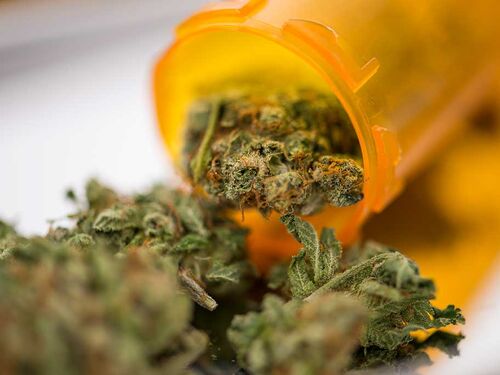
Only a few health conditions have been studied well enough to know if cannabis is a helpful treatment.
Cannabis and products made from cannabis are under study for a variety of health conditions, but in most cases, not enough studies have been done to make strong conclusions.
The cannabis plant contains dozens of potentially active compounds, called cannabinoids. Most research has not used the entire plant, but rather extracts or lab-made versions of cannabinoids. Two components under study are THC (tetrahyrdocannabinol), the part of marijuana that induces a high, and CBD (cannabidiol), which doesn’t cause a high.
Cannabis and cannabinoids can be administered many ways. Two popular methods are orally or by inhlation (smoking or vaping). When inhaled, the medications get to the bloodstream much faster. However, most studies focused on these products being taken by mouth.
Scientists have the best evidence from studies of people with chronic pain. Cannabinoids and some kinds of cannabis can provide relief for specific types of pain. But so far studies have tended to look at only short-term, not long-term, effects.
Cannabinoids also have a place in treating nausea and vomiting in patients with cancer. Chemotherapy can cause nausea and vomiting, and THC relieves these side effects. The THC-based medications dronabinol (Marinol®) and a THC-like drug called nabilone (Cesamet®) have been approved for this purpose by the U.S. Food and Drug Administration (FDA) since 1985. The same medications may also be used to boost appetite and weight gain in people with HIV/AIDS.
Some people with multiple sclerosis, a nerve disease, have stiffness or tightness in their muscles. Cannabinoids can help with this symptom, called spasticity. A combination of THC and CBD, called nabiximols (Sativex®), has been approved for multiple sclerosis symptoms in other countries, but not the United States.
CBD may help children with certain rare types of epilepsy, or seizures. CBD in the form of Epidiolex® was approved by the FDA in 2018 for this use.
Watch out for advertising that overstates the science on cannabis.
Approved and tested cannabinoid medications are quite different from the products one might find in a cannabis dispensary or other over-the-counter products. Those products might have different concentrations of the active parts of cannabis or contain other contaminants.
Therefore, advertisements that promise benefits from cannabis or CBD products that are not FDA approved are not based on rigorous science. Scientists simply don’t have enough information to know if cannabis helps with many conditions including irritable bowel syndrome (IBS), Parkinson’s, glaucoma, or dementia. And there is no conclusive evidence thus far that cannabis can cure or slow the growth of cancer in people.
There are many ongoing studies of cannabis and cannabinoids to treat dozens of symptoms and conditions, including:
Acute and chronic pain
Epilepsy
Drug use disorders, including dependence on opioids and cannabis itself
Cancer and its symptoms
Multiple sclerosis symptoms
Schizophrenia and psychosis
Symptoms associated with Alzheimer’s disease and dementia
PTSD
Graft versus host disease in organ transplant recipients
More research is needed to understand both benefits and harms of cannabis in the short- and long-term.
Why is the story around cannabis so fuzzy? Several factors have made it difficult for scientists to work out cannabis’ effects.
Despite the FDA approvals of certain cannabinoids and one cannabis-based medicine, U.S. law considers cannabis to be a drug with no currently accepted medical use, a high potential for abuse, and a lack of safety for use under medical supervision. Laws restrict research on such drugs. For now, scientists can only use cannabis from one government source, which may be different from cannabis grown elsewhere.
Compared to most medicines, whole-plant cannabis is complex. It contains many different chemicals. And different cannabis versions, or strains (sometimes called chemovars), may have different levels of these chemicals. Plus, the effects of the chemicals vary depending on whether they’re inhaled or taken orally. That makes it hard for scientists to standardize even what a single “dose” means. This contrasts with studies of alcohol, where everyone agrees that 12 ounces of beer or 5 ounces of wine equals “one drink.”
Another reason why research in this area is difficult is because drug companies don’t have much incentive to invest millions in developing a cannabis-type medication when people can get cannabis on their own. It may be difficult for traditional drug companies to profit from cannabis-based medications.
Cannabis use has risks, especially for certain people.
People have been using cannabis, with relatively good safety, for millennia. There are many potential health benefits from cannabis, but there are risks.
Cannabis use is associated with:
Increased risk of car accidents
Interference with memory, learning, and attention
Altered brain development in adolescents
When smoked long-term, breathing problems
Increased use over time that negatively impacts everyday functioning, including withdrawal symptoms when use is stopped
Unless it is recommended for a specific health condition, cannabis use may be risky for certain people, including:
People with mental health problems, or a family history of such issues
Pregnant women
Children and teens
People with a history of substance use disorder
People taking psychotropic medications that affect thought, feelings, or behavior
Drivers