Confronting Chronic Neglect: The Education and Training of Health Professionals on Family Violence (2002)
Chapter: Appendix E Existing Curricula on Family Violence
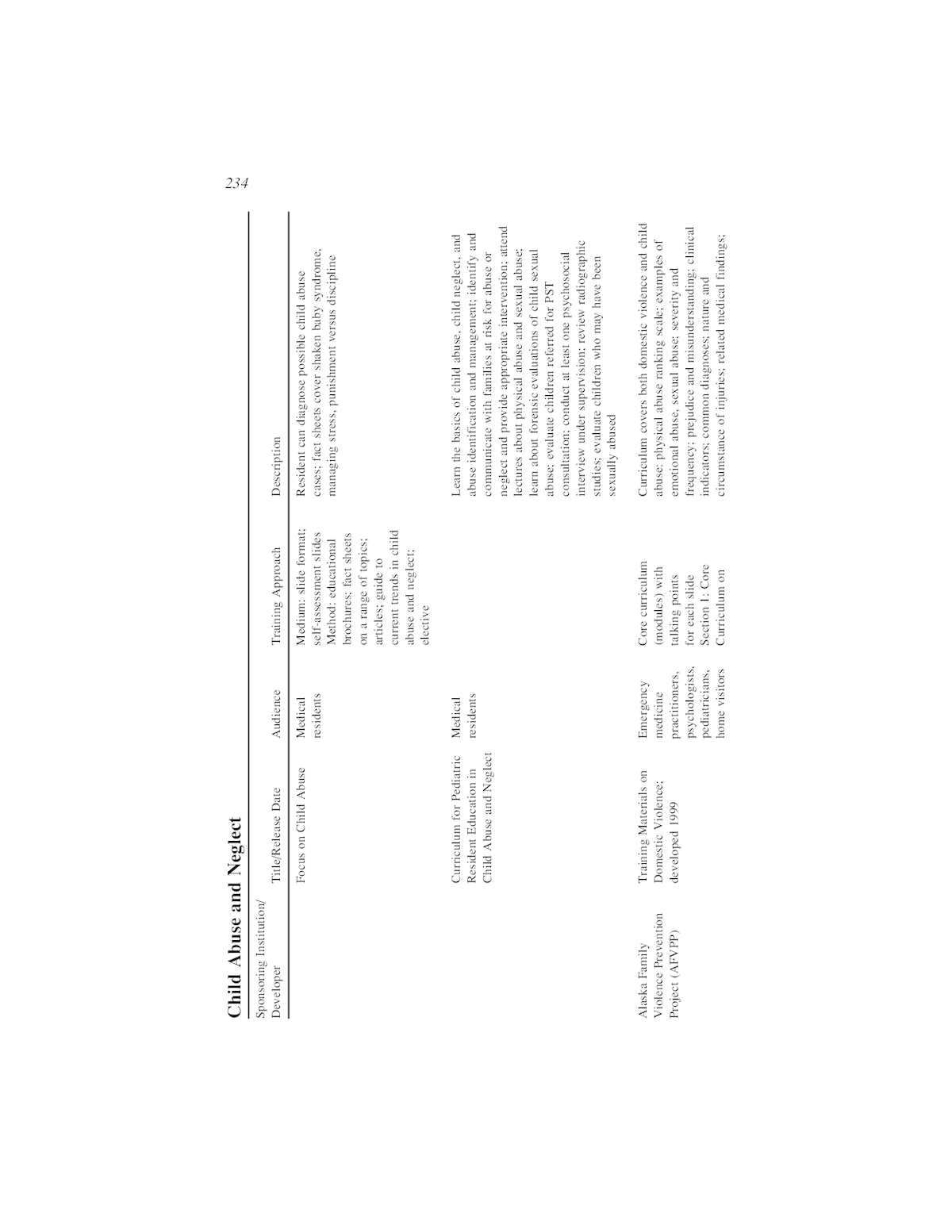
Child Abuse and Neglect
|
Sponsoring Institution/Developer |
Title/Release Date |
Audience |
Training Approach |
Description |
|
|
Focus on Child Abuse |
Medical residents |
Medium: slide format; self- assessment slides Method: educational brochures; fact sheets on a range of topics; articles; guide to current trends in child abuse and neglect; elective |
Resident can diagnose possible child abuse cases; fact sheets cover shaken baby syndrome, managing stress, punishment versus discipline |
|
Curriculum for Pediatric Resident Education in Child Abuse and Neglect |
Medical residents |
|
Learn the basics of child abuse, child neglect, and abuse identification and management; identify and communicate with families at risk for abuse or neglect and provide appropriate intervention; attend lectures about physical abuse and sexual abuse; learn about forensic evaluations of child sexual abuse; evaluate children referred for PST consultation; conduct at least one psychosocial interview under supervision; review radiographic studies; evaluate children who may have been sexually abused |
|
|
Alaska Family Violence Prevention Project (AFVPP) |
Training Materials on Domestic Violence; developed 1999 |
Emergency medicine practitioners, psychologists, pediatricians, home visitors |
Core curriculum (modules) with talking points for each slide Section 1: Core Curriculum on |
Curriculum covers both domestic violence and child abuse: physical abuse ranking scale; examples of emotional abuse, sexual abuse; severity and frequency; prejudice and misunderstanding; clinical indicators; common diagnoses; nature and circumstance of injuries; related medical findings; |
|
|
Domestic Violence Section 2: Relationship Between Domestic Violence and Child Abuse Curriculum |
mental health/ psychological symptoms; relationship between domestic violence and child abuse; escalation of the violence; severe and fatal cases of child abuse; childhood history of abuse; child witnesses; screening for domestic violence and child abuse; goals when intervening in domestic violence and child abuse; child abuse reporting |
||
|
American Academy of Pediatrics (AAP) |
Visual Diagnosis of Child Sexual Abuse; developed 1998 |
AAP members, medical professionals |
Medium: binder with 166 slides; 33-page study guide Method: elective education program |
Normal anatomy and variants; nonabusive pathology and trauma; examples in male and female children |
|
American Academy of Pediatrics (AAP) |
Visual Diagnosis of Child Sexual Abuse; developed 1994 |
AAP members, medical professionals |
Medium: binder with 150 slides; 33-page study guide Method: elective education program |
Medical evidence of physical abuse: inflicted burns, bruises, abrasions, fractures; radiological diagnosis of head trauma; ocular findings |
|
American Academy of Pediatrics (AAP) |
Focus on Child Abuse: Resources for Prevention, Recognition, and Treatment, 2nd edition |
Medical professionals |
Medium: CD-ROM featuring 200 color slides Method: presentation |
200 color slides on CD-ROM; visual diagnosis of child physical abuse; visual self- assessment; parent and patient education/information; results of 50-state child abuse survey; AAP policies, manual excerpts; full-text articles from Pediatrics; AAP speaker’s kit with slides, lecture notes, and handouts |
Child Abuse and Neglect
|
Sponsoring Institution/ Developer |
Title/Release Date |
Audience |
Training Approach |
Description |
|
American Psychological Association, Child Abuse and Neglect Working Group and Section on Child Maltreatment of the Division of Child, Youth, and Family Services |
A Guide for Including Information on Child Abuse and Neglect in Professional Education and Training; A Guide for Including Information on Child Abuse and Neglect in the Undergraduate Curriculum; developed 1996 |
Graduate students of psychology |
Medium: three-part guide with resources (graduate course on child abuse and neglect) Method: specialized training for clinical, counseling, and school psychologists (basic materials on child abuse and neglect) |
Integrating child abuse and neglect into current course work; definitional issues; prevalence and consequences of child abuse and neglect; theories about the development of abusive and neglectful behaviors; recognition and referral of abused and neglected children and adults: child protection system, medical intervention, legal involvement, mental health interventions; prevention of child abuse and neglect; ethical issues; research methods; involvement with other professionals; assessment of child abuse and neglect victims and their families; interventions with abused and neglected children and families—issues for the psychologist; interventions with perpetrators of abuse and neglect |
|
Boston Children’s Hospital, AWAKE program (Advocacy for Women and Kids in Emergencies) |
Health Care Services for Battered Women and Their Abused Children |
Health care providers |
Medium: 60-page manual; elective |
Relationships between child abuse and woman abuse (also covers domestic violence); specific, practical information for a health system response |
|
Brown University School of Medicine, Department of Pediatrics and Hasbro Children’s Hospital, Providence, RI |
Fellowship Program in Child Abuse and Neglect |
|
||
|
Center for Child Protection, Children’s Hospital and Health Center, San Diego, CA |
Gynecology and Obstetrics Preceptorship Clinical Training Program |
Gynecology and obstetrics |
Medium: clinical training program Method: lecture; vignettes; clinic |
Manner in which sexual abuse medical evaluation can be effectively and atraumatically performed; team meetings for case review; 3-5 examples of crossdiscipline cooperation; roles of law enforcement, child protective services, clinical forensic examiner/ interviewer as they relate to investigation; anticipatory problems indicating need for referral for abuse counseling; filling out OCJP 925 medical reports; interpretation of examination findings; documentation; interpretation of photographs; literature review |
|
Center for Child Protection, Children’s Hospital and Health Center, San Diego, CA |
Family Violence Rotation |
|
Medium: student rotation Method: observation; educational videotapes; clinic; meetings; research project |
Observe child protective services hotline for 1 hour as well as forensic videos, dv tro clinic, Oprah tape on incest dynamics and conference tape; article on child sexual abuse accommodation syndrome; observe/ perform exams on children suspected of having been abused; participate in the failure-to-thrive clinic; standardized paper cases to demonstrate differences between medical and forensic history; law review; reporting forms; attendance at a navy family advocacy meeting; meeting with therapists; expert witness testimony |
|
Center on Child Abuse and Neglect, University of Oklahoma Health Sciences Center |
Interdisciplinary Training Program in Child Abuse and Neglect |
Graduate-level students in law, psychology, social work, nursing, dentistry, public health,education, and related disciplines |
Method: weekly seminars; two field practica; course projects; participation in a mock trial |
Role of child protective services; interviewing children for suspected sexual abuse; substance abuse and child abuse and neglect; issues of child maltreatment in indian country; foster care; treatment of offenders and victims; mock trial; overview of prevention |
Child Abuse and Neglect
|
Sponsoring Institution/ Developer |
Title/Release Date |
Audience |
Training Approach |
Description |
|
Child Abuse and Neglect, American Academy of Pediatrics (AAP) 2000 Annual Meeting |
Identifying Child Abuse: Can You Meet the Challenge? |
AAP Members |
Medium: 3-hour lecture followed by “Award for Outstanding Service to Maltreated Children”; elective |
Interactive case-based sessions with ARS; review common pitfalls in recognizing abuse; provide approaches for improving diagnostic acumen; and highlight disease mimickers of physical and sexual abuse |
|
Children’s Hospital of Philadelphia |
The Child Abuse and Neglect Fellowship |
Board-eligible or board-certified pediatricians |
2 years |
Court testimony; clinical care of children; education of medical personnel; multidisciplinary approach to caring for abused children; CARE clinic: work with social work coordinator of the clinic and attending physician to provide medical evaluations to children who are victims of physical and sexual abuse; in-patient evaluations: fellow provides consultation to the pediatric and surgery teams in the hospital when children are admitted as a result of abuse or neglect; research: develop research skills and learn proper research techniques under the guidance of pediatricians and epidemiologists with expertise in the medical research design; multidisciplinary work with the Child Advocacy Center, Philadelphia Child Fatality Review Team, Law Enforcement Child Abuse Project of Philadelphia, Medical Legal Advisory Board on Child Abuse |
|
Children’s Memorial Hospital, Chicago |
Child Abuse Rotation Curriculum |
PL-3 residents |
Medium: 2-week rotation; required Method: clinic; consultations; review meetings; home visits |
Hospital consults (mostly physical abuse and some neglect); outpatient sexual abuse clinic; death review meetings; juvenile court; home visits with Department of Children and Famly Services |
|
Division of Emergency Medicine, Mayerson Center for Safe and Healthy Children, Children’s Hospital Medical Center, University of Cincinnati |
Fellowship in Child Forensics and Abuse; developed 1998 |
Pediatricians; completion of pediatric residency |
Medium: 1-year fellowship Method: training; administrative; research |
Training in the clinical areas of physical child abuse, sexual child abuse, medical neglect, Munchausen syndrome by proxy; administrative skills needed to direct a child abuse program; research skills required of medical investigators |
|
Duke Medical Center |
Pediatric residency rotation |
Second-year residents |
Medium: 1-month-long required course (however, 1 week of vacation time comes out of this month, and not every resident is able to rotate through the child abuse program/clinic because of limited space) Method: shadowing; clinic |
Residents are with the physicians every day of the week but do not participate in child abuse coverage on evenings or weekend |
|
Governor’s Office, State of Pennsylvania |
Governor’s Proposal to Help Medical Professionals Identify and Prevent Child Abuse and Neglect; released April 1999 |
Physicians and other medical professionals |
Medium: curriculum provided by 27 physicians and 32 county children and youth agencies in the state Method: lecture |
How to identify child abuse and neglect and families at risk of child abuse and neglect; curriculum focuses on providing information on child protective services law and mandatory reporting provisions; hypothetical examples in which physicians and medical professionals may suspect child abuse and neglect; actual examples of child abuse compiled by the American Academy of Pediatrics; common themes that may indicate child abuse and neglect |
Child Abuse and Neglect
|
Sponsoring Institution/ Developer |
Title/Release Date |
Audience |
Training Approach |
Description |
|
Hawaii Dental Hygenists’ Association |
Dentistry’s Role in Preventing Abuse and Neglect |
Dentistry students |
Medium: reading list; handout; worksheet Method: lectures |
History and etiology of child abuse and neglect; risk factors for child abuse and neglect; warning signs; physical and behavioral indicators of child abuse and neglect; the relation of child abuse and neglect to other forms of family violence; statutory definitions; precipitating factors to family violence; recognition of physical abuse: clinical, general, head and neck, intraoral; sexual abuse; emotional abuse; conditions that mimic abuse; dental neglect; recognition of neglect; interventions; legal and liability issues; multipage resource/reading list; office protocol for identifying and reporting suspected child abuse and neglect |
|
Louisiana County Department of Health Services |
Family Violence for Health Professional Schools; 1981 (currently being updated) |
Health professionals |
|
Also covers elder abuse, domestic violence, and other special topics |
|
Louisiana State University, School of Medicine, Department of Pediatrics |
Child abuse rotation |
All pediatrics interns, fourthyear elective, psychiatry fellows |
Medium: 1-month rotation that consists of 40 hours per week outpatient clinic Method: clinic; consultations; review meetings; court attendance |
One to three residents per month; outpatient clinic involves physical abuse, sexual abuse, failure to thrive and burns (inflicted) ; after hours; inpatient local death consultations; multidisciplinary staffing; attendance at review panels; elective attendance at pediatric autopsies; attendance in juvenile and criminal court; hired former prosecutor to plan/hold mock trial withthe resident being the expert once a month; planning to add a major/minor head injury |
|
|
|
clinic in conjunction with neurology and ophthalmology; psychiatry fellows concentrate on improving interview skills with children |
||
|
Massachusetts Society for the Prevention of Cruelty to Children, Institute for Professional Education |
Medical evaluation of physical and sexual abuse; accidents and abuse: how to tell the difference; head trauma in child abuse; visceral injuries in child abuse; cutaneous manifestations of child abuse; skeletal injuries as a manifestation of child abuse; child neglect; unsafe manifestations of child abuse; Munchausen syndrome by proxy; conditions mistaken for child abuse; syndromes associated with child abuse, fatal child abuse, and sudden infant death syndrome, dental aspects of child abuse and neglect; critical injuries from falls |
|||
|
Nova Southeastern University Physician Assistant Program, College of Allied Health, Health Professions Division |
Issues in Medicine: Domestic Violence; developed 1999 |
First-year physician assistant students, practicing physician assistants |
Medium: on-line project or course during the “transition month” for physician assistant students; for CME [?] credits Method: 3-hour program |
Presentation features epidemiology; diagnosis; treatment; patient education; counseling and prevention; state laws; reporting and case presentations; also covers spousal/mate abuse, elderly abuse, disabled abuse |
Child Abuse and Neglect
|
Sponsoring Institution/ Developer |
Title/Release Date |
Audience |
Training Approach |
Description |
|
Ohio State University College of Medicine, Columbus |
The Child Abuse Program; developed 1998 |
|
1 year (July 1 through June 30) |
Fellow attends five clinics in the Family Development Clinic each week; remaining time is spent in selfstudy, including pre- and posttesting, preparation of education materials, and community visits; attendance at weekly pediatric grand rounds and other appropriate educational programs at Children’s Hospital; fellow and staff on all consultations, training programs, and court appearances; develop skills in research design, data collection, and data analysis; perform a forensic physical exam for abuse or neglect; complete an appropriate abuse form; participate in the interview of a child suspected of having been sexually abused; testify in court about findings as a fact witness; recognize sexual abuse; describe the roles of adjudication, identification, treatment, and prevention; date a bruise, subdural bleed, fracture; recognize 10 diseases that can be mistaken for child abuse; develop a community plan of action for child maltreatment; family development clinic |
|
St. Joseph’s Hospital, Phoenix |
Children’s Health Center, St. Joseph’s Hospital Residents |
Residents in their PL-2 year |
Medium: 1-month-long required course Method: clinic; shadowing; rotation |
Sexual abuse clinic; hospital consults; spend day with investigator; attend court with staff who are testifying; rotation initiated at the request of the students who wanted more training |
|
State University of New York, Health Science Center at Syracuse University Health Center |
Fellowship in Forensic and Child Abuse Pediatrics |
Pediatricians |
Medium: 2-to 3-year fellowship for one or two fellows Method: teaching; research; patient care advocacy |
Prepare pediatricians for teaching, research, patient care, legal and community responsibilities in the area of child maltreatment, including child abuse, forensics, foster care, sexual abuse, physical abuse, neglect and related issues; provide clinical treatment to maltreated children; plan, conduct, analyze, interpret, write studies related to maltreatment; advocate for children’s issues, including courtroom time; teach medical students and residents, parent groups, and community professionals; program development for child abuse programs |
|
Team for Children at Risk, Children’s Mercy Hospital, Kansas City, MO |
Child abuse curriculum |
|
||
|
University of California, Davis Medical Center, Sacramento |
Child Abuse and Neglect Fellowship |
Candidate either board certified or board eligible in pediatrics |
Medium: 2-year fellowship training program Method: teaching responsibilities; community involvement; research responsibilities; biomedical statistics course; writing workshop; computer workshop; literature searches; database management |
Experimental design workshop, conferences, meetings; Child Protection Center Clinic responsibilities; on-call responsibilities; rotation/ experiences; progress assessment; clinical and teaching assessment |
Child Abuse and Neglect
|
Sponsoring Institution/ Developer |
Title/Release Date |
Audience |
Training Approach |
Description |
|
University of Colorado Hospital and Kempe Children’s Center, Denver |
Child Abuse and Neglect Fellowship |
Board-certified or board-eligible pediatricians, state medical license required |
Medium: 1-to 2-year residency fellowship Method: first year is primarily clinical; second year can be designed around research with 60% clinical, 30% research, 10% outside involvement in advocacy center or consultation work; one or two positions yearly |
Weekly child protection team; clinic sees primarily sexual abuse consultations for colposcopy and interviews; civil and criminal court involvement |
|
University of Maryland Medical System’s Child Protection Program |
SEEK (Safe Environment for Every Kid): Provider Information Manual; developed March 2000 |
Community pediatricians, child health care providers |
Manual with chapters on domestic violence, physical and sexual abuse, and child sexual abuse prevention |
Assessment; initial management; referral information; questioning the child; questioning the parent; special considerations; documentation |
|
University of Michigan |
Practice Seminar in Child Maltreatment: Assessment and Treatment |
Master’s in social work students |
Medium: class Method: lectures; discussion; demonstrations; video; role play; small-group exercises; duration 4 months (one semester) |
Explores personal, professional, and societal responses to children at risk; discusses client issues and responses to child welfare interventions; discusses theories that explain child maltreatment |
|
University of Michigan |
Integrative Seminar Child Maltreatment |
Master’s in social work students |
Medium: class Method: lecture; discussion; small-group exercises; student presentation; guest speakers; elective |
Examination of child welfare from perspective of community practice, direct practice and policy; integration of research findings related to child welfare; examines the relationship between child maltreatment and environmental factors |
|
University of North Carolina at Chapel Hill, School of Medicine, Department of Social Medicine |
Preventive Medicine Residency/Fellowship in Violence Prevention; developed 1998 |
Preventive medicine residents; must have completed a primary care training program in internal medicine, family practice, or pediatrics |
Medium: 2-year fellowship Method: first year: learning research skills; acquiring master’s in public health in epidemiology; outcomes research or maternal and child health; at end of program, fellows will be eligible for American Board of Preventive Medicine |
Year 1: work in a multidisciplinary child abuse center; work on the consultation team for domestic violence Year 2:30 working days at the state health department or a national health agency, completion of a major research project, and continued clinical work in one or more areas of violence specialization (also covers youth violence and domestic violence) |
|
University of Pittsburgh |
Child Sexual Abuse |
Bachelor’s in social work students |
Medium: class Method: lecture; readings; written papers; duration is 4 months (one semester) |
Overview of child sexual abuse; assessment of child abuse situations; examination of personal value/belief system; evaluation of effectiveness of treatment approaches |
|
University of Pittsburgh |
Child Maltreatment: Physical Abuse and Neglect |
Bachelor’s in social work students |
Medium: class Method: discussion; role plays; readings; written assignments; duration 4 months (one semester) |
Development of relevant treatment strategies for family members; identification of gender and racial issues in abuse/neglect situations; overview of how abuse and neglect are identified and integrated |
Child Abuse and Neglect
|
Sponsoring Institution/ Developer |
Title/Release Date |
Audience |
Training Approach |
Description |
|
University of Texas at Austin |
Child Welfare |
Bachelor’s and master’s in social work students |
Medium: duration is 4 months (one semester); elective |
|
|
Vanderbilt University |
Child Abuse Forensic Pediatric Rotation |
First-year medical residents |
Medium: 2 weeks, required as part of their ambulatory clinic months/ research month Method: slide review; history taking, visual diagnosis; management of acute and chronic sexual abuse presentations |
Inpatient evaluation of suspected child abuse cases; two half-days per week at Our Kids, functioning as the primary medical provider, performing and documenting genital exams; take calls for both the CARE team and Our Kids during a month; interviewing techniques; attend review meetings with multidisciplinary review of cases; review and present a forensic pediatric case consult; attend x-ray rounds; attend court, depositions, or other legal matters with members of CARE and Our Kids; keep a log of patients and diagnoses; complete a pre- and posttest knowledge test on aspects of forensic pediatrics |
|
Western Schools, Inc. |
Child Abuse; developed 1993 |
Nurses |
Medium: self-study book for nurses; continuing education credits |
Characteristics of families at risk; underlying causes of violence against children; factors in a child’s medical history that help professionals identify abuse; physical examination of the child; x-ray, ultrasound, and CAT scan studies; causes and detection of psychological abuse; legal aspects; failure to thrive; reporting; difference between juvenile and criminal courts; evidence; successful treatment approaches for families |
Elder Abuse and Neglect
|
Sponsoring Institution/ Developer |
Title/Release Date |
Audience |
Training Approach |
Description |
|
Benjamin Rose Institute, Alzheimer’s Association of Cleveland, Department of Senior and Adult Protective Services |
Model Intervention for Elder Abuse and Dementia; 19999 |
Cross-training service provider |
Medium: comprehensive training manual on elder abuse and dementia Method: organized into three modules |
Faculty guides; participant’s workbooks; learning objectives; value statements; interactive exercises; case discussion guides Organized into three modules: (1) emphasizes the manifestations of various types of dementia; (2) provides background information on elder abuse, characteristics and theories of causation, how to screen for possible abuse, information on elder abuse laws, referral protocols; (3) integrative module promotes collaboration, discussion, ethical dilemmas, legal issues |
|
Hawaii Dental Hygienists’ Association |
Dentistry’s Role in Preventing Abuse and Neglect |
Dentistry students |
Method: reading list; handout; worksheet Method: lecture |
Dentistry’s role in preventing child abuse and neglect and domestic violence, also covers elder abuse: physical and behavioral indicators; history; relation to other forms of family violence; etiology; statutory definitions; precipitating factors to family violence; recognition of physical abuse; clinical, general, head and neck, intra-oral; sexual abuse; emotional abuse; conditions that mimic abuse; dental neglect; recognition of neglect; interventions; legal and liability issues; multipage resource/reading list; office protocol for identifying and reporting suspected abuse and neglect; warning signs; risk factors |
Elder Abuse and Neglect
|
Sponsoring Institution/ Developer |
Title/Release Date |
Audience |
Training Approach |
Description |
|
Integrated Health Services |
Abuse Prohibition Program |
Health care professionals |
Medium: abuse prohibition program Method: PowerPoint presentation |
Abuse, neglect, and misappropriation of property; prevention, identification, investigation of abuse; abuse protocol; definitions and examples of abuse; indicators that abuse may have occurred; guidelines for communication; suspected abuse reporting tools; abuse prohibition |
|
New York State Office for the Aging |
Shining Light on the Hidden Problem of Elder Abuse |
Health care providers |
Medium: elder abuse prevention training manual with overheads |
Introduction to elder abuse, mistreatment, and neglect; high-risk factors and indicators; challenges in substantiating elder abuse; role of the financial community; role of the health care community; role of the law enforcement community; recommendations to reduce prevalence; resources |
|
Nova Southeastern University Physician Assistant Program; College of Allied Health, Health Professions Division |
Issues in Medicine: Domestic Violence; 1999 |
First-year physician assistant students, practicing physician assistants |
Medium: On-line course or course during the “transition month” for physician assistant students; for continuing medical education credits, 3-hour program |
Presentation features epidemiology, diagnosis, treatment, patient education, counseling and prevention, Florida laws, reporting, and case presentations; also features spousal/mate abuse, disabled abuse, child abuse |
|
Terra Nova Films (ELDER) |
Just to Have a Peaceful Life |
Health professionals |
Medium: 10-minute video; elective |
Training video on older battered women’s issues; complements materials produced by Wisconsin Coalition Against Domestic Violence Older Battered Women’s Project |
|
Wisconsin Bureau on Aging |
Elder Abuse, Neglect, and Family Violence: A Guide for Health Care Professionals |
Health care professionals |
Medium: resource manual; elective |
Descriptions of elder abuse, resources, key issues, addresses most commonly asked questions; also covers domestic violence |
|
Wisconsin Coalition Against Domestic Violence (WCADV) Wisconsin Bureau on Aging and Long Term Care Resources (BALTCR) |
Elder Abuse, Neglect, and Family Violence: A Guide for Health Care Professionals; 1999 |
Health care professionals |
Medium: manual |
Domestic abuse in later life; response to suspected elder abuse; answers to commonly asked questions; what can be done to help older victims of family violence; resources |
Intimate Partner Violence
|
Sponsoring Institution/ Developer |
Title/Release Date |
Audience |
Training Approach |
Description |
|
Alabama Coalition Against Domestic Violence |
Domestic Violence: The Effective Medical Response |
Health care providers |
Lecture and discussion with accompanying 120-page resource manual 1-2 hours total |
Training components: domestic violence 101; medical role in responding to domestic violence; domestic violence laws in Alabama; Alabama Coalition Against Domestic Violence resources; safety plan; medical resources; selected articles; resource material |
|
Alaska Family Violence Prevention Project (AFVPP) |
Developing a Domestic Violence Training Initiative: Technical Assistance Manual (Vol. 1) |
Maternal and child health providers |
Resource manual for background and planning (Vol. 1) |
Vol. 1—Technical Assistance Manual Overview; domestic violence as a maternal and child health issue; building partnerships; local data sources; designing and conducting a needs assessment; locating resources; developing a training project; making the connection: family violence; funding sources |
|
Training Materials on Domestic Violence (Vol. 2); 1999 |
|
Didactic presentation; small-group discussion (variable duration) (Vol. 2) |
Vol. 2—Training Materials on Domestic Violence Core curriculum on domestic violence; relationship between domestic violence and child abuse |
|
|
American College of Nurse Midwives |
1995 |
Nurse midwifery students |
50-page manual |
Training manual for use by faculty of nurse midwifery education programs |
|
American College of Obstetricians and Gynecologists, Centers for Disease Control and Prevention, Work Group on the Prevention of Violence During Pregnancy |
Intimate Partner Violence During Pregnancy: A Guide for Clinicians; 2000 |
Reproductive health care providers: physicians— attending, fellows, residents, medical students, advancedpractice nurses, emergency department personnel, mental health providers, dentists |
30- to 60-minute slide lecture presentation with facilitator notes and talking points |
44 slides on CD with accompanying 73-page manual/ facilitator guide; references; selected bibliography; resource listings |
|
American College of Obstetricians and Gynecologists |
Domestic Violence— The Role of the Physician in Identification, Intervention and Prevention; 1995 |
Reproductive health care providers: physicians— attending, fellows, residents medical students advancedpractice nurses, other health care practitioners, general public |
30- to 60-minute slide lecture presentation with facilitator notes and talking points |
68 slides with accompanying 89-page manual/ facilitator guide with lecture script; references; selected bibliography; resource listings Targeted to obstetrics-gynecology residency training programs |
Intimate Partner Violence
|
Sponsoring Institution/ Developer |
Title/Release Date |
Audience |
Training Approach |
Description |
|
American College of Physicians—American Society of Internal Medicine, Florida Chapter |
Domestic Violence: How Do You Know and What Do You Do? A Guide For Physicians; 2000 |
Physicians |
On-line self-instructional manual with accompanying self-test; continuing medical education (1-hour) for physicians |
Instructional components: objectives; definition of domestic violence; signs of victimization; interviewing the victim; documentation; intervention; resources; RADAR; references; continuing medical education test |
|
American Medical Women’s Association |
Domestic Violence; 1999 |
Health care providers (MDs and non-MDs) |
On-line self-instruction |
Text with interspersed audio and video clips of survivor interviews. On-line test for continuing medical education Modules: introduction; nature and dynamics; screening; assessment; documentation; presentations and assessment in clinic safety planning; referrals; legal aspects; children of domestic violence; the perpetrator; course evaluation |
|
Arkansas: University of Arkansas for Medical Sciences |
Student Syllabus: Domestic Violence |
Medical students |
Didactic presentation with accompanying independent study and small-group patient interview |
Training components: lecture; small-group discussion with patient interview; journal entry |
|
Association of Professors of Gynecology and Obstetrics ( APGO) Medical Education Foundation |
Women’s Health: A Teaching Guide to Psychosocial Issues; 2000 |
Obstetricians and gynecologists |
Chapter 17 in a textbook on teaching about psychosocial issues in women’s health |
Chapter 17: Violence Against Women: basic descriptive text; three case vignettes with discussion questions; appendix: sample safety plan; bibliography; web resources |
|
Belson/Hanwright Video |
Domestic Violence: Identification, Treatment, and Referral for the Health Professional; 1995 |
Health care providers |
20-minute video |
Three vignettes with discussion by a hospital-based domestic violence consult team |
|
California: Health Education Alliance, San Jose |
Why Does Daddy Hit Mommy?—A Course in Assessment and Intervention |
Health professionals |
Video presentation with accompanying written materials 12 continuing education hours for nurses |
Training components: videos ( 2) ; course books; workbooks |
|
California Medical Training Center |
Improving the Healthcare Response to Violence; 1998 |
Health care providers, especially physicians, nurses, physician assistants, emergency department personnel, forensic examiner |
Structured didactic presentations; panel presentations; role-play exercises; small-group discussions; skill labs (courses 2 and 3); photo review (course 2). (variable duration from 1 hour to 3 days, depending on course) |
Four separate course offerings with course director and participant guides for each course: (1) Advanced training in domestic violence (1 day). Seven modules: prevalence; dynamics; screening; assessment; legal responsibilities; forensic exam; providing care; (2) pediatric sexual abuse evidentiary exam training; (3) sexual assault evidentiary exam (3 days); (4) elder and dependent adult abuse training (1-2 hours) Each course has complete facilitator notes; handouts; video illustrations; slides (35 mm or presentation on CD); full-text references; resource lists; bibliography |
|
College of St. Catherine and University of St. Thomas |
The Anatomy of Violence |
Bachelor’s in social work students |
Medium: Class lecture Method: Attend a community antiviolence event; journal; written paper; written exams; meet once weekly for 4 months |
Identifies issues related to cultural, racial, and interpersonal violence; explores the extent of violence and theoretical approaches to understanding violence; examines cultural/institutional sanctions for violence |
Intimate Partner Violence
|
Sponsoring Institution/ Developer |
Title/Release Date |
Audience |
Training Approach |
Description |
|
Colorado Department of Public Health and Environment, Injury Prevention and Control Program |
Domestic Violence: Recognizing the Epidemic |
Health care providers |
30-minute training video |
Designed for emergency health providers as an adjunct to other training about intimate partner violence; video consists of three clinical scenarios with discussion highlighting perspectives of physician, emergency department nurse, district attorney, police officer, perpetrator, treatment provider, shelter counselor, and victim-survivor |
|
Connecticut Primary Care Association, University of Connecticut Health Center Domestic Violence Training Project |
Domestic Violence Training Project: A Program for Health Professionals |
Community health center staff |
Lecture and small-group discussion |
Clinic-wide curriculum; continuing medical education curriculum; train-the-trainer curriculum |
|
Family Violence Prevention Fund |
Improving the Health Care Response to Domestic Violence (2nd edition); 1998 |
Health care providers |
Structured didactic presentations; role-play exercises; small-group protocol development exercises (2-day program) |
1. Resource manual (“White Manual”) 2. Trainer’s manual (“Blue Manual”) Discrete modules with background material, participant and facilitator notes; and handouts, understanding domestic violence; identification; assessment and intervention; health care responses to perpetrators; establishing an appropriate response; appendixes (forms, sample policies and protocols, etc.) Module on cultural competency included |
|
Florida Department of Children and Families; Institute for Family Violence Studies, Florida State University School of Social Family Practice Residency Program, Tallahassee Memorial Regional Medical Center |
Domestic Violence: A Competency-Based Training Guide for Family Practice Residents; 1999 |
Family practice residents |
106-page (plus appendixes) manual for self-instruction or classroom use |
Ten-chapter manual for self-instruction or class/ seminar use: overview of project; role of family practice residents in addressing domestic violence; encountering domestic violence in emergency room rotations; encountering domestic violence in obstetrics-gynecology rotations; encountering domestic violence in pediatric rotations; encountering domestic violence in orthopedic rotations; encountering domestic violence in medical rotations; working with special populations of domestic violence patients; legal issues present in domestic violence practice; utilizing community resources; references and bibliography; appendixes |
|
Florida International University |
Family Violence |
Bachelor’s in social work students |
Medium: Elective course |
|
|
Group Health Cooperative of Puget Sound, Harborview Injury Prevention and Research Center, University of Washington |
Managing Domestic Violence in Primary Care Settings; 1998 |
Adult health care providers |
Two-hour training session with didactic components including overheads and video, accompanied by supporting materials for patient education and office support |
Session 1: basic information; identification; assessment; documentation and referral skills Session 2: Skill building via role plays and survivor presentation; panel discussion on legal issues and community resources Multidisciplinary training team; evaluation of program published |
|
Health Resources and Services Administration (HRSA), Office of Minority Health |
Domestic Violence: Lessons, Community Partners; 2000 |
HRSA-funded communitybased primary health care providers |
Two-part satellite broadcast, each available as a 2-hour video |
Broadcast series goal is to improve the capacity of community health centers to better recognize and treat abused women. Broadcast I: “Lessons” designed as “Domestic Violence 101.” Covers awareness, assessment, and intervention Broadcast 2: “Community Partners.” Covers strategies for developing a coordinated community response |
Intimate Partner Violence
|
Sponsoring Institution/ Developer |
Title/Release Date |
Audience |
Training Approach |
Description |
|
IIllinois: University of Chicago Pritzker School of Medicine, Abused Women Coalition, Cook County Hospital, Hospital Crisis Intervention Project |
Improving the Health Care Response to Domestic Violence; 2000 |
Primary care internal medicine residents |
Lectures; structured small-group discussions; site visit to an emergency shelter Integrated into residency training program |
Intensive, interactive, 8-week elective course, 90 minutes per week; topics include overview of domestic violence; site visit to Greenhouse shelter; identifying, assessing, and intervening with domestic violence victims; working with diverse populations; the batterer; intervening with sexual assault patients; gun/community violence; child abuse; elder abuse and legal issues |
|
Indiana University School of Medicine, National Centers of Excellence in Women’s Health |
Domestic Violence Curriculum—Medical Student Edition |
Medical students |
CD-ROM |
CD-ROM with a combination of orally delivered didactic material, text material, and resources, plus four video demonstrations of clinical vignettes; includes a a knowledge-based posttest for student evaluation |
|
Kentucky Board of Nursing |
Domestic Violence, Recognition, Intervention, and Prevention—A Model Curriculum for Nursing Continuing Education; 1997 |
All nurses in Kentucky with active licensure |
Lecture series (3 hours); 3-hour required continuing education |
Four modules: dynamics of family violence (0.5 hours); victims of domestic/family violence (1 hour); prevention and intervention strategies: nursing protocols (1 hour); legal and social mandates (0.5 hours) |
|
Kentucky Governor’s Office of Child Abuse and Domestic Violence Services |
Mental Health Intervention in Cases of Domestic Violence: Training Guide and Clinical Manual; 1996, revised 2001 |
Mental health clinicians |
Lecture series (3 hours); 3-hour required continuing education |
3-hour training program with 130-page companion manual for participants Five modules: scope and dynamics of domestic violence; domestic violence as an issue for mental health providers; correlation of domestic violence and chemical abuse; duties of mental health professionals in cases of domestic violence; application of criminal and civil law in cases of domestic violence |
|
Kentucky Medical Association, Subcommittee on Domestic Violence, Committee on Community and Rural Health |
Model Health Care Protocol on Abuse, Neglect, and Exploitation: Child, Spouse/Partner, Adult, and Elder; 1997 |
Physicians in primary care practice |
Lecture series (3 hours) |
Training modules: dynamics of domestic violence (45 minutes); effects of domestic violence and lethality and risk issues facing victims of domestic violence (75 minutes); societal issues and violence— laws and community resources for violence victims (45 minutes) |
|
Louisiana State University |
Family Violence |
Master’s in social work students |
Medium: course Method: discussion; role play; small-group readings; written assignments; duration 4 months (one semester) |
Examination of manifestations and dimensions of family violence; discussion of the dynamics of family violence as a social problem; applying social work skills to interventions |
|
March of Dimes |
Abuse During Pregnancy; 2001 |
Perinatal nurses, nurse midwives |
Self-study or group study manual; self-administered exam for continuing education |
60-page manual contains basic information, clinical protocols, vignettes of survivors, resource information, and pre- and postinstruction instruments and course evaluation |
|
Maryland Alliance Against Family Violence, Medical and Surgical Faculty of Maryland (Maryland State Medical Society) |
Maryland Physicians’ Campaign Against Family Violence |
Physicians |
Didactic presentation and self-study manual with accompanying patient education and community outreach materials |
Curriculum components: physicians’manual; curriculum guide; slides; posters; bus placards; clergy information packet; hospital information packet; patient information brochures |
Intimate Partner Violence
|
Sponsoring Institution/ Developer |
Title/Release Date |
Audience |
Training Approach |
Description |
|
Massachusetts: Boston Medical Center, Child Witness to Violence Project |
Shelter from the Storm; 2000 |
Mental health clinicians |
236-page trainer’s manual; 12-hour curriculum of lectures; small-group discussion; case discussion Designed to train mental health clinicians to provide services to children and families affected by intimate partner violence |
Training materials include training manual, 115 slides on disk, handout containing slide text, additional handouts Manual contains lecture/facilitator notes, case material, reproducible handouts; bibliography, list of resources, CD-ROM Modules: domestic violence: principles of empowerment-based practice; impact of domestic violence on children; assessment of children affected by domestic violence; individual and group treatment of children affected by domestic violence; domestic violence; children; the courts; caring for the caregiver |
|
Massachusetts: Children’s Hospital of Boston, Family Violence Task Force AWAKE program (Advocacy for Women and Kids in Emergencies) |
Health Care Services for Battered Women and Their Abused Children; 1997 |
Health care providers |
2-hour lecture with accompanying 60-page training manual |
Training focus: intimate partner violence; child abuse and neglect Training topics: definitions; prevalence; dynamics; myths; barriers; signs and symptoms; screening techniques; staff as victims or perpetrators; disclosure; children who witness violence; additional topics on request (personal safety, clinic security, confidentiality, human resources, role plays) |
|
Massachusetts Medical Society |
Seminar Series on Domestic Violence |
Physicians, medical students, house officers, practicing physicians, other health care providers |
Structured seminars, instructional video, interactive CD-ROM (6 hours total instructional time) |
Four interactive structured seminars with comprehensive facilitator notes and handouts: background and dynamics of domestic violence; RADAR—a clinical model for screening, diagnosis, and intervention; skills development for clinical practice; a team approach to violence prevention and intervention 15-minute instructional video: “Diagnosis: Domestic Violence”; three-disc CD-ROM with three survivor interviews and four-visit primary care interactive “cases”; baseline and follow-up evaluation instruments; instructional “goal cards”; handouts; slides; guidelines for teaching section; designed for interested yet nonexpert faculty to teach effectively |
|
Massachusetts: Office of the Attorney General |
Diagnosis: Domestic Violence |
Health care providers |
24-minute video with accompanying monograph |
Basic introduction to domestic violence featuring case histories; section on children as witnesses and characteristics of batterers |
|
Massachusetts: University of Massachusetts Medical School |
Interclerkship in Domestic Violence; 1995, updated yearly |
Third-year medical students |
Full-day multidisciplinary training |
Lectures; workshops; small-group discussions; role plays; keynote address by a survivor Originally 3 days; now 1 day Required of all third-year medical students |
|
MEDCEU |
Domestic Violence Update; 2000 and 2001 |
Nurses, other medical professionals |
On-line self-instructional monograph with posttest for nursing continuing education units |
Instructional components: history, definitions and facts, health effects, dating violence, male batterers, references |
Intimate Partner Violence
|
Sponsoring Institution/ Developer |
Title/Release Date |
Audience |
Training Approach |
Description |
|
Medulogic |
The Many Faces of Family Violence; 1999 |
Physicians, nurses dentists, social workers |
Self-instructional CD-ROM, including printable text and video clips Physician, nursing and dental continuing education units (20 hours) Compatible with IBM-PC, not Macintosh computers |
Instructional components: introduction and instructions; overview; survivor’s story; dynamics; myths; domestic violence and health care system; recognizing and interviewing victims; documentation; advocacy; therapy and community action; same-sex intimate partner violence; understanding the batterer; elder abuse; child abuse; legal and reporting issues; resource kit for health care providers; resources; references |
|
Minnesota: Allina Health System |
Creating a Safe Place: Family Violence Screening in Health Care |
Health care providers (primary care, social service, allied health, prehospital) |
Modular teaching, including lecture, group discussion, video, clinical scenarios |
Training components: Domestic Violence 101: definitions; statistics; dynamics; barriers to leaving; provider barriers; screening; assessment; documentation; community resources; self-care; 18-minute video and accompanying discussion guide; “Creating a Safe Place”; teaching scenarios |
|
Minnesota: HealthPartners Family Violence Prevention Program |
Screening and Intervening for Domestic Violence |
Ambulatory health care providers and clinic staff |
Brown-bag lunch discussions; 26-minute training video |
Video: “Domestic Violence—How to Ask and What to Say ” highlights three health care providers inquiring about abuse |
|
Minnesota: University of Minnesota School of Dentistry, Program Against Sexual Violence |
Family Violence: Intervention Model for |
Dental Professionals |
6-hour multicomponent training program, including didactic presentations, small-group discussion, role plays, case reviews, and two training videos Concurrent tracks for dentists and allied dental personnel |
Training components: introduction; definition; myths; patterns; warning signs of abuse; clinical signs of abuse; role clarification; ethical and legal responsibilities; “healing voices: intervention model for dental professionals”; intervention techniques; development of office safety plans; team intervention techniques; community resources; Q&A Accompanying materials: training monograph; resource directory; selected articles; poster |
|
Network for Continuing Medical Education |
Domestic Violence: Intervention Strategies for the Physician; 2000 |
Physicians |
60-minute video |
Used as an independent or adjunctive training tool; can be used as a grand rounds presentation |
|
Nova Southeastern University Physician Assistant Program; Ft. Lauderdale, FL |
Issues in Medicine: Domestic Violence; 1999 |
First-year physician assistant students |
3-hour course with reading assignments, lecture, case discussion, video scenarios and interviews |
Course is part of a series of preclinical seminars offered during the “ transition month ” for physician assistant students entering clinical training |
|
Ohio State Medical Association |
Ohio Physicians’ Domestic Violence Project: TRUST TALK; 1995 |
Physicians, nurses, other health care providers |
58-page manual, 2-hour program; continuing medical education credit available |
Designed for self-study or as a text for training classes; components: how to approach women who are battered; clinical guidelines for recognizing abuse, legal issues and reporting requirements, Ohio resources |
|
Oregon Health Sciences University |
Voices of Survivors: Domestic Violence Survivors Educate Physicians; 1999 |
Physicians |
30-minute video consisting of a blackand-white photo montage with voiceover |
Documentary video made from the perspectives of survivors of intimate partner violence; accompanying handbooks for learners and facilitators |
Intimate Partner Violence
|
Sponsoring Institution/ Developer |
Title/Release Date |
Audience |
Training Approach |
Description |
|
Philadelphia Family Violence Working Group, Physicians for Social Responsibility |
The RADAR Domestic Violence Training Project |
Health centerbased health care providers |
3 to 6 hour didactic and video presentation delivered by a multidisciplinary team |
Focus on trauma theory; instruction in RADAR approach to care; survivor presentation |
|
Physicians for a Violence-Free Society (PVS) |
PVS Documentation Course: Standardized Medical Documentation for Domestic Violence Injuries; 1999 |
Physicians |
Four 40-minute structured didactic presentations on a standardized approach to medical documentation of injuries resulting from domestic violence; interactive session on how to use a camera designed for medical documentation |
Curriculum contains slides and complete facilitator notes for each lecture, participant’s syllabus (to be copied for each participant), chief instructor’s guide, course coordinator’s guide Participant syllabus contains narratives of each lecture, articles, course evaluation form, local resources Lecture summary: introduction and need for a medical response, medical response to domestic violence, living forensics: recognizing patterns of injury, medical-legal aspects of domestic violence Interactive session: learning to take pictures |
|
Professional Resource Press |
Domestic Violence and Spousal Abuse Program; 1994 |
Psychologists, psychiatrists, social workers, psychiatric nurses, other mental health providers |
Home study continuing education course and self-exam based on book on spouse abuse; 3 hours of continuing education |
Book sections: what kind of families are violent? how much do you know about partner abuse? assessment of spouse abuse; treatment of spouse abuse; final word on spouse abuse; references |
|
Select Media |
In Need of Special Attention |
Emergency medical professionals |
18-minute video |
Emergency room training film demonstrates how emergency room personnel can identify and treat victims of spouse abuse |
|
Society for Academic Emergency Medicine |
Domestic Violence Presentation |
Physicians |
54-slide didactic presentation |
Slide presentation for residency faculty to use as a teaching tool, for self-instruction, or for grand rounds presentations |
|
Texas: Violence Intervention Prevention (VIP) Center Parkland Hospital, Dallas |
Manual Strangulation in Victims of Domestic Violence |
Physicians |
PowerPoint presentation |
Presentation components: rapid response intervention; in-depth assessment; case management, disposition, and placement; homicidal strangulation; literature on survivors of strangulation; information on walking and talking to the strangled patient |
|
University of Iowa |
Family Violence |
Master’s in social work students |
Medium: course Methods: readings; lecture; written assignments; duration, 4 months (one semester) |
Discussion of historical aspects of family violence; examination of family violence as a social issue; discussion of the role of “family” in society |
|
University of Iowa |
Selected Aspects of Social Work: Violence and Trauma |
Social work students |
Medium: lecture Method: readings; interview with trauma survivor or professional in field; written assignments; guest speakers; duration is 4 months (one semester) |
Analyze violent content on television; overview of violence in community; effects of traumatic experiences |
Intimate Partner Violence
|
Sponsoring Institution/ Developer |
Title/Release Date |
Audience |
Training Approach |
Description |
|
University of Kentucky |
Family Violence: Social Work Interventions |
Master’s in social work students |
Medium: course Method: readings; lecture; exams; duration, 4 weeks: meets twice a week for 3 hours |
Evaluation of theories for understanding the etiology of child, spouse, elder, and sibling abuse; identify interventions to be used; identify implications of violence for social policy |
|
University of Michigan |
Family Violence Prevention and Intervention |
Master’s in social work students |
Method: no information Medium: duration is 4 months (one semester); elective |
Focus on methods of prevention; intervention and social change; provides overview of risk factors; emphasis is on needs of oppressed populations |
|
University of Michigan |
Special Issues in Interpersonal Violence |
Master’s in social work students |
Method: no information Medium: duration is 4 months (one semester); required course |
Integrates content on diversity, prevention, and social justice; use of social science theories and research is applied |
|
University of Michigan |
Integrative Seminar: Family Violence |
Master’s in social work students |
Medium: models of interagency coordination; duration, 4 months (one semester) |
Overview of risk factors; effects of trauma due to family violence are discussed; description of current models of prevention and intervention |
|
University of Michigan |
Practice Seminar in Child Maltreatment: Assessment and Treatment |
Master’s in social work students |
Lectures; discussion; demonstrations; video role play; small-group exercises; duration, 4 months (one semester) |
Explores personal, professional, and societal responses to children at risk; discusses client issues and responses to child welfare interventions; discusses theories that explain child maltreatment |
|
University of Michigan |
Integrative Seminar in Child Maltreatment |
Master’s in social work students |
Lecture; discussion; small-group exercises; student presentation; guest speaker |
Examination of child welfare from perspective of community practice; direct practice and policy; integration of research findings related to child welfare; examines the relationship between child maltreatment and environmental factors |
|
University of Minnesota Medical School |
Domestic Abuse: The Role of the Physician; 1996 |
Medical students |
Format includes lecture and video; class is 1 hour in length and is taught once every 2 months |
Relationship of early intervention and prevention; prevalence of domestic abuse and violence; definitions; misconceptions and dynamics of domestic abuse; role and responsibilities of the health care provider; Joint Committee on Accreditation of Healthcare Organizatons hospital and ambulatory care standards; prevention in practice—a structure for change client services—vocacy and case ma nagement; where do we go from here? |
|
University of Pittsburgh |
Family Violence |
Bachelor’s in social work students |
Medium: course Method: discussion; readings; written papers; written exam; presentation; duration is 4 months (one semester) |
Exploration of aspects of family violence; treatment strategies presented; contains theoretical approach but with focus on practical social work experience |
|
University of Pittsburgh |
Child Sexual Abuse |
Bachelor’s in social work students |
Lecture; readings; written papers; duration is 4 months (one semester) |
Overview of child sexual abuse; assessment of child abuse situations; examination of personal value/belief system; evaluation of effectiveness of treatment approaches |
Intimate Partner Violence
|
Sponsoring Institution/ Developer |
Title/Release Date |
Audience |
Training Approach |
Description |
|
University of Pittsburgh |
Child Maltreatment: Physical Abuse and Neglect |
Bachelor’s in social work students |
Discussion; role plays; readings; written assignments; duration is 4 months (one semester) |
Development of relevant treatment strategies for family members; identification of gender and racial issues in abuse/neglect situations; overview of how abuse and neglect are identified and integrated |
|
University of Texas at Austin |
Contemporary Issues in Domestic Violence |
Bachelor’s and master’s in social work students |
Method: no information Duration is 4 months (one semester); elective |
Dynamics of domestic violence and practice with individuals and families are discussed |
|
University of Texas at Austin |
Child Welfare |
Bachelor’s and master’s in social work students |
Duration is 4 months (one semester) |
|
|
U. S. Healthcare, Medical Education Collaborative |
Current Concepts in Women’s Health; Domestic Violence and Primary Care |
Physicians and other women’s health care providers |
75-page self-study manual; 5 hours continuing medical education by the American Academy of Family Physicians, Administration on Aging |
Components: overview and introduction; identification, diagnosis, and clinical findings; intervention and treatment; special considerations; appendix, including assessment documents; patient resources; bibliography |
|
Vantage Professional Education |
Domestic Violence: Update for Healthcare Professionals; 2000 |
Nurses, dieticians |
Self-study on-line or download and print; 4 contact hours—Georgia Nurses Associations; 4 continuing professional education credits— Commission on Dietetic Registration |
Self-study document containing course objectives; what is domestic violence?; dynamics of violent relationships; effects of domestic violence on children; health care response to domestic violence case studies; sample forms and worksheets; bibliography and additional sources; continuing education test; answer sheet |
|
Virtual Lecture Hall, Medical Directions, Inc. |
The Current Management of Domestic Violence; 1999 |
Physicians |
On-line self-study (no time duration indicated) |
Case-based, interactive, downloadable forms; links to references and web sites; continuing medical education available |
|
Washburn University |
Clinical Practice with Survivors of Trauma |
Master’s in social work students |
Medium: lectures Method: audio-visual aids; class exercises; readings; duration, 4 months (one semester) |
Exploration of trauma on children and adults; impact of institutional and professional responses to traumas; strengths perspective |
|
Washburn University |
Clinical Practice with Survivors of Trauma: Adults |
Master’s in social work students |
Medium: lectures Method: audiovisual aids; class exercises; readings; duration, 4 months (one semester) |
Exploration of trauma on adults; impact of institutional and professional responses to traumas; strengths perspective |
|
Washburn University |
Clinical Practice with Survivors of Trauma: Professional Development |
Master’s in social work students |
Medium: lecture Medium: discussions; readings; written assignments; duration, 4 months (one semester) |
Focus on practitioner skills; transference and countertransference are discussed |
Intimate Partner Violence
|
Sponsoring Institution/ Developer |
Title/Release Date |
Audience |
Training Approach |
Description |
|
Washburn University |
Clinical Practice with Survivors of Trauma: Adults |
Master’s in social work students |
Medium: lectures Method: audiovisual aids; class exercises; readings; duration, 4 months (one semester) |
Exploration of trauma on children; impact of institutional and professional responses to traumas; strengths perspective |
|
Washington, DC: George Washington University |
Sensitive Topics in Interviewing: Domestic Violence |
Medical students |
Videotape review; discussion; role play |
Training components: videotape—the dynamics of domestic violence and the ethics of physician involvement; lecture/discussion; role plays followed by plenary discussion; selected articles as reference |
|
Washington: Sacred Heart Medical Center, Spokane |
A Time of Opportunity: Helping Battered Women in the Health Care Setting |
Health professionals |
22-minute video |
Overview that includes basic information and interviews with survivors of physical, emotional, and sexual abuse and a number of professionals who work with battered women |
|
Wisconsin: The Family Peace Project |
Family Violence: A Self-Study Guide for Health Care Professionals in Primary Care; 1994 |
Health care providers |
Self-study manual |
Manual contains syllabus, required readings, background information, referral information, resource information Training also includes survivor presentations; role plays; community resource assessment |