Sustaining Zero-Fare Public Transit in a Post COVID-19 World: Conduct of Research Report (2024)
Chapter: APPENDIX A: LITERATURE REVIEW
APPENDIX A
LITERATURE REVIEW
Introduction
Fare-free transit, also known as “zero-fare,” “fareless,” and “pre-paid” transit, refers to transit agencies that, under certain circumstances, do not collect a fare from some or all of their riders. The history of fare-free policies in the United States (US) spans many decades, with the first instances of fare-free policies having been in the 1960s (Volinski 2012). During the COVID-19 pandemic, the rate of transit agencies offering fare-free transit in the US increased dramatically. However, many transit agencies are now considering whether to resume collecting fares, especially given uncertainties surrounding fare-free transit funding, which had been easily accessed during the pandemic due to the creation of new, one-time sources of federal funding such as the Coronavirus Aid, Relief, and Economic Security (CARES) Act, the Coronavirus Response and Relief Supplemental Appropriations Act, and the American Rescue Plan Act (ARPA).
The primary focus of the literature review is on US-based, “fully” fare-free policies for which there are relatively recently published reports. While there are successful, well-documented fare-free policies implemented outside of the US (e.g., Cats et al. 2017, Storchmann 2003), this report focuses primarily on American policies since they are most relevant to state departments of transportations (DOT); however, a brief review of international examples is presented first to set the global context. Additionally, there are a very large number of US agencies that offer partially fare-free policies such as university pass programs or free rides for young children accompanying their parents. While the impacts of partially fare-free policies tend not to be well-documented as thoroughly as fully fare-free policies, available reports that focus exclusively on partially fare-free transit are briefly discussed.
This literature review primarily focuses on both academic and grey literature (e.g., reports) about fully fare-free policies, which are less widespread and can provide the clearest observations of the impacts of a fare-free policy. There have been a large number of government reports on US-based, fare-free policies and their impacts throughout the decades, going back as early as the 1970s (Perone 2002, Studenmund et al. 1982, USDOT 1975). However, except two reports, most of the papers and reports contained in the following literature were published within the last decade. The two exceptions were published in 2012 and 1994 and were included for the quality and relevance of their information. These recent reports and papers were identified using Google and Google Scholar, using search terms such as “fare-free transit.”
The following literature review is split into four parts; the first part is a review of international academic literature. The second part is a review of Cooperative Research Program reports and US-centric academic literature. The third part is a review of transit agency and/or state DOT reports and programs in the US. The fourth part is a review of Transit Cooperative Research Program (TCRP) reports, academic literature, and agency reports on partially fare-free transit policies.
Literature Review Part 1
This section provides a detailed summary of the most relevant prior research from abroad, including evidence from Europe, Asia, Australia, and South America. Figure 1 shows the locations or scope of the studies included in the international review.

Global Review
A comprehensive 2019 academic paper titled “Why (not) Abolish Fares? Exploring the Global Geography of Fare-free Public Transit” conducted a global analysis of the potential effect of fully fare-free transit policies on economic performance, sustainable development, and social justice. Fare-free policies from Europe, North America, South America, Asia, and Australia were examined. Several types of fare-free policies were identified. Fully fare-free transit was defined as being “implemented on the vast majority of routes and services provided within a given public transit network, available to the vast majority of its users, most of the time, and for a period of at least 12 months.” Aside from pilots, several types of partially fare-free transit were also identified, including temporally limited, socially limited, and spatially limited policies, which will be discussed further in part four (Kębłowski 2019).
Fully fare-free transit was defined as being “implemented on the vast majority of routes and services provided within a given public transit network, available to the vast majority of its users, most of the time, and for a period of at least 12 months.” (3)
Why (not) Abolish Fares? Exploring the Global Geography of Fare-free Public Transit
Three major observations were noted in the study. First, from the perspective of economic utility, efficiency, and growth, the study found that some believe that fare-free policies are only viable in small transit networks with low ridership and low farebox recovery ratios. This was because removing fares could reduce revenue while increasing service and maintenance costs. However, evidence was cited from larger agencies, particularly in France and Estonia, that successfully implemented fare-free public transit and increased local revenue via taxes. Kębłowski also observed that many people criticize fare-free policies for potentially increased incidents of
disruptive passengers; however, most policies in the US, Poland, and France did not have that result.
Second, from the perspective of sustainability, fare-free policies were generally found to induce mode shift less away from cars than from walking and biking. Kębłowski did note that in California, however, providing fare-free transit to students reduced solo car ridership by 20%. More effective methods of inducing mode shift away from cars were to increase gas prices, restrict parking and road usage, and improve public transit quality by adjusting its speed, frequency, and coverage. Based on evidence from several cities in France and Poland, fare-free policies were found to result in improvement of the quality of public transit service thanks to stronger public support and political will for higher operation and investment subsidies.
Third, from the perspective of social justice, fare-free policies in the US and Europe were generally found to have increased ridership among socially vulnerable groups such as youth, older adults, low-income, and the unemployed. The study noted that with a fare-free policy, public transit becomes a common good, similar to other public services such as libraries, parks, roads, streetlights, and bike paths. Another interesting finding was that the abolition of fares can potentially help prevent racial profiling, biopolitical control, and surveillance (Kębłowski 2019).
Specific to the US, Kębłowski found that most fare-free policies in university and resort towns seem to be implemented predominantly for economic reasons, and fare-free policies in small urban/rural areas seem to be implemented for socio-political reasons. Although the US contained most of the world’s fully fare-free policies in the 20th century, which resulted in substantial ridership increases, many programs were discontinued due to a lack of political will to address the need for increased network capacity and security measures. A case study of the fare-free policy of Corvallis, OR, was provided. Fare-free transit was proposed by a grassroots organization motivated by the desire to reduce emissions and increase accessibility among the vulnerable members of the population. The policy is funded by federal and state funds, university funding, and local property taxes, with lost fare revenue having been replaced by a monthly Transit Operations Fee tax on households and companies. Ridership increased by at least 43% in the first 2 months following implementation (approximately a quarter of which was due to an increase in the local student population), and the previously existing transit service was able to accommodate the increased demand. There was neither evidence of mode shift nor security issues (Kębłowski 2019). Beyond the detailed review of international examples and those from the United States summarized in Kębłowski, the following paragraphs provide a more detailed synthesis of some of the largest fare-free programs outside the US.
Brazil
A 2021 master’s thesis titled “Exploring Fare-Free Public Transport in Brazil” examined the unique fare-free policies of Brazil in order to determine their reasons for implementation and their political, financial, and economic characteristics. Brazil has a long history of public transit-related protests and movements in which Brazilians demanded just and decent public transit service. However, from 2013 to 2015, protests were ignited due to a proposed fare increase. Since many Brazilians were reliant on public transit, and since some public transit services in Brazil were limited, overcrowded, and/or tedious to use, the proposed fare increases sparked outrage among public transit riders. In response, a student-led, organized movement emerged that advocated for
fare-free public transit as a fundamental civil right. The study pointed out that fare-free transit movements around the world are often embedded in a broader call for systemic changes, such as people’s rights movements for fair mobility, transit justice, racial justice, and against transit poverty. In the context of Brazil, the fare-free public transit movement was embedded in a larger struggle against social inequality, racism, and sexism. The study found that fare-free transit policies were generally introduced suddenly, out of necessity, and when there was little to no public transit existing in the city. Generally, the policies were funded entirely by the local municipality, with no extra taxes levied on residents or businesses. The agencies were typically small and, therefore, easy to finance. Some agencies were financed by businesses and catered only to workers, excluding other population groups such as older adults and students (Vermander 2021).
Chile
A 2021 article titled “The Impact of Fare-Free Public Transport on Travel Behavior: Evidence from a Randomized Controlled Trial” described the results of a small-scale randomized controlled trial of fare-free public transit in Santiago, Chile. The purpose of the study was to estimate the full impact of a fare-free policy on rider behavior. Test participants were randomly selected from 13 firms in Santiago; workers were chosen for the study because commuter trips made up 74% of all morning peak trips. The researchers noted that their sample group was more likely to use transit than the overall population of Santiago. The test group was made up of 106 workers who received two-week fare-free passes, and the control group was made up of 101 workers who did not receive a pass. The study found that the fare-free passes increased weekday off-peak travel by 23%, with an aggregate all-day increase in trips of 10%. Additionally, the increase in trips was twice as large for workers living within one kilometer of a subway station and zero for the rest. The number of trips made during peak hours did not change; this suggests that the fare-free passes mainly generated new trips made for leisure or errands, rather than substituted for other modes or periods. Contrary to the results found in previous reports that walking trips decreased in favor of transit trips, the study found that the test group also had an increase in off-peak non-motorized trips of 44%, including both weekday and weekend periods. The study did not find an impact of fare-free transit on trips made using a personal vehicle (Bull, O. et al. 2021).
Estonia
A 2017 article titled “Decrypting Fare-Free Public Transport in Tallinn, Estonia” evaluated the goals and performance of a fare-free transit policy available to registered residents of Tallinn, Estonia. Tallinn’s fare-free program was launched in 2013 in order to enhance resident mobility, stimulate the economy, and reduce the number of automobiles in the city center. However, it has been suggested that the reasons for the implementation of fare-free transit appeared to be for a political reason, to boost the popularity of the local administration, and to increase the municipal tax income of Tallinn by incentivizing more people to register as city residents. The policy was developed by the mayor and administration of Tallinn. The estimated 12 million euros required to fund the fare-free program was more than replenished by the 20 million euro increase in the municipal budget due to the introduction of the program. In 2017, approximately 2.5% of the municipal budget was devoted to the funding of public transit. The program was launched alongside a service expansion, which produced a 9.6% increase in capacity and a ridership increase of 3%. Ridership increases due to the elimination of fares were seemingly low, perhaps because ridership was already high, with public transit at 40% of mode share, and fares were already affordable. After implementation, the average trip length by transit was shorter, indicating that
mode shift may have occurred from walking to transit. Public transit riders versus car drivers increased by 8 percent, and public transit’s share of all trips increased by 14%, but the average trip length by private vehicle increased by 31%. The program’s goal to advance resident mobility was achieved; however, the authors of the study stated that measuring if the program stimulated the economy is not possible. The program was not found to decrease the number of automobiles in the city center; instead, the article suggested that other policies that increase the cost of driving could be more effective at reducing traffic congestion in the city. The study concluded that some of the design components of Tallinn’s fare-free transit program limit potential success; for example, the passenger counters on Tallinn’s buses only work if riders validate their transit cards. However, up to half of passengers do not validate their cards, and some passenger groups are not required to have a transit card at all (Hess 2017).
China
A 2015 study titled “Fare-Free Public Transit Service: Experience from Gaoping City of China” examined the impacts of a fully fare-free transit policy implemented in 2013 in the small, dense city of Gaoping, China. The purpose of the policy was to promote the use of transit, reduce traffic congestion, and discourage illegal modes of transportation, specifically motorcycle taxis. The policy resulted in a ridership increase of 320%, which was far higher than expected and resulted in some overcrowding on buses. Most of the increase in transit ridership was due to mode shifts away from walking, biking, and motorcycle taxis. The policy did not result in a decrease in traffic congestion; however, the congestion problems also did not continue to deteriorate. Traffic safety was found to have improved (Shen et al., 2015).
Literature Review Part 2
This section provides a detailed summary of the most relevant prior research from the Cooperative Research Program of the Transportation Research Board, beginning with the most recent report from TCRP focusing on the US.
TCRP Research Report 237: Fare-Free Transit Evaluation Framework
A 2022 TCRP report created a 10-step fare-free transit evaluation framework by which transit agencies can evaluate the appropriateness of various fare-free or partially fare-free scenarios. Twenty-three case studies were conducted of transit agencies that considered the implementation of full or partially fare-free policies, terms which are defined in Figure 2. Of those 23 agencies, 10 had fully fare-free policies, 10 had partially fare-free policies, and three did not have any fare-free policies (Kirschen et al., 2022).

Included in the report was a transit agency survey of the costs and benefits of implementing fare-free transit, which is summarized in Table 1. The costs and benefits in the proposed evaluation framework encourage agencies to evaluate fare-free transit scenarios across four major themes: access, equity, and mobility; operational efficiency; financial health; and community impacts.
Table 1 – TCRP Research Report 237 Survey Results, Costs, and Benefits of Implementing a Fare-free Policy (Kirschen et al. 2022)
| Theme | Benefits | Costs |
|---|---|---|
| Access, mobility, and equity | + Ridership increase + Equitable transit access + Mitigation of historical inequity in transit policy | − Constrained funding for service − Potential to lead to regressive source of funding (e.g., taxation) |
| Operational efficiency | + Increased productivity + Decreased dwell times + Elimination of fare disputes and fare collection equipment | − Overcrowding − Increased paratransit demand/service requirements − Loss of ridership data − Disruptive passengers |
| Financial health | + Elimination of fare collection costs + Decreased cost per passenger trip + Eligibility for new funding | − Elimination of fare revenue − Requirement for new sources of revenue |
| Community impacts | + Reduced traffic, pollution, and emissions + Increased development and land value + Increased spending in the community | − Public criticism of the agency |
Last, TCRP Research Report 237 proposed a detailed, 10-step evaluation framework to evaluate free-fare scenarios separated into three categories, which were:
- Organization
- identify relevant context and form a project team
- assess the transit agency’s existing conditions
- review relevant peer agencies that have considered or implemented fare-free policies
- identify opportunities or challenges to implementing a fare-free policy
- Design
- set evaluation goals and objectives
- determine performance measures
- establish selection criteria to determine feasibility
- select the fare-free scenarios to evaluate
- Feasibility
- measure the impacts of the scenarios using the evaluation plan
- select the preferred scenario using the selection criteria (Kirschen et al. 2022)
TCRP Synthesis 101: Implementation and Outcomes of Fare-Free Transit Systems
A 2012 TCRP synthesis summarized the state of the practice of fully fare-free policies in the US and other countries. First, the author examined past fare-free programs and demonstrations going back to the 1960s and found that while many agencies experienced substantial increases in ridership, there were also problems with overcrowding, delays, disruptive passengers, and driver complaints. However, fare-free programs in small urban communities were found to still be in place over 50 years later. The report then examined current (in 2012) fare-free programs, specifically at agencies that were recipients of federal transit grants and offered fully fare-free transit to all passengers on every mode. At the time, there were at least 39 such agencies in the US. Thirty-two of those transit agencies responded to a 34-question survey, which asked them about their experiences regarding a range of topics, including their motivation for implementing a fare-free policy, benefits, and challenges of offering fare-free transit, and rider and driver satisfaction.
In 2012, there were at least 39 fully fare-free agencies in the US.
TCRP 101
Five transit agencies were selected for case studies, and agency personnel were interviewed to gain deeper insight regarding the conditions necessary for a successful fare-free program.
Most fare-free policies in the United States were implemented in:
- small urban areas
- resort communities
- university-dominated communities
TCRP 101
The report found that most fare-free policies were implemented in:
- small urban areas with modest ridership and large rural areas with low ridership,
- resort communities with inordinately large demand during tourist seasons, and
- university-dominated communities where the majority of the passengers were enrolled in or employed by the university (Volinski 2012).
Several outcomes of fare-free transit were noted, which were also summarized in Table 2. Smaller agencies with low ridership prior to accommodating a ridership increase of 100% or more with existing capacity had no effect on schedule adherence. The agencies in the study reported that they did not implement a nominal fare ($0.25 or $0.50) because of the negative impact on ridership and the substantial expenses associated with collecting fare, which would result in very little or negative gain in revenue. In fact, in many smaller communities, the cost of collecting fares was found to be greater than or equal to the fares collected. The report also found that the Federal 5311 program – a program providing capital, planning, and operating assistance to states to support public transit in rural areas (FTA N.D.) – had a provision that encouraged nonurbanized areas to eliminate fares, since the amount of assistance provided to such communities was reduced by the amount of farebox revenue reported; therefore, with this grant, eliminating fares produced no change in an agency’s revenue. The author noted that many agencies did not report capacity problems after implementing fare-free transit, but that these agencies had relatively low ridership prior to implementing the policy, and agencies that frequently had fairly full transit prior to implementation can expect to encounter capacity problems. Three agencies reported that their riders voluntarily donated money to the agency to ensure the continuation of the fare-free policy. Agencies noted other benefits, such as a yearly reduction in carbon emissions ranging from tens of thousands to a million pounds, reduced vehicle miles traveled, and a reduction in airborne pollutants and fuel consumption (Volinski 2012).
Small agency experiences with fare revenue and grants:
- A nominal 25 to 50 cent fare produced little or negative revenue due to fare collection costs and stunted ridership growth
- The cost of collecting fares was often a similar value to the fare collected
- The Federal 5311 grant program encouraged agencies in nonurbanized areas to eliminate fares because the funds provided were reduced by the fare revenue
TCRP 101
Table 2 - Summary of TCRP Synthesis 101 Transit Agency Survey Results, Experiences Offering Fare-free Transit (Volinski 2012)
| Survey Topic | Benefits | Costs |
|---|---|---|
| Reasons for implementation | + Marketing, to increase ridership, convenience (37.5% of agencies) + High cost of collecting revenue (31%) + To reduce dwell time (25%) + To reduce traffic congestion, auto use (18.8%) + Economic development, social equity (18.8%) + Taxes pay for service (15.6%) + And various other social, economic, environmental, safety, and administrative reasons | − N/A |
| Effect on ridership | + Increases ranged from 21% to 300% + Ridership increases often exceeded expectations + Substantial increases observed within 2 months of implementation | − N/A |
| Effects on passenger satisfaction | + Consistent, very high level of satisfaction with the lack of fare and quality of service + Operators are able to focus on building rapport with customers instead of collecting fare + If not fare-free, riders would seek alternative transportation methods | − Complaints about disruptive riders, negative experiences − Fare-free resort communities indicated that their passengers would like to see (fare-free) service expansions |
| Potentially disruptive passengers (e.g., teenagers, and inebriated people) | + Several agencies stated it was not an issue or not a major concern, and appeared to be no more frequent than on paid systems + Many agencies successfully implemented countermeasures + Fare-free policies are easier to administer and produce fewer disruptive passengers in smaller communities | − Larger agencies reported increased incidents of disruptive riders − Some agencies had problems with people experiencing homelessness − Implementation of countermeasures (e.g., training drivers, maintaining liaisons with police, security cameras, ejecting/refusing service to/trespassing disruptive passengers, creating a customer satisfaction staff position, familiarizing passengers with the code of conduct, and requiring a destination or to exit after one round trip) |
| Community acceptance and complaints | + Passengers strongly support fare-free transit | − Concerns that policymakers may not want to continue funding fare-free service as budgets become tighter − Occasional complaints from taxpayers |
| Bus operators’ acceptance | + Several agencies said drivers loved going fare-free + Vast majority of bus drivers are happier not to have to deal with fares compared to having to handle occasional disruptive passengers + Drivers are able to function as ambassadors and spend more time | − Strongly negative reaction in Austin due to badly deteriorated conditions for themselves and long-term riders |
answering rider questions | ||
| Effect on schedule reliability | + Reduced dwell time + University and resort agencies stated they wouldn’t be able to stick to published schedules if they implemented a fare | − Delays due to increased number of boarding passengers and additional stops |
| Impact of livability and development | + Increased livability, walkability, community vitality, and car-free living + Environmental benefits such as reduction in carbon emissions and traffic + Substantial benefits for older adults, students, and low-income residents + In resort towns, visitors’ experiences are more pleasant, and resorts are easily accessible to service workers + In university towns, there is less need for parking facilities and more investment in dorms and teaching facilities | − N/A |
| Effect on parking and development | + Ability to decrease parking requirements due to people leaving their cars behind + Increased transit-oriented development + Real estate near fare-free transit advertised the fact and tended to sell more quickly | − Parking requirements increased due to many riders parking in areas they shouldn’t have (e.g., retail lots, residential neighborhoods) |
| Other | + Decrease in subsidy per passenger + Increase in productivity + Greater community bonding, cooperation, and relationship-building + Greater quality of life (several cities won awards), community pride, economic competitiveness + Reduced administrative costs + Higher ridership, social mobility, affordable mobility + Satisfied customers + Easier system to navigate and operate + Fewer driver complaints + Safer roads, less drunk driving + Less emissions, congestion, and gas usage | − Increased costs (e.g., due to increased ridership, maintenance, requirement to provide free paratransit) − Disruptive riders − Funding, especially during economic downturns − Schedule adherence − Public perception, securing support from elected officials, marketing |
Literature Review Part 3
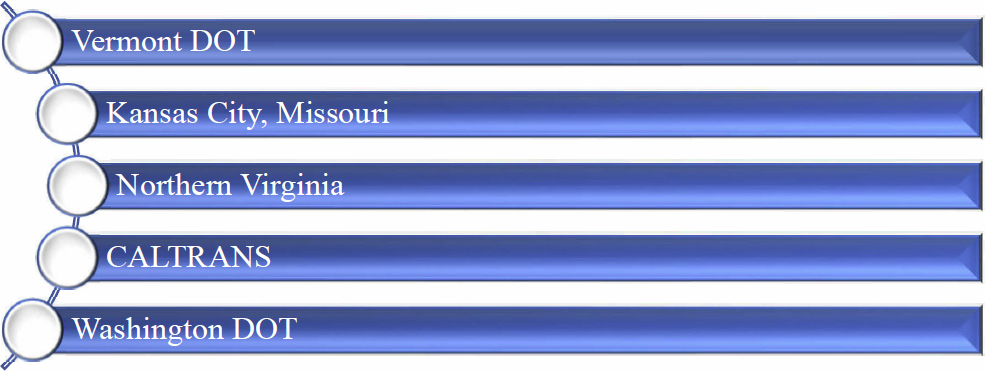
This section provides a detailed summary of the most relevant reports from transit agencies, state DOTs, and other government agencies. These reports were selected for detailed summaries due to the availability of detailed public reports and documentation. The references are summarized by region, beginning with the most recently published reports. The regions are listed in Figure 3.
Vermont DOT
A 2019 report titled “Report on Methods to Increase the Use of Public Transit in Vermont” addressed how to increase transit ridership in Vermont by outlining policy goals, target markets, and a series of recommendations. Specifically, the target markets for increasing transit ridership were people with unmet transportation needs (e.g., older adults, persons with disabilities, low-income individuals, and teenagers) and people who have transportation options but may be open to using transit (e.g., millennials and Generation Z). Several methods to meet the needs of these groups were listed, including increasing evening and weekend transit service, making the convenience of transit competitive with that of driving, improving the comfort and image of transit, improving pedestrian and biker access to transit stops, and making information readily available. The report listed several recommendations for actions to take, including considering a fare-free transit policy (Vermont Agency of Transportation 2019).
A subsequent 2021 report titled “Transit Financing Study” for Chittenden County, Vermont, summarized the then-financial state of Vermont’s transit agencies and suggested potential funding sources for the transit systems. The report pointed out that immediately prior to the COVID-19 pandemic, all VTrans and Vermont transit agencies had eliminated fares in response to the prior (2019) report on methods to increase public transit ridership. The authors noted that in 2019,
Vermont’s urban transit services brought in $2.2 million out of the state’s $2.7 million total fare revenue from transit. Replacing the remaining $500,000 in fare revenue from rural areas would be both feasible and would provide great benefit to the generally less-affluent rural riders. The report discussed some alternative revenue sources ranked from the strongest advantage or positive impact to the strongest disadvantage or negative impact; these included a utility fee, a county property tax, an income tax, a property transfer tax, a payroll tax on employers, a sales tax, a business revenue assessment, and a mortgage recording fee (Chittenden County RPC et al. 2021).
In 2019, Vermont’s rural transit agencies brought in only $500k of Vermont’s $2.7 million in total fare revenue, and eliminating fares would provide great benefit to the generally less-affluent riders.
Transit Financing Study – Chittenden County
A 2023 report titled “Report on Impacts of Zero-Fare Transit Service in State Fiscal Year 2024” quantified the impact on ridership and revenue of continuing Vermont’s statewide fare-free program. Regarding ridership, the authors found that the services most affected by the pandemic were those that carried tourists and commuters, and routes that serve commuters also have recovered more slowly than the services that carry shoppers and tourists. In order to estimate the potential annual revenue foregone by a fare-free policy, ridership was forecasted for fiscal years 2024 (FY24) and 2023 (FY23). Because the demand response services in Vermont have never charged fares, these services were excluded from the forecast. Overall, the reinstatement of fares was forecast to result in a statewide loss of 485,000 trips, most of which would be urban trips. To predict the foregone fare revenue from a fare-free policy, the predicted ridership was multiplied by the average fare per passenger. The authors concluded that continuing fare-free transit in rural areas would result in foregone revenue of $303,000 but an increase in trips of 145,000. In urban areas, continuing fare-free transit would result in a foregone revenue of $1.88 million but an increase in trips of 340,000. The cost of fare collection was also calculated. For the urban areas, the cost of fare collection was about $36,000 (2% of fare revenue). For the rest of the state, the overall cost of fare collection was around $150,000 (29% of fare revenue). The authors recommended that services should remain fare-free in the rural areas but discontinued in the urban areas and for microtransit services (Vermont Agency of Transportation 2023). VTrans has since reinstituted fares for their urban service but is considering alternative local funding sources for public transit (Vermont Agency of Transportation 2024).
Estimated impact of continuing fare-free transit in Vermont:
- In rural areas – $303,000 in foregone fare revenue, 140,000 more trips
- In urban areas – $1.88 million in foregone fare revenue, 340,000 more trips
Report on Impacts of Zero-Fare Transit Service in State Fiscal Year 2024
Kansas City, Missouri
In a pre-implementation report titled “Analysis of Free Busing in Kansas City,” an analysis of the potential benefits of the Kansas City Area Transportation Authority’s (KCATA / Ride KC) fare-free policy was finalized in February 2020. The report concluded that such a policy in the Kansas City area would produce significant economic benefits to the community and riders. An econometric model was used to assess the potential impact of a fare-free policy, and the results estimated the impact of the policy on climate change, ridership, and operations. The conclusions of the analysis were:
- Regional gross domestic product (GDP) could increase anywhere from $13.6 to $17.9 million
- Real estate, healthcare, and wholesale trade may be most significantly impacted by the new regional GDP
- Tax revenue could grow by over $600,000, in large part due to additional sales tax and property tax revenue
- Ninety-five jobs were expected to be created
- Carbon emissions were expected to decrease
- Ridership increases were expected to range from 20% to 50% within the first year (Center for Economic Information at the University of Missouri Kansas City 2020)
In Kansas City, the cost savings from fare collection did not offset the revenue losses or additional costs due to increased paratransit demand. In order for the fare-free policy to be sustainable, additional revenue would need to be identified.
Kansas City Transit Zero-Fare Impact Analysis
In a second, post-implementation report about Kansas City titled “Transit Zero-Fare Impact Analysis,” a 2022 analysis examined the impacts of the fare-free policy to determine if an economic benefit to the community and riders was produced and to determine the necessary policy interventions to ensure the sustainability and positive economic outcome of a fare-free policy. KCATA suspended the collection of fares in 2020 and used the federal CARES Act funding to replace the foregone farebox revenue for 2020 and 2021. Two scenarios for future implementation of a fare-free policy were also considered: a program that could operate with, or without new public funding. Outreach was conducted to stakeholders, including riders, elected officials, and executives of local government and local nonprofits, to determine the quantitative and qualitative benefits of the fare-free policy, as well as measures to enhance or expand the policy (MARC 2022).
Several key findings were determined using an econometric forecast model and a travel demand model. The cost savings from fare collection did not fully offset the $8 to $10 million in revenue losses or the $1.2 million additional costs due to increased service demands from ADA paratransit users. Therefore, for the fare-free policy to be sustainable, additional revenues or new cost savings needed to be found. Thanks to a half-cent transportation sales tax and a three-eight-cent retail sales tax, KCATA holds in reserve $20.7 million, which can be used to fully recover lost fare from the fare-free policy within Kansas City until 2024, when the transportation sales tax expires. Because KCATA contracts with jurisdictions outside of Kansas City, and the reserve from the two sales taxes can only be used within the Kansas City service area, the annual financial losses from a fare-free policy within the region-wide KCATA area could be limited to around 4 to 6 million dollars annually (MARC 2022).
Compared to peer agencies, ridership decreased less and recovered more quickly during the pandemic, due to the fare-free policy and KCATA’s higher share of transit-dependent riders. A 2020 survey revealed that the majority of KCATA’s riders are transit-dependent, people of color, and/or low-income earners, and nearly three-fourths of riders reported not having access to a personal vehicle. The quantitative outcomes of the research are summarized in the callout box to the right. The qualitative and equity outcomes included:
- access for high schoolers to employment and educational enrichment opportunities
- improved reliability to access health care for people without access to private vehicles
- community leaders were primarily supportive of the fare-free policy
- a sales tax would likely result in a small transfer in income from higher-income households to lower-income households
- a reduction in service would not produce an equitable outcome at all and may cause riders to have less access to opportunities than they had before
- disproportionate equity impacts may result if Ride KC’s partners discontinue fare-free transit (MARC 2022)
Quantitative outcomes of KCATA’s fare-free policy:
- 88.3% rider satisfaction
- 17% decrease in security incidents per 100,000 riders (2019-2020)
- Predicted 39% to 44% increase in employment, economic output, and personal income
- Predicted 20% to 60% increase in ridership
- Predicted 7,000 tons less carbon emissions
Kansas City Transit Zero-Fare Impact Analysis
Northern Virginia
A 2021 white paper titled “Zero-fare and Reduced-Fare Options for Northern Virginia” by the Northern Virginia Transportation Commission sought to provide a high-level overview of considerations for the evaluation of fare-free transit on locally operated, fixed-route bus transit systems. Existing policies in Northern Virginia and elsewhere in the US were examined in order to identify key themes. Several key observations regarding the implementation of fare-free transit in Northern Virginia were made. Regional impacts of implementing a fare-free policy were important considerations, given that local bus services in Northern Virginia operate alongside regional systems (Metrobus, Metrorail, Washington D.C. area). The elimination of fares was found to have resulted in ridership increases between 20% and 85%, although, depending on local factors, there has not been strong evidence of mode shift away from the private vehicle. Fare-free policies can reduce operating expenses related to collecting fare, but other expenses may increase due to increased ridership and potential service adjustments. The authors identified Virginia’s Transit Ridership Incentive Program (TRIP) as one potential source of funding to replace lost revenues. However, TRIP and similar programs are typically designed for fixed time periods (TRIP provides funding for only 3 years); therefore, identification of long-term sustainable revenue replacement sources was required. The average farebox recovery ratio in Northern Virginia is 14% for local buses, 65% for commuter buses, and 23% overall. Three agencies in Northern Virginia already implemented or decided to implement fare-free policies/demonstrations (Northern Virginia Transportation Commission 2021).
The Greater Richmond Transit Company required $2 million in operational costs to collect $7 million in fares, and the majority of fares were collected from the most economically distressed members of the community.
Zero-Fare and Reduced Fare Options for Northern Virginia
Case studies of three US agencies with well-established fare-free programs were presented: Greater Richmond Transit Company (GRTC), Charlottesville Area Transit (CAT), and Chapel Hill Transit (CHT) in North Carolina. GRTC considered fare-free transit alongside two means-based reduced-fare programs. The two reduced-fare programs were predicted to increase costs and staff requirements; additionally, the cost of fare collected was already relatively high, requiring $2 million in order to collect $7 million. In the fall of 2019, GRTC identified that approximately 54% of their passengers earned $25,000 or less annually, meaning the majority of the fares were collected from the most economically distressed members of the community. The program was initially funded with COVID funds, and the agency communicated plans to apply for TRIP funding and to search for other sources of funding in order to provide fully fare-free transit indefinitely. GRTC already had automatic passenger counters installed on their vehicles, so there was no loss of data from the decision to eliminate fares. Due to the fare-free policy, GRTC planners were required to adjust route timetables due to travel time savings from faster boardings. GRTC also
implemented a policy that riders must disembark after one full round trip. As a result of the decision, GRTC has shifted focus from ridership recovery to improving connectivity and benefiting the community (Northern Virginia Transportation Commission 2021).
Demand for on-campus and downtown parking in Chapel Hill, NC was reduced, allowing for more residential and commercial development.
Zero-Fare and Reduced Fare Options for Northern Virginia
CAT already had a partnership with the University of Virginia to allow students to ride for free but implemented a fully fare-free policy at the beginning of the pandemic. The policy has been funded using COVID funding (the CARES Act and ARPA) and has initiated a feasibility study aimed at determining the need for additional local funding and their eligibility for TRIP funding (Northern Virginia Transportation Commission 2021).
CHT is one of the world’s largest fare-free transit agencies, carrying around 7.5 million passengers annually. CHT provides service to Chapel Hill, Carrboro, and the University of North Carolina at Chapel Hill (UNC). Prior to 2002, CHT had a fare subsidy program with UNC to allow students and employees to ride “free.” However, UNC concluded that administering the program was too time-intensive, and CHT concluded the farebox recovery from other passengers was so low that they could eliminate fares. Two major benefits have resulted from the policy; in the first year, ridership increased 43% more than the previous year. Additionally, demand for on-campus and downtown parking was reduced, allowing for more residential and commercial development (Northern Virginia Transportation Commission 2021).
CALTRANS
A 2020 report titled “A Review of Reduced and Free Transit Fare Programs in California” aimed to understand the then-use and performance of fare-free and reduced-fare transit by surveying 59 California transit agencies about their practices in the fiscal year 2018 to 2019. Fare-free and reduced-fare programs were grouped according to the demographics of the affected rider group (e.g., K-12 programs, post-secondary school programs, etc.). Therefore, whether any of the agencies had a fully fare-free policy is unclear. Ten major recommendations were made as a result of the study:
- The “insurance” model was found to have the potential to enhance mobility, increase transit ridership, and improve the financial health of the transit agency
- In order to achieve certain goals, such as the reduction of motor vehicle use, fare-free programs were found to be best implemented alongside additional measures, such as measures to increase the cost of driving
- Then-current farebox recovery requirements prevented the implementation of fare-free or reduced programs and ran counter to California’s goals for increasing ridership and reducing greenhouse gas emissions
- The researchers recommended that fare-free or reduced policies be integrated into comprehensive policies that consider the full costs and characteristics of a community member’s transportation options, in order to prevent ridership increase at the expense of active transportation modes like walking and biking
- Understanding the transportation needs, travel preferences, and characteristics of a community was found to be critically important to ensuring a program’s success because, in addition to being accessible, transit should also be convenient, clean, and safe
- The insurance model was found to have the potential to be financially self-sustaining, but additional/external funding should be considered for vulnerable groups such as students, the unemployed, persons with disabilities, older adults, and other low-income groups
- The researchers suggested that successful programs should have simple eligibility criteria, a clear system for monitoring usage, and emerging technologies like smart cards and mobile ticketing
- The changes in the travel behavior of participants to fare-free or reduced-fare programs should be recorded using pilot programs
- Guidelines for California transit agencies for creating and managing fare-free or reduced-fare programs should be created
- A clearinghouse of successful programs should be created for the benefit of agencies considering fare-free or reduced-fare programs (Saphores et al. 2020).
Washington DOT
A 1994 report titled “Fare Free Policy: Costs, Impacts on Transit Service, and Attainment of Transit System Goals” examined the potential costs and benefits of offering fare-free transit using data from Washington state. Overall, experiences with fare-free policies in Washington state were overwhelmingly positive, and the researchers concluded that smaller communities, in particular, were better served by fare-free transit policies. The authors also proposed a conceptual overview of why the removal of fares resulted in larger ridership increases than were predicted by standard fare elasticity models. The cost of implementing a fare-free policy was found to be minimal, and (at the time) half of the transit agencies in Washington were found to have a farebox recovery rate of less than 10%. (Hodge et al. 1994).
Three major questions were addressed in the report:
- what is the net cost of a fare-free policy,
- what is the impact of fare-free policies on ridership and quality of service, and
- how will a fare-free policy affect the attainment of a transit agency’s goals (Hodge et al. 1994).
Agencies with a low farebox recovery ratio were found to gain no net usable income by collecting fares due to the cost of fare collection. Agencies reported very few problems with disruptive riders, particularly in small communities or communities with policies of education for student riders and suspension of riding privileges for problem riders. Regarding the quality of service, the removal of the fare box resulted in the elimination of farebox disputes, and driver conflicts with passengers. The authors mention that some passengers act as if paying a fare gives them a right to abuse drivers. However, the lack of fare could result in a lack of ownership/responsibility in riders, which could result in decreased driver satisfaction. Another concern is that overcrowding on buses could lead to decreased rider and driver satisfaction. Overall, the study suggested that the negative aspects of fare-free policies may be overemphasized and that factors that influence these issues include the presence of policy adjustments to prevent and deal with disruptive riders, whether or not the agency began as a fare-free agency or if it
Instead of the farebox recovery ratio, a better measure to gauge a system’s effectiveness may be the cost per rider over time or the cost per new rider.
Fare Free Policy: Costs, Impacts on Transit Service, and Attainment of Transit System Goals
converted to fare-free, and agency personnel/management commitment to the program. Regarding boarding time, the study suggested that although aggregate boarding time may increase, average boarding time is likely to decrease by as much as 18%; however, if the vehicles become overcrowded, there may be an overall negative impact on boarding time, which may impact an individual’s choice to use transit (Hodge et al. 1994).
Last, the authors argue that measuring a system’s effectiveness based on the farebox recovery ratio is counterproductive, because to improve the farebox recovery ratio, transit agencies may raise fares which decreases ridership. Instead, a better measure may be cost per rider over time (e.g., before and after the implementation of a fare-free policy) or cost per new rider. Fare-free transit was not found to have a substantial impact on air quality on its own but could be combined with land use policy and transportation demand management (Hodge et al. 1994).
Literature Review Part 4
Nearly every US transit agency actively offers or has offered in the past some form of partially fare-free transit; the most common forms of fare-free policies are “children under 5 ride free,” free downtown circulators/historic trolleys, fare-free university transit systems or U-Pass programs, and, with the onset of the pandemic, temporary fare-free policies designed to reduce the spread of COVID. Some states have programs that aim to facilitate fare-free transit for certain rider groups on a statewide scale. For example: Washington state offers a transit support grant to agencies who implement a fare-free policy on all their modes for youth aged 18 and under (Washington State Department of Transportation N.D.); Illinois State offers fare-free transit benefits to older adults and people with disabilities who have a low income (Illinois Department on Aging N.D.); and Pennsylvania State has a program that allows all adults aged 65 and up to ride fixed-route transit for free (Pennsylvania Department of Transportation N.D.). Although most transit agencies seem to offer partially fare-free transit, there are few publicly available agency reports of the quantitative impacts of these partially fare-free policies on their ridership, revenue, or other metrics of agency performance. Reports that mention the quantitative impacts of partially fare-free transit generally estimate the potential impacts of several possible fare scenarios that a transit agency could consider (IceMiller 2020, Nelson-Nygaard 2023). Several academic studies and TCRP reports have included some examination of the qualitative impacts of partially fare-free transit, especially for specific rider groups or in specific geographic locations/on certain modes (Boyle et al. 2011, Burkhardt 2002, Ellis et al. 2014, Kruger et al. 2008, Zapata et al. 2023). This section provides a brief summary of some of the TCRP reports, academic studies, and agency reports that included a discussion of partially fare-free transit from the US.
Why (not) Abolish Fares? Exploring the Global Geography of Fare-Free Public Transit
In his 2019 article, Wojciech Kębłowski outlined four major types of partially fare-free transit: temporary, temporally limited, socially limited, and spatially limited. Kębłowski defined these different types of policies as follows:
- Temporary fare-free transit is when fares are temporarily abolished for a period of time lasting between one and 12 months,
- Temporally limited fare-free transit is when fares are not charged in specific and regular
- Socially limited fare-free transit is when fares are not charged for specific groups of riders, such as children, youth, students, persons with disabilities, or older adults, and
- Spatially limited fare-free transit is when fares are not charged on specific sections of a transit network, on certain modes, or on systems with so few routes that they cannot be considered to be network (Kębłowski 2019).
time periods (in this report, temporary fare-free transit policies were grouped under the temporally limited fare-free umbrella for simplicity),
Figure 4 below provides a summary of the various types of partially fare-free policies discussed in this report. The following sections describe specific examples from the US of each policy (Kębłowski 2019).

TCRP Research Report 237: Fare-Free Transit Evaluation Framework
The 2022 TCRP report on fare-free transit described 10 case studies of agencies with partially fare-free transit policies. The key findings of these case studies are summarized in Table 3 (Kirschen et al. 2022).
Table 3 - Summary of Partially Fare Free Case Studies from TCRP Research Report 237 (Kirschen et al. 2022)
| Agency | Partially Fare-Free Policy Type | Details of Policy | Evaluation/Outcomes | Revenue Loss/Funding Info |
| Denver Regional Transportation District | Socially and spatially limited | Fare-free on two routes in the central business district and for: children; active-duty military; law enforcement; RTD employees/depend ents, contractors, retirees, and board members; ADA paratransit-approved riders and their aides | N/A | N/A, always fare-free on certain routes and for certain passengers |
| Houston Metro | Socially limited | Older adults, paratransit-eligible, qualified disabled, decorated veterans, children under 6, jurors, and Metro employees/their spouses | Estimated over $100 million in capital costs due to additional ridership | N/A |
| Iowa City Transit | Socially limited | People with disabilities, older adults, Medicare card holders, paratransit card holders, children under 5 | Estimated increase in annual costs of $1.3-$1.4 million for fixed-route and $745k-$872k for paratransit | Estimated revenue loss of $50k |
| Los Angeles Metro | Temporally, socially, and spatially limited | 2-year pilot for K-12 and community college students in participating school districts | In the first 4 months, over half a million student passes distributed (highest previous number was 90,000) | Cost sharing with schools and partner transit agencies; possible federal funding and the California Cap and Trade funds for Low Carbon Transit Operations |
| Program | ||||
| Massachusetts Bay Transportation Authority | Temporally and spatially limited | 2-year pilot of fare-free transit on three routes | Ridership increases, dwell times decreased about 20%, and 20% of riders saved more than $20/month | $8 million in federal funds |
| Ride On (Montgomery County, MD) | Temporally and socially limited | Suspended all fares during COVID until 2023, but fare-free for older adults and K-12 students | N/A | Federal COVID-19 relief funding |
| San Francisco MUNI | Socially limited | Youth, some students, people with disabilities, low-income older adults, unhoused people | No increase in ridership or crowding, but fewer fare disputes | General funds and a one-time 16-month grant from Google for the youth program |
| Sandy Area Metro (Greater Sandy, OR) | Spatially limited | Fare-free on local routes only | N/A | Payroll taxes, federal funds, state and local funds |
| Steamboat Springs Transit (Steamboat Springs, CO) | Spatially limited | Fare-free on local routes only | 30% increase in fixed-route ridership and more than 100% increase in paratransit ridership; significantly reduced dwell times; similar operational budget | Sales tax/local municipality’s general fund |
| Utah Transit Authority | Temporally and spatially | Fare-free during times of poor air quality and on BRT routes for 3-6 years | Some complaints of disruptive riders and homelessness; significant increases in ridership during Fare-Free February | Fare-free BRT provided by a city grant, and Fare-Free February paid for through partnerships with regional governments, educational institutions, corporations, etc. |
TCRP Research Report 242: Homelessness: A Guide for Public Transportation
Another recent TCRP report investigated fare-free policies implemented by some transit agencies to provide support to unhoused populations. The report found that some transit agencies engaged in collaborative efforts with local homeless shelters to link unhoused individuals with necessary services, temporary shelter, or supportive housing by providing fare-free transportation. For example, BART worked with the San Francisco International Airport to provide transit passes to unhoused individuals at late hours to help connect them with shelter. The report also found that some agencies established partnerships with non-profit organizations and service providers to offer free transit passes to facilitate trips to healthcare clinics and other essential services. Some agencies engaged in public-private collaborations with transportation networking companies like Uber and Lyft to help bridge gaps in areas not covered by regular transit lines, for example, by providing free trips to grocery stores. The report found that ongoing communication with city partners, homelessness support service providers, and housing providers enabled transit agencies to better support unhoused populations by identifying key locations in their service areas, facilitating better service to individuals in need, and supporting efforts to transition them into more stable and permanent housing (Zapata et al. 2023).
TCRP Synthesis 87: Practices in the Development and Deployment of Downtown Circulators
A 2011 TCRP synthesis summarized the practices of downtown circulator systems. Twenty-three out of 42 surveyed agencies reported that their downtown circulator was fare-free. These programs have been shown to be effective in increasing ridership and reducing traffic congestion. Some examples of fare-free downtown circulators include: the Portland Streetcar, which has been credited with helping to revitalize the downtown area; the KC Streetcar (Kansas City), which has been shown to increase ridership and reduce traffic congestion; and the Olympia, which has been shown to increase ridership and improve air quality. The study concluded that downtown circulators are most successful when they are designed to meet the specific needs of their communities, fare-free programs can be a cost-effective way to increase ridership and reduce traffic congestion, and effective marketing and promotion are essential for the success of any downtown circulator program (Boyle 2011).
TCRP Synthesis 78: Transit Systems in College and University Communities
A TCRP synthesis from 2008 examined transit systems in university communities. The study found that of the survey participants, 40% of universities offered free local bus rides to students, 60% of universities offered free on-campus circulator rides to the general public, and 51% of universities offered a U-Pass program, subsidizing transit costs for faculty, staff, and students. For example, in Ames, Iowa, a partnership was established between Ames Transit Agency, Iowa State University, and the university’s student government. The result of the partnership is called CyRide, which is free for university students. When free fares were implemented in 2003, ridership increased by 57%. Another example is the University of Massachusetts Transit in Amherst, which has been fare-free for students since its inception in 1969. At the time of the study, the transit system had an annual budget of $4 million, with 25% coming from student fees, 12% from parking permit revenue, and the rest from the state. The system had a 40% student and 60% faculty commute mode share and saw 5% yearly increases in ridership (Krueger et al. 2008).
The following reports detail recent partially fare-free programs at US transit agencies; it should be noted that these were selected as examples of partially fare-free programs because they have readily available reports or documentation (e.g., on the Internet). A summary of the agencies discussed is shown in Figure 5.

Boston, MA
MBTA is currently running a fare-free program on Routes 23, 28, and 29 for 2 years, from March 1, 2022, to February 29, 2024. The program is funded with $8 million in federal funds from the City of Boston via the ARPA. Most of the riders on these routes are transit-critical, i.e., residents who have a low income, are people of color, are older adults, have disabilities, or have little to no access to a vehicle. MBTA has reported several benefits of the program, including:
- 26% of MBTA’s riders were found to save $20 or more per month,
- From Fall 2021 to fall 2022, ridership on the three fare-free routes increased 35%, whereas systemwide ridership increased only 15% over the same period of time,
- 15% of the fare-free ridership increase are trips that would not have been taken had the rider needed to pay a fare,
- Forty-two percent of MBTA riders reported saving money due to the fare-free program,
- From May to October 22, 10% more people (from 9% to 19%) said they were new to riding MBTA, and
- Dwell times on the three fare-free routes have decreased by 6% to 23% (City of Boston 2023).
Benefits of fare-free transit on three transit-critical routes in Boston:
- 26% of MBTA’s riders were found to save $20 or more per month,
- From Fall 2021 to fall 2022, ridership on the three fare-free routes increased 35% whereas systemwide ridership increased only 15% over the same period of time,
- 15% of the fare-free ridership increase are trips that would not have been taken had the rider needed to pay a fare,
- Forty two percent of MBTA riders reported saving money due to the fare-free program,
- From May to October 22, 10% more people (from 9% to 19%) said they were new to riding MBTA, and
- Dwell times on the three fare-free routes have decreased by 6% to 23%
MBTA’s Fare-Free Program Mid Program Report
Salt Lake City, Utah
The Salt Lake City Utah Transit Authority (UTA) conducted a month-long demonstration of fare-free transit in February 2022 called Fare-Free February. The fare-free transit was for all modes that UTA offers, including the bus, Trax (light rail), ski bus (bus that serves ski resorts), microtransit, Frontrunner (commuter rail), Park City Commuter (commuter bus), and paratransit. The demonstration was proposed in order to reduce emissions during a time of the year with poor air quality and to honor the history of the Salt Lake Olympics. The funding sources included the city, county, and state, as well as funding from the Mountainland Association of Governments, the Wasatch Front Regional Council, and pass partners (such as universities and businesses subsidizing fares for passengers). The agency raised $1,113,000 from local government organizations and $1,400,000 from past partners to make up for the revenue loss in February, which was estimated to range from $2.2 to $2.4 million. The UTA experienced an average ridership increase of 16.2% on weekdays, 58.1% on Saturdays, and 32.5% on Sundays, noting that Frontrunner and the express bus/BRT (UVX) do not operate on Sundays. All modes except UVX, a service that was already fare-free, had substantial increases in ridership (UTA 2022).
Average ridership increases:
- Weekdays – 16.2%
- Saturdays – 58.1%
- Sundays – 32.5%
Utah Transit Authority’s Free Fare February Final Report
UTA’s major ridership takeaways were:
- ridership increased on nearly all modes, especially on weekends,
- time of day ridership stayed consistent, with some observable increases in mid-day and afternoon riding on weekends on the light rail and commuter rail, and
- several stations, such as major destinations and transfer points, had higher-than-average ridership increases (UTA 2022).
UTA conducted a rider survey, the results of which are shown in Table 3, to determine who was taking advantage of the fare-free demonstration; the survey results showed that existing users made more trips and there were many more new riders. UTA also commented that additional staff may be required to assist new riders in navigating the system, support riders with economic and social challenges, and ensure rules for rider behavior are clear (UTA 2022).
Table 2 - UTA Rider Survey Responses (UTA 2022)
| Theme | Benefit | Cost |
|---|---|---|
| Rider statistics | + 95% knew about Fare-Free February + Over half were riding because it was free + Over a fifth were new riders: 70% were riding because it was free, and half were riding for entertainment or work | − N/A |
| Feedback | + 81.8% positive + Comments on: cost-effectiveness, quality of life / public good, convenience, environment / air quality, and access | − Comments on: rider behavior, homelessness, cleanliness, convenience (delays / reliability), and safety / security |
| Outcomes | + 17% decrease in customer service calls + Decrease in calls for police + Estimated 12 tons (21.4%) decrease in air pollutant | − Slight increase in calls generated through police dispatch |
Since UTA’s Fare-Free February demonstration, the agency has continued to run another ongoing fare-free initiative to improve air quality. The project is called “Zero Fare for Clean Air,” and has in the past applied to all UTA bus and rail services. The project is funded by the Utah State Legislature. In September 2022, the Zero Fare Days resulted in ridership increases of 12.7% on buses, 9% on commuter rail, and 5.9% on light rail (UTA’s light rail was already fare-free at the time of this project). In 2023, UTA announced another set of fare-free days. GREENbike, a bikeshare company, also offered free trips during this demonstration. UTA determines when to offer fare-free days by partnering with the Utah Division of Air Quality, so that fare-free days can be offered when the ozone levels and particulate matter levels are forecasted to be unhealthy (Maynes 2023).
Denver, CO
In 2023, Denver RTA ran a “Zero Fare for Better Air” initiative, which provided fare-free transit on all of RTA’s modes for the months of July and August. The initiative emerged from the Ozone Season Free Transit Grant Program in the Colorado Energy Office, which covered almost all of RTA’s lost revenue and other costs. Additionally, RTD has now implemented, as of September 2023, a “Zero Fare for Youth” pilot, which will run through August 31, 2024. The results of the Zero Fare for Better Air initiative are discussed in this report (Regional Transportation District 2023).
RTA saw a daily reduction of:
- 145,000 vehicle miles traveled out of an average of 83 million
- 42 lbs. of volatile organic compounds
- 38 lbs. of NOx
- 99,300 lbs. of greenhouse gases
Zero Fare for Better Air 2023 Evaluation Report
RTD described several benefits of its zero-fare program. There was an estimated 12% increase in ridership over expected ridership increase. The ridership increase had a marginally positive impact on greenhouse gas emissions; over the two-month pilot, RTD estimated a reduction of: 9 million vehicle miles traveled, 2,500 lbs. of volatile organic compounds, 2,300 lbs. of NOx, and 6.1 million lbs. (about 2766911.2 kg) of greenhouse gases. RTD’s cost savings due to not collecting fare amounted to $16k, which came from savings in sales commissions to vendors who sell RTD fare and reduced printing of fare media. 21% of operators reported fewer fare disputes, and 20% reported faster boarding times (Regional Transportation District 2023).
RTD also reported several costs associated with their fare-free program. There was an overall increase in paratransit demand of 15%. Over the course of the two-month demonstration, RTS forewent an estimated $15.2 million in fare revenue, about $13.9 million of which was reimbursed by the Zero Fare for Better Air initiative. In some cases, fare collection costs increased due to the labor costs required to take the electronic fare collection system offline and bring it back online again. RTD also provided partial credits to employers, neighborhoods, and academic institutions to cover their EcoPass/Neighborhood EcoPass/CollegePass payments. RTD did not need to increase service due to overcrowding, although there was an increase in customer complaints about overcrowding. Customer complaints of cleanliness at stops and on vehicles nearly doubled. More than 28% of operators reported an increase in disruptive behavior by riders (Regional Transportation District 2023).
Regarding crime, RTD saw a 64% decrease in arrests but did see a 66% increase in criminal mischief/property damage reports, a 33% increase in trespassing, a 20% increase in assaults, a nearly 40% increase in security incidents, 75% increase in vandalism, and 40% increase in biohazard incidents. However, RTD noted that their incident reporting procedures have changed from 2022 to 2023, which would have caused their incident reporting rates to increase anyway,
making year-to-year comparisons difficult. Additionally, reports of narcotics use decreased by 27%, and general disturbance reports decreased by 6% (Regional Transportation District 2023).
Illinois State
A 2012 study aimed to estimate the potential increase in demand and associated costs if a fare-free policy were implemented for ADA complementary paratransit service in Illinois. The study used local knowledge about ADA complementary operations in Illinois with an ordinary least squares regression model to estimate the demand for trips due to a fare-free policy. The study found that the average annual increase in ADA trips was estimated to range from 121% to 153% in the Chicago area and 191% to 323% statewide. The authors noted that the predicted increases would not necessarily be caused by induced demand, but rather could be due to latent demand and demand shift from fixed-route transit to paratransit. Compared to the 2007 baseline total cost of $99.3 million, the estimated cost due to increased demand was estimated to be between $123.9 million and $160.6 million. Other potential impacts included: increased operational challenges due to higher demand, diversion of riders from fixed-route transit to paratransit, and potential benefits for social equity and accessibility (Metaxos et al. 2012).
Costs and Benefits of Complementary ADA/Paratransit Service in Illinois:
- Average annual increase in trips of 121%-153%
- Increase in annual costs from $99.3 million to $123.9-160.6 million
Cost Estimation of Fare-Free ADA Complementary Paratransit Service in Illinois
Montgomery County, Maryland
The Montgomery County DOT (MCDOT, D.C. area, Maryland) implemented a fare-free policy at the beginning of the pandemic (March 2020) and examined the viability of a permanently fare-free or reduced-fare policy in a 2021 report titled “Ride On Zero and Reduced Fare Study.” The goal of such a policy would be to provide equity to low-income riders by reducing their financial burden and improving their access to opportunities. The authors developed an index of benefits in order to measure the magnitude of benefits from the two fare scenarios. The index of benefits is equal to the number of transit-dependent adults in a household, multiplied by their percent reduction in annual transit cost, multiplied by a financial stress factor (annual expenses divided by annual income) (IBI Group 2021).
While the average annual median income in Montgomery County was $108k, and the annual cost of living was estimated to be $69.8k, the estimated median income for Ride On riders was only $35k.
Ride On Zero and Reduced Fare Study
The focus of the 2021 report was on MCDOT’s Ride On passengers, who tended to be lower-income riders, two-thirds of whom were estimated not to have access to a personal vehicle. While Montgomery County residents were found to be mostly affluent, with an annual median income of $108,000 and an annual cost of living estimated to be $69,826, the majority of Ride On riders were found to earn less than $50,000 annually. The estimated median income for Ride On riders was $35,000. A survey revealed that most lower-income riders made no transfers or transferred to another Ride On line, while most higher-income riders used Ride On as feeder buses to transfer onto the Metrorail to Washington, D.C. Likely due to the state of Virginia’s TRIP which has set aside $40 million for agencies to pilot fare-free policies, agencies in Virginia tended to have a strong interest in continuing fare-free policies (IBI Group 2021).
A fully fare-free policy was estimated to save riders $1,248 per adult annually, or 7.1% of their estimated median income.
Ride On Zero and Reduced Fare Study
Also in the report, the authors compared MCDOT with the bus services of 22 transit agencies, only two of which implemented or had plans to implement a fare-free policy. The results suggested that MCDOT aligns more closely with agencies that have implemented means-tested policies (reduced fares for low-income riders), but agencies serving higher-income communities may be more financially capable of implementing fare-free transit. The authors concluded that a fully fare-free policy would result in an average annual savings of $1,248 per adult (six round trips per week), which is 7.1% of the annual median Ride On passenger income of $35,000. The fully fare-free policy was estimated to cause the annual operating and maintenance costs to increase by $20.5 million or $19.52 per capita, and ridership was predicted to increase to slightly above pre-pandemic levels. Last, the implementation of a fare-free policy was not expected to significantly change the operating speed, customer satisfaction levels, fuel economy, or vehicle miles traveled on highways, and nuisance passengers were not expected to be a problem (IBI Group 2021).
REFERENCES
Boyle, D. TCRP Synthesis 87: Practices in the Development and Deployment of Downtown Circulators. Transportation Research Board of the National Academies, Washington, DC, 2011.
Bull, O., Munoz, J. C., and Silva, H, E. The impact of fare-free public transport on travel behavior: Evidence from a randomized controlled trial. Regional Science and Urban Economics. 2021.
Burkhardt, J. E., A. T. McGavock, C. A. Nelson, and C. G. B. Mitchell. TCRP Report 82: Improving Public Transit Options for Older Persons, Volume 2: Final Report. Transportation Research Board of the National Academies, Washington, DC, 2002.
Cats, O., Y. O. Susilo, and T. Reimal. The prospects of fare-free public transport: evidence from Tallinn. Transportation, Vol. 44, 2017, pp. 1083-1104.
Center for Economic Information at the University of Missouri Kansas City. Analysis of Free Busing in Kansas City. Kansas City Area Transportation Authority. Accessed January 21, 2023. 2020.
Chittenden County RPC, and I. Steadman Hill Consulting. Transit Financing Study. Vermont, 2021.
City of Boston. City of Boston Fare Free Program: Mid Program Report. 2023. https://www.boston.gov/sites/default/files/file/2023/03/Fare%20Free%20Mid%20Program%20Report.pdf. Accessed December 7, 2023.
Ellis, E., H: Menninger, R. Glauthier, V. Sedig, B. Hamby, H. Chase, J. Quan, and B. Powell. TCRP Report 164: Community Tools to Improve Transportation Options for Veterans, Military Service Members, and Their Families. Transportation Research Board of the National Academies, Washington, DC, 2014.
FTA. Formula Grants for Rural Areas - 5311. https://www.transit.dot.gov/rural-formula-grants-5311. Accessed January 29, 2023. N.D.
Hess, D. B. Decrypting fare-free public transport in Tallinn, Estonia. Case Studies on Transport Policy, 5(4), 2017, pp 690-698.
Hodge, D. C., I. James D. Orrell, and T. R. Strauss. Fare-Free Policy: Costs, Impacts on Transit Service, and Attainment of Transit System Goals. Washington State Department of Transportation. 1994. Accessed January 21, 2023.
IBI Group. Ride On Zero & Reduced Fare Study. Montgomery County DOT. 2021. Accessed January 21, 2023.
IceMiller. Fare-Free Transit Analysis. 2020. https://www.cota.com/static/35d3ec4e17fa64fd3256de31c8151b60/COTA-no-fare-transit-study.pdf. Accessed December 6, 2023.
Illinois Department on Aging. Free Ride Transit Benefit. https://ilaging.illinois.gov/benefitsaccess/ride-free-transit-benefit.html, Accessed December 6, 2023.
Kębłowski, W. Why (Not) Abolish Fares? Exploring the Global Geography of Fare-Free Public Transport. Transportation, 2019, pp. 2807-2835.
Kirschen, M., A. Pettine, M. Adams, and H. Persaud. TCRP Research Report 237: Fare-Free Transit Evaluation Framework. Transportation Research Board of the National Academies, Washington, DC, 2023.
Krueger, T., and G. Murray. TCRP Synthesis of Transit Practice 78: Transit Systems in College and University Communities. Transportation Research Board of the National Academies, Washington, DC, 2008.
MARC. Transit Zero Fare Impact Analysis. Kansas City Area Transportation Authority. Accessed January 21, 2023. 2022.
Maynes, M. UTA announces fare free days Thursday and Friday. https://kslnewsradio.com/2030082/uta-fare-free-days/. Accessed December 7, 2023. 2023.
Metaxatos, P., and L. Dirks. Cost Estimation of Fare-Free ADA Complementary Paratransit Service in Illinois. Journal of Public Transportation, Vol. 15, No. 4, 2012, pp. 67-85.
Nelson-Nygaard. Regional Zero-Fare Study. https://wfrc.org/Studies/ZeroFareTransit/ZeroFareTransitStudy_FinalReport.pdf. Accessed December 6, 2023. 2023.
Northern Virginia Transportation Commission. Zero-Fare and Reduced-Fare Options for Northern Virginia Transit Providers. Northern Virginia Transportation Commission. Accessed January 21, 2023. 2021.
Pennsylvania Department of Transportation. Seniors and Persons with Disabilities. https://www.penndot.pa.gov/TravelInPA/PublicTransitOptions/Pages/Seniors-and-Persons-With-Disabilities.aspx#:~:text=The%20free%20transit%20program%20allows,senior%20citizen%20transit%20identification%20card. Accessed December 6, 2023. N.D.
Perone, J. S. Advantages and Disadvantages of Fare-Free Transit Policy. National Center for Transportation Research, Tampa, FL, 2002.
Regional Transit District. Zero Fare for Better Air 2023 Evaluation Report.https://cdn.rtd-denver.com/image/upload/v1701363542/2023_ZFBA_Evaluation_Report_2023.11.27_54_mukmbl.pdf. Accessed December 7, 2023. 2023.
Saphores, J.-D., D. Shah, and F. Khatun. A Review of Reduced and Free Transit Fare Programs in California. University of California Institute of Transportation Studies. Accessed January 21, 2023. 2020.
Shen, J. X., & Zheng, S. K. Fare-free public transit service: experience from Gaoping City of China. Advances in Transportation Studies. 2015.
Storchmann, K. Externalities by Automobiles and Fare-Free Transit in Germany - A Paradigm Shift? Journal of Public Transportation, Vol. 6, No. 4, 2003, pp. 89-105.
Studenmund, A. H., and D. Connor. The fare-free transit experiments. Transportation Research Part A, Vol. 16, No. 4, 1982, pp. 261-269.
USDOT. Report to Congress Concerning the Demonstration of Fare-Free Mass Transportation. 1975.
Utah Transit Authority. Fare Free February Final Report. Utah Transit Authority. Accessed January 21, 2023. 2022.
Vermander, M. Exploring Fare-Free Public Transport in Brazil (Master’s thesis). 2021.
Vermont Agency of Transportation. Report on Methods to Increase the Use of Public Transit in Vermont. The Vermont House and Senate Committee on Transportation, Vermont, 2019.
Vermont Agency of Transportation. Report on Impacts of Zero-Fare Transit Service in State Fiscal Year 2024. The Vermont House and Senate Committees on Transportation, Vermont, 2023.
Vermont Agency of Transportation. Report on Funding Sources for Public Transit Nonfederal Match. The Vermont House and Senate Committees on Transportation, Vermont, 2024.
Volinski, J. TCRP Synthesis of Transit Practice 101: Implementation and Outcomes of Fare-Free Transit Systems. Transportation Research Board of the National Academies, Washington, DC, 2012.
Washington State Department of Transportation. Transit Support Grant. https://wsdot.wa.gov/business-wsdot/grants/public-transportation-grants/grant-programs-and-awards/transit-support-grant. Accessed December 6, 2023. N.D.
Zapata, M., J. MacArthur, A. Rockhill, and R. Petean. TCRP Research Report 242: Homelessness: A Guide for Public Transportation. Transportation Research Board of the National Academies, Washington, DC, 2023.


