Origins, Worlds, and Life: Planetary Science and Astrobiology in the Next Decade (2023)
Chapter: Current NSF Activities
Current NSF Activities
NSF supports a variety of programs and facilities of direct relevance to astrobiologists and planetary scientists. Perhaps the best known of these facilities are the optical and infrared ground-based telescopes of the National Optical–Infrared Astronomy Research Laboratory (NOIRLab) and the radio telescopes of the National Radio Astronomy Observatory (NRAO). A notable omission from this list is the National Astronomy and Ionosphere Center, which operated Arecibo Observatory in Puerto Rico. The collapse of Arecibo’s iconic radio telescope in 2020 left a major gap in U.S. capabilities, particularly for radar observations of solar system bodies.
National Optical–Infrared Astronomy Research Laboratory
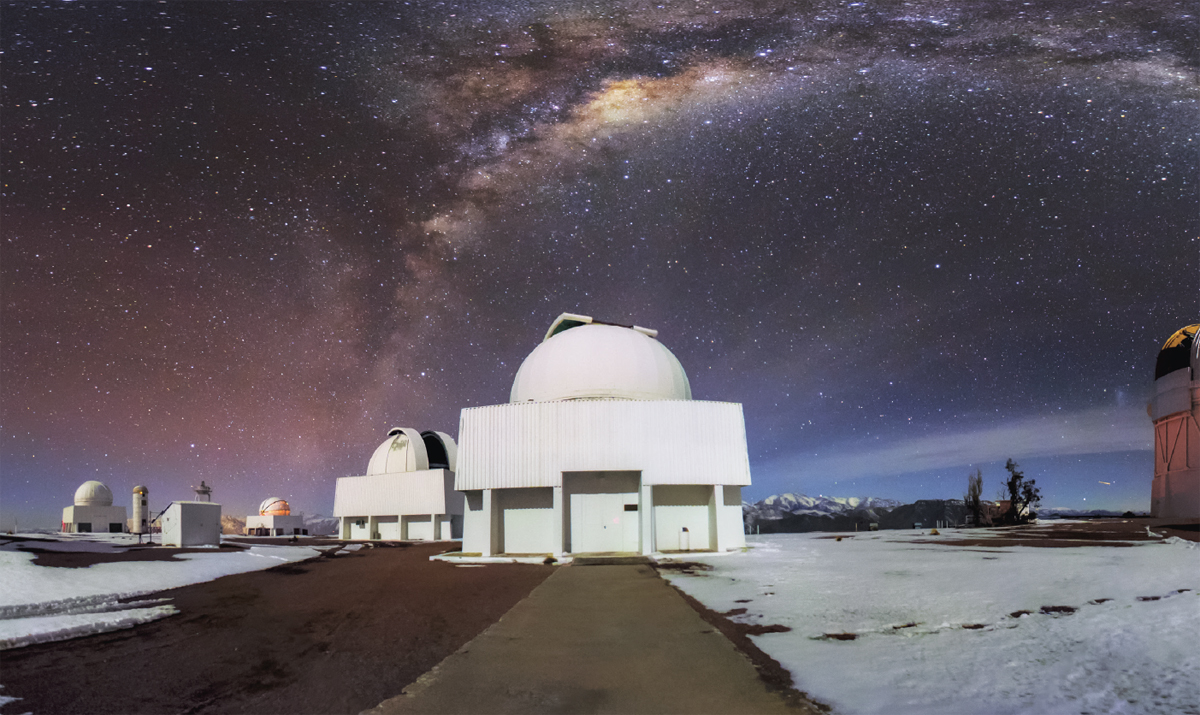
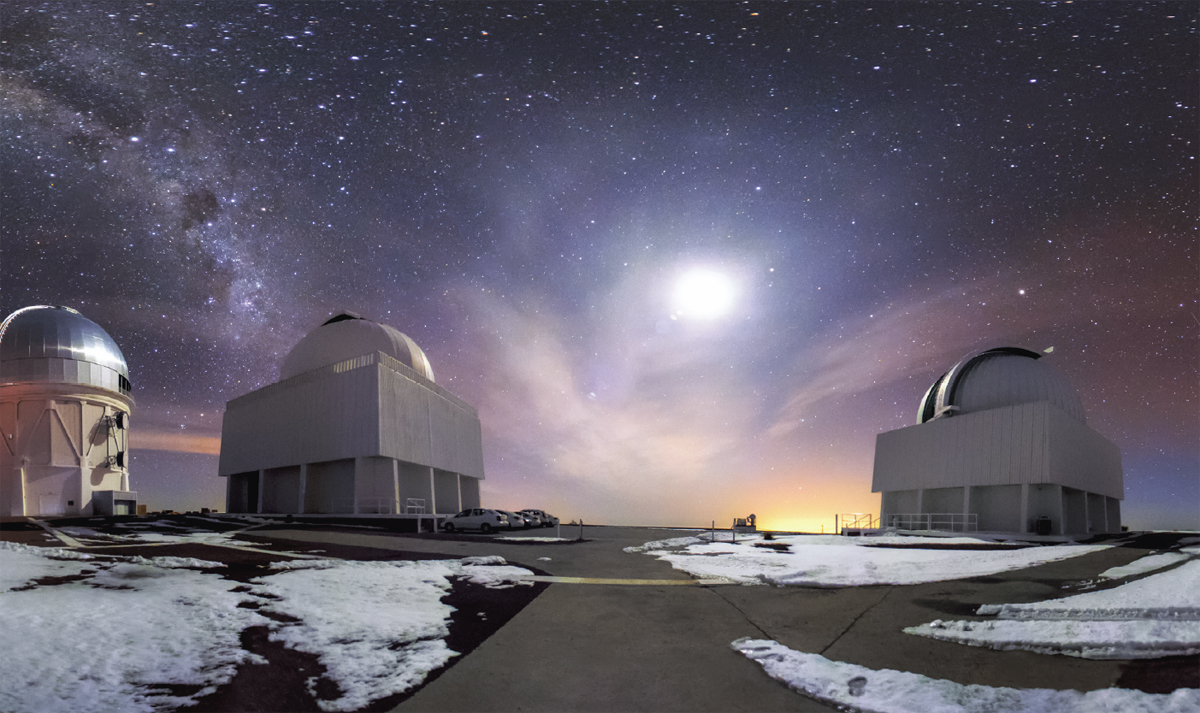
NOIRLab operates Kitt Peak National Observatory in Arizona, Cerro Tololo Inter-American Observatory (Figure 13) in Chile, the International Gemini Observatory with twin 8.1 m telescopes in Hawaii and Chile, the Vera C. Rubin Observatory currently under construction in Chile (Figure 14), and the Community Science and Data Center. NOIRLab also runs the U.S. Extremely Large
FIGURE 13 (Above) The Milky Way arches over the telescopes of Cerro Tololo Inter-American Observatory, a component of NSF’s National Optical–Infrared Astronomy Research Laboratory. The central silvery dome is that of the 4-meter Blanco Telescope.
Telescope (ELT) Program, a joint activity with national and international consortia building the planned Thirty Meter Telescope and Giant Magellan Telescope. These ELTs will enable such activities as imaging selected exoplanets, providing high-resolution images and spectra of the satellites of the giant planets, and monitoring Pluto’s atmosphere over time.
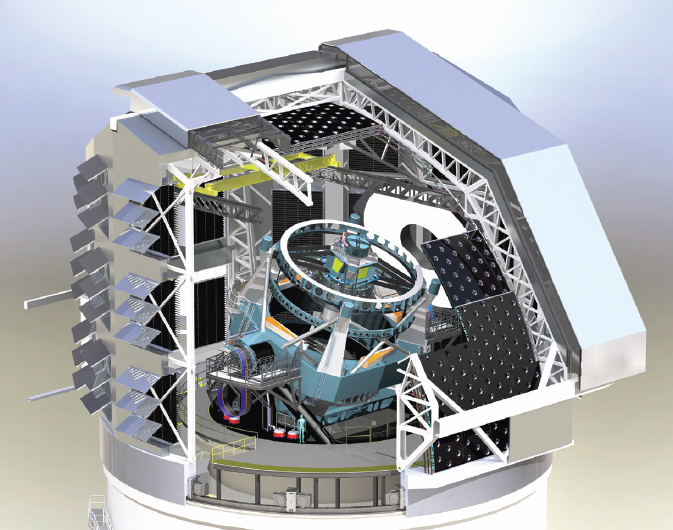
Ground-based telescopes have the benefit of longevity, and their capabilities can evolve as scientific needs require and instrument technologies improve. And while spacecraft suffer from power, mass, and volume constraints, ground-based telescopes face no such limits. Therefore, the largest telescopes on Earth have superior light-gathering abilities compared to their space-based counterparts. But they view the universe through Earth’s turbulent atmosphere.
National Radio Astronomy Observatory
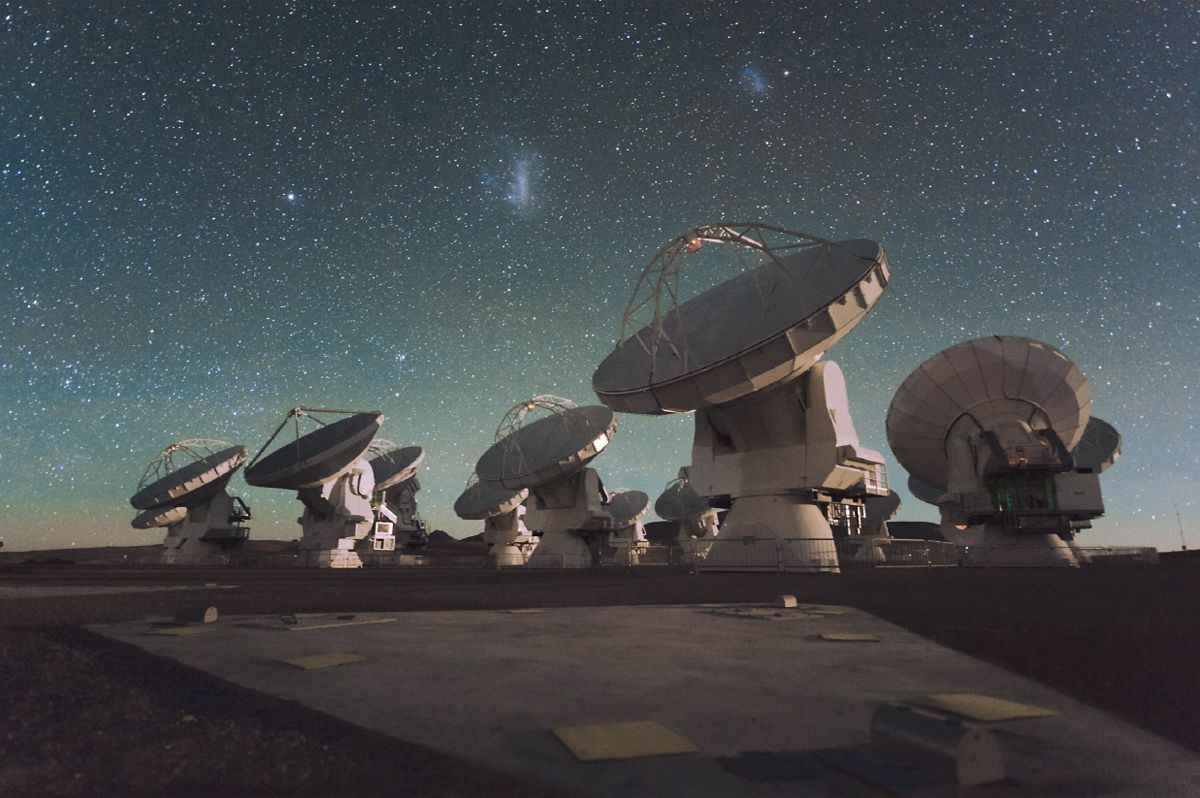
NRAO supports the Very Large Array (VLA) in New Mexico, the 10 antennas of the Very Long Baseline Array (VLBA) scattered across the United States from the Virgin Islands to Hawaii, and the Atacama Millimeter Array (ALMA) in Chile (Figure 15). NRAO is also planning a new initiative called the Next Generation Very Large Array to replace the VLA and VLBA with a new radio array that is 10 times more sensitive. Closely affiliated with NRAO is the Green Bank Observatory in West Virginia, home to the 100-meter-aperture, fully steerable Green Bank Telescope (GBT). After having been outfitted with a 700 W, high-frequency transmitter, the GBT can transmit radar signals whose return signals are detected by the VLBA. This process was used to support NASA’s Double Asteroid Redirection Test (see Figure 47 later in this publication), part of its planetary defense program.
Other NSF Activities
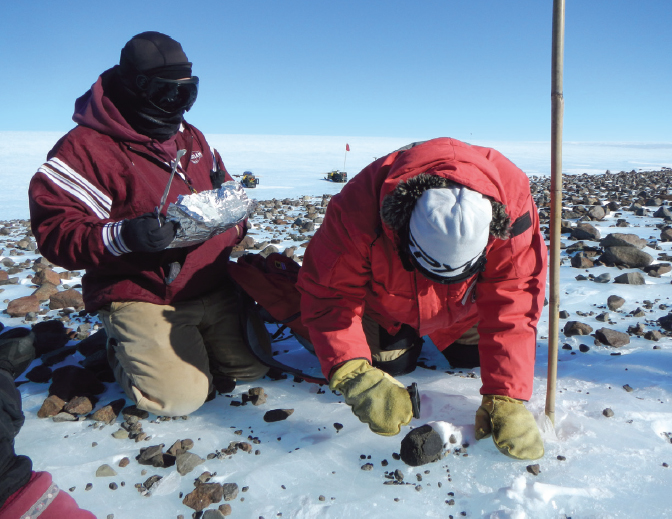
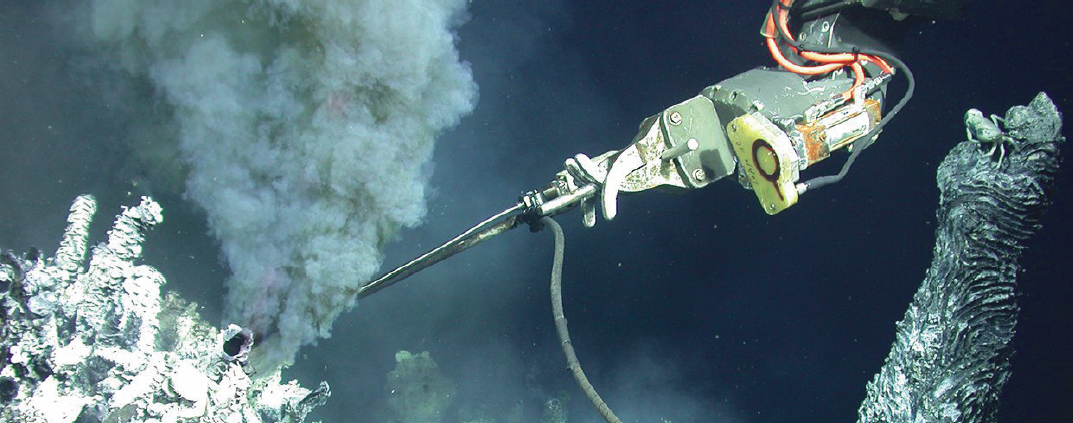
NSF supports activities in areas other than ground-based astronomy, such as studies of the Earth, its oceans, atmosphere, and near-space environment. These activities provide a key linkage between the relatively small community of planetary scientists and astrobiologists and the much larger community of researchers studying the Earth system, matter under conditions of extreme temperatures and pressures, and fundamental biological processes. Particularly notable examples include NSF support for research in the polar regions (Figure 16) and in Earth’s oceans (Figure 17).
Given the complementarity of NASA and NSF support for planetary science and astrobiology, closer collaborations would enhance the goals of both agencies. Examples of collaborative activities mentioned in the decadal survey include recovery of the radar capabilities lost at Arecibo Observatory and a closer integration between planetary scientists and scientific ocean drilling projects.