Origins, Worlds, and Life: Planetary Science and Astrobiology in the Next Decade (2023)
Chapter: Planetary Defense
Planetary Defense
Over its history, the Earth has been struck by many objects from space, such as the 1908 Tunguska impact that flattened thousands of square kilometers of Siberian forest. A similar strike today in a highly populated area could kill tens of millions of people, so it is crucial that a system be developed to defend Earth from this sort of catastrophe.
Such a planetary defense will require three distinct capabilities. First, one must be able to learn exactly what is out there to have as much advance warning as possible when an object is on a collision course with Earth.
Second, it is crucial to establish the composition of each object, as that will determine what sort of defense is necessary. Banging a missile into a solid body could push it onto a different, Earth-missing path, for instance, but the same sort of strike on a “rubble pile,” a loose aggregate of many smaller pieces, might have
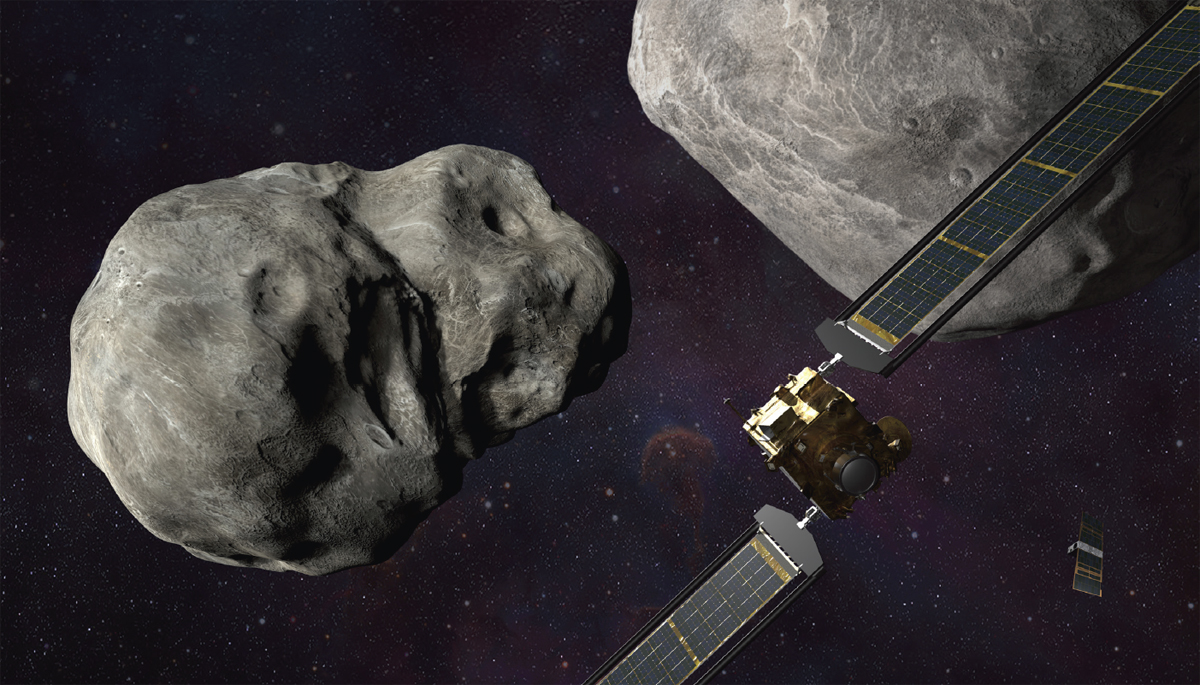
FIGURE 47 (Above) Artist’s impression of NASA’s DART spacecraft and the Italian Space Agency’s LICIACube, prior to the former’s controlled impact on the 160 m asteroid Dimorphos. The collision changed the orbital period of Dimorphos about the larger asteroid Didymos by more than 30 minutes.
little or no effect. Figuring out what will work to save the Earth from a particular near-Earth object (NEO) begins with knowing what that NEO is made of.
Last, NASA must develop the necessary technology to divert NEOs of these various types.
Work has already begun on that third capability. The Double Asteroid Redirection Test (DART) was launched in November 2021, and it reached its target 10 months later, on September 26, 2022, when the DART spacecraft rammed into the 160-meter asteroid Dimorphos (Figure 47). The test was a spectacular success, with the impact having a much larger effect on the asteroid’s path than had been hoped for. The test also provided a great deal of data about what happens when a human-made object crashes into an asteroid of this type. For example, the collision caused a significant amount of material to be ejected from Dimorphos, with the resulting recoil adding greatly to the push caused by the collision itself.
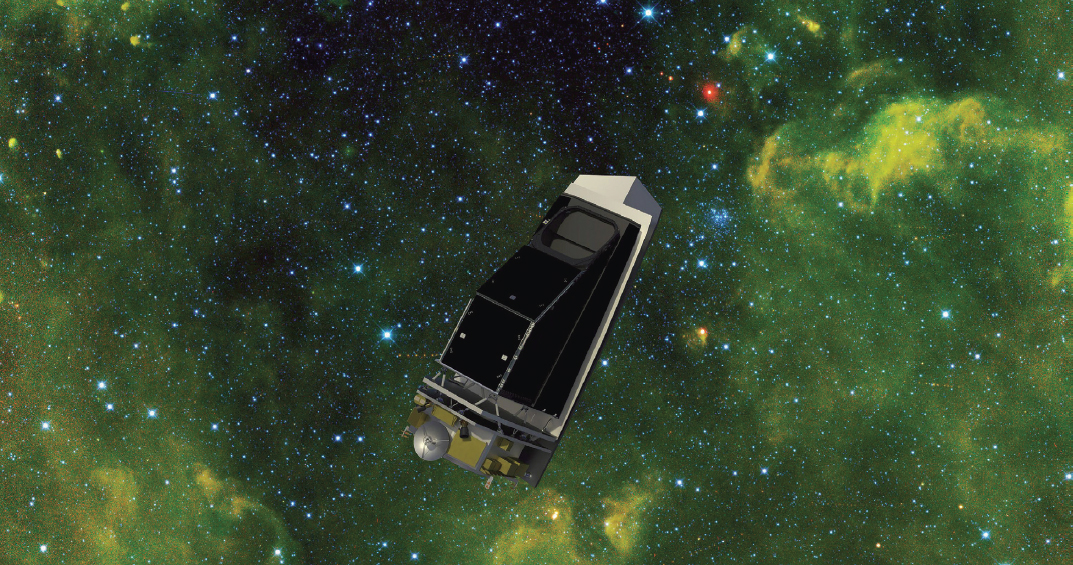
The coming NEO Surveyor mission (Figure 48) will focus on the first capability and continue the task of cataloging all of the NEOs that might pose a significant risk to Earth. Although almost all of the largest NEOs—those greater than 1 kilometer in diameter—have been found, most of the smaller ones, including those large enough to devastate entire regions, have yet to be detected and tracked.
After the NEO Surveyor is launched, the decadal survey committee recommended that the next mission address the second capability—characterizing relevant NEOs. In particular, NASA should carry out a rapid-response, reconnaissance flyby of an object from 50 to 100 meters in diameter. Such a mission will make it possible to test various observational techniques and to learn how well such a fast flyby can characterize a threatening NEO.
Much remains to be done, such as coming up with ways to divert NEOs that are not solid single objects, but it is vital that NASA move forward on the NEO Surveyor, the reconnaissance flyby, and further steps to develop an effective planetary defense system.

