Blueprint for a National Prevention Infrastructure for Mental, Emotional, and Behavioral Disorders (2025)
Chapter: Front Matter

Consensus Study Report
NATIONAL ACADEMIES PRESS 500 Fifth Street, NW Washington, DC 20001
This activity was supported by contracts between the National Academy of Sciences and the Centers for Disease Control and Prevention under Contract No. 75D30121D11240, Task Order No. 75D30123F00025; the National Institutes of Health under Contract No. HHSN263201800029I, Task Order No. 75N98023F00016; and the Substance Abuse and Mental Health Services Administration, under Contract No. 75S20123P00005. Any opinions, findings, conclusions, or recommendations expressed in this publication do not necessarily reflect the views of any organization or agency that provided support for the project.
International Standard Book Number-13: 978-0-309-73092-1
International Standard Book Number-10: 0-309-73092-9
Digital Object Identifier: https://doi.org/10.17226/28577
Library of Congress Control Number: 2025938404
This publication is available from the National Academies Press, 500 Fifth Street, NW, Keck 360, Washington, DC 20001; (800) 624-6242; http://www.nap.edu.
Copyright 2025 by the National Academy of Sciences. National Academies of Sciences, Engineering, and Medicine and National Academies Press and the graphical logos for each are all trademarks of the National Academy of Sciences. All rights reserved.
Printed in the United States of America.
Suggested citation: National Academies of Sciences, Engineering, and Medicine. 2025. Blueprint for a national prevention infrastructure for mental, emotional, and behavioral disorders. Washington, DC: National Academies Press. https://doi.org/10.17226/28577.
The National Academy of Sciences was established in 1863 by an Act of Congress, signed by President Lincoln, as a private, nongovernmental institution to advise the nation on issues related to science and technology. Members are elected by their peers for outstanding contributions to research. Dr. Marcia McNutt is president.
The National Academy of Engineering was established in 1964 under the charter of the National Academy of Sciences to bring the practices of engineering to advising the nation. Members are elected by their peers for extraordinary contributions to engineering. Dr. John L. Anderson is president.
The National Academy of Medicine (formerly the Institute of Medicine) was established in 1970 under the charter of the National Academy of Sciences to advise the nation on medical and health issues. Members are elected by their peers for distinguished contributions to medicine and health. Dr. Victor J. Dzau is president.
The three Academies work together as the National Academies of Sciences, Engineering, and Medicine to provide independent, objective analysis and advice to the nation and conduct other activities to solve complex problems and inform public policy decisions. The National Academies also encourage education and research, recognize outstanding contributions to knowledge, and increase public understanding in matters of science, engineering, and medicine.
Learn more about the National Academies of Sciences, Engineering, and Medicine at www.nationalacademies.org.
Consensus Study Reports published by the National Academies of Sciences, Engineering, and Medicine document the evidence-based consensus on the study’s statement of task by an authoring committee of experts. Reports typically include findings, conclusions, and recommendations based on information gathered by the committee and the committee’s deliberations. Each report has been subjected to a rigorous and independent peer-review process and it represents the position of the National Academies on the statement of task.
Proceedings published by the National Academies of Sciences, Engineering, and Medicine chronicle the presentations and discussions at a workshop, symposium, or other event convened by the National Academies. The statements and opinions contained in proceedings are those of the participants and are not endorsed by other participants, the planning committee, or the National Academies.
Rapid Expert Consultations published by the National Academies of Sciences, Engineering, and Medicine are authored by subject-matter experts on narrowly focused topics that can be supported by a body of evidence. The discussions contained in rapid expert consultations are considered those of the authors and do not contain policy recommendations. Rapid expert consultations are reviewed by the institution before release.
For information about other products and activities of the National Academies, please visit www.nationalacademies.org/about/whatwedo.
COMMITTEE ON A BLUEPRINT FOR A NATIONAL PREVENTION INFRASTRUCTURE FOR BEHAVIORAL HEALTH DISORDERS
MARCELLA ALSAN, (Cochair), Harvard University Kennedy School of Government
MARTHE R. GOLD, (Cochair), City University of New York Medical School
RINAD BEIDAS, Northwestern University Feinberg School of Medicine
CAMILLE C. CIOFFI, University of Oregon; Influents Innovations; Oregon Research Institute
JOSEPH P. GONE, Harvard University
KYLE LYNN GRAZIER, University of Michigan School of Public Health
JEFFREY HOM, San Francisco Department of Public Health
MARGARET KUKLINSKI, University of Washington
DAVID MANDELL, University of Pennsylvania School of Medicine
VELMA MCBRIDE MURRY, Vanderbilt University
ANAND PAREKH, Bipartisan Policy Center
LISA SALDANA, Chestnut Health Systems, Lighthouse Institute
PAULA SMITH, University of Utah
LONNIE SNOWDEN,1 University of California Berkeley School of Public Health
EMILY WANG, Yale University
DONALD (DON) WARNE, Johns Hopkins University
Study Staff
ALINA B. BACIU, Study Director
ALEXIS WOJTOWICZ, Program Officer
MADELEINE M. DEYE, Research Associate (from January 2024)
ELLA CASTANIER, Senior Program Assistant (from October 2024)
RACHEL RILEY SORRELL, Senior Program Assistant (until August 2024)
MISRAK DABI, Senior Finance Business Partner (until October 2024)
CHRISTIE BELL, Senior Finance Business Partner (from October 2024)
ROSE MARIE MARTINEZ, Senior Board Director
REBECCA MORGAN, Senior Research Librarian
___________________
1Deceased January 25, 2025.
NAM Fellow
SEBASTIAN TONG, National Academy of Medicine James C. Puffer/American Board of Family Medicine Fellow, University of Washington, Seattle
Consultants
ALANA ROSENBERG, Yale University
ANNE HARRINGTON, Harvard University
LUCINDA LEUNG, National Academy of Medicine Emerging Leader in Health and Medicine Scholar, University of California, Los Angeles
TAMI MARK, RTI
Reviewers
This Consensus Study Report was reviewed in draft form by individuals chosen for their diverse perspectives and technical expertise. The purpose of this independent review is to provide candid and critical comments that will assist the National Academies of Sciences, Engineering, and Medicine in making each published report as sound as possible and to ensure that it meets the institutional standards for quality, objectivity, evidence, and responsiveness to the study charge. The review comments and draft manuscript remain confidential to protect the integrity of the deliberative process.
We thank the following individuals for their review of this report:
Although the reviewers listed above provided many constructive comments and suggestions, they were not asked to endorse the conclusions or recommendations of this report nor did they see the final draft before its release. The review of this report was overseen by GEORGE J. ISHAM, HealthPartners Institute, and ERIC B. LARSON, University of Washington. They were responsible for making certain that an independent examination of this report was carried out in accordance with the standards of the National Academies and that all review comments were carefully considered. Responsibility for the final content rests entirely with the authoring committee and the National Academies.
Acknowledgments
The committee wishes to thank and acknowledge the many individuals and organizations that contributed to the study process and development of this report. To begin, the committee would like to thank the study sponsors, the Centers for Disease Control and Prevention, National Institutes of Health, and Substance Abuse and Mental Health Services Administration of the National Institutes of Health, for their support of this work.
The committee is grateful to the individuals who presented to the committee: Kym Ahrens, Deepa Avula, Kari Benson, Kirsten Beronio, Brenda Blasingame, Joshua Breslau, Rahil Briggs, Pamela Buckley, Sarah Chilenski, Namkee G. Choi, David M. Clark, Zeke Cohen, Nathaniel Counts, Chinazo Cunningham, Jonah C. Cunningham, Patsy Cunningham, Erin Day, Nancy J. Donovan, Rev. Que English, Abigail Fagan, Diana Fishbein, Lisa Gennetian, Amy Goldstein, Anne Harrington, Brian Hepburn, Jody Heymann, Rani Hoff, David Hughes, Jeanette Ickovics, Christopher Jones, Angela Kimball, Amy Lansky, Stephanie Lee, Shari M. Ling, Sally Manninen, Sarah Mariani, Greta Massetti, Kristine McCoy, Katie McLaughlin, Benjamin Miller, Robert Morrison, Michael Mumper, Joe Neigel, Jonathan Purtle, Therese S. Richmond, Zili Sloboda, Tequila Terry, Sue Thau, Robert Ursano, Nora Volkow, Sara Whaley, Reginald D. Williams II, and David Willis.
The committee thanks Tami Mark, the consultant on this report, for her expertise and writing of Appendix C, which greatly enhanced the following work.
The committee also thanks the dedicated staff at the National Academies of Sciences, Medicine, and Technology, particularly the study staff in the Board on Population Health and Public Health Practice (BPH): Alina
Baciu, Alexis Wojtowicz, Madeleine Deye, Ella Castanier, Crysti Park, and Rose Marie Martinez. The committee also thanks Samantha Chao, Monica Feit, Annalee Gonzales, Lori Brenig, Leslie Sim, and Taryn Young (Health and Medicine Division Executive Office), Amber McLaughlin and Sam Gerard (Health and Medicine Division Communications), Rebecca Morgan and Colleen Willis (Research Center), Nicole Cohen (Office of Congressional and Government Affairs), and Megan Lowry (Office of News and Public Information). The committee also thanks BPH staff Amy Geller, Nicholas Murdock, Aimee Mead, and Stephanie Puwalski for their additional support.
The committee thanks NAM Puffer/ABFM Fellow Sebastian Tong and NAM Emerging Leader Lucinda Leung, along with consultants Alana Rosenberg and Alexandra Halberstam.
National Academies staff are grateful for helpful and timely background information, examples, and insights shared by Heidi Christensen, Terry Cross, Heather Gotham, Holly Hagle, Katie Johnson, Grace Kindt, Jane Koppelman, Katya Miltimore, Jessica Roark, Joshua Sharfstein, Tyler Winkelman, and Rachel Witmer.
Finally, the National Academies staff thank the committee’s indispensable executive assistants and support staff for their help with scheduling committee meetings and calls: Mayra Blakey, Bree-Lyn Cash, Grace Kim, Loretta Grey Cloud, Susie Carey, Patricia Gomez, Ana Rodriguez, Salisha Marryshow Batson, and Aubry Dunaway.
In Memoriam
The committee would like to dedicate this report to honor the life and work of Lonnie Snowden. Dr. Snowden was a valued member of the committee and passed away January 25, 2025.
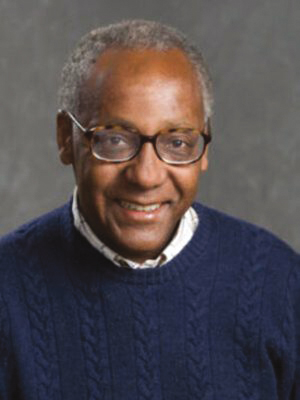
Lonnie Snowden, Ph.D., was a professor at University of California, Berkeley and director of the University of California, Berkeley–University of California, San Franscico Center for Mental Health Services Research. Dr. Snowden was an expert in psychology and mental health care access, and championed work examining the disparities in access to mental health care between Black and White Americans. His 1982 book Reaching the Underserved: Mental Health Needs of Neglected Populations was seminal in the field of health care access research and emphasized critical gaps in service delivery for marginalized groups. With over 160 publications, his work has been recognized with numerous awards, including the 2002 Surgeon General’s Exemplary Service Award, the 2012 Berkeley Citation, and the 2021 Presidential Citation from the American Psychological Association.
This page intentionally left blank.
Research Needs to Improve the Evidence Base on Interventions and Their Implementation
3 WORKFORCE, TRAINING, AND TECHNICAL ASSISTANCE
The Workforce and Current Challenges
Building the Prevention Worforce Pipeline
4 DATA AND DATA SYSTEMS TO SUPPORT THE INFRASTRUCTURE
Overview of Existing Data Sources
Federal and National Data Initiatives and Guidelines
Data Issues (Challenges and Opportunities)
Helping Communities Work with Data
Regional and Local Governance Structure
6 FUNDING FOR THE PREVENTION OF MENTAL, EMOTIONAL, AND BEHAVIORAL (MEB) DISORDERS
Value of Prevention in Behavioral Health
Federal Funding for Prevention of MEB Disorders
Meeting the Need for Sufficient and Sustainable Funding
Other, Nongovernmental Funding Opportunities
7 THE EVIDENCE BASE ON POLICIES
Economic Policies and MEB Health
Social Policies that Promote MEB Health
Environmental Policies that Promote MEB Health
This page intentionally left blank.
Boxes, Figures, and Tables
BOXES
S-1 Statement of Task (abridged)
2-1 A Note About Adverse Childhood Experiences (ACEs)
2-2 Evidence-Based Program: Nurse-Family Partnerships
2-3 Evidence-Based Program: Good Behavior Game
2-4 Boys and Girls Clubs of Washington State Association’s Promising Out-of-School Program
2-5 Evidence-Based Program: Family Spirit
2-6 PEARLS: A Promising Preventive Intervention for Older Adults
2-7 Promising Approach: Web-Based Apps
2-8 Eight Steps for Implementation of Preventive Interventions in Communities
3-1 A United Kingdom (U.K.) Model for Building an Infrastructure
3-2 Training Frontline Workers from Other Sectors: Sample Strategies
4-1 Elmo and the State of America’s Well-Being
4-2 Using Qualitative Data to Inform Selection of Preventive Strategies
4-3 Implementation Considerations Related to MEB Health Data
5-2 Mental, Emotional, and Behavioral Health Elements in Three Departmental “Learning Agendas”
5-3 Endorsing a Recommendation on Community Input and Expertise (NASEM, 2023)
5-4 Implementation Considerations in Governance and Partnerships for MEB Disorder Prevention
6-1 Solving the Wrong Pockets Problem
6-2 Insights on Funding from State, Local, and Federal Leaders
6-3 Implementation Considerations in MEB Disorder Prevention Funding
7-1 Community-Led Prevention to Reduce Violence on Chicago’s South Side
FIGURES
S-1 The prevention infrastructure for MEB disorders
1-1 A depiction of the prevention infrastructure for MEB disorders
2-2 Prevention spectrum for mental, emotional, and behavioral disorders
4-1 Adapted depiction of the public health approach to inform local data systems
4-2 Eight steps toward implementation to promote MEB health equity
TABLES
1-1 The Prevention Ecosystem in Which the MEB Prevention Infrastructure Is Embedded
1-2 Timeline of Milestones in the History of MEB Health in the United States
2-1 Examples of General Cost Estimates for Selected Interventions
4-1 Examples of Sources and Types of Administrative Data Relevant to MEB Health
4-2 Select Types and Examples of Data Relevant to MEB Health by Life Stage
5-1 Governance Arrangements and Partnerships in Example Accountable Communities for Health
This page intentionally left blank.
Preface
The costs associated with our nation’s substance use and mental health crises are high, measured in lost and altered lives of children, parents, siblings, and friends and in lost workers, human potential, and the economic productivity of the nation. Groups marginalized on the basis of their race, ethnicity, tribal affiliation, rural status, and low-income status are particularly affected.
The data tell us that the behavioral health (BH) and well-being of people living in the United States is declining. This report marshals evidence that the BH crises individuals and communities face is often preventable. The committee’s report is intended to outline a prevention infrastructure that can safeguard the mental, emotional, and behavioral (MEB) health of everyone by promoting protective factors and decreasing risk factors.
Community coalitions around the country have been working for decades to prevent MEB disorders and related challenges. Often, this work is done by volunteers on thin budgets through sheer force of will. Achieving MEB health requires greater resources and infrastructure than our society provides for these activities. The committee finds that effective program interventions are available at every level—from equipping individuals with skills, to strengthening parenting effectiveness, to training teachers and agricultural extension workers, to informing policy makers with the best evidence for policy. The report underscores how improved funding, workforce, data systems, and governance and partnerships can support the implementation of evidence-based programs and policies. Social, economic, and environmental policies enhance protective factors for everyone—and this is needed against a backdrop of challenges that contribute to MEB
disorders directly or indirectly. We touch on two examples here. Anxiety, depression, and trauma can result from the community devastation and housing and employment loss caused by extreme weather events. Similar large-scale effects, frequently reinforced, are seen from community firearm violence—which is far more often the cause rather than the outcome of BH disorders. (We note that Recommendation 7-3 for universal prevention interventions of firearm violence as a risk factor for MEB disorders was limited from discussing gun control by the contract that supports this study.)
We all are united in a hope to have our country, our communities, and our children thrive. When they thrive, so does the nation. A strong and sustained infrastructure to prevent MEB disorders and promote well-being is critical to making that hope a reality.
Marcella Alsan and Marthe R. Gold, Cochairs
Committee on a Blueprint for a National Prevention
Infrastructure for Behavioral Health Disorders
Acronyms and Abbreviations
| ACA | Affordable Care Act |
| ACE | adverse childhood experience |
| ACL | Administration for Community Living |
| ACF | Administration for Children and Families |
| ACO | accountable care organization |
| ACT | Assertive Community Treatment |
| ADAI | Addictions, Drug & Alcohol Institute |
| AIAN | American Indian and Alaska Native |
| AOT | assisted outpatient treatment |
| ASPE | Assistant Secretary for Planning and Evaluation |
| ASTHO | Association of State and Territorial Health Officials |
| AWARE | Advancing Wellness and Resiliency in Education |
| BCYF | Board on Children, Youth, and Families |
| BRFSS | Behavioral Risk Factor Surveillance System |
| CADCA | Community Anti-Drug Coalitions of America |
| CAPTA | Child Abuse Prevention and Treatment Act |
| CBO | community-based organization |
| CDC | Centers for Disease Control and Prevention |
| CHIP | Children’s Health Insurance Program |
| CHSI | community health status indicators |
| CHW | community health worker |
| CMHS | SAMHSA Center for Mental Health Services |
| CMS | Centers for Medicare & Medicaid Services |
| COI | conflict of interest |
| CPWI | Community Prevention and Wellness Initiative |
| CSAP | SAMHSA Center for Substance Abuse Prevention |
| CTC | Communities That Care |
| CSAT | Center for Substance Abuse Treatment |
| CUA | cost-utility analysis |
| CVI | community violence intervention |
| D&I | dissemination and implementation |
| DFC | Drug-Free Communities |
| DOJ | Department of Justice |
| DOL | Department of Labor |
| DSM-V | Diagnostic and Statistical Manual of Mental Disorders, 5th Edition |
| EBPRC | Evidence-Based Practices Resource Center |
| EITC | Earned Income Tax Credit |
| ELTRR | Equitable Long-Term Recovery and Resilience |
| EPSDT | early and periodic screening, diagnostic and treatment |
| ERPO | extreme risk protection order |
| GTO | Getting to Outcomes |
| HHS | Department of Health and Human Services |
| HRSN | health-related social need |
| HRSA | Health Resources and Services Administration |
| HSI | Health Services Initiative |
| HYS | Healthy Youth Survey |
| IC&RC | International Certification & Reciprocity Consortium |
| IDEA | Individuals with Disabilities Education Act |
| IRS | Internal Revenue Service |
| IS | implementation science |
| LAUNCH | Linking Actions to Unmet Needs in Children’s Health |
| LGBTQ+ | Lesbian, Gay, Bisexual, Transgender, Queer (or Questioning), and other sexual identities |
| MAPP | Mobilizing for Action Through Planning and Partnership |
| MCO | managed care organization |
| MEB | mental, emotional, and behavioral |
| MHSP | mental health services professional |
| MHTTC | Mental Health Technology Transfer Center |
| NASADAD | National Association of State Alcohol and Drug Agency Directors |
| NASMHPD | National Association of State Mental Health Program Directors |
| NHATS | National Health and Aging Trends Study |
| NIAAA | National Institute on Alcohol Abuse and Alcoholism |
| NIDA | National Institute on Drug Abuse |
| NIDCR | National Institute for Dental and Craniofacial Research |
| NIH | National Institutes of Health |
| NIHB | National Indian Health Board |
| NIMH | National Institute of Mental Health |
| NIMHD | National Institute on Minority Health and Health Disparities |
| NNIP | National Neighborhood Indicators Project |
| NREPP | National Registry of Effective Prevention Programs |
| NSDUH | National Survey of Drug Use and Health |
| NSLP | National School Lunch Program |
| ONDCP | Office of National Drug Control Policy |
| PLACES | Population Level Analysis and Community Estimates |
| PROSPER | Promoting School-community-university Partnerships to Enhance Resilience |
| PSSF | Promoting Safe and Stable Families |
| PTSD | posttraumatic stress disorder |
| PTTC | Prevention Technology Transfer Center |
| QPR | Question, Persuade, Refer |
| RCT | randomized controlled trial |
| ROI | return on investment |
| SAMHSA | Substance Abuse and Mental Health Services Agency |
| SBHC | school-based health center |
| SBIRT | screening, brief intervention, and referral to treatment |
| SDOH | social determinants of health |
| SDRG | Social Development Research Group |
| SMI | serious mental illness |
| SNAP | Supplemental Nutrition Assistance Program |
| SSI | Supplemental Security Income |
| SUD | substance use disorder |
| TANF | Temporary Assistance for Needy Families |
| TFAH | Trust for America’s Health |
| UC | University of California |
| UM | University of Michigan |
| VHA | Veterans Health Administration |
| WIC | Supplemental Nutrition Program for Women, Infants, and Children |
Glossary
| Community: | “Any configuration of individuals, families, and groups whose values, characteristics, interests, geography, or social relations unite them in some way.”2 |
| Health equity: | Concept “that everyone has a fair and just opportunity to be as healthy as possible. This requires removing obstacles to health such as poverty, discrimination, and their consequences, including powerlessness and lack of access to good jobs with fair pay, quality education and housing, safe environments, and health care. For the purposes of measurement, health equity means reducing and ultimately eliminating disparities in health and its determinants that adversely affect excluded or marginalized groups.”3 |
___________________
2National Academies of Sciences, Engineering, and Medicine. 2017. Communities in Action: Pathways to Health Equity. Washington, DC: The National Academies Press. https://doi.org/10.17226/24624. pg 1. Adapted from Draft manuscript from Melanie C. Dreher, Rush University Medical Center, provided to staff on February 19, 2016, for the Committee on Community-Based Solutions to Promote Health Equity in the United States. Available by request from the National Academies of Sciences, Engineering, and Medicine’s Public Access Records Office. For more information, email PARO@nas.edu.
3Braveman, P., E. Arkin, T. Orleans, D. Proctor, J. Acker, and A. Plough. 2018. What Is Health Equity? Behavioral Science & Policy 4(1):1-14. https://doi.org/10.1177/237946151800400102, p. 2.
| Health disparities: | “Avoidable differences in health or in its key determinants that adversely affect marginalized or excluded groups.”4 |
| Implementation: | “Systematic, scientific approach to ask and answer questions about how we get ‘what works’ to people who need it, with greater speed, fidelity, efficiency, quality and relevant coverage.”5 |
| Indicated prevention: | Targets those already using or engaged in other high-risk behavior (for substance use disorder) or at increased risk of mental illness. |
| Infrastructure: | “Systems, competencies, frameworks, relationships, and resources that enable [state and local governments and agencies, along with communities, community-based organizations, and their partners,] to perform core functions” central to preventing MEB disorders and promoting health and well-being.6 |
| Mental, emotional, and behavioral disorders: | Encompasses both those disorders diagnosable using Diagnostic and Statistical Manual of Mental Disorders, 5th Edition (DSM-V) criteria and the problem behaviors associated with them, such as violence, aggression, self-injury, suicide, and antisocial behavior. It includes mental illness and substance use disorders along with a somewhat broader range of concerns associated with problem behaviors and conditions. This committee, like the 2019 committee, chose to use the definition of MEB disorders developed by the authors of the 2009 National Academies report: “the term ‘mental, emotional, and behavioral disorders’ . . . encompasses both disorders diagnosable using Diagnostic and Statistical Manual of Mental Disorders, 4th Edition (DSM-IV) criteria and the problem behaviors associated with them, such as violence, aggression, and antisocial behavior. |
___________________
4Braveman, P., E. Arkin, T. Orleans, D. Proctor, J. Acker, and A. Plough. 2018. What is Health Equity? Behavioral Science & Policy:4(1):1-14. https://doi.org/10.1177/237946151800400102, p. 3.
5University of Washington. 2024. Step 4: Select Research Methods. https://impsciuw.org/implementation-science/research/select-research-methods/#:~:text=A%20broad%20and%20inclusive%20definition,efficiency%2C%20quality%20and%20relevant%20coverage (accessed January 13, 2025).
6Adapted from https://www.naccho.org/programs/public-health-infrastructure (accessed January 13, 2025).
| Many mental, emotional, and behavioral disorders of youth exist on a continuum. . . . The term . . . encompasses mental illness and substance abuse, while including a somewhat broader range of concerns associated with problem behaviors and conditions in youth.”7 | |
| Mental, emotional, and behavioral (MEB) health and well-being: | Defined as the opposite of MEB disorders, a broad construct that encompasses good MEB health and the related concepts associated with measures of subjective well-being, such as flourishing, thriving (the upper end of the Cantril’s ladder scale of well-being), and life satisfaction. |
| Prevention: | Strategies offered before the onset of a disorder that are intended to prevent or reduce the risk for its development. |
| Primary prevention: | Interventions before the onset of a disorder that are intended to prevent or reduce the risk for its development. |
| Primordial prevention: | Refers to interventions that address root causes and social factors of MEB disorders. |
| Program, intervention, approach: | All sometimes used to refer to organized plans for bringing about particular improvements in a public health, and none are used consistently to refer to a single defined method. We use the terms interchangeably unless the context calls for a particular meaning, which we make clear through surrounding text. |
| Policy: | Refers to public policy—the actions taken by government entities at the city, county, state, or federal levels to pursue social improvements; these actions may include formal rules, legislative actions, administrative programs, targeted funding initiatives, or other mechanisms. |
| Secondary prevention: | Refers to early detection of disease before it is symptomatic to reduce severity. |
| Selective prevention: | Refers to targeting those at higher-than-average risk. |
| Tertiary prevention: | Refers to interventions aimed at reducing severity or worsening of significant adverse outcomes. |
| Universal prevention: | Refers to interventions targeted at the general population. |
___________________
7National Research Council and Institute of Medicine. 2009. Preventing mental, emotional, and behavioral disorders among young people: Progress and possibilities. Washington, DC: The National Academies Press. https://doi.irg/10.17226/12480, p. xv.
This page intentionally left blank.


