Transportation Resilience 2023: International Conference on Extreme Weather and Climate Change Challenges (2025)
Chapter: Session Snapshots
Session Snapshots
Conference sessions provided insights and research findings. Topics included adaptation planning around the world, mitigation of high-risk flooding events, measurement of resilience benefits, vulnerability assessment frameworks, state department of transportation (DOT) actions, transit and rail resilience assessments, development of resilience improvement plans (RIPs) under the Federal Highway Administration (FHWA) Promoting Resilient Operations for Transformative, Efficient, and Cost-Saving Transportation (PROTECT) program,3 cost−benefit analyses (CBAs), climate-resilient transportation infrastructure, and equity integration in resilience.
Session insights included integrating climate resilience into organizational practices and design standards and exploring innovative methods for evaluating resilience investments. Presented challenges, including funding and financing transportation resilience, were discussed alongside strategies for effective community engagement.
Welcome and Opening Plenary
Presenters:
- Brenda Dix, ICF
- Steven Olmsted, Arizona DOT
- Mark Abkowitz, Vanderbilt University
- Victoria Sheehan, TRB
- Robert Hampshire, U.S. DOT
Video recording: https://vimeo.com/showcase/10851381/video/893317881
Action Items:
- Develop and implement RIPs: Create comprehensive RIPs that consider evolving climate science. These plans should focus on adapting business practices to climate change, addressing equity, and engaging a diverse range of national and international professionals. Emphasize continuous learning and inspiration from global examples.
- Enhance collaboration and research in climate action: Leverage the varied expertise at the conference and beyond to foster collaboration across sectors.
___________________
3 1. Ibid.
- Encourage weekly progress in key areas such as policy advancement, data management, and the National Climate Resilience Framework application.4 Use resources such as the National Academies of Sciences, Engineering, and Medicine (the National Academies) Climate Crossroads 2023 initiative5 and the extensive research contributions from TRB’s standing committees to inform and guide these efforts.
- Contribute to the National Climate Resilience Framework: Engage in the National Climate Resilience Framework6 by contributing to community-driven initiatives and integrating equity considerations. Actively participate in programs such as the FHWA PROTECT program,7 the Resilience and Disaster Recovery (RDR) Tool Suite,8 and the Strengthening Mobility and Revolutionizing Transportation (SMART) grants program.9 Use these platforms to make informed, risk-based investment decisions and explore innovative technologies such as drone usage for remote-sensing projects. Additionally, engage with the University Transportation Center (UTC) program10 and contribute to the Climate Change and Transportation Research Initiative11 to bridge the gap between practice and research in transportation resilience.
Summary: The opening plenary of the conference began with Brenda Dix providing a historical perspective, highlighting the challenges faced in 2010, when limited climate science was available. Dix emphasized the need to change how business is conducted to account for climate change. The objectives set for the conference included learning,
___________________
4 The White House. (2023). National Climate Resilience Framework. Retrieved from https://www.whitehouse.gov/wp-content/uploads/2023/09/National-Climate-Resilience-Framework-FINAL.pdf.
5 National Academies of Sciences, Engineering, and Medicine. (2023). Climate Crossroads. Retrieved from https://www.nationalacademies.org/event/39683_07-2023_climate-crossroads-summit-2023#:~:text=A%20summit%20engaging%20experts%2C%20community,to%20the%20planet%20and%20society.
6 4. Ibid.
7 1. Ibid.
8 Volpe National Transportation Systems Center. (n.d.). Resilience and Disaster Recovery Tool Suite. U.S. DOT. Retrieved March 28, 2024, from https://www.volpe.dot.gov/our-work/resilience-and-disaster-recovery-tool-suite.
9 U.S. DOT. (n.d.). SMART Grants Program. Retrieved March 29, 2024, from https://www.transportation.gov/grants/SMART.
10 U.S. DOT. (n.d.). University Transportation Center (UTC) Program 2022−2026 Grants. Retrieved March 29, 2024, from https://www.transportation.gov/rural/grant-toolkit/university-transportation-center-utc-program-2022-2026grants#:~:text=The%20University%20Transportation%20Center%20(UTC,in%20the%20varied%20disciplines%20that.
11 U.S. DOT. (n.d.). Biden–Harris Administration Announces New Climate and Transportation Research Funding. Retrieved March 29, 2024, from https://www.transportation.gov/briefing-room/biden-harris-administration-announces-new-climate-and-transportation-research-funding.
inspiration, and the development of RIPs; addressing equity; and building a diverse network of national and international professionals. The key message was to take the information and network exchanges back to continue efforts beyond the conference.
Steven Olmsted discussed the current state of climate action worldwide. He stressed the importance of taking advantage of the diverse expertise at the conference. Olmsted urged attendees to make weekly progress in areas such as policy advancement and data management. He emphasized the unified effort for the greater good of the country and its transportation system, drawing attention to the White House Climate Resilience plan’s six elements.12
Mark Abkowitz shared key findings and research needs, encouraging participants to seek quotes from experts in the field. Victoria Sheehan highlighted TRB’s role as one of seven program divisions in the National Academies. She explained TRB’s commitment to bringing together professionals, conducting timely research, and addressing contemporary challenges in the transportation sector.
Sheehan provided insights into TRB’s initiatives, including Climate Crossroads 2023,13 emphasizing collaboration across program divisions. She mentioned the Executive Committee’s focus on critical issues in transportation (see Critical Issues in Transportation for 2024 and Beyond),14 stressing the increased momentum and the importance of engagement in sessions. The standing committees, with nearly 6,500 papers submitted for the 2023 TRB Annual Meeting,15 were highlighted as crucial contributors to ongoing research and tools for practitioners.
Drawing from her experience in the Massachusetts and New Hampshire DOTs, Sheehan outlined challenges in obtaining funds for events that did not qualify for federal support. She emphasized building a system that advances the state of practice. The abundance of events focusing on resiliency and climate change in TRB annual meetings underscores the organization’s dedication to addressing these critical issues.
Robert Hampshire emphasized the significance of tackling the impacts of climate change, from wildfires to floods and hurricanes. He urged attendees to be part of the solution and contribute to new research and practices addressing threats to the nation.
___________________
12 2. Ibid.
13 5. Ibid.
14 National Academies of Sciences, Engineering, and Medicine. (2024). Critical Issues in Transportation for 2024 and Beyond. Washington, DC: The National Academies Press. https://doi.org/10.17226/27432.
15 TRB. (n.d.). 2023 TRB Annual Meeting. Retrieved March 29, 2024, from https://www.nationalacademies.org/event/01-08-2023/trb-annual-meeting.
Hampshire highlighted the need to consider both climate change and man-made disasters in a comprehensive approach. He introduced the National Climate Resilience Framework,16 emphasizing community-driven initiatives and the importance of equity impact. Integrating decarbonization blueprint with climate resilience was stressed with the aim of bringing these elements together for a holistic strategy.
Proactive measures by the U.S. DOT, such as the FHWA PROTECT program17 and the RDR Tool Suite18 developed with the U.S. DOT’s Volpe National Transportation Systems Center, were outlined to make informed investment decisions based on risk. Hampshire also mentioned the creation of a resilience coalition in partnership with the American Association of State Highway and Transportation Officials (AASHTO)19 seeking input and collaboration to advance the coalition’s objectives.
The SMART grant program,20 part of the infrastructure bill, was highlighted, with 59 locations exploring various technologies, including drone usage on Cape Cod for remote-sensing projects. Another round of SMART grants is expected in early spring. The importance of the UTC program21 was emphasized, with feedback from UTC members being crucial.
In summary, the plenary emphasized historical challenges, the importance of collaboration, and the need for ongoing efforts to address climate change in the transportation sector. Actionable outcomes included developing RIPs, building a diverse network, and engaging research and policy advancement beyond the conference.
Plenary Session: Advancing Resilience in Surface Transportation—Roads, Rail, Port, and Transit
Moderator: Steven Olmsted, Arizona DOT
Presenters:
- Joshua DeFlorio, Port Authority of New York and New Jersey
- Rebecca Lupes, FHWA, U.S. DOT
- E. Cris Liban, Los Angeles Metro
___________________
16 4. Ibid.
17 1. Ibid.
18 8. Ibid.
19 AASHTO. (n.d.). AASHTO Resilience & Sustainability Management. Retrieved March 29, 2024, from https://transportation.org/resilience-and-sustainability-management/.
20 9. Ibid.
21 10. Ibid.
- Michael Johnsen, Federal Railroad Administration
- Gretchen Goldman, Climate Change and Resilience, U.S. DOT
Video recording: https://vimeo.com/showcase/10851381/video/892676779
Action Items:
- Integrate resilience in design and planning: The panel emphasized the need to incorporate resilience into transportation planning and design standards. This involves updating guidelines regularly with the latest climate science and best practices and tailoring them to different types of infrastructure, including rail and public transport systems.
- Enhance the use of climate data in decision-making: There was a strong call for improving the use of climate data in transportation decision-making. This action involves training stakeholders to interpret and apply climate data and developing tools for easy access and understanding of these data. The goal is to increase the percentage of decisions informed by robust climate data analysis.
- Foster community engagement and create peer learning networks: The importance of community engagement and forming peer learning networks was highlighted. This includes integrating local and indigenous knowledge into resilience planning and creating a collaborative environment for sharing experiences, challenges, and best practices between professionals, policymakers, and community leaders in the transportation sector.
Summary: The panel discussion, guided by Steven Olmsted, provided an overview of resilience efforts in transportation. Panelists shared diverse perspectives and initiatives. Joshua DeFlorio highlighted the integration of resilience into design guidelines since 2015, emphasizing a proactive and strategic approach. Rebecca Lupes discussed the substantial focus on climate resilience following a monetary infusion into resilience programs, with a specific focus on plans within the FHWA PROTECT program.22E. Cris Liban shared insights into California’s Priority Climate Action Plan,23 emphasizing programs and the transition to technologies for a more sustainable footprint. Michael Johnsen addressed the coordination challenge among privately owned rail networks and highlighted the Consolidated Rail Infrastructure and Safety Improvement grant program24 and the Mineta Transportation Institute.25
___________________
22 1. Ibid.
23 California Air Resources Board. (2024). The State of California’s Priority Climate Action Plan. Retrieved March 29, 2024, from https://ww2.arb.ca.gov/sites/default/files/202403/California%20CPRG%20Priority%20Climate%20Action%20Plan%202024%20March%201_0.pdf.
24 Federal Railroad Administration. (n.d.). Consolidated Rail Infrastructure and Safety Improvements (CRISI) Program. U.S. DOT. Retrieved March 29, 2024, from https://railroads.dot.gov/grants-loans/competitive-discretionary-grant-programs/consolidated-rail-infrastructure-and-safety-2.
25 Mineta Transportation Institute. (n.d.). San José State University. Retrieved March 29, 2024, from https://transweb.sjsu.edu/.
The panel also addressed questions about the audience’s contributions to transportation, a common understanding of resilience, progress in integrating resilience into design standards, the upcoming Fifth National Climate Assessment,26 resilience funding challenges for rail, and successful examples of community engagement. The discussion emphasized the importance of credible information, global collaboration, and community inclusion in transportation resilience efforts. DeFlorio and Liban highlighted the uniqueness of decision-making processes for each agency but stressed the need for credible information and global tools. Lupes mentioned FHWA’s ongoing development of approaches, and Gretchen Goldman emphasized the significance of community engagement, stressing the importance of listening to communities and incorporating diverse knowledge, including indigenous perspectives.
The discussion concluded with insights into the percentage of individuals using climate data analysis in decision-making and a focus on advancing climate data usage.
DeFlorio and Liban highlighted the importance of continuous improvement and collaboration between policymakers and engineers. The panel emphasized the value of peer learning networks in advancing resilience efforts, as highlighted in this event.
Olmsted shared the positive impact of assembling knowledgeable individuals for knowledge sharing and relationship building.
Technical Session A: Adaptation Planning Around the World
Moderator: Wenxin Qiao, World Bank
Presenters:
- Jin Xiong, World Bank
- Jose Moran, Oxford University
- Eric Lancelot, World Bank
- Marta Pertierra, INES Ingenieros Consultores SL
- John T. Harvey, University of California, Davis: University of California Pavement Research Center
Co-Presenters:
- Mari Tye, National Center for Atmospheric Research
- Mark Rupp, Georgetown Climate Center
___________________
26 U.S. Global Change Research Program. (n.d.). Fifth National Climate Assessment. Retrieved March 29, 2024, from https://nca2023.globalchange.gov/.
- Linda Silka, University of Maine
- Annie Bennett, Georgetown Climate Center
- Gordon Airey, University of Nottingham
- Clara Gonzalez, INES Ingenieros Consultores SL
- Illán Paniagua, INES Ingenieros Consultores SL
- Enrique Galdón, INES Ingenieros Consultores SL
Video recording: https://vimeo.com/showcase/10851381/video/892729549
Action Items:
- Develop climate resilience tools: Launch or continue initiatives to create comprehensive data presentation and technology tools for climate-oriented decision-making in transportation infrastructure.
- Cultivate workforce training in climate resilience: Launch or cultivate training programs focused on equipping professionals with skills and knowledge for building and managing climate-related infrastructure.
- Increase international collaboration: Increased international collaboration can enhance global strategies, the sharing of best practices, and innovative financing mechanisms for resilient transportation infrastructure.
Summary: The session on transportation infrastructure focused on the need for climate resilience in transportation planning. The slow pace of change in civil engineering and infrastructure decision-making was accompanied by proposed solutions such as adaptable processes, tools, organizations, and improved data visualization for climate data.
Climate change is ever evolving. Information sharing, research, and technologies deploy quickly to adapt and mitigate transportation infrastructure quickly. The session, which was part of the Infrastructure and Climate Network (ICNet) Global Workshop,27 addressed the need for coordination, tools, and funding in transportation infrastructure planning in the face of climate change.
A staff member from the World Bank highlighted efforts to enhance transport infrastructure resilience, particularly in low- and medium-income countries. This includes vulnerability assessments, updating road design standards for climate risks, and advocating for open data and knowledge sharing.
Case studies from Honduras underscored the importance of investment in road resilience and the need for data-driven decision-making, flexible approaches, and global
___________________
27 International Carbon Action Partnership. (n.d.). Retrieved March 29, 2024, from https://www.icnetglobal.org/.
cooperation. The session emphasized the critical need for coordinated efforts, innovative approaches, and effective use of technology and data to advance global climate resilience in transportation infrastructure.
Technical Session B: Mitigating and Reducing Impacts of High-Risk Flooding Events
Moderator: Mark Teschauer, U.S. Climate Alliance
Presenters:
- Tyler Jantzen, Jacobs Engineering Group
- Jack Kurki-Fox, North Carolina State University
- Rupsa Roy, Weston and Sampson
- Christopher Dorney, WSP
Co-Presenters:
- Mike Rotar, RESPEC
- Barbara Doll, North Carolina State University and North Carolina Sea Grant
- Daniel Line, North Carolina State University
- Matt Lauffer, North Carolina DOT
- Indrani Ghosh, Weston and Sampson
- Kristoffer Langlie, Minnesota DOT
Video recording: https://vimeo.com/showcase/10851381/video/893309077
Action Items:
- Encourage resilient infrastructure design: Use detailed hazard mapping and predictive modeling to guide the design and improvement of transportation infrastructure, ensuring it can withstand current and projected natural events such as floods and rain-on-snow scenarios.
- Use predictive analytics for risk assessment: Leverage historical data and hydrodynamic models to identify vulnerable locations and predict potential impacts, employing tools for visual data analytics to enhance decision-making and emergency planning.
- Consider adaptive planning and methodology selection: Compare and select appropriate methodologies for projecting future precipitation and flood risks and use these projections to inform strategic adaptation planning for transportation infrastructure resilience.
Summary: “Incorporating Resilient Design for Present and Future Fluvial Hazards in Yellowstone National Park” addressed the comprehensive approach of the Jacobs Engineering Group and RESPEC after the historic flooding in 2022. The focus was on resilience planning and design improvements for the Northeast Entrance Road corridor in Yellowstone National Park. The presentation outlined the identification and characterization of current-day threats, including fluvial hazards. It emphasized the need to translate changes in future climate to natural hazards, mainly focusing on rain-on-snow threats. The presentation shared mapped flood elevations and channel migration projections and delineated fluvial hazards linked to climate change. The results informed design decisions for enhancing highway performance in future natural events.
“Predicting Roadway Washout Locations During Extreme Rainfall Events” addressed the vulnerability of North Carolina’s transportation network to road flooding and washouts during extreme rainfall events. The study leveraged statewide elevation data, historical rainfall records, and hydraulic infrastructure data to predict washout locations. Statistical analyses revealed that most washouts occur along secondary roads in small watersheds. The presentation discussed the challenges of predicting washout locations and the development of a detailed Hydraulic Engineering Center—River Analysis System28 rain-on-grid hydrodynamic model for a specific region. A geospatial visual data analytics tool was introduced for mapping and summarizing washout data.
“Rainy Days Ahead: Comparative Analyses for Projected Future Total Precipitation Depth” focused on the impact of heavy precipitation on the transportation sector. The study compared four methodologies for estimating projected future total precipitation depths for extreme events in Massachusetts. The methods include extreme precipitation scaling rates, the NCHRP Project 15-61 approach,29 the regionalized percentage increase methodology, and the National Oceanic and Atmospheric Administration (NOAA)+ methodology.30 The presentation emphasized the importance of selecting an appropriate method based on project location and criticality.
___________________
28 U.S. Army Corps of Engineers. (n.d.). HEC-RAS (Hydrologic Engineering Centers River Analysis System). Retrieved March 29, 2024, from https://www.hec.usace.army.mil/software/hec-ras/.
29 Kilgore, R., W. O. Thomas Jr., S. Douglass, B. Webb, K. Hayhoe, A. Stoner, J. Jacobs, D. Thompson, G. Herrmann, E. Douglas, and C. Anderson. (2019). Applying Climate Change Information to Hydrologic and Coastal Design of Transportation Infrastructure. NCHRP Project 15-61 Final Report. TRB, Washington, DC. http://onlinepubs.trb.org/Onlinepubs/nchrp/docs/NCHRP1561_FinalReport.pdf.
30 NOAA. (n.d.). Precipitation Frequency Data Server. Retrieved March 29, 2024, from https://hdsc.nws.noaa.gov/pfds/. [“See also Massachusetts Executive Office of Energy and Environmental Affairs (2022), Climate Resilience Design Standards & Guidance, Table 1, p. 64. Retrieved March 29, 2024, from https://eea-nescaum-dataservices-assetsprd.s3.amazonaws.com/cms/GUIDELINES/V1.2_SECTION_4.pdf#:~:text=NOAA%20+%20Methodology.%20A%20factor%20of%200.9,for%20the%20present%20NOAA%20Atlas%2014%20values”].
“Quantifying Flood Risks to MnDOT Bridges and Culverts Under Climate Change—Dodge County Case Study” presented the Minnesota DOT’s analysis to quantify current and future flood risks to bridges and culverts. The methodology includes developing climate change–influenced precipitation projections, automated hydraulic models, geographic information system (GIS)–based exposure models, and risk modeling. The Dodge County results were presented to showcase how the Minnesota DOT will use them for adaptation planning.
Technical Session C: Measuring Resilience Benefits: Lessons Learned
Moderator: Shawn Johnson, Office of Research, Development and Technology, Office of the Secretary, U.S. DOT
Presenters:
- Karen White, FHWA
- Joseph Krolak, FHWA
- Derek Soden, FHWA
- Robert Kafalenos, FHWA
- Suseel Indrakanti, Cambridge Systematics, Inc.
Co-Presenters:
- Aimee Flannery, Jacobs
- Maria Pena, Gannet Fleming
Video recording: https://vimeo.com/showcase/10851381/video/892739686
Action Items:
- Develop a comprehensive framework for risk assessment in CBA: Create a detailed framework for incorporating various risks (seismic, hydrological, and wildfire) into the CBA process. It should evaluate potential resiliency investments against various natural events, including evolving scenarios such as rising sea levels.
- Establish specialized teams for measuring specific benefits: Refine methodologies for accurately quantifying benefits by respective areas and then explore integrating their findings into the broader CBA process.
- Implement a standardized resilience performance measurement system: Initiate the implementation of the resilience performance measures (RPMs) by establishing a pilot project to test the compendium of RPMs, linking them to agency goals, and developing a model for effective implementation. Ensure regular RPM
- reviews and updates based on evolving needs and new insights into transportation resilience metrics and sustainability performance measurement.
Summary: The first presentation, “Focus on Benefits–Cost Analysis Work at Federal Highway Administration,” discussed the importance of CBA in evaluating different types of potential resiliency investments and considered various natural events, from catastrophic to evolving ones such as sea-level rise (SLR). The presentation addressed the challenges of incorporating risk into CBA, specifically discussing issues related to seismic, hydrological, and wildfire risk measurement.
The subsequent presentations focused on specific aspects of measuring benefits:
- “Measuring Hydraulics Benefits” by Joseph Krolak
- “Measuring Seismic Benefits” by Derek Soden
- “Measuring Climate Change Benefits” by Robert Kafalenos
“Measuring Impacts and Performance of State DOT Resilience Efforts (NCHRP 23-26)” addressed the need for standardized measures to track goals, effectiveness, and outcomes of resilience efforts in transportation agencies. The presentation explored the development of a compendium of RPMs, linkages to agency goals, and a model for implementation. The ongoing NCHRP 23-26 project aims to guide practitioners in establishing RPMs, to enable greater integration of resilience into agency functions.31
Technical Session D: Vulnerability Assessment Frameworks and Tools
Moderator: Chelsea Treboniak, Critical Ops
Presenters:
- Rawlings Miller, TRC
- Amit Armstrong, FHWA
- Amit Sachan, AtkinsRéalis
- Mike Woning, Deltares
___________________
31 National Academies of Sciences, Engineering, and Medicine. (2022). Measuring Impacts and Performance of State DOT Resilience Efforts. NCHRP Project 23-26 [Active]: TRB, Washington, DC. Retrieved April 2, 2024, from https://apps.trb.org/cmsfeed/TRBNetProjectDisplay.asp?ProjectID=5171.
Co-Presenters:
- Annika Ragsdale, WSP
- Steve Bourne, AtkinsRéalis
- Matt Lauffer, North Carolina DOT
- Margreet Van Marle, Deltares
- Kees van Muiswinkel, Rijkswaterstaat—Ministry of Infrastructure and Water Management
- Thomas Bles, Deltares
Video recording: https://vimeo.com/showcase/10851381/video/893307556
Action Items:
- Develop and implement tailored climate vulnerability assessment frameworks: Develop frameworks that align climate vulnerability assessments with decision-making processes in various contexts, including organizations and tribal communities. These frameworks should consider the variability of data and methodologies, be flexible yet data intensive, and account for local documentation practices and community trust. Implement decision trees to select appropriate assessments based on available data, staffing, stakeholder engagement, and decision-making needs.
- Incorporate advanced simulation tools for resilience planning: Leverage innovative tools, such as the city simulator used in the US-74 resiliency study.32 Create digital twins for critical infrastructure to assess future vulnerabilities due to climate change, analyzing economic, environmental, and population impacts. Emphasize the integration of resilience into cultural and systemic approaches and use simulation results to prioritize infrastructure improvements based on their projected effectiveness and impact.
- Utilize comprehensive platforms for multihazard resilience assessment: Implement platforms for comprehensive resilience assessment and adaptation planning. These platforms should evaluate exposure, vulnerability, and cascading impacts on infrastructure networks and incorporate advanced techniques for sensitivity analyses. Produce resilience maps with expected annual damages and losses and perform CBAs to prioritize adaptation measures effectively. These processes uphold inclusiveness and equity principles to cater to diverse community needs and ensure equitable resilience enhancements.
___________________
32 AtkinsRéalis. (2024). North Carolina US 74 Corridor Resilience Study. Retrieved April 2, 2024, from https://www.atkinsrealis.com/en/projects/ncdot-us74-corridor-resilience-study.
Summary: “A Roadmap: Matching Climate Assessments to Decision-Making” addressed the challenges organizations face in aligning climate vulnerability assessments with decision-making processes (see Figure 2). The presentation emphasized the variability in data, methodologies, and findings among studies. It introduced a decision tree to guide participants in selecting the proper assessment based on available data, staffing, stakeholder engagement, and intended decision-making levels. The talk included case studies and examples to support agencies in developing tailored roadmaps with tiered analyses.33
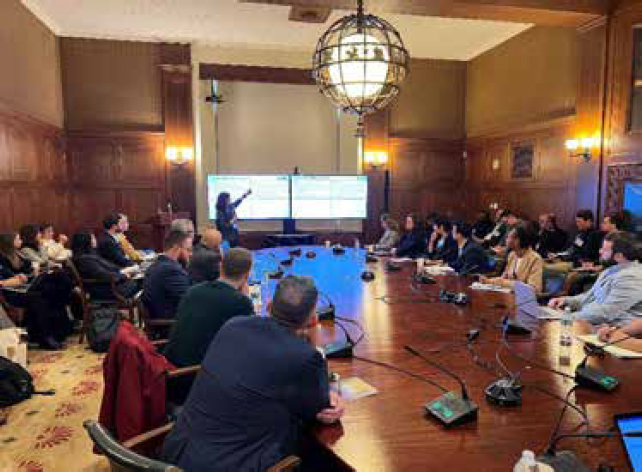
“Applying a Vulnerability Assessment and Adaptation Framework to Tribal Communities” focused on the application of the FHWA Vulnerability Assessment and Adaptation Framework34 to seven tribal communities. The flexible yet data-intensive framework aimed to help tribal communities assess the long-term impacts of climate change on their transportation systems. Successes in implementation included creating partnerships, while challenges involve data access and the nonprescriptive nature of the framework.
An implementation plan derived from these projects provided guidance to over 300 tribal entities on data collection and vulnerability assessment approaches. The presentation highlighted the importance of understanding tribal documentation practices and building trust with consultants.
___________________
33 Zamurs, J., and M. Stout. 2024. NCHRP Synthesis 624: Addressing Climate Resilience and Greenhouse Gases in the Transportation Planning Process. TRB, Washington, DC. https://doi.org/10.17226/27797. The report was not discussed in the session, although it provides reference to variability in data, methodologies, and findings with state DOTs.
34 U.S. DOT, FHWA. (2021). Climate Change Extreme Weather Vulnerability Assessment Framework, 3rd ed. U.S. Climate Resilience Toolkit. Retrieved April 2, 2024, from https://toolkit.climate.gov/tool/climate-change-extreme-weather-vulnerability-assessment-framework.
“US-74 Resiliency Study and Report—Implementing Atkins’ City Simulator Tool” presented a resiliency study of the US-74 corridor. The study employed a city simulator tool, thereby creating a digital twin for a 190-mi stretch and assessment of future vulnerabilities due to climate change.35 The simulation provided insights into economic, environmental, and population impacts, emphasizing the need for resilience as part of the culture and a holistic, system-based approach.
“Multi-hazard Resilience Assessment and Adaptation Planning for the Dutch Highway Network” shared the Resilience Assessment and Adaptation for Critical Infrastructure (RA2CE) platform for resilience assessment and adaptation planning.36 The platform evaluates exposure, vulnerability, and cascading impacts on infrastructure networks to produce resilience maps with annual expected damages and losses. It includes CBAs for prioritizing adaptation measures and building a business case with sensitivity analyses. The presentation underscored the benefits of rapid infrastructure network assessment for enhancing resilience and emergency response during extreme climate events, emphasizing inclusiveness and equity principles in the evaluation process.
Technical Session E: State Departments of Transportation Taking Action
Moderator: Aimee Flannery, Jacobs
Presenters:
- Sandy Hertz, Maryland DOT
- Jennifer Abrams, HDR
- Kase Poling, Toxcel, LLC
Co-Presenters:
- Jim Pappas, Delaware DOT
- Vishal Ream-Rao, Caltrans
- Arnica MacCarthy, Caltrans
- Avery Livengood, HDR
- Shannon McCarty, HDR
- Tripp Shealy, Virginia Tech
___________________
35 32. Ibid.
36 Deltares. (n.d.). Critical Infrastructure Resilience. Retrieved April 2, 2024, from https://www.deltares.nl/en/expertise/areas-of-expertise/future-proof-infrastructure/climate-resilient-roads/critical-infrastructure-resilience.
Video recording: https://vimeo.com/showcase/10851381/video/893309899
Action Items:
- Implement multijurisdictional climate resilience frameworks: Foster collaborative frameworks across state lines for flood mitigation and climate resilience, integrating risk assessments and optimizing climate data use, as exemplified by the Delaware and Maryland DOTs’ approach along the Atlantic Coastal Highway.37
- Integrate SLR adaptation in planning: Adopt comprehensive strategies, such as California’s Sea-Level Rise Decision Determination Document (SLR3D),38 across transportation departments, ensuring alignment with state laws and focusing on mainstreaming SLR considerations in planning and investments.
- Develop resilient community recovery models for rural areas: Establish models based on programs such as West Virginia’s Bridge Home Program for resilient recovery in rural regions after disasters,39 focusing on long-term planning, collaboration, and cost-effective rebuilding with resilient designs.
Summary: “DOTs Without Borders—Road Tripping Along the Atlantic Coast” considered the integration of risk and resilience assessments in a multijurisdictional approach to mitigating climate change flooding. Representatives from the Delaware and Maryland DOTs shared insights on their collaborative efforts covering the 35-mi stretch of coastal highway along the Atlantic Ocean.40 The presentation addressed infrastructure risk assessment, climate data utilization, and the potential impacts of a lack of coordination between agencies on resilience improvement projects.
“Mainstreaming SLR Adaptation with a Sea-Level Rise Decision Determination Document (SLR3D)” focused on the California Department of Transportation’s (Caltrans’) executive order to account for SLR in planning and investment decisions.41 The presenters introduced the SLR3D, a comprehensive and cross-divisional approach to achieving SLR resiliency aligning with state law. The presentation discussed the challenges and solutions identified through a literature review, interviews, and evaluation to inform the mainstreaming of SLR resilience throughout Caltrans District 4 planning and project delivery functions. The research also enhances transportation practices by addressing gaps between SLR guidance and project development processes.
___________________
37 Delaware DOT. (n.d.). SR1 Coastal Corridor Resiliency Study. Retrieved April 2, 2024, from https://deldot.gov/projects/Studies/sr1-coastal-corridor/.
38 California Ocean Protection Council. (2024). DRAFT: State of California Sea Level Rise Guidance: 2024 Science and Policy Update. Draft January 2024. Retrieved April 2, 2024, from https://opc.ca.gov/wp-content/uploads/2024/01/SLR-Guidance-DRAFT-Jan-2024-508.pdf.
39 West Virginia Voluntary Organizations Active in Disaster. (n.d.). Bridge Home Program. Retrieved April 2, 2024, from https://www.wvvoad.org/bridge-home-program.
40 36. Ibid.
41 37. Ibid.
“A Model for Resilient Rural Recovery: The West Virginia Bridge Home Program” emphasized the importance of rebuilding resilient communities after severe weather events. The West Virginia Bridge Home Program, developed before the 2016 West Virginia floods, showcased a successful collaborative, long-term community-planning and disaster-recovery model.42 The program, funded with federal aid dollars, focused on replacing damaged private-access bridges with resilient designs. This case study highlighted the significance of team building, planning, and partnerships in leveraging federal funds for building back better after a disaster, contributing to rural regions’ long-term recovery. The presentation underscored the cost-effectiveness of such approaches compared to financing the hardening of physical assets in small communities with limited budgets.
Technical Session F: Transit and Rail Resilience Assessments
Moderator: E. Cris Liban, Los Angeles Metro
Presenters:
- Marine Lericolais, Setec
- Maria Pena, Gannett Fleming
- Wei Bi, University of Cambridge
- Huiying Fan, Georgia Institute of Technology
- Veronica Wambura, University of Alberta
Co-Presenters:
- Yann Souk, Setec
- Michael Gonzva, Setec
- Eric Adams, Gannett Fleming
- Juan Carlos Lam, WSP
- Kristen MacAskill, University of Cambridge
- Jurgen Hackl, Princeton University
- Ziming Liu, Georgia Institute of Technology
- Randall Guensler, Georgia Institute of Technology
- Stephen Wong, University of Alberta
Video recording: https://vimeo.com/showcase/10851381/video/892741609
___________________
42 38. Ibid.
Action Items:
- Conduct comprehensive climate risk assessments for transit systems: Implement methodologies to assess climate risks impacting transit and rail systems. This process includes identifying vulnerable hotspots for hazards such as heatwaves, wildfires, and floods and using mapping tools to visualize and manage these risks effectively for better asset- and service-management adaptation.
- Prioritize all-hazards quantitative risk assessment in transit facilities: Conduct all-hazards quantitative risk assessments for transit facilities. This should involve evaluating natural and man-made threats, using quantitative methods to assign monetary values to risks, and prioritizing resilience improvement measures based on these assessments.
- Enhance flood resilience and evacuation planning in urban rail systems: Leverage network modeling-driven assessments to improve flood resilience in urban rail systems. Focus on realistic flood scenarios and recovery planning, considering station importance and network robustness.
Summary: “Climate Risk Assessment: Case Study of the French National Railway Infrastructure” featured a case study on the French National Railway (SNCF) Infrastructure’s climate risk assessment.43 The study aimed to enhance SNCF Réseau’s understanding of climate change impacts, focusing on hazards such as heatwaves, wildfires, soil swell capacity, and floods. Based on European Union guidance, the methodology identified vulnerable hot spots and presented results through maps.44 The study contributed to climate change adaptation in asset and service management.
“Data, Process, Collaboration and Communication Needs for Conducting All-Hazards Quantitative Risk Assessments of Transit Facilities” focused on data, process, collaboration, and communication needs for conducting all-hazards quantitative risk assessments of transit facilities. The Washington Metropolitan Area Transit Authority Resilience Program assesses risks, considering natural hazards and man-made threats and using a quantitative approach to calculate monetary values and prioritize resilience improvement alternatives.45
“Flood Resilience of Urban Rail Transit Systems: Network Modeling-Driven Resilience Assessment and Recovery Prioritization” addressed the flood resilience of urban rail
___________________
43 SNCF Réseau. (n.d.). Upgrading Network. Retrieved April 2, 2024, from https://www.groupe-sncf.com/en/group/about-us/companies/sncf-reseau/adapting-climate-change.
44 European Union. (2021). Technical Guidance on the Climate Proofing of Infrastructure in the Period 2021–2027 (Commission Notice 2021/C 373/01). Official Journal of the European Union.
45 Washington Metropolitan Area Transit Authority. (n.d.). Sustainability. Retrieved April 2, 2024, from https://www.wmata.com/initiatives/sustainability/.
transit systems. The network modeling-driven assessment focused on realistic flood scenarios, evaluating the recovery sequence based on station importance. The approach aimed to incorporate engineering features into resilience assessments, considering topological and operational properties.
“Multi-Layered Transit Network Resilience to Flooding: An Analysis of 30 U.S. Cities” used open-source data to identify network features relevant to robustness and reveal significant impacts of 100-year and 500-year floods on transit networks.
“Public Transit Evacuation Planning for Vulnerable Populations: A Literature Review” examined public transit evacuation planning for vulnerable populations during disasters. The review highlighted the lack of equity integration, emphasized the need to address the unique needs of different vulnerable groups, and stressed multistakeholder collaboration for adequate and equitable public transit evacuation plans.
Technical Session G: Development of Resilience Improvement Plans Under PROTECT
Moderator: Eva Birk, FHWA
Presenters:
- Pamela Cotter, Rhode Island DOT
- Allison Breitenother, Maryland DOT
- Katherine Rainone, Metropolitan Washington Council of Governments
- Mark Abkowitz, Vanderbilt University
- Steven Olmsted, Arizona DOT
Video recording: https://vimeo.com/showcase/10851381/video/893310897
Action Items:
- Enhance stakeholder engagement in resilience planning: Emphasize the importance of internal and external stakeholder engagement in developing RIPs, as highlighted in the FHWA PROTECT program.46 Encourage state DOTs and metropolitan planning organizations (MPOs) to actively involve diverse stakeholders in drafting these plans to ensure inclusive and comprehensive resilience strategies.
___________________
46 1. Ibid.
- Integrate natural hazard resilience into transportation planning: Use the handbook Integrating Natural Hazard Resilience into the Transportation Planning Process47 to guide DOTs and MPOs in incorporating climate change resilience into their long-range transportation planning. This approach should address specific challenges such as monetizing risks and creating a statewide criticality framework, thereby ensuring resilience planning is effectively integrated into broader transportation strategies.
- Leverage case studies for practical insights into resilience improvement: Draw on the experiences and case studies by various state DOTs and MPOs to understand the approaches and methodologies in developing and implementing RIPs. Utilize these insights to address common challenges and explore innovative solutions for enhancing the resilience and reliability of transportation systems, particularly in the context of the FHWA PROTECT program’s48 objectives and funding structures.
Summary: The session featured the FHWA PROTECT program49 and speakers from various state DOTs and MPOs. Approximately 50 percent of attendees were actively drafting resilience plans, and the goals emphasized fostering internal and external stakeholder engagement. Challenges in plan review and case studies from completed plans offered valuable insights, such as creating a statewide criticality framework.
The session discussed the integration of natural hazard resilience into the transportation planning process through the handbook Integrating Natural Hazard Resilience into the Transportation Planning Process.50 The handbook provides approaches for integrating climate change resilience into DOT and MPO long-range transportation planning processes.
The session also covered RIPs, highlighting experiences and case studies from state DOTs and MPOs and their role in reducing matching funding requirements under the FHWA PROTECT program.51 The discussion touched on challenges, including monetizing risks and funding delineation. Additional highlights included the importance
___________________
47 Dix, B., B. Zgoda, A. Vargo, S. Heitsch, and T. Gestwick. (2024). Integrating Natural Hazard Resilience into the Transportation Planning Process. Technical Report. FHWA, U.S. DOT, Washington, DC. Retrieved from https://www.fhwa.dot.gov/environment/sustainability/resilience/publications/Integrating_Natural_Hazard_. [See also A. O’Connor. (2023). NCHRP Research Report 1052: Integrating Resilience Concepts and Strategies into Transportation Planning: A Guide. TRB, Washington, DC. Retrieved from https://doi.org/10.17226/27192.]
48 1. Ibid.
49 1. Ibid.
50 47. Ibid.
51 1. Ibid.
of integrating resilience across all transportation modes, embedding resilience into long-range planning, and incorporating economic and financial analyses into resilience strategies.
Oregon, Delaware, Kentucky, and Nevada finalized their RIPs in 2023, and more states are aiming to do so by early 2024. These plans do not follow a uniform model yet involve substantial stakeholder engagement to tailor project selection and workflow integration.
Technical Session H: Cost–Benefit Assessments
Moderator: Hamid Ghasemi, Office of Research, Development and Technology, Office of the Secretary, U.S. DOT
Presenters:
- Armin Golkhandan, WSP
- Kees van Muiswinkel, Rijkswaterstaat—Ministry of Infrastructure and Water Management
- Kristin C. Lewis, Volpe National Transportation Systems Center, U.S. DOT
Co-Presenters:
- Amit Armstrong, FHWA
- Juan Carlos Lam, WSP
- Mike Flood, WSP
- Durk Riedstra, Rijkswaterstaat—Ministry of Infrastructure and Water
- Mike Woning, Deltares
- Gigi van Rhee, Stratelligence
- Bas Kolen, HKV
- Jonathan Badgley, Volpe National Transportation Systems Center, U.S. DOT
- Andrew Breck, Volpe National Transportation Systems Center, U.S. DOT
- Dan F. B. Flynn, Volpe National Transportation Systems Center, U.S. DOT
- Olivia Gillham, Volpe National Transportation Systems Center, U.S. DOT
- Shawn Johnson, Office of Research, Development and Technology, Office of the Secretary, U.S. DOT
- Zoe Johnson, FHWA
- Alexander Oberg, Volpe National Transportation Systems Center, U.S. DOT
- Gretchen E. Reese, Volpe National Transportation Systems Center, U.S. DOT
- Scott Smith, Volpe National Transportation Systems Center, U.S. DOT
- Kevin Zhang, Volpe National Transportation Systems Center, U.S. DOT
- Thomas Bles, Deltares
- Margreet van Marle, Deltares
- Alvaro Fonseca, Ramboll
- Alan O’Connor, Trinity College Dublin
- Martin Lamb, Maple Consulting
- David Garcia Sanchez, Tecnalia
Video recording: https://vimeo.com/showcase/10851381/video/892743661
Action Items:
- Implement climate-resilient maintenance practices: Use effective climate change mitigation strategies (e.g., riprap and engineered log jams) in maintenance activities for low-volume roads and public lands to reduce flooding risks and associated costs.
- Conduct CBA for flood resilience: Apply rigorous CBA methods, as demonstrated in the Netherlands, to assess and prioritize flood resilience measures for highways. Consider economic and societal impacts.
- Use decision-making tools for resilience investments: Leverage tools such as the RDR Tool Suite for systematic evaluation and prioritization of resilient infrastructure investments.52 Consider a range of hazard conditions and economic factors.
Summary: “Building Resiliency Through Maintenance Activities in Low-Volume Roads and Public Lands Roadways” addressed the impacts of climate change on federal land transportation infrastructure. The study evaluated maintenance practices on low-volume roads in Washington State’s national parks, assessing their effectiveness in mitigating climate change stressors. Interventions that mitigate the risk of floods, such as riprap and engineered logjams, were found to reduce the risk of flooding.53 A CBA showed that investing in maintenance practices to mitigate climate risk can reduce the risk of flooding and associated damage costs. The findings have significant implications for enhancing the resilience of roadway assets and minimizing the socioeconomic impact of flooding on users and surrounding communities.
“Flood Risk of Highways in the Netherlands: Measures, Cost−Benefit Assessment, and Policymaking” examined the susceptibility of 50–60 percent of the Netherlands to flood and the efforts to enhance flood resilience in the highway network.54 The stress test of
___________________
52 8. Ibid.
53 U.S. DOT, FHWA. (2021). Applying Engineered Logjams and Dolosse for Streambank Stabilization. Retrieved June 17, 2024, from https://highways.dot.gov/media/1831. This report was not discussed in the session, although it provides reference logjams.
54 Van Ginkel, C. H., Meijer, L. G., and M.P., I. (2022). Grootschalig neerslag event provincie Zuid Holland: Effecten op bereikbaarheid op het hoofdwegennetwerk en onderliggend netwerk. Klimaatadaptatie Nederland. Retrieved April 20, 2024, from https://www.deltares.nl/expertise/publicaties/case-studie-zuid-holland-analyse-grootschalige-wateroverlast.
the network’s resilience to climate change hazards identified weak spots, and a CBA was conducted for potential measures. The presentation highlighted the challenges of pluvial flooding and emphasized the need for cost-effective measures; it also considered political and societal reasons for investment in flood-resilient highways. The conclusion included the development of a new methodology for CBA and provided insights for policymaking and future evaluations.
“Prioritizing Resilient Infrastructure Investments Using a Robust Decision-Making Tool for Economic Benefit–Cost Analysis Under Deep Uncertainty” introduced the RDR Tool Suite, an open-source tool designed to assess the potential return on resilience investments in the transportation sector.55 The tool uses a decision-making approach to evaluate the economic performance of projects across a range of hazard conditions, duration, and economic analysis time frames. The RDR Tool Suite offers a systematic way for transportation agencies to prioritize resilient infrastructure investments under deep uncertainty.56 Various hazard scenarios and associated costs and benefits are considered.
“ICARUS—Improving the Uptake of Climate Change Adaptation in the Decision-Making Processes of Road Authorities” discussed balancing the ambition and pragmatism of national road administrations in incorporating climate change and resilience concepts into decision-making.57 The ICARUS project’s results included guidelines on resilience assessments, minimum viable service levels, and measures for implementation that provide valuable insights for road authorities seeking to integrate climate change considerations into their processes.
Technical Session I: Using Federal Highway Administration’s New Resilience Handbooks
Moderator: Robert Kafalenos, FHWA
Presenters:
- Khalid Mohamed, FHWA
- Amir Golalipour, FHWA
- Elizabeth Habic, FHWA
___________________
55 8. Ibid.
56 8. Ibid.
57 The ICARUS Project. (n.d.). ICARUS. Retrieved April 20, 2024, from https://icarus.project.cedr.eu/.
Co-Presenters:
- Suraiya Motsinger, FHWA
- Tashia Clemons, FHWA
Video recording: https://vimeo.com/showcase/10851381/video/892753629
Action Items:
- Use FHWA handbooks for resilience integration: Implement guidance from FHWA handbooks to integrate resilience against climate change and extreme weather into DOT and MPO operations covering areas such as geohazards, pavements, and planning processes.58
- Incorporate climate considerations in asset management: Apply vulnerability assessments, risk management, and life-cycle planning from the asset management handbook to address climate and extreme weather vulnerabilities in transportation asset management.
- Adapt pavement design for climate resilience: Focus on adapting pavement design and maintenance to climate change and extreme weather, using strategies and insights from FHWA’s resilience approach and peer exchanges.
Summary: FHWA’s four handbooks integrate resilience against climate change and extreme weather events into various aspects of state DOT and MPO operations. The handbooks cover geohazards, pavements, metropolitan and statewide planning, and asset management. They are grounded in pilot projects, case studies, peer exchanges, and recent mandates for natural hazard resilience.
- Geohazards, Extreme Weather Events, and Climate Change Resilience Manual discusses the impact of climate change on geohazards, offering proactive methods for state DOTs to mitigate risks.59 Geohazards include, but are not limited to landslides, liquefaction, rockfalls, subsidence, expansive/collapsible soils, and erosion.
- Pavement Resilience: State of Practice focuses on understanding climate impacts on pavements, drawing from international climate documents, FHWA’s resilience approach, literature reviews, and FHWA-sponsored peer exchanges.60
___________________
58 U.S. DOT, FHWA. (n.d.). Resilience. Retrieved April 20, 2024, from https://www.fhwa.dot.gov/environment/sustainability/resilience/index.cfm.
59 U.S. DOT, FHWA. (2023). Geohazards, Extreme Weather Events, and Climate Change Resilience Manual. Report No. FHWA-HIF-23-008. Retrieved April 20, 2024, from https://www.fhwa.dot.gov/engineering/geotech/pubs/hif23008.pdf.
60 U.S. DOT, FHWA. (2023). Pavement Resilience: State of Practice. Report No. FHWA-HIF-23-006. Retrieved April 20, 2024, from https://www.fhwa.dot.gov/pavement/concrete/pubs/hif23006.pdf.
- Addressing Resilience to Climate Change & Extreme Weather in Transportation Asset Management emphasizes using vulnerability assessments in asset management plans, including risk management and life-cycle planning.61
- The handbook on Integrating Natural Hazard Resilience into the Transportation Planning Process will be published in 2024.62 It intends to integrate climate change considerations into planning processes and fulfill requirements to address climate and extreme weather vulnerabilities. Specific considerations will include transportation agencies’ long-range planning, stakeholder engagement, goal setting, problem definition, solution evaluation, plan development, and monitoring.
Presentations highlighted the importance of resilience in design and maintenance decision-making, focusing on adapting to climate change and extreme weather. Asset management remarks included risk-based references, such as risk-assessment approaches, vulnerability and engineering assessments, risk-mitigation strategies, and resilient investment strategies in asset management.
Technical Session J: Pavements
Moderator: Albert Romano, ATCS
Presenters:
- Hao Wang, Rutgers University
- Jim Pappas, Delaware DOT
- Amir Golalipour, FHWA
- Seyyedmahdi Nasimifar, Engineering and Software Consultant
Video recording: https://vimeo.com/showcase/10851381/video/893313061
Action Items:
- Implement post-flooding pavement assessment methods: Use new methods, such as falling weight deflectometer (FWD) testing and finite element modeling, to assess and improve post-flooding pavement performance and inform operational decisions such as truck weight limits.
- Adopt pervious pavements for flood mitigation: Utilize pervious pavements in
___________________
61 U.S. DOT, FHWA. (2023). Addressing Resilience to Climate Change & Extreme Weather in Transportation Asset Management. Report No. FHWA-HIF-23-010. Retrieved April 20, 2024, from https://www.fhwa.dot.gov/asset/pubs/hif23010.pdf.
62 U.S. DOT, FHWA. (n.d.). Sustainability. Retrieved April 20, 2024, from https://www.fhwa.dot.gov/environment/sustainability/resilience/ongoing_and_current_research/planning/.
- flood-prone areas to allow water to flow through and mitigate flooding, particularly for sunny-day events in coastal communities.
- Develop resilient pavement designs for extreme weather: Focus on creating pavement designs resilient to the direct and indirect effects of extreme weather events, such as wildfires, considering the long-term impacts of climate stressors on pavement performance.
Summary: These sessions focused on resilience in pavement systems, particularly in response to climate change and extreme weather events. “Post-Flooding Pavement Condition Assessment and Decision-Making for Roadway Operation” featured a new method for assessing post-flooding pavement performance: utilizing FWD testing to collect field data and develop finite element models.63 These models help predict pavement performance under traffic loading in different saturation conditions after flooding, which aids in decisions about roadway operation, such as implementing truck weight limits or volume control to mitigate flood impact on pavements.
“Resilient Paving: Using Pervious Pavement for Flood Mitigation in Delaware” introduced an innovative approach that allows water to flow horizontally through the pavement to mitigate sunny-day flooding events.
“Impacts of Wildfires on Pavement Systems” highlighted the need for resilient pavement designs to withstand the direct and indirect effects of wildfires, including surface and structural damages, post-fire flooding, and the demands of fire suppression and recovery efforts.
“Investigation of Climate Stressors’ Impact on Sustainable and Resilient Considerations for Flexible Pavement” used various climate models to predict long-term pavement performance under changing climatic conditions. The investigation assessed the technical, economic, and environmental effects of climate change on pavements.
Workshop: Integrating Equity into Resilience
Moderator: Andrea Cristina Ruiz, Eastern Research Group, Inc.
Presenters:
- Lindy Lowe, Eastern Research Group, Inc.
- Hannah Stroud, Eastern Research Group, Inc.
- Katie Graziano, Eastern Research Group, Inc.
- Diana Pietri, Eastern Research Group, Inc.
___________________
63 Chen, X., and H. Wang. (2023). Postflooding Asphalt Pavement Condition Assessment for Roadway Operation Strategy. Journal of Transportation Engineering, Part B: Pavements, Volume 150, Issue 1.
Video recording: https://vimeo.com/showcase/10851381/video/893363577
Action Items:
- Enhance equity in climate-resilient transportation: Incorporate safety, co-benefits, effective outreach, and access for displaced communities into the definition and planning of equitable climate-resilient transportation.
- Adopt holistic and data-driven approaches: Utilize data-driven decision-making and holistic systems approaches that consider community engagement and equitable distribution of benefits in transportation resilience projects.
- Implement community-centric strategies: Focus on empowering communities, establishing formal community benefit agreements, and integrating cultural and historical contexts into the planning and implementation of transportation resilience initiatives.
Summary: “Integrating Equity into Resilience” aimed to explore the intersection of transportation planning, climate resilience, and equity. The workshop began with a reflection on definitions related to transportation planning, climate-resilient transportation, and equitable climate-resilient transportation. Participants engaged in group discussions, sharing ideas to enhance the definition of equitable climate-resilient transportation. Suggestions included adding safety as a key criterion, expanding goals to maximize co-benefits, emphasizing effective outreach, incorporating quantitative analysis, addressing policy, and providing reasonable access to displaced communities.
The second part of the workshop focused on tools and strategies for integrating equity and featured a case study activity set in a fictional coastal metropolitan area. Small groups discussed approaches, challenges, and reflections related to implementing an infrastructure project that builds climate resilience while considering impacts on historically marginalized communities.
Key takeaways from the workshop included the importance of community engagement, data-driven decision-making, acknowledging the distribution of benefits, adopting a holistic systems approach, and addressing challenges such as the complexity of issues, engagement fatigue, and diverse stakeholder priorities. Participants highlighted challenges such as the complexity of issues, the need for shared values and criteria, and the difficulty of balancing trade-offs. Solutions included empowering communities, establishing formal community benefit agreements, and addressing the interdisciplinary nature of planning.
The workshop concluded with discussions on opportunities and challenges in integrating equity into transportation resilience. Participants emphasized the importance of political will, community engagement, data collection, and overcoming funding constraints. Recommended tools included decision-making support tools, equity overlays, vulnerability mapping, and models for prioritizing infrastructure networks based on equity principles.
One standout idea was recognizing that past harm and systemic inequities have led to underresourced and underserved populations. The cultural and historical context of a community is crucial in developing equitable and resilient transportation solutions. The workshop underscored that equity should be continuous throughout a project life cycle, including equitable engagement, solution development, and decommissioning.
Workshop: Justifying Investment in Climate-Resilient Transportation Infrastructure: Challenges and Opportunities
Moderator: Juan Carlos Lam, WSP
Presenters:
- Juan Carlos Lam, WSP
- D. J. Rasmussen, WSP
- Armin Golkhandan, WSP
- Angie Garcia Arevalo, WSP
Co-Presenter: Amit Armstrong, FHWA
Video recording: https://vimeo.com/showcase/10851381/video/893377781
Action Items:
- Use economic justification tools: Use CBA to secure funding and political support for climate-resilient transportation projects.
- Implement a four-step justification framework: Apply a structured framework involving project context definition, impact assessment, data collection, and exploration of multiple justification themes.
- Adopt a comprehensive approach for project evaluation: Integrate economic, environmental, social, and cultural factors in justifying and planning climate-resilient transportation infrastructure.
Summary: The workshop “Justifying Investment in Climate-Resilient Transportation Infrastructure: Challenges and Opportunities” was designed to be interactive and collaborative; this session brought together professionals to discuss the challenges and strategies in justifying climate-resilient infrastructure investments.
The beginning of the workshop emphasized the critical need for economic justification, such as CBA, for securing funding and political support for such projects. Discussions focused on addressing the growing impacts of climate change on transportation and the limited resources available.
The workshop introduced a straightforward, four-step framework to guide discussions, starting with defining the context and objectives of a project, assessing its impact using relevant metrics, identifying necessary data, and considering various justification themes beyond economic factors. Participants engaged in a hands-on group activity, applying the four-step framework to a hypothetical project involving the construction of a new bridge in New Jersey. This exercise encouraged brainstorming on metrics, data needs, and additional factors to justify the project.
Following an intermission, the groups reconvened to delve deeper into these strategies’ practical challenges and applications in real-world scenarios. The session concluded with groups sharing their insights on various topics, including economic, environmental, and cultural impacts and stakeholder engagement. Discussions highlighted the importance of a comprehensive approach that integrates economic, environmental, social, and cultural aspects and the necessity of considering various project alternatives for resilience and long-term sustainability.
Poster Session and Networking Reception
Action Items:
- Integrate equity in transportation evacuation planning: Focus on incorporating equity in evacuation strategies for vulnerable populations, including mobile and manufactured home residents.
- Innovate with advanced materials and technologies: To enhance transportation infrastructure resilience, utilize advanced materials such as nanomodified concrete and other innovative technologies.
- Develop multifaceted resilience strategies: Embrace a comprehensive approach to transportation planning that addresses climate change, extreme weather, and seismic activities, utilizing research and models to inform strategies for mitigating natural disaster impacts.
Summary: The poster session and networking reception in the Great Hall showcased an array of research and innovative ideas in the field of transportation resilience (see Figure 3). This session allowed professionals, academics, and industry experts to engage with each other and discuss various topics related to transportation and resilience. The poster titles and presenters are listed here: https://trb.secureplatform.com/a/solicitations/104/sessiongallery/schedule/items/1517.
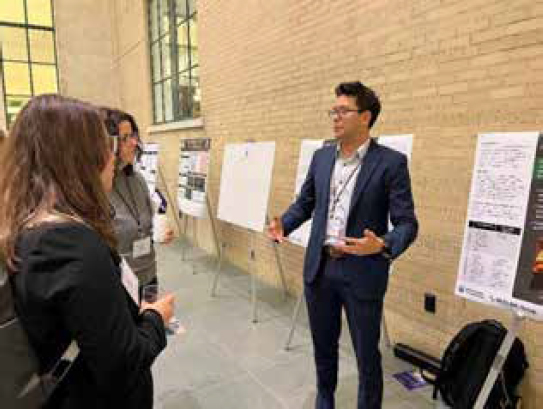
The posters covered a range of subjects, from equity in evacuation orders for mobile and manufactured home residents to more technical aspects, such as nanomodified concrete for transportation infrastructure applications. Other notable topics included the integration of resilience in transportation planning, the economic analysis of incorporating resilience into transportation infrastructure, and innovative uses of technology in transportation resilience.
Posters highlighted the importance of considering various factors in transportation planning, such as climate change, extreme weather events, and seismic activities. For instance, structuring a long-term extreme weather and climate resilience research agenda and modeling of the transportation impacts of a New Madrid seismic zone earthquake provided insights into planning for and mitigating the effects of natural disasters. North Cascades National Park’s long-term access and resilience strategy and an exploration of human behavior in shaping climate and extreme weather-related transportation resilience underscored the multifaceted approach required in this field.
The event was a platform for presenting research and a vital networking opportunity that fostered collaboration and idea exchange between participants.
Technical Session K: Design Standards for Resilient Transportation
Moderator: Albert Romano, ATCS
Presenter:
- Brenda Dix, ICF
Co-Presenters:
- Maria Mutuc, Virginia DOT
- Matt Lauffer, North Carolina DOT
- Rose Marie Klee, Texas DOT
Video recording: https://vimeo.com/showcase/10851381/video/893314391
Action Items:
- Update infrastructure design standards: Revise transportation infrastructure design standards to integrate climate change resilience based on U.S. Government Accountability Office (GAO) recommendations.64
- Implement proactive design approaches: Adopt forward-thinking design practices that factor in future climate scenarios, such as temperature changes and rising sea levels.
- Share best practices and lessons learned: Facilitate knowledge exchange between DOTs to disseminate best practices and lessons in climate-resilient infrastructure design.
Summary: “Pioneering Updates to Design Standards to Account for Climate Change” focused on updating design standards for transportation infrastructure to include considerations for climate change and GAO recommendations. Information emphasized the cost-effectiveness of incorporating climate change considerations into initial designs rather than addressing damages after the event.
The discussion included insights from various state DOTs, such as Virginia, New York, and Texas, which have begun implementing changes in their design standards. These updates include considerations for future temperature, precipitation, SLR, and storm-surge impacts in infrastructure projects. Approaches and language suggestions for updating design guidelines and manuals were based on projects such as NCHRP Project 15-61, “Applying Climate Change Information to Hydrologic and Coastal Design of Transportation Infrastructure”65 and NCHRP Project 15-80, “Design Guide and
___________________
64 U.S. GAO. (2022). Climate Resilience: Opportunities to Improve Federal Planning and Implementation. Report GAO-22-105688). Retrieved April 21, 2024, from https://www.gao.gov/products/gao-22-105688.
65 29. Ibid.
Standards for Infrastructure Resilience”.66 The presentation concluded with a question- and-answer session, during which the state DOTs shared lessons learned and plans for incorporating climate resilience into their design standards.
Technical Session L: Regional Resilience Planning (Part A)
Moderator: Rebecca Lupes, FHWA
Presenters:
- Ben Magallon, Alliance Transportation Group
- Matthew Miller, Cambridge Systematics
- Levi Stewart-Figueroa, Broward MPO
- Jeffrey Neal, North Central Texas Council of Governments
Co-Presenters:
- Rene Pastorek, Alliance Transportation Group
- Andrew Canan, Rio Grande Valley MPO
- John P. O’Har, Gannett Fleming
- Nick Fang, University of Texas at Arlington
- Matthew Lepinski, United States Army Corps of Engineers (USACE)
- Kate Zielke, North Central Texas Council of Governments
- Fouad Jaber, Texas A&M University
Video recording: https://vimeo.com/showcase/10851381/video/892755651
Action Items:
- Analyze vulnerabilities: Conduct in-depth vulnerability analyses of multimodal transportation systems to identify and address resilience challenges related to extreme weather and chronic stressors.
- Align projects: Align transportation improvement projects with resilience plans under the FHWA PROTECT program,67 ensuring that investments meet the specific needs of different urban regions, particularly in coastal and arid areas.
- Focus on implementation: Implement comprehensive resilience strategies, including climate modeling, critical infrastructure analysis, and stakeholder engagement, to guide infrastructure investments and policy decisions.
___________________
66 National Academies of Sciences, Engineering, and Medicine. (2021). NCHRP Project 15-80 [Active]: “Design Guide and Standards for Infrastructure Resilience.” TRB, Washington, DC. Retrieved April 21, 2024, from https://apps.trb.org/cmsfeed/TRBNetProjectDisplay.asp?ProjectID=4971.
67 1. Ibid.
Summary: “Resilient Transportation Analysis in the Rio Grande Valley” explored the integration of resilience and sustainability into the transportation system’s infrastructure planning. Remarks highlighted multimodal transportation systems experiencing various stressors ranging from extreme weather events to chronic issues like congestion and environmental factors, including air quality, water contamination, and protected lands and habitats. Discussions addressed the necessity for comprehensive resilience planning, including vulnerability assessments and strategies for infrastructure hardening, green infrastructure, and policy changes.
“Resilience Investment Planning Considerations and Lessons Learned from Coastal and Arid Metropolitan Planning Organizations in Texas” examined the integration of transportation improvement and resilience plans under the PROTECT Formula Program.68 This approach, exemplified by RIPs in the Permian Basin69 and the Southeast Texas Regional Planning Commission,70 combined traditional planning with critical infrastructure analysis and climate modeling. The session highlighted the importance of public and stakeholder engagement in selecting analysis scopes and ensuring that suggested investments align with the specific needs of urban regions.
Technical Session M: Geotechnical Modeling and Geohazards (Part A)
Moderator: Benjamin S. Rivers, FHWA
Presenter: Benjamin S. Rivers, FHWA
Co-Presenters:
- Mark Vessely, BGC Engineering
- Aine Mines, Landslide Technology
- Jennifer Bauer, Appalachian Landslide Consultants
Video recording: https://vimeo.com/showcase/10851381/video/893357085
Action Items:
- Integrate advanced technologies in geotechnical asset management: Embrace and integrate modern technological tools, such as light imaging,
___________________
68 1. Ibid.
69 Permian Basin Regional Planning Commission. (2024). Permian Basin Regional Planning Commission. (Homepage). Retrieved April 21, 2024, from https://www.pbrpc.org/.
70 South East Texas Regional Planning Commission. (2024). South East Texas Regional Planning Commission. Retrieved April 21, 2024, from https://www.setrpc.org/.
- detection, and radar (LiDAR) and GIS in geotechnical engineering for enhanced identification and management of geohazards (e.g., preventive measures, emergency responses).
- Standardize geotechnical solutions in design and construction: Implement a standard, ground-up practice incorporating geotechnical solutions into routine design and construction processes, for example, using filter fabrics for culverts.
- Foster collaboration and data sharing: Improved data management and sharing practices between state departments and agencies are essential for effective response to geotechnical challenges.
Summary: The session centered around enhancing transportation resilience through effective geotechnical asset management, spotlighting the implementation of the R4 Framework—robustness, redundancy, resourcefulness, and rapidity—in geotechnical solutions.71 The concept of resilience in geotechnical engineering was explored through the R4 Framework, where robustness and redundancy involve applying solutions such as redundant foundation elements or anchored systems for slope stability before an event, and resourcefulness and rapidity focus on responding effectively after an event with quick and resourceful solutions.
The discussion further delved into physical geotechnical solutions, emphasizing robust and redundant systems for slope stability and rockfall mitigation. Additionally, it highlighted the necessity of rapid response and efficient asset management in emergencies, referencing the guidelines in 23 CFR Section 667.72
Presentations covered diverse topics such as landslide management using LiDAR data, statewide geohazard inventories, and geotechnical asset management inventories for corridor resilience. Discussions included integrating the FHWA PROTECT program73 into resilience planning and standardizing routine design and construction with geotechnical solutions.
The session also highlighted significant additional points, such as risk and liability concerns in geotechnical engineering, geotechnical asset management for transportation resilience, the importance of data management and sharing between different departments, and the integration of modern tools such as LiDAR and GIS in education. Legal perspectives on geotechnical data were also discussed, emphasizing proactive management for liability protection.
___________________
71 Tierney, K., and M. Bruneau. (2007). Conceptualizing and Measuring Resilience: A Key to Disaster Loss Reduction. TR News, No. 250, May–June, pp. 14–17. https://onlinepubs.trb.org/onlinepubs/trnews/trnews250_p14-17.pdf.
72 Part 667—Periodic Evaluation of Facilities Repeatedly Requiring Repair and Reconstruction Due to Emergency Events. (2016). Title 23 CFR Part 667. Retrieved April 24, 2024, from https://www.ecfr.gov/current/title-23/chapter-I/subchapter-G/part-667.
73 1. Ibid.
Technical Session N: Flood Risks in Transportation
Moderator: Ellen Mecray, NOAA
Presenters:
- Jamie Mooney, HDR
- Paolo Avner, World Bank
- Ashley Atkins, Vermont Agency of Transportation
- Jonathan Peters, College of Staten Island, The City University of New York
Co-Presenters:
- Adam Keen, HDR
- Akiko Kishiue, World Bank
- Cameron Gordon, Australian National University
- Richard Flanagan, College of Staten Island, The City University of New York
Video recording: https://vimeo.com/showcase/10851381/video/893348477
Action Items:
- Enhance infrastructure resilience: Create region-specific models to address and manage vulnerabilities in critical infrastructure, such as bridges, to improve flood resilience.
- Incorporate climate projections in design: Use climate change projections and innovative modeling in infrastructure planning to prepare for the multifaceted impacts of compound flooding, focusing on equity and community engagement.
- Prioritize resilient urban transport: Apply analytical methods to evaluate urban flood risks, prioritizing the development of resilient transportation networks and economic stability in the face of natural disasters.
Summary: In the discussions on flood risks and resilience in transportation, the challenges of climate change, such as rising sea levels, were a focal point. These conversations highlighted the need for adaptable models to address specific regional issues such as infrastructure vulnerabilities.
Ashley Atkins illustrated Vermont’s resilience in emergency management by detailing the response to a catastrophic storm, emphasizing the importance of balancing state and local maintenance efforts.
The topic of compound flooding in the Pacific Northwest and Gulf Coast was also addressed and emphasized the complexity of flooding from multiple sources and the impact on communities and transportation systems. The panel discussed the role of
innovative coastal modeling and the incorporation of climate projections into infrastructure design, emphasizing the centrality of equity in resilience projects. Similarly, the analysis of urban connectivity in the wake of floods in Kigali, Rwanda, and the prioritization of resilience solutions were presented, underscoring the broader economic costs of disrupted networks in urban settings.
Technical Session O: Developing a Business Case and Communications Strategy for Resilience Efforts
Moderator: Suseel Indrakanti, Cambridge Systematics
Presenters:
- Suseel Indrakanti, Cambridge Systematics
- Lian Plass, Urban Land Institute Americas
- Daniel Forbush, Cambridge Systematics
- Maria Pena, Gannett Fleming
- Pamela Cotter, Rhode Island DOT
Co-Presenters:
- Christina Huang, Cambridge Systematics
- Aimee Flannery, Jacobs
Video recording: https://vimeo.com/showcase/10851381/video/893306386
Action Items:
- Develop and refine business cases for resilience projects: Focus on creating detailed business cases for transportation resilience initiatives, clearly outlining costs, benefits, risks, and potential opportunities. This will aid in making persuasive arguments for investments in resilience and facilitate decision-making processes.
- Enhance communication strategies for diverse stakeholders: Use clear, relatable, and actionable messages to ensure broader understanding and support for resilience projects among audiences, including public officials, DOT staff, and the public.
- Integrate comprehensive risk and resilience assessments in transportation planning: Regularly incorporate risk and resilience assessments into transportation planning. Use tools such as the Capability Maturity Framework to improve the effectiveness and efficiency of planning and communication related to resilience projects.74
___________________
74 FHWA. (2023). Transportation Systems Management and Operations Framework Tool. Retrieved April 24, 2024, from https://ops.fhwa.dot.gov/tsmoframeworktool/.
Summary: “Developing a Business Case and Communication Strategies” included business cases and comprehensive communication strategies for transportation resilience. This session featured a diverse panel of experts, each providing unique insights into the following resilience planning within the transportation sector:
- Stakeholder engagement in resilience planning, particularly in land use and real estate.
- Intricacies of developing business cases for resilience strategies.
- Comprehensive risk assessments in transportation planning.
- Practical experience of implementing resilience strategies within state DOT frameworks.
The session underscored the importance of constructing business cases that clearly outline the costs, benefits, risks, and opportunities of resilience projects. Effective communication with a diverse range of audiences, including the public, officials, and DOT staff, was emphasized as crucial.
The session included a case study from Southeast Florida and various resilience planning tools. The case study demonstrated the significance of data-driven decision-making and community engagement in resilience planning. Various resilience planning tools and methodologies, such as the Capability Maturity Model and Tools in a Box, which are designed to enhance planning and communication processes, were highlighted.75
Key takeaways from the session included the importance of a multidisciplinary approach in resilience planning, the necessity of data-driven strategies, the pivotal role of stakeholder engagement, the effectiveness of clear and targeted communication strategies, the need for adaptation and flexibility in planning, and the value of collaboration and partnership for sustainable resilience solutions.
Technical Session P: How Midwestern State Departments of Transportation Are Addressing Resilience
Moderator: Daniel Murray, American Transportation Research Institute
Presenters:
- Jeffrey Meek, ICF
- Brian Shekleton, Minnesota DOT
___________________
75 72. Ibid.
Co-Presenters:
- Zach Rable, Michigan DOT
- Randy Lane, Ohio DOT
Video recording: https://vimeo.com/showcase/10851381/video/893374704
Action Items:
- Develop and implement RIPs: Develop and execute RIPs with detailed assessments and strategies for extreme weather, drawing on lessons from other states.
- Enhance stakeholder engagement and interstate collaboration: Foster stakeholder engagement and interstate collaboration to share best practices and challenges for unified climate resilience strategies.
- Integrate climate resilience into planning and asset management: Embed climate resilience into long-term planning and asset management, using predictive modeling to anticipate and withstand future environmental changes.
Summary: “Resilience Adaptive Planning & Projects” explored how different state DOTs are addressing the challenges of climate change and building resilience in their infrastructure and operations. The session began with an overview of the FHWA PROTECT program76 and common strategies among state DOTs for implementing resilience. Representatives from the Ohio, Michigan, and Minnesota DOTs discussed their unique climate change resilience programs, which included vulnerability assessments and strategies to build resilient infrastructure and garner agency support. They also shared challenges and unexpected insights, shedding light on severe rainstorms, flooding, and extreme heat climate changes.
The session emphasized a multifaceted approach to resilience, which is to integrate it into planning and operations, and highlighted the importance of stakeholder engagement. The states presented their progress in resilience planning, stressing the need for comprehensive risk assessments and incorporating resilience into project scoping and long-term planning. The discussions highlighted state DOTs’ proactive support of and approach toward resilience planning, development, and implementation, considering climate change’s environmental, social, and financial impacts on transportation infrastructure.
___________________
76 1. Ibid.
Technical Session Q: Nature-Based Solutions
Moderator: Brenda Dix, ICF
Presenters:
- Brenda Dix, ICF
- Cameron Kukes, Washington DOT
- Bret Webb, University of South Alabama
- Roy Schiff, SLR International Corporation
- Laura Girard, FHWA
Co-Presenter: Susan Kanzler, Washington DOT
Video recording: https://vimeo.com/showcase/10851381/video/893306529
Action Items:
- Implement nature-based solutions (NBS): Develop and integrate NBS such as estuarine restoration, living shorelines, and riverbank stabilization into infrastructure projects, focusing on enhancing community safety and preserving natural habitats.77
- Promote sustainable infrastructure development: Emphasize adopting sustainable infrastructure practices that leverage NBS to showcase the co-benefits of these approaches regarding environmental preservation and long-term infrastructure viability.
- Innovation and adaptation in resilience planning: Foster a culture of innovation and adaptation within resilience planning, using case studies and shared experiences to continuously evolve and improve the effectiveness of NBS in infrastructure development.
Summary: The session explored using NBS to bolster transportation infrastructure against environmental threats and provided examples, including Washington’s estuarine restoration,78 Virginia’s living shorelines,79 and New Hampshire’s riverbank stabilization.80
___________________
77 U.S. DOT, FHWA. (2019). Nature-Based Solutions for Coastal Highway Resilience: An Implementation Guide. U.S. Climate Resilience Toolkit. Retrieved April 24, 2024, from https://toolkit.climate.gov/reports/nature-based-solutions-coastal-highway-resilience-implementation-guide.
78 Washington State DOT. (2023). Strategic Plan. Retrieved April 24, 2024, from https://wsdot.wa.gov/about/secretary-transportation/strategic-plan.
79 Virginia Institute of Marine Science. (2022). Center for Coastal Resources Management: Living Shorelines. Retrieved April 24, 2024, from https://www.vims.edu/ccrm/outreach/living_shorelines/.
80 American Council of Engineering Companies of New Hampshire. (2022). Digital Board: SLR Magalloway Riverbank Stabilization. Retrieved April 24, 2024, from https://acec-nh.org/wpcontent/uploads/2022/01/Digital-Board-SLR-Magalloway-River-Bank-Stabilization.pdf.
Examples demonstrated NBS capabilities to bolster infrastructure against the increasing challenges posed by climate change across various landscapes. Solutions presented practical and co-benefits in enhancing community safety, preserving natural habitats, and ensuring long-term infrastructure viability.
Technical Session R: Equity in Resilience (Part A)
Moderator: Annie Bennett, Georgetown Climate Center
Presenters:
- Grace Lewis, Environmental Defense Fund
- Shangjia Dong, University of Delaware
- Kenneth Dierks, Fernleaf Interactive, LLC
- Thayanne Ciriaco, University of Alberta
Co-Presenters:
- Jolanda Prozzi, Texas A&M Transportation Institute
- Bumsik Kim, Texas A&M Transportation Institute
- Eun Lee, Texas A&M Transportation Institute
- Maia Draper, Environmental Defense Fund
- Utkarsh Gangwal, University of Delaware
- Veronica Wambura, University of Alberta
- Syeda Narmeen Zehra, University of Alberta
- Stephen Wong, University of Alberta
Video recording: https://vimeo.com/showcase/10851381/video/893363761
Action Items:
- Equitable access to resilience hubs for vulnerable groups: Develop and implement strategies to ensure that resilience hubs are accessible to vulnerable populations, providing reliable transportation for emergency evacuations and essential service access.
- Tailored transportation solutions based on community needs: Use discrete choice models and spatial analysis to create transportation plans that cater to different demographic groups’ diverse needs and preferences for accessing resilience hubs.
- Inclusive urban and transportation planning: Integrate study findings into urban and transportation planning to strategically develop and place resilience hubs, focusing on vulnerable community members’ specific needs and equitable access.
Summary: Resilience hubs, essential during emergencies, provide critical resources
and support to residents, especially in disaster scenarios. Session studies highlighted the disparity in the impact of disasters based on local sociodemographic factors, emphasizing that vulnerable groups such as low-income communities, visible minorities, and residents of informal settlements are often the most adversely affected. A significant issue shared by the presenters is the lack of reliable transportation access for these groups, which is crucial for evacuations and accessing recovery facilities.
The presented research employed a variety of methodologies, including statistical tools, spatial analysis, and discrete choice models, focusing particularly on vulnerable populations. Survey data from approximately 950 residents of Edmonton, Alberta, Canada, captured the distinct needs, behaviors, and transportation preferences of different groups regarding resilience hubs.81 Spatial analysis components examined the correlation between proposed locations for resilience hubs and preferred modes of transport. Outcomes aimed to inform development and placement of resilience hubs around the characteristics and preferences of users, particularly those from vulnerable groups.
The Climate Vulnerability Index aims to aid in equitable transportation planning.82 This index uses extensive data to assess vulnerabilities and climate risks across the United States, which provides actionable insights for MPOs.
The impact of flood disruptions on healthcare access equity emphasized disparities faced by rural areas during floods.83 Findings underscored the need for resilient infrastructure that considers equity, especially considering climate change’s increasing impact on disadvantaged communities.
___________________
81 Ciriaco, T. G. M., and S. D. Wong. (2022). Review of Resilience Hubs and Associated Transportation Needs. Transportation Research Interdisciplinary Perspectives, 16, Article 100697. https://doi.org/10.1016/j.trip.2022.100697.
82 Environmental Defense Fund. (2024). Climate Vulnerability Index. Retrieved April 24, 24024, from https://climatevulnerabilityindex.org/.
83 Kaiser, R., I. M. Karaye, T. Olokunlade, T. A. Hammond, D. W. Goldberg, and J. A. Horney. (2021). Hemodialysis Clinics in Flood Zones: A Case Study of Hurricane Harvey. Prehospital and Disaster Medicine, 36(2), pp. 135–140.
Technical Session S: Designing Resilient Transportation Infrastructure
Moderator: Steven Olmsted, Arizona DOT
Presenters:
- Alan O’Connor, Trinity College Dublin
- Julie Eaton Ernst, HNTB
- Kees van Muiswinkel, Rijkswaterstaat—Ministry of Infrastructure and Water Management
- Elizabeth Repko, U.S. GAO
Co-Presenters:
- Ivonne van Pelt, Rijkswaterstaat—Ministry of Infrastructure and Water Management
- Gerrald Goselink, Rijkswaterstaat—Ministry of Infrastructure and Water Management
- Thomas Bles, Deltares
- Ype Wijnia, Asset Resolutions
- Mary Koenen, U.S. GAO
Video recording: https://vimeo.com/showcase/10851381/video/893366461
Action Items:
- Integrate probabilistic risk assessment in infrastructure design: Implement Bayesian networks and probabilistic methods for bridge design and assessment across various transportation projects to better manage uncertainties related to natural hazards and climate impacts.84
- Update design standards for climate adaptation: Develop and adopt new design standards incorporating cumulative probability and variable annual exceedance probabilities, reflecting the changing patterns of extreme weather events due to climate change.
- Mainstream climate resilience in asset management: Conduct nationwide stress tests for infrastructure vulnerability, develop climate resilience policies aligned with asset management standards, and create risk mapping tools to inform maintenance and decision-making processes.
___________________
84 Arangio, S., and J. Beck. (2010). Bayesian Neural Networks for Bridge Integrity Assessment. Structural Control and Health Monitoring. 2012; 19, pp. 3–21. https://doi.org/10.1002/stc.420.
Summary: Using Bayesian networks to quantify resilience in bridge design and assessment demonstrates how probabilistic methods, instead of deterministic ones, account for the uncertainties inherent in natural hazards such as floods and scours affecting bridges. The approach allows for risk-based analysis, considering the likelihood of limit-state violations and the associated consequences, thus optimizing design and assessment from risk and resilience perspectives. This methodology was applied to an actual structure in Arizona and incorporated into the GAO Report to Congress, thus demonstrating its potential for broader application in infrastructure risk and resilience quantification.85
Changing design standards for climate change introduced a risk-based approach leveraging cumulative probability and variable annual exceedance probabilities. This method informs infrastructure design by considering the changing likelihood of extreme weather events due to climate change. The innovative framework was applied in a South Boston, Massachusetts, pilot project, in which it influenced coastal landscape design, and integrated into the Massachusetts Climate Resilience Design Standards Tool.86
The Dutch Delta Decision aims for climate and flood resilience in vital functions by 2050.87 The Dutch highway network operator has mainstreamed climate change adaptation into its asset management, based on International Organization for Standardization 55000.88 Presenters from the Rijkswaterstaat—Ministry of Infrastructure and Water Management conducted a stress test to identify network vulnerabilities, developed specific policy goals, and created risk maps to guide decision-making for maintenance planning.
“Climate-Resilient Roads: Federal Efforts and Options” discussed federal initiatives and strategic options to enhance the resilience of roads to climate change.
___________________
85 U.S. GAO. (2021). Climate Resilience: Options to Enhance Resilience of Federally Funded Roads and Reduce Fiscal Exposure. (GAO-21-436). Retrieved April 24, 2024, from https://www.gao.gov/assets/gao-21-436.pdf.
86 Massachusetts Executive Office of Energy and Environmental Affairs. (n.d.). Massachusetts Climate Resilience Design Standards Tool. Retrieved April 24, 2024, from https://resilient.mass.gov/rmat_home/designstandards/.
87 Dutch Delta Programme. (n.d.). Delta Decision on Flood Risk Management. Retrieved April 24, 2024, from https://english.deltaprogramma.nl/three-topics/flood-risk-management/deltadecision#:~:text=The%20core%20of%20the%20Delta%20Decision%20for%20Flood,%28or%200.001%25%29.%20This%20is%20the%20%E2%80%98base%20protection%20level%E2%80%99.
88 International Organization for Standardization. (2014). ISO 55000:2014 Asset Management—Overview, Principles, and Terminology. Retrieved April 24, 2024, from https://www.iso.org/standard/55088.html.
Technical Session T: Community Resilience
Moderator: Bradley Dean, Federal Emergency Management Agency (FEMA)
Presenters:
- Stephen Wong, University of Alberta
- Pamela Murray-Tuite, Clemson University
- Katherine Rainone, Metropolitan Washington Council of Governments
- Nick Veraart, Michael Baker International
Co-Presenters:
- Mohammad Jahedul Alam, Dalhouise University
- Sarah Grajdura, University of Vermont
- William B. Anderson, TRB
- Vaiva Kalesnikaite, Clemson University
- Michael Deegan, USACE
- Igor Linkov, USACE Research and Development Center
- David Vaughn, Clemson University
- Annie Dixon, Indianapolis MPO
- Hannah Walter, California Transportation Commission
- Kelsey Stoddard, USACE Research and Development Center
Video recording: https://vimeo.com/showcase/10851381/video/893350386
Action Items:
- Develop equitable transportation response plans: Establish comprehensive plans focusing on the transportation needs of marginalized communities during disasters.
- Enhance community resilience through place attachment: Recognize and incorporate the role of transportation in strengthening community resilience and place attachment, which is described as the emotional bond between individuals and specific places.
- Integrate resilience in regional transportation planning: Encourage MPOs to collaborate on RIPs and share best practices for regional transportation resilience.
Summary: Discussions on resilient recovery and equitable transportation response in disasters included community-based and equitable disaster responses, transportation’s role in community resilience, lessons from MPOs on resilience planning, and leveraging zero-emission mandates for resilient supply chains. Topics included addressing the needs of marginalized communities during disasters, understanding the impact of place
attachment on community resilience, sharing regional experiences in resilience planning, and integrating military and civilian resilience strategies.
The session also emphasized the need for a guide to address transportation equity in disasters, the impact of transportation on long-term economic recovery and community cohesion after a disaster, and the role of regional planning bodies in adapting and mitigating climate impacts. Insights included leveraging federal mandates for resilient supply chains, zero-emission transportation, and the significance of artificial intelligence in optimizing logistics for resilience.
Technical Session U: Visualization and Modeling
Moderator: Mark Abkowitz, Vanderbilt University
Presenters:
- Cristina Torres-Machi, University of Colorado Boulder
- Ted Thrasher, The MITRE Corporation
- Crystal Goodison, University of Florida GeoPlan Center
- Kurt Golembesky, North Carolina DOT
Co-Presenters:
- Francisco Contreras, University of Colorado Boulder
- Reginald Pierre-Jean, University of Florida GeoPlan Center
- Christy McCain, University of Florida GeoPlan Center
- Jennifer Carver, Florida DOT
Video recording: https://vimeo.com/showcase/10851381/video/893307416
Action Items:
- Utilize crowdsourced data for flood impact analysis: Implement crowdsourced travel behavior data to assess the impact of flooding on community resilience and traffic patterns.
- Develop integrated climate and aviation models: Create comprehensive models that integrate climate forecasts with aviation performance and environmental factors to plan for heat-induced disruptions in aviation.
- Incorporate advanced flood resilience tools in transportation planning: Integrate predictive tools such as the Flood Inundation Mapping and Alert
- Network,89 the Transportation Surge Analysis Prediction Program,90 and BridgeWatch91 for real-time monitoring and predictive analysis of flood impacts on transportation infrastructure.
Summary: The session featured presentations on resilience processes and programs. The presentations addressed using crowdsourced travel data to examine community resilience and traffic disruptions caused by flooding; visualizing the effects of heat on aviation by integrating climate forecasts, aircraft performance, and environmental modeling; using a resilience screening tool for transportation planning to consider flood risks and climate change impacts; and integrating flood warning and planning tools for resilience.
Technical Session V: Agency Culture for Resilience
Moderator: Cassandra Bhat, ICF
Presenters:
- Cassandra Bhat, ICF
- Jim Pappas, Delaware DOT
- Keri Robinson, Caltrans
- Chris Berg, Virginia DOT
- Jennifer Carver, Florida DOT
- Stacy Williams, TRC
Co-Presenter: Rawlings Miller, TRC
Video recording: https://vimeo.com/showcase/10851381/video/893391436
Action Items:
- Establish dedicated resilience offices: Evaluate the feasibility and benefits of setting up specialized resilience offices within DOTs.
- Develop comprehensive resilience plans: Create and execute detailed plans incorporating lessons learned from other DOTs.
- Foster collaboration and innovation: Promote collaboration between agencies and encourage innovative approaches in resilience planning.
___________________
89 North Carolina Flood Inundation Mapping and Alert Network. (n.d.). FIMAN-T. Retrieved April 24, 2024, from https://espgis.com/FIMAN_T/.
90 Association of State Floodplain Managers. (2023). Transportation Surge Analysis Prediction Program. Retrieved April 24, 2024, from https://www.floods.org/wp-content/uploads/640b9dbbd7047.pdf.
91 U.S. Engineering Solutions. (2024). BridgeWatch. Retrieved April 24, 2024, from https://usengineeringsolutions.com/bridgewatch/.
Summary: “Organizing for Resilience: Experiences from DOT Resilience Offices” focused on the establishment and operation of dedicated resilience offices in state DOTs. Discussions focused on justification for setting up resilience offices, impacts on resilience strategies, and benefits and challenges of such specialized offices.
Plenary Session: Global Resilient Transportation—Blending Finance, Insurance, Risk, and New Decision Theory Models
Moderator: Steven Olmsted, Arizona DOT
Presenters:
- Andy Neal, Aon Public Sector Partnership
- Nicolas Peltier-Thiberge, World Bank
- Guru Madhavan, National Academy of Engineering
- Alan O’Connor, Trinity College Dublin
Action Items:
- Advance decision-making models: Develop and implement more sophisticated decision-making models in transportation systems to address complexity and uncertainty, particularly regarding the increase in natural hazards and climate change impacts.
- Integrate holistic resilience approaches: Adopt a total systems thinking approach in transportation resilience, integrating risk modeling, resilience planning, and social dimensions, such as ensuring equity through accessible features and community engagement, to prepare for the challenges of a growing global population.
- Enhance risk assessment and management: Focus on improving risk assessment and management strategies in transportation, considering the long-term impacts of extreme weather and natural hazards, to ensure the resilience and sustainability of global transportation systems.
Summary: The session suggested a holistic approach to transportation resilience that encompasses risk assessments, decision-making improvements, and integration of diverse perspectives to address the challenges of natural hazards and climate change. Discussions among panelists from diverse fields (see Figure 4) included integration of various perspectives from risk modeling, resilience, and social dimensions, with consideration for the expected growth of the worldwide population to more than 11 billion by 2100 and the consequent expectation for resilient transportation systems.

Meeting: Emergency Management and Security
Presenters:
- Chelsea Treboniak, Critical Ops
- Jenni Hesterman, Security Professional
- Ben Currier, Transportation Security Administration (TSA)
- Jason Carnes, FHWA
- Daniel Genua, Cybersecurity and Infrastructure Security Agency (CISA)
- Irene Cabral, Florida DOT
Action Items:
- Strengthen transportation cybersecurity: Prioritize cybersecurity in transportation infrastructure, ensuring protection against digital threats.
- Build resilient electric vehicle infrastructure: Develop and secure electric vehicle infrastructure to withstand environmental challenges and cyber threats.
- Enhance interagency collaboration: Foster data sharing and collaborative efforts between agencies such as TSA, CISA, and state DOTs for comprehensive transportation security.
Summary: Attendees from various sectors acknowledged the mandate for security programs in highway infrastructure (see Figure 5). Representatives shared a broad portfolio covering highways to school buses, emphasizing the diversity of responsibilities and the need for emergency-response preparedness. Discussions centered on the growing importance of cybersecurity in critical infrastructure and soft target hardening.
The states’ proactive stance on cybersecurity and ventures into electric vehicles and infrastructure resilience were often geographically specific and associated with natural disasters such as hurricanes. This demonstrated the evolving challenges of securing automated vehicle lanes and the criticality of partnerships and information sharing in addressing security threats. Federal agency information dissemination and efforts to expand influence through grant programs were also points of focus, indicating a collaborative approach toward enhancing national security across transportation networks.
Technical Session W: Maritime Resilience
Moderator: Bradley Dean, FEMA
Presenters:
- Katherine Chambers, USACE Research and Development Center
- Craig Philip, Vanderbilt University
- Marin Schultz, USACE Research and Development Center
- Michelle Carns, U.S. Committee on the Marine Transportation System
Co-Presenters:
- Jevon Daniel, CISA
- Janey Camp, Vanderbilt University
- Miguel Moravec, Vanderbilt University
Video recording: https://vimeo.com/showcase/10851381/video/893369161
Action Items:
- Incorporate equity in resilience planning: Integrate the Justice40 Initiative92 to ensure that 40 percent of federal funding supports environmental justice communities, thereby enhancing equitable resilience.
- Enhance community engagement: Employ participatory methods in data collection and planning to ensure recovery efforts reflect the diverse needs of all community segments after disasters such as Hurricane Ida.
- Prioritize network redundancy: Focus on projects that improve network redundancy and address inequities to ensure resilient transit systems that can withstand climate-related disruptions.
Summary: The session focused on the critical need for resilient recovery in the Marine Transportation System (MTS).93 Discussions centered around the MTS Resilience Assessment Guide, which integrates various resources into a resilience assessment framework.94 The guide, co-led by CISA and USACE, is for stakeholders managing complex MTS systems. Case studies such as the seismic resilience at the Port of Portland and the resilience of the Caribbean and mainland port traffic were highlighted, showing the importance of stakeholder relationships, understanding MTS functions, and exploring resilient practices.
Technical Session X: Equity in Resilience (Part B)
Moderator: Heather Holsinger, Office of the Under Secretary for Policy, U.S. DOT
Presenters:
- Jeffrey Meek, ICF
- Nick Shaw, HDR
- Jiayun Shen, Clemson University
Co-Presenters:
- Rachael Barlock, SEMCOG
___________________
92 2. Ibid.
93 U.S. DOT, Maritime Administration. (n.d.). Maritime Transportation System (MTS): Improving the U.S. Marine Transportation System. Retrieved from April 24, 2024, from https://www.maritime.dot.gov/outreach/maritime-transportation-system-mts/maritime-transportation-system-mts.
94 Cybersecurity and Infrastructure Security Agency. (n.d.). Marine Transportation System Resilience Assessment Guide. Retrieved April 24, 2024, from https://www.cisa.gov/resources-tools/resources/marine-transportation-system-resilience-assessment-guide.
- E. Cris Liban, Los Angeles Metro
- Emilia Ptak, Clemson University
- Pamela Murray-Tuite, Clemson University
Video recording: https://vimeo.com/showcase/10851381/video/893358196
Action Items:
- Incorporate equity into resilience planning: Transportation resilience planning should prioritize strategies focused on equity to comply with the Justice40 Initiative,95 thereby ensuring investments and infrastructure improvements in marginalized communities for fair resource distribution.
- Strengthen community engagement: Involve local communities, especially those affected by climate change and disasters, in resilience planning. Use qualitative feedback, such as community surveys, and statistical analyses of participation rates to tailor recovery efforts and infrastructure projects to specific local needs.
- Enhance operational resilience: Adopt an integrated landscape approach in regional transport systems, balancing societal needs with natural systems resilience, and develop multihazard adaptive frameworks that consider future climate conditions and community interdependencies.
Summary: The session discussed integrating equity within the realm of transportation resilience. The discussions centered around how transportation bodies embed equal opportunity in their operations, with particular attention to the Justice40 Initiative, which aims for significant investments in underserved areas.96 The session included strategic planning, as seen in Toronto’s transit expansion, which hardwired equity considerations into its projects to ensure that resilience measures reach those disproportionately affected by climate events.97 Further insights were gleaned from open-ended responses to Hurricane Ida; these insights reinforced the need for participatory recovery approaches that prioritize community-specific needs for a more resilient future.
___________________
95 2. Ibid.
96 2. Ibid.
97 Executive Director, Transit Expansion Office, and Chief Planner and Executive Director, City Planning. (2022). Advancing City Priority Transit Expansion Projects—Eglinton East LRT and Waterfront East LRT. Report for Action, May 25, 2022. Retrieved April 24, 2024, from https://www.toronto.ca/legdocs/mmis/2022/ex/bgrd/backgroundfile-226594.pdf.
Technical Session Y: More Tools and Toolkits
Moderator: Xiangyu Li, Oklahoma State University
Presenters:
- Jurgen Hackl, Princeton University
- Adair Garrett, Georgia Institute of Technology
- Jennifer Martin, Maryland Transit Administration (MTA), Maryland DOT
- Akhil Anil Rajput, Texas A&M University
- James Hunter, Morgan State University
Co-Presenters:
- Juan Carlos Lam, WSP
- Adjo Amekudzi-Kennedy, Georgia Institute of Technology
- Manuel Cuadra, Georgia Institute of Technology
- Zhongyu Yang, Georgia Institute of Technology
- Prerna Singh, Georgia Institute of Technology
- Paola Ariza, MTA, Maryland DOT
Video recording: https://vimeo.com/showcase/10851381/video/893351984
Action Items:
- Develop a computational platform: Innovate a computational platform that can integrate various simulation models to estimate risk and resilience, particularly for transportation networks.
- Create adaptive planning tools: Implement a suite of dynamic adaptive planning tools to assist in resilience-focused transportation planning, ensuring the inclusion of multihazard considerations.
- Use resilience and climate data: Leverage improved data tools such as the intensity−duration−frequency (IDF) curve platform to inform infrastructure planning, thus enhancing resilience against climate-induced hazards.98
Summary: The session included resilience-building tools for transportation systems. An example includes a scalable computational platform for risk and resilience estimation in infrastructure that integrates various models and supports high-performance computing
___________________
98 Delaware River Basin Commission. (n.d.). DRBC IDF Curve Tool. Retrieved April 24, 2024, from https://drbc-idf.rcc-acis.org/.
and a web-based platform for road network criticality assessment. Other examples included the MTA’s Adaptation and Resiliency Toolbox (ARToolbox,99 an interactive online resource for planning and implementing preparedness measures for transit assets) and the Mid-Atlantic Regional Integrated Sciences and Assessments suite of data tools for decision support, planning, and public engagement in the face of climate change.100
Tools and toolkits emphasized the importance of integrating resilience into infrastructure planning, using data-driven tools, and involving stakeholders to enhance the adaptability of transportation systems.
Technical Session Z: Geotechnical Modeling and Geohazards (Part B)
Moderator: John Dean, AASHTO
Presenters:
- Becky Rude, Jacobs
- Amir Golalipour, FHWA
- John Clendenin, Alaska Department of Transportation and Public Facilities
Co-Presenters:
- Mark Vessely, BGC Engineering
- Khalid Mohamed, FHWA
Video recording: https://vimeo.com/showcase/10851381/video/893352838
Action Items:
- Plan resilient infrastructure: Conduct thorough assessments of geohazards in national parks to guide the design of resilient infrastructure, integrating future climate projections into hazard models for informed decision-making.
___________________
99 Baltimore Metropolitan Council. (2023). MTA’s Adaptation and Resiliency Toolbox (ARToolbox). Retrieved April 24, 2024, from https://baltometro.org/sites/default/files/bmc_documents/committee/presentations/tc/TC240305pres_MTA-ARToolbox.pdf.
100 Mid-Atlantic Regional Integrated Science and Assessments. (n.d.). Retrieved April 24, 2024, from https://www.midatlanticrisa.org/.
- Consider FHWA’s Geohazard and Pavement Resilience Initiative: Update roadway design practices to address the rise in geohazards due to climate change and embed resilience in pavement life-cycle management.
- Model Alaska’s drone docking systems for geohazard mitigation: Implement automated drone docking systems for consistent data collection in geohazard areas.
Summary: Discussions on resilient design in the face of geohazards at Yellowstone National Park provided a comprehensive approach to assess geohazard vulnerability, especially considering the impacts of climate change.
FHWA’s efforts in investigating geohazards and pavement resilience emphasized the need to adapt infrastructure design to changing climate conditions and extreme weather events.
The Alaska Department of Transportation and Public Facilities demonstrated how it uses drone docking systems for emergency response and avalanche mitigation to highlight the benefits of automated data capture for creating snow-depth models.
Technical Session AA: Asset Management
Moderator: Juan Carlos Lam, WSP
Presenters:
- Brian Shekleton, Minnesota DOT
- Tashia Clemons, FHWA
- Lauren Gardner, Vanderbilt University
Co-Presenters:
- Doug Maki, Minnesota DOT
- Robert Kafalenos, FHWA
- Elizabeth Habic, FHWA
Video recording: https://vimeo.com/showcase/10851381/video/893353009
Action Items:
- Integrate resilience into asset management: Focus on incorporating resilience into transportation asset management plans (TAMPs), addressing extreme weather impacts and life-cycle planning.101
___________________
101 U.S. Government Publishing Office. 23 CFR Part 667 - Periodic Evaluation of Facilities Repeatedly Requiring Repair and Reconstruction Due to Emergency Events. Code of Federal Regulations, Title 23: Highways, Part 667. Available from: https://www.ecfr.gov/current/title-23/part-667.
- Promote a collaborative approach to asset management: Encourage multidisciplinary involvement in TAMP development, involving engineers, planners, environmentalists, and financial specialists for more efficient and comprehensive asset management strategies.
- Develop transportation RIPs (TRIPs): Create and implement TRIPs that focus on assessing vulnerabilities and prioritizing improvements to enhance the resilience of transportation systems against climate hazards.
Summary: State DOTs are incorporating resilience into TAMPs in response to the Bipartisan Infrastructure Law.102 Presentations included the importance of resilience in life-cycle planning and risk management. Key topics included approaches to integrating resilience into asset management, the evolution of TAMPs since the Moving Ahead for Progress in the 21st Century Act (MAP-21), and the impact of extreme weather on transportation systems. Discussions covered the changing strategies in asset management, collaboration across various disciplines, and new methodologies in TAMP development with regard to resilience and extreme weather factors.
Technical Session AB: Emergency Management
Moderator: Chelsea Treboniak, Critical Ops
Presenters:
- Veronica Wambura, University of Alberta
- Daniel Patterson, Cambridge Systematics
- Charles Doktycz, Argonne National Laboratory
Co-Presenters:
- Stephen Wong, University of Alberta
- Thomas Wall, Argonne National Laboratory
Video recording: https://vimeo.com/showcase/10851381/video/893347557
Action Items:
- Integrate active transportation: Develop and implement strategies for including bicycles and pedestrian pathways in emergency-response plans. This includes identifying critical routes and infrastructure that support active transportation during disasters.
___________________
102 1. Ibid.
- Promote transit equity in emergencies: Focus on ensuring equitable access to public transit during emergencies, particularly for vulnerable populations. This entails planning for the diverse needs of these groups, ensuring transit accessibility, and, potentially, implementing fare-free transit during crises.
- Advance community-centric emergency management: Enhance community resilience by fostering social cohesion through public transit systems during disasters. Engage community members in emergency planning processes to ensure their needs and strengths are incorporated into more inclusive emergency-response frameworks.
Summary: Discussions integrated active transportation in emergency response. Emphasis was on the following:
- Addressing the underutilized role of bicycles and pedestrian pathways in emergency plans by proposing methods to identify critical active transportation routes for disaster sustainability.
- Changing the disproportionate disaster impact on vulnerable groups by advocating for transit equity and community cohesion through public transit in emergencies.
- Advocating for inclusive emergency-response frameworks that leverage community strengths and prioritize transit equity.
Technical Session AC: Regional Resilience Planning (Part B)
Moderator: Mosi London, Arlington County (VA) DOT
Presenters:
- Chia-Wei Hsu, Texas A&M University
- Alexander Kerr, Barton & Loguidice, DPC
- Oceane Keou, World Bank
Co-Presenters:
- Jayme Breschard, Barton & Loguidice, DPC
- Guillermo Diaz-Fana, World Bank
Video recording: https://vimeo.com/showcase/10851381/video/893354674
Action Items:
- Focus on innovative resilience integration: Develop practical methods and processes for integrating resilience into transportation infrastructure with a focus on bridging research with engineering practices.
- Increase strategic regional planning: Create comprehensive regional planning strategies that prioritize vulnerability assessment and long-term resilience in transportation and that incorporate best practices for asset management and hazard impact mitigation.
- Further climate-resilient infrastructure: Advocate for an integrated land-use planning approach that promotes climate resilience, especially in vulnerable regions and ensures that roads and transport systems balance societal needs with the sustainability of natural systems.
Summary: In this session, the focus was on embedding resilience in transportation infrastructure planning and development. Bridging the gap between resilience research and engineering practice includes innovative methods and practical information for resilience integration in transportation projects, policy, tools, and cross-organization coordination for resilience in planning and project development.
A regional planning strategy for addressing transportation infrastructure vulnerabilities incorporates asset inventories, data analysis of hazard impacts, and multifaceted strategies aimed at bolstering long-term resilience. In Nepal, the significant impacts of climate change on transportation underscore the need to integrate climate resilience into the national road network strategy.103 An integrated land-use planning approach was proposed that designs roads to enhance climate resilience while maintaining a balance between societal needs and environmental conservation.
___________________
103 World Bank. (2023). Project appraisal document for the Accelerating Transport and Trade Connectivity in Eastern South Asia—Nepal Phase 1 Project. Retrieved from https://documents1.worldbank.org/curated/en/099052123013518969/pdf/P1779020f4e1150aa091e10b5ab5352707e.pdf.
Technical Session AD: Nature-Based Resilience for Transportation: Connecting New Science, Engineering, and Ecology to Support Practice
Moderator: Trevor Meckley, NOAA
Presenters:
- Elizabeth Habic, FHWA
- Arnica MacCarthy, Caltrans
- Vishal Ream-Rao, Caltrans
- Benjamin Bowers, Auburn University
- Jo Sias, University of New Hampshire
Video recording: https://vimeo.com/showcase/10851381/video/893347763
Action Items:
- Integrate NBS into resilience planning: Leverage the expertise of environmental scientists, engineers, and policymakers to create resilience plans. These should incorporate NBS, such as preserving habitats and integrating ecological elements into engineering designs that provide dual benefits of infrastructure protection and environmental enhancement.
- Advance research and technical assistance: Encourage and fund research initiatives focusing on the application and efficacy of NBS in transportation infrastructure. This involves bridging the gap between current research and practical engineering applications, particularly in coastal and riverine ecosystems, to fortify them against climate-induced threats.
- Foster interdisciplinary collaboration: Establish partnerships between public agencies, the private sector, academia, and nonprofit organizations. These collaborations aim to exchange knowledge, align strategies, and deploy NBS effectively. Engage in knowledge transfer activities such as workshops, webinars, and joint projects to enhance the understanding and use of these solutions in real-world scenarios.
Summary: Individuals convened to explore integrating NBS into the fabric of transportation resilience. The impetus for the session was the escalating threat that climate change poses to transportation infrastructure, with increased flooding, rising sea levels, and intensified storm events challenging the integrity of roadways nationwide.
The role of NBS in managing natural habitats such as wetlands, reefs, beaches, and dunes and embedding ecological components within engineered structures could provide a defense against nature’s erosive force while enhancing environmental
benefits. Emerging research and technical assistance highlighting the vital role of NBS in bolstering coastal and riverine ecosystems could be reimagined with the inclusion of natural materials and processes, filling research gaps with integrated approaches that could pivot transportation resilience to new heights.
The repeated inundation of roadways poses significant challenges that emphasize the need for proactive planning and robust emergency management to maintain resilient transportation networks. NBS are proposed as offering sustainable options, and the ICNet is exploring both theoretical and practical applications.104 This includes early findings from projects that focus on enhancing pavement resilience against SLR. The approach advocates for interdisciplinary collaboration to bridge the gap between scientific research and practical engineering, thereby ensuring effective implementation of NBS.
Closing Plenary—Tools, Resources, and Partnerships for Transportation Resilience
Moderator: Brenda Dix, ICF
Presenters:
- Tina Hodges, FHWA
- Trevor Meckley, NOAA
- Shawn Johnson, Office of Research, Development and Technology, Office of the Secretary, U.S. DOT
- Peter Herrisk, Jr., FEMA
- Kim Penn, NOAA
- Ann Shinkany, U.S. DOT
- Sandra Pavlovic, NOAA
- E. Cris Liban, Los Angeles Metro
- Heather Holsinger, Office of the Under Secretary for Policy, U.S. DOT
Co-Presenter:
- Bhaskar Subramanian, NOAA
Video recording: https://vimeo.com/showcase/10851381/video/893345097
___________________
104 26. Ibid.
Action Items:
- Foster climate-smart collaboration: Establish interdisciplinary teams combining state and federal DOTs, NOAA, and local expertise to integrate climate science into transportation planning and ensure resilience initiatives are scientifically sound and actionable.
- Encourage community-centered resilience: Engage local and tribal communities in resilience planning by leveraging FEMA’s Building Resilient Infrastructure and Communities (BRIC),105 to ensure equitable benefit distribution and enhance community resilience against climate threats.
- Leverage and communicate: Utilize tools such as NOAA’s Climate Mapping for Resilience and Adaptation (CMRA)106 and Atlas 15107 to plan for climate impacts on transportation. Prioritize clear communication and federal funding to build resilient infrastructures.
Summary: The closing plenary focused on tools, resources, and partnerships for transportation resilience and featured discussions on climate-smart transportation initiatives by state and federal DOTs and NOAA, FEMA’s BRIC program for building community resilience, the role of data in climate adaptation, and the importance of including local and tribal communities in resilience planning. Key themes included integrating climate science into transportation planning, leveraging federal funding for resilience, and ensuring equitable distribution of benefits. The session also previewed tools and resources, such as NOAA’s CMRA tool and Atlas 15. It underscored the need for interdisciplinary collaboration and clear communication to address transportation challenges posed by climate change.
___________________
105 FEMA. (n.d.). Building Resilient Infrastructure and Communities. Retrieved April 24, 2024, from https://www.fema.gov/grants/mitigation/building-resilient-infrastructure-communities.
106 U.S. Climate Resilience Toolkit. (n.d.). Retrieved April 24, 2024, from https://resilience.climate.gov/.
107 National Weather Service. (n.d.). NOAA Atlas 15 flyer. Retrieved April 24, 2024, from https://www.weather.gov/media/owp/hdsc_documents/NOAA_Atlas_15_Flyer.pdf.


