As Commercial Districts Come Back to Life, Water Stagnation Will Pose Health Risks
Feature Story
By Megan Lowry
Last update June 11, 2020
After several months sitting empty and quiet, commercial districts are coming back to life as businesses and offices are being given permission to reopen. When the lights come on and doors are unlocked, will the water that comes out of the tap be safe?
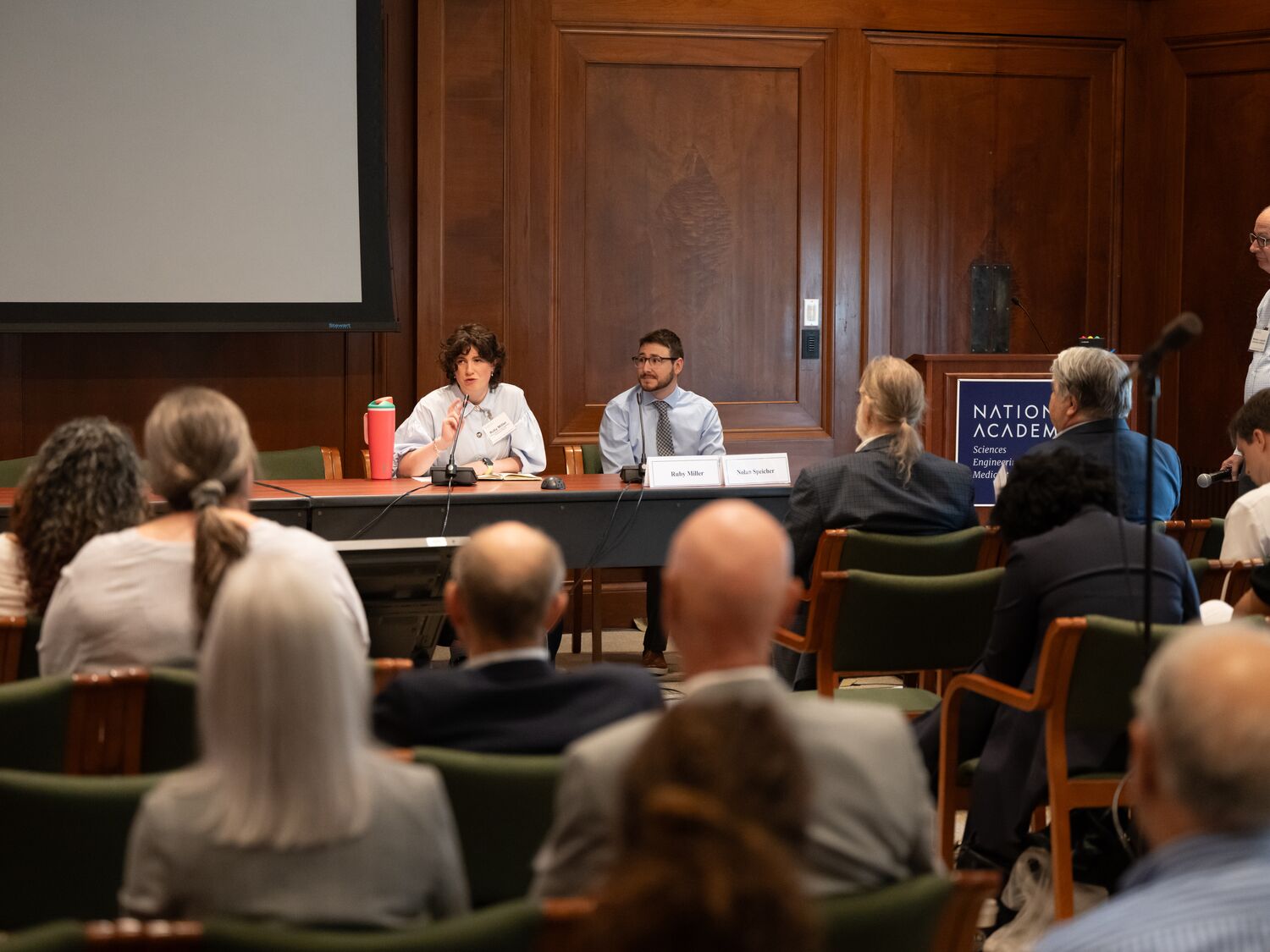
The National Academies of Sciences, Engineering, and Medicine hosted a panel discussion recently to explore how stagnant water in commercial buildings can pose a risk to public health. “Water utilities expect to basically put chemicals in the water so that it gets to the building owner without contamination,” said Andrew Whelton, associate professor of civil, environmental, and ecological engineering at Purdue University. But stagnation can lead to loss of disinfectant chemicals in the lingering water, encouraging bacterial growth and failing to control corrosion. “If that water spends longer in transit, it may become vulnerable to contamination.”
Most research on the public health harms of water stagnation has been done on a shorter time scale, looking into the effects over just days or weeks, so the consequences of a months-long shutdown are unknown. Whelton explained that in past studies at schools where water remained stagnant for just a few days, “we’ve found you could have levels exceed safe drinking water limits for copper. And in some places, we found levels at which kids or healthy adults could vomit, have nausea, or abdominal cramps.”
In addition to leaching from metal pipes, experts are also concerned about the possibility of a sharp rise in waterborne disease when buildings are re-occupied, especially Legionnaires’ disease. First recognized 40 years ago after an outbreak at the 1976 American Legion conference in Philadelphia, Legionnaires’ disease is caused by Legionella bacteria and can lead to complications like pneumonia and kidney disease, and on average is fatal in 10 percent of infected patients.
Last year, the National Academies published a report on management of Legionella in water systems. Ruth Berkelman, a member of the committee that wrote the report and moderator of the panel discussion, explained how Legionella is spread through contaminated water systems. “Some of the common sources of infection include shower heads, cooling towers … hot tubs, saunas, whirlpools, decorative fountains — there are many, many sources.” Climate change, inadequate maintenance of public water supplies, and low-flow water fixtures in green buildings, among other causes, have made Legionnaires’ six-fold more common than when it was first discovered in 1976, even before the COVID-19 shutdowns.
To prevent water quality problems, water in buildings must be kept moving to avoid stagnation. Utilities may need to flush their systems or use chemical disinfectants. “In England, Ireland, Canada, and France, they’re adding higher levels of chlorine to the water,” Whelton said. Building owners may need to clean devices and equipment, do their own system flushing, and recirculate water heaters. If water quality does deteriorate, Whelton added, testing is a critical tool for helping building mangers understand how effective their cleaning efforts are.
But the best approach for preventing bacterial growth and pipe leaching during a shutdown is unclear for many building owners and occupants. Since March, more than 45 guidance documents have been issued instructing building owners how manage their water systems during pandemic closures. Many of the guidance documents differ widely. Different kinds of buildings with different uses may require different types of treatment, which adds to the complexity of providing complete and appropriate guidance. “Without that clear guidance in what people need to do, we’re likely to not see the impacts we want to see,” said David Krause, principal toxicologist at Healthcare Consulting and Contracting.
Chris Boyd, manager of NSF International’s Building Water Health Program, said that many buildings have never had their water systems managed. Guidance should seek to improve basic understanding of water management, in addition to offering information about reopening. “We’ve got lots of guidance, lots of direction, and it’s disconnected from the level of concern that those building owners have had in the past around this issue,” Boyd said. Whelton added, “I’m getting emails from people all over the U.S. saying they’ve really never looked in their utility room before, and now they’re asking, ‘what do I have to do?’”
The Academies’ Legionella report strongly recommended that water management plans be required for all public buildings. This is a good moment for building managers to be thinking long term about how they’re managing water, and for public health mechanisms to build awareness about prevention, said Jasen Kunz, an environmental health officer with the Centers for Disease Control and Prevention. “We know from past outbreak investigations that … if nothing is done in terms of managing the risk that caused it to occur to begin with, such as low water temperature or stagnation, that you’re going to have Legionella grow back.” He added, “Now is the time to be thinking about long-term risk management strategy.”
Water issues that pose a health risk are usually preventable, speakers agreed. Public health leaders, utilities, building owners, and commercial tenants need to be prepared to work together to prevent and manage outbreaks when commercial districts are able to reopen.
Watch the full panel session, Reopening During COVID-19: Ensuring Safe Water Supplies at the Building Scale.
Featured Publication
Management of Legionella in Water Systems
Consensus Study Report
·2020
Legionnaires' disease, a pneumonia caused by the Legionella bacterium, is the leading cause of reported waterborne disease outbreaks in the United States. Legionella occur naturally in water from many different environmental sources, but grow rapidly in the warm, stagnant conditions that can be foun...
View details