Guidance for Federal Conservation Programs on PFAS on Agricultural Lands Offered in New Report
News Release
Last update February 13, 2026
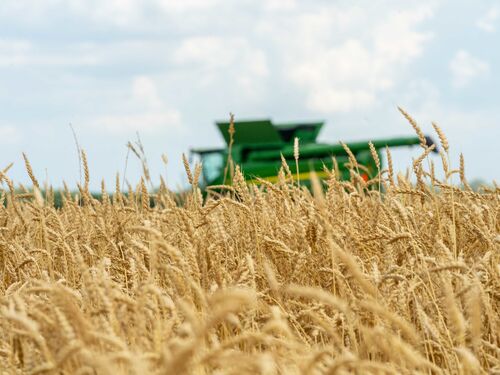
WASHINGTON — A new report from the National Academies of Sciences, Engineering, and Medicine provides an initial framework to help the Natural Resources Conservation Service and other land conservation agencies at the U.S. Department of Agriculture address PFAS contamination on agricultural working lands. The report examines the scope of PFAS challenges in agriculture and identifies steps these agencies could take to reduce impacts on natural resources and agricultural productivity.
Perfluoroalkyl and polyfluoroalkyl substances, known as PFAS, are widespread, persistent chemicals that can move through soils, water, crops, livestock, and food systems and can negatively affect human health. In agricultural settings, PFAS can enter lands through pathways such as organic soil amendments, irrigation water, atmospheric deposition, or off-site industrial sources. As the primary federal agency responsible for helping conserve and improve the condition of natural resources on privately owned working lands, the Natural Resources Conservation Service seeks to help producers minimize and mitigate the harmful effects of PFAS on these lands through its conservation practices, processes, and programs.
“Through local, state, regional, and national partnerships, NRCS provides technical and financial assistance for tens of millions of acres of privately owned farm, ranch, and forested lands on an annual basis,” said Jim Ippolito, Rattan Lal Endowed Professor of Soil Health and Soil Fertility at the Ohio State University and chair of the committee that wrote the report. “We hope this report offers a path forward for USDA and others who may face PFAS challenges.”
The report focuses on NRCS’s conservation planning process and identifies opportunities regarding research, available data, and conservation practices and programs to address the effects of PFAS on agricultural land.
Some of the report’s conclusions include:
There are opportunities within existing USDA conservation programs to help address on-farm PFAS contamination and mitigation, such as prioritizing funding for PFAS-related pilot initiatives.
Existing conservation practices can be used to mitigate PFAS, or new conservation practice standards could potentially be developed specifically for this purpose.
More information is necessary, and a coordinated, nationwide network of experts focused on applied research could assist in improving existing resources and help close research gaps in the field.
The study — undertaken by the Committee on Assistance to the U.S. Department of Agriculture in Building a Framework for Addressing PFAS on Agricultural Land — was sponsored by the U.S. Department of Agriculture.
The National Academies of Sciences, Engineering, and Medicine are private, nonprofit institutions that provide independent, objective analysis and advice to the nation to solve complex problems and inform public policy decisions related to science, engineering, and medicine. They operate under an 1863 congressional charter to the National Academy of Sciences, signed by President Lincoln.
Contact:
Solomon Self, Media Relations Officer
Office of News and Public Information
202-334-2138; email news@nas.edu
Featured Publication
PFAS in Agricultural Systems: Guidance for Conservation Programs at USDA
Consensus Study Report
·2026
Per- and polyfluoroalkyl substances, known as PFAS, are widespread, persistent chemicals that can move through soils, water, crops, livestock, and food systems. Agricultural lands may receive PFAS through pathways such as organic soil amendments, irrigation water, atmospheric deposition, or off-site...
View details
More like this




Discover
Events
Right Now & Next Up
Stay in the loop with can’t-miss sessions, live events, and activities happening over the next two days.
NAS Building Guided Tours Available!
Participate in a one-hour guided tour of the historic National Academy of Sciences building, highlighting its distinctive architecture, renowned artwork, and the intersection of art, science, and culture.