International Day for the Eradication of Poverty
Program News
Last update October 17, 2019
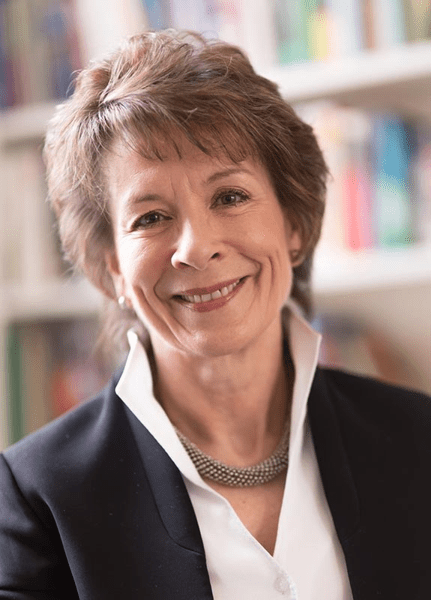
To celebrate the 70th anniversary of the Universal Declaration of Human Rights (UDHR), the CHR is sharing stories of scientists, engineers, and health professionals who use their expertise to promote and protect human rights.
In honor of the International Day for the Eradication of Poverty, we are spotlighting National Academy of Medicine member Prof. Lesley Regan and her work to improve access to family planning and maternal health care services for women around the world, the denial of which often perpetuates impoverished conditions. Prof. Regan's work promotes the right of everyone to benefit from scientific advancement.
"Everyone has the right freely to... share in scientific advancement and its benefits." -Article 27, Universal Declaration of Human Rights
The Role of Maternal Health in Eradicating Poverty
Numerous factors contribute to the perpetuation of poverty, including unequal access to health care. Around the world, women and girls face particular healthcare challenges and their health needs often go unmet. To learn more about efforts to ensure equal access to healthcare for women and girls around the world, we spoke with Prof. Lesley Regan, Professor and Head of the Department of Obstetrics and Gynecology at Imperial College Healthcare NHS Trust at St. Mary’s Hospital, and Deputy Head of the Division of Surgery, Oncology, and Reproductive Biology and Anesthetics at Imperial College London.
CHR: We’re highlighting your work in connection with the right to benefit from scientific progress. According to the UN Population Fund, the majority of women who die in childbirth die from complications for which there are effective preventives. Can you comment on why these preventives are not being used in areas of the world where maternal mortality rates are highest?
LR: In 2015, the UN adopted the Sustainable Development Goals, which included the commitment to end discrimination, violence, and the exploitation of women and girls. To achieve this vision we must reach beyond the achievements made by our predecessors to ensure that for the first time in history the rights of women and girls are considered equal with the rest of society. Almost 90% of maternal mortality can be prevented. It is often a combination of barriers which we have to address. These can be cultural and political; and politics is the language of priorities. In those countries where women’s health is not a priority, often legal frameworks contribute to the problem. We know that women are dying because societies have not yet decided that their lives are worth saving.
CHR: How does improving access to family planning services allow for the fulfillment of other human rights, in addition to the right to benefit from scientific progress?
LR: While we are continually making improvements and using our skills to advocate for safe, high quality, and sustainable healthcare, we need to address both symptom and cause. For every instance of poor practice, inequality, and harm done to women, there exists a system which actively supports or tacitly condones this violence. We must not forget that the health of women correlates to their educational achievement, which enriches and benefits all society and hugely reduces morbidity and mortality. It is time for all nations to prioritize education for girls and women and adopt a broader commitment to ending discrimination based on gender. In challenging the barriers women face when accessing healthcare, we must not forget to challenge the barriers to education which so often originate from the same source.
CHR: You serve on the Committee for Human Rights, Refugees, and Violence Against Women of the International Federation of Gynecology and Obstetrics (FIGO). Can you speak about FIGO’s work to integrate information on women’s reproductive rights into educational programs for health professionals around the world?
LR: As obstetricians and gynecologists we deal with many complex and difficult issues. However, safeguarding the dignity of women is neither complex nor difficult and should be at the center of our practice and teaching. FIGO works all over the world, across many different societies, to encourage the people providing healthcare to become advocates for women’s health. As President of the Royal College of Obstetricians and Gynaecologists, I have worked on programs led by our Centre for Global Women’s Health, and I know that by providing the skills and information to healthcare professionals, you can really change hearts and minds. To deny access or to consider the rights of women and their choices as secondary issues in delivering healthcare is to misunderstand. Healthcare is not something given to a person but a tool to empower them.
CHR: You’ve described a human rights approach to women’s healthcare as “essential”. What does such an approach look like?
LR: Human rights are inalienable; they are the cornerstone of a just society and a measure by which we hold governments to account. A woman’s right to high quality healthcare is fundamental and a part of this lexicon of human rights, yet remains unobserved in many countries across the world. A universal, rights-based approach to women’s health encourages global empowerment and rejects country-by-country variation. All women, irrespective of where they were born, live, and work, deserve dignity. A rights-based approach means providing women with the medically accurate information they need to make the choices which are right for them. It means respecting their autonomy and allowing them to make their own decisions. A woman’s right to healthcare is also her right to free choice.
CHR: In what ways does improving access to family planning and maternal health care services further the human rights of everyone, not only women?
LR: Improving access to services like family planning has a huge impact on wider society. Allowing a woman to prevent an unplanned pregnancy, for instance, means she has a much greater chance of finishing her education or remaining in the workforce. A human right is not solitary but part of a greater whole. In a society where women’s rights remain undervalued or unimportant, it is often the case that the rights of other groups will be transgressed too.