Preparing Our Teachers: Opportunities for Better Reading Instruction (2002)
Chapter: 2. Making Meaning: Language Development and Comprehension
2
Making Meaning
Language Development and Comprehension
We read for meaning. Whether the text before us offers poetry, scientific facts, a page-turning plot, or the most mundane instructions about how to put together a set of shelves, a basic goal is that we, the readers, understand what the writer intended. We may also enjoy it, disagree with it, sneak to the last page, suddenly have a revolutionary new idea beyond anything the author conceives, or respond in a number of other ways.
Good readers call on many resources to do all this. By the time we are adults, most of our comprehension work becomes so automatic that we are no longer aware of it. When we pick up a newspaper, we effortlessly understand words and phrases we’ve seen in myriad styles of print and writing and heard in countless conversations.
Even when faced with new subject matter, we draw resources from our old knowledge, our background. Of course, there are the well-developed connections between letters and sounds that carry our word knowledge from speaking and listening into reading and writing. But that’s not all we exploit for comprehension. We capitalize on experience with all aspects of language—the routine structure of clauses and sentences, paragraphs, articles, and whole books. We draw expectations, analogies, and ideas from other subjects. We know enough to check on ourselves as we read along and even reread a page or two if we get confused, keeping careful track of how previous parts inform the later ones, alert for apparent contradictions that may mean we misunderstand or that the author is wrong!
For most beginning readers, it is a different story. Their resources are not as abundant; the work of comprehending is not as familiar. Understanding the written language is not so certain.
Most teachers are good enough at the age-old method of checking students’ comprehension by asking questions at the end of a story. But it is not good enough for children if teachers only test reading comprehension rather than teach it.
Comprehension instruction proceeds on three fronts at once: resources, tactics, and repairs. Students build up their resources—the growth and elaboration of spoken language, the depth and breadth of concepts and vocabulary. They deploy their resources, becoming adept tacticians before and during reading. And students learn strategies to fall back on when meaning breaks down.
Teacher education colleges must do a better job of preparing aspiring teachers
|
Midstov Mrs. Keane and her first-grade class are sitting on the rug while she reads to them after lunch, just as she does every day. She has an old book of tales that one of the families sent in. At other times in the day, what’s read is more contemporary, and most of the children are more likely to read on their own than listen. But just before rest time they like this sort of book. As she closes the book, she nods to Tyrone, who has been waiting to talk. He asks, “What was that you said? That midstov? What’s that?” Mrs. Keane goes back to the bookmarked page and rereads the next to the last sentence, carefully enunciating: “In the midst of the winter, there are no flowers.” She pauses and then asks: “Does anyone want to say what in the midst of means?” Suddenly, the phrase catches on like a song, and the first graders are repeating it over and over. “In the midst of…midst of…in the midst of…midst of” They love it. It sounds so romantic and beautiful, so adult, too. It rolls off the tongue. It’s a single unit, not four separate words, or three, or two. But what does it mean? Oh yes, back to that. It is pretty much like in the middle of, according to Mrs. Keane. But the first graders have their doubts. In the middle of sounds so boring and stodgy. It can’t possibly be anything like in the midst of. Mrs. Keane rereads again. She gives them more examples. They trust her, to an extent. Rather grudgingly, they give in about what it means. She asks them to try using it in new sentences. They are really a lot happier saying in the midst of than talking about what it means. But they seem to be using it the right way so Mrs. Keane is happy. Rest time begins. A few days later the class is beginning a math lesson. Mrs. Keane takes out her math planning book and asks the kids to tell her which math lab they are working on so that she can make sure her records are up to date. Each math lab has a number. So the kids say things like “I finished lab 6 and I’m going to start 7.” Or “I’m doing 4.” Or “I just started 8.” When it’s his turn, Tyrone grins and says, “I’m midstov 6.” Mrs. Keane smiles, too. So he’s got the meaning, but he thinks it’s just one word. |
in this area. All classroom teachers should know how language development supports children’s literacy development. They should know how to build on children’s life experiences and general knowledge to help them comprehend what they read. They should be prepared with an array of techniques to bring the processes of reading comprehension to the surface so that they can demonstrate these processes and teach children to use them on their own.
Teachers with good preparation can make a world of difference for children—the difference between just calling out the words on a page and discovering the meaning, ideas, and life that can come from books and print.
|
She repeats the phrase in the midst of, separating each of the words as she writes slowly in her plan book. The next boy says, “I’m almost midstov 7.” After a moment, Mrs. Keane catches on and offers a paraphrase: “So you’ve begun lab 7, but you haven’t done very much of it yet.” Maybe ignoring the pseudoword will work. “I’m midstov 4 and 5,” Rachel says. Okay, this girl has finished 4 and plans to start 5. “You’re betwixt and between.” “Mrs. Keane dangles other words to take the place of midstov, but no way, the kids don’t bite. Danny says simply. “I’m finished midstov 4.” He hates math and doesn’t want to talk about doing lab 5. “I’ll be midstov 6,” Lakeisha says, meaning she plans to start lab 6. And so on. What a wonderfully silly class, Mrs. Keane thinks to herself. They get new vocabulary words and take them over. Talk about making a word your own. They don’t want to give it back. They are wearing it out, stretching it beyond belief. It’ll take some effort to get that genie back into the bottle! But she’d rather have a class that wants to use new words than a class that thinks vocabulary is a boring chore. Mrs. Keane takes a second to tell them she’s glad they like the words in the midst of. She emphasizes the s on words. She promises that tomorrow she’s going to help them write in the midst of, and they’ll put the words on their bulletin board and talk some more about it then. As she puts away her plan book, her mind races: Maybe if the kids write the four separate words, they’ll see. And then how to show them in the midst of is not the same as between. Most of the vocabulary work has been on single words. Wasn’t there an article in last month’s journal about first graders and word boundaries? Maybe Adele, the other first-grade teacher, can help plan a good vocabulary unit on phrases. Or maybe it just will not fit into the curriculum for first graders. But now, on to the math lesson! Got to figure out about Danny hating math. |
spoken language—a link to literacy
Classroom teachers must have a chance to pay more attention to spoken language as a foundation for written language. From the preschool years through the late elementary grades, a child’s language development is a critical component of learning to read and write.
From infancy, children should be immersed in rich language experiences in their homes and child care environments. Too often though, early childhood educators are not sure how to engage children in interesting talk. Children need daily opportunities to witness adult models of language in use. Children need to practice their own conversational skills.
In the early years, by listening and talking, children learn the myriad connections and distinctions in the language—the dog house is not the same as a house dog; Janie hit John is quite different from John hit Janie; a tulip is a flower, but some flowers are not tulips; if something is not good, it is probably bad or close to it; if it’s not red, it could be yellow or blue or green or white. Children gradually learn all the complexities. As the advertisement says, they just do it; they don’t have to know its morphology and syntax, semantic hierarchies, antonyms, or semantic fields.
Without really thinking about it, children attach deep knowledge to words. Later, when they learn to identify words in print, they exploit that knowledge. Those connections and distinctions in language will help them figure out what it all means.
Many little ones arrive at kindergarten with a language repertoire that pertains mainly to the concrete, the “here and now.” In books and in classroom discussions, they have to deal with a radically different situation and language that is sometimes quite abstract.
Language goes beyond the world around us. It brings a new world into existence; it gives a different viewpoint on the world. In school, children encounter descriptions of what happened long ago, what is happening in distant places, what could happen in the future, what might have happened if things were different in the past. As they move on in education (and abstraction), they have to be able to jump from questions about where a nose is on a face to ones about whether justice is a part of democracy.
Teacher education must ensure that teachers know the facts of language acquisition in early childhood and that teachers learn to help children manage the transition between spoken and written language. (See Chapter 1, pp. 37–38, for more about the distinctions between spoken and written language; see Chapter 3 for the relationship between printed words and spoken words.)
Often for young children, written stories, poems, and essays are delivered through a grown-up’s spoken language. Well-prepared teachers learn to read aloud

in a compelling way, with clarity and style that will allure, entertain, and hold children’s attention. One good way to pick up techniques is to watch and learn from expert storytellers like those featured on Between the Lions, a PBS television program.
Teachers learn skills for talking with children and for helping them talk with each other about what has been read to them—making connections, expecting explanations, looking for a punch line, asking about words that are new or used in an unusual way, noticing when they need to stop and think about what the book is all about. Teachers have to develop a repertoire of techniques to engage children as active listeners during a read-aloud.
Well-prepared teachers show children that whatever is spoken can be written, too. In lessons they elicit and write down children’s comments. They set aside time in the day for whole stories, reports, and letters to be written, dictated to adults, written in collaboration with an adult, or written independently. And, always, the resulting products are read back and used, not just hung up like decorations or trophies.
Even when children become more independent readers, speaking and listening are still important parts of reading development. Teachers need to learn innovative ways to lead interactive discussions about reading. It is often a good discussion about the ideas, events, and facts that were read that really cements a student’s understanding—or points out the need to read more in order to gain clarity and certainty. This is especially challenging when children’s interests and tasks mean that
they will not all be reading the same book—and may be reading books teachers have not yet read themselves.
Teachers must also stay alert in case a gap or stall in spoken-language growth becomes a barrier to reading as students encounter increasingly sophisticated materials. Teachers need to be able to use formal and informal methods for observing and assessing their students’ language development, strengths, and needs. To get a complete picture, teachers should attend to how children use language during lessons and conversations with schoolmates, but they should also know enough about formal testing and clinical language assessments to turn to them as necessary. (See also Chapter 5.)
speaking of and in multilingual classrooms
In schools all over the United States the student body includes diverse language and cultural backgrounds. If they check, teachers might find three or four different languages spoken among families they work with and several different dialects of English, too. In some schools, teachers can expect even more diversity.
On the first day of school a child might find that one classmate has a Southern drawl and another speaks a northern inner-city vernacular—both dialects of American English. In the same class, one child might be terrific with both Spanish and English while another might be proficient in Hmong but at the beginning of the year needs help saying much beyond “Hi” in English.
Are language and dialect differences assets or problems? The quality of teacher education and professional development can be the deciding factor.
Parents, children, and teachers agree that children should become expert with mainstream American English. With teachers who treat standard English as an addition, not a replacement, classroom lessons can proceed smoothly and propel children toward the shared goal.
If teachers are well prepared, they know about the dialects of English and the languages spoken in the neighborhoods their students come from. They recognize when a different culture and language exert an influence in class discussions or in reading and writing. They are aware that many children have a language that works well for them outside school. They expect each child to become expert in mainstream English through school, finding it a useful addition for reading and writing and speaking in her or his brilliant future. They know how to help children use the language patterns in mainstream English comfortably and automatically, so that words pop out without conscious effort.
Colleges of education and school districts must ensure that teachers are prepared to find out about the languages, dialects, literacy, and cultures present in the areas
|
TEACHING JOSEFINA Josefina writes We sat on Mary’s porch and enjoyed. And no more. What happened? Does she want to use a different word than enjoyed but lacks the vocabulary? Is she tired, distracted, lazy—not finishing her sentence? Mainstream American English use of the verb enjoy calls for an object after the verb (transitive verb is the official term). We expect the sentence to indicate something more about enjoy—like enjoyed ice cream, enjoyed the afternoon, enjoyed ourselves. No problem if the sentence had used an intransitive verb, like We sat on Mary’s porch and relaxed. But that isn’t quite the same meaning. We’ve all taken measures to relax in the midst of a stressful situation when we wouldn’t claim to be enjoying ourselves. But in Josefina’s neighborhood a lot of people, like her family, learned the English dialect spoken in the Philippines. In that dialect the verb enjoy is intransitive, like the verb relax is in mainstream English. It’s not a coincidence either that in Cebuano—the language that Josefina’s parents often speak at home—the literal translation for enjoy is also intransitive. Well-prepared teachers who work in Josefina’s neighborhood have had a chance to learn about English dialects influenced by the languages of the Philippines. They know that Josefina’s use of enjoy without an object isn’t just due to vocabulary limits or distractions. The well-prepared teacher is ready to proceed without taking over or ignoring the message that Josefina intends to express. A discussion with Josefina can help figure out which word should be added. A well-planned lesson that focused on verbs and their objects can be planned, too. Over time, the teacher’s job is to help Josefina develop the capability to handle mainstream American English and its use of transitive and intransitive verbs as well as many other grammatical structures. It’s not so different from the case of a British child who would say I went to hospital rather than I went to the hospital—and many other cases of different dialects of English. |
where they teach. This information is basic for teachers to support the language development of students who are newcomers to speaking English. For these children the well-prepared teacher uses virtually every learning experience to practice, expand, and exercise their new language.
Children can (and perhaps must) do the two things at once—learn language and learn school subjects. While they are studying science—say, the fact that birds are a class of animals with special forms and behaviors—children are introduced to or practice words and sentence structures that are useful for more than discussions about birds. Whether English is a native language or a new language a child can find that the science lesson is a chance for language growth. But it is a vital
opportunity for those learning English; more of the words and more of the language structures are new or only marginally known.
When the lesson takes place in a park or zoo, or otherwise calls for firsthand experiences, a lot of language learning can happen. But in classroom lessons children can make meaningful connections between the world and English, too, and teachers must be prepared to backstop and elaborate class discussions with multiple representations—different ways to introduce concepts and language and many chances to practice the new bits. Teachers must be able to recognize the words and language structures they will need to elaborate with children learning a new language.
Well-prepared teachers take the time and make the efforts that increase the amount and quality of language their students use. They say “tell me more” instead of a quick “good” before moving on to another topic or student. They paraphrase a child’s answer, both to check if they understood the student and to model a more elaborate and grammatical expression of the idea. They respond with an enthusiastic “Really?” and stand still for a minute, letting a pregnant pause develop, so that the child will elaborate on the ideas he is eager to express. Teachers need to learn many tactics for helping students get the most out of the language they have and to get more language in the process.
Some students may need special support and instruction beyond the scope of their classroom teacher. Just because a child may quickly become good at speaking English to peers on the playground does not mean he or she is ready to rely on English for reading and learning academic subjects. Teachers need to learn to work with more than casual assessments and work to get children the help that is needed. A child having a good experience in a welcoming class is no substitute for work with a specialist prepared to teach English as a second or foreign language. (See the Resources section at the end of this chapter for recent information on working with speakers of languages other than English.)
vocabulary words—and the ideas that go with them
The more vocabulary words children learn, the better they can read and understand what they’ve read. If a text is full of unknown and therefore meaningless words, the reader will falter, become confused, and even give up.
It is important for teachers to have lots of tricks up their sleeves for teaching kids to learn new words and make it fun and interesting in the process. It simply doesn’t work to send children to the dictionary to “look it up” and let it go at that.
Words do not lead quiet lives trapped between the covers of a dictionary. Words are vibrant things, born of experiences, places, nature, events, science, the body,
food, inventions—in short, everything. When teachers give children new experiences, they get new concepts, and the words that go with them. A trip to a farm brings tractor, hoe, plow, dairy. Cooking offers blend, broil, mushrooms. A taste of a lemon ensures tart. An apple falling to the ground brings gravity. Play acting with other children clarifies words like rescue.
Through doing—class trips, cooking, art projects, science experiments, and role play—teachers can build children’s vocabulary. Well-prepared teachers know how to capitalize on these experiences. They weave the new with what is already known. They teach children how to call on their existing knowledge to tackle new words.
They might rely on a semantic web—a definition in a map form that depicts word relations, including superordinate and subordinate categories as well as near synonyms and antonyms. A web begins with just a few words, sketched on the board, as the teacher has the students brainstorm about the word. For days, even weeks, the class may add to the web or readjust the elements in it, reflecting increasing familiarity and sophistication with the word and the semantic domain as a whole.
Word learning is not just a single-day activity that then gets discarded. Children learn particular words, but they also learn a bigger lesson—how to add new words to their vocabulary.

|
Understand Before You Move On Joan Gottesman was a lawyer but than entered a teacher education master’s program in New York City and interned at an elementary school. I think that people who are good readers read in an organic, seamless way. When we read magazine or newspaper articles, we don’t stop to say to ourselves, “Okay now I’m going to read the heading to frame in my mind what this piece will be about and then I’m going to check back when I’m finished to see if my idea was right and then, if it wasn’t, I’m going to try to figure out where the disconnect occurred and I’ll go back and read it again and if I was right, I’ll continue reading.” But children who are struggling or who are not yet good readers need to become conscious of their reading habits so that they can monitor what they do and what they don’t do and learn the comprehension strategies that good readers use unconsciously, so that they, too, can achieve the kind of automaticity that characterizes good readers. When I studied the teacher’s role in reading comprehension in my master’s program, I had some of those “ah-ha” moments, where suddenly (or so it seemed) I realized that although we know that reading has two components, decoding and comprehension, we rarely focus on the deliberate part of teaching comprehension. I think there are a lot of students who don’t exactly understand that reading is both parts, that decoding without comprehension is not reading—it’s just decoding—and that good readers make sure they understand the meaning of their texts before they move on to the next clause, sentence, or paragraph. That’s okay, because we can help these learners become good readers by explicitly teaching them how to comprehend a text. My courses helped me visualize a framework for explicitly teaching comprehension. Having an outline in my mind was almost like having index cards with the types of strategies written on them, that I could shuffle and pull out as I needed them. It’s not as if there are only two prereading, two during-reading, and two postreading strategies that a teacher can use, but thinking about categorizing my knowledge in a grid or framework makes it easier |
Learning vocabulary through reading is important, too. Effective teachers immerse children in a particular subject to help them build vocabulary. For example, the teacher might read Charlotte’s Web, by E.B.White, to a class of first graders. This is a book that most first graders cannot read on their own but nonetheless will find enrapturing. To go with it, the teacher finds materials on spiders that the children can read independently—poems or nature books, perhaps. Children get multiple chances to develop deeper knowledge of new words when they find them in different contexts and with different styles of writing.
Well-prepared teachers also learn to give their students “word awareness.” This means giving kids the drive, zest, and playful desire to learn new words because they know words are fun and valuable. Without word awareness, students are more likely to skip over words they don’t know and jeopardize comprehension. The teacher needs to let students know that not knowing at first is okay. Figuring out the meaning is what everybody does.
|
for me to think about consciously teaching it. You have to scrutinize your texts to analyze what demands they place on the readers, in terms of vocabulary, inferencing, or other comprehension tasks. Matching readers to texts is a real art and takes time but is worth it because you can build so much more from strength than from weakness. This is what I learned about being a teacher for children’s comprehension growth: You have to think about stuff, go back and deconstruct your own processes, and then examine those of your students. What are their strengths? Where are they falling down? Do they understand what comprehension is? I learned that when teaching comprehension strategies you model what you’re trying to teach. You tell students that a technique you’re presenting is a strategy, a way to approach something, and often one that they can use in a variety of situations. Let’s say a student noticed that there were paragraph headings. You could discuss what they are and why students think they are there. If no one thought they were there for organization, you’d suggest reading a paragraph together and then go back and see if there was a connection between the text and the heading. You’d ask an explicit question: “Does anybody see a connection between the heading and what we just read? Show us.” If no one saw it, you’d point it out. You’d talk about what people noticed and then try it again and again. You’d maybe ask a question like “So how do you think you could use paragraph headings to help you with your reading next time?” or “Can you think of another kind of reading where using the heading might help you understand what you’re reading?” That would probably be enough for one day (or too much for one day). Model it, and practice it, practice it, practice it. When you teach comprehension, you are teaching students how to think, how to make connections, and how to think about their thinking. I don’t ever want to teach students what to think. I want them to be able to understand what I think—and what an author thinks—and to decide for themselves what they think. 
|
Teachers must learn that creative approaches to words help children take on word awareness. For instance, the teacher might have a routine for the class to work on mystery words every now and then. The teacher explains that a mystery word is one that the children can figure out how to say once they see it written—very simple spelling-sound correspondences. But the words should be ones the children are unlikely to have met before—out of context the children would be stymied about a word’s meaning. First, the teacher makes deputies of the students so that they are ready to track down the meaning and provide the evidence that will stand up in the court of time and memory! She holds up the victim—the word written alone—clambers. The students say it easily. Next the teacher shows the group a short written passage, bordered in yellow with crime scene tape, the mystery word outlined in chalk: The boy clambers up the tree. He puts the egg in the nest. The group of deputies will quickly suggest “climb” for a meaning, and the teacher will press for the evidence and the reasoning, calling attention to “up” and “the nest” and
what everyone knows about trees and birds’ nests. In case there is need for more hints, the teacher might have another exhibit that includes the passage on a page with an illustration of a boy awkwardly climbing a tree. Next, to narrow it down—the difference between climb and clamber—a dictionary or thesaurus comes into the lesson. The lesson concludes with the deputies using the word in new sentences of their own making. The children could learn the vocabulary item in many different ways; the well-prepared teacher recognizes that this way has the bonus of promoting a class climate of word awareness.
An excellent teacher knows how to promote word awareness by creating interest in homographs, words that are spelled the same way but have quite different meanings. This is another recurring opportunity to teach children that readers pay attention to how words are used in sentences to figure out meaning. A teacher might set up a poster with a thermometer like the ones used for fund raising, but for this one the units are indicated by a word that has two distinct meanings and the red column increases each time the class finds one of these homographs. The teacher should be alert to make contributions, too. For instance, most kids know that the word “lying” means not telling the truth. But in the book Whistle for Willie, what does it mean when the text says “He hid in an empty carton lying on the sidewalk”? Teachers should be able to help their students figure out the “other” meaning based on the passage, and then one more homograph can be added to the thermometer poster.
comprehension and metacognition
Comprehension is sometimes misunderstood as a fairly passive experience of “remembering” what we have read or adequately “receiving” the ideas of the author. But comprehending is a very active process. In order to remember anything, in order to receive anything, we have to roll up our sleeves and get to work.
We have to pull up background knowledge and ideas to begin making sense. Then we have to jettison some of our old ideas, or at least remodel them, as we learn from the text. We contribute our reading skills and strategies to the job. We bring our own psychological affect to the interpretations. We have a certain purpose that makes some parts of what we read more important than others. With all this we create and re-create until we get an understanding that works. Then it’s simple—“That’s just what it says,” we claim, overlooking all that we did to make it say something.
Nowadays, most classroom teachers have had a chance to take courses that cover concepts important for teaching comprehension—the role of background knowledge in understanding; inferences; specific strategies like summarizing, predicting, and questioning; methods for direct instruction; and applications of

strategies in reciprocal teaching and other kinds of instructional conversations. (See the Resources section for studies of comprehension and its instruction.)
Too often, though, these concepts are kept in the abstract; they are not applied to specific passages or only in a limited way, perhaps only to fictional narrative prose passages. The concepts and techniques are often demonstrated one at a time, as if any passage called for only one strategy to be used—by the teacher or the student reader.
The real world of understanding is a lot busier. We do it every time we read something, but noticing “real-world” understanding—the intellectual processes within it—is difficult. The trick is to catch understanding processes while we are reading! When we are aware of these intellectual processes, we are metacognitive. That means we can think about our own thinking as we read.
What good is that? Doesn’t it just add clutter and take the reader off task? Yes, it’s true that metacognition is not very useful when everything is going well. But that’s just the point. Children limit their achievement if they read only what is easy, where they can be sure “everything will go well.” When they read material that stretches them, that makes room for improvement, then metacognition is useful. Children need metacognitive strategies to fix reading that goes awry, in fact, to be able to notice that it is going awry.
Teachers, like other accomplished readers, do not find it “natural” to read and think about reading at the same time. Too many teachers have not had a chance to step back and notice their own comprehension strategies. But if teachers are not aware of their own comprehension strategies, they miss a gold mine of resources for teaching children. When a teacher has learned to talk explicitly about how one goes about reading a passage, in effect a window opens into the teacher’s head and children can peek in and see how it’s done.
Well-prepared teachers have had a chance to develop three capacities: to be metacognitive about their own reading, to bring the hidden processes to the surface for their students to see, and finally to help children manipulate their own hidden processes when it will help them to get over problems and read more challenging material more independently.
Even teachers who are adept at metacognition need special practice to bring the hidden processes to the surface when a passage is easy for them to read. It isn’t easy for children, so it is worth it for teachers to demonstrate how they read, how they check their understanding along the way, and how they make repairs when they need to. Well-prepared teachers can read and keep up a running commentary, asking themselves questions and answering them, making skilled reading visible for
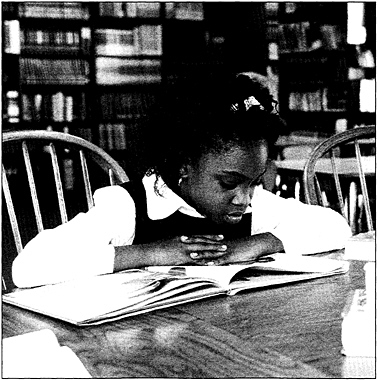
the children to witness and learn from.
This kind of performance is called a “think-aloud.” A think-aloud should cover preparations for reading, from the mundane and general (good light, good chair, some protection from distractions) to specific attention to the passage. Teachers give children copies of the passage so they can follow along. While scanning titles and headings and pictures, noticing a boldface or italic word here and there, the teacher comments on what she already knows and what she’ll probably be able to find out, what might be easy and what might take more effort.
A think-aloud combines reading aloud and interrupting the reading. The teacher pauses to make a comment about something she wants to remember, explaining what gave a hint that it
might come in handy for later reading. Another pause comes when something doesn’t make sense. The teacher rereads something, explaining what put her on notice that there was a problem, how she decided to try rereading to solve the problem, and how she knew how far back to go.
The think-aloud continues after the text has all been covered. It can include a summary “in your own words,” an application of the ideas in the passage, a question the passage brought up, a goal to do some more reading, or some other activity.

Teachers need an opportunity to practice thinking aloud and working with students to follow up on them. There should be time for children to ask about the teacher’s think-aloud and time for the teacher to ask the students if they ever do what she does when she reads. It’s the time to delve deeply and explain directly some comprehension strategy that the class is ready to learn but hasn’t been relying on enough.
Effective teachers are prepared to follow up with careful attention to children when they are reading on their own. That’s the time to remind them that comprehension takes work for everybody—it’s not magic; it’s a matter of working at it. That’s the time to remind them about a particular strategy demonstrated in the teacher’s think-aloud and to help them apply it to problems they are having right then and there. At first, teachers and students can use the strategies together, but the teacher’s role fades out.
The well-prepared teacher keeps track of the techniques and strategies the children are able to use and prompts them to use them throughout the classroom day—reading for different school subjects, reading for different purposes, always reading for comprehension.
Sample Activities for Teacher Learning
Words in the World
We are usually as unaware of language demands as we are of a clean window when looking through one at a beautiful garden. Teachers must learn to look at the window—at the language—if they are to help their students conquer it. In this activity, teachers have a chance to notice the complexity of experiences from which new concepts and words are built. Beyond empathy for the children’s tasks, they also develop materials for some specific lessons. The facilitator for this set of lessons should have a background about teaching students who are new to the language of instruction.
-
Divide the class of teachers or teachers-to-be into teams of three. In an urban neighborhood, tell each team to visit a city block’s worth of restaurants. Each team’s task is to look for all the repetitive features noticed in each restaurant. Remind the team members to listen, too, for repeated things that people say. No notes. Just remembering.
|
|
Back in the classroom, list each team’s findings on the board. Check the other teams’ lists and go back and add words each team forgot or missed but “knows” were repeated features of the restaurants it visited. |
|
|
First, discuss words that people hadn’t known before, or knew but weren’t sure if they knew how to read or write, or knew only with a more limited meaning. Then consider features they took so much for granted that they didn’t list them at first. Have the class consider the different aspects of knowing a word. |
|
|
Finally, discuss special cases—the features that are the same in the abstract but a little bit different each time. One example is: “I’ll have a coke/Pepsi/cup of coffee.” It’s really a repeated language structure with a variable slot. How hard is it to talk about words that are collections not single instances? How much harder are truly abstract words like “cost”? |

|
|
Discuss how to prepare children to read or listen to a story set in a restaurant. How can teachers be prepared to help new English speakers handle the language demands like the ones the group has been discussing? |
|
|
In a suburban setting, base the exercise on the similar and different features of houses on a street, the architecture, the landscaping, and what people say and do when they answer the door. |
-
For homework tell the teachers to repeat what was done in class, but one-fourth take trips to art museums and one-fourth to science centers, while the other half prepares to use new printed matter, some a new story and the rest a new science book.
-
The next class is the time to pool lists and then ideas for being ready to support language growth for students. At least four advice packets should be produced. After the class reviews and corrects them, make copies for the whole class of the most useful ideas. Tell the class to be prepared in a few weeks to revisit the issue, reporting on an idea the teachers tried and how they know if it worked.
What Does That Word Mean Here or Anywhere?
The following exercise helps teachers become aware of their own strategies for figuring out the meanings of words, first with a simple word that has special meaning in context and next with odd words that most teachers or teachers-to-be will not have met before.
-
Make the arrangements needed to photocopy the first page of two novels: Beloved by Toni Morrison (Plume/Penguin Books, 1988) and Jane and the Wandering Eye: Being the Third Jane Austen Mystery by Stephanie Barron (Bantam Paperbacks, 1998).
-
Write “124” on the board. Have students say what it means—maybe 12 tens plus 4, maybe 1 more that 123, etc.
-
Write this sentence on the board: “124 was spiteful.” (Tell those who remember Tony Morrison’s novel to zip their lips, please.) Discuss how hard it is to figure out what the sentence means because few if any of the meanings given for 124 give a hint that it could be spiteful. Some may claim the sentence is meaningless.
-
Pass out the photocopies of the first page of Beloved. Give a few minutes for everyone to read it. Discuss the meanings: “124” is a house number, a word to refer to a house, the house that characters in the novel lived in, a spirit, a child’s spirit, etc.
-
How do you know what the word means here?
|
|
Discuss specifically which words or phrases on the page gave the teachers information about the meaning of “124.” Go sentence by sentence through each paragraph. |
|
|
Give names to the kinds of context clues that recur here and that the teachers know are useful for reading other passages, too. Put aside the list of context clue types and the page from Beloved. |
-
Ask the class members to try to define five words without using a dictionary. The words are rout-party, efflorescence, negus, pasties, and
-
stupid. Someone from the United Kingdom might get pasties; a master of prefixes, suffixes, and roots might get efflorescence. Stupid will seem easy. There may be creative responses for the other words.
-
Pass out a photocopy of the first page of Jane and the Wandering Eye, a fictitious diary with a mystery twist, alleged to have been written by Jane Austen in 1804. Give everyone a few minutes to read it. This is the opening paragraph:
“A rout-party, when depicted by a pen more accomplished than my own, is invariably a stupid affair of some two or three hundred souls pressed elbow-to-elbow in the drawing-rooms of the great. Such an efflorescence of powder shaken from noble wigs! Such a crush of silk! And what general heartiness of laughter and exclamation—so that the gentler tones of one’s more subdued companions must be raised to a persistent roar, rendering most of the party voiceless by dawn, with only the insipid delights of indifferent negus and faltering meat pasties as recompense for all one’s trials.”
-
Discuss what stupid means here. Consider how the word refers as much to a speaker’s opinion as to the noun it is supposedly modifying.
-
Next turn to rout-party, efflorescence, negus, and pasties. Repeat step 5 above. Point out that this time the clues are used for words that readers didn’t know before, not just meanings special to a context. Ask which word they are least sure of. Suppose a dictionary could be used to check only one of the words. Which one do they vote to look up? (Negus is the least supported by clues in the text. The reader can infer that it is a kind of drink, but….)
-
Discuss the lists of context clues. Ask for reports of experiences with context clues for meaning, for both unknown words and words used in unusual ways. Provide the class with references about context clues and instruction. Assign the teachers to work in teams to plan a lesson that will help children use context clues to understand a passage and be able to use them subsequently on their own. In later class sessions, study and critique the plans and, if, possible, the results of using them.
Getting Metacognitive with Gloopy and Blit
This is a way to help teachers become aware of the intellectual processes involved in reading. The trick is to use a strange text. The reader has to work overtime to make sense of it. All that effort shines a spotlight on the background knowledge, procedures, and strategies that are tried and that are discarded or that succeed. The reader’s ordinarily hidden intellectual work becomes noticeable when the writing is so strange. It’s almost impossible to fail to be metacognitive. It is a good introduction to readings about metacognitive strategies in comprehension instruction.
Two-thirds of the teachers or teachers-to-be pair up to work on the following selection. Each pair is joined by a classmate who will take notes on what happens while they work.
Gloopy and Blit
Gloopy is a borp. Blit is a lof. Gloopy klums like Blit does. Gloopy and Blit are floms.
Ril had poved Blit to a jonfy. But he had not poved Gloopy.
“The jonfy is for lofs,” Blit bofd to Gloopy, “you are a borp.”
Gloopy was not klorpy. Then Blit was not klorpy.
|
|
The pairs are to figure out whatever they can about the words, sentences, paragraphs, and the whole passage. They should have some prompts to use if they get stuck: Read it. Summarize it. Are there main characters? Are there any other characters? Compare and contrast each character. List a few things that happened in chronological order. Did anything cause anything else? What questions would you predict a “next” chapter would answer? Substitute words and come up with a passage that makes sense. Write it down. |
|
|
The observer should have some prompts too. Do they read aloud? When and how often do they reread, aloud or to themselves? Do they say why? Can they pronounce all the words? Do they mention letter-sound correspondences or analogies to pronunciations of known words? Do they complain about the number of unknown words? Did anyone doubt for a |
|
|
minute that Gloopy, Blit, and Ril were names? Did anyone comment on this and say how they knew? Do they use the “new” words to summarize or answer any of the “comprehension” questions? Or do they actually substitute words before they do the other tasks? Do they mention any features of writing, like uppercase letters, punctuation, or paragraphing? Do they mention any features of morphology, such as which words are nouns and which are verbs and how they know that? Do they mention anything about syntax or sentence structure? Did they suggest a category—a semantic interpretation—to capture the relationship between the main characters? Did they rely on typical narrative structure? How did their prior experiences come into play? Were some overwhelmed by the nonsense language and others fascinated by the challenge of the task? |
|
|
After 15 minutes, have the trios discuss the experience, using the observer notes and prompts as a guide, adding or correcting by using the metacognitive insights from the reading pair. Conclude by picking two ideas about reading that came up and one question about reading and prepare to present them to the class. |
|
|
After 30 minutes, convene the class as a whole. Ask for a volunteer to read a story that resulted from substituting words in the passage. Ask about similar and different stories that resulted. Most likely no one substituted words for Gloopy and Blit, so shift the conversation to the metacognitive by asking about that: What is it about names as a special case of words we don’t know? Then ask for volunteers to present their “two ideas” about reading. Discuss them, and note who else had the same ideas. Cover the questions in a similar way. |
|
|
For an assignment, provide readings about metacognition, noting that a reader who does what all three of the members of the trio did is being metacognitive. |
|
|
In a subsequent class, model reading a short passage while thinking aloud about the reading. Reassemble the trios, and have each student choose a passage from a children’s book to practice solo metacognitive think-alouds, helping each other to notice and report on what they do to comprehend. |
resources
Basic reviews of the knowledge base relevant to this chapter can be found in the following recent publications:
Kamil, M.L., Mosenthal, P.B., Pearson, P.D., & Barr, R. (Eds.). 2000. Handbook of Reading Research: Volume III. Mahwah, NJ: Erlbaum. (See especially Nagy and Scott on vocabulary, Alexander and Jetton on learning from text, Goldman and Rakestraw on structure and meaning, Pressley on the essence of comprehension instruction, Blachowicz and Fisher on vocabulary instruction, Wade and Moje on varying texts, Bean on reading in different subjects, Bernhardt on second-language reading, Garcia on bilingual reading, and Au with a multicultural perspective on equity and excellence.)
National Reading Panel. 2000. Teaching Children to Read: An Evidence-Based Assessment of the Scientific Research Literature on Reading and Its Implications for Reading Instruction: Report of the Subgroups. Washington, DC: National Institute of Child Health and Human Development. (See especially Chapter 4, Part I, “Vocabulary Instruction,” and Part II, “Text Comprehension Instruction.”)
National Research Council. 1998. Preventing Reading Difficulties in Young Children. Committee on the Prevention of Reading Difficulties in Young Children, C.E.Snow, M.S. Burns, and P.Griffin, Eds. Washington, DC: National Academy Press. (See especially Part I, Chapter 2, and Part III.)
Neuman, S.B., & Dickinson, D.K. (Eds.). 2001. Handbook of Early Literacy Research. New York: Guilford Press. (See especially Watson on literacy and oral language, Scarborough on aspects of early language development related to subsequent reading difficulties, Bus on storybook reading, Morrow and Gambrell on literature-based instruction, and Tabors and Snow on young bilingual children and early literacy development.)
The sections of this chapter can be elaborated by consulting various other sources, including the following:
Language development:
Berko-Gleason, J. (Ed.). 1997. The Development of Language, 4th Edition. New York: Allyn & Bacon.
Dickinson, D.K., & Tabors, P.O. (Eds.). 2001. Beginning Literacy with Language: Young Children Learning at Home and School. Baltimore: Brookes.
Fillmore, L.W., & Snow, C.E. 2000. What Teachers Need to Know About Language. Washington, DC: Center for Applied Linguistics.
Hart, B., & Risley, T.R. 1999. The Social World of Children Learning to Talk. Baltimore: Brookes.
Snow, C. 1983. Language and literacy: Relationships during the preschool years. Harvard Educational Review, 53, 165–189.
Snow, C. 1991. The theoretical basis for relationships between language and literacy in development. Journal of Research in Childhood Education, 6, 5–10.
Snow, C., & Goldfield, B.A. 1983. Turn the page please: Situation-specific language acquisition. Journal of Child Language, 10, 551–569.
Speakers of languages other than English, general issues, reviews, and overviews:
August, D., & Hakuta, K. (Eds.). 1997. Improving Schooling for Language-Minority Children: A Research Agenda. Washington, DC: National Academy Press.
Bamford, J.D., & Richard, R. 1998. Teaching reading. Annual Review of Applied Linguistics, 18, 124–141.
Bialystok, E. (Ed.). 1991. Language Processes in Bilingual Children. New York: Cambridge University Press.
Coady, J., & Huckin, T. (Eds.). 1997. Second Language Vocabulary Acquisition. New York: Cambridge University Press.
Fitzgerald, J. 1995. English-as-a-second-language reading instruction in the United States: A research review. Journal of Reading Behavior, 27(2), 115–152.
González, V. (Ed.). 1999. Language and Cognitive Development in Second Language Learning. Boston: Allyn & Bacon.
Greene, J.P. 1997. A meta-analysis of the Rossell and Baker review of bilingual education research. Bilingual Research Journal, 21 (2/3). Available online at brj.asu.edu/archives/23v21/articles/art1.html.
Reyes, M.L., & Halcón, J.J. (Eds.). 2001. The Best for Our Children: Critical Perspectives on Literacy for Latino Students. New York: Teachers College Press.
Tinajero, J.V., & Ada, A.F. (Eds.). 1993. The Power of Two Languages: Literacy and Biliteracy for Spanish Speaking Students. New York: Macmillan/McGraw-Hill.
Wiley, T.G. 1996. Literacy and Language Diversity in the United States. McHenry, IL: Center for Applied Linguistics & Delta Systems.
Speakers of languages other than English, samples of more specific topics and studies:
Au, K.H. 1998. Social constructivism and the school literacy learning of students of diverse backgrounds. Journal of Literacy Research, 30(2), 297–319.
Boers, F. 2000. Metaphor awareness and vocabulary retention. Applied-Linguistics, 21(4), 553–571.
Crowell, C.G. 1995. Documenting the strengths of bilingual readers. Primary Voices K-6, 3(4), 32–38.
Eviatar, Z., & Ibrahim, R. 2000. Bilingual is as bilingual does: Metalinguistic abilities of Arabic-speaking children. Applied Psycholinguistics, 21(4), 451–471.
Field, M. 1996. Pragmatic issues related to reading comprehension questions: A case study from a Latino bilingual classroom. Issues in Applied Linguistics, 7(2), 209–224.
Fitzgerald, J. 1999. About hopes, aspirations, and uncertainty: First grade English-language learners’ emergent reading. Journal of Literacy Research, 31(2), 133–182.
Garcia, G.E. 1991. Factors influencing the English reading test performance of Spanish-speaking Hispanic children. Reading Research Quarterly, 26(4), 371–392.
García, G.E., & Nagy, W.E. 1993. Latino students’ concept of cognates. National Reading Conference Yearbook, 42, 367–373.
Goldenberg, C. 1994. Promoting early literacy development among Spanish-speaking children. Pp. 171–199 in E.H.Hiebert & B.M.Taylor (Eds.), Getting Reading Right from the Start: Effective Early Literacy Interventions. Boston: Allyn & Bacon.
Jimenez, R.T., Garcia, G.E., & Pearson, P.D. 1995. Three children, two languages, and strategic reading: Case studies in bilingual/monolingual reading. American Educational Research Journal, 32(1), 67–97.
Jimenez, R.T., Garcia, G.E., & Pearson, P.D. 1996. Three reading strategies of bilingual Latina/o students who are successful English readers: Opportunities and obstacles. Reading Research Quarterly, 31(1), 90–112.
Lee, J., & Schallert, D.L. 1997. The relative contribution of L2 language proficiency and L1 reading ability to L2 reading performance. TESOL Quarterly, 31(4), 713–739.
Mace-Matluck, B.J., Hoover, W.A., & Calfee, R.C. 1989. Teaching reading to bilingual children: A longitudinal study of teaching and learning in the early grades. NABE Journal, 13, 187–216.
Moll, L.C., & Gonzalez, N. 1994. Lessons from research with language minority children. Journal of Reading Behavior, 26(4), 439–456.
Muñiz-Swicegood, M. 1994. The effects of metacognitive reading strategy training on the reading performance and student reading analysis strategies of third grade bilingual students. Bilingual Research Journal, 18(1–2), 83–97.
Nagy, W., García, G.E., Durgunoglu, A., & Hancin-Bhatt, B. 1993. Spanish-English bilingual students’ use of cognates in English reading. Journal of Reading Behavior, 25(3), 241–259.
Truscott, D.M. 1997. Supporting cultural and linguistic diversity in beginning readers. The New England Reading Association Journal, 33, 21–25.
Ulanoff, S.H., & Pucci, S.L. 1999. Learning words from books: The effects of read-aloud on second language vocabulary acquisition. Bilingual Research Journal, 23(4), 409–422.
Vocabulary and concepts, sample of reports and studies:
Beck, I.L., & McKeown, M.G. 1991. Conditions of vocabulary acquisition. Pp. 789–914 in R. Barr, M.Kamil, P.Mosenthal, and P.D.Pearson (Eds.), Handbook of Reading Research, Vol. II. White Plains, NY: Longman.
Carlisle, J.F. 1995. Morphological awareness and early reading achievement. Pp. 189–209 in L.B.Feldman (Ed.), Morphological Aspects of Language Processing. Hillsdale, NJ: Erlbaum.
Fischer, U. 1994. Learning words from context and dictionaries: An experimental comparison. Applied Psycholinguistics, 15(4), 551–574.
Fukkink, R.G., & de Glopper, K. 1998. Effects of instruction in deriving word meaning from context: A meta-analysis. Review of Educational Research, 68(4), 450–469.
Kuhn, M., & Stahl, S. 1998. Teaching children to learn word meanings from context: A synthesis and some questions. Journal of Literacy Research, 30, 119–138.
Leung, C., & Pikulski, J.J. 1990. Incidental word learning of kindergarten and first grade children through repeated read aloud events. In J.Zutell & S.McCormick (Eds.), Literacy, Theory and Research: Analyses from Multiple Paradigms. Chicago: National Reading Conference.
McKeown, M.G. 1993. Creating effective definitions for young word learners. Reading Research Quarterly, 28(1), 16–31.
McKeown, M.G., Beck, I.L., Omanson, R.C., & Pople, M.T. 1985. Some effects of the nature and frequency of vocabulary instruction on the knowledge and use of words. Reading Research Quarterly, 20(5), 522–535.
Nagy, W.E., & Scott, J.A. 1990. Word schemas: Expectations about the form and meaning of new words. Cognition & Instruction, 7(2), 105–127.
Robbins, C., & Ehri, L.C. 1994. Reading storybooks to kindergartners helps them learn new vocabulary words. Journal of Educational Psychology, 86(1), 54–64.
Scott, J.A., & Nagy, W.E. 1997. Understanding the definitions of unfamiliar verbs. Reading Research Quarterly, 32(2), 184–200.
Senechal, M., & Cornell, E.H. 1993. Vocabulary acquisition through shared learning experiences. Reading Research Quarterly, 28(4), 360–374.
Stahl, S.A. 1998. Vocabulary Development. Cambridge, MA: Brookline Books.
Waring, R. 1997. The negative effects of learning words in semantic sets: A replication. System, 25(2), 261–274.
Comprehension and metacognition:
Alvermann, D.E., & Swafford, J. 1989. Do content area strategies have a research base? Journal of Reading, 32, 388–394.
Applebee, A.N. 1978. The child’s concept of story: Age two to seventeen. Chicago: University of Chicago Press.
Armbruster, B.B., & Armstrong, J.O. 1993. Locating information in text: A focus on children in the elementary grades. Contemporary Educational Psychology, 18(2), 139–161.
Beck, I.L., McKeown, M.G., Hamilton, R.L., & Kucan, L. 1997. Questioning the Author: An Approach for Enhancing Student Engagement with Text. Newark, DE: International Reading Association.
Brown, A.L. 1997. Transforming schools into communities of thinking and learning about serious matters. American Psychologist, 52, 399–414.
Brown, A.L., & Day, J.D. 1983. Macrorules for summarizing texts: The development of expertise. Journal of Verbal Learning and Verbal Behavior, 22, 1–14.
Brown, R., Pressley, M., Van Meter, P., & Schuder, T. 1996. A quasi-experimental validation of transactional strategies instruction with low-achieving second-grade readers. Journal of Educational Psychology, 88(1), 18–37.
Cross, D.R., & Paris, S.G. 1988. Developmental and instructional analyses of children’s metacognition and reading comprehension. Journal of Educational Psychology, 80(2), 131–142.
Duffy, G.G., Roehler, L.R., & Herrmann, B.A. 1988. Modeling mental processes helps poor readers become strategic readers. The Reading Teacher, 41, 762–767.
Fountas, I.C., & Pinnell, G.S. 1996. Guided Reading: Good First Teaching for All Children. Portsmouth, NH: Heinemann.
Gambrell, L., & Almasi, J.F. 1996. Lively Discussions! Fostering Engaged Reading. Newark, DE: International Reading Association.
Gambrell, L., & Jawitz, P.B. 1993. Mental imagery text illustrations and children’s story comprehension and recall. Reading Research Quarterly, 28, 264–273.
Guthrie, J.T., & McCann, A.D. 1996. Idea circles: Peer collaborations for conceptual learning. Pp. 87–105 in L.B.Gambrell & J.F.Almasi (Eds.), Lively Discussions! Fostering Engaged Reading . Newark, DE: International Reading Association.
Guthrie, J.T., Van Meter, P., Hancock, G.R., Alao, S., Anderson, E., & McCann, A. 1998. Does concept oriented reading instruction increase strategy use and conceptual learning from text? Journal of Educational Psychology, 90(2), 261–278.
Keats, E.J. 1964. Whistle for Willie. New York: Viking Press.
Markman, E.M. 1979. Realizing that you don’t understand: Elementary school children’s awareness of inconsistencies. Child Development, 50, 643–655.
McDermott, R., & Varenne, H. 1995. Culture as disability. Anthropology & Education Quarterly, 26, 324–348.
Palincsar, A.S., & Brown, A. 1984. Reciprocal teaching of comprehension fostering and comprehension-monitoring activities. Cognition and Instruction, 1, 117–175.
Paris, S.G., Cross, D.R., & Lipson, M.Y. 1984. Informed strategies for learning: A program to improve children’s reading awareness and comprehension. Journal of Educational Psychology, 76, 1239–1252.
Pittelman, S.D., Heimlich, J.E., Berglund, R.L., & French, M.P. 1991. Semantic Feature Analysis: Classroom Applications. Newark, DE: International Reading Association.
Pressley, M., & Wharton-McDonald, R. 1997. Skilled comprehension and its development through instruction. School Psychology Review, 26, 448–467.
Pressley, M., El-Dinary, P.B., Gaskins, I.W., Schuder, T., Bergman, J.L., Almasi, J., & Brown, R. 1992. Beyond direct explanation: Transactional instruction of reading comprehension strategies. The Elementary School Journal, 92, 513–555.
Raphael, T.E., & Hiebert, E.H. 1996. Creating an Integrated Approach to Literacy Instruction. Orlando, FL: Harcourt Brace.
Rosenshine, B., & Meister, C. 1994. Reciprocal teaching: A review of the research. Review of Educational Research, 64, 479–530.
Rosenshine, B., Meister, C., & Chapman, S. 1996. Teaching students to generate questions: A review of the intervention studies. Review of Educational Research, 66(2), 181–221.
Schoenbach, R., Greenleaf, C., Cziko, C., & Hurwitz, L. 1999. Reading for Understanding: A Guide to Improving Reading in Middle and High School Classrooms. San Francisco: Jossey-Bass.
Snow, C.E. 2002. Reading for Understanding: Toward a Research and Development Program in Reading Comprehension. Santa Monica, CA: RAND.
Strickland, D.S. 1991. Emerging literacy: How young children learn to read. In B.Persky and L.H.Golubchick (Eds.), Early Childhood Education, 2nd ed. Lanham, MD: University Press of America.
Westby, C. 1999. Assessing and facilitating text comprehension problems. In H.W.Catts and A.G.Kamhi (Eds.), Language and Reading Disabilities. Boston: Allyn & Bacon.
White, E.B. 1952. Charlotte’s Web. New York: Harper Collins.
Whitehurst, G.J., Falco, F.L., Lonigan, C.J., Fischel, J.E., DeBaryshe, D.B., Valdez-Menchaca, M.C. & Caulfield, M. 1988. Accelerating language development through picture book reading. Developmental Psychology, 24:552–559.