Recently completed
Topics
The study will identify key demands and challenges facing the U.S. Army Corps of Engineers (USACE) related to navigation and flood risk management assets; consider how innovative materials can support capabilities critical to meeting these demands and challenges; and make recommendations to inform strategies that USACE can pursue to further the development, demonstration, and deployment of promising materials in new and existing infrastructure.
Introduction
Much of the nation’s inland navigation and flood risk management infrastructure was built in the mid twentieth century and now exceeds its intended service life. Maintaining, repairing, and modernizing these assets is increasingly complex and costly due to aging components, site specific designs, damage from vessel traffic, and exposure to harsh and changing water environments. At the direction of Congress, an independent committee of experts examined how innovative materials could help address these challenges and support more durable, efficient, and resilient infrastructure. The study was commissioned by the U.S. Army Corps of Engineers (USACE) to inform strategies for advancing the development, demonstration, and use of promising materials across its Civil Works program.
Key Recommendations
The committee’s recommendations are organized according to three broad themes aimed at motivating and incentivizing the use of innovative materials, monitoring and communication information about their performance, and providing the needed guidance and workforce training.
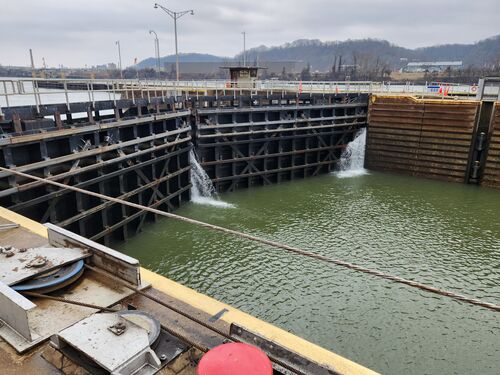
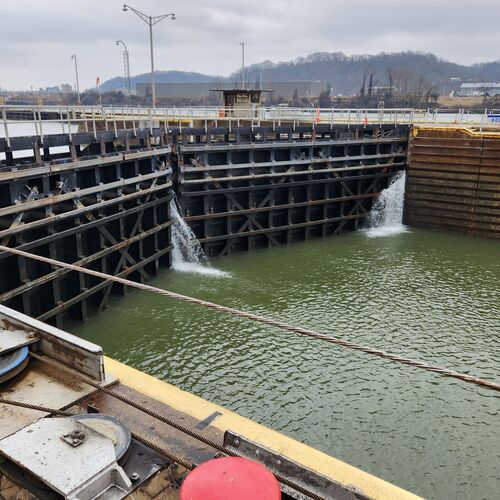
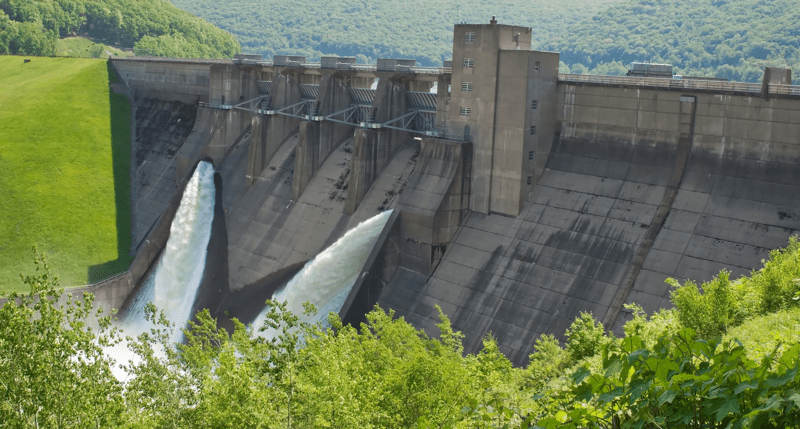
Dams, locks, and levees are critical to U.S. navigation, safety, and commerce—but many are reaching the end of or have surpassed their design lives.
Focus on Innovative Materials
The study examined a wide range of innovative materials, giving in-depth attention to following three that show promise for near-term benefits:
These three material types are already of high interest to USACE and have been the subject of significant laboratory testing and, in some cases, field deployments. Each is also supported by a substantial amount of research and implementation evidence from both the public and private sectors in water resources infrastructure and other domains
The committee’s report also discusses other innovative materials, including coatings, lubricants, anchoring systems, and bio geotechnical materials, that may support future infrastructure needs.
Infrastructure Needs and Decision Making
The dams, locks, and levees that make up USACE’s inland navigation and flood risk management systems are essential to commerce and community safety. These assets are composed of thousands of individual components, many of which are unique and subject to mechanical damage and environmental stress. Because the nation’s water resources infrastructure is largely built out, most new investment focuses on maintaining, repairing, and rehabilitating existing facilities, creating significant opportunities for innovative materials.
USACE decisions about maintenance and repair are primarily made at the district level through an annual budget prioritization process. A budgetary emphasis on minimizing initial project costs rather than life cycle costs coupled with lack of awareness about long term field performance can discourage the use of innovative materials by district engineers. Risk aversion, workforce training needs, limited technical standards and guidance, and restrictive procurement rules can also favor the use of conventional materials over innovative materials.
At the same time, these conditions can also present opportunities to use innovative materials. For example, low-use waterways and small components could serve as early testbeds for innovative materials, allowing districts to demonstrate performance, build confidence, and generate data with limited risk of severe consequences, such as lock closures, should the material not perform as expected. USACE’s asset management and budgetary systems, Communities of Practice, Centers of Expertise, and policy guidance on life cycle considerations also provide mechanisms that can be leveraged to support more strategic and coordinated adoption of innovative materials.
Conclusion
Innovative materials offer meaningful opportunities to enhance the resiliency, efficiency, and longevity of the nation’s water resources infrastructure. Success in exploiting the potential for innovative materials will not only require continued technological advances but also deliberate and coordinated efforts to promote and incentivize their use when benefits are identified.
More like this
Featured publication
Innovative Materials in Water Resources Infrastructure: Opportunities for the Corps of Engineers
Consensus Study Report
·2026
Dams, locks, and levees are critical to U.S. navigation, safety, and commerce—but many are reaching the end of or have surpassed their design lives. In response to a congressional request through the Water Resources Development Act of 2016, the Transportation Research Board of the National Academies...
View details