Physical Sciences, Systems, and Infrastructure Program Area
This program area sets research priorities, highlights critical future directions, and develops policy innovations to advance mathematical and physical sciences, energy systems, engineering and manufacturing, infrastructure and facilities, and defense and intelligence.

In progress
Bundle of network cables during data transmission. 3d illustration.
News and Updates

Why Chemistry Might Be Our Best Clue to Life on Other Planets
Program News
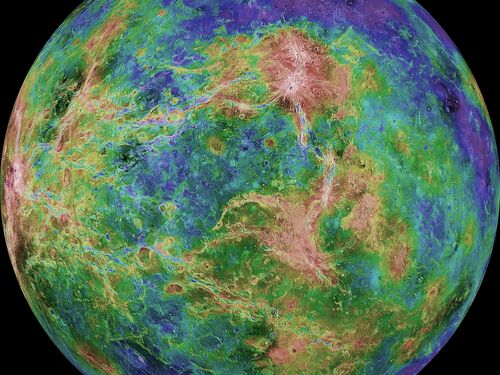
The Chemistry in 2050–Space webinar brought together leading scientists to discuss how chemistry is essential for understanding the universe, from the origins of life on other planets to the adaptation of biology in extreme space environments. Panelists highlighted the need for more laboratory-based astrochemistry, addressed challenges in detecting biosignatures like phosphine, and emphasized the importance of innovative research and flexible mission approaches to advance space bioscience.
Exploring the New Nuclear Energy Landscape
Feature Story
The energy industry in the U.S. is undergoing rapid change, and the needs of “hyperscalers” and others have led to a resurgence of interest in nuclear energy. A recent workshop brought together experts in tech, policymaking, finance, and community engagement to discuss what comes next.
Our Expertise
The Physical Sciences, Systems, and Infrastructure program area brings together leading experts from academia, government, and industry to provide independent and forward-thinking advice to support technology development and identify critical future research directions across the mathematical and physical sciences and engineering. Our work shapes policy and guides decision making on topics such as the future of U.S. energy systems, infrastructure needs, smart manufacturing, military force modernization, mission-focused Service systems integration, and defense applications for emerging technologies.
Our landmark studies explore the opportunities and challenges at the frontiers of technology innovation — from digital twins to advanced nuclear reactors — and provide actionable advice on ways to harness these new advances for the benefit of the nation. Our workshops and roundtables offer unparalleled forums to discuss complex and timely issues as they arise with experts from across disciplines and perspectives.
Description
Addresses innovations in physical sciences – math, physics, chemistry – with a systems approach across disciplines and domains including: Energy/Electricity, Manufacturing/Materials, and S&T for Defense/Intelligence.
Contributors
Staff
Michelle Schwalbe
Lead
Discover
Events
Right Now & Next Up
Stay in the loop with can’t-miss sessions, live events, and activities happening over the next two days.
NAS Building Guided Tours Available!
Participate in a one-hour guided tour of the historic National Academy of Sciences building, highlighting its distinctive architecture, renowned artwork, and the intersection of art, science, and culture.