Executive Summary
In 2001, surface transportation made up 8 percent of U.S. gross domestic product and about 18 percent of average U.S. household expenditures, second only to housing. The nation’s economy and the lifestyles of its citizens depend heavily on a safe and efficient transportation system. Yet, surface transportation agencies face unprecedented challenges in recruiting and retaining the workforce they need to deliver transportation infrastructure and service effectively. The responsible and efficient operation of the nation’s transportation system depends on a well-trained workforce. Successfully addressing transportation workforce issues requires a collective effort involving the agencies, the federal government, the private sector, and a wide range of academic institutions, as well as the transportation workforce.
WORKFORCE ISSUES EXAMINED IN THIS STUDY
State departments of transportation and transit agencies deliver transportation infrastructure and service with the support of a host of private-sector contractors and consultants. The Committee on Future Surface Transportation Agency Human Resource Needs was convened by the Transportation Research Board to determine how these agencies can reorient their human resource efforts over the next two decades in order to respond to future changes in roles and responsibilities within their organizations. The intent of this study was not to precisely measure shortfalls between labor force supply and demand. Rather, the committee examined what is needed for transportation agencies to strategically alter key human resource activities—recruiting, training, retaining, and succession management—and makes recommendations designed to enable these agencies to continue to meet
workforce challenges and adjust to labor market realities. Also addressed is the important leadership role of the federal government in this effort.
Transportation workforce issues are complex. There are more than 50 state departments of transportation, nearly 6,000 transit agencies, and many other public agencies with transportation responsibilities. Each has its own set of responsibilities, organizational structure, history, and culture. Each must adapt to internal and external social, political, and institutional working environments, often in different ways. Agencies vary widely, and although each has its own unique capabilities and resources to address workforce needs, all have limited resources. Few have addressed their future workforce needs in a comprehensive fashion, which further complicates efforts to predict how many people in specific job categories for each type of agency will be needed in 5 or 10 years. The committee did not attempt to estimate specific agency needs—what kinds of workers are needed for what kinds of jobs—in any detail because the basis for any such estimate is insufficient. Most agencies do not have mechanisms in place for identifying the skill sets they need. Each agency must decide what skills it needs and set out to obtain them.
It is evident that in recruiting, training, and retaining employees in transportation agencies, one size does not fit all. Agencies must adopt and adapt practices that are best suited to their individual circumstances from a wide range of possible alternatives. This is a complex endeavor because in addition to competing with each other, transportation agencies compete with the private sector for qualified staff. With these constraints in mind, the committee focused on how agencies can meet their workforce needs, now and in the future, regardless of specific or cumulative need. To their credit, all the agencies—in both the public and the private sector—have a long history of working together successfully to address common problems in a systematic and coordinated fashion. The Interstate highway system is an example of such successful collaboration.
In the course of this study, it became clear to the committee that many factors require immediate action and that the situation may, in fact, be far worse than anticipated. Among the factors are high levels
of anticipated retirements; insufficient numbers of midlevel managers available to fill forthcoming vacancies; the need for new workforce skills required to keep pace with new methods and advanced technologies, including systems analysis, computer-aided design and engineering, new materials, robotics, and intelligent transportation technologies; and increasing demands on surface transportation agencies.
The needs are critical. The committee makes recommendations that can be implemented to avoid the severe consequences of inaction that are quickly approaching or already affecting the nation’s transportation and transit agencies. Consider the following:
-
Expanded agency missions require new skills. Today’s state departments of transportation were established as highway agencies in the last century to build road networks. Now some of them are responsible for airports, railroads, public transportation, ports and waterways, intermodal operations, and other ancillary functions (such as motor vehicle registration and enforcement) as well as highways. Their changing mission and broader responsibilities require a workforce capable of addressing many issues other than engineering. Transit agencies offer many types of service and must address numerous community, economic, and customer issues. All agencies face planning, environmental, and technology issues and are increasing their use of telecommunications, data management, and other information technologies. Thus, agencies require a workforce with a wider range of technical disciplines than ever before.
-
Program growth coincides with level or decreasing staffing. Although programs are expanding, budget restrictions frequently call for maintaining or reducing current staff, resulting in more contracting out and a need for additional contract management and administration skills.
-
Senior agency staff are likely to retire in unprecedented numbers. More than 50 percent of the state transportation agency workforce will be eligible to retire in the next 10 years. While this trend is not unique to transportation agencies, it is more than double the rate for the nation’s entire workforce.
-
Increasing difficulties in recruiting and retaining professionals and technicians are common. Today’s highly competitive job market shows a growing disparity between pay scales in the public and private sectors. Transit agencies, whose bus and train operators make up about 75 percent of the transit workforce, are struggling to attract workers to this rule-bound, seniority-based environment. Transit agencies’ inability to offer work schedule flexibility, which is highly regarded by today’s job applicants and common in other industries competing to attract these same employees, adds a unique constraint on recruiting. In addition, transit agencies typically offer less pay and fewer opportunities for advancement than do state departments of transportation. Therefore, they frequently find it more difficult to recruit many of the same types of professionals— engineers, planners, and environmental and financial specialists— than do the departments of transportation.
-
Workforce training expenditures are insufficient. Benchmark studies of training investment in the private sector and federal agencies indicate that successful organizations spend, on the average, 2 percent of salaries on training, at least four times more than transportation agencies.
-
Meeting an organization’s strategic plan requires positioning human resource activities at the strategic level. Agencies whose human resource function focuses solely on filling positions to meet immediate needs cannot achieve their strategic goals of recruiting successfully in today’s job market.
Although any one of these issues would be of concern individually, in combination they suggest an impending crisis, which—with foresight and intervention—may be averted. They also reveal the key role the federal government has in meeting the challenges of the transportation workforce. Because it has the responsibility for strategic national interests, the federal government—Congress, the administration, and the U.S. Department of Transportation (USDOT) and its modal administrations—has a large stake in the effectiveness of the nation’s transportation workforce. The federal government relies on the national transportation workforce to deliver the programs and
projects the nation needs to accomplish its economic, mobility, safety, environmental, and defense mobilization goals for transportation. As the primary steward of the nation’s transportation system, the federal government is in the best position—in terms of resources, scope of interest, and influence—to take a leadership role in addressing transportation workforce issues. Absent federal leadership, attempts to resolve these human resource issues will lack strategic direction and national scope, despite the best efforts and accomplishments of individual transportation agencies and their national associations.
RECOMMENDATIONS
The committee’s recommendations are aimed at a broad range of agency needs and apply to surface transportation agencies but recognize that others—the federal government, the private sector, educational institutions, unions, and employees—must be involved in addressing the key issues. The opportunity to partner is great, as is the potential for collaboration and cooperation on many fronts. Partnering may be difficult at times because of rules and regulations that require distance between public- and private-sector activities, but examples from many successful partnerships and collaborations in other industries suggest that barriers can be overcome. A summary of the committee’s recommendations and its views on the potential consequences of inaction follow.
Training must be a key priority for all involved. Surface transportation agencies at all levels—federal, state, and local—in partnership with the federal government, the private sector, educational institutions, unions, and employees, should establish training as a key priority. Training must be viewed as an investment providing needed knowledge, skills, and abilities. It can be a key component of alternative pathways to transportation agency careers by providing those from undergraduate programs (including community college programs) in business, planning, environmental science, public policy, and other areas with access to the transportation workforce. Commitment to
training is measured by the amount of training and the effectiveness of the training. The agencies must invest more in training than they are now. An investment goal of 2 percent of salaries for training—as suggested from benchmarking surveys of many successful organizations—is appropriate for transportation agencies. This is equivalent to about 40 hours of training annually for each employee. While this benchmark goal is important, the training must be effective as measured in terms of improved performance, lower costs, and other metrics.
Consequences of inaction: Lack of adequate training can lead to ineffective agency operations, inefficient use of limited resources, and higher future costs to meet future needs.
More federal surface transportation program funds should be eligible for use by state and local transportation agencies for education and training activities. The committee believes that while spending at all levels for training and education of the transportation workforce should be increased, federal spending can serve as an important catalyst. Federal reliance on the nation’s transportation workforce supports the need for federal leadership in addressing transportation workforce training. Current federal funding for transportation workforce training has several components. The largest single source of federal training funding to agencies is a discretionary program that permits states to use up to 0.5 percent of a portion of the funds from the Surface Transportation Program—about $38 million—for education and training. Similarly, transit agencies can use a portion of their federal operating and capital investment funds—about $32 million—for training. The committee supports the administration reauthorization proposal that calls for making more existing program funds eligible for education and training. By adding several existing programs to those programs whose funds are eligible for education and training expenditures, the administration’s proposal, if enacted, would yield a 200 percent increase in available discretionary funds. Each agency could then decide how much of these funds it wishes to invest in education and training across a number of eligible programs.
Many federal transportation programs—which amount to about $36 billion annually—encourage the use of new methods and ad-
vanced technologies, including planning and environmental models, systems analysis, intelligent transportation systems technologies, community involvement, and alternative fuel transit vehicles. However, these programs do not support training for agency staff responsible for implementing, operating, and maintaining these new methods and technologies. This lack of support acts as a barrier to wider implementation of transportation system innovations that can improve safety and performance and reduce costs. It also hampers the federal stewardship role aimed at ensuring that state and local governments use national resources efficiently.
The committee also supports reauthorization proposals to increase funding for existing federal programs that directly support education and training, including the University Transportation Centers (UTC) program, the Federal Highway Administration’s National Highway Institute, the Federal Transit Administration’s National Transit Institute, and the Local Technical Assistance Program (LTAP). In conjunction with increasing the federal program funds available for agency education and training, Congress should also introduce incentives that trigger more federal funding if states and agencies invest their own funds in education and training for the transportation workforce. Incentives should be added to the UTC program to encourage the UTCs to partner with community colleges to provide specific education and training in areas for which the community colleges are best suited. Increased training investment must be accompanied by systematic evaluation of training outcomes.
Consequences of inaction: Failure to increase federal spending for training will limit the ability of all agencies to provide education and training needed to decrease project delivery times, improve service, reduce system operational problems and failures and their consequences, and use new technologies.
USDOT, in partnership with transportation agencies, the private sector, educational institutions, unions, and employees, should undertake an initiative that focuses on innovation in human resource practices and addresses recruitment, training, retention, and succession management for transportation agency
personnel. This initiative can provide leadership; a focal point for federal, state, and local agency efforts; and a basis for creating partnerships among all key parties. The federal government, because of its national transportation responsibilities and the resources within the human resource organizations in USDOT and its modal agencies, is in an excellent position to lead this initiative as a follow-up to the USDOT-sponsored 2002 National Transportation Workforce Summit. USDOT can interact directly with other federal agencies that are moving forward on workforce development initiatives and acquire useful information and data from them. The transportation workforce initiative can build on current efforts, including the Transportation Workforce Development website being developed by the Federal Highway Administration in partnership with the American Association of State Highway and Transportation Officials to document exemplary workforce practices at state departments of transportation. Another example of current work that would be useful to incorporate is that of the American Public Transportation Association’s Workforce Development Task Force. Broadening these efforts to include experiences from all types of transportation agencies and private-sector organizations would provide much-needed information and support. All stakeholders in the nation’s workforce—agencies, academia, trainers, unions, employees, and the private sector—should participate in setting priorities and direction for the initiative. These partners should work together to compile information to examine the national implications of transportation workforce issues.
Consequences of inaction: Without federal leadership in an initiative aimed at innovation in human resource practices, a significant opportunity to improve transportation workforce practice and share information and data will be lost.
Transportation agencies should partner with universities, community colleges, training institutes, and the LTAP centers to meet agency training and workforce development needs. These institutions are well organized to provide education and training and have the technical expertise to deliver the curricula, courses,
and training materials required to meet agency skill needs. Many have already done so. More needs to be learned about the appropriate role of each, individually and in combination, in delivering efficient and effective education and training to the workforce.
Consequences of inaction: Failure to partner with established education and training providers prevents agencies from taking full advantage of key workforce development opportunities.
Transportation agency leaders must make human resource management a strategic function in their agencies. The most successful private- and public-sector organizations have raised human resource management to the strategic level in their organizations because they recognize that human capital is a key to successful performance. Several transportation agencies have already carried out organizational changes to make the human resource function a strategic and equal partner with other key agency functions. Without this organizational change, agencies will continue to fill positions in a piecemeal fashion instead of identifying future workforce needs and addressing gaps in their ability to meet those needs through a strategic human resource program.
Consequences of inaction: Failure to change agency human resource focus from solely filling vacant positions to strategically addressing workforce needs will result in agencies falling short of accomplishing their missions, especially in light of today’s competitive job market.
All these recommendations aim at improving the performance of transportation agencies and, ultimately, the nation’s transportation system. They reflect the goals and benchmarks of successful public-and private-sector organizations. They also reflect the primary goal— improving human capital—of President Bush’s 2002 Management Agenda.
1
Introduction
The Committee on Future Surface Transportation Agency Human Resource Needs: Strategies for Recruiting, Training, and Retaining Personnel was formed to study the future human resource needs of transportation agencies and to identify potential strategies for recruiting, training, and retaining these personnel. The charge to the committee is presented in Box 1-1.
The predominant surface transportation agencies—in terms of the number of transportation professionals and operating and support personnel employed—are state departments of transportation or highways (SDOTs) and regional and local transit agencies (TAs). Other public agencies play important roles in surface transportation—rail, water, and intermodal—and also employ transportation specialists. In addition, private engineering, planning, and consulting firms employ a large number of transportation professionals and compete with public agencies for many of the same people and skills in the labor market. Nonetheless, the committee focused primarily on several key employee categories within SDOTs and TAs in its information gathering and discussions. While most of the conclusions and recommendations presented in this report are directed at SDOTs and TAs and these key employee categories, they also apply to other public agencies and private firms, as well as other categories. There are also recommendations aimed at components of the federal government—Congress, the administration, and the U.S. Department of Transportation— responsible for the nation’s transportation system.
The study was requested by the Federal Highway Administration (FHWA). Funding support was provided from FHWA, the Research
and Special Programs Administration, and the National Cooperative Highway Research Program.1
|
BOX 1-1 Charge to the Committee The committee charge was to describe how the changing roles and responsibilities of public transportation agencies might reorient their human resource needs over the next two decades. The intent is not to precisely measure shortfalls between labor force supply and demand; rather the intent is to identify the kinds of expertise that will be needed in the future to meet transportation challenges, as well as the likely numbers and capabilities of people, and to compare them with the curricula being offered at universities, colleges, and training institutes and the adequacy of the number of students enrolled in these institutions. The committee will describe strategies that public agencies at all levels can use to recruit and develop staffs they will need. It will also make recommendations to the institutions training students on the mix of personnel needs such public agencies are likely to have and on approaches these institutions can take to develop needed skills of the future transportation workforce. The committee will also identify useful areas of research and technical information exchange. In addition, the committee will comment on (a) the appropriate federal role in supporting university education programs to develop transportation professionals and scholars, with particular regard to the federal oversight, management, and guidance of the University Transportation Centers program and (b) federal provision for training and retraining of transportation professionals. |
WHAT SURFACE TRANSPORTATION AGENCIES DO
SDOTs are state agencies responsible for owning, planning, designing, constructing, operating, maintaining, and repairing major components of each state’s transportation system. The modal responsibilities of some SDOTs include highways, airports, ports and waterways, transit, and some railroads. They carry out their responsibilities in partnership with private-sector engineering and construction firms, suppliers of equipment and materials, and other public agencies. Each of the 50 states, plus Washington, D.C., and the Commonwealth of Puerto Rico, has its own transportation agency.
While SDOTs are being asked to address an increasing range of economic, cultural, and social impacts of transportation systems, their primary responsibility remains the segments of the federal Interstate highway and primary highway systems within their borders, as well as their own networks of state highways and other transportation infrastructure. The states own more than 20 percent of the nation’s highways, but average ownership varies, ranging from 8.5 percent in North Dakota to 91.5 percent in West Virginia. In 1997 the states provided about $54 billion for highway-related purposes from vehicle and driver licensing fees and fuel taxes. SDOTs work closely with more than 35,000 jurisdictions—counties, towns, and municipalities— that have some transportation responsibilities.2 States often provide direct assistance to local governments by performing construction and maintenance on some locally owned roads and by distributing state and federal revenues to local governments as grants for highway purposes.
Budgets for federal surface transportation programs are determined by Congress and state legislatures; SDOT operating budgets are set by state legislatures. The former budgets have grown considerably in recent years (but could be reduced in the future). Between
|
2 |
According to the American Public Works Association (APWA), the public works practitioners employed by these jurisdictions address many topics in their work, including computers and computer applications, solid waste, water resources, municipal engineering, transportation, equipment services, buildings and grounds, and snow removal. (Source: APWA website, www.apwa.net.) |
FY 1995 and FY 2001, the apportionment of federal funds administered by FHWA increased nearly 60 percent, from $18.1 billion to $28.9 billion (FHWA various years) (see Figure 1-1).
TAs include nearly 6,000 state, regional, and local agencies that provide transit service with one or several modes—bus, rail, and demand-responsive systems. Aggregate transit industry statistics mask individual agency characteristics. TAs vary considerably in many respects, including size, service area, responsibility, and jurisdictional complexity. In 1998 only 12 of 478 (2.5 percent) had more than 1,000 vehicles, and just one—New York City—had more than 8,000. More than 53 percent operated fewer than 50 vehicles, and more than 90 percent operated fewer than 250 vehicles. More than 55 percent of all conventional transit passenger miles in the nation are accounted for by the three largest systems—New York City, Chicago, and San Francisco–Oakland—with New York alone accounting for more than 40 percent.
Although public ownership dominates today, the history of transit provision in the United States reflects a mix of privately and publicly provided service. The evolution from private to public ownership,
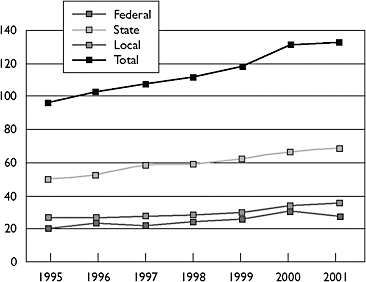
FIGURE 1-1 Highway expenditures by government level ($ billions).
while not swift, was dramatic. In 1940, only 20 transit systems in the country were publicly owned, and they accounted for just 2 percent of ridership (Black 1991). By 1960, although the vast majority of all systems were still privately owned, public properties accounted for nearly half of all transit ridership, mainly because the country’s very largest systems were publicly owned (Jones 1985). By 1980, more than 500 systems were publicly owned, accounting for 95 percent of ridership nationally (Black 1991).
Two key pieces of legislation—the Urban Mass Transportation Act of 1964 (later redesignated the Federal Transit Act) and the 1974 National Mass Transit Assistance Act—established the role of the federal government in the provision of urban transit. Federal aid— loans and grants for transit capital acquisition, construction, and planning beginning in 1964 and operating grants beginning in 1974 —was generally welcomed by states, localities, and distressed private companies alike ( Jones 1985).3 Public funding was also favored by transit labor unions; approximately 75 percent of the current transit workforce is unionized.
The transit workforce comprises approximately 225,000 employees. Of this total, about 58 percent are vehicle operators, 20 percent are assigned to vehicle maintenance, and 12 percent are assigned to nonvehicle maintenance.4 The balance of the transit workforce is assigned to general administration.5
WHY THIS IS AN IMPORTANT ISSUE
The significance of surface transportation agencies, their workforce, and the transportation system is illustrated by the following key statistics.
-
Surface transportation makes up about 8 percent of the nation’s gross domestic product and about 18 percent of average household expenditures, second only to housing.
-
The surface transportation system has an asset value of about $1,300 billion, more than 87 percent of the nation’s total transportation assets.
-
Capital expenditures on transportation infrastructure total more than $130 billion per year; transit system operating costs are about $22.6 billion per year.
-
Private-sector expenditures for passenger and freight transportation are significant. Private-sector spending for highway transportation alone was $688 billion in 1998, 83 percent of all expenditures for passenger transportation. In 1996 Americans spent more than $225 billion on new automobiles and trucks. More than $402 billion was spent in 1997 for truck freight transportation in the United States, about 79 percent of the nation’s freight transportation expenditures.
-
Public-sector transportation agencies employ more than 620,000 people. Total transportation employment in the United States is more than 14.7 million, about 11 percent of the civilian workforce.
STUDY APPROACH
The committee began its study by reviewing several previous studies about the education of transportation engineering professionals (TRB 1985a; TRB 1985b; TRB 1998; Sussman 1995), civil engineering careers (Henderson Associates 2000; Meyer and Jacobs 2000; Mason et al. 1992), transit workforce issues (TRB 2001; Moffat et al. 2001; McGlothin Davis 2002), and the changing nature of state transportation organizations (AASHTO 1998; FHWA 2000; NAPA 1995; TRB 2000; Zuelsdorf 2000).6 In addition to reviewing recent research
conducted in the National Cooperative Highway Research Program and the Transit Cooperative Research Program, it held discussions with researchers involved in ongoing projects related to this study.7 The committee benefited from presentations and discussions at the 2002 National Workforce Summit, which took place in May 2002 and involved more than 75 transportation leaders and professionals (FHWA 2002). Two industry associations that represent key North American transportation and transit agencies, the American Association of State Highway and Transportation Officials and the American Public Transportation Association, provided the committee with valuable information about their workforce studies and workforce development activities.8 At two of its meetings, the committee heard presentations from and had discussions with a range of transportation leaders, educators, private consultants, and labor management experts.9
Two recent reports of the National Academy of Engineering, one on public awareness of engineering and the other on improving technological literacy, provided information on the challenge of ensuring an adequate supply of high school graduates interested in pursuing careers in transportation (NAE 2002; Pearson and Young 2002). Both reports provide examples of grassroots activity aimed at improving science and mathematics education in grades K-12, where interest in and preparation for transportation careers—as well as many others— begin.
One study, which is actually a precursor to this one, recognized changes under way in public-sector transportation agencies—large
|
7 |
Projects under way include TCRP Project F-11: Positioning the Public Transportation Operating Agency as an Employer of Choice; TCRP Synthesis Project SF-10: Corporate Culture as the Driver of Practices, Techniques, and Strategies for Hiring, Developing, Evaluating, and Retaining Transit Leadership; NCHRP Project 22-24(18): Outsourcing of State Department of Transportation Delivery of Capital Programs; and NCHRP Synthesis Project 33-08: Current Practice for Recruiting and Retaining Individuals in State Transportation Agencies. |
|
8 |
While the study was supported primarily by agencies of the U.S. Department of Transportation, these organizations represent transportation agencies throughout North America, and the issues and solutions are not constrained by national boundaries. |
|
9 |
The presenters are listed in the addendum to Chapter 1. |
numbers of impending retirements, the introduction of new technologies, increasing amounts of contracting out of agency work, and a growing need for more training—that continue today (TRB 1985a). It also noted the importance of a highly qualified private-sector transportation workforce in support of the public-sector agencies. Taking a cue from that study, the committee recognized early the large variations in transportation agencies, including different missions, size, and organization. There are many federal, state, and local agencies with transportation responsibilities, and they have similar workforce components. In addition, the private-sector transportation industry—construction firms, contractors, suppliers, and consultants—compete with the public sector in many job categories. To narrow its focus the committee concentrated primarily on the workforces of SDOTs and TAs because it believes that these agencies are representative of most public agencies with transportation responsibilities. Even though the committee focused on SDOTs and TAs, other agencies and private-sector organizations with transportation responsibilities can benefit from this report if they choose to adopt the suggestions for specific action. They are also the principal agencies delivering key elements of the national transportation program.
Transportation agencies are struggling with their human resource efforts at a basic level, and most lack the fundamental tools needed to determine their future agency workforce needs. Organizational workforce development must have a strategic foundation, be data-driven, and follow a systematic model aimed at achieving organizational goals (NAPA 2000). However, most SDOTs have yet to tie their staffing plans to a strategic plan, identify their core competency needs, or undertake a systematic analysis of the gaps between their workforce needs and staff competencies (New Mexico State Highway and Transportation Department 1999).
In addition, despite recent and ongoing studies, there is a paucity of data available on agency skill needs, job categories, employee educational background, and employee job skills (New Mexico State Highway and Transportation Department 1999; Warne 2003;
McGlothin Davis 2002). The committee commissioned a study to examine the availability and usefulness of national data sources for examining transportation workforce issues (Gilliland 2002). The data were found to be too aggregated to provide accurate predictions for individual job categories in SDOTs and TAs. After considerable deliberation, the committee decided that the lack of essential data and information prevented it from making several key estimates, including the kinds of expertise transportation agencies need in the future, the likely numbers and capabilities of the future transportation workforce, and the future mix of personnel needs in transportation agencies. Clearly each agency must decide what competencies it needs on the basis of how it plans to accomplish its mission. Without established agency workforce development programs in place and agency-level data, it is premature to estimate aggregate skill needs and assess them, especially in light of the wide variations among agencies.
The committee was also asked to examine whether civil engineering programs are changing to accommodate changes in transportation agency missions. SDOTs in particular have traditionally relied on state engineering schools to supply them with entry-level civil engineers. The task was to include assessment of the adequacy of the numbers of students enrolled in universities, colleges, and training institutes with regard to future agency needs. Curriculum change is a complex process involving many considerations. Several are key considerations for this study.
First, engineering programs strive to update course materials to reflect both new technical knowledge and new workforce skill needs, such as technical writing, team building, and working with the public. Second, undergraduate engineering programs are under pressure to reduce their credit hour requirements for graduation and put more emphasis on basics even while they attempt to accommodate new knowledge and meet accreditation requirements. Finally, even though transportation agencies, especially SDOTs, will continue to need a core group of civil engineers to perform or manage the performance of key planning, design, construction, maintenance, and related tasks,
they increasingly need expertise in many other areas, such as environmental science, business administration, economics, information technology, and law.
In light of the variations in transportation agencies, the changes under way in them, their broadening skill needs, and the intricacies of curriculum change in more than 200 civil engineering programs, the committee decided not to address curriculum change or the adequacy of current enrollments. Nevertheless, the committee examined several alternative pathways to careers in transportation agencies that have yet to be fully exploited by the agencies. It also reviewed opportunities for agency partnering with the academic community within and outside their jurisdictions to help educate and train the transportation workforce.
Thus, after considerable discussion and deliberation and subsequent conversations with the study’s sponsors, the committee decided to concentrate on what agencies should do to enable their human resources to meet agency strategic workforce needs. The committee concentrated on the process of accommodating change within transportation agencies instead of trying to solve their individual workforce needs or predict how the internal and external environments of the agencies will change. The committee prepared recommendations that focus on agency recruiting, training, retention, and succession planning and reflect what it believes government, transportation agencies, educators and trainers, and agency personnel can and should do.
ORGANIZATION OF THE REPORT
In Chapter 2, information on the characteristics of SDOTs, TAs, and their workforces is presented, the primary issues that affect them are reviewed, and changing agency workforce needs are described. The traditional sources of key transportation and transit agency personnel and the education and training system that supports them are reviewed in Chapter 3. The importance of strategic human resource management is described in Chapter 4, and suggestions for address-
ing people and skill needs through agency recruiting, training, retention, and succession planning are provided. Information on specific transportation workforce data and analysis needs is provided in Chapter 5. The committee’s findings and recommendations are given in Chapter 6.
REFERENCES
Abbreviations
AASHTO American Association of State Highway and Transportation Officials
FHWA Federal Highway Administration
NAE National Academy of Engineering
NAPA National Academy of Public Administration
TRB Transportation Research Board
AASHTO. 1998. The Changing State DOT. Washington, D.C.
Black, A. 1991. Privatization of Urban Transit: A Different Perspective. In Transportation Research Record 1297, TRB, National Research Council, Washington, D.C., pp. 69–75.
FHWA. 2000. Positioning FHWA for the Future. Report of Task Force on Workforce Planning and Professional Development. U.S. Department of Transportation, Washington, D.C., Dec.
FHWA. 2002. National Transportation Workforce Summit: Summary of Proceedings. U.S. Department of Transportation, Washington, D.C., May.
FHWA (various years). Highway Statistics. U.S. Department of Transportation, Washington, D.C.
Gilliland, C. W. 2002. Transportation Workforce: Existing Indicators and Needed Data. Prepared for Committee on Future Surface Transportation Agency Human Resource Needs, TRB, National Research Council, Washington, D.C.
Henderson Associates. 2000. Minnesota Summit on Civil Engineering Workforce Development. Final Report 2000-23. Nov.
Jones, D. W. 1985. Urban Transit Policy: An Economic and Political History. Prentice-Hall, Inc., Englewood Cliffs, N.J.
Mason, J. M., Jr., J. R. Tarris, E. Zaki, and M. S. Bronzini. 1992. NCHRP Report 347: Civil Engineering Careers: Awareness, Retention, and Curriculum. TRB, National Research Council, Washington, D.C.
McGlothin Davis, Inc. 2002. TCRP Report 77: Managing Transit’s Workforce in the New Millennium. TRB, National Research Council, Washington, D.C.
Meyer, M., and L. J. Jacobs. 2000. A Civil Engineering Curriculum for the Future: The Georgia Tech Case. Journal of Professional Issues in Engineering Education and Practice, American Society of Civil Engineers, April, pp. 74–78.
Moffat, G. K., A. H. Ashton, and D. R. Blackburn. 2001. TCRP Synthesis 40: A Challenged Employment System: Hiring, Training, Performance Evaluation, and Retention of Bus Operators. TRB, National Research Council, Washington, D.C.
NAE. 2002. Raising Public Awareness of Engineering. National Research Council, Washington, D.C.
NAPA. 1995. NCHRP Report 371: State Departments of Transportation: Strategies for Change. TRB, National Research Council, Washington, D.C.
NAPA. 2000. Building Successful Organizations: A Guide to Strategic Workforce Planning. Washington, D.C.
New Mexico State Highway and Transportation Department. 1999. Staffing Plan Survey of State Transportation Agencies. Research Report NM99, ADM-01. Sept.
Pearson, G., and A. T. Young (eds.). 2002. Technically Speaking: Why All Americans Need to Know More About Technology. National Academy of Engineering, Washington, D.C.
Sussman, J. M. 1995. Educating the New Transportation Professional. ITS Quarterly, Summer.
TRB. 1985a. Special Report 207: Transportation Professionals: Future Needs and Opportunities. National Research Council, Washington, D.C.
TRB. 1985b. Special Report 210: Transportation Education and Training: Meeting the Challenge: Proceedings of the Conference on Surface Transportation Education and Training. National Research Council, Washington, D.C.
TRB. 1998. Conference Proceedings 17: Intermodal Transportation Education and Training. National Research Council, Washington, D.C.
TRB. 2000. Transportation Research Circular 501: Strategic Management Research Needs for State Departments of Transportation. National Research Council, Washington, D.C.
TRB. 2001. TCRP Research Results Digest 45: Identification of the Critical Workforce Development Issues in the Transit Industry. National Research Council, Washington, D.C., Dec.
Warne, T. 2003. NCHRP Synthesis of Highway Practice: Current Practice for Recruiting and Retaining Individuals in State Transportation Agencies. TRB, National Research Council, Washington, D.C. (in progress).
Zuelsdorf, R. 2000. Presentation at the Western Association of State Highway and Transportation Officials meeting. June 13.
Addendum: PRESENTATIONS TO THE COMMITTEE
DECEMBER 17–18, 2001
Future Changes Affecting Transportation Agencies
John Mahaffie, Coates & Jarratt
Agency Changes Affecting the Workforce
Stephen Lockwood, Parsons Brinckerhoff, Inc.
State DOT Experience
John Horsley, American Association of State Highway and Transportation Officials
Minnesota Summit on Civil Engineering Workforce Development
Cheri Marti, Minnesota Department of Transportation
Transit Agency Workforce Development Issues
Pam Boswell, American Public Transportation Association
Brian Vogel, Quatt Associates
Private-Sector Workforce Development
Terry Neimeyer, KCI Technologies, Inc.
Workforce Development Experience in the Construction Industry
James Krug, FMI Recruiters
Universities and Curriculum Change
Gerald E. Galloway, Secretary, U.S. Section, International Joint Commission and Member, American Society of Civil Engineers Task Force on Academic Prerequisites for Professional Practice
APRIL 11–12, 2002
State DOT Experience with Meeting Human Resources Needs
David Gehr, Vice President, Parsons Brinckerhoff, Inc., and former Commissioner, Virginia Department of Transportation
Changing Education and Training Needs for Intelligent Transportation Systems
John Collura, Professor of Civil Engineering, Virginia Tech and Chairman of the ITS-America Education and Training Committee
Labor/Union Considerations
Robert Tobias, Professor, Department of Public Policy, American University and former President of the National Treasury Employees Union
Transportation Construction Industry Issues
Brad Sant, Vice President of Safety and Education, American Road and Transportation Builders Association
2
Transportation Agency Work and the Workforce
|
Chapter Highlights
|
|
Transportation agencies at all levels of government and the private-sector organizations that support them operate in a climate of change—stemming from technical, demographic, institutional, political, cultural, economic, and environmental factors—that affects the personal and professional lives of everyone, including the transportation workforce. Comprehensive studies of current and future workforce issues identify many such factors. Box 2-1 presents the four key factors of change from one such study— Workforce 2020—together with several primary components of each (Hudson Institute 1997).1
Surface transportation agencies face these and other issues in delivering programs, facilities, and services to their customers.2 No single trend or characteristic describes how the transportation agency workplace or workforce is changing. While state departments of transportation (SDOTs) and transit agencies (TAs) share many
|
BOX 2-1 Factors of Change from Workforce 2020
|
Source: Hudson Institute 1997. |
trends and characteristics, there are important differences in the issues faced by each. In the first section of this chapter the issues affecting SDOTs are presented, and how these issues affect the workforce and are changing the way those agencies are organized and operated is examined. The key issues affecting the TA workforce are reviewed in the second section. This is followed by a description of the model used by the committee to characterize transportation agency job categories. The chapter is summarized in the final section.
WORK AND WORKFORCE ISSUES FACING STATE TRANSPORTATION AGENCIES
Today’s SDOTs are the direct descendants of state highway agencies that were organized in the early 20th century to plan, design, build, and maintain state and federal highway networks. Many of these agencies have evolved into multimodal departments with divisions responsible for statewide aviation, highways, public transportation, waterways, and intermodal programs. Some also have driver and motor vehicle registration and at least one has the state highway patrol within its purview.
As an organization, an SDOT is oriented toward civil engineering because its work relates to public or civil infrastructure facilities and systems. A typical university civil engineering curriculum provides instruction on the planning, design, construction, and maintenance of
such facilities and systems. Graduate programs focus these skills more closely on transportation subjects.
The Interstate highway system, the country’s last major national transportation program, set the stage for current SDOT organization and activity. The success of that system required a high degree of uniformity and consistency across all the states. This need was met through an enormous set of procedures, standards, and specifications for highway infrastructure. As a result, until recently the SDOT environment was characterized by a long period of stability and a high degree of standardization, supported by a successful national program oriented toward highway system development and preservation. State and federal policy and politics, then, together with dedicated funding and legislative oversight, define the SDOT operating environment. Information on the salient federal legislation and the roles of different levels of government in highway funding is provided in Box 2-2. Some of the key changes under way in state highway programs are described in Box 2-3. [Such changes at the federal level are illustrated in Appendix A by the Federal Highway Administration’s (FHWA’s) view of the key differences between FHWA programs and roles in the Interstate era and in the early 21st century.] Despite the changes affecting all SDOTs and FHWA, each SDOT possesses a distinctive culture and character, and each continues to adapt to its internal and external social, political, and institutional working environments, often in different ways. Within this context, key factors forcing change in the SDOTs are described in the following sections.
Agency Downsizing and Reorganization
The 1980s and 1990s saw a growing commitment by governors and state legislatures to reducing the size and influence of government. More recently, many states faced with revenue shortfalls have reduced state agency operating budgets and staff.3 Mandated spending limits, balanced-budget requirements, and other factors led to agency workforce reductions, hiring freezes, and early retirement incentive programs that downsized many state agencies. To deliver their programs
|
BOX 2-2 Federal Legislation and Government Roles in Highway Transportation By creating a new class of highways and a new highway funding mechanism, the Federal-Aid Highway Act of 1956 significantly affected the governmental roles in highway transportation. The act created the Highway Trust Fund, a unique infrastructure funding mechanism based on receipts from federal user taxes on motor fuels, tires and tubes, new buses, and trucks and trailers and a use tax on heavy trucks. States have always viewed the Highway Trust Fund as state money collected by the federal government for distribution back to the states. Distribution formulas set by Congress redistribute trust fund contributions to address national highway goals. Congress occasionally changes the distribution formulas and has considered proposals to eliminate federal highway taxes, leaving the states responsible for generating needed highway funds directly. Following debate on this issue for the 1998 highway reauthorization bill, Congress decided to continue the Highway Trust Fund and added the requirement that each state must receive at least 90.5 percent of its contribution. FHWA dispersed about $29 billion in 2000 to the states, primarily from the trust fund. In the same year, states provided $62 billion for highway-related purposes through a range of means, including vehicle and driver licensing fees and fuel taxes. States also provide direct assistance to local governments by performing construction and maintenance on locally owned roads and by distributing state revenues to local governments as grants for highway purposes. Counties, municipalities, towns, and townships spent about $30 billion on highways in 1999. |
|
BOX 2-3 How SDOTs Are Changing The largest element of the SDOT workforce is and will continue to be the highway component. That workforce is adjusting to a shift from an emphasis on building and maintaining highways to operating them as part of a transportation system and to protecting and enhancing the highway investment, while adding capacity as needed. This shift, combined with the introduction of many new methods, materials, and technologies, requires broader expertise than that of the highway engineer of the 1970s and 1980s. Moreover, the mission of SDOTs has changed and expanded to include other modes—rail, water, air—as well as intermodal considerations and facilities, further affecting SDOT workforce needs. Two examples illustrate some of these changes. First, past state SDOT interest in freight traffic was focused on truck axle loadings, bridge ratings, and the volume and directions of truck movements. Today, many states are addressing freight traffic in a much broader context that encompasses intermodal transportation and the facilities and equipment needed to support it. Consideration is being given to state heavy truck tax structures, the state role in supporting short line railroads, port subsidies, funding for a rail or a barge link rather than expanding a highway route, and shared funding of intermodal facilities. Consequently, SDOTs need staff capable of analyzing alternative funding mechanisms and assessing potential public–private partnerships to address projects in the public interest. Second, environmental issues also present challenges to the SDOT workforce. These issues and their regulatory requirements are increasingly complex and important to trans |
|
portation programs; inadequate or inappropriate environmental studies can delay projects or even lead to federal funds being withheld. Many SDOTs work closely with state environmental agencies (even funding the cost to these agencies for the preparation of environmental impact assessments for SDOT projects) and are committed to public involvement. It is recognized, however, that these activities require skills and expertise not previously found in the SDOT workforce. |
with reduced staff, many SDOTs reorganized to eliminate several organizational levels, automated or shifted some traditional central office functions to lower levels of the organization, and decentralized other functions. Reorganization also often devolves decision making to lower levels; combined with decentralization, this trend results in more individual discretion concerning how work gets done and fosters more nontraditional employment arrangements. Thus reorganization requires a broader range of knowledge, skills, and abilities among individual workers.4 Kettl (1996, 45) points out that “careful downsizing requires planning, strategic analysis of critical skills, and the creation of incentives to acquire and retain those skills. The key is shrinking government’s size while reconfiguring it to manage changing needs.” As an example, some of the changes associated with the reorganization at the Ohio Department of Transportation are described in Box 2-4.
The trend toward devolving authority from the federal to the state level, and in many cases further within the states to local governments, combined with changing institutional forms, has affected intergovernmental relationships. At the same time, federal regulations and unfunded mandates strain federal–state relations. State and local agencies are beginning to be less dependent on federal assistance and to work
|
BOX 2-4 Reorganization Changes at the Ohio Department of Transportation During the last decade, the Ohio Department of Transportation (ODOT) significantly altered its organization to improve its core service delivery function. Before ODOT’s reorganization, growing pavement and bridge deficiencies, an increasing number of high-accident locations, and limited available construction funding due to a rise in operating costs double the rate of inflation were negatively affecting the performance of the state’s highway network. During the reorganization, ODOT reduced staff by more than 1,900, from 7,800 to 5,900, without any layoffs; streamlined its functions; and reinvested more than $600 million in Ohio’s highway network. ODOT reorganized by consolidating 42 work units into 19 streamlined sections. The agency’s 2001 capital program of $1.2 billion represents a 54 percent increase over that of the mid-1990s and was accomplished with a 24 percent smaller staff. Central to the reorganization was giving the department’s 12 district offices the flexibility to identify cost-saving opportunities while maintaining established production goals. In addition, each district office was able to keep its respective savings and reinvest this money in its capital program. As a result, several high-profile projects were constructed, including a $300 million project to rebuild Interstate 71 through downtown Cincinnati, a $122 million project to reconstruct Interstate 270 north of Columbus, and a $300 million cable-stayed bridge project in Toledo that is expected to become a signature landmark for that city. |
|
Such a major reorganization requires continuing attention to organizational adjustments, skill needs and gaps, employee reaction, relocations, and other factors. ODOT continues to make changes as it addresses a growing program with fewer staff. |
more closely with each other to address some issues—environmental, transportation, and others—that require solutions tailored to local or regional circumstances. In some cases, serious consideration is being given to new forms of regional government even as agencies strive to find ways of working together more closely to achieve regional goals.
Wave of Retirements
The aging of the nation’s population is reflected in the aging of the transportation agency workforce. According to the Current Population Survey, there were 18.4 million workers over age 55 in the labor force in 2000; the Bureau of Labor Statistics projects 31.9 million workers over age 55 by 2015 (GAO 2001). A 1999 survey of SDOTs indicated that more than 50 percent of their workforce is eligible to retire in the next 10 years—more than double the rate for all workers (New Mexico State Highway and Transportation Department 1999).5 In December 2000, FHWA reported that 47 percent of its 2,680 employees were eligible for retirement in 2010 (13 percent at the time, 16 percent in 2005, and 18 percent in 2010). Moreover, potential re-
tirements are more critical in some position specialties than others.6 For example, almost one-third of current SDOT executives were eligible to retire in 2000, and more than 90 percent can retire within 10 years (FHWA 2000a).7
This high potential rate of retirements stems in large part from the aging of the baby boom generation—those born from 1946 through 1964. The proportion of all workers aged 45 and older will increase from 33 percent of the labor force in 1998 to 40 percent in 2008, which will add nearly 17 million workers to this age group. Over the same period, those aged 25 to 44 will decline as a percentage of the labor force—from 51 to 44 percent—resulting in 3 million fewer workers in this age bracket (Dohm 2000). For some transportation agencies, the institution of hiring freezes when downsizing took place means that today many agencies do not have enough midlevel managers to replace their retiring senior-level managers. In an example that reflects the situation in many American Association of State Highway and Transportation Officials member organizations, retirements are leaving the Ontario Ministry of Transportation with significant vacancies (see Table 2-1). Vacancy rates in these specialized skill areas are double those seen at the ministry just 10 years ago.
Program Growth
The Transportation Equity Act for the 21st Century significantly increased federal-aid program funding and broadened the scope of program activities, which placed increased pressure on reduced SDOT staffs. As noted in Chapter 1, between FY 1995 and FY 2001, the apportionment of federal funds administered by FHWA increased nearly 60 percent, from $18.1 billion to $28.9 billion.
|
6 |
Information on state experiences would be helpful, especially in light of such trends as agency downsizings and early retirement offers. Unfortunately, the committee found a paucity of such information. |
|
7 |
Some public and a few private employers are adopting measures to retain older workers and extend their careers. Some of these measures are discussed in more detail in Chapter 4. |
TABLE 2-1 Projected Staff Vacancies in Key Engineering and Technician Categories by 2003, Ontario Ministry of Transportation
|
Agency Work Category |
Projected Staff Vacancy (%) |
|
Planning and design (planners and engineers) |
37 |
|
Structural (engineers) |
56 |
|
Structural (technicians) |
40 |
|
Geotechnical (engineers) |
25 |
|
Surveys and plans (engineers) |
38 |
|
Property (engineers) |
27 |
|
Traffic (engineers) |
27 |
Contracting Out
Two factors have led to increasing amounts of contracting out in SDOTs—increased program spending and agency downsizing. States have always contracted out their highway construction work, and many are now contracting out large portions of other work as well. Estimates from two sources based on state submissions illustrate the nature and extent of work contracted out by SDOTs as well as the variations among states in this regard (see Annex 2-1 at end of this chapter). Anecdotal evidence indicates that the amount of work being contracted out will likely continue to increase, largely because of increased program growth and agency staffing limitations.8
An important consequence of increased contracting out is that agency staff must focus less on engineering work and more on contract administration and management of others who are doing the engineering work.9 Moreover, regardless of the amount of work contracted out, responsibility for verification and accountability for expenditure of public funds remain with the agencies. Contract administration and management of others may not be appealing to engineers whose undergraduate curriculum emphasized planning and design of facilities.
Moreover, as transportation programs expand, the workloads of contractors, consultants, and materials suppliers increase in parallel with those of transportation agencies, requiring them to have additional qualified engineers, certified inspectors, and skilled and unskilled construction workers.
Changing Skill Needs
The traditional mission—and continuing responsibility—of SDOTs is the delivery of surface transportation infrastructure. The past focus of SDOTs on highway construction and maintenance led to agency staffs being heavily populated by civil engineers and technicians trained in the fundamentals of design, materials, construction, structures, hydraulics, geotechnical studies, and transportation engineering. This traditional mission began to change in the 1960s as SDOTs began responding to changing environmental and community needs, as well as federal mandates and regulations. Since then, agency missions have further expanded to encompass metropolitan and regional planning requirements; environmental and safety concerns; intermodal considerations; the implementation of intelligent transportation system (ITS) technologies; and a wide range of issues related to the natural environment, including air and water quality, noise, and habitat and endangered species protection, as well as community impacts (cultural, historic, and social).10 Moreover, the issues of sustainability and environmental justice have emerged as areas for transportation agency attention despite a lack of consensus on what they entail (TRB 1997). And since September 2001, transportation security has become a pressing issue as well. As a result, today’s public and private transportation organizations employ a wide range of specialists, including certified planners, architects, landscape architects, environmental scientists, economists, geologists, hydrologists, computer programmers, statisticians, real estate agents, lawyers, appraisers, and acquisition agents (Polzin and Ward 2002).
Starting in the late 1980s and throughout the 1990s, SDOTs began emphasizing customer-oriented initiatives and paying more attention to quality management, performance measurement, process reengineering, and the delivery of customer service. Customer service and its accompanying real-time information requirements have become a key component of SDOT (as well as TA) activities. More focus on customer satisfaction helps overcome some inefficiency inherent in fragmented system ownership and has impelled many agencies to seek improved cooperation between states and metropolitan areas, and states and local communities. Coupled with customer service activities is the need for SDOTs (and TAs) to interact more proactively and openly with the public and the media.
All public agencies are under increasing legislative and public scrutiny, with the result that they must operate more openly, especially when large-scale projects and facilities are involved. While public involvement may have begun as a response to planning and regulatory requirements, it is becoming a key component of the customer-oriented focus of public agencies. Public involvement requires effective communication and openness in planning, design, priority setting, and overall decision making. Agencies are also recognizing that customer-oriented public participation requires more than responses to individual needs, and they are surveying their customers more regularly to measure levels of satisfaction and identify areas for improvement.
Impact of Technology
Technology changes the skills required in the workforce. During the 1980s and 1990s, computer and telecommunications technologies reshaped many core SDOT functions, including financial and administrative systems, project planning, design, and program management, as well as all measurement and analysis activities. With a computer on everyone’s desk, the way work is organized has changed, as well as how work gets done. ITS technologies—the convergence of communication, computing, sensing, and control technologies aimed at achieving operational improvements through freeway and incident management, traveler information, road weather information, and
other user services—are the most recent examples of technology innovation in transportation agencies.11 The use of ITS technologies to operate and manage transportation systems creates a whole new operating environment for transportation agencies and increases the demand for people who understand and operate these technologies. In addition, the transportation agency workforce must be able to use new computer and telecommunications technologies quickly if their benefits are to be realized (Tulgan 2001).12
Competition for Skilled Personnel
As noted in Chapter 1, public agencies and private organizations compete for many of the same employees. Variations in compensation and job benefits significantly affect the choice of employer for many job seekers. Public agencies are often challenged in recruiting and retaining workers for jobs requiring newer skills and for entry-level positions (NRC 2001). While data on public–private salary differentials are scarce, several recent surveys indicate the differences. One survey revealed that the median salary of responding civil engineers was $59,900 per year in the public sector and $66,000 per year in the private sector (CE News 2002). Reese (2003) found in a survey of younger (below age 35) American Society of Civil Engineers members that the average annual salary for private-sector engineers is $1,000 higher than the average for all engineers, while the average annual salary for public engineers is $1,000 lower than the average for all. Young engineers with advanced degrees in both categories earned $2,000 more per year than the overall average.
Anecdotal evidence provided to the committee in an open session held in December 2001 and by several committee members who are human resource managers indicates that when SDOT engineers
|
11 |
Early attempts at implementing ITS technologies in the 1990s were hindered by a lack of technical capacity at state and local levels. This situation led to the development and implementation of an ITS capacity-building program by the ITS Joint Program Office of the U.S. Department of Transportation, which was responsible for the ITS implementation program. A description of the program is provided in Appendix B. |
|
12 |
There is an emerging trend in the states to consolidate information technology services into a single unit serving all state agencies. This can result in reduced service and lower performance for some agencies, especially the SDOT, which often has a robust computer center. |
move from the public to the private sector, the primary reasons are higher salaries and the potential for profit sharing. Interviews conducted with SDOT officials in 2000 as part of a recent FHWA study yielded similar results (FHWA 2000b). Evidence of engineers moving from the private to the public sector is sketchy. Reasons given for such moves include more regular work hours, improved work–life balance, and greater opportunity for more responsibilities earlier in one’s career (FHWA 2000b). The committee could find no information on how many engineers move in either direction.
While periods of low unemployment often highlight the difficulties associated with public–private salary differentials, periods of increasing unemployment or labor market instability have the opposite effect.13 Workers become more interested in public-sector employment for the same reasons as those cited above for moving from the private to the public sector—more regular work hours, improved work–life balance, and opportunity for more responsibilities earlier in one’s career (Kaye and Jordan-Evans 1999).
Progressive public-sector agencies are able to attract workers even while adopting efficiency improvements based on new methods and techniques developed for the private sector—reengineering, restructuring, and downsizing. Such agencies, in recognition that the labor market is becoming increasingly open and fast moving, are recognizing that they need a retention strategy that focuses on particular employees or groups of employees (Cappelli 2000).
WORK AND WORKFORCE ISSUES FACING TRANSIT AGENCIES
TAs provide local and regional public transit services and operate in an environment of high expectations from transit customers. The TA workforce has several unique characteristics:14
-
It is in constant contact with the general public.
-
About 75 percent of its members—operators and maintenance staff—are responsible for high standards of efficiency and public (in addition to workplace) safety.15
-
Transit operators and maintenance staff are usually unionized.
-
Operators must hold a Class B commercial driver’s license with a passenger endorsement and are subject to drug and alcohol testing.
-
Almost all TAs are local government agencies; a few are state agencies.
-
Opportunities for advancement are limited.
-
The industry has suffered from a poor or uncomplimentary image in the past, which hampers recruiting efforts.
TAs provide a schedule-driven customer service. As a result, the majority of the transit workforce—transit equipment operators— function in a rule-bound, seniority-based environment with little flexibility. This situation has its drawbacks for recruiting younger employees. In addition, the transit industry is experiencing the same stresses on its employment processes as those affecting employers in other sectors. A tight labor market, combined with changing workforce demographics and difficult transit working conditions, creates a definite challenge for TAs. This is especially so for the five key job categories that TAs identify as most difficult to recruit and retain— bus and train operators, equipment maintenance staff, planners, engineers, and information technology specialists (McGlothin Davis 2002). Nevertheless, the workforce issues that TAs face vary from locale to locale, among different-sized agencies, and on the basis of the type of governance structure. The ways in which these and other characteristics affect the TA workforce are described below.
Competition for Skilled Personnel
TAs face many of the same obstacles in competing for skilled personnel as do other public agencies. In a recent survey of the industry, 77 percent of responding agencies reported that a noncompetitive wage and benefit package was a key reason for their difficulty in recruiting employees in the benchmark positions mentioned above (McGlothin Davis 2002, 15). On the other hand, certain other positive characteristics of TA employment—public service, job security, working with people, supporting a better environmental solution, and the opportunity to work independently—can be marketed for some positions (Moffat et al. 2001, 7).
Work Environment of Equipment Operators and Maintenance Staff
Transit employees responsible for performing safety-sensitive functions—such as bus and rail operators—must pass drug and alcohol tests and a physical examination as conditions of employment and are subject to random testing during employment (McGlothin Davis 2002).16 Entry-level operator positions require a high school degree or equivalent; mechanic positions often require training or certification. Operators and maintenance staff work their way up through the ranks, advancing internally, usually to a limited number of supervisory positions.17 New hires—especially bus and train operators—are faced with the traditionally challenging entry-level conditions of split shifts, variable work schedules, and stressful working conditions.18 Transit operating schedules are rigid, reflecting high travel demands during peak periods of the day. As a result, there is no opportunity for flexible work schedules for transit operators. Moreover, the first assignment for many bus operators is the extra-board, a standby assignment that can require the operator to be ready to drive as many as three times each day without a guarantee of being assigned any
work. Such an assignment can be a deterrent for new hires and contributes to high turnover in the position, adversely affecting transit service and thwarting recruiting efforts.
Impact of Technology
Technology changes are affecting TAs in many of the same ways that they affect SDOTs, especially with regard to financial and administrative systems, project planning, and data management and analysis. TAs need information technology specialists to operate and maintain their computer systems and networks and the ITS-oriented systems now included in much bus and rail equipment. They need maintenance staff who understand modern bus subsystems that are increasingly dependent on electronics for control, monitoring, and communication. They are also faced with a proliferation of sophisticated onboard electrical and electronic equipment that is changing the way agencies provide bus service and the way passengers use that service. For example, wiring systems are multiplex instead of analog, engines and subsystems are electronically instead of mechanically controlled, and revenue collection systems are electromechanical rather than mechanical. While such improvements have greatly enhanced the capabilities and benefits of the systems involved, they have also introduced a new level of complexity, requiring considerable knowledge and skill to operate and maintain effectively. Transit operators, for example, must be able to use new mechanical equipment designed to accommodate passengers with disabilities. Many TAs have acknowledged that keeping pace with advanced electronics-based technologies and realizing the full range of benefits of new systems and equipment through traditional on-the-job training alone is not sufficient (McGlothin Davis 2002, 13). Many small transit agencies with a few paratransit vehicles find it particularly difficult to afford a qualified mechanic for their vehicles, which contain complex mechanical systems (Passenger Transport 2002).
Engineering and Planning Needs
TAs have traditionally employed civil engineers and planners to address core engineering and planning issues. The building of subway
and trolley systems in the 19th and 20th centuries—similar in many ways to the construction of railroads that already employed civil and mechanical engineers—drew many engineers to urban transit. Many continued to play key roles as the need for planning, design, and construction, as well as operation and maintenance of facilities, grew. The organization and management of today’s TAs has been heavily influenced by engineers and engineering practice, and TAs continue to recruit engineers for key positions. TAs also need planners to support their service and capital programs. Both engineer and planner positions require a baccalaureate degree, and both have been identified as benchmark positions—those most difficult to recruit and retain for TAs (McGlothin Davis 2002).
A Diverse and Aging Workforce
TA workforce demographics reflect many public-sector employment trends. According to data from 20 TAs, the average age of bus operators was 50.1 years, and that for mechanics was 46.1 years (McGlothin Davis 2002). Both are higher than the average of 39 years for all employees (Dohm 2000). Minorities are overrepresented in bus operations as compared with information technology and engineering positions, in which Caucasian males dominate. The gender mix for bus operators is about 77 percent male and 24 percent female.
Image and Culture of Transit Agencies
The image an organization projects and perceptions about its culture are important to its workforce and its recruiting and retention efforts. Transit is perceived as hardware- rather than people-oriented and isolated from the mainstream of American business (McGlothin Davis 2002). Because it is schedule-driven and must adhere strictly to safety, drug, and alcohol regulations, transit is viewed as quasi-military, inflexible, and rule-bound or old-fashioned. Some agencies suffer from a history of poor union–management relations, even if the situation is
improving.19 Research is currently under way to determine how existing negative attitudes about TA culture and practices can be addressed to improve the agencies’ image as an employer of choice (Transit Cooperative Research Program Project F-11).
Influence of Legislative Bodies and Agency Boards
Transit agencies are usually governed by a board of directors or trustees comprising public citizens appointed by a governor, mayor, or other elected official. Sometimes approval of appointments is also required by a legislative body (the state legislature or the city council). Members typically represent specific political jurisdictions. Transit boards range in size from 5 to 23 members and average 9 members (Simon & Simon 2002). The vast majority of transit boards avoid day-to-day operations and focus on policy issues.
TA workforce planning is often constrained by a transit board decision to cap the number of full-time equivalents (FTEs). When a board mandates restricting FTEs to control costs, it often overlooks actual operating conditions and the potential consequences of FTE limits, such as increased scheduled and unscheduled overtime, operator dependence on overtime, reduced morale and performance, and increased turnover (Moffat et al. 2001).
CHARACTERIZING KEY TRANSPORTATION AGENCY JOB CATEGORIES
Past studies of SDOT workforce needs have focused principally on either the civil engineering or the professional workforce—including, for example, civil and other engineers, planners, lawyers—those requiring a baccalaureate or professional degree. Studies of TA workforce needs have concentrated on several benchmark categories—bus
and train operators, equipment maintenance staff, engineers, planners, and information technology specialists. To both focus and simplify its discussions, the committee adopted a model of transportation agency job categories based on education and training qualifications while recognizing that any such model can oversimplify the situation and obscure variations within and among categories.20 The committee’s model is based on four primary job categories—executive/managerial, professional /technical, operator/technician, and administrative/ clerical. The minimum requirement for professional staff is a baccalaureate or professional degree or equivalent qualifications. The minimum requirement for technical staff is a post–secondary school credential (an associate’s degree, a certificate from a recognized training program, or some combination of training and experience) that qualifies them. The minimum requirement for administrative and clerical staff is a high school diploma or equivalent. More information on these categories as discussed by the committee is presented in Table 2-2.
SUMMARY
Many factors—including technology changes, demographic factors, increasing ethnic diversification of the population, funds availability, and so forth—will continue to have an impact on the transportation agency workforce and the agencies’ ability to recruit and retain qualified staff. Each agency must decide how it will undertake its mission and the workforce it needs to accomplish that mission. While many factors affect this decision, several are critical: anticipated program
TABLE 2-2 Selected Characteristics for Primary Transportation Agency Job Categories
|
|
Typical Job Titles |
Minimum Job Qualifications |
Change Considerations |
Recruiting Range |
|
Executive/managerial |
General managers, executive officers, agency heads, department heads |
Experience with agency operations plus some management experience or equivalent |
Open to change; knowledge of changing conditions within and outside the agency |
National, regional, or departmental |
|
Professional/technical |
Managers; engineers; planners; environmental, financial, and legal specialists |
Baccalaureate or professional degree or equivalent qualifications |
An expanding range of technical skills—planning, operation, environmental, etc.—are needed in all agencies. The changing SDOT business model and core competency requirements are affecting the range of professional requirements; more contracting out increases the need for contract managers; innovative financial arrangements increase the need for financial experts |
SDOTs and TAs generally recruit within the state or region; some recruit across the country; some agencies cannot pay moving expenses for out-of-state candidates |
|
Operator/technician |
Transit equipment operators, maintenance staff, engineering technicians, information technology specialists |
Some combination of postsecondary training and experience |
New computer, information, and transportation technologies result in higher qualifications |
Often within a state or region |
|
Administrative/clerical |
Secretaries, administrative assistants, clerks |
Secondary school education; possibly some additional training. |
Computer-based office technologies and information technologies are raising entry-level qualifications and requiring employers to provide remedial training |
Usually local |
growth, an expanding agency mission, constraints on program funding, and pressure to maintain or reduce agency staff. In combination they require agencies to contract out more work. Many agencies are already selectively increasing their use of contractors and consultants for work traditionally undertaken by agency staff. As they contract out more work, agencies still need some in-house expertise to ensure quality control, a basic fiduciary responsibility of the agency, as well as more contract management and administration skills (Camm and Moore 1997). Nevertheless, overall program management and fiscal stewardship must remain in-house.
Each transportation agency is independent, and few have attempted to predict their workforce needs in the next 5 or 10 years. However, in light of the changes taking place in the workforce, there are some identifiable trends. The impending wave of retirements of senior management staff is important to agencies that do not have sufficient numbers of midlevel replacements in the pipeline. Technology changes are taking place at a quickening pace, increasing the need for training in new methods, technology applications, and management techniques. Contracting out demands more of an agency’s technical staff than just a caretaker role; it requires technical competence combined with contract management and administration skills. The experience gained from the few states moving quickly toward an operating model in which a high percentage of work is contracted out should prove valuable to other agencies if the lessons learned can be captured and disseminated.
The issue of the future TA workforce is somewhat different at this time. While external changes will continue to affect TAs, how they will deliver service in the next 5 to 10 years is not likely to change, nor is the basic mix of personnel required. Thus the need for transit operators and equipment maintenance staff, engineers, planners, and information technology personnel will continue.
REFERENCES
Abbreviations
FPE Federation of Public Employees
FHWA Federal Highway Administration
GAO General Accounting Office
NRC National Research Council
TRB Transportation Research Council
Camm, F. S., and N. Y. Moore. 1997. Strategic Sourcing: A Key to the Revolution in Business Affairs. Report DB-208-AF. Rand Corporation, Santa Monica, Calif.
Cappelli, P. 2000. A Market-Driven Approach to Retaining Talent. Harvard Business Review, Jan.–Feb.
CE News. 2002. Salary Survey 2002. May. www.cenews.com/edsalsurmain.html.
Dohm, A. 2000. Gauging the Labor Force Effects of Retiring Baby-Boomers. Monthly Labor Review, July, pp. 17–25.
FHWA. 2000a. Positioning FHWA for the Future. Report of Task Force on Workforce Planning and Professional Development. Washington, D.C., Dec.
FHWA. 2000b. Federal Lands Highway, Phase II Benchmarking Study. Washington, D.C., Sept.
FPE. 2001. The Quiet Crisis: Recruitment and Retention in the Public Sector. Recruitment and Retention Task Force. Washington, D.C., June.
GAO. 2001. Older Workers: Demographic Trends Pose Challenges for Employers and Workers. GAO-02-85. Washington, D.C., Nov.
GAO. 2002. A Model of Strategic Human Capital Management. GAO-02-373SP. Washington, D.C.
Hudson Institute. 1987. Workforce 2000—Work and Workers for the 21st Century. Indianapolis, Ind.
Hudson Institute. 1997. Workforce 2020—Work and Workers in the 21st Century. Indianapolis, Ind.
Kaye, B., and S. Jordan-Evans. 1999. Love ‘Em or Lose ‘Em. Berrett-Koehler Publishers, San Francisco, Calif.
Kettl, D. 1996. Civil Service Reform: Building a Government That Works. The Brookings Institution, Washington, D.C.
McGlothin Davis, Inc. 2002. TCRP Report 77: Managing Transit’s Workforce in the New Millennium. TRB, National Research Council, Washington, D.C.
Moffat, G. K., A. H. Ashton, and D. R. Blackburn. 2001. TCRP Synthesis 40: A Challenged Employment System: Hiring, Training, Performance Evaluation, and Retention of Bus Operators. TRB, National Research Council, Washington, D.C.
New Mexico State Highway and Transportation Department. 1999. Staffing Plan Survey of State Transportation Agencies. Research Report NM99, ADM-01. Sept.
NRC. 2001. Building a Workforce for the Information Economy. Washington, D.C.
Passenger Transport. 2002. Illinois DOT Connects Small Transit Agencies to Regional Repair Centers. Dec. 27.
Polzin, S. E., and B. G. Ward. 2002. Designing an Interdisciplinary Educational Program to Support Transportation Workforce Development. In Transportation Research Record: Journal of the Transportation Research Board, No. 1812, TRB, National Research Council, Washington, D.C., pp. 143–150.
Reese, C. 2003. Employment History Survey of ASCE’s Younger Members. Leadership and Management in Engineering, ASCE, Vol. 3, No. 1, pp. 33–53.
Simon & Simon Research and Associates, Inc. 2002. TCRP Web Document 21: Public Transit System Policy Boards: Organization and Characteristics. TCRP Project H-24, Contractor Final Report. TRB, National Research Council, Washington, D.C. gulliver.trb.org/publications/tcrp/tcrp_webdoc_21.pdf.
TRB. 1997. Special Report 251: Toward a Sustainable Future: Addressing the Long-Term Effects of Motor Vehicle Transportation on Climate and Ecology. National Research Council, Washington, D.C.
Tulgan, B. 2001. Winning the Talent Wars. W.W. Norton & Company.
Warne, T. 2003. NCHRP Synthesis of Highway Practice: Current Practice for Recruiting and Retaining Individuals in State Transportation Agencies. TRB, National Research Council, Washington, D.C. (in progress).
Wulf, W. A., and G. M. C. Fisher. 2002. A Makeover for Engineering Education. Issues in Science and Technology, Spring, pp. 35–39.
ANNEX 2-1 Extent of and Variations in Contracting Out at SDOTs
|
State |
Notes |
Percent Contracted |
|
Alabama |
Design and environmental services (most design and construction inspection is contracted out as well) |
80* |
|
Alaska |
Construction contract administration |
10 |
|
|
Design |
31 |
|
Arizona |
Design |
90 |
|
|
Construction management |
30 |
|
|
Surveys |
Almost all |
|
|
Mapping |
100 |
|
|
Geotechnical |
67 |
|
|
Hydraulics |
Almost all |
|
|
Bridge design |
50 |
|
|
Environmental |
100 |
|
California |
Design and environmental services (The State Supreme Court has limited contracting out to environmental activities and specialty work on bridge design and experimentation/re-search of seismic retrofit.) |
15* |
|
Colorado |
Design and environmental services (DOT has been contracting out significant amounts of project development activities in recent years, including environmental studies and documents as well as plans development. It is contracting out a growing amount of construction contract administration. For the fiscal year ending July 30, 1999, 51 percent of design and construction oversight was contracted out.) |
40* |
|
Connecticut |
Design |
72 |
|
|
Construction inspection (Surveys, geographic information system, and property activities are done in-house as mandated by the state legislature. State core competencies are identified as maintenance, contract administration, engineering, surveying, and construction inspection.) |
61 |
|
Delaware |
Design |
60 |
|
|
Construction management |
60 |
|
Florida |
Project engineering |
70 |
|
|
Construction |
100 |
|
|
Design and environmental services (Workforce size is determined by the state legislature.) |
66* |
|
State |
Notes |
Percent Contracted |
|
Georgia |
Design |
25 |
|
Hawaii |
Design and environmental services |
>50* |
|
Idaho |
Design |
67 |
|
|
Construction management |
10 |
|
Illinois |
Design and environmental services (Illinois DOT expected to triple its consultant budget in 1999 from $55 million per year to $160 million per year. Most of this is for environmental and design purposes. There will likely be an increase in construction engineering contracts this year as well.) |
65–80* |
|
Indiana |
Environment studies |
90 |
|
|
Design |
90 |
|
|
Construction oversight |
10 |
|
|
Maintenance |
0 |
|
|
ITS area |
0 |
|
|
Construction |
100 |
|
|
Construction inspection |
25 |
|
|
Right-of-way |
Little |
|
Iowa |
Highway design |
62 |
|
|
Bridge design |
41 |
|
|
Project planning (location and environment) |
18 |
|
|
Construction inspection |
25 |
|
Kansas |
Plans and design for the major highway and bridge jobs (from 1990 to 1997) |
71 |
|
|
Plans and design for the major highway and bridge jobs (from 1998 to 1999) |
58 |
|
|
Plans and design for the major highway and bridge jobs (for the 2000 to 2009 program) |
70 |
|
|
Environmental (approximate) |
10 |
|
|
Construction and reconstruction activities |
100 |
|
Kentucky |
Preliminary engineering items, such as design, environmental studies, planning, underwater bridge inspection, photogrammetry |
80 |
|
Louisiana |
Design |
30* |
|
|
Environmental |
60* |
|
Maine |
Highway design |
30 |
|
|
Bridge design |
20 |
|
|
Construction engineering |
13 |
|
State |
Notes |
Percent Contracted |
|
Maryland |
Plats |
90 |
|
|
Field surveys |
33 |
|
|
Mapping |
100 |
|
|
Design (on a dollar basis) |
60 |
|
|
Design (on a project basis) |
50 |
|
|
Construction inspection |
50 |
|
|
Construction |
100 |
|
Massachusetts |
Design and environmental services |
50* |
|
Michigan |
Design and environmental services |
55* |
|
Minnesota |
Design and environmental services |
25–30* |
|
Mississippi |
Design and environmental services |
30* |
|
Missouri |
Highway design |
82 |
|
|
Bridge design |
16 |
|
|
Construction inspection |
0 |
|
|
Miscellaneous |
3 |
|
Montana |
Design and environmental services |
30–50* |
|
Nebraska |
Highway design |
35 |
|
|
Construction engineering |
0 |
|
Nevada |
Construction engineering |
55 |
|
|
Preliminary engineering |
78.6 |
|
|
Right-of-way plans and appraisals (State legislature fixes staff limits by approving all state agency budgets. Technicians are certified through the Transportation Technician Training Program, a joint program of Nevada DOT and the Association of Contractors in the state.) |
Some |
|
New Hampshire |
Design projects (by number) |
33 |
|
|
Design projects (by dollar amount) |
63 |
|
New Jersey |
Design on a project basis |
95 |
|
|
Construction |
30 |
|
New York |
Design and environmental services |
50* |
|
New Mexico |
Signs and pavement markings |
100 |
|
|
Logo program |
100 |
|
|
Construction management on certain projects |
100 |
|
|
Services such as environmental, design, and traffic studies |
40 |
|
North Carolina |
Design and environmental services |
50* |
|
State |
Notes |
Percent Contracted |
|
North Dakota |
Construction engineering services for the state portion of the total construction program |
20 |
|
|
Design services |
50 |
|
|
Design and construction engineering for county program |
100 |
|
Oklahoma |
Design work |
70 |
|
|
Construction inspection |
10 |
|
|
Bridge inspections |
75 |
|
Oregon |
Preliminary engineering |
45 (1998) |
|
|
|
39 (1999) |
|
|
Construction engineering |
9.6 (1998) |
|
|
|
4.3 (1999) |
|
|
(State legislature has capped hiring.) |
|
|
Puerto Rico |
Engineering services (The Puerto Rico Highway and Transportation Authority contracts out the majority of its preliminary engineering work including some construction management and design/build management contracts for large transportation projects.) |
90 |
|
Rhode Island |
Design and environmental services |
95* |
|
South Dakota |
Design |
25 |
|
|
Construction |
20 |
|
|
Environmental |
<5 |
|
Tennessee |
Design projects |
50 |
|
|
Construction inspection (except for specialized work) |
100 |
|
|
Right-of-way appraisal work |
60 |
|
|
Environment studies |
60 |
|
Texas |
Preliminary engineering, including design |
51 |
|
|
Construction engineering |
2 |
|
Utah |
Design |
45 |
|
|
Preconstruction (Utah DOT does not contract out for construction inspection. Most local governments use consultant construction inspection services.) |
80 |
|
Vermont |
Design and environmental services |
60–70* |
|
Virginia |
Design and environmental services |
60–70* |
|
Washington |
Design and environmental services |
20* |
|
State |
Notes |
Percent Contracted |
|
West Virginia |
Preliminary engineering design services (WVDOH does contract out for engineering services in many areas including preliminary engineering for environmental document preparation and contract plans, construction inspection, bridge inspections, materials inspection, and even some right-of-way services.) |
70* |
|
Wisconsin |
Design and construction engineering services |
50 |
|
|
Design engineering Wyoming |
15 |
|
|
Planning |
20 |
|
|
Environmental |
80* |
|
SOURCES: Based on information from FHWA’s Federal Lands Highway core business unit and an independent survey by Zweig-White. Numbers with an asterisk are from a Zweig-White survey of SDOTs. Zweig-White data are for design and environmental services only. |
||
3
Traditional and Emerging Sources for Transportation and Transit Agency Personnel and Training
|
Chapter Highlights
|
|
Universities, community colleges, independent training institutes, professional and trade associations, and public agencies offer a broad range of education and training opportunities that encompass degree, certificate, and continuing education programs, and short courses providing the knowledge and skills needed by transportation agencies. Two federal agencies closely associated with transportation programs offer training opportunities: the Federal Highway Administration (FHWA), through the National Highway Institute (NHI), and the Federal Transit Administration (FTA), through the National Transit Institute (NTI). A third federal agency, the Research and Special Programs Administration (RSPA) in the U.S. Department of Transportation (USDOT), manages the University Transportation Centers (UTC) program, initiated under the Surface Transportation and Uniform Relocation Assistance Act of 1987 and continued in subsequent surface transportation reauthorizations.
Education and training programs at universities, community colleges, and technical schools are affected by institutional issues as they attempt to meet the needs of the education marketplace.1 These issues include academic policies, accreditation and licensing requirements, competition for students, economic considerations, and staffing.
Traditional and emerging sources of education and training all address the needs of employers and employees for continuous learning in response to the growing demands of the marketplace and the workplace. In the following sections information is provided on sources of professional, technical, and industry education and training for state departments of transportation (SDOTs) and transit agencies (TAs).
UNIVERSITIES AND COLLEGES
The primary credential for many key transportation agency positions is still a degree in civil engineering. Civil engineering graduates have long been the backbone of SDOT workforces, largely because civil engineering education prepares students to perform the bulk of work done by these agencies—planning, design, construction, operation, and maintenance of transportation facilities. As the range of activities within the purview of SDOTs has broadened (as discussed in Chapter 2), the agencies need more planning, environmental, financial, and legal specialists. The primary credential for these positions is a bachelor’s degree in planning, environmental science, business, prelaw, or related topics. Regardless of the need for a variety of professions, civil engineering remains the dominant focus. In recent years, the number of civil engineers graduating from accredited engineering programs has been decreasing (see Figure 3-1).2 Despite this cyclic pattern, the supply of civil engineering graduates appears sufficient to meet demand.
Notwithstanding the importance of civil engineers to the operation of transportation agencies, engineering consulting and construction firms employ many more civil engineers. This is evidenced by the fact that in mid-2002, offers to civil engineering graduates were 40 percent
from consulting firms, 50 percent from construction firms, and only 10 percent from government and nonprofit organizations.3 While the data are limited, they do reflect the employment potential. They also suggest that even if changes in civil engineering curricula would benefit SDOTs in light of their changing work requirements, the influence of the agencies on curriculum decisions is small compared with that of other potential employers.4
Many SDOTs have strong ties and established relationships with state universities that help attract engineering students to agency
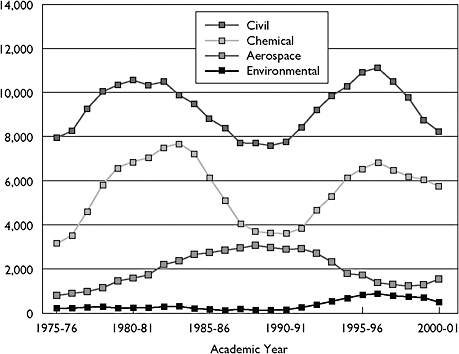
FIGURE 3-1 Bachelor’s degrees awarded in selected engineering disciplines. (Source: engtrends.com.)
work. Such ties have several origins, including state government support of public universities, participation in cooperative engineering programs, agency funding of internships and fellowships, agency research funding that focuses the work of graduate students (and their professors) on SDOT topics, and agency employees who are state university graduates or supporters of student and departmental activities.5
The changes taking place in SDOTs and other transportation agencies—requiring other engineering and technical specialties to address intelligent transportation system (ITS) implementation, environmental regulations, and metropolitan transportation planning, as well as the growing demand for procurement and contract management specialists—have been recognized by the academic community. Sussman (1995, 4) notes the need to educate a “new transportation professional” with breadth in three fundamental areas—technology, systems, and institutions—and an in-depth specialization in a subset of transportation. He also addresses the associated need for a faculty capable of approaching transportation education in terms of “big infrastructure investments, a network structure for delivery of services, an (relatively recent) application of real-time control, a global scale, and a changing institutional structure, particularly between public and private sectors” (Sussman 1999, 23).
In response to the changing needs of urban transportation agencies the University of South Florida—one of USDOT’s university transportation centers—has instituted a Graduate Interdisciplinary Transportation Program. It brings together graduate students in economics, civil engineering, and public administration for a six-course certificate program; the coursework is also available to students working toward master’s degrees. The program, which is described in more detail in Box 3-1, was developed with a view toward the changing knowledge and skill requirements of the transportation workforce for both public- and private-sector employers.
The UTC program, a key component of federal support for university transportation education and research, is described later.
|
5 |
The scholarship program sponsored by the Kentucky Department of Transportation is an example of how an SDOT connects to engineering programs in state universities. The program is described in Chapter 4. |
|
BOX 3-1 The Graduate Interdisciplinary Transportation Program at the University of South Florida The Graduate Interdisciplinary Transportation Program in the Department of Civil Engineering at the University of South Florida (USF) was inaugurated in 1995. Graduate students in economics, civil engineering, and public administration enroll in a common set of core courses that emphasize urban transportation issues. Students in the program have opportunities to participate on research project teams with senior transportation faculty at the USF Center for Urban Transportation Research. The program is being offered as a six-course certificate program in addition to being available to students working toward a graduate degree. The certificate program was developed for early- and mid-career transportation professionals in response to a need expressed by the profession for increased training in interdisciplinary approaches to transportation issues. In addition to its interdisciplinary nature, the program draws from a much wider pool than the traditional set of engineering and planning students in transportation programs. The program’s full-time students are currently 20 percent women and 70 percent Black and Hispanic minorities, whereas the undergraduate civil engineering enrollment has 21 percent women and 10 percent Black and Hispanic minorities. The overall undergraduate population at USF is approximately 60 percent female and 24 percent Black and Hispanic minorities. Thus the program has attracted considerable minority participation and over time is expected to increase female participation as well. |
COMMUNITY COLLEGES
As their name implies, community colleges—a unique American institution with a 100-year history of service—are community-based institutions of higher learning. There are more than 1,170 community colleges in the nation, with about 1,000 being public institutions.6 The majority share the characteristics of open access and equity, comprehensive program offerings aimed at job preparation, a community-based philosophy, a commitment to teaching, and a commitment to continuous learning. Unlike 4-year colleges and universities, where attainment of a bachelor’s degree is the implicit goal of students, community colleges serve students who share a goal of self-improvement but not necessarily a degree.
Community colleges offer a variety of credit and noncredit courses aimed at occupations in high demand within the community.7 They are characterized by high levels of enrollment, low graduation rates, and large numbers of older (mature) students, suggesting that they are functioning as retraining rather than as primary training institutions. Minorities and immigrants are overrepresented in 2-year schools. First-generation postsecondary students and students from low socioeconomic backgrounds are more likely to enroll in community colleges than in 4-year schools (NCES 2000). For students who are already in related technical fields, switching careers, or adding technical skills to their current nontechnical skills, community colleges are a convenient, economical, and popular option.
Community colleges offer an opportunity to tap a worker pool of recent high school graduates, experienced workers seeking a midlife career change, and college graduates with nontechnical degrees seeking alternative employment in more technical fields. Evidence that community college programs have proven successful in providing workers for information technology jobs suggests that programs can
be developed for other job types and diffused across the country (Lerman et al. 2000). This capability is leveraged by a key community college advantage—flexibility in curriculum. Two-year colleges can react to industry demands quickly and are not burdened by the bureaucratic structure and accreditation issues of 4-year colleges and universities.8 On the other hand, as noted above, an accredited engineering or other degree is often a requirement for some transportation agency positions. Finally, it should be noted that, given their financial constraints and union contracts, community colleges can find it difficult to attract and retain the qualified faculty they need.9
Community colleges are partnering with TAs to address some transportation agency needs for specialized skills. The Houston Community College System’s Northeast College has partnered with the Houston Metropolitan Transit Authority (METRO) for nearly 20 years to provide heavy motor vehicle maintenance/diesel mechanic training for METRO’s maintenance apprenticeship program. That program consists of 5 years of training based on a combination of community college classes and on-the-job training at METRO. Candidates are selected by METRO, and community college instructors teach the classes. The program provides 100 percent job placement for those who complete the training. There are currently 75 students in the program.
Community colleges are addressing the need for engineering graduates in other ways, including partnering with universities to provide alternative entry into baccalaureate engineering degree programs. For example, the University of Dayton (UD) has two dual-admission
programs with Sinclair Community College (SCC) in Dayton. In such programs, students who complete an associate’s degree in one of the qualifying programs at SCC and meet the grade point average requirement can transfer to UD with junior status and receive a one-third annual tuition discount from UD while they pursue their baccalaureate degree. In the joint Adult Degree Advancement Program, students over 24 years of age also receive a tuition discount.
Community colleges are well positioned to address emerging and continuing community needs for specialized training programs; they can react quickly to changing needs. However, their ability to initiate and sustain programs in areas of high demand depends on hiring and retaining qualified instructors, who are often in high demand elsewhere.
TARGETED EDUCATION AND TRAINING PROGRAMS
Key Federal Agency Programs
National Highway Institute
FHWA’s NHI provides training and education for surface transportation agencies through the development and delivery of training courses, administration of fellowships and internships, and several affiliate programs. Current funding for NHI is $8 million annually. Specific NHI program activity is summarized in Table 3-1. In addition, NHI currently supports an initiative of the American Association of State Highway and Transportation Officials (AASHTO) aimed at identifying and publicizing innovative practices in SDOT workforce management practices. This effort is described in Chapter 4.
National Transit Institute
NTI, located at Rutgers University, was established under the Intermodal Surface Transportation Efficiency Act of 1991 to develop, promote, and deliver education and training programs for the public transit industry in subject areas of critical importance in which training does not exist or is limited. The institute’s initial four program
TABLE 3-1 Description of Key NHI Activities
|
Activity |
Description |
|
Training courses |
More than 550 courses involving more than 15,000 participants—nearly 70 percent from SDOTs—were delivered in FY 2002. Course materials can be made available to states for their own use and modification. NHI has begun to adopt distance-learning mechan isms (Web- and computer-based training). NHI coordinates across modes and institutions to make the best use of resources. |
|
Fellowships and scholarships |
About 100 student and faculty fellowships and grants are administered for the Dwight David Eisenhower Transportation Fellowship Program. Special fellowships and grants are available for historically African American and Hispanic-speaking institutions, and tribal colleges. |
|
Affiliates programs |
The affiliates programs office supports the Local Technical Assistance Program, the international program, and a partnerships program. |
areas were advanced technologies and innovative practices, compliance with federal regulations, management and professional development, and multimodal transportation planning. In 1998, the Transportation Equity Act for the 21st Century (TEA-21) provided additional funding and added workplace safety as a program area. Current funding for NTI is $4 million annually. In addition to traditional course offerings, NTI provides monthly audio teleconferences, an annual transit trainer’s workshop, and presentations by invited speakers.
Local Technical Assistance Program
The Local Technical Assistance Program (LTAP) provides technical assistance funds to the states to assist them and local governments through 58 LTAP centers10 that provide training and technical assistance primarily to local transportation agencies, as well as to SDOTs, metropolitan planning organizations, private industry, and other transportation providers. Most of the centers are housed at state universities and technical colleges and are geared specifically toward disseminating research results and new technologies to rural highway agencies and municipalities with populations under 2 million. The location of the
centers at universities also provides educational and training opportunities for students interested in highway-related careers, and training and technical assistance for highway professionals at the state and local levels. The LTAP centers are funded by FHWA, SDOTs, the Bureau of Indian Affairs, universities, local transportation agencies, and other state funds. In 2002, up to $140,000 in LTAP funds was available to each state on a 1:1 matching basis; in some cases the match was much greater. During that year, LTAP centers provided more than 5,000 training sessions to more than 135,000 participants. Current funding enables the LTAP program to reach about one-third of the local government transportation workforce.
UTC Program
The centerpiece of federal support for university transportation programs is the UTC program, which is administered by RSPA. TEA-21 authorized up to $158.8 million for grants to as many as 33 UTCs throughout the United States from FY 1998 to FY 2003. Ten of these centers, designated as regional centers, were selected competitively in 1999. The other 23 UTCs are located at universities specified in TEA-21. Funding for the UTCs is matched on a 1:1 basis, often by an SDOT, but also by other sources.
The UTC program supports graduate student education and research in transportation; such assistance provides a platform for the development of future transportation professionals, researchers, and educators. TEA-21 established education as one of the primary objectives of a UTC, institutionalized the use of strategic planning in university grant management, and reinforced the program’s focus on multimodal transportation. (See Appendix C for more detail on the universities in the UTC program.) Congressional designations for the UTC program in FY 2001 amount to 93 percent of the potential grants. During FY 2002, 17 existing centers will enter a competition for funding for the final 2 years of authorization.
State Agency Programs
As noted in Chapter 2, SDOTs operate in a climate of change stemming from technical, demographic, institutional, political, cultural,
economic, and environmental factors. These changes—especially advances in technology; materials; construction methods; financing and scheduling projects; and ways of administering contracts to save time, control costs, and improve quality—require SDOTs to focus more resources on training the workforce. Congress has authorized each SDOT to spend up to 0.5 percent of a portion of its Surface Transportation Program funds on training, a total of about $38 million in FY 2002. SDOTs spent only about $9 million of the available funds in 2002.11 Data from surveys indicate that SDOTs annually provide about 10 hours of training on average for each employee. Nevertheless, many states spend state money for training.12
Information from NHI and the National Transportation Training Directors, an organization of SDOT training directors, suggests that the full range of SDOT training activities is quite broad, but documentation on those activities is limited. Many states are entering into joint training efforts with contractors, consultants, and, in some cases, county and city engineers to leverage limited training resources toward common goals.
A recent survey by Trauner (2001) revealed that SDOTs are reacting to reduced staffing levels by requiring that project engineering and inspection staffs have a wider variety of skills and be willing to work in broader geographic areas than was previously the norm.
SDOTs use certification and licensing mechanisms to ensure that project engineers and inspectors have the needed knowledge and skills.13 Both are often tied to advancement in the organization as well. SDOTs use a variety of institutions to provide instruction for project engineers and inspectors. Table 3-2 shows that the primary provider of such instruction is department staff. Some SDOTs have also pooled resources to develop and implement a single uniform program for training and certification of technical personnel under the
TABLE 3-2 Providers of State Training
|
Provider |
Percentage |
|
Department staff |
27 |
|
Contractor associations |
6 |
|
Universities/colleges |
21 |
|
Consultants |
13 |
|
American Society of Civil Engineers |
8 |
|
National Highway Institute |
16 |
|
Other |
3 |
Transportation Curriculum Coordinating Council, a partnership formed in September 2000 to coordinate, prioritize, and reduce duplication of effort in the development and revision of core training materials for highway construction inspectors and technicians. The council comprises representatives of AASHTO, FHWA, NHI, SDOTs, industry associations, and five regional training and certification groups.14
The training and certification efforts of SDOTs extend to other areas. Examples include Georgia DOT’s project engineer’s academy, maintenance foreman’s academy, and worksite erosion control certification program; Indiana DOT’s technician certification program; and Pennsylvania DOT’s Transportation University, which has been designated as a certified provider of continuing education credits by the International Association for Continuing Education and Training.
A number of states—including Virginia, Texas, Minnesota, California, Pennsylvania, and New York—have established cooperative programs among state highway and transportation agencies, transit properties, and state universities and community colleges. For example, Virginia DOT has a community college–based training program for bus maintenance staff; the state transit office pays the maintainers while they attend courses.
|
14 |
The New England Transportation Technician Certification Program, Mid-Atlantic Regional Training and Certification Program, Southeast Task Force for Technician Training and Qualification, Multi-Regional Training and Certification, and Western Alliance for Quality Transportation Construction. For more information see www.nhi.fhwa.dot.gov/tccc/. |
Transit Agency Programs
Transit equipment operators and maintenance staff, who make up the majority of transit agency employees, receive considerable training. After recruitment, operators require training in safety, operational issues, passenger relations, and the electronic communications and fare collection equipment widely used today. Transit agency maintenance staff usually need to be certified as an electrical, electronic, or mechanical technician or in another specialty. Because equipment suppliers regularly enter and exit the market, each new equipment purchase can require training on new systems. Other transit employees need training in their skill areas and for other reasons. Congress has authorized transit agencies to spend up to 0.5 percent of federal operating and capital funds for training, a total of about $33 million in FY 2002. FTA does not compile information on how much of these funds transit agencies actually spend, but anecdotal information from FTA, the American Public Transportation Administration (APTA), and committee members familiar with a number of transit agencies indicates that they do not use much, if any, of these funds for training. Purchases of new transit equipment provide a mechanism for training of maintenance staff by manufacturers. Studies of the transit workforce indicate that some transit agencies have exemplary training programs. Box 3-2 describes how the Metropolitan Transit Authority in New York City teamed with its unions and the New York City Board of Education to create an apprenticeship program to feed qualified technicians into the agency. Box 3-3 describes an agency’s efforts to train its maintenance staff on new bus technologies.
Key Association Programs
American Association of State Highway and Transportation Officials
AASHTO is the national association that represents state highway and transportation officials. It sponsors several management training programs. National Transportation Management Conferences, conducted in partnership with the Eno Transportation Foundation, provide specialized training to midlevel SDOT managers in skills they
|
BOX 3-2 Cooperative Apprenticeship Program at Metropolitan Transit Authority–New York City Transit In 1998 the Metropolitan Transit Authority–New York City Transit (NYCT), in partnership with Local 100 of the Transport Workers of America and the New York City Board of Education, initiated a pilot training program to enlist New York City vocational and technical high school graduates as apprentices in a structured training environment aimed at providing replacements for its electrical, structural, and mechanical technicians. A Joint Apprenticeship Committee representing NYCT and the union selects apprentices from candidates with specific high school training in these specialties. Apprentices are full-time employees with full benefits and union representation. Training periods can range from 18 months to 3 years. In 2002 there were more than 100 apprentices in training. As of January 2003, NYCT had 105 apprentices, with 11 having matriculated into journeyman maintenance staff positions. |
need to make the transition from technical to management responsibilities. These weeklong conferences introduce participants to the theories and practices associated with managing people and projects effectively. The Team Leadership Institute, conducted in partnership with Indiana University, is a 2-week management training program for senior managers. An annual weeklong Advanced Leadership Institute is organized for selected alumni of the Team Leadership Institute. AASHTO also conducts a 1-day CEO Workshop for new SDOT directors each year in conjunction with its spring meeting.
AASHTO sponsors a science and mathematics education program [Transportation and Civil Engineering (TRAC)] to increase student awareness of transportation and civil engineering as possible career
|
BOX 3-3 Training to Accommodate New Transit Technologies In 1994 SunLine Transit, headquartered in Thousand Palms, California, became the first public transit agency in the nation to convert its entire fleet of buses to compressed natural gas (CNG). Today, the agency operates a fleet of 47 CNG buses, two Hythane (a blend of hydrogen and natural gas) buses, three liquefied natural gas Superbuses, three electric trolleys, 26 CNG paratransit vans, and other miscellaneous light-, medium-, and heavy-duty natural gas vehicles. When a curriculum was needed to train mechanics for alternative-fuel vehicles, SunLine partnered with the College of the Desert, the Southern California Gas Company, and its union. As a result, the system is regarded as a pioneer in the field of operating alternative-fuel vehicles, and SunLine is often approached by other transit agencies and private vendors to demonstrate the benefits of CNG. In addition, SunLine’s supervisory and management training programs are considered models for the industry. Source: McGlothin Davis 2002. |
choices. (See Box 3-4 for more information on TRAC.) See Appendix G for more information on programs aimed at supporting young people in K-12 science and mathematics education and attracting them to transportation careers.
American Public Transportation Association
APTA represents 14,000 North American transit systems, government and state associations, and transit businesses. Since 1997, Leadership APTA, a professional development program made up of three 2-day sessions, has provided transit leadership–oriented instruction
|
BOX 3-4 TRAC (Transportation and Civil Engineering) AASHTO’s TRAC is made available to high schools and junior high schools through regional centers where SDOTs work in partnership with other government organizations, universities, nonprofit organizations, and private industry. TRAC sends volunteer transportation professionals into high schools with a TRAC PAC consisting of a computer, electronic data collection and analysis instruments, software programs for calculating and graphing results, hands-on modeling materials, and more than three dozen activities based on real-world transportation problems. The program’s career message—that transportation and civil engineering are exciting fields in which there is a need for talented people, regardless of gender or ethnic origin, to address future challenges—is incorporated in both TRAC and TRAC PAC. A website (www.trac.net) offers online access to the TRAC RECORD, the program’s quarterly newsletter, as well as a guide to the TRAC PAC; information for students on scholarships, colleges, and careers; guides for teachers using TRAC’s programs in classrooms; and links to more that 40 math- and science-related websites. Membership in TRAC includes 27 states and two countries, South Africa and Tanzania. Recently AASHTO/TRAC completed a partnership agreement with the Associated General Contractors of America (AGC) to pool the resources and outreach programs of the two organizations. TRAC will distribute AGC’s Construction Futures program primary education packages (Build Up! for fifth grade students and On Site! for middle school students) to TRAC participants. In return AGC will assist TRAC in developing construction-based learning modules for its program. |
to 25 individuals working for transit systems and corporations and businesses related to the transit industry. The program introduces participants to the issues, skills, and demands of transit and APTA leadership. The American Public Transportation Foundation provides support for qualified individuals to pursue advanced degrees in areas related to the needs of the transit industry.
As a result of the work of APTA’s Workforce Development Task Force, APTA has begun to institutionalize human resource management as a strategic function in transit agencies. Four subcommittees have been formed within the committee: labor relations, employment, organizational development, and employee development and training. Each subcommittee is developing a work plan that will include training needs and program suggestions with particular emphasis on Web-based seminars and instructional programs.
APTA’s workforce development activities are featured on its website (www.apta.com/cmmtt/humres/index.htm).
Others
Many other associations provide training opportunities for transportation agencies, contractors, and consultants. Selected examples in the area of project management and project inspection are shown in Table 3-3.
NONTRADITIONAL EDUCATION PROGRAMS
Education and training are increasingly available from a variety of sources other than those described above. Such education and training can involve nontraditional sources, nontraditional delivery mechanisms, or both.
Over the last two decades, community-based organizations, for-profit companies, and in-house company programs have begun competing with 4-year colleges and universities and community colleges for programs and students (Bailey 2002). An example is the Cisco Networking Academies program, sponsored by Cisco Corporation, which provides training in high schools and community colleges on
TABLE 3-3 Selected Association Education and Training Opportunities
|
Association |
Offerings |
|
American Concrete Institute |
Seminars and custom in-house training; certification program for project inspectors. |
|
American Society of Civil Engineers |
Continuing Education Division offers courses and training for industry professionals. |
|
Associated General Contractors |
Construction project manager course; project manager program; advanced management program; courses are available only to employees of general contractors. |
|
Association for Project Managers |
Customized courses based on company need; list at www.construction.st/indexelejou.htm. |
|
Construction Experts, Inc. |
Certificate courses, online courses, and seminars; list at www.constructionclasses.com. |
|
Construction Industry Institute |
Continuing Education Short Course aimed at project engineers; www.construction-institute.org. |
|
Construction Management Resources |
Project management training in contract administration, document control, cost control, and critical path method scheduling; list at www.cmrco.com. |
|
Construction Specifications Institute |
Seminars and customized on-site training; list at www.csinet.org. |
|
International Conference of Building Officials |
Training courses for inspection; www.icbo.org. |
|
National Asphalt Paving Association |
Training courses and seminars for project engineers and project inspectors. |
|
National Center for Construction Education and Research |
Craft-oriented courses; list at www.nccer.org. |
|
PM Solutions |
Training in project management; www.pmsolutions.com. |
|
Project Management Institute |
how to design, build, and maintain computer networks (see Box 3-5). For-profit companies are offering short-term training, preparation for technical certification, and even baccalaureate degrees at several levels. For-profit educational institutions are competing directly with community colleges for adult students with strong occupational objectives, especially in information technology fields.
The delivery of education and training is changing. Whereas education has traditionally meant bringing students to sources of knowl-
|
BOX 3-5 Cisco Networking Academies As of July 2001, Cisco Networking Academies, located in all 50 states and 130 countries, were training more than 160,000 students in how to design, build, and maintain computer networks. Students learn from a common curriculum available in nine languages and delivered over the Internet. The majority of the Cisco Networking Academies in the United States reside in public high schools and community colleges. Cisco undertook the program because it had identified a growing demand for computer networks in educational institutions, but it found that limited support staff and training opportunities were available in these institutions. The program was designed to train students to operate school networks and provide a curriculum that could be part of the overall academic program. The program was based on four operating principles:
The cornerstone of the program—recruiting and training qualified instructors—depends on a hierarchical organizational structure of training centers, regional academies, and local academies. Funding for training the initial instructors |
|
was provided by the Cisco Learning Institute, a nonprofit corporation created by Cisco that operates as a public charity to develop e-learning opportunities for educational and charitable institutions and programs. The demand for instructors is a continuing issue because of the problem of retaining teachers whose skills provide them with higher-paying opportunities in industry. The brief history of the Cisco Networking Academies demonstrates that the Internet is useful in developing and improving curriculum, distributing an up-to-date curriculum to underserved populations, assessing student skills, monitoring the quality of instruction, and providing instructors with advice on technical and pedagogical issues. Source: Murnane et al. 2002. |
edge and instruction, distance learning using computers and the Internet brings sources of knowledge to students.15 The combination of economic pressure, student needs, time and space limitations, and technological opportunity has encouraged schools and firms to experiment with Web-based distance education. Web technologies that are capable of delivering text, data, images, audio, and video in an integrated and coordinated manner help overcome many problems associated with earlier delivery methods for distance education. Degree-granting colleges and universities, community colleges, state and federal agencies, corporations, and even publishers are exploring options for participating in distance education. As intellectual capital and knowledge work replace physical capital and production work as the source of economic prosperity, attention is increasingly being
given to the opportunities offered by distance learning. Nevertheless, “the potential effect of computer-based distance education is perhaps the greatest unknown concerning the nature of the competitive landscape in postsecondary education” (Bailey 2002, 61).
Distance learning is only beginning to be developed and used. Computer-based distance learning is not a homogeneous and well-defined entity; it takes a variety of forms and serves various individual and organizational purposes.16 Some students may be uncomfortable with technology and simply avoid using it. Others may be interested in the technology but not have access to the bandwidth needed to receive training properly as originally formatted. Thus if providers use Internet technology to its fullest potential, they may find their student base shrinking because of technical constraints as students have increasing difficulties with graphics and formats. The Internet requires infrastructure that is not affordable to every institution or organization. Internet education and training are also socially isolating and inadequate for certain types of skills, such as soft interpersonal and high-level analytical skills (Bechky 1999).
There are several examples of the use of distance learning technology in transportation. The Consortium for ITS Training and Education (CITE) is addressing the needs of transportation professionals through a partnership of more than 30 universities worldwide, two state members of the I-95 Corridor Coalition, USDOT’s ITS Joint Program Office, and FHWA. CITE offers certificate programs, and SDOTs in need of ITS capability can use its courses. It was recently awarded a 3-year development grant from the U.S. Department of Education’s Office of Postsecondary Education.
The Institute of Transportation Engineers has developed an Internet-based professional development program to address transportation and management areas of practice, such as transportation planning, traffic control, capacity analysis, and safety analysis.
Successful completion of a course can lead to professional development hour units that meet requirements for professional license renewal in 25 states.
CHALLENGES FOR DISTANCE LEARNING: ACCREDITATION AND VALIDATION
Before distance learning can be a major factor in undergraduate engineering education, the issues of accreditation and validation (graduation, licensure, and certification) must be addressed.17 Both issues are important to public agencies and their public health and safety responsibilities.
Traditionally, SDOTs have hired graduate civil engineers to fill most of their entry-level professional positions and then used training programs, rotational job assignments, job experience, and other means to develop their own cadre of midlevel engineers, some of whom advanced to become managers in the agency. However, as the range of SDOTs’ technical activity has expanded (see Chapter 2), the knowledge, skills, and abilities needed by agency staff have also expanded. In addition, the work environment and the way work is undertaken continue to change, requiring communication, team-building, and other skills.
Some of these changing needs are addressed over time through changes in the curricula of engineering degree programs. Curriculum changes are slow, involving internal assessment and debate and outside advice; see the review by Meyer and Jacobs (2000) of the process and outcomes of a major curriculum change in the civil and environmental engineering department at Georgia Tech.18 Curriculum changes respond to the needs of the profession in general, not those
of any specific specialty area. For example, Georgia Tech added a technical communications specialist to its staff to work with faculty and staff on enhancing communication skills within the existing course structure. On the other hand, Penn State recently dropped its transportation engineering undergraduate course requirement for civil engineers in reaction to reduced credit hour requirements for the undergraduate degree.19
An undergraduate engineering curriculum is subject to accreditation, which serves to assure employers that graduates are prepared to begin professional service, taxpayers that their funds are being well spent, and the public that graduates are aware of public health and safety considerations.20 Accreditation is based on several factors, including demonstration that the curriculum has certain required components, that students obtain specific knowledge and skills, and that the faculty are sufficient in number and qualifications. Degree programs for engineers, engineering technologists, and engineering technicians are accredited by the Accreditation Board for Engineering and Technology (ABET), whose members are the major national professional engineering societies.21 The ABET accreditation process uses independent visiting teams to evaluate individual programs.
Accreditation is also important because state licensing boards and certification programs may require graduation from an ABET-accredited program as the first step in the registration or certification process for professional practice. Licensing assures the public that the registration holder has demonstrated acceptable knowledge and skills in basic engineering areas. In most SDOTs, many senior-level positions require licensure, which is a key incentive for young engineers to obtain their professional engineering license. Many SDOTs encourage, and sometimes support, this step through job assignments
|
19 |
In the June 2002 issue of Civil Engineering, one correspondent noted that in 1900, a civil engineering degree required 155 credit hours, whereas today the requirement is 125 credit hours. |
|
20 |
In some instances, federally funded scholarships or grants are available only for accredited programs. |
|
21 |
Based on material from www.abet.org. |
and other assistance. In the private sector, many engineering firms require licensure for advancement to senior-level positions.
Certification is often a requirement for some technical specialties at SDOTs and TAs. It is a voluntary process through which individuals are recognized for knowledge and skills in a specialized field.22 Certification is firmly established in such professional fields as accounting, financial planning, association management, and medical specialties. Increasingly it is being established in specialties such as environmental, irrigation, and corrosion engineering.23 (Table 3-4 indicates some of the SDOT technician certification requirements.) Transit operators also have certification requirements. Bus operators are required to have a commercial driver’s license, while train operators are certified by union supervisors after specific classroom and field training.
MAKING TRAINING A PRIORITY
There are several reasons why transportation agencies must make training a priority. While the work of SDOTs is still civil engineering– oriented, many more disciplines and technical specialties are involved.24 Even in TAs, where equipment operators and maintenance staff make up at least 75 percent of the workforce, training is an imperative for complex transit vehicles that incorporate advances such as alternative fuel propulsion systems, automated fare collection systems, telecommunications-based positioning systems, and computer-based vehicle diagnostic equipment. In addition, because transportation agencies are finding it necessary to hire employees with little or no prior
|
22 |
Some countries have highly detailed skill standards and apprenticeship programs that lead to certification in technical fields (FHWA 2003). |
|
23 |
Certification is now available in professional traffic operations engineering according to information from the Transportation Professional Certification Board, Inc., website at www.ite.org/certification/certification_about.html. |
|
24 |
As noted in Chapter 2, these include planners, architects, environmental scientists, economists, geologists, hydrologists, computer programmers, statisticians, real estate agents, lawyers, appraisers, and acquisition agents. |
TABLE 3-4 Selected SDOT Certifications
|
State |
Selected Certifications |
|
Arkansas |
Materials Testing Technician |
|
Connecticut |
Concrete Technician HMA Paving Inspector ACI Concrete Technician |
|
Georgia |
Worksite Erosion Control |
|
Indiana |
Materials Testing Technician |
|
Iowa |
Aggregate Technician PCC Field Testing PCC Plant Inspection Certification HMA Technician |
|
Kansas |
Aggregate Technician PCC Field Testing PCC Plant Inspection HMA Technician Nuclear Gauge Safety Technician |
|
Montana |
Aggregate Technician PCC Field Testing PCC Plant Inspection HMA Technician Nuclear Gauge Safety Technician |
|
Oklahoma |
Materials Sampling Technician |
|
Nebraska |
Field Technician Plant Inspection Strength Technician Soil Density Technician Nuclear Gauge Safety Technician |
|
South Carolina |
HMA Roadway Technician HMA Quality Control Technician Manager (earthworks, drainage, and base inspection) |
|
Vermont |
Concrete Technician HMA Paving Inspector Nuclear Gauge Safety Technician |
|
West Virginia |
Transportation Technician |
|
Wyoming |
Nuclear Gauge Safety Technician Quality Control/Quality Assurance Technician |
|
NOTE: ACI = American Concrete Institute; HMA = hot-mix asphalt; PCC = portland cement concrete. |
|
exposure to the work of the agencies, training is needed to prepare them for such work. Figure 3-2 illustrates some potential alternative career pathways for SDOT and TA staff and the role training plays.25
Training is increasingly necessary if transportation agencies are going to benefit from or utilize many workplace changes, including new technologies, methods and materials, environmental and planning regulations, and even upgrades to PC-based office software applications; Box 3-6 provides illustrations. The implementation of ITS technologies provides another example. When Congress created the ITS implementation program, USDOT recognized the need for state and local transportation agency training before such implementation could begin. To address this need it established the ITS professional capacity–building program—and provided $3.5 million annually—to examine the needs, engage public- and private-sector partners and academia, and develop a program to provide the knowledge and skills for agencies to implement ITS technologies.26 As noted previously, FHWA has identified two additional critical training needs—for safety and planning specialists—but federal funding has yet to be made available.
As noted above, SDOTs have about $38 million in federal funds available for training but use only about one quarter of that. (No comparable federal funding is available to train TA employees.) For 23 SDOTs reporting the number of full-time employees, these federal funds amount to about $233 per full-time employee (New Mexico State Highway and Transportation Department 1999). If these SDOT employees average $30,000 per year, this amounts to about 0.7 percent of their annual salary. Data from 18 states responding to a survey conducted by the National Transportation Training Directors indicate that the states spent just under 1 percent of agency salaries (unpublished survey, 2001).
|
25 |
These alternatives also suggest that there are many opportunities—policies, programs, and practices—to influence individual decisions to pursue and remain in transportation careers, as noted by participants of the 2002 National Transportation Workforce Summit (FHWA 2002). |
|
26 |
See Appendix B for more information about the ITS professional capacity–building program and its accomplishments. |
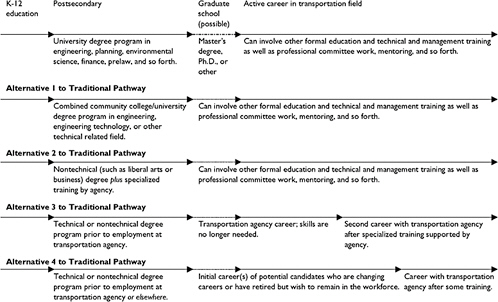
|
BOX 3-6 Illustrative Examples of Transportation Agency Training Needs Stemming from Technological Innovation, Changing Regulatory Requirements, and Office Application Software Upgrades The lessons of the Strategic Highway Research Program (SHRP), a 5-year, $150 million state pooled-fund research program, provide examples of how innovative technologies affect agency and contractor training needs. A key SHRP research product was a new system for designing and producing asphalt pavement called Superpave®, which involves asphalt binder and mixture specifications much different from those used in the past, as well as new testing requirements and equipment. As a result, before Superpave could be implemented and its benefits realized, many transportation workers, including pavement design engineers, asphalt plant operators, asphalt plant technicians, and agency inspectors, had to be trained. This led to the creation of five regional university-based Superpave centers, each with test equipment on loan from FHWA, to provide training for agencies as well as asphalt user–producer groups, materials suppliers, contractors, and consultants. SHRP research also yielded several new tests for assessing the condition of concrete bridge components. The tests include the steel corrosion rate test, the ground-penetrating radar inspection system, the bridge deck integrity test, and a test for measuring the effectiveness of penetrating sealer. The value of these tests is that they can help increase the service lives of concrete pavement and structures. The challenge lies in properly carrying out the test procedures and being able to interpret the results. |
|
This challenge can only be met through effective technician training. Transportation agencies also need training to maintain existing skills. For example, many agencies acquire right-of-way for construction as well as rehabilitation projects, and this requires specific skills for appraisal and negotiation activities. In the environmental area, changes in statutory regulations create an ongoing need for new agency skills. Agency staff need statutory knowledge and negotiation skills in the processes leading to wetland permitting and historical preservation determinations. Safety provides several examples where training is important to agencies. Work zone safety addresses safety considerations for both agency workers and system users and must address the need to maintain construction and system user traffic in many cases. Work zone safety encompasses traffic management and control; design, installation, and maintenance of traffic control devices; legal considerations; and worker control. Workplace safety, especially in road and equipment maintenance areas, also requires attention to manager and worker training. The importance of work zone and workplace safety coupled with the individuality of each work zone situation and the changing nature of the work zone as the job is under way mean that a range of skills are needed to address the topic. These skills can be developed through training. Roadway design is highly dependent on computer packages and the ability of engineers to provide accurate data and interpret the results. These programs require considerable attention to detail and are upgraded occasionally. Agency staff must be able to adopt and adapt the programs effectively, especially because of the safety considerations involved, to avoid crash-related tort liability problems. In |
|
many cases training is needed to convey the needed knowledge and skills. In transit vehicles, as in automobiles, onboard vehicle electronic systems have become virtually ubiquitous in major subsystems and accessories. Fare boxes, destination signs, engines, and transmissions were among the first bus systems with electronic controls. Doors, multiplexed wiring systems, antilock brakes, air conditioning, automatic vehicle location, and other equipment now have electronic controls. Today’s transit vehicles also feature the transmission of data generated by the components to remote locations for analysis and the support of ITS applications like traffic signal priority and remote traveler information. The implementation and maintenance of such equipment require new skills for both maintenance and operator staff. Most electronic systems use PCs and software programs to diagnose failures, which requires maintenance staff to have a basic understanding of electronics and how to operate PCs. Inability to use computer technology to troubleshoot system problems can lead to inaccurate diagnoses, improper repairs, excessive labor costs, and unnecessary materials costs. Bus operators are increasingly being asked to help troubleshoot on-vehicle electronic systems when there are breakdowns while in operation. A more common but nevertheless important example of training need is related to today’s computer-based office operations and the software applications that employees use on a daily basis. Software applications are upgraded continually; if the office operation is to keep pace with these changes, employees need training to use them properly. |
Similarly, transit agencies can use a portion of their federal operating and capital investment funds, about $32 million in FY 2002, for training. According to FTA, few of them use these funds for training, but there are no data indicating how many agencies do use it for this purpose or how much they use. With approximately 225,000 transit agency employees in the United States, these funds yield an average of $142 per employee in 2002.
In comparison, a 2001 survey of 1,488 employers by the American Society of Training and Development found that these companies spent 2 percent of annual salaries on training. Leading companies spend even more: General Electric, 4.6 percent; U.S. Robotics, 4.2 percent; Motorola, 4 percent. FHWA, in recognition of its workforce training needs, has set a goal of 3 percent of annual salaries.
Nevertheless, transportation agency training is not being neglected. There is an extensive array of targeted education and training for transportation agency staff, as well as for people interested in transportation careers. However, such efforts are fragmented and decentralized, reflecting the nature of the transportation system and the transportation agencies. Each agency has different training needs and limited resources, so no single agency addresses the full spectrum of industry needs. AASHTO’s Administrative Subcommittee on Personnel and Human Resources, APTA’s National Transit Workforce Initiative, and the National Transportation Training Directors have all recognized the industry need for cooperative workforce development activities aimed at making more effective use of limited resources.27 While these and other efforts point to the need for training the transportation workforce, they also reveal the need to learn more about alternative ways of developing skills and delivering training. Numerous approaches, including traditional classroom training, Web-based instruction, distance learning, computer-based training, and Web-based professional networks—and their cost-effectiveness—need to be explored.
|
27 |
The work of AASHTO’s Administrative Subcommittee on Personnel and Human Resources is described at www.nhi.fhwa.dot.gov/transworkforce/. APTA’s workforce development activities are described at www.apta.com/services/hrtraining/. |
LEADERSHIP: A FEDERAL ROLE AND RESPONSIBILITY
Surface transportation is essential to economic activity and social interaction. It also reinforces public policies concerning economic, social, defense, environmental, and, more recently, national security matters. The federal government—through the combined actions of Congress, the administration, and USDOT—is responsible for strategic national transportation interests. However, the delivery of transportation infrastructure and public transportation service takes place through a complex intergovernmental arrangement, which is based on a long history of federalism whereby more than 35,000 state and local government agencies carry out a national transportation program with guidance and direction from the federal government.28 The demands on the transportation workers in public agencies and in the private-sector organizations that support these agencies require a broad range of education, skills, and capabilities that change as new methods, materials, and technologies are developed and adopted.
While workforce development is not exclusively a federal problem, the federal government has recognized its reliance on the transportation workforce of these government agencies and the private-sector companies that support them by assisting in several activities aimed at workforce development. For example, SDOTs and TAs can use a portion of federal surface transportation funds for employee training. The UTC program, which provides transportation-related education and research opportunities for graduate students, is funded in part with federal funds. The LTAP centers, also federally supported, provide training and technical assistance primarily to local transportation agencies, as well as to SDOTs, metropolitan planning organizations, private industry, and other transportation providers. NHI and NTI provide education and training opportunities, especially where training does not exist or is limited. USDOT has begun to partner with professional associations, especially AASHTO and APTA, to address workforce issues.
In 2002, USDOT organized the National Transportation Workforce Summit, which enabled public- and private-sector and academic representatives to engage in extensive dialogue on transportation workforce issues (see Box 3-7). The summit underscored that the federal government has yet to develop a consistent strategy or programmatic goals addressing the full spectrum of transportation workforce issues.29 Participants concluded that a large unmet need and opportunity remain for federal government leadership in transportation workforce development. The committee agrees with this assessment.
Continuing federal government reliance on the workforce of the nation’s highly fragmented and decentralized transportation agencies makes workforce development an important issue for the federal government. No single agency or organization has sufficient interest in or resources available to take on the full range of national transportation workforce development issues, especially in light of the highly mobile nature of the workforce. Moreover, a federal agency can interact directly with other federal agencies in activities that address and support workforce development and leverage these activities for the benefit of the transportation workforce.30
Taking a leadership role would help the federal government ensure that the programs it already supports lead to the outcomes it seeks. Stated simply, only the federal government has the breadth of interest and connections, combined with sufficient resources, to gather information about workforce development issues and programs, engage in and support partnerships with state and local transportation agencies and the private sector, and disseminate information about successful activities.
|
29 |
In 1998 USDOT launched the Garrett A. Morgan Technology and Transportation Futures Program to address several transportation workforce issues. Lack of federal support for the program led to elimination of its funding in 2000. Appendix G includes more information on the program. |
|
30 |
The President’s Management Agenda makes the strategic management of human capital one of five federal government management priorities to improve government performance. The initiatives and remedies adopted at the federal level should provide important bases for developing human capital strategies for state and local governments. Source: www.whitehouse.gov/omb/budget/fy2002/mgmt.pdf. |
|
BOX 3-7 The 2002 National Transportation Workforce Summit On May 13, 2002, USDOT hosted the National Transportation Workforce Summit. The summit brought together leaders from government, academia, and the transit and highway communities to discuss the future of the transportation workforce, which includes everyone from construction workers and bus drivers to professional engineers. Workforce discussion sessions included the following topics: the workforce pipeline, training and professional development, and institutionalizing workforce development. Tom Warne, former director of the Utah Department of Transportation, summed up the summit by noting that transportation workforce development is of concern to all representatives of the various sectors of the transportation community. “The Summit should be seen as a first step of a process that can have a far-reaching impact on the future of transportation workforce development.” Summit participants were invited to sign the National Partnership for Educating, Training and Developing the Nation’s Transportation Workforce. Source: FHWA 2002. |
SUMMARY
Transportation agencies, especially SDOTs, are experiencing considerable change. Traditionally, SDOTs have been civil engineering–oriented organizations. TAs also have a key need for civil engineering professionals. Today’s transportation agencies require a much wider range of skills, and their staffs include people from many disciplines. Moreover, alternative pathways for entering the transportation workforce are increasing in number, but little is known about how such nontraditional pathways attract or prepare
future agency staff. More knowledge about the various pathways offered by university engineering and transportation programs, community colleges, and nonengineering university degree programs could help SDOTs and TAs in their search for a qualified workforce.
Taken together, many education and training opportunities are available to the transportation workforce. However, because the overall effort is highly fragmented, with little coordination or collaboration (and no single national leader), opportunities for improvement are being missed. Little effort has been made to clarify how much education and training are needed, available, or consumed by transportation agencies. Moreover, because funding for education and training varies considerably in the agencies, individual efforts often lack sufficient resources to have a national impact.
The mix of opportunities available to provide agency staff with the knowledge, skills, and abilities they need indicates that there is much to be learned about alternative ways of supplying this knowledge. Not only traditional classroom training, but also Web-based instruction, distance learning, computer-based training, and Web-based professional networks31—and their cost-effectiveness—need to be explored.
Finally, although some agencies have estimated their future workforce needs, the aggregate needs of all agencies have not been documented. Moreover, no single agency, organization, or association addresses the national transportation workforce need. The 2002 National Transportation Workforce Summit underscored the concerns and interest regarding workforce issues among public and private stakeholders but also illustrated the fragmented ownership and lack of leadership on this issue. Moreover, federal representatives at the National Transportation Workforce Summit acknowledged that
USDOT has yet to address the transportation workforce issue. It remains to be seen whether leadership can be brought to bear on the issue.
REFERENCES
Abbreviations
FHWA Federal Highway Administration
NCES National Center for Education Statistics
Bailey, T. 2002. Community Colleges in the 21st Century: Challenges and Opportunities. In The Knowledge Economy and Postsecondary Education: Report of a Workshop (P. A. Graham and N. G. Stacey, eds.), National Research Council, Washington, D.C., pp. 59–76.
Bechky, B. A. 1999. Summary of the Workshop. In Competence Without Credentials, Office of Educational Research and Improvement, U.S. Department of Education, March. www.ed.gov/pubs/Competence/section7.html.
Feisel, L., and G. Peterson. 2002. A Colloquy on Learning Objectives for Engineering Education Laboratories. Proc., 2002 American Society for Engineering Education Annual Conference and Exposition, Montreal, Quebec, Canada.
FHWA. 2002. National Transportation Workforce Summit: Summary of Proceedings. U.S. Department of Transportation, Washington, D.C., May.
FHWA. 2003. European Practices in Transportation Workforce Development: Results of an AASHTO–FHWA Scanning Tour. U.S. Department of Transportation, Washington, D.C.
Lerman, R., S. K. Riegg, and H. Salzman. 2000. The Role of Community Colleges in Expanding the Supply of Information Technology Workers. DOL Contract No. J-9-M-5-0048. The Urban Institute, May.
McGlothin Davis, Inc. 2002. TCRP Report 77: Managing Transit’s Workforce in the New Millennium. TRB, National Research Council, Washington, D.C.
Meyer, M., and L. J. Jacobs. 2000. A Civil Engineering Curriculum for the Future: The Georgia Tech Case. Journal of Professional Issues in Engineering Education and Practice, American Society of Civil Engineers, April, pp. 74–78.
Murnane, R., N. Sharkey, and F. Levy. 2002. A Role for the Internet in American Education? Lessons from the Cisco Networking Academies. In The Knowledge Economy and Postsecondary Education: Report of a Workshop (P. A. Graham and N. G. Stacey, eds.), National Research Council, Washington, D.C., pp. 127–158.
NCES. 2000. The Condition of Education. U.S. Department of Education, Washington, D.C.
New Mexico State Highway and Transportation Department. 1999. Staffing Plan Survey of State Transportation Agencies. Research Report NM99, ADM-01. Sept.
Stacey, N. G. 1999. Conclusion. In Competence Without Credentials, Office of Educational Research and Improvement, U.S. Department of Education. March. www.ed.gov/pubs/Competence/section8.html.
Sussman, J. M. 1995. Educating the “New” Transportation Professional. ITS Quarterly, Summer.
Sussman, J. M. 1999. The New Transportation Faculty: The Evolution to Engineering Systems. Transportation Quarterly, Summer.
Trauner Consulting Services, Inc. 2001. Training Curriculum for Project Personnel. Final Report. Philadelphia, Pa.
4
Addressing People and Skill Needs in Transportation Agencies: Recruiting, Training, and Retaining Personnel
|
Chapter Highlights
|
|
In this chapter, what transportation agencies can do to meet their strategic staffing needs in today’s highly competitive labor environment is examined. The focus is on recruiting, training and retraining, and retaining employees and on succession management. Where possible, research findings concerning these activities are provided, practices that have proved successful for private- and public-sector organizations are described, and the committee’s suggestions for action by transportation agencies are presented. What the committee believes is a fundamental principle for a successful organization—making the human resource function a strategic partner in setting the organization’s strategic direction—is addressed in the first section. In the second section, how an organization’s strategic plan determines its core competency needs and how these needs focus recruiting, training, and retention activities are described. In the sections that follow, research and experience concerning how to recruit, train and retrain, and retain qualified people are described. It is important to note that human resource activities are interrelated and that, for example, some actions taken to improve employee retention also support recruiting efforts. Moreover, specific agency human resource activities must be customized in light of different job categories and employment requirements. Finally, succession planning and potential agency partnering activities are addressed in separate sections.
IMPORTANCE OF STRATEGIC HUMAN RESOURCE MANAGEMENT
Background
As discussed in Chapter 2, there is no single organizational or operating model for a state department of transportation (SDOT) or a transit agency (TA). Each is unique because of state or local politics, history, geography, size, population, governmental structure, and other conditions.1 Overall, however, as the dominant owners/operators of the nation’s surface transportation infrastructure, SDOTs are responsible for building, operating, and maintaining a vast array of infrastructure components for a variety of modes, whereas TAs share a common mission of providing public transportation service. Both SDOTs and TAs have planning, environmental, budgeting, finance, and data-gathering and analysis responsibilities. In addition, the work of SDOTs and TAs—like that of other public agencies—involves a network of partnerships among government agencies, private companies, nonprofit organizations, and elected officials (Kettl 1993).
Public and private organizations that recognize the importance of human capital to their long-term success and establish human resource management as a strategic function do best at dealing with the uncertainties of a changing work environment and workplace (NAPA 2000).2 Such organizations recognize that the human element must be explicit in strategic plans, which provides the basis for identifying human resource requirements, competency needs, and competency gaps (OPM 1999).3 Accomplishing this requires the active participa-
tion of human resource managers as fully integrated partners in the development and implementation of such plans.
Decisions about privatization, outsourcing, devolution, and the like stem from policy debates about what governments should do in-house and what they should have the private sector do for them. These decisions can also reflect the nature of work, skill availability, the impact of technology, and other factors. Such debates often generate change. SDOTs are changing as their mission broadens (AASHTO 1998) (see Chapter 2). The changes stem from how agencies choose or are directed to accomplish their mission. Thus, as individual SDOTs change, they become increasingly differentiated by the kinds of work done by their staff. The changes in TAs are not as extensive, but for both SDOTs and TAs, deciding how work will be done and who will do it is a strategic-level decision that drives human resource management.
The Strategic Workforce Planning Process
The purpose of strategic workforce planning is to ensure that the organization has the human resources it needs to accomplish its mission. The organization’s leaders must assess the nature and content of its current and future work and the kind of workforce required to perform it. They must identify and react to the social, technical, economic, political, and environmental factors that may change the agency’s mission or priorities. Tracking these changes and evaluating how they affect workforce needs help identify gaps to be addressed. These gaps form the basis for actions aimed at providing the workforce needed for future agency work. The workforce planning process addresses four key issues:
-
Identifying the composition and content of a workforce strategically positioned to deal with possible future situations and business objectives,
-
Identifying the specific capability gaps—including any special skills required by possible future situations—between the current and future workforces,
-
Preparing recruiting and training plans for permanent and contingent staff that address these gaps, and
-
Determining what functions or processes can and should be out-sourced and how this will be done.
Exemplary organizations are developing carefully crafted workforce planning strategies using multiple approaches or activities (NAPA 2001). Each organization must take into consideration the factors mentioned above that make it unique, as well as its culture, what its employees value, and its industry. The proposed workforce planning process prepared for the Georgia Department of Transportation shown in Figure 4-1 exemplifies the needed components.
CORE COMPETENCIES AND JOB REQUIREMENTS
The core competencies of an organization are the collective knowledge, skills, and abilities that set the organization apart from others and without which it cannot accomplish its primary mission or business and realize its desired outcomes. Core competencies reflect how an organization chooses to accomplish its mission. Traditionally, the core competencies of SDOTs have been oriented to civil engineering because of the agencies’ focus on infrastructure provision and historical decisions that they would rely on their own engineering staffs to accomplish their mission. Nevertheless, the missions and core competencies of SDOTs, as well as individual core competencies and job requirements, are changing. Table 4-1 summarizes these changes for SDOTs. At the same time, the committee recognizes that each SDOT and TA defines its own mission and core competencies, along with individual core competencies and job requirements. The core competencies for SDOTs in Florida, Minnesota, and Wisconsin are provided in Appendix D. Although each organization is unique, their individual core values share a common focus on leadership, organizational knowledge, and managing for results.
The broadened mission of SDOTs has resulted in the need for a wider range of knowledge, skills, and abilities. Moreover, as some
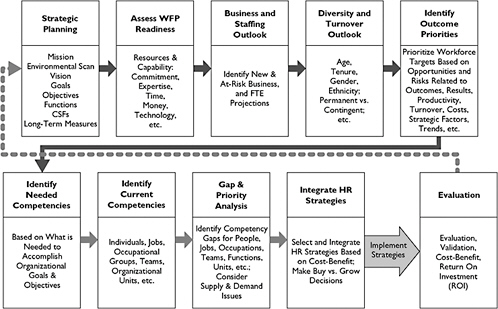
TABLE 4-1 Agency Mission, Competencies, and Job Requirements
|
Characteristic |
Basic Description |
Changes Under Way |
|
Agency mission |
The agency’s mission or role is determined by legislation; that mission or strategic function translates into functional activities undertaken by the agency |
The mission of SDOTs has expanded beyond building a high-way network to include protecting and enhancing the high-way investment, adding capacity as needed, and managing other transportation while supporting and balancing economic, social, and environmental goals. Agencies are hiring others to perform all or parts of certain functional activities |
|
Agency core competencies |
Core competencies are the collective knowledge, skills, and abilities that set an organization apart from others and without which it cannot accomplish its primary mission or business and realize its expected outcomes. Core competencies are needed to ensure successful performance but cannot be outsourced |
Agency core competencies can change when an agency re-organizes or when it changes how it wants to fulfill its mission. If an agency decides to contract out large portions of specific functions, it will need more contract specialists and fewer technical specialists for that function |
|
Individual core Competencies |
Individual core competencies are the knowledge, skills, and abilities individuals must have to perform specific activities |
Traditional SDOT core competencies focus on planning, designing, constructing, and maintaining highway facilities and systems. Changing emphases within agencies have resulted in the need for new and broadened skill sets. Knowledge of environmental, energy, ITS, and other issues and program management, team-building, and consensus-building abilities are now required |
|
Job requirements |
These are determined by the activities staff must perform to fulfill agency functions. They vary across agencies depending on how each chooses to fulfill its mission |
Some states have developed or are developing detailed job requirement information for each of their job classes. Such information helps define benchmark requirements, determine what jobs are nonessential and can be outsourced, and document essential tasks and expertise |
SDOTs increase the amount of work they contract out, the way to accomplish their mission, as well as the knowledge, skills, and abilities needed, changes accordingly. This change is reflected in new agency core competency needs.4 How contracting out can change key skill needs is described in Appendix E. These needs are also affected by such factors as the increasing application of intelligent transportation system (ITS) technologies.
RECRUITING QUALIFIED PEOPLE
Recruiting for key positions in SDOTs and TAs must reflect current and future workforce needs and the labor market. Although traditional recruiting techniques are likely to continue to be used in addressing agency needs, customizing the recruiting process to better align tactics, market conditions, and the positions being filled can help agencies deal successfully with current and possible future recruiting issues, including multiple career paths, a pleasant work environment, training and education opportunities, work–life balance, freedom of location, and attractive financial and compensation/benefits packages. While government agencies and some private companies may not be able to address all these issues to the same degree, they can view them as useful benchmarks for evaluating strategies and innovative practices.5
Although SDOTs use a variety of recruiting approaches, most rely on campus recruiting. Many have traditionally hired newly graduated engineers and rotated them through a series of work assignments within the agency.6 Some SDOTs have long-standing alumni
connections with state universities, while others have research or other organizational ties that enable them to identify and encourage potential job applicants. The Kentucky Department of Transportation, for example, has a successful scholarship program that provides it with many graduate engineers (see Box 4-1). Other potential sources for job applicants are university cooperative engineering
|
BOX 4-1 Kentucky Department of Transportation Scholarship Program Since 1948, the Kentucky Department of Transportation (KYDOT) has had a program of civil engineering scholarships at four state universities. At present, 75 scholarships are available annually. KYDOT currently has a workforce of 6,100, of whom 445 are engineers; two-thirds of these engineers are graduates of the program. The scholarships have conditions. An applicant must be a Kentucky high school graduate or a Kentucky resident, maintain a minimum semester or cumulative grade point average of 2.5 based on a 4.0 scale, continue to maintain full-time student status (12 credit hours per semester), and complete 30 credit hours by the end of each school year. The student receives a stipend: $3,200 for freshmen and sophomores, and $3,600 for juniors and seniors. The student applies to the state university of his or her choice. After graduation, there is a 1-year rotation program (2 months in six locations), followed by a 1-year intensive assignment. KYDOT may provide summer employment as long as the student is making reasonable academic progress. Salaries for summer employment are based on university credit hours earned and range from $1,121 to $1,427 per month. |
TABLE 4-2 Example College Recruitment Timetable (NAPA 1999)
|
Activity |
Time Frame |
|
Establish company or organization identity on campus |
Continuous |
|
Identify candidates for formal job interviews |
Fall or early spring semester |
|
Job interviews on campus |
Spring semester, earlier rather than later |
|
Site interviews at headquarters |
Invitation issued within days of campus interview—conducted soon thereafter |
|
Decide whom to hire |
Recruiting team generally makes final decision on the day of the interviews; other required approval, if any, obtained within a day or two |
|
Issue job offers |
Within a day or two of the interview |
|
Decision by candidates |
Generally flexible, with ongoing contact |
|
Start work |
Negotiable |
education programs, scholarship programs, summer employment for promising undergraduate students, support for graduate student research, research partnerships between agencies and universities, agency support of student engineering association activities, and job fairs. Career development information can be provided via websites, videos, CDs, and printed materials; career-day participation; and support for mentoring programs, science fairs, and internship programs (Mason et al. 1992).7 The timetable for the college campus recruiting process shown in Table 4-2 illustrates the many activities involved in such recruiting, as well as the continuous nature of the process.
A recent survey of SDOT recruiting practices confirms that the agencies are becoming more innovative in recruiting (Gilliland 2001). States are using benchmarking and salary surveys to increase salary levels, developing flexible employment arrangements for employees with special physical or family needs, and establishing employee satisfaction programs that include frequent communication with supervisors.
They are also instituting bonus programs for new hires, referrals by existing employees, and retention in critical job categories; streamlining the hiring process to reduce delays; and using multidisciplinary teams for recruiting visits and interviews (Gilliland 2001). More specific methods are used for some individual job categories. For example, when one state agency found it difficult to recruit information technology specialists, it instituted an internal training program for employees desiring a career change. Applicants who pass a screening test participate in a 6-month training program while continuing to receive their salary. Trainees are guaranteed the option of returning to their previous jobs if the training is not successful. In its initial year the program had a 100 percent retention rate. Other actions taken by SDOTs include the following:
-
Partnering with a state university to establish individual development plans addressing both personal and departmental goals, with all employees being offered core competency courses to increase individual effectiveness and specialized courses to prepare them for future career opportunities;
-
Providing incentives for highly motivated or economically disadvantaged students to complete their education while working at the agency;
-
Working with the universities within a state to establish distance learning opportunities for advanced degree programs in areas of needed expertise; and
-
Helping universities prepare and monitor senior design projects to provide undergraduate engineers with exposure to multidisciplinary projects that reflect agency experience.
Re-recruiting, or attracting adults making a career transition, has proved successful at several SDOTs looking to add or replace skills in middle- and upper-management positions. Highly qualified people who are retiring from another organization often remain interested in working in a stable work environment or wish to accumulate additional retirement benefits. Re-recruiting involves many of the same
approaches used to recruit experienced professionals. Some examples are described in Table 4-3.
Some TAs have also adopted innovative recruiting methods, especially for bus drivers and information technology specialists, two of the most difficult positions to fill. (See Box 3-2 for details of the technician apprenticeship program at the Metropolitan Transit Authority in New York City.) TAs have found that well-planned and highly targeted advertising and outreach programs can be successful in this regard. Some are recognizing the differences between what transit employees value most and what transit managers think they value, and they are tailoring their recruiting efforts accordingly (see Table 4-4). Some are awarding bonuses to employees who recruit new bus operators; others display a promotional bus at major public and sporting events and have bus operators available to talk to prospective operators. Other tactics, which apply to all organizations and most job categories, include the following (Moffat et al. 2001):
-
Providing website access for potential recruits;
-
Focusing on inside sources, current or former employees, and internal job postings;
-
Seeking recruits through schools and fraternal, religious, and community organizations;
TABLE 4-3 Recruiting Experienced Professionals (NAPA 1999)
|
Approach |
Relative Success |
|
Newspaper and journal ads |
Does not produce a high volume of candidates; best for marketing the firm to potential applicants |
|
Job fairs |
Can generate a few candidates, as with ads; can be used for marketing |
|
Internet postings |
High-volume source of resumes, but additional screening is needed |
|
Company Web page |
Can be a good source of applicants, especially as software becomes more sophisticated |
|
Employee referrals |
Unquestionably the best source of high-quality applicants |
|
Direct sourcing |
Direct calls to firms with a particular expertise (identified through news articles or websites) can be effective for specific skills. Can also be effective for senior positions |
TABLE 4-4 What Transit Employees Value and What Transit Managers Think Transit Operators Value (Moffat et al. 2001)
|
What Employees Value |
What Transit Managers Think Operators Value |
|
Type of work |
Competitive benefits |
|
Respectful treatment |
Safety |
|
Ability of top management |
Respect for employees |
|
Coaching and feedback from supervisor |
Performance recognition |
|
Opportunity to learn new skills |
Competitive pay |
|
Training |
Work environment |
|
Recognition for a job well done |
Equity and fairness |
|
PayRecognition |
|
-
Specifically seeking recruits from traditionally underrepresented groups;8
-
Orienting the recruiting message to the career life cycle; and
-
Developing structured assessments of recruits.
Some state governments have elevated the issue of strategic workforce planning in all state agencies and consolidated state and local efforts to address workforce development issues. States can encourage and support business–government partnerships to address specific needs. A few states, notably Michigan, Maine, and Wisconsin, use the youth apprenticeship approach in which students and employers agree to a program of school-based and work-based learning to achieve a well-designed and broad occupational certification (21st Century Workforce Commission 1998). This approach motivates students not only through incentives to learn for future jobs but also through what they produce today in a work context. Youth apprenticeship helps connect young people with natural adult mentors, lessens the chance of a mismatch between training and career posi-
|
8 |
Civil engineering programs, the traditional source of transportation professionals for SDOTs, are also striving to achieve greater participation of underrepresented groups, as noted in Chapter 3. |
tions, and increases the likelihood that students will learn current practice rather than old approaches. Certification can reduce the uncertainty concerning the skills a worker obtains and increase the portability and the market value of the training. Wisconsin developed 20 occupational standards in collaboration with community colleges and associations of employers. The state has more than 1,200 apprentices in fields such as financial services, health services, printing, automobile technology, and biotechnology. States could partner to develop additional transportation-related programs.
TRAINING THE WORKFORCE: PROVIDING A CONTINUOUS LEARNING ENVIRONMENT
Training and retraining have become essential components of an organization’s human resource activities.9 Technology change and innovation are requiring continuous or lifelong learning to acquire and retain skills at an appropriate level.10 Formal training of new employees has been found to decrease time to competency significantly, as well as to reduce operational problems (LeMay and Carr 1999).11 Benchmarking studies indicate that exemplary organizations spend the equivalent of about 2 percent of their payroll costs on training (Becker et al. 2001). Such organizations view training as an investment in their people and the organization’s future. They recognize that this investment helps forestall the costs and lost opportunities associated with inadequately trained employees.
Training is a necessity at all job levels. Lerman and Schmidt (1999) report that more than two-thirds of employers indicated that the skills required for production or support jobs had increased over the prior
TABLE 4-5 Observations on Issues Faced by Training Program Directors (Cascio 1997, 265)
|
Issue |
Comment |
|
Commitment to training is lacking and uneven |
Many organizations spend little on training. Some focus training on managers and professionals only |
|
Aggregate expenditures on training are inadequate |
While exemplary organizations spend 2 percent of annual payroll on training and even more, many organizations spend very little |
|
Poaching trained workers provides a strong disincentive for training |
Many SDOT managers have expressed this viewa |
|
While some managers view training as an investment, others see it as an expense with little evidence of return |
The costs of not training are not well developed. Agency managers often must hide training expenditures |
|
Government support for training often does not extend to incumbent workers |
State government programs are generally aimed at economic development issues and support of “export” industries for their multiplier effect |
|
Too much emphasis on senior managers |
Training and development should extend to the overwhelming percentage of non–college graduates in the workforce |
|
Ties between employers and schools are not very strong |
While schools can be more responsive to labor market demands, employers must clearly communicate their needs to the schools |
|
Labor organizations provide useful models for training programs that could be explored more fully |
Unions have developed many first-rate apprenticeship programs in a number of crafts and have recognized and supported training programs for their members |
|
Academic credentials are not good indicators of basic skill sets |
Many entry-level employees lack basic skills in mathematics and writing |
|
aIn general this is the training paradox mentioned in the text. Several committee members expressed the view that employment of SDOT-trained engineers and technicians in the private sector is a good thing. |
|
training programs can achieve their full potential. Organizational commitment to training and adequate funding are key factors; these and other factors are described in Table 4-5.12
Training helps address many of the challenges faced by SDOTs and TAs today, including the need to keep skills current, changing
skill needs in downsized organizations, an expanded agency mission, and rapidly changing technologies.13 Training is also increasingly viewed as an enterprise aimed at yielding organizational performance improvement. In essence, training departments are becoming internal organizational development consultants whose focus expands to include performance management through training (Mason et al. 1992).
Transportation agencies and employees are acknowledging that traditional on-the-job training alone is not sufficient for keeping pace with advanced electronics-based technologies. Some TAs have negotiated union agreements that include growth, continued learning, and rewards for developing new skills, leading to advancement based on skills attainment rather than seniority (McGlothin Davis 2002, 13). Such agreements reflect a new understanding in today’s workplace concerning roles: employers must provide training, education, and skill development opportunities, and employees must assume responsibility for developing and maintaining the needed skills.14 Training to meet the needs of ITS was the driving force behind the ITS Professional Capacity Building (PCB) Program developed by the Federal Highway Administration (FHWA). This federally funded national program, with an annual budget of $3.5 million, was launched to provide training for state and local transportation staff to ensure the widest possible implementation of ITS technologies. Appendix B provides a brief history of the ITS PCB Program. Recognizing similar national capacity-building needs in other areas, FHWA has launched two other education and training initiatives—the Metropolitan Capacity Building Program and the Professional Excellence for Highway Safety Program. See Box 4-2 for more details. Both
|
13 |
Most states operate state-funded programs to assist private companies in providing training for their employees but restrict eligibility for those funds to firms producing goods and services that may be imported to or exported from the state. More information on these programs is provided in Appendix F. |
|
14 |
The Metropolitan Atlanta Regional Transit Authority (MARTA) supports employee training by paying tuition reimbursement of 80 percent per course in a partnership agreement with Georgia State University, which tailors courses to meet the agency’s needs. The agency reimbursement from MARTA can be packaged with state scholarship funds to pay for most educational costs at state universities, colleges, and technical schools in Georgia. |
|
BOX 4-2 Recent FHWA Initiatives Aimed at Professional Capacity Building FHWA’s ITS Professional Capacity Building Program is well known and well documented (see Appendix B). FHWA has recently begun addressing professional capacity building for metropolitan transportation planners and highway safety specialists. The Metropolitan Capacity Building Program was launched in 2001 to help state and local transportation agency staffs meet the complex political, social, economic, and environmental demands of metropolitan areas. The program is designed for members of policy boards or executive committees, community leaders, professionals in metropolitan areas who participate in the metropolitan transportation planning process, and metropolitan planning organization (MPO) transportation staff. The program’s aims are as follows:
|
|
The program incorporates information dissemination, technical assistance, training, education, outreach, and customer feedback. It is a collaborative effort of the Federal Transit Administration, FHWA, the American Association of State Highway and Transportation Officials (AASHTO), the American Public Transportation Association, and the Association of Metropolitan Planning Organizations. FHWA’s Office of Safety launched the Professional Excellence for Highway Safety Program to provide continuing education for safety professionals on the basis of an assessment of the needs of the safety profession. The ultimate aim is to reduce highway-related crashes, injuries, and fatalities. The program will coordinate interagency partnerships within the U.S. Department of Transportation to integrate the needs of all safety program stakeholders, providers, and customers and raise the safety awareness of legislators, the media, and other education providers, with emphasis on intersection safety, speeding, run-off-the-road crashes, and pedestrian and bicyclist safety. The program will encompass infrastructure enhancements, operations enhancements, equipment, and onboard vehicle technologies. In an effort to bring more attention to the need for highway safety training, FHWA has begun an inventory of information on training courses, software, databases, and curricula to assist in training highway safety practitioners. It is also establishing a highway safety stakeholder database including such information as customer category, region, professional level, and organization. |
programs are aimed at specific needs of state and local transportation agency staff; neither has attracted significant funding as yet.
Successful organizations use a range of techniques for training, including job rotation, on-the-job training, self-directed learning (often technology-based), mentor relationships, on-the-job coaching, special projects and assignments, and electronic learning technologies.15 The use of technology-based training in particular has increased in recent years.16 Such training can be expensive and resisted by both trainers and participants,17 but it offers advantages, including the potential for presentation at a variety of locations, greater independence of scheduling, and opportunities for cost-sharing among like organizations (Tulgan 2001).
WORKFORCE RETENTION
Creating a workplace that employees find motivating and enriching is perhaps the most effective and low-cost retention strategy organizations can adopt (NAPA 2000). Employees want fair compensation, meaningful work, career advancement opportunities, increasing responsibility, and recognition and reward for their accomplishments.18 Fortune’s 2001 Survey of the 100 Best Companies to Work For revealed that these companies address retention by devoting considerable resources to employee development, demonstrating to employees that they are valued, and paying attention to the importance of
|
15 |
Training can also be differentiated with regard to whether it is offered in-house or contracted out. A key determinant in deciding between the two is the extent to which the training content requires internal knowledge, such as organizational values and culture, versus technical information. |
|
16 |
Many transit agencies use CD-ROM training programs for defensive driving training. Modules include The Professional, which discusses operator health, customer relations, and prechecking a bus and Smart Driving+which emphasizes bus equipment (pretrip inspections, potential road problems, and reporting of problems to the maintenance division). |
|
17 |
Estimates for the time required to design 1 hour of good, interactive Web-based instruction range between 80 and 350 hours (Rothwell and Benkowski 2002). |
|
18 |
Preferences of different groups of employees can vary as can be seen by comparing these preferences with those of transit agency employees shown in Table 4-4. |
employee benefits. The motivation for such efforts is the cost of employee replacement, which ranges from three to five times the individual’s annual salary.19 In addition to direct replacement costs, unplanned turnover has been shown to create additional operating costs: as the turnover rate increases, operational inefficiencies also increase as a result of inexperienced employees who are inadequately trained (CLC 1998).
Retention efforts begin when an employee starts to work. Research has shown that employees are vulnerable to voluntary turnover during their period of acclimation to the organization (NAPA 2000). Training and mentoring programs and organized coaching reduce the potential for turnover due to a new employee’s not being made to feel welcome or wanted in the organization.20 The Salt Lake City transit agency assigns new bus operators to the same specially trained supervisor for the duration of their orientation period. Because employees often cite the quality of their immediate supervisor as a determining factor in deciding whether to stay in an organization, managers must be trained and evaluated so that their style fits with the organization’s mission and values.
Retention strategies must be based on current information about the characteristics and needs of the organization’s employees, as well as the organization’s needs.21 Turnover can be good for an organization, especially if it involves unproductive employees. McEvoy and Cascio (1987) found that good performers are less likely to leave an organization than are bad performers. The crucial issue in analyzing turnover is not the number of employees leaving, but the performance
and replaceability of those leaving versus those staying and the reasons difficult-to-replace employees are leaving. If the organization knows and understands these reasons—across occupational groups and geographical locations—it improves its chances of retaining productive employees, reducing turnover, and avoiding the costs associated with high turnover (CLC 1998).22 Research has shown that work–life programs, in addition to being important for recruiting purposes, improve productivity, reduce turnover, and reduce absenteeism.23 As a result, they are the key component of retention strategies for top-performing organizations. The Conference Board has noted that a primary reason for implementing work–life programs is organizational performance (CLC 1998).
Most work–life programs involve a combination of policies and practices that significantly affect the choices available to employees for achieving a desirable work–life balance. Giving employees choices conveys the message that management considers the individual to be important. The National Academy of Public Administration (NAPA) (1998) describes these policies and practices in terms of four dimensions of the work environment: personal control, life support, physical workspace, and workplace relationships. While each of these is a management issue, the first three focus more on individual employee issues; the fourth relates to a range of employee–employee and employee–management issues.
Policies and practices related to personal control give employees a greater range of choices over how, when, and where they work. They include such options as shared jobs, specialized leave programs, part-time and part-year appointments, and alternative work schedules.24 Life support policies address the health and well-being of employees and those they care for. They include child and elder care, wellness
and fitness programs, retirement counseling, and career counseling and placement. Physical workplace issues deal with how employees get to work; where they work; and what workspace, equipment, and supplies they use. The area of workplace relationships encompasses such issues as diversity and affirmative action, labor–management relations, effective communication programs, supervisory training, and leadership development. Table 4-6 summarizes information about the practices that address these issues and their effects.
The General Accounting Office has found that retention of older workers is helpful for some public and a few private employers for several reasons, including high demand for their general skills, a critical need for specialized skills, long transition times for new workers, and employees’ desire to continue working (GAO 2001). A variety of incentives, including flexible hours and financial benefits, reduced workloads (part-time or part-year schedules), and job sharing, have proved successful in encouraging older workers to continue working (GAO 2001, Table 8). Nonetheless, pension regulations, corporate culture, employment costs, and other impediments to retaining older workers may have to be addressed. For example, redesigning defined-benefit state pension plans to allow a pension participant of eligible retirement age to begin receiving pension benefits while continuing to work has enabled some public school districts and the SDOT to retain retirement-eligible employees and benefit from their experience and institutional knowledge.25
SUCCESSION MANAGEMENT26
Succession management is a way to meet an organization’s future need for leaders with people who are intentionally prepared for such leadership. It is a systematic effort to project leadership requirements,
TABLE 4-6 Example Work–Life Policies and Practices
|
Policy or Practice |
Description |
Measured Effects |
|
Personal Control (Addresses Need for More Personal Control of Time and Greater Schedule Flexibility) |
||
|
Shared jobs and permanent part-time appointments |
Arrangements that allow employees to continue to work part-time in shared assignments |
Improved productivity and reduced absenteeism and turnover |
|
Specialized leave programs |
Specialized leave to meet the needs of a growing number of employees with child and elder care responsibilities |
Improved productivity; reduced individual stress |
|
Alternative work schedules |
Flexible work schedules (flextime) that allow employees to set their own start and end times while continuing to work a specified number of hours each week. Compressed work schedules allow employees to work an 80-hour schedule in a 2-week period, but do it in less than 10 workdays by working more than 8 hours some days |
Employers have reported higher productivity; employees have reported they are more productive when they can manage their own time; alternative schedules enlarge applicant pool |
|
Life Support |
||
|
Employee assistance, wellness, and fitness programs |
Counseling and referral services for substance abuse, indebtedness, spousal abuse, emotional problems, and other issues. Wellness programs address first aid and emergency assessments, immunizations and allergy injections, health-risk appraisals, health screenings, health counseling, and health education seminars. Fitness programs are offered as part of an overall health program |
Improved productivity and reduced absenteeism and turnover |
|
Caregiver assistance program |
Leave-sharing programs; child and elder care assistance; dependent care assistance plans; child daycare facilities |
Valuable recruiting and retention tools; reduced unexpected absenteeism; improved productivity; supported by alternative work schedules. Help in retaining growing numbers of employees with elder care responsibilities that could prompt them to retire early |
|
Physical Workspace (Aimed at Matching the Workplace with the Type of Work and the Individual Worker) |
||
|
Office accommodations |
Changing size and organization of workspace (individual and communal) and hoteling, that is, providing mobile employees with cell phones, laptop computers, and other equipment so they can work at alternative sites and reserve office space on an as-needed basis |
Improved productivity |
|
Telecommuting |
Arrangements that allow an employee to work away from the traditional worksite, either at home or at an alternative site |
Improved recruiting capability; expanded applicant pool; reduced turnover; improved productivity; reduced costs |
|
Workplace Relationships |
||
|
Diversity and affirmative action |
Diversity actions recognize that a workforce comprising people from many races, backgrounds, and cultures provides an assortment of values, experiences, and perspectives. Organizational efforts aim at helping employees from diverse backgrounds succeed through language and cultural training as needed. Affirmative action is a legislatively required and goal-oriented program to ensure a level playing field in the workplace |
Anecdotal evidence, employee surveys, and limited measurement in large firms show that such actions result in an expanded applicant pool; reduced turnover; and improved productivity |
|
Labor-management relations |
Management and unions acknowledge each other’s legitimate value, roles, functions, and responsibilities to the enterprise. Joint initiatives aim at value resolution of conflict rather than conflict avoidance. Development of an organizational culture that is supportive, flexible, and sensitive to the needs of the workforce. Union involvement in all aspects of strategic planning, program design, and specific work processes |
Improved productivity and reduced costs |
|
Effective communications programs |
Communications programs designed to deliver information simply, clearly, frequently, and honestly. Organizations use multiple communications vehicles, including face-to-face meetings, online messages, intranet forums, e-mail, telephone hotlines, and newsletters |
Help align employees with mission, vision, values, and strategy of the organization. Can improve productivity and reduce costs |
|
Policy or Practice |
Description |
Measured Effects |
|
Supervisory training |
Training to establish clear organizational goals and objectives at the working level, provide an understanding of the technical aspects of human resource rules and regulations, develop the basis for a positive work environment, and provide feedback and counseling |
Helps reinforce organizational values and vision. Can improve productivity and reduce costs |
|
Leadership training |
Training to provide senior managers with an understanding of different leadership styles, the components of these styles, and how each can be tied to organizational goals and management of people |
Helps reinforce organizational values and vision. Can improve productivity and reduce costs |
|
SOURCE: Prepared by the committee on the basis of NAPA 1999 and information provided by Jane Weizmann of Watson Wyatt & Company. |
||
identify a pool of high-potential candidates, develop leadership competencies among those candidates through intentional learning experiences, and then select leaders from the pool of candidates.27 To these ends, the organization’s senior executives must be involved in a continuing discussion and analysis of what is needed, when it is needed, and why it is needed.
Systematic succession management is undertaken in response to many of the same change factors affecting the workforce, such as changing technology, downsizing and reorganization, globalization, social forces, and rising service expectations. Such questions as the following are addressed:
-
What types of leaders will be needed?
-
What competencies should they possess?
-
Will more leaders (such as for teams, not necessarily more positions) be needed?
-
What processes will be required to support the development of leaders?
-
How will this leader development initiative affect performance outcomes, customer service, innovation, and cost reduction?
Benchmark principles or critical success factors for succession management were developed by NAPA’s Center for Creative Leadership on the basis of interviews with exemplary organizations (NAPA 1997):
-
Commitment of leaders: The single greatest determinant of the success or failure of a succession program in developing leaders is the personal involvement and commitment of the top leadership of the organization—the only ones who can identify and sustain the focus and resources needed to develop future leaders.
-
Integration with organization business plan: Succession plans must be integrated with strategic business plans and be flexible and relatively simple in addressing the organization’s changing needs.
-
Ownership of program: Succession programs must be owned by line managers and supported by human resource staff, integrated into all human resource processes, and consistent with the organizational culture.
-
Leadership pool: A leadership pool approach that involves identifying high-potential candidates and recognizes future leaders as a corporate asset is preferred.
-
Leadership competencies: The heart of the succession management process is the identification of leadership competencies—while recognizing that they can change—and assessment and development of potential candidates based on those competencies.
-
Regular review: Regular review that involves all levels of the organization is essential. Such review addresses future potential as well as current performance
-
Leadership development: Success in developing leaders depends on three critical dimensions: a variety of job assignments, education and training, and self-development. Leader competencies and a regular review process form the basis for a vision of what potential leaders need for growth.
-
Follow-through: Accountability and follow-up using measurable outcomes are central to ensuring success. Accountability is the link back to strategy, making visible the value of succession and the development of leaders.
NAPA (1997) cites an effort of the Minnesota Department of Transportation (MNDOT) as a prime example of successful publicsector succession management.28 In 1990 senior MNDOT leaders
saw the need to prepare employees for leadership as the agency began adapting to a changing environment. They undertook a long-term strategic initiative to create a pool of talent for targeted management and technical positions through the development of key competencies. Initially, 56 top positions were identified as critical to the agency’s strategic objectives.
MNDOT’s succession management process operates as follows. An employee succession plan survey helps identify those who are interested in being considered as candidates for the top positions. Individuals are rated by their managers and themselves against the competencies. An executive management review process identifies the top candidates; individuals who are not forwarded receive feedback on areas in which they need to develop for future consideration. This screening process occurs at three levels: division, bureau, and department. After final decisions are made, an individual development strategy is prepared for each competency. The MNDOT process compares well against the eight benchmarks listed above (see Table 4-7).
NAPA (1997) points out that the voluntary nature of identifying high-potential candidates may have some unintended consequences. The late bloomer who is not selected after volunteering several times may become discouraged. Moreover, some individuals do not have a good perspective on their potential as a leader and may not opt into the process. Some provision for volunteering by individuals, combined with nomination by managers, could provide a more balanced process so that all candidates with high leadership potential will be identified.
PARTNERING AND COOPERATIVE EFFORTS
In today’s competitive world, no single business, agency, employee organization, educational institution, or union can single-handedly tackle the challenge of educating and training the transportation workforce. Developing a skilled workforce and improving the academic and technical skills of youth and adults are clear areas of mutual
TABLE 4-7 Benchmarking MNDOT’s Succession Management Process (NAPA 1997)
|
Benchmark |
Comments |
|
Commitment of leaders |
The process has the full participation of top officials and the support of line managers using a collaborative approach that allows for organizationwide involvement |
|
Integration with business plan |
The strategic direction of the organization and the succession plan are integrated primarily by using the strategic direction of the organization as the context for reviews at each level |
|
Ownership of the program |
Broad representation from all levels of the organization helps focus ownership |
|
Leadership pool |
MNDOT develops a pool of leaders |
|
Leadership competencies |
A task group prepares a clear set of competencies |
|
Regular review |
A thorough review process occurs at each level |
|
Leadership development |
MNDOT emphasizes job assignments and temporary or permanent reassignments, along with education and training and individual initiatives as development tools |
|
Follow-through |
The process ensures participant and managerial accountability on at least an annual basis |
interest and advantage for agencies and private companies. The 21st Century Workforce Commission (1998) has stated that partnerships based on local, state, and regional models and supported by well-designed state and federal policies and programs can create mechanisms for addressing these and other workforce issues. Cooperative efforts and strategic coordination involving public agencies and private organizations can leverage the use of limited resources aimed at attracting and educating workers in areas of common interest and need. Box 4-3 describes the AASHTO Lead State Program, a cooperative effort aimed at promoting the implementation of research products, which could serve as a model for SDOTs and TAs in cooperatively promoting human resource improvements. Box 4-4 describes a program being developed by the Community Transportation Development Center that is aimed at creating union–agency partnerships for developing transportation career ladders.
The types, sizes, and varieties of potential partnerships are numerous, but all require leadership and commitment. Partnerships
|
BOX 4-3 The AASHTO Lead State Program as a Partnership Model for Implementing Best Practices In the mid-1990s, as some SDOTs began implementing the research products developed by the AASHTO-sponsored Strategic Highway Research Program, AASHTO established several initiatives aimed at accelerating the adoption of these products. One initiative, the Lead State Program, helped ensure that practical experience with the research products would be shared among all states. A Lead State was a transportation agency (together with its contractors and suppliers) that used a specific technology on a large enough scale to gain experience with it and its procedures. The Lead State then volunteered to share this experience and approaches for adapting the products to specific sites and conditions with other agencies on a formal basis. The program helped shorten the learning period for these agencies. In addition, accelerating implementation through the direct assistance of peers serves to increase the return on the research investment. Lead State teams were created in each of seven technology areas, and an SDOT contact was identified as team coordinator. Team members provided a peer-level point of contact for SDOTs seeking to implement a research product and, in some cases, organized and participated in on-site meetings and consultations to assist in implementation. Agency employees created a pooled-fund project supported by AASHTO to help defray some of the program costs—especially travel. |
|
BOX 4-4 Union–Management Partnerships to Train Transit Agency Employees The Community Transportation Development Center, a nonprofit organization whose board of directors includes representatives from both management and labor in the transit industry, develops labor–management partnerships for workforce development. One such partnership, the Keystone Transit Career Ladder Partnership, was launched in December 2001 with the cooperation of the Southeastern Pennsylvania Transportation Authority, the Port Authority of Allegheny County, the Transport Workers Union, the Amalgamated Transit Union, and the Pennsylvania AFL-CIO. With support from the Pennsylvania Department of Labor and Industry, the partnership is developing and piloting new training curricula across a range of transit occupations experiencing skill shortages with the goal of developing career ladders for incumbent workers so they can progress into higher-level positions. Training of incumbent workers can avert layoffs as new technology is introduced. The partnership also engages local community organizations in recruiting new hires and supporting their entry into transit careers. Such organizations recruit from among dislocated workers, youth, and those reentering the workforce from public assistance and other programs. While the curricula being developed are technology oriented, they also address entry-level training, basic skills, and aptitudes. As of January 2003, skill assessments were planned, under way, or completed at transit agencies in Johnstown, Altoona, Erie, Harrisburg, Philadelphia, and Wilkes-Barre. After these assessments are completed, similar assessments will be scheduled for nine other transit agencies in the state. Source: CTDC 2003. |
face considerable hurdles. All stakeholders are independent entities, and many have strong traditions of operating without coordinating services or engaging in joint planning among institutions and programs.29 Many organizations are unaware of the existence of the full range of activities and potential outcomes of partnering. Those having had negative experiences with partnering may believe that the system is too intractable for joint effort to be of any value in addressing their specific needs. Their competitive nature may spur them to go their own way and avoid the possibility of helping another stakeholder. Moreover, even though partnering helps leverage limited resources, the cost involved may be a deterrent. Partnering also takes time.
Despite these potential impediments, the 21st Century Workforce Commission (1998) found that various partnerships could be productive and beneficial. Partnerships aimed at developing the transportation workforce might include the following:30
-
Raising student awareness and achievement in K–12 education;
-
Forming stronger linkages between middle and high school students and postsecondary education and transportation careers;
-
Helping identify pathways for youth and adults to enter the transportation workforce;
-
Increasing the numbers of workers who acquire skills for the transportation workforce through postsecondary education programs;
-
Expanding lifelong learning opportunities;
-
Increasing access to transportation workforce opportunities to all segments of the population;
-
Defining the skills needed for specific job categories;
-
Developing regional, state, and national job posting systems; and
|
29 |
This was highlighted at the 2002 National Transportation Workforce Summit (FHWA 2002). |
|
30 |
The first three items in this list continue to be addressed by groups, including the National Academy of Engineering and others. Appendix G summarizes key information the committee reviewed on this topic. |
-
Developing a central listing of all available computer-based and long-distance training.
Research partnerships can also yield workforce development benefits. Collaborations between transportation agencies and universities can support research into specific agency problem areas and expose graduate students to the working environment and career opportunities at the agencies. In 2001 the Chicago Transit Authority (CTA) entered into such a collaboration with the Massachusetts Institute of Technology (MIT), the University of Illinois at Chicago, and O’Brien-Kreitzberg, an engineering and management consultant. CTA and MIT have formulated a research agenda aimed at developing knowledge to help in critical capital and operating decisions facing CTA. Student researchers are from both universities; CTA staff and several consultants provide technical expertise as needed. Several interns from the first year of the program have taken full-time positions at CTA and other transit agencies.
SUMMARY
There is evidence that strategic workforce planning sets the stage for what agencies need to do in the areas of recruiting, training, retention, and succession management. Successful companies recognize that without locating human resource management at a strategic level within the organization, they will be unable to effect change. In addition, recent studies of private-sector and federal agency workforce issues provide guidance to human resource managers in transportation agencies. A key step for agencies is identification of their core competency needs and inventorying of required knowledge, skills, and abilities, coupled with a gap analysis to identify specific agency skill needs.
Technology change and innovation are requiring continuous or lifelong learning to acquire and retain skills at an appropriate level. Benchmarking studies indicate that exemplary organizations spend the equivalent of about 2 percent of their payroll costs on training. Such organizations view training as an investment in their people and their organization’s future. In addition to providing training for em-
ployees, some organizations require that employees spend a specified amount of time in training, some provide monetary or other incentives for training, and others reimburse employees for a portion of annual educational or training expenses.
Transportation agencies at all levels are in a position to partner with one another and with other organizations in addressing workforce issues and sharing successful practices. The National Transportation Workforce Summit illustrated the willingness of federal transportation agencies to partner with other stakeholders to address the issues involved. Sustaining such partnerships, however, will take continuing leadership, time, and resources.
Box 4-5 summarizes several promising practices for recruiting, training, retention, and succession management. The committee encourages agencies to consider these strategies and to adopt or adapt them as appropriate and evaluate their effectiveness. The results of such evaluations should be shared with other agencies to help advance this field of knowledge.
|
BOX 4-5 Selected Practices with Demonstrated Potential to Improve Recruiting, Training, Retention, and Succession Management at Transportation Agencies Recruiting Practices
|
Training Practices
Retention Practices
|
Succession Management Practices
|
REFERENCES
Abbreviations
AASHTO American Association of State Highway and Transportation Officials
CLC Corporate Leadership Council
CTDC Community Transportation Development Center
FHWA Federal Highway Administration
GAO General Accounting Office
NAPA National Academy of Public Administration
OMB Office of Management and Budget
OPM Office of Personnel Management
21st Century Workforce Commission. 1998. Building America’s 21st Century Workforce. Washington, D.C.
AASHTO. 1998. The Changing State DOT. Washington, D.C.
Becker, B. E., M. A. Husefeld, and D. Ulrich. 2001. The HR Scorecard: Linking People, Strategy, and Performance. Harvard University Press.
Cappelli, P. 2000. A Market-Driven Approach to Retaining Talent. Harvard Business Review, Jan.–Feb., p. 103.
Cascio, W. F. 1997. Managing Human Resources: Productivity, Quality of Work Life, Profits. Irwin/McGraw-Hill.
CLC. 1998. Workforce Turnover and Firm Performance. Washington, D.C.
CTDC. 2003. Report on the Keystone Transit Career Ladder Partnership. Washington, D.C., Jan.
FHWA. 2002. National Transportation Workforce Summit: Summary of Proceedings. U.S. Department of Transportation, Washington, D.C., May.
GAO. 2001. Older Workers: Demographic Trends Pose Challenges for Employers and Workers. GAO-02-85. Washington, D.C., Nov.
Gilliland, C. A. W. 2001. NCHRP Web Document 39: Managing Change in State Departments of Transportation. Scan 5 of 8: Innovations in Work Force Strategies. TRB, National Research Council, Washington, D.C. gulliver.trb.org/publications/nchrp/nchrp_w39-5.pdf.
Kettl, D. 1993. Sharing Power: Public Governance and Private Markets. The Brookings Institution, Washington, D.C.
LeMay, S. A., and J. C. Carr. 1999. The Growth and Development of Logistics Personnel. Council of Logistics Management, Oak Brook, Ill.
Lerman, R. I., and S. R. Schmidt. 1999. An Overview of Economic, Social, and Demographic Trends Affecting the U.S. Labor Market. The Urban Institute, Washington, D.C.
Mason, J. M., Jr., J. R. Tarris, E. Zaki, and M. S. Bronzini. 1992. NCHRP Report 347: Civil Engineering Careers: Awareness, Retention, and Curriculum. TRB, National Research Council, Washington, D.C.
McEvoy, G. M., and W. F. Cascio. 1987. Do Good or Poor Performers Leave? A Meta-Analysis of the Relationships Between Performance and Turnover. Academy of Management Journal, Vol. 30, pp. 344–364.
McGlothin Davis, Inc. 2002. TCRP Report 77: Managing Transit’s Workforce in the New Millennium. TRB, National Research Council, Washington, D.C.
Moffat, G. K., A. H. Ashton, and D. R. Blackburn. 2001. TCRP Synthesis 40: A Challenged Employment System: Hiring, Training, Performance Evaluation, and Retention of Bus Operators. TRB, National Research Council, Washington, D.C.
NAPA. 1997. Managing Succession and Developing Leadership: Growing the Next Generation of Public Service Leaders. Washington, D.C.
NAPA. 1998. Work/Life Programs: Helping Managers, Helping Employees. Washington, D.C., Jan.
NAPA. 1999. Building the Workforce of the Future to Achieve Organizational Success. Washington, D.C., Dec.
NAPA. 2000. Building Successful Organizations: A Guide to Strategic Workforce Planning. Washington, D.C.
NAPA. 2001. A Work Experience Second to None: Impelling the Best to Serve. Washington, D.C., Sept.
OMB. 2002. The President’s Management Agenda. www.whitehouse.gov/omb/budget/fy2002/mgmt.pdf.
OPM. 1999. Strategic Human Resources Management: Aligning with the Mission. Office of Merit Systems Oversight and Effectiveness, Sept.
Rothwell, W. J., and J. A. Benkowski. 2002. Building Effective Technical Training. Jossey-Bass/Pfeiffer, San Francisco, Calif.
Sterling Institute. 2002. HR Process Review and Workforce Development Plan: Executive Summary and Recommendations for the Georgia Department of Transportation. Aug.
Tulgan, B. 2001. Winning the Talent Wars. W.W. Norton & Company.
Warne, T. 2003. NCHRP Synthesis of Highway Practice: Current Practice for Recruiting and Retaining Individuals in State Transportation Agencies. TRB, National Research Council, Washington, D.C. (in progress).
5
Data and Analysis Needs
As noted in the preceding chapters, transportation agencies are struggling with their human resource efforts at a basic level, and most lack the fundamental tools needed to determine their future agency workforce needs. Few state transportation agencies have yet tied their staffing plans to a strategic plan, identified their core competency needs, or undertaken a systematic analysis of the gaps between their workforce needs and staff competencies; the same is true of most transit agencies. Transportation agencies would benefit significantly from more quantitative analyses and assessments of their workforce issues. However, such analyses require considerably more agency-level data than are currently available. Key transportation workforce data needs and potential topics for quantitatively based assessments and research are briefly described in the following sections.1
KEY DATA NEEDS
There are many opportunities for improved data collection and analysis to support workforce development activities. For example, despite recent and ongoing studies, the data available on agency skill needs, job categories, employee educational background, and employee job skills and on transportation agency employment by
level of education and by specific skill are scarce. Moreover, there is no documentation of the labor requirements of public transportation agencies by job category or how these requirements compare with the needs of private employers in the transportation sector. There are few data on wage trends for public and private transportation agencies and companies or on wage differences between public and private organizations and across job categories. Aside from anecdotal evidence, information about the mobility of workers between the two sectors is limited. Such information would be helpful in assessing the capacity of the private sector to absorb more work from public agencies and the extent to which more contracting out shifts workforce issues from the public to the private sector. A better understanding of the different labor needs across comparable job categories within all transportation agencies and across different job categories in agencies of the same type would also be desirable.
The aging of the workforce is having considerable impact on transportation agencies, as well as many other components of the public sector. The retirements of a large number of their senior managers are impending, and many transportation agencies may not have an adequate number of skilled middle managers to replace those leaving the workforce. Moreover, the agencies must reexamine how the departure of experienced managers affects the skill sets the agencies need. An in-depth analysis of how retirements are affecting the agencies and how agencies are addressing the issue would be useful.
Information about the extent to which the stock of civil engineers is changing would be useful. While data indicate that only about 10 percent of offers to civil engineering graduates come from government and nonprofit organizations, it would be useful to know more about the numbers of civil engineers leaving the transportation workforce or moving from civil engineering to another occupation and why these moves are made.
More information on contracting out, especially on the portion of agency budgets contracted out for specific categories, would be useful in analyzing the need for more contract administration
specialists as well as what kinds of technical expertise the agencies must retain.
AREAS FOR ADDITIONAL ANALYSIS
Several areas of analysis could prove beneficial to transportation agencies as they address their future workforce needs. The following are key among them: skills standards, training effectiveness, and agency practices.
Skills Standards
It would be useful to examine how skills standards and certification of skills in a variety of occupations can help meet industry workforce needs, whether developing a limited number of portable skill credentials would be useful, and at what level (federal or state) the skills standards should be developed to achieve credibility for and widespread use of the standards.
As a recent Federal Highway Administration international scanning tour showed, some countries emphasize apprenticeship programs for many job categories (FHWA 2003). More information on the effectiveness of these programs and their training systems in providing needed workers and job ladders for operators and maintenance staff would be useful.
Training Effectiveness
There is little specific information about the effectiveness and benefits of today’s training mechanisms for the transportation workforce in meeting current skill needs. Research and demonstration projects involving different kinds of agencies with similar training needs could supply the basis for answers to these questions.
The committee believes that more can be achieved with public– private initiatives for developing training modules (both work-based and curriculum-based) than currently is the case. As noted previously, despite the barriers to joint initiatives, there are examples where they
have been overcome, and these examples need to be examined more closely for broader application.
Agency Practices
The current joint Federal Highway Administration–American Association of State Highway and Transportation Officials effort under way to document and assess innovative practices that agencies are adopting to help meet their workforce needs in recruiting, retention, training, and succession management provides a basis for additional assessments across a wider range of transportation agencies. Such assessments can benefit both agencies and the private sector.
Finally, transportation agencies can examine how well they are doing in human resource practices by using a tool like the Human Capital Capability Scorecard or a similar proven technique (Bassi et al. 2003).
REFERENCES
Abbreviation
FHWA Federal Highway Administration
Bassi, L., K. McGraw, and D. McMurrer. 2003. Beyond Quarterly Earnings: Using Measurement to Create Sustainable Growth. Human Capital Capability, Inc., Feb.
FHWA. 2003. European Practices in Transportation Workforce Development: Results of an AASHTO–FHWA Scanning Tour. Washington, D.C.
6
Findings and Recommendations
The nation’s economy and the lifestyles of its citizens depend heavily on a safe and efficient transportation system. Surface transportation agencies—including primarily state departments of transportation (SDOTs) and transit agencies—deliver this system with the support of a host of private-sector contractors, consultants, and other businesses. Most agencies are under considerable pressure today because of several high-risk issues associated with key components of the transportation workforce. Individually, these issues are of concern, and in combination they are critical to the functioning of the agencies and to the delivery of transportation infrastructure and service. The committee identified five key issues that characterize the current transportation workforce situation for federal, state, and local transportation agencies.
-
The transportation workforce requires a wider range of skills and abilities than in the past because of changing and expanding agency missions as well as new technologies; this has coincided with level or decreasing staffing in transportation agencies.
-
Transportation agencies face an unprecedented level of retirements of senior-level managers over the next decade—nearly double the rate for the nation’s entire workforce.
-
The agencies are significantly underinvesting in training their workforces.
-
The agencies are finding it increasingly difficult to recruit and retain professionals and technicians.
-
Few transportation agencies are positioning their human resource activities at a strategic level so the workforce needs described by the organization’s strategic plan can be met.
These findings echo those identified in an earlier study about supply and demand issues in the transportation profession (TRB 1985) and suggest that, although specific details might have changed, there are fundamental issues that continue to need attention. These key findings are addressed in the following section. The committee’s recommendations for future action are then given.
FINDINGS
Surface transportation agencies require a workforce encompassing a wider range of skills and abilities than in the past because of changing and expanding agency missions and new technologies. The Intermodal Surface Transportation Efficiency Act of 1991 and the Transportation Equity Act for the 21st Century (1998) institutionalized many new mission requirements for surface transportation agencies. As a result, these agencies must address a much larger set of issues and responsibilities than in the past—including environmental, social, and community impacts; intelligent transportation system and information technologies; alternative financing mechanisms; more extensive community involvement; and metropolitan and corridor planning. Quality initiatives, a greater focus on customer service, and more openness in all stages of program and project planning have further expanded agency missions and the skills required to achieve them.
In addition, SDOTs are increasing their focus on freight operations. They are engaging in more partnering with nontransportation groups and local governments in project development and with the private sector in pursuit of alternative financing arrangements to fund capital projects. Finally, to meet their expanding needs in all areas with little change in the size of agency staff, many agencies increasingly are contracting out work to the private sector. For this purpose agencies need more program and contract managers.
Transportation agencies face an unprecedented level of retirements of senior-level staff members over the next decade. The aging of the nation’s population and workforce is well documented. The baby boom generation will begin reaching age 65 in 2011, and many will retire. Between 2000 and 2015, the number of workers over age 55 throughout the nation is projected to increase by 69 percent. Against this backdrop, public-sector employers are facing levels of retirement for their professional and managerial staffs of up to 50 percent in the next 10 years, more than double the rate for all workers in the nation. The prospect of high levels of retirement—and the concomitant loss of experience and expertise—is exacerbated for those agencies previously faced with downsizing or hiring limitations in response to executive or legislative direction. In many such cases, agencies have limited numbers of experienced midlevel staff available to move up and fill those positions.
Transportation agencies are significantly underinvesting in training their workforces. The underinvestment is especially obvious when agencies are compared with successful or benchmark organizations. While 2 percent of employee salaries—the equivalent of about 40 hours of training per year—is considered a benchmark level for training expenditures, many transportation agencies invest much less. Of the $38 million in discretionary federal funds available to SDOTs for training and workforce development in 2001, only $9 million was used for this purpose. Nevertheless, the expenditures of state funds by some SDOTs exceed the federal funds that are available. Several have developed extensive training programs to meet their needs and focus employee attention on the opportunities available. Such programs, however, are the exception, and they are unlikely to address national issues or the training needs of other agencies. Congress has authorized transit agencies to spend up to 0.5 percent of federal operating and capital funds for training, a total of about $33 million in fiscal year 2002. While the Federal Transit Administration (FTA) does not compile information on what transit agencies spend on training, anecdotal evidence from FTA, the American Public Transportation Association, and committee members familiar with transit agency spending indicates that only a small portion of the amount available is spent on training.
Just as important as an adequate training investment is careful monitoring of the quality of the training and its relevance to outcomes—including improvements in productivity and service delivery. Agencies with strong training programs are beginning to develop specific performance measures. Also, despite the wider range of skills needed today by transportation agencies, few systematically develop alternative education and training pathways to meet current and future staff needs. Civil engineers have been the backbone of many agencies largely because civil engineering education prepares students for the bulk of work for which transportation agencies have traditionally been responsible. Nevertheless, with the broadening of the transportation agency mission and increasing skill needs, undergraduate programs in business, planning, environmental science, public policy, and other areas—as well as selected community college programs in business and technology-related fields—provide skills that can form the basis for transportation careers. Recruiting from these and possibly other sources, combined with highly focused training opportunities and incentives, could help agencies meet future workforce needs.
Transportation agencies, like many other public agencies, find it increasingly difficult to recruit and retain professionals and technicians. Public agencies and private organizations compete for many of the same employees, including transportation professionals, environmental specialists, maintainers, technicians, and others. Although some employees favor the combination of compensation and work–life balance offered by public agencies, many job seekers base their employment choices on salary. Typically, the public sector pays less than the private sector, especially for entry-level jobs and positions requiring new skills. Moreover, young workers no longer face the stigma previously associated with moving from employer to employer, and the portability of retirement programs facilitates such movement. In addition to difficulties in attracting entry-level workers, transportation agencies report difficulty in retaining young professionals with 5 or more years of experience.
Many transportation agencies recognize the importance of aggressive retention programs and other elements that make a difference—
including a workplace that employees find motivating and enriching, training programs, work schedule flexibility, job reclassifications, and employee recognition activities. Public agencies, however, often are faced with external challenges, such as executive and legislative resistance, that limit such benefits and bonus programs.
Few transportation agencies are positioning their human resource function at a strategic level within the organization so that the workforce needs—recruiting, retention, training, and succession planning—of the agency’s strategic plan can be met. The most successful private- and public-sector organizations have raised human resource management to the strategic level in their organizations because they recognize that human capital is a key to successful performance. Several transportation agencies have already changed their organizational structures to make the human resource function a strategic and equal partner with other key agency functions. Without this organizational change, agencies will continue to fill positions in a piecemeal fashion instead of identifying future workforce needs and addressing gaps in their ability to meet those needs through a strategic human resource program.
RECOMMENDATIONS
The following recommendations address actions to be taken by Congress, the U.S. Department of Transportation (USDOT), and the nation’s surface transportation agencies. Congress determines surface transportation spending priorities, principally through surface transportation authorizing legislation. Congress and USDOT are responsible for the national transportation system, and USDOT relies heavily on the competency of thousands of state and local transportation agencies and private-sector organizations for infrastructure provision and service delivery. The committee believes that the ultimate success of its recommendations will depend on collaboration and partnerships involving the agencies, the federal government, the private sector, and academic institutions. Possible consequences of inaction follow each recommendation.
Transportation agencies at all levels—federal, state, and local— in partnership with the industry, employee organizations, and unions, should establish training as a key priority. Training is essential in providing employees with the knowledge, skills, and abilities to perform their jobs and in supporting recruitment, retention, and succession management efforts. Moreover, because each agency determines how it will accomplish its mission, only the agency can accurately identify the knowledge, skills, and abilities it needs. In this way, agencies exert their individual leadership regarding workforce development issues. In addition, because they depend on the work of private contractors, transportation agencies must develop partnerships among themselves and with the private sector and educational institutions to develop and execute their training programs.
Consequences of inaction: Lack of adequate training can lead to ineffective agency operations, inefficient use of limited resources, and higher future costs to meet future needs.
Surface transportation agencies should invest more in training than is currently the case. Commitment to training is measured by the amount of investment in training and the effectiveness of the training. SDOTs currently are permitted to use 0.5 percent of the funds apportioned to the state under Section 104(b)(3) for the surface transportation program account for training and education, but many states do not use those funds for training. Data based on state surveys indicate that states provide about 10 hours of training per employee per year. This represents about 0.5 percent of salaries. Transit agency spending is estimated to be even less. Studies of successful organizations indicate that 2 percent of salaries is an average benchmark; some organizations, including the Federal Highway Administration (FHWA), invest even more. Such investment is needed by agencies to meet current and future workforce skill needs. Even more investment may be needed if skill development has been neglected in the past. The administration’s proposal for reauthorization of surface transportation legislation calls for a large increase in the funds that transportation agencies can use for education and training. Several funding categories would be added to the current single eligible fund-
ing category. Agencies would have more funds available for education and training and would be able to spread such expenditures over more categories. The increased eligibility should result in an increase in overall spending for education and training and provide significant dividends. The commitment to training also requires effective use of the training investment—as measured by improved performance, lower costs, and other metrics—and the cooperation of the workforce.
Consequences of inaction: Failure to invest in training leads to skill gaps and adversely affects the agencies’ ability to implement new technologies and innovations.
More federal surface transportation program funds should be eligible for use by state and local transportation agencies for training and education activities. The federal government is dependent on state and local transportation agencies to deliver a national transportation program. In surface transportation there is a long history of true federalism whereby state and local governments carry out a national program with guidance and funding from the federal government. Congress currently permits SDOTs to use surface transportation program funds for training and education, but the competition for funds is great and many states do not use all of the funds available for training. Similarly, transit agencies can use a portion of their federal operating and capital assistance funds for training. Another component of federal funding for transportation workforce training is the University Transportation Centers (UTC) program, which provides about $160 million to 33 universities for both education and research. FHWA’s National Highway Institute, with an annual budget of $6 million, and FTA’s National Transit Institute, with an annual budget of $4 million, help train the transportation workforce. The Local Technical Assistance Program (LTAP) makes $140,000 available to each state on a 1:1 matching basis for training and technical assistance. The committee supports the administration reauthorization proposal that calls for making more existing program funds eligible for training and education. By adding several existing programs to those programs whose funds are
eligible for training and education expenditures, the administration’s proposal, if enacted, would yield a 200 percent increase in available discretionary funds. Each agency could then decide how much of these funds it wishes to invest in education and training across a number of eligible programs.
Many federal transportation programs—which amount to about $36 billion annually—encourage the use of new methods and advanced technologies, including planning and environmental models, systems analysis, intelligent transportation systems technologies, community involvement, and alternative-fuel transit vehicles. These programs, however, do not support the training of agency staff responsible for implementing, operating, and maintaining these new methods and technologies. This lack of support acts as a barrier to wider implementation of transportation system innovations that can improve safety and performance and reduce costs. It also hampers the federal stewardship role aimed at ensuring that state and local governments use national resources efficiently.
The committee also supports reauthorization proposals to increase funding for existing federal programs that directly support education and training, including FHWA’s National Highway Institute, FTA’s National Transit Institute, LTAP, and the UTC program. Such increases should include incentives that encourage more state and agency spending on training—for example, tying the funding to desired benchmarks for training and training effectiveness or encouraging the use of state funds to supplement federal training funds. Incentives should be added to the UTC program to encourage the UTCs to partner with community colleges to provide specific education and training in areas for which the community colleges are best suited.
Although some states provide substantial funding for transportation workforce training, largely through their departments of transportation, many could do more. Linking existing federal and state education dollars more closely with state initiatives that address employer needs for higher-skilled workers would be helpful. The use of existing state training funds for incumbent and public-sector transportation employees, especially if such action supports economic development programs, should be encouraged.
Increased spending for transportation workforce education and training should be accompanied by requirements that these programs identify and document clear outcomes from associated training efforts. Only in this way can the return on investment of such training be determined. The measurement of results such as increased productivity, reduced costs, or other appropriate metrics would help build support for training funds.
Consequences of inaction: Failure to increase federal spending for training will limit the ability of all agencies to provide education and training needed to decrease project delivery times, improve service, reduce system operational problems and failures and their consequences, and use new technologies.
USDOT, in partnership with transportation agencies, the private sector, educational institutions, unions, and employees, should undertake an initiative that focuses on innovation in human resource practices and addresses recruitment, training, retention, and succession management for transportation agency personnel. This initiative can provide leadership; a focal point for federal, state, and local agency efforts; and a basis for creating partnerships among all parties. The federal government, because of its national transportation responsibilities and the support available within the human resource organizations in USDOT and the modal agencies, is in an excellent position to lead this initiative as a follow-up to the USDOT-sponsored 2002 National Transportation Workforce Summit. USDOT can interact directly with other federal agencies that are moving forward on workforce development initiatives and acquire useful information from them. The transportation workforce initiative can build on current efforts, including the Transportation Workforce Development website being developed by FHWA in partnership with the American Association of State Highway and Transportation Officials to document exemplary workforce practices at SDOTs. Another example of current work that would be useful to incorporate is that of the American Public Transportation Association’s Workforce Development Task Force. Broadening these efforts to include experiences from all types
of transportation agencies and private-sector organizations would provide much-needed information and support. All stakeholders in the nation’s workforce—agencies, academia, trainers, unions, employees, and the private sector—should participate in setting priorities and direction for the initiative. They should work together to compile information to examine the national implications of transportation workforce issues.
Consequences of inaction: Without federal leadership in an initiative aimed at innovation in human resource practices, a significant opportunity to improve transportation workforce practice and share information and data will be lost.
Transportation agencies should partner with universities, community colleges, training institutes, and the LTAP centers to meet agency training and workforce development needs. Universities, community colleges, training institutes, and the LTAP centers are organized to provide education and training and have the technical expertise to deliver the curricula, courses, and training materials needed to meet agency skill needs. Many have already done so. In addition, transportation agencies could leverage their training investment by partnering with the private sector in areas of common interest and need. They might have to address impediments—legal, procurement, institutional, and others—to such partnerships, but the growing experience in public–private partnering could help suggest new ways to overcome such barriers.
Consequences of inaction: Failure to partner with established education and training providers prevents agencies from taking full advantage of key workforce development opportunities.
Transportation agency leaders should make human resource management a key strategic function of their agencies. Top-performing private- and public-sector organizations have raised human resource management to the strategic level in their organizations because they recognize that human capital is key to successful operation. In addition, this reflects President Bush’s 2002 Management Agenda for improving the management and performance of
the federal government. The leading initiative of this management agenda is strategic management of human capital.
Moreover, in light of federal government dependence on state and local transportation agencies and their workforce to deliver transportation infrastructure and service, support for strategic management of human capital in these agencies from the federal government—through USDOT—is a key to successful federal program delivery. Several transportation agencies have already made organizational changes to address this need, and many others are considering doing so. As workforce development issues become a higher priority because of increasing skill needs, large numbers of retirements, and greater competition in recruiting new staff, agency leaders must elevate the human resource function and make it an equal partner with other strategic agency functions. Without this organizational change, agencies will continue to fill positions one at a time and be unable to meet future workforce needs through a strategic human resource program.
Consequences of inaction: Failure to change agency human resource focus from solely filling vacant positions to strategically addressing workforce needs will result in agencies falling short of accomplishing their missions, especially in light of today’s competitive job market.
All these recommendations aim at improving the performance of transportation agencies and, ultimately, the nation’s transportation system. They reflect the goals and benchmarks of successful public-and private-sector organizations. They also reflect the primary goal—improving human capital—of President Bush’s 2002 Management Agenda.
REFERENCE
Abbreviation
TRB Transportation Research Board
TRB. 1985. Special Report 207: Transportation Professionals: Future Needs and Opportunities. National Research Council, Washington, D.C.
APPENDIX A
Key Differences Between the Federal Highway Administration’s Program and Roles During the Interstate Era and the Early 21st Century
|
FHWA-Interstate Era |
Possible FHWA-2010 |
|
Focus on fostering self-managed state organizations. |
Focus on assisting states in maintaining and improving self-management abilities and sharing best practices with local units of government. |
|
FHWA funding for “highways” and transportation planning activities. |
Further merging of highway and transit funding with potential of full integration of funding in some areas. |
|
Transportation planning addressed highway system needs and transit needs in developing a program of individual projects. |
Transportation planning addresses intermodal system capital, safety, and operational needs of integrated system and the associated environmental consequences. |
|
Implementation of local road programs done by state agency personnel or as pass-through of state organization. |
Increased outreach to and sharing with county/city/other organizations to assist in the implementation of federal-aid program off and on the state system as well as extensive use of consultant/contract forces to deliver projects. |
|
Focus was on capital program to construct Interstate and system planning to outline scope of program but implementation on a route-by-route, project-by-project basis. |
Focus on management of transportation system (extending the life of the facilities and improving safety and operations) and integrated system planning and implementation. New systemwide solutions to age-old issues rather than project-by-project solutions. Focus on quality. |
|
FHWA-Interstate Era |
Possible FHWA-2010 |
|
Focus on effective use of funds (cost-efficiency). |
Focus will be travelers and local economies affected by system rehabilitation and reconstruction. Implementation will require materials that are quickly installed and have a longer functional life. More consideration given to user benefits. |
|
Partner was a state highway agency that was typically strongly hierarchical and centrally managed. |
Partners include state DOT, other modal administrations, federal agencies, tribal governments, counties, municipalities, and resource agencies. Increased involvement of special interest groups and public in every aspect of the program. Partner agencies and FHWA management styles are decentralized. Partners may include private companies as DOT functions and programs are outsourced. |
|
Transportation facilities are publicly owned and managed. |
Transportation facilities and access increasingly are provided through public and private partnerships, and some transportation is provided by private industry exclusively. |
|
Implementation of FHWA direction primarily by FHWA program/project approvals. |
Implementation of FHWA initiatives more through marketing and educating and influencing partners. |
|
Oversight based on compliance and quality control of projects and processes. |
Oversight based on promotion and attainment of common strategic work objectives. Regulatory actions where partnerships fail. |
|
FHWA organizational structure consists of state division offices; regional oversight offices; headquarters office; FHWA staff conducting research at Turner-Fairbank; Federal Lands Highways providing engineering services and products with other funds and with predominantly government staff. FHWA seen as having the ability to solve state problems, with personnel being available through chain-of-command organizational structure. Offices had similar skill groups with level of expertise varying with organizational unit. |
Transportation programs still implemented through FHWA offices in each state because of success of partnerships and customer satisfaction, but with increased program interaction with the Federal Transit Administration and other modes. Backup support in functional areas via shared resources among division offices; specialized technical assistance available through division, resource center, and headquarters staffs with those staffs leveraging consultant/industry expertise. Skill sets vary with organizational units in FHWA with divisions’ skills more closely matching state support needs and resource center/headquarters skill sets more closely aligned with goals, initiatives, and new technologies. Federal Lands Highways is one source for the development of some of the agency’s technical expertise. |
|
FHWA-Interstate Era |
Possible FHWA-2010 |
|
Direct federal activities were conducted by staff in two regional offices and Region 15. Activities were funded by other agency appropriations. |
Federal Lands Highways Program is a funded program and a core business unit of the agency. Activities include administration of the program, rural transportation planning, innovation and technology transfer, and advocacy for tribes and federal land transportation issues in addition to the continued delivery of engineering services to federal and state agencies. Help develop tribal self-sufficiency. |
|
FHWA involved in reviews and approvals throughout program. Environmental document just one stage of the process. |
FHWA remains involved in reviews and approvals throughout program. Activity in environmental programs is increased. Emphasis is on a broader range of alternatives and balanced decision making. FHWA is recognized for its facilitation role between states/locals and resource agencies. |
|
Focus of FHWA program activities was obligating funds. |
Focus of FHWA program activities includes management and sharing of information, new ideas, and innovations (technology development and deployment). Reduced focus on obligation of funds as a daily routine. |
|
Division and regional organizations were uniform (respectively) based on the assumption that all like offices needed similar complement of skills. |
Division and resource center organizations will comprise core functions plus additional positions that reflect the unique needs of the partners those offices serve. |
|
Employees developed by assisting journeymen. Processes learned/applied. Technology transferred to states for implementation. |
Employees developed through special assignments, communities of practice, mentoring, networking, and outside training. Processes continually assessed and improved. Demonstration and implementation of new technologies through Federal Lands Highways, resource centers, and divisions. |
|
Internal technical assistance requested through management hierarchy (division to region, region to headquarters). |
Internal technical assistance provided by peer offices as well as resource centers, Federal-Aid, Federal Lands Highways, or headquarters, as determined by which office has most appropriate source of assistance and the ability to respond. |
|
FHWA-Interstate Era |
Possible FHWA-2010 |
|
Strategic planning consisted of beginning the journey and categorizing existing activities under the appropriate objectives, but there was no change in the approach to or management of activities. The agency evolved from administering projects to reviewing processes but never took any work off its plate. |
Strategic and performance plans are the drivers to generating what activities are pursued. Measurement and evaluation systems give managers the ability to identify and focus on results and use resources where there is the biggest payoff. Information systems allow sharing of knowledge. |
|
FHWA staff conducted research at Turner-Fairbank facility. |
FHWA staff oversee national and international integration of research efforts. |
|
FHWA staff in direct federal activities performed all engineering services. |
Federal Lands Highways maintains internal technical ability to provide services as well as manage contract services to provide re- quested transportation services. |
|
SOURCE: Positioning FHWA for the Future, Task Force on Workforce Planning and Professional Development, Federal Highway Administration, Washington, D.C., Dec. 2000. |
|
APPENDIX B
Recent Professional Capacity–Building Efforts
INTELLIGENT TRANSPORTATION SYSTEMS
The history of the intelligent transportation systems (ITS) professional capacity–building program developed by the U.S. Department of Transportation (USDOT) Joint Program Office ( JPO) illustrates how a well-funded response to key changing needs of state departments of transportation can bring focus to the education and training needs created by new technologies and their implementation.1 The need to build professional capacity for ITS deployment was documented in several studies undertaken by ITS America, USDOT, and the Institute of Transportation Engineers (ITE) (Humphrey 1997a). In 1996 USDOT, recognizing the need to improve the skills and competencies of transportation professionals to enable the deployment of ITS technologies, prepared a 5-year Strategic Plan for ITS Professional Capacity Building (ITS PCB) (Humphrey 1997b). Additional studies launched in 1997 established a baseline for ITS education and training needs. Annual funding for the program was $3.5 million.
Implementation of the plan involved three key stakeholder groups: the public sector—federal, state, and local transportation agencies; the private sector—consultants and contractors working with ITS America, the American Association of State Highway and Transportation Officials (AASHTO), and ITE; and the academic community,
primarily through the Council of University Transportation Centers. The purpose of the plan was to overcome the limited technical expertise available in the transportation industry to plan, design, and deploy ITS projects (USDOT 1997a).
Process to Design and Deliver the Program
USDOT, through JPO, initiated a program of seminars and short courses to prepare participants for deploying ITS.2 The seminars and courses were delivered to Federal Highway Administration (FHWA) field and headquarters professionals, state and local transportation agencies, and private-sector consultants and contractors. The program was designed to deliver assistance in four related areas: training, education, technical assistance, and information dissemination.
The ITS PCB Program emphasized the use of ITS technologies to more effectively operate and manage surface transportation systems. It encouraged professionals to think and act differently and to consider changes in their way of doing business. By December 2001 the ITS PCB Program had delivered 21 courses to about 15,000 people throughout the country. In addition, approximately 12,000 people have participated in an ITS/Commercial Vehicle Operations Awareness Briefing in conjunction with a traveling truck display.
Many other presentations based on the course materials have been delivered for which participation was not recorded. For example, field personnel of FHWA and the Federal Transit Administration (FTA) have presented and continue to present courses to state and local partners. Both ITS America and ITE have developed and are delivering professional courses to their members. Universities throughout the country are developing and presenting new undergraduate- and graduate-level programs to their students. Groups of states have also developed core programs to tailor training for state and local participants.
The ITS PCB Program initially focused on the need to quickly train as many people as possible in the application of technologies to assist in operating and managing surface transportation systems more efficiently and safely. As those first initiatives were being implemented, some gaps were identified. To obtain a better understanding of the fundamental knowledge, skills, and competencies required by professionals and technical personnel to apply ITS technologies, JPO staff interviewed nearly 200 professionals already involved in planning, designing, deploying, operating, and maintaining advanced technology–based programs (USDOT 1997b). This provided essential information about fundamental competency requirements. Analysis of the interview results helped identify the following 10 key competencies needed for successful ITS deployment:
-
Systems integration—linking systems through information technologies,
-
Organizational/institutional changes—creating and managing change,
-
Technology options—analysis and training on technical devices and equipment,
-
Systems analysis and design application—using concepts of systems engineering,
-
Managing contractors—designers and systems integrators,
-
Financing—identifying sources of funding for deployment,
-
Communications—writing specifications that clearly define functional requirements,
-
ITS planning and regional concepts of operations—integrated systems’ operations,
-
Building coalitions with new stakeholders, and
-
Data analysis and management—developing and using critical information.
The interviews also provided important information on staff competencies for a wide range of typical ITS projects that led to the following general principles about attracting, recruiting, training, and retaining skilled professionals (USDOT 1999):
-
Attracting bright young people to transportation and educating the transportation professionals of the future should begin well in advance of the college years.
-
Education and training must be tailored, targeted, and accessible.
-
Education must be a continuous, lifelong endeavor.
-
Education programs must be viewed in a comprehensive and holistic way and include the contributions of community and junior colleges, technical schools, undergraduate and graduate programs, continuing education programs, and new delivery media.
-
In light of the rapid advances in transportation technology, programs must be established for transportation faculty to assist them in keeping up to date.
-
The ability of colleges and universities to adapt to rapidly changing needs in undergraduate transportation programs is a serious challenge for the academic community.
-
New delivery media—including distance learning programs—are being used and are in great demand by students seeking continuing education opportunities or degrees. These media must be part of future education and training initiatives.
-
The technical, institutional, and cultural changes under way require the entire transportation profession to change the old ways of doing business.
One of the ultimate objectives of the ITS PCB program was to mainstream ITS-related education and training. As a consequence, most ITS PCB courses have now been integrated into the programs carried out by the National Highway Institute (NHI) in FHWA and the National Transit Institute (NTI) at Rutgers University. In addition, both ITS America and ITE have developed and delivered
courses for their members in coordination with the ITS PCB Program. Finally, many universities have incorporated material from the PCB course into their courses.3
The interviews with ITS practitioners also revealed that while they are eager for more training and education, they are hindered by a lack of time, travel flexibility, and funds. Distance learning—any form of training that is delivered without an instructor being physically present with the learning audience—offers opportunities for providing training and education while removing the barriers mentioned. Distance learning can be achieved with live, interactive teletraining; CD-ROM programs; the Internet; and linear products such as texts and videotapes.
JPO concluded that Web-based training (WBT) offers some significant opportunities to reach a wide audience with the training they need, when and where they need it. Consequently, three WBT pilots were launched and evaluated. On the basis of the success of those pilots JPO established a partnership with the Consortium for ITS Training and Education, which offers a wide variety of Web-based ITS training. Information can be obtained from www.citeconsortium.org.
Establish an ITS Training Curriculum
There is a continuing need for ITS training for several reasons, primarily because new agency staff members need to be trained and program requirements are changing. The need for continuous training programs has been addressed by JPO with the development of guidelines for a core training curriculum. The ITS curriculum guide is now available on the ITS PCB website. It provides guidance for individuals on awareness training, core training, and advanced training. The core courses address the following topics:
-
Deployment of ITS in metropolitan areas and deployment of ITS rural toolbox,
-
Introduction to systems engineering for transportation,
-
Telecommunications overview,
-
Use of the national architecture or the commercial vehicle infor mation systems and networks architecture for deployment,
-
ITS standards,
-
ITS procurement,
-
ITS software acquisition,
-
Project management for advanced transportation systems,
-
ITS public–private partnerships, and
-
Management of incidents and roadway emergencies.
Two course catalogs have been prepared and are available at the following websites: www.vtti.vt.edu for university courses and www. itsa.org for private-sector courses. In addition, NHI course descriptions are available at www.nhi.fhwa.dot.gov, NTI course descriptions are available at www.ntionline.com, and course descriptions related to the Federal Motor Carrier Safety Administration are available at www.fmcsa.dot.gov.
OTHER RECENT TRANSPORTATION EDUCATION AND TRAINING INITIATIVES
Two recent education and training initiatives have been launched by FHWA: the Metropolitan Capacity Building (MCB) Program and the Professional Excellence for Highway Safety Program. The MCB Program was launched in 2001 to help state and local transportation agency staffs meet the complex political, social, economic, and environmental demands of metropolitan areas. The program is designed for members of policy boards or executive committees, community leaders and professionals in metropolitan areas who participate in the metropolitan transportation planning process, and metropolitan planning organization (MPO) staff. The program’s aims are the following:
-
Gather and disseminate examples of effective metropolitan transportation planning practices from across the nation.
-
Act as a clearinghouse for information and contacts within the metropolitan transportation planning community.
-
Provide background information for MPO board members to enhance their understanding of the metropolitan transportation planning process, their role within the process, and its relationship to community and societal goals.
-
Provide information, training, and technical assistance to MPOs (including new MPOs and those designated as nonattainment for air quality).
The program incorporates information dissemination, technical assistance, training, education, outreach, and customer feedback. It is a collaborative effort of FTA, FHWA, AASHTO, the American Public Transportation Association, and the Association of Metropolitan Planning Organizations.
FHWA’s Safety Core Business Unit launched the Professional Excellence for Highway Safety Program to provide continuing education for safety professionals based on an assessment of their needs. The ultimate aim is to reduce highway-related crashes, injuries, and fatalities. The program will coordinate interagency partnerships within USDOT to integrate the needs of all safety program stakeholders, providers, and customers and raise safety awareness of legislators, the media, and other education providers, with emphasis on intersection safety, speeding, run-off-the-road crashes, and pedestrian and bicyclist safety. The program will encompass infrastructure enhancements, operations enhancements, equipment, and onboard vehicle technologies.
FHWA has begun an inventory of information on safety training courses, software, databases, and curriculum available for highway safety training to assist safety practitioners. It is also establishing a stakeholders’ database including information on customer category, region, professional level, organization, and so forth. It is planning a 1-day national conference for safety engineers, operators, planners, industry leaders, elected officials, educators, and researchers.
REFERENCES
Abbreviation
USDOT U.S. Department of Transportation
Humphrey, T. F. 1997a. ITS Professional Capacity Building Program. Public Roads, Sept.–Oct., pp. 36–38.
Humphrey, T. F. 1997b. ITS Deployment: The Critical Need for a Trained Work Force. ITS Quarterly, Winter, pp. 45–54.
USDOT. 1997a. ITS Training and Education Needs Assessment Baseline: A Review and Synthesis of Thirteen Prior Studies, Field Interviews, and a Summary Assessment of ITS Needs. Dec.
USDOT. 1997b. Planning and Deploying ITS: Six White Papers Describing Current and Planned Programs of Five Transportation Associations and Four University Research Centers of Excellence. Dec.
USDOT. 1999. Building Professional Capacity in ITS: Documentation and Analysis of Training and Education Needs in Support of ITS Deployment. April.
ADDITIONAL RESOURCES
Committee on Science of the National Science and Technology Council’s Interagency Working Group. 2000. Ensuring a Strong U.S. Scientific, Technical, and Engineering Workforce in the 21st Century. March.
Humphrey, T. F. 2000. Searching for Core Competencies: Continuous Learning Is Key to ITS Deployment. ITS Quarterly, Winter, pp. 49–58.
Rand Corporation. 2000. Strategic and Performance Planning for the Office of the Chancellor for Education and Professional Development in the Department of Defense.
USDOT. 1997. Framework and Overview for Establishing a Professional Capacity Building Program for Transportation Management and Traveler Information Services in Support of ITS Deployment. Sept. 30.
APPENDIX C
University Transportation Research Centers
Part 1: University Transportation Centers. These centers were designated in the Transportation Equity Act for the 21st Century (TEA-21) or competed as regional centers to receive TEA-21 funding. Federal funding is matched on a 50/50 basis and is subject to a variable obligation limitation ceiling, which reduced the amounts shown by approximately 12 percent in FY 2000.
Group A: Ten regional centers competitively selected; each receives $1 million per year from 1998 to 2003.
|
Location |
Theme |
|
Massachusetts Institute of Technology (Region 1) |
Strategic management of transportation systems |
|
City College of New York (Region 2) |
Regional mobility and accessibility investment strategies |
|
Pennsylvania State University (Region 3) |
Advanced technologies in transportation operations and management |
|
University of Tennessee (Region 4) |
Transportation safety |
|
University of Wisconsin–Madison (Region 5) |
Transportation investment and operations |
|
Texas A&M University (Region 6) |
Sustainable transportation for mobility and economic strength |
|
Iowa State University (Region 7) |
Transportation management systems and operations (from 1988 to 1995, theme was intelligent transportation systems and geographic information systems; from 1995 to 1999, center operated without federal funding) |
|
Location |
Theme |
|
North Dakota State University (Region 8) |
Rural and nonmetropolitan transportation |
|
University of California-Berkeley (Region 9) |
Improving accessibility for all |
|
University of Washington (Region 10) |
Management and planning of intermodal operations |
Group B: Seven congressionally designated centers; each receives $300,000 per year in 1998 and 1999 and $500,000 in 2000 and 2001; limited competition with Group C centers for 5th and 6th years.
|
Location |
Theme |
|
Assumption College (Massachusetts) |
Transportation and environmental education for the 21st century |
|
Purdue University |
Safe, quiet, and durable highways |
|
Rutgers University |
Advanced infrastructure and transportation |
|
South Carolina State University |
Transportation intermodalism |
|
University of Central Florida |
Advanced transportation simulation |
|
University of Denver and Mississippi State University |
Intermodal transportation—planning, design, and assessment |
|
University of Southern California and California State University, Long Beach |
Metropolitan transportation research |
Group C: Nine congressionally designated centers; each receives $750,000 per year between 1998 and 2001; limited competition with Group B centers for 5th and 6th years.
|
Location |
Theme |
|
Morgan State University |
Transportation safety and efficiency through management, research, and development |
|
New Jersey Institute of Technology |
Productivity improvements through transportation |
|
North Carolina A&T State University |
Urban transit |
|
North Carolina State University |
Transportation and the environment |
|
Location |
Theme |
|
San Jose State University |
Surface transportation policy studies |
|
University of Alabama |
Management and safety of transportation systems |
|
University of Arkansas |
Rural transportation |
|
University of Idaho |
Advanced transportation technology |
|
University of South Florida |
Urban transportation |
Group D: Six congressionally designated centers; each receives $2 million per year from 1998 to 2003.
|
Location |
Theme |
|
George Mason University (with University of Virginia and Virginia Polytechnic Institute and State University) |
Intelligent transportation systems |
|
Marshall University |
Economic growth and productivity in rural Appalachia through transportation |
|
Montana State University, Bozeman |
Rural transportation |
|
Northwestern University |
Infrastructure technology |
|
University of Minnesota |
Intelligent transportation systems |
|
University of Rhode Island |
Advanced transportation infrastructure and systems |
Part 2: Programs designated in TEA-21 and funded from FHWA Surface Transportation Research Program funds. Funding is on an 80/20, federal/other matching basis; federal funds are subject to an obligation limitation ceiling (approximately 12 percent reduction in FY 2000).
|
Program |
Location/Federal Funds |
Term |
|
Seismic Research |
University of California at San Diego ($4 million) |
1999–2002 |
|
Global Climate Research |
University of Alabama at Huntsville ($1 million) |
1999–2003 |
|
Asphalt Pavement Research |
Auburn University ($0.5 million) |
1999–2000 |
|
Program |
Location/Federal Funds |
Term |
|
Seismic Research Program |
National Center for Earthquake Engineering at State University of New York-Buffalo ($12 million) |
1998–2003 |
|
Fundamental Properties of Asphalt and Modified Asphalt |
Western Research Institute at the University of Wyoming ($16 million) |
1998–2003 |
|
Intelligent Infrastructure Research |
Drexel University ($10 million) |
1999–2003 |
|
Recycled Materials Research Center |
University of New Hampshire ($9 million per year) |
1998–2003 |
|
Intermodal Transportation Simulation System and National Center for Aviation and Transportation |
Dowling College and Auburn University ($2 million to Dowling with a minimum of $0.5 million to Auburn in FY 2000 only) |
FY 2000 |
|
Other designated programs for undesignated recipients |
$94 million |
1998–2003 |
Part 3: Programs designated in TEA-21 and funded from FHWA Technology Deployment Initiatives and Partnerships Program. Funding is on an 80/20 federal/other matching basis; federal funds are subject to an obligation limitation ceiling (approximately 12 percent reduction in FY 2000).
|
Program |
Location/Federal Funds |
Term |
|
Advanced Vehicle Research |
University of Alabama at Tuscaloosa ($2 million) |
1999–2003 |
|
Geothermal Heat Pump Smart Bridge Research |
Oklahoma State University ($3.5 million) |
1999–2002 |
|
Intelligent Stiffener for Bridge Stress Reduction |
University of Oklahoma ($2.5 million) |
1999–2001 |
|
Advanced Trauma Care |
University of Alabama at Birmingham ($3.75 million) |
1999–2003 |
|
Center for Transportation Injury Research |
Calspan of Buffalo Research Center ($12 million) |
1998–2003 |
|
Head and Spinal Cord Injury Research |
Louisiana State University ($1 million) and George Washington University ($1.5 million) |
1999–2003 |
|
Motor Vehicle Safety Warning System |
Georgia Tech Research Center ($2.1 million) |
1998–2000 |
|
Intelligent Transportation Infrastructure |
State of Pennsylvania ($10.2 million) |
1998–2003 |
|
Program |
Location/Federal Funds |
Term |
|
Advanced Traffic Monitoring and Response Center |
Pennsylvania Turnpike Commission ($10 million) |
1998-2003 |
|
Transportation Economics and Land Use |
New Jersey Institute of Technology ($6 million) |
1998-2003 |
Part 4: Designated programs (recipients) in the FY 2000 highway appropriations. Funding was at 50 percent of conference earmark.
|
Program |
Location |
Funding |
|
Geosynthetic Materials |
Montana State University |
$200,000 |
|
Polymer Binders |
South Carolina State University and Clemson University |
$625,000 |
|
Advanced Engineering/ Wood Composites |
San Diego State University and the University of Maine |
$600,000 |
|
Center for Excellence for Structures and Pavements |
West Virginia University |
$1,000,000 |
|
Native Vegetation Center |
University of Northern Iowa |
$150,000 |
|
National Environmental Research Center |
University of New Mexico |
$25,000 |
APPENDIX D
Core Competency Statements for Selected State Departments of Transportation
MINNESOTA DEPARTMENT OF TRANSPORTATION’S INDIVIDUAL CORE COMPETENCIES
(Asterisked items apply to managers and supervisors)
Leadership
-
Build constructive relationships.
-
Take calculated risks.
-
Act decisively in a crisis.
-
Communicate clearly and effectively.
-
Take actions to improve practices and procedures.
-
Sought out by others for counsel and advice.
Learning/strategic systems thinking
-
Take responsibility for continued improvement and learning.
-
Acquire new skills and competencies that benefit the agency.
-
Appreciate mission of individual work units and how units are part of the whole operation.
-
Consider all transportation forms when planning and problem solving.*
-
Seek information from multiple sources.*
-
Share ideas and information with others.*
Quality management
-
Identify and respond to customer needs.
-
Organize activities for efficient work flow.
-
Recommend improvements to processes and procedures.
-
Use assessment measures and be able to explain how they benefit customers.
-
Recognize when “good enough” is good enough and when it is not.
Organizational knowledge
-
Know how the agency is organized.
-
Know major products and services.
-
Work through formal channels and informal networks.
-
Understand and act in accordance with policies, practices, and procedures.
-
Understand that the department operates in a political environment.
-
Support organizational changes.
People management
-
Responsible for personal behavior.
-
Participate in performance review discussions.
-
Work effectively with culturally diverse workforce.
-
Treat others with dignity and respect.
-
Possess conflict management skills.
-
Regularly review performance with employees.*
-
Delegate both routine and important tasks and decisions.*
-
Support achievement of individual career goals.
-
Seek development opportunities for employees.*
-
Hold employees accountable and take necessary corrective action.*
Technical knowledge
-
Possess necessary job skills and knowledge.
-
Provide technical assistance as needed.
-
Understand relevance of historical perspectives.
-
Acquire knowledge of emerging technologies.
-
Be aware of financial and budget information.
FLORIDA DEPARTMENT OF TRANSPORTATION LEADERSHIP CORE COMPETENCIES
-
Leading people encompasses team building, cultural awareness, integrity/honesty, conflict management.
-
Leading change requires the ability to develop and implement an organizational vision and to incorporate that vision into the state’s transportation goals and the department’s core values. Inherent in this ability is balancing change with stability and continuity while striving to improve customer service within the basic government framework. It also involves the ability to foster a work environment that encourages creative thinking and the ability to maintain focus, intensity, and persistence, even under adversity and in the face of specific as well as institutional resistance to change.
-
Communicating and building coalitions involves the ability to explain and advocate facts and ideas in a convincing manner while communicating and negotiating with individuals and groups. It also includes the ability to develop a professional network with other organiza-
-
tions and individuals to assist in solving issues and identifying the internal and external forces that affect the work of the organization.
-
Business judgment involves applying principles of management generally used in the private sector to manage a public-sector operation. The public-sector leader must be able to manage and apply financial, human resource, and technology management to accomplish the organization’s mission. The bottom line of this core qualification is effective and efficient decision making.
-
Results driven stresses accountability and continuous improvement. It includes the ability to make timely and effective decisions and produce results through strategic planning and the implementation and evaluation of programs and policies.
WISCONSIN DEPARTMENT OF TRANSPORTATION CORE COMPETENCIES
Leadership in the protection of public interests and stewardship of public resources
-
Anticipate changing and emerging transportation needs.
-
Implement sound public policies through programs and projects.
-
Provide safe mobility with minimum waste, expense, and unnecessary effort.
Management of transportation project delivery: Apply project management skills; engineering and environmental expertise; technology; knowledge of local and regional transportation system conditions, needs, and plans; and knowledge of public transportation policies to transportation projects.
Management of transportation system performance
-
Set and fulfill priorities for overall maintenance and operation requirements.
-
Respond to concerns, complaints, and emergencies.
-
Incorporate maintenance and operation information into improvement programs and projects.
Public and local interactions
-
Ensure communication with other agencies, local governments, citizens, and industries.
-
Coordinate local and regional needs with transportation system planning, programming, development, and project implementation.
Information management
-
Maintain and access reliable information on system plans, programs, and operation requirements.
-
Integrate relevant local and regional information across all phases of project planning and implementation.
APPENDIX E
Contracting Out and Core Competencies
Since the earliest days of the Continental Congress, government has sought alternative organizational and procedural mechanisms for important support functions and policy instruments that are inherently commercial in nature. In the 1990s governments around the world initiated efforts to reduce their size and costs. Downsizing was accomplished but did not change the need for program delivery.
Sometimes the political pressures to get a program out of a government agency led to reliance on contractors. Sometimes having to produce a mandated service without an adequate in-house staff led government managers to hire contractors. Sometimes government officials have used contractors to escape ceilings (which did not apply to non-government workers) on the number of government employees. Sometimes contractors have received government work because studies have shown they could do the work better and cheaper, although contracting has spread far more quickly than such studies have been done. (Kettl 1996, 46)
State governments are exploring alternatives—especially contracting out—to the usual in-house provision of services. These alternatives often offer a chance to adopt modern business practices; streamline the organization; and rely on market mechanisms to improve quality, reduce costs, and become more responsive to constituencies. A major theme for change in government agencies is customer service, but critics have noted that government has citizens, not customers, and that
government cannot be run like a private company.1 Moreover, according to Camm and Moore (1997), these alternatives also involve risks such as the following:
-
A catastrophic failure to perform (which can involve not only quality, performance, and cost issues but also the need to process the contract termination and to renegotiate with another contractor);
-
Loss of real-time control, which is problematic under an uncertain operating environment;
-
High transaction costs, especially those that are so subtle as to make it difficult to specify clearly what is needed;
-
Inadequate investment in customized assets (providers will not make such investments unless they can get a positive return on them); and
-
Loss of needed skills; an agency must provide aggressive oversight of the outsourcing activity and make certain that the activity is fully integrated with the agency’s planning, operation, and information systems. It may be cost-effective to keep a portion of an activity in-house to train managers who will oversee contract sources.
Much of government’s current work, and even more of it in the future, is likely to be accomplished through a vast network of partnerships among government workers; private companies; nonprofit corporations; and federal, state, and local governments. Nevertheless, government is ultimately accountable to the public for its programs and for public expenditures. Government’s work requires a strong
and competent technical core to ensure that government is a smart buyer of goods and services (Kettl 1993). Unfortunately, as government increasingly relies on contracting out and other forms of service delivery, it risks losing its in-house technical expertise. The erosion of technical capacity matters in several ways. First, government is presumed capable of carrying out the programs it creates. If it cannot assess the work of others, difficulties can quickly arise. Second, the bureaucracy is presumed capable of exercising the discretion that elected officials delegate to it. Such discretion requires technical expertise as well as management capabilities. Third, the government’s legitimacy in day-to-day operations often hinges on the presumption that government agencies are expert and use that expertise to guide their actions. Inevitably, contractors will encounter problems and issues that government managers will have to address. They need technical expertise to make intelligent judgments on the basis of available information.
Government reliance on contractors changes how things get done and the relationships between all the participants involved in government service delivery. For example, reliance on contractors changes the relationship between government program managers and program outputs; instead of using their technical expertise to address program and project issues, program managers can find themselves dealing with the procedural features of contract monitoring and compliance. Thus, government workers can be doing jobs for which they were not trained, while their expertise goes unused. Contracting also changes the relationship between political appointees and the programs they are responsible for. The contracting system adds a link in the chain from policy making to policy execution. Program managers can be frustrated by their lack of leverage over contractors’ behavior and over the programs they are charged with managing. A link is also added to the programmatic connection between elected officials and citizens. Elected officials often lack an understanding of how the market model actually works and the complex partnerships the model produces. Finally, because contracting changes the fundamental relationship between citizens and government, it can complicate efforts to increase citizen involvement in the delivery of services.
As government reliance on contracting out increases, the importance of the government being a smart buyer—that is, knowing what it wants and how to get it—increases. If the government is not a smart buyer, the critical responsibility for the performance of public programs passes to its contractors. But effective contract management requires some level of government expertise. So while policy makers continue to puzzle over where the line should be drawn between functions that are inherently governmental and those that can legitimately be contracted out, government must determine what level of technical expertise it needs to remain a smart buyer.2
REFERENCES
Camm, F. S., and N. Y. Moore. 1997. Strategic Sourcing: A Key to the Revolution in Business Affairs. Report DB-208-AF. Rand Corporation, Santa Monica, Calif.
Kettl, D. 1993. Sharing Power: Public Governance and Private Markets. The Brookings Institution, Washington, D.C.
Kettl, D. 1996. Civil Service Reform: Building a Government That Works. The Brookings Institution, Washington, D.C.
Mintzberg, H. (ed.). 1996. The Strategy Process: Concepts, Contexts, and Cases. Prentice-Hall International, London.
APPENDIX F
Background on State-Funded Training Programs
Forty-eight states operate state-funded programs to assist firms in providing employee training. Such programs are linked to the economic development mission of state government. The assumption is that public dollars can help create an infrastructure to coordinate public- and private-sector training resources, improve workers’ basic and occupational skills, prevent worker dislocation, contribute to individuals’ economic self-sufficiency and security, and develop new approaches to learning. Public investments are best used to leverage private investments and to build the infrastructure that can address the needs of multiple firms in a collaborative environment. In 1998 state spending on employer-focused job-training programs totaled about $575 million and exceeded $600 million in 2000. These programs are an important tool to encourage job retention and growth among existing firms. Potential spillover effects are important to consider as states decide which projects to fund and how to leverage broader results from their job-training investments.
Many states are developing funding strategies other than state general fund appropriations. Ten states now fund their programs through an assessment on all employers based on the unemployment insurance fund tax. Most states restrict eligibility for training funds to firms producing goods and services that may be imported to or exported from the state. Most states also tend to direct the funds to large firms rather than small firms. Thirty of the 47 states responding to the study survey indicated that they are making multiform training projects a “high priority.” Multiform projects have several benefits: they enable states to achieve economies of scale, address the training
needs of smaller employers through cooperative projects, and increase employer involvement in the design and management of training programs.
Even states that collect their training funds through an assessment on all employers restrict eligibility to firms that are in the “traded sector” of the economy. Few states are working to apply employer-focused training to the substantial federal and state resources that are used to subsidize traditional, campus-based higher education. There is considerable potential to be realized in developing strategies that link the billions of federal and state higher education dollars more closely with state initiatives to address employer needs for higher-skilled workers.
Source: Regional Technology Strategies, Inc. A Comprehensive Look at State-Funded, Employer-Focused Job Training Programs. Prepared for the National Governors Association, 1999.
APPENDIX G
Attracting People to Transportation Careers
Although the committee focused primarily on the issues that surface transportation agencies face in recruiting, training, and retaining the transportation workforce, it recognizes the importance of ensuring that a sufficient number of young people are interested in pursuing the training and education needed to join the transportation workforce. An earlier study examined how public agencies, private organizations, and professional associations can promote awareness of and interest in a professional activity and help guide and retain qualified students in the educational path needed to participate in the profession (Mason et al. 1992). The study focused on civil engineering careers and presented a model for awareness, retention, and curriculum that is useful today for developing programs to attract people to transportation careers (see Figure G-1). Candidate action plans aimed at the entire range of grade levels, from kindergarten through college, were also prepared.
Summary reports from both the Minnesota Transportation Workforce Summit in 2000 and the National Transportation Workforce Summit in 2002 noted the need to raise awareness about transportation careers (Henderson Associates 2000; FHWA 2002). Many organizations in the transportation industry, public and private, support youth-oriented outreach activities. Many transportation industry employees—representing their employers or professional, fraternal, and union associations and societies—participate in these activities by preparing instructional materials for schools, participating in student field trips, making presentations before school classes and youth
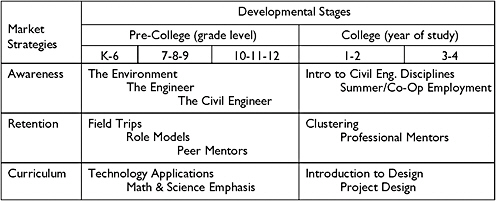
FIGURE G-1 Primary components of the awareness, retention, and curriculum model. (Source: Mason et al. 1992, 16.)
groups, and so forth. These transportation-oriented efforts reflect even broader engineering involvement in outreach and awareness programs in the field of engineering (NAE 2002).
Two recent reports of committees of the National Academy of Engineering (NAE) address awareness of engineering and technology and how both K-12 education and public understanding of engineering and technology can be improved (Pearson and Young 2002; NAE 2002). The findings of these studies apply to attracting young people to transportation careers as well as attracting people to engineering careers and improving technology literacy. The committee believes that as the transportation industry begins to look more closely at specific steps it can take to attract young people to transportation careers, it can learn and participate through partnerships in the broader efforts described and proposed in these two studies.
The NAE Committee on Public Awareness of Engineering found evidence of many grassroots outreach and awareness programs aimed at young people in grades K-12. Organizations use a variety of tools in their programs, including websites, public service announcements, speakers bureaus, and informal education programs. Education programs are skewed toward high school students and generally involve demonstrations, field trips, competitions, and mentor programs. Nevertheless, despite considerable support and evidence of enthusi
asm for these programs, very few attempts have been made to determine whether or how effectively such programs are changing attitudes or behaviors, especially in terms of improving mathematics and science literacy, encouraging engineering enrollments, and understanding more about engineering and its value.1 This makes it difficult to identify best practices.
There is evidence that outreach to students must begin at the K-3 level if it is to be successful. There is some evidence suggesting that children self-select away from certain subjects and careers as early as the fourth or fifth grade. Sometimes this is based on difficulties with certain subjects (for example, mathematics and science) or perceptions about the careers themselves.
Despite the range and number of awareness programs, engineering enrollments continue to decline, and many engineering schools are responding by becoming more engaged in looking for solutions.2 NAE (2002) highlighted three examples of engineering schools forming partnerships with state and local institutions to expand their reach and strengthen their offerings. One engineering school, with significant support from its state business community, has created a successful summer camp for mathematics students. A second engineering school has formed an alliance with the state department of education and other institutions to strengthen the K-12 education curriculum and to train current teachers to teach to those standards. A third engineering school is partnering with eight other universities and the public school system in its metropolitan region to bring hundreds of students, many of them minority, to campuses where college faculty help coach the students in mathematics, science, and computer skills they will need to enroll and succeed in college.
The number of ongoing outreach programs is itself encouraging and something to build upon. Many current outreach activities have the potential to increase awareness of and attract young people to careers in transportation. Without such programs the likelihood that young people will be attracted to such careers is further reduced. Moreover, in light of the multitude of career paths that people take—for example, making midcareer changes or deciding to work again after retirement—outreach programs aimed at these potential workers might help build awareness of transportation career opportunities in a group previously neglected by such programs.
The following are examples of how engineering associations are reaching out to young people.
-
The Society of Automotive Engineers (SAE) has developed the World in Motion series for middle schools. The series consists of 8-week units that focus on problem-solving and design activities. The SAE Foundation supplies materials free of charge to any school that agrees to become partners with a local engineer or company that will provide volunteer support to the classroom.
-
Three years ago the Institute of Electrical and Electronics Engineers (IEEE) launched a website, PEERS (Pre-College Engineer/ Education Resource Site) (www.ieee.org/eab/precollege/peers/index.htm) to facilitate communication and collaboration between practicing engineers and K-12 teachers. IEEE also hosts a comprehensive online resource related to the history of electrical technologies.
-
The annual National Engineers Week includes the “DiscoverE K-12” program, in which 40,000 engineers volunteer in classrooms across the country. They interact with more than 5 million students and teachers with support from more than 60 corporations and 75 government, education, and engineering organizations.
-
A number of engineering associations, businesses, and other organizations sponsor contests and award programs intended to in-
-
terest students in science, engineering, and technology. The best-known contest is the Intel International Science and Engineering Fair in which several million students compete in local, state, and regional fairs around the world. The FIRST Robotics Competition challenges teams of high school students and engineers to design and build a robot that can defeat another robot in some kind of game. The competition attracts more than 500 teams each year. In 1998, FIRST initiated a contest for middle school children using LEGO building blocks, sensors, motors, and gears.
-
Real-world problem-solving is the focus of the TEAMS (Tests of Engineering Aptitude, Mathematics, and Science) Contest, sponsored by the Junior Engineering Technical Society ( JETS). The National Engineering Design Challenge, sponsored by JETS and several other organizations, attracts about 80 teams from around the country and is held in conjunction with National Engineers Week.
From 1997 to 2000 the U.S. Department of Transportation supported a career-oriented outreach program called the Garrett A. Morgan Transportation and Technology Futures Program. It consisted of four components. The first was a mathematics, science, and technology literacy program for K-12 students aimed at connecting school mathematics and science skills with a broad range of attainable transportation career possibilities. The second was a program that sought greater engagement of community colleges in training transportation employees and retraining people who wish make a career change and work in the transportation sector. Third, a transportation degree program initiative sought to increase the development of and enrollment in multidisciplinary transportation degree programs. Finally, the Morgan program sought to ensure the availability and accessibility of lifelong learning opportunities for transportation agency employees. Funding for the program stopped after 2000.
REFERENCES
Abbreviations
FHWA Federal Highway Administration
NAE National Academy of Engineering
FHWA. 2002. National Transportation Workforce Summit: Summary of Proceedings. U.S. Department of Transportation, Washington, D.C., May.
Henderson Associates. 2000. Minnesota Summit on Civil Engineering Workforce Development. Final Report 2000-23. Nov.
Mason, J. M., Jr., J. R. Tarris, E. Zaki, and M. S. Bronzini. 1992. NCHRP Report 347: Civil Engineering Careers: Awareness, Retention, and Curriculum. TRB, National Research Council, Washington, D.C.
NAE. 2002. Raising Public Awareness of Engineering. National Research Council, Washington, D.C.
Pearson, G., and A. T. Young (eds.). 2002. Technically Speaking: Why All Americans Need to Know More About Technology. National Academy of Engineering, Washington, D.C.
Wulf, W. A., and G. M. C. Fisher. 2002. A Makeover for Engineering Education. Issues in Science and Engineering, Spring.
Study Committee Biographical Information
David L. Winstead, Chair, is a member of the law firm of Holland & Knight, LLP, which has offices in Maryland and the District of Columbia. His practice includes zoning, land use, transportation policy, and municipal affairs. From 1995 to 1999, Mr. Winstead served as the Secretary of the Maryland Department of Transportation. He was elected President of the American Association of State Highway and Transportation Officials in 1998. As head of the Maryland DOT, he also chaired the Maryland Port Commission, the Maryland Aviation Commission (which has responsibility for Baltimore– Washington International Airport), and the Maryland Transportation Authority. From 1991 to 1995, Mr. Winstead served in a pro bono capacity as chair of the Maryland Transportation Commission. From 1975 to 1979, he was a special assistant to Senator Charles Mathias. From 1981 to 1987 he was the Executive Director of the Washington–Baltimore Regional Association. Mr. Winstead is active in numerous professional and civic organizations, including the Urban Land Institute, the Economic Club of Washington, and the National Aquarium. He is the Honorary Chair for National Transportation Week—2002. He currently chairs the Project Panel on Development of Technical Methods for Environmental Justice Analyses for the National Cooperative Highway Research Program. Mr. Winstead has a B.A. in economics from Denison University, an M.B.A. from Columbia University, and a J.D. from Columbus School of Law at Catholic University.
Anthony L. (Tony) Alarid recently retired from the New Mexico State Highway and Transportation Department, where he was Human Resources Director. He was responsible for administration and personnel operations, classification compensation, payroll and
benefits, labor relations, and training for the department’s employees. He was formerly personnel director for the City of Santa Fe and for the Administrative Office of the Supreme Court of New Mexico. Mr. Alarid has a bachelor’s degree in sociology from Southern Colorado State University. He is a member and past chapter president of the Society for Human Resources.
David S. Ferguson has been the Chief of Personnel Resources for the Florida Department of Transportation since January 1973. He is responsible for developing and directing the personnel and training program for the department’s 9,000 employees. In 1994 he managed the development and implementation of a new personnel system for the department. Changes included a consolidation of job classes from more than 1,800 to fewer than 100; pay broadbanding; a knowledge, skills, and abilities selection system; a computerized system for ranking employees for superior proficiency pay increases; and a bonus payment program. He is currently developing an electronic performance and evaluation system and bonus payment ranking program for the department. He is assisting the Florida Department of Management Services in revising the Florida Career Service System and outsourcing all human resource transactional activities. He has a bachelor’s degree from Roanoke College.
Margaret L. Forde is President of Northeast Houston Community College, where she has been an educator and administrator since 1984. Previously she taught at the University of Houston, Wichita State University, and Bethany College, Lindsborg, Kansas. Dr. Forde has a bachelor of arts degree in English, a master of education degree in English from Wichita State University, and a doctorate in education from the University of Houston. She also has a certificate in urban and regional planning from Kansas State University. She serves on the boards of several civic and public service organizations and for several years has produced and hosted legislative news analysis programs for public television in Houston.
Cameron Gordon is the Executive Director of the American Council on Intergovernmental Relations, which focuses on tracking inter-
governmental financial and economic flows and conducts research on urban economic development, the political economy of infrastructure decision making, infrastructure and economic development, and intergovernmental governance and political structure. From 1992 to 1996 he was Manager of Infrastructure Economic Studies for the Institute for Water Resources of the U.S. Army Corps of Engineers. He was Assistant Professor at the University of Southern California School of Policy, Planning, and Development from 1996 to 2000. He also served on the staff of the U.S. Congress Joint Committee on Taxation. Dr. Gordon has a B.A. in history from Wesleyan University and a Ph.D. in economics from the City University of New York.
Damian J. Kulash recently retired as President and CEO of the Eno Foundation for Transportation, which conducts policy forums, operates educational and leadership development programs, produces technical monographs, and publishes Transportation Quarterly in support of the nation’s transportation programs. Dr. Kulash previously served in a number of posts at the National Research Council, including 6 years as the Executive Director of the Strategic Highway Research Program; he also served as Director of the Special Projects Division of the Transportation Research Board (TRB). From 1977 to 1982, Dr. Kulash was Deputy Assistant Director of the Congressional Budget Office, where he managed policy studies in areas of transportation, water resources, and agriculture. Dr. Kulash has a B.S. in industrial management from the Sloan School of Management at Massachusetts Institute of Technology (MIT) and a Ph.D. in civil engineering from MIT.
Paul J. Larrousse is the Director of the National Transit Institute at Rutgers University, an education and training institute for public transit. He was previously the general manager of transit systems in Madison and Waukesha, Wisconsin; Wayne and Oakland Counties, Michigan; and York, Pennsylvania. He is a member of the Transit Cooperative Research Program Oversight and Project Selection Committee, having served as chair in 1999–2000, and is a member of the American Public Transportation Association. He has a bachelor’s degree from St. Anselm College and a master’s degree from Brooklyn Polytechnic University.
John M. Mason, Jr., is the Associate Dean for Graduate Studies, Research, and Outreach in the College of Engineering at Pennsylvania State University. He is also Professor of Civil Engineering and Research Associate with the Pennsylvania Transportation Institute. Dr. Mason has served as Chair of the Education and Training Committee of ITS America; Chair of the Executive Committee, Highway Division, American Society of Civil Engineers; and President of the Council of University Transportation Centers. He previously served as the Associate Director of the Pennsylvania Transportation Institute, Director of the Center for Intelligent Transportation Systems, and Division Coordinator/Executive Committee in the Department of Civil and Environmental Engineering. Dr. Mason has a B.S. in transportation from Pennsylvania State University, an M.S. in transportation engineering from Villanova University, and a Ph.D. in civil engineering from Texas A&M University. He is a registered professional engineer in Pennsylvania.
Myra Howze Shiplett is a Senior Consultant at the National Academy of Public Administration’s Center for Human Resources Management. Prior to joining the academy in 1999, Ms. Shiplett worked in both the executive and judicial branches of the federal government. She has served as Assistant Director for Human Resources and Statistics for the federal judiciary, Director of Administration for the Federal Housing Finance Board, Associate Director for Passport Services and Associate Director of Human Resources at the Department of State, Assistant Director for National and International Affairs with the Office of Personnel Management, and Director of Personnel for the Federal Trade Commission. Ms. Shiplett has also taught at the high school and college levels. She holds a master’s degree in urban affairs from the Virginia Polytechnic Institute and State University in Blacksburg and a bachelor’s degree in English and journalism from the University of South Florida in Tampa. She is a graduate of the Department of State’s Senior Seminar in American Diplomacy.
Thomas R. Smith is a Vice President and the Director of Human Resources for Wilbur Smith Associates, an international trans-
portation consulting company based in Columbia, South Carolina. His responsibilities include employee recruitment and retention, compensation and benefits administration, training and development, employee and community relations, health and safety, governmental compliance, and human resource information systems. Previously he served as the human resources director for accounting, technology, and engineering firms. He has been certified as a Senior Professional in Human Resources by the Human Resource Certification Institute. He has a B.S. in business management from the Indiana University of Pennsylvania.
Darwin G. Stuart recently retired from the Chicago Transit Authority (CTA), where he was Manager of the Market Research Department. He had previously served as Manager of Planning and Research and Manager of Strategic Planning. Prior to joining CTA, he worked for Barton-Aschman Associates, a Chicago-based national transportation consulting firm. He currently serves on several TRB committees, has chaired two study panels of the National Cooperative Highway Research Program and the Transit Cooperative Research Program, and has served on several others. He received a bachelor’s degree from Dartmouth College, a master of urban planning from the University of Illinois, and a master of transportation science and a Ph.D. in civil engineering from Northwestern University.
Paul E. Torgersen is President Emeritus of the Virginia Polytechnic Institute and State University. He holds the John W. Hancock, Jr., Chair of Engineering, and continues to teach part-time. In 1970, he was appointed Dean of the College of Engineering, a post he held for 20 years. He served as President of the Corporate Research Center until being appointed president of the university in 1993, a post he held until 2000. Dr. Torgersen is a Fellow of the Institute of Industrial Engineers and the American Society of Engineering Education. He received the College of Engineering’s Outstanding Teacher Award while at Oklahoma State University in 1963. In 1971 he received the Distinguished Alumnus Award of the College of Engi-
neering, Ohio State University. In 1994 he received Virginia Tech’s first affirmative action award. He received the Benjamin G. Lamme Meritorious Achievement Medal from Ohio State in 1990 and the American Society of Engineering Education Lamme Medal in 1994. Also in 1994, Lehigh University awarded him an honorary Doctor of Engineering degree. He is the author or coauthor of five books and numerous technical papers. Dr. Torgersen received a B.S. in industrial engineering from Lehigh University and an M.S. and Ph.D. in industrial engineering from Ohio State University. He is a member of the National Academy of Engineering and is a registered professional engineer.
There was a problem loading page 187.
There was a problem loading page 188.
There was a problem loading page 189.
There was a problem loading page 190.
There was a problem loading page 191.
There was a problem loading page 192.
There was a problem loading page 193.
There was a problem loading page 194.
There was a problem loading page 195.
There was a problem loading page 196.
There was a problem loading page 197.
There was a problem loading page 198.
There was a problem loading page 199.
There was a problem loading page 200.
There was a problem loading page 201.
There was a problem loading page 202.
There was a problem loading page 203.
There was a problem loading page 204.
There was a problem loading page 205.
There was a problem loading page 206.