Committee on Human Rights: Annual Report 2023 (2024)
Chapter: Message from the Chair
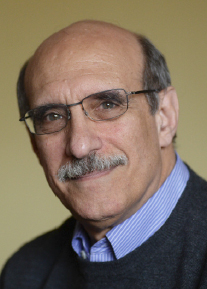
Martin Chalfie, Ph.D.
University Professor,
Department of Biological
Sciences,
Columbia University
Message from the Chair
As I reflect on the events of the past year, I want to express my gratitude to the many academy members and others who have supported the efforts of the Committee on Human Rights (CHR) of the National Academy of Sciences, National Academy of Engineering, and National Academy of Medicine. In 2023, the CHR followed 127 cases involving colleagues subjected to persecution and abuse throughout the world. Many of these individuals have been targeted because of their professional activities and their exercise of internationally guaranteed rights, while others have come under threat because they belong to communities that have been marginalized in their countries. Working with families, lawyers, and other human rights organizations, the CHR has assisted colleagues under threat in a variety of ways—from remote trial observations to the submission of formal human rights complaints to international expert bodies. While the CHR’s ongoing advocacy work is largely non-public, this report highlights several major positive developments concerning colleagues for whom we have worked.
The Committee has continued to build a program of activities designed to shine a spotlight on the problem of violence against health care and its implications for people’s access to equitable, quality health services. Throughout the year we’ve held several in-person and virtual events examining aspects of this problem within and outside of the United States. We’ve also expanded a CHR-created Forum to Address Attacks on Health Professionals, a consortium of leaders of national and international scientific and health care associations that share information on violence against health care providers, public health officials, and health facilities and seek ways to help address this pressing global problem.
A growing area of interest for the CHR is the integration of human rights themes into STEMM education, and we have begun a project with Boston University’s Center on Forced Displacement that has resulted in the development of pilot STEMM courses on forced displacement at four universities. In 2023 the CHR also produced a digital resource collection on the human rights implications of climate change for use by STEMM educators and others.
Finally, as part of the CHR’s role as Secretariat for the International Human Rights Network of Academies and Scholarly Societies (IHRN), we are building a robust human rights community of national academy members around the world. Together with the Academy of Science of South Africa, we held a 3-day conference in Pretoria with representation from 25 academies that explored issues such as equity in global collaborations, the importance of safeguarding academic freedom, and the promotion of social justice through access to health care. We were delighted to welcome several new academies to the IHRN as a result of this conference and also to see the strong interest in human rights issues from our scientific, engineering, and medical colleagues.
In this time of mounting rights abuses, the work of the CHR is an essential part of the wider global effort to safeguard human dignity around the world. We appreciate your commitment to this effort and look forward to continuing this important work in the year ahead.

