Safeguarding the Food Supply: Integrating Diverse Risks, Connecting with Consumers, and Protecting Vulnerable Populations: Proceedings of a Workshop—in Brief (2025)
Chapter: Safeguarding the Food Supply: Integrating Diverse Risks, Connecting with Consumers, and Protecting Vulnerable Populations: Proceedings of a Workshop—in Brief

Safeguarding the Food Supply: Integrating Diverse Risks, Connecting with Consumers, and Protecting Vulnerable Populations
Proceedings of a Workshop—in Brief
On September 4–5, 2024, the National Academies of Sciences, Engineering, and Medicine’s (the National Academies’) Food Forum hosted a workshop to explore the state of the science around hazard- and risk-based approaches to safeguarding both the domestic and global food systems. Workshop presenters discussed nutritional, economic, and equity implications in food safety decision-making as well as considerations and strategies for communicating hazard and risk across sectors. Presentations also included national and international perspectives on risk assessment that highlighted new tools that utilize technologies such as artificial intelligence (AI) to mitigate risk. The workshop concluded with diverse perspectives on opportunities for the future of risk management and assessment, food safety, and public health.
This Proceedings of a Workshop—in Brief highlights the workshop presentations and discussions and is not intended to provide a comprehensive summary of the information shared.1 The information summarized here reflects the knowledge and opinions of individual participants and should not be seen as a consensus of the workshop participants, the committee, or the National Academies.
NUTRITIONAL, ECONOMIC, AND EQUITY IMPLICATIONS IN FOOD SAFETY
Arie H. Havelaar, University of Florida, highlighted the global burden of foodborne disease, which contributes to a total of 33 million healthy life years lost, with a disproportionate impact on low- and middle-income countries (Havelaar et al., 2015). He discussed the complex relationship between foodborne pathogens and malnutrition, particularly in children, with even asymptomatic infections leading to environmental enteric dysfunction and stunting. Food safety is intimately related to nutrition, he noted. Havelaar reviewed the vicious cycles of diseases of poverty (see Figure 1), keeping children who are suffering this burden even more vulnerable to future exposures.
With bacteria playing such a key role in stunting as well as chronic inflammation in children, there is a need to understand how to intervene at the level of bacteria sources, he explained. Studies have shown that one of the main sources of children’s exposures are surrounding livestock. For infants, food and breastfeeding are important pathways, both being contaminated by the hands of caretakers. He emphasized the need for a multidisciplinary approach to address these issues, integrating food safety, nutrition, and water, sanitation, and hygiene interventions, to include behavioral interventions and social sciences expertise. Shifting to the United States, he acknowledged that the burden here is lower than in
___________________
1The workshop agenda, presentations, and other materials are available at https://www.nationalacademies.org/event/43353_09-2024_safeguarding-the-food-supply-integrating-diverse-risks-connecting-with-consumers-and-protecting-vulnerable-populations-a-workshop (accessed September 5, 2024).

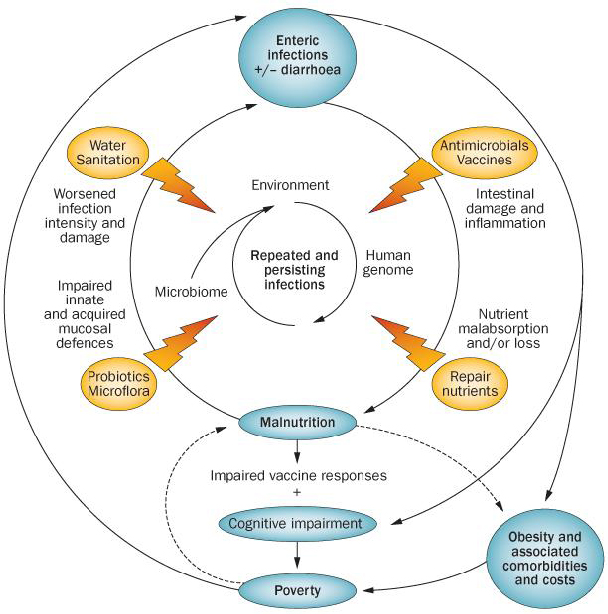
SOURCES: Presented by Arie H. Havelaar on September 4, 2024; Guerrant et al., 2013. Used with permission of Nature Reviews, permission conveyed through Copyright Clearance Center, Inc.
other regions of the world, but it cannot be ignored. Part of the success of low levels of foodborne disease burden is attributable to improved access to health care, which results in fewer deaths.
There is less difference between the United States and other regions when comparing incidence, for the incidence of foodborne disease by norovirus in the United States is the same as in Africa. Food safety is never ending and always changing, said Havelaar. He closed by emphasizing that safe food is not a natural phenomenon but requires constant effort to maintain, and he cautioned that without continuous surveillance, threats that are not commonly found in the United States, like Chagas disease, can emerge, and known causes such as Listeria can make a comeback.
Margaret R. Karagas, Dartmouth College, presented the challenges and opportunities for assessing dietary exposures to chemical contaminants, particularly in vulnerable populations. She shared findings from learning about eating patterns, especially during sensitive periods of gestation and early childhood. Looking at data from the New Hampshire Birth Cohort Study, Karagas noted that 80 percent of babies were introduced to rice cereal.
Estimated arsenic exposure from intake of three servings of rice cereal a day, she explained, would be roughly equivalent to a child ingesting formula mixed with 10 mcg/liter of arsenic in the water (Carignan et al., 2016). A more direct approach to measurement, she highlighted, is to use biomarkers and novel techniques like spatial imaging of teeth to trace exposures over time as well as analysis of blood and human milk, demonstrating how these methods can reveal prenatal and early-life exposures to elements like lead from drinking water and per- and polyfluoroalkyl substances (PFAS) exposures during gestation and lactation.
She shared her study comparing children who were exclusively breastfed versus those who were fed formula, finding higher concentrations of barium, lithium, and strontium in the infancy window of teeth from formula-fed babies (Bauer et al., 2024). Food is a mixture, Karagas emphasized; it reflects a combination of nutrients and toxicants in people’s foods. Trials to identify novel toxicant exposures from foods like seaweed can be useful but are costly and may require long follow-up periods. Rather than waiting for clinical evidence of illness to manifest, she suggested measuring intermediary biomarkers, known to be associated with disease diagnosis, which then can help link exposures to long-term health outcomes more quickly. Karagas underscored the prospects of using national consortia that comprise populations with diverse consumption patterns and exposure risks and highlighted approaches to tease apart the health effects of nutrient and contaminant levels in foods, such as seafood.
Robert L. Scharff, The Ohio State University, discussed the economic perspective on foodborne illness, explaining how economists assess the burden of illness and use this information to prioritize food safety efforts. He outlined three tasks for economists: estimating the economic burden of illness, understanding incentives, and evaluating interventions. It is important to consider both the financial costs and the effects on quality of life when calculating the economic burden, he noted, as these costs can vary significantly across states. This economic burden or cost of foodborne illness can include cost to the food industry, cost to the household, and costs to the government, such as disease surveillance and outbreak response. The cost seen at the national level may not be
the same as the costs certain states may encounter, he added.
Presenting data on the economic cost of leafy green illnesses, he said it is as high as $5.3 billion, demonstrating how economic cost estimates can lead to different prioritization of pathogens compared to illness counts alone. He emphasized the importance of understanding incentives when designing and implementing food safety measures. In summary, Scharff said that economics can provide burden estimates that reflect the loss of social welfare, aid in the prioritization of hazards, and reveal how incentives shape behavior and help in the design, implementation, and evaluation of interventions.
Also presenting on economic considerations, Joanna MacEwan, Genesis Research Group, shared perspectives on regulating chemical contaminants in the food supply. These include substances like cleaning chemicals and byproducts, environmental contaminants, pest control compounds, and natural toxins. She explained the process of setting action levels, or limits, for contaminants, which is done by the U.S. Food and Drug Administration (FDA) to identify a point where the food becomes adulterated, and after which they may take legal action. Establishing these action levels relies on both exposure assessments and achievability analyses. As an important example, she highlighted the risks to babies and young children, saying that low levels of lead exposure can be harmful in this population.
FDA drafted guidance for industry in early 2023 that included results of their exposure and achievability analyses, providing draft action levels for typical foods consumed by babies, including dry infant cereals or fruit and vegetable pouches. MacEwan highlighted the challenges of balancing food safety with economic impacts on producers and consumers, noting that regulations can affect farm gate prices, production practices, and food prices. There are a lot of parameters and inputs that go into estimating the cost and benefits of a policy or regulation intended to mitigate effects of a contaminant.
She used a case study in California of a proposed pesticide ban on pyrethroids and neonicotinoids to illustrate the complex economic considerations involved in food safety policy decisions. The study estimated potential cost increases of 12 percent in farming and about 8.2 percent increases in consumer price for conventional lettuce, demonstrating the potential effects on both producers and consumers (ERA Economics LLC, 2022). MacEwan also discussed the importance of considering regional economic effects and the potential disproportionate impact on economically disadvantaged communities, where families spend a large proportion of their income on food. In summary, she noted that estimating and comparing costs of the disruptions with the health benefits should be key components of the policy and regulatory design process.
Julie Herbstman, Columbia University, began her remarks by focusing on the intersections between food safety and food security. Both have a variety of predictors, but two factors predict both, she noted: poverty and climate change. Recent estimates show that 13 percent of the U.S. population was food insecure, said Herbstman, without much progress made in the last 20 years (see Figure 2).
Herbstman said tools like the National Health and Nutrition Examination Survey (NHANES) are useful to understand what people are eating, but there are limitations in sample size which makes it difficult to look at smaller subgroups. For example, trying to understand how beneficial or harmful the recommendation to eat fish is for pregnant women is difficult as researchers found 27 percent of lactating women or women of childbearing age are not eating fish at all, and only 19 percent follow the recommendation (NASEM, 2024). She noted that this makes it challenging to know the effect seafood consumption during pregnancy is having on children’s growth and development—as seafood contains essential nutrients as well as contaminants. She emphasized the equity considerations as well, since the source of where the seafood is caught can make a difference; subsistence fishermen in a Louisiana bayou may be eating mercury-laden fish, while those with the means shop at stores like Whole Foods where fish is typically expensive to buy, but shoppers are able to make choices about consuming fish that is labeled with information about mercury levels.
She also addressed the potential exacerbating effects of climate change on food safety risks and exposure disparities, showing how rising temperatures can affect
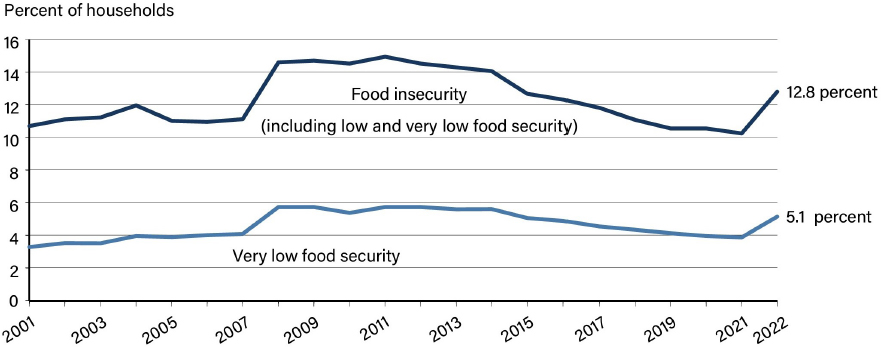
NOTE: For the definitions of food insecurity, low food security, and very low food security, please see: https://www.ers.usda.gov/topics/food-nutrition-assistance/food-security-in-the-u-s/key-statistics-graphics (accessed September 4, 2024).
SOURCES: Presented by Julie Herbstman on September 4, 2024, from Economic Research Service, 2024.
salinity and water temperature, leading to more toxic algal blooms and affecting the fish. Looking at other differences across populations, Herbstman shared data showing how Asian populations in the United States consume significantly more rice than other groups, leading to higher arsenic exposure (Sobel et al., 2020). She emphasized the need for more research to understand consumption patterns in subgroups defined by ethnicity, life stage, and poverty status, calling for approaches to risk assessment and management that are both culturally appropriate and account for notable differences from average consumption patterns.
Discussion
The discussion centered on regulatory approaches and improving data collection and analysis. Peter Lurie from the Center for Science in the Public Interest raised concerns about the FDA’s achievability approach to setting action levels for contaminants. He argued that this approach, which considers what industry can currently achieve, might not adequately prioritize public health. MacEwan acknowledged this concern and suggested that a more formal cost–benefit analysis in the action level-setting process could be beneficial. In response to a question on improving data collection beyond the NHANES study, Herbstman discussed ways to fill gaps in available data. She reiterated the importance of large studies like the ECHO consortium or the National Institutes of Health’s All of Us program, and she and Karagas both agreed that such efforts could capture regional and cultural differences in exposure, as well as the effects of local policies and behavior patterns. The use of artificial intelligence (AI) to improve data analysis and inspections was also highlighted, though Scharff emphasized the need for expert validation following AI assessments.
CONSUMER CONSIDERATIONS IN RISK COMMUNICATION
Kris Sollid, International Food Information Council (IFIC), presented findings from the IFIC Food & Health Survey (2024) on food safety perceptions and behaviors. He noted that consumers often define “healthy” foods as those that are fresh, have good sources of protein, and are low in sugar. However, there has been a growing trend of consumers associating limited or no artificial ingredients with healthiness. More than half of survey respondents reported trying a specific eating style in the past year, with top patterns identified as high protein, mindful eating, or intermittent fasting. However, there has been a significant drop in consumer confidence in food safety in 2024, said Sollid, with the decline most notable for millennials and Hispanic Americans. Carcinogens, foodborne illness from bacteria, and pesticides are the most important food safety concerns reported. Sollid also emphasized that consumers often use labels such as natural, organic, and healthy as indicators of food safety. Lastly, he focused on trust in information and suggested providing consumers with practical, fact-based information rather than focusing on scientific details, as consumers tend to trust health care professionals and registered dietitians most for food-related information.
Benjamin Chapman, North Carolina State University, presented research on consumer food safety behaviors, emphasizing the discrepancy between what consumers
report doing and their actual practices. At their facility in North Carolina, they use research and teaching kitchens where they can observe people cooking, cleaning, and general behaviors. Through extensive observational studies, Chapman found that only about 30 percent of consumers attempt to wash their hands after handling raw meat or poultry, and only 1.2 percent of observed handwashing events met U.S. Centers for Disease Control and Prevention guidelines. From this work, they are finding that comments and recommendations may be too complicated, and there may be benefits to just saying “wash your hands” and not telling them how to do so in detailed steps, as there have not been documented differences in microbial movement between those who followed handwashing guidelines successfully versus those who did not.
He also highlighted the ineffectiveness of many consumer food safety interventions, including a simulated national public service announcement campaign that only marginally increased thermometer use for cooking hamburgers (Cope et al., 2020) despite a large amount of money being spent to reach the entire city population. Chapman emphasized the need for more in-depth, observational research on consumer behaviors and suggested exploring new communication channels like TikTok to reach younger generations effectively.
Barbara Kowalcyk, George Washington University, discussed the integration of food safety and nutrition security using a communication lens. Foodborne disease is also associated with many long-term health outcomes, she said, including autoimmune, digestive, and neurological disorders. She explained that this can lead to a significant economic impact including medical costs, lost productivity, loss of consumer confidence, and increased food waste. Bringing in the role of water, she noted that water and sanitation are a really big problem globally, affecting food safety and nutrition. She outlined the complex relationship between food safety and nutrition (see Figure 3).
Kowalcyk presented the concept of nutrition security, which combines consistent access to nutritious, safe, and affordable foods, and noted the challenge that many nutritious foods, such as fresh produce and animal-sourced foods, are also high risk from a food safety perspective. Managing these risks is a very complex effort as the system relies on food grown, processed, and distributed from all over the world—even just for a single salad, she explained. No interventions will be 100 percent effective, she said, so there is a need for multiple interventions along the continuum to try and prevent foodborne disease. Adding to the challenge of food safety is that consumers have limited information and knowledge about procedures and what can be done to prevent illness. There are use by and sell by dates, she said, but what that says about safety is uncertain, and many food professionals do not even understand the difference between the two, let alone the public. Consumers need actionable information, she argued.
Kowalcyk used the ongoing Boar’s Head Listeria outbreak across 18 states, linked to deli meats, to illustrate systemic failures in food safety. The plant responsible for the recall had more than 100 violations over the
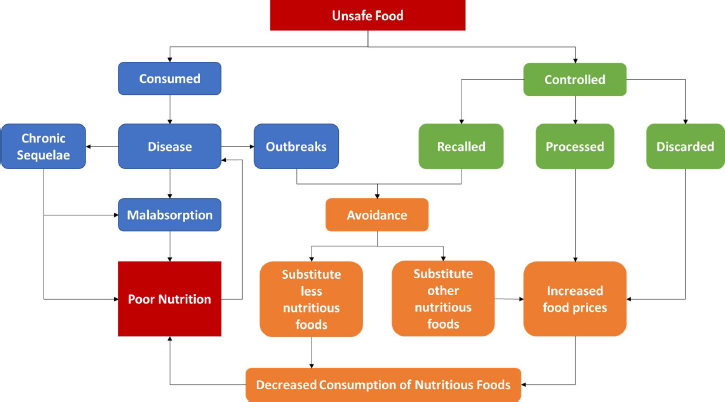
SOURCES: Presented by Barbara Kowalcyk on September 4, 2024; adapted from Grace, 2016.
past year, yet they were never shut down, she noted. To really move the needle on food safety, Kowalcyk emphasized the need for a culture change in the food industry, regulatory agencies, and society to prioritize proactive food safety measures. She called for increased awareness of food safety and nutrition interlinkages, integration of food safety and nutrition in interventions, and effective collaboration among stakeholders.
Discussion
The panel discussion centered on consumer perceptions, communicating risks, and ways to make food safer while still maintaining trust with consumers. Lurie highlighted the potential for changing consumer perceptions, citing the evolution of car safety marketing as an example of a successful cultural shift. Chapman agreed but noted that current food safety messaging often focuses on perceived rather than actual risks. Kristi Reimers from Conagra Brands raised concerns about potentially demonizing nutrient-dense foods that also carry higher risks. Instead of thinking about trade-offs, Kowalcyk emphasized the need to make safer foods. Chapman emphasized the importance of acknowledging that all foods carry some level of risk and doing a better job of communicating those risks.
Francisco J. Zagmutt from EpiX Analytics brought up the topic of food irradiation as a highly effective microbial risk reduction strategy that is still not widely adopted, possibly because of perceived low consumer acceptance. Chapman noted that irradiation cost is a significant factor, while Kowalcyk suggested a need for education, since many are not aware that irradiation is already being used on foods like spices and flour. Sollid added that consumers are generally more fearful of technology in food compared to other areas but noted increasing openness to AI in food safety applications, which may signal a shift in thinking.
REGULATORY AND PRODUCER PERSPECTIVES ON FOOD SAFETY COMMUNICATION
De Ann Davis, Western Growers Association, presented the challenges for the field of food safety and the need to shift from a hazard-based to a risk-based approach. “To strengthen food safety, we should not be focused on avoiding the next outbreak but on avoiding the next illness,” she said. Davis highlighted the complexities of California’s agricultural industry, which produces more than 400 commodities and accounts for a significant portion of the country’s fruits and vegetables. For example, California and Arizona account for 85 percent of the domestically harvested leafy greens, and leafy green food safety continues to be a priority for public health. Davis also introduced the multifaceted nature of adjacent land use challenges in leafy green production, which can include things like irrigation channels running alongside animal feeding operations, trucks driving by leafy green fields, or nearby hobby farms—all affecting food safety.
She emphasized the limitations of current hazard-based approaches, which identify things capable of causing harm but do not help the user prioritize or manage the risks. Collectively, Davis said, it is important to start thinking differently about field food safety. She called for a national agenda focused on prevention, including comprehensive industry-led commodity best practices, public–private data-sharing collaborations, and better risk-informed research agendas. Lastly, Davis also pointed out the gap in the scientific workforce supporting fresh produce, highlighting public–private collaborations as examples to guide future expansion to improve food safety practices.
Sharmi Das, FDA, discussed the agency’s approach to consumer education on food safety. She outlined the upcoming reorganization of all food safety activities into the unified Human Foods Program with a goal of better positioning the agency to uphold the safety of the nation’s food supply; respond to food-related emergencies; and elevate the importance of nutrition, strengthen partnerships, and regulate innovative products more effectively. Das highlighted FDA’s multipronged approach to prevention, including the use of various communication tactics and the need for creativity and strategic planning because of limited resources. She emphasized the importance of using the appropriate terminology that resonates with consumers, balancing messages to provide facts without promoting specific products, and integrating food safety and nutrition information.
Das presented examples of successful initiatives, such as the Feed Your Mind campaign on genetically engineered foods and the ongoing Closer to Zero initiative, seeking to reduce children’s exposure to heavy metals in foods.
In summary, she highlighted the importance of using terminology that consumers know and are comfortable with, balancing the message by providing facts and data to inform decisions, and the interconnections between food safety and nutrition. Food can be a vehicle for wellness, and well-informed consumers are more likely to make better choices for themselves and their families, she concluded.
Discussion
The discussion focused on key areas of communication. In response to a question on the disconnection between consumer understanding of such terms as contaminants and scientific definitions, Das acknowledged the importance and mentioned ongoing focus group research to better understand consumer perceptions of these terms. Similarly, Kimberly L. Cook, U.S. Department of Agriculture (USDA), raised a question about overcoming barriers in public health messaging, particularly when initial do not messages may have long-lasting effects. Das discussed the need for nuanced messaging in behavior change campaigns, using the example of raw cookie dough consumption to illustrate the complexities of effective risk communication.
NATIONAL AND INTERNATIONAL RISK ASSESSMENT AND MITIGATION TOOLS
Salomon Sand, Swedish Food Agency, presented approaches proposed by the European Food Safety Authority (EFSA) for risk–benefit assessment of foods. Most of EFSA’s work is done in response to questions from the European Commission, European Parliament, or member states, but they can also self-task, as they did with a recently published guidance document that aims to broaden the overall approach to risk–benefit assessment (EFSA Food Safety Committee et al., 2024). Sand emphasized that the guidance “exclusively deals with health risks and benefits” and focuses on chemical hazards and nutrients. He explained various approaches, including ranking methods for the initial prioritization of food components, comparison of exposure to health-based guidance values, and health effect metrics such as disability-adjusted life years (DALYs), which can be used to extend the historical risk–benefit assessments.
In Europe, he said, the risk–benefit assessment is not established as a normal risk assessment process, creating an opportunity for new ideas. Sand also discussed methods for the joint assessment of multiple effects, such as categorical regression and approaches based on severity scoring systems, which could assist in comparing and integrating different health effects. There are also general challenges for these types of assessments, including the need to characterize several relevant effects over a range of potential intakes, differing data on relevant risks and benefits, and trying to compare negative and positive health effects on a common scale to assess trade-off, he described. Sand concluded by highlighting the importance of collaborating with risk managers to select weights or weighting approaches for balancing different effects.
Cory Lindgren, Canadian Food Inspection Agency, presented innovative food safety tools using quantitative risk modeling and machine learning. As a regulatory agency, he said they are dedicated to safeguarding food, animals, and plants to ensure the well-being of Canadians. His office works mainly in the predictive space, trying to predict the emerging risks and trends, and it conducts modeling work to reduce pathogens with the end goal of modernizing their food inspection programs. Lindgren introduced three new tools or models they are currently developing. The Food Import Risk Explorer (FIRE) model estimates imported food safety risk using DALYs at the food-hazard-country of origin level. This will allow their operations and policy colleagues to compare risk across different commodities, he said. The algorithm’s results are captured in a Power BI dashboard (a single-page data visualization), enabling agency staff to take a deeper dive into the information based on their needs. He also discussed the FISHnet model, which uses AI and machine learning (ML) to assist inspection staff in predicting and preventing risks, and the Misdeclared Import Surveillance Tool (MIST), a risk-based, predictive screening tool to help prioritize inspections of incoming import shipments. Importantly, these tools and models should feed into one another, he added, emphasizing the importance of data sharing and collaboration among different stakeholders to improve food safety efforts.
Chuck Hassenplug, FDA, discussed ML for improved compliance targeting. He also reiterated the challenge of having limited resources to inspect a large number
of items, explaining how FDA is using traditional ML techniques to complement existing models and human expertise in identifying high-risk food imports. Hassenplug described the development and implementation of various models targeting specific hazards and operations, such as microbial contamination, seafood hazards, and pesticides. The food coming into the United States is increasing by roughly 10 percent every year, he added, with many different products and continuously evolving players and businesses, so there are always a lot of moving pieces, often leading to confusion. ML can help to recognize patterns and support human inspectors, focusing on actionable information as power, he said. He highlighted the importance of model transparency, continuous evaluation, and collaboration with other agencies and stakeholders to improve food safety efforts.
Over the past fiscal year 2024 it was estimated that there were 175 more violative samples based solely on the deployment of these models, said Hassenplug, demonstrating the potential these approaches have to offer. While summarizing lessons learned, he emphasized the importance of data quality, and the potential for ML to “shrink the haystack” of samples and increase surveillance to become more proactive in predicting riskier or problematic shipments. This would enable the removal of these products from the market before exposure or need for recall, he said. Overall, Hassenplug explained that the goal is to move toward “smart” regulation in a collaborative way working and communicating across the public, academia, and industry.
Discussion
The discussion across international perspectives focused on data sharing and transparency, model capabilities and limitations, as well as practical implementation and integration with industry. In response to concerns about sharing model details and potential system gaming, Hassenplug emphasized the importance of transparency. This should also be balanced with data sensitivity, especially when used to inform consumer choices, he added. Kowalcyk raised concerns about potential bias in AI and ML models, questioning the absence of vulnerable populations as a factor. Hassenplug acknowledged that all models have some bias, but he emphasized their efforts to minimize it and noted the importance of balancing what they feed into the models to avoid perpetuating existing biases. He also added that vulnerable populations are considered postanalysis.
Davis highlighted the need for practical applications of these models in the produce industry, emphasizing that the goal is not to have growers perform complex analyses but to change behaviors based on risk assessments. She suggested an end goal of having a risk model similar to the Waze app (a satellite navigation software that incorporates user-submitted traffic information) used for traffic, that could flag a red zone in their process as they are growing that could prompt them to change behaviors. Janell R. Kause, USDA, emphasized the importance of incremental improvements in food safety practices, even if perfect solutions are not immediately achievable.
EXPLORING OPPORTUNITIES FOR THE FUTURE OF FOOD SAFETY
In this final session, speakers shared brief remarks on the opportunities and challenges for the field, and reactions to the workshop discussion. Gary Ginsberg, Yale University and New York State Department of Health, highlighted the need to change the culture, though he noted how to prioritize risks and become more proactive still remains a question. He also brought up vulnerable populations and disparities, noting that though it was not a key topic in the workshop, they are increasingly focusing on how to do a better job of identifying disparities and finding ways to address them.
Specifically, he also shared a pragmatic approach to thinking things through when risk-based approaches do not work, using inorganic arsenic in foods for young children as an example. Developing an action level for inorganic arsenic will be difficult to do in a risk-based way, he explained. The inorganic arsenic action level in apple juice, confirmed in 2023, is 10 parts per million, which would estimate that one juice box per day for a 3- to 6-year-old would increase cancer risk 70 times more based on the old slope factor than ideal. So, if this risk-based approach is not feasible, he proposed using a relative source contribution approach to set action levels and consider consumption advisories, such as keeping each food to less than 20 percent contribution to the total diet of inorganic arsenic. This is a careful balance, Ginsberg added, saying that food advisories to the public
are fraught with communication issues, with some people ignoring them and others overreacting and avoiding certain foods entirely.
Francisco J. Zagmutt, EpiX Analytics, brought the perspective of a risk specialist with experience working across the spectrum of food science, sharing the use of genomics and risk analytics to create a safer food system. He presented work on identifying higher virulence groups of Salmonella using combined data. The current challenge in using epidemiological or foodborne illness reported data is the lack of power to detect trends, as it would take years to detect a large enough signal. So, they combined genetic and epidemiological data to better target Salmonella virulence groups. In addition to better public–private partnerships in the future, Zagmutt also called for formalizing the implementation of genomics and ML/AI into the risk analysis process. Understanding genomic drivers of “virulence” more deeply can improve prediction and risk management and increase the public availability of data. Lastly, he noted that food safety innovation requires federal investment.
Kerry A. Hamilton, Arizona State University, offered three suggestions for systems-level improvements to risk analysis, different types of data needs, and social considerations. She called for improving the nontargeted approaches for chemical analysis, and metagenomics on the microbial side to narrow down the hazard and assist in nontargeted prioritization. There are many existing approaches for accounting for chemical toxicity mechanisms, but fewer exist for microbial-associated outcomes. In terms of data, she said that generally time-series data can improve understanding of the time scales of hazard persistence and risks. She noted that there are many different types of modeling that can bridge the gap between mechanistic and data-driven models, and that ideally modeling approaches can be shared in an open-source fashion to advance progress in risk assessment. Lastly, she acknowledged that consumer behavior does not always align with consumer perceptions, and it will be important to understand the drivers of behavior, while also understanding risk acceptability for various populations. What may constitute an acceptable risk for one person may be very different than another, she added. Hamilton also highlighted the role of social media and how patterns can indicate different food behaviors, and how that can inform the ability to effectively communicate with different audiences and include them in risk assessments.
Recounting the history of the field, Janell R. Kause, USDA, discussed the massive outbreaks 20 years ago that led to risk-based algorithms and reduced percentages of contaminants in food, and a massive decrease in outbreaks for nearly 15 years. But then cracks began to form in that system, she said, with outbreaks linked to products that no one thought would make people sick—so the threat continues to evolve and change. She also highlighted the importance of data, saying there is a lot of data out there, but much of it is not accessible, so collaborations with academia, state health departments, and federal partners are extremely important. Working together across those sectors aggregating data can help prioritize efforts and lead to real benefit. However, the commitment needs to be there as well, she said, as they can build all the greatest tools in the world, but without everyone coming to the table to work together, progress will be slow.
Discussion
The discussion portion of the panel focused on a few key areas for the future, including better use and integration of data, practical application of complex models, improved funding and resources, and focus on vulnerable populations and cumulative risks. Kimberly L. Cook, USDA, emphasized the need to overlay information from multiple sources and industries to gain deeper insights, and similarly, Hamilton pointed out the need to better use existing datasets, as well as generate new datasets to answer specific questions. To encourage more data sharing and improve communication, Kause suggested showing stakeholders how their data are used and what their impact could be. In the spirit of collaboration, Davis also challenged the industry community to think about reasons it can be done, and just start with what is realistic to do. “We could talk ourselves out of this very easily,” she said, “but there are a lot of things that can get done.”
Davis also highlighted the need to simplify complex risk-based approaches into more practical tools for growers, again highlighting the Waze traffic app that can alert users to high-risk situations and suggest behavior changes. Hamilton also emphasized the importance of scaling back complex approaches to focus on something that is feasible and can be put into practice.
Kowalcyk advocated for increased funding and training opportunities in food safety research. “If we really want to make a difference here, we need to change the research and training funding model in this country,” she emphasized. Similarly, Kause emphasized the need for, and importance of, a food safety culture change across the entire food system. She added that if the change can be agreed upon, she thinks together there will be the energy to put the data together.
Vulnerable populations were mentioned throughout workshop discussions, and Keeve E. Nachman, Johns Hopkins University, raised the question of whether the field is adequately accounting for diverse factors that influence vulnerability to food safety challenges. These could include such things as stage of life, comorbidities, genetic composition, and nutritional status. Ginsberg also highlighted the importance of considering the increasing prevalence of immunocompromised individuals in the population. When recommendations are heavily influenced by sustainability, cautioned Zagmutt, there are risks to nutrition, and protection for vulnerable populations is necessary. He suggested incorporating nutrition and sustainability considerations alongside traditional chemical and microbial hazards in risk analysis to ensure things like animal product consumption are not overly restricted in populations that need that nutrition. Overall, Kause emphasized the importance of continual improvement, while the final goal may not always be immediately achievable, forward progress should be the target.
REFERENCES
Bauer, J. A., T. Punshon, M. N. Barr, B. P. Jackson, M. G. Weisskopf, F. B. Bidlack, M. O. Coker, J. L. Peacock, and M. R. Karagas. 2024. Deciduous teeth from the New Hampshire birth cohort study: Early life environmental and dietary predictors of dentin elements. Environmental Research 256:119170.
Carignan, C. C., T. Punshon, M. R. Karagas, and K. L. Cottingham. 2016. Potential exposure to arsenic from infant rice cereal. Annals of Global Health 82(1):221-224.
Cope, S., A. Porto-Fett, J. Luchansky, J. Hochstein, and B. Chapman. 2020. Utilization of quantitative and qualitative methods to investigate the impacts of a pilot media campaign targeting safe cooking techniques and proper thermometer use. Food Protection Trends 40:332.
Economic Research Service. 2024. Key statistics & graphics: Trends in prevalence rates. U.S. Department of Agriculture. https://www.ers.usda.gov/topics/food-nutrition-assistance/food-security-in-the-u-s/key-statistics-graphics/#trends (accessed September 4, 2024).
EFSA (European Food Safety Authority) Food Safety Committee, S. J. More, D. Benford, S. Hougaard Bennekou, V. Bampidis, C. Bragard, T. I. Halldorsson, A. F. Hernández-Jerez, K. Koutsoumanis, C. Lambré, K. Machera, E. Mullins, S. S. Nielsen, J. Schlatter, D. Schrenk, D. Turck, A. Naska, M. Poulsen, J. Ranta, S. Sand, H. Wallace, M. Bastaki, D. Liem, A. Smith, E. Ververis, G. Zamariola, and M. Younes. 2024. Guidance on risk–benefit assessment of foods. EFSA Journal 22(7):e8875.
ERA Economics LLC. 2022. Economic considerations for conceptual pesticide policies. https://ca4pestpolicy.org/wp-content/uploads/2024/08/pesticidepolicy_tm-002.pdf (accessed September 4, 2024).
Grace, D. 2016. Influencing food environments for healthy diets through food safety. In Influencing food environments for healthy diets (pp. 43-75). Rome, Italy: Food and Agriculture Organization of the United Nations. https://openknowledge.fao.org/server/api/core/bitstreams/14a2828e-2b07-444a-a0b2-af111b0efd30/content (accessed September 4, 2024).
Guerrant, R. L., M. D. DeBoer, S. R. Moore, R. J. Scharf, and A. A. Lima. 2013. The impoverished gut—a triple burden of diarrhoea, stunting and chronic
disease. Nature Reviews Gastroenterology Hepatology 10(4):220-229.
Havelaar, A. H., M. D. Kirk, P. R. Torgerson, H. J. Gibb, T. Hald, R. J. Lake, N. Praet, D. C. Bellinger, N. R. de Silva, N. Gargouri, N. Speybroeck, A. Cawthorne, C. Mathers, C. Stein, F. J. Angulo, B. Devleesschauwer, and World Health Organization Foodborne Disease Burden Epidemiology Reference Group. 2015. World Health Organization global estimates and regional comparisons of the burden of foodborne disease in 2010. PLoS Medicine 12(12):e1001923.
IFIC (International Food Information Council). 2024. Food & Health Survey. https://foodinsight.org/2024-food-health-survey/ (accessed September 4, 2024).
NASEM (National Academies of Sciences, Engineering, and Medicine). 2024. The role of seafood consumption in child growth and development. Washington, DC: The National Academies Press.
Sobel, M. H., T. R. Sanchez, M. R. Jones, J. D. Kaufman, K. A. Francesconi, M. J. Blaha, D. Vaidya, D. Shimbo, W. Gossler, M. V. Gamble, J. M. Genkinger, and A. Navas-Acien. 2020. Rice intake, arsenic exposure, and subclinical cardiovascular disease among US adults in MESA. Journal of the American Heart Association 9(4):e015658.
DISCLAIMER This Proceedings of a Workshop—in Brief has been prepared by Megan Snair as a factual summary of what occurred at the meeting. The statements made are those of the rapporteur or individual workshop participants and do not necessarily represent the views of all workshop participants; the planning committee; or the National Academies of Sciences, Engineering, and Medicine.
*The National Academies of Sciences, Engineering, and Medicine’s planning committees are solely responsible for organizing the workshop, identifying topics, and choosing speakers. The responsibility for the published Proceedings of a Workshop—in Brief rests with the institution. The planning committee comprises Eric A. Decker (Chair), University of Massachusetts Amherst; Kellie M. Casavale, U.S. Food and Drug Administration; Kimberly L. Cook, U.S. Department of Agriculture; Francisco Diez-Gonzalez, University of Georgia; Emily Dimiero, Cargill, Inc.; Lawrence Goodridge, University of Guelph; Keeve E. Nachman, Johns Hopkins University; Haley F. Oliver, Purdue University; and Stéphane Vidry, International Life Sciences Institute.
REVIEWERS To ensure that it meets institutional standards for quality and objectivity, this Proceedings of a Workshop—in Brief was reviewed by Francisco Diez-Gonzalez, University of Georgia, and Helen H. Jensen, Iowa State University. Leslie J. Sim, National Academies of Sciences, Engineering, and Medicine served as the review coordinator.
SPONSORS This workshop was partially supported by the American Heart Association; American Society for Nutrition; Cargill, Inc.; Coca-Cola Company; Conagra Brands; Center for Science in the Public Interest; Danone North America; General Mills, Inc.; Institute of Food Technologists; Mars, Inc.; Mondelēz International; National Council on Aging; Ocean Spray Cranberries, Inc.; National Institutes of Health (HHSN263201800029I/75N98023F00028); U.S. Department of Agriculture (59-8040-4-003 and 123A9424P0007); and U.S. Food and Drug Administration (75F40120C00192).
STAFF Heather Del Valle Cook, Cypress Lynx, and Meredith Parr, Food and Nutrition Board, Health and Medicine Division, National Academies of Sciences, Engineering, and Medicine.
For additional information regarding the workshop, visit https://www.nationalacademies.org/event/43353_09-2024_safeguarding-the-food-supply-integrating-diverse-risks-connecting-with-consumers-and-protecting-vulnerable-populations-a-workshop.
SUGGESTED CITATION: National Academies of Sciences, Engineering, and Medicine. 2025. Safeguarding the food supply: Integrating diverse risks, connecting with consumers, and protecting vulnerable populations: Proceedings of a workshop—in brief. Washington, DC: The National Academies Press. https://doi.org/10.17226/28574.


