Charting the Next 75 Years of Science
Feature Story
Last update February 28, 2020
Symposium Gathers Policymakers, Scientists to Envision the Future of Research
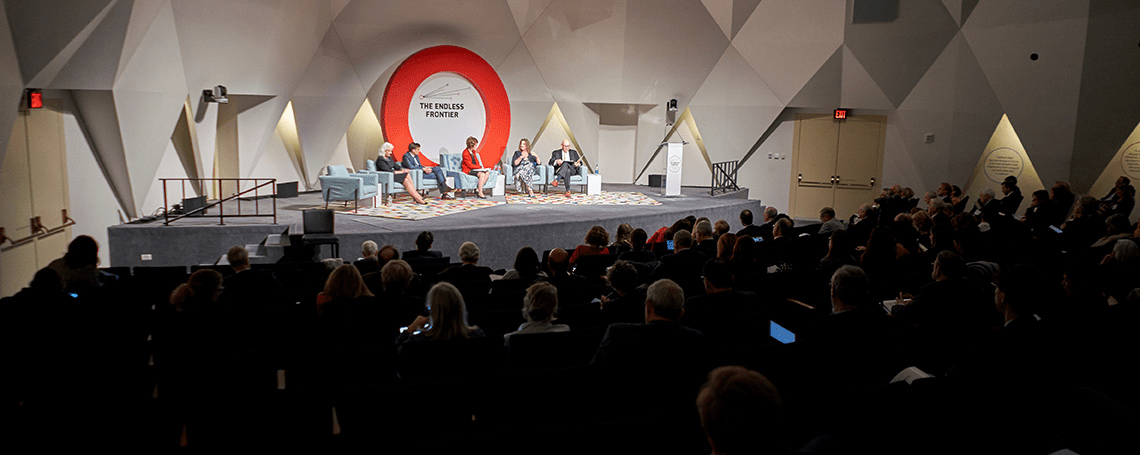
On Feb. 26 the National Academies convened leaders from Congress, federal agencies, universities, and industry to explore how to structure science for the next 75 years to respond to the nation’s emerging needs and future challenges.
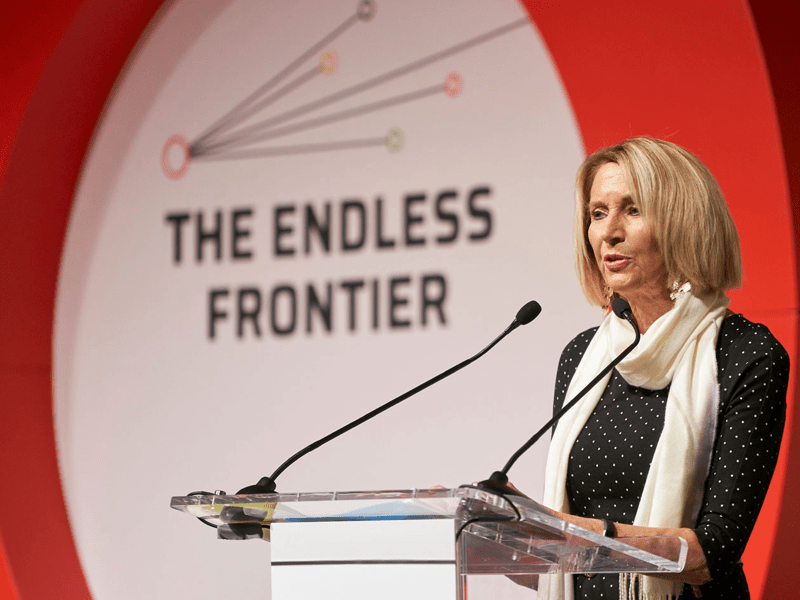
The event marked the 75th anniversary of “Science: The Endless Frontier” — written by the nation’s first presidential science adviser, Vannevar Bush, whose report steered American science after World War II, spurring a range of advances that improved citizens’ quality of life. Given how science has evolved, however, our scientific structures need reevaluation, said National Academy of Sciences President Marcia McNutt in her welcoming remarks. “Science as practiced today is far more international, more collaborative, more interdisciplinary, more dependent on data and observations from novel and expensive facilities, more important to economic prosperity, and a greater driver of social change than it was when Dr. Bush laid down the roadmap for the endless frontier.”
Noting that America’s share of global R&D spending fell from nearly 40% in 2000 to 28% in 2017, Senator Chris Van Hollen said, in light of growing global competition, “We need to take a fresh look at where we are and where we need to go.” Without a strategy in place for maintaining our technological edge, he warned, we risk at falling behind in autonomous vehicles, artificial intelligence, and quantum computing, among other areas. Senator Lamar Alexander also stressed the growing global competition faced by the U.S. “The situation we’re in is like being a very good football team playing in a league that suddenly got a lot better. There are a lot better teams in our league for the next 75 years than there have been in the last 75 years when it comes to science, technology, and research.”
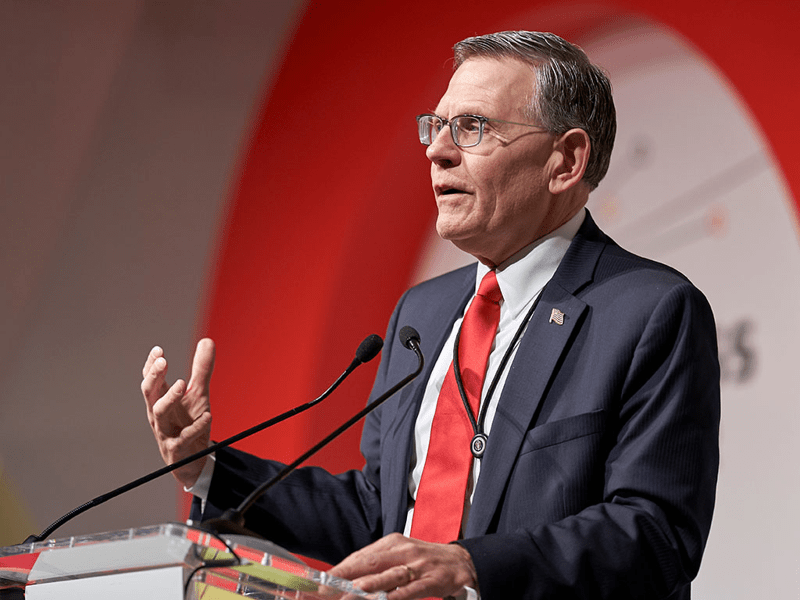
White House Office of Science and Technology Policy Director Kelvin Droegemeier applauded the symposium’s far-future lens and explained that OSTP is planning to take a 50-year look-ahead to provide a framework for the direction of science and technology. The effort will seek to identify the activities and frameworks the nation needs to have in place to succeed on the world stage. “This needs to transcend multiple Congresses, multiple administrations,” said Droegemeier, noting that OSTP plans to use not just a whole-of-government approach but a whole-of-nation approach.
Throughout the day, multiple panels explored science engagement with the public, the expanding role of philanthropy and private-sector funding for research, the evolution of the government-university research project, and possible directions for the next 75 years.
Speaker Alan Alda, an advocate and educator in communications and founder of the Alan Alda Center for Communicating Science at Stony Brook University, predicted that science communication will play a much greater role in the next 75 years than it has in the past. “Bush’s report changed the way science was supported in this country for 75 years, and yet he left out one element that is becoming known as a key element in how science thrives and flourishes…the communication of science.” Alda emphasized that it’s important for scientists not just to translate technical language but also to engage with, listen to, and build a personal connection with their public audiences.
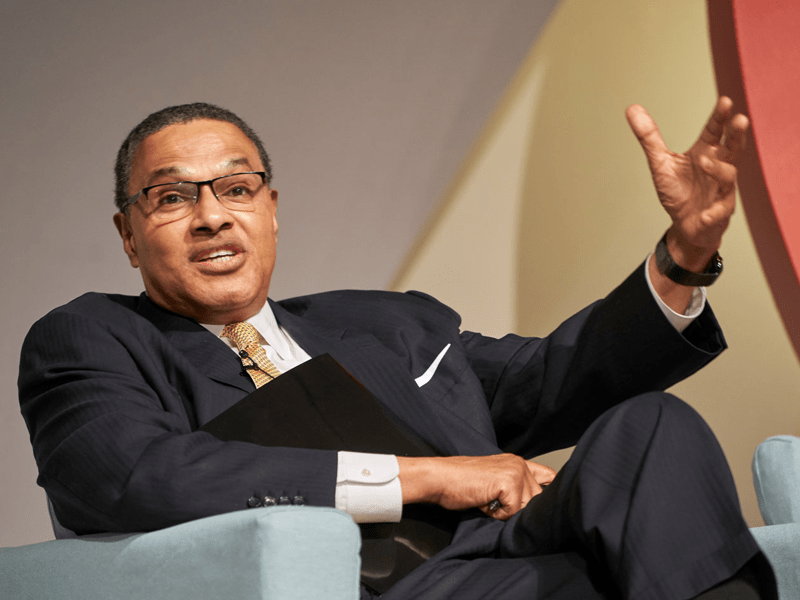
Freeman Hrabowski, president of the University of Maryland, Baltimore County, challenged attendees to bring a more diverse group of people into the scientific enterprise. “If we want people to invest in science and have elected officials doing it, we've got to pull more people into the work.” He also stressed the importance of evaluating efforts to improve diversity. “When we talk about diversity and inclusion, they’re almost warm and fuzzy terms. We have not brought the rigor of analysis to those issues.”
The importance of connecting science with the nation’s needs was stressed by Worcester Polytechnic Institute President Laurie Leshin. Public confidence in universities has declined by 9% over the past three years, she noted. “We have a challenge with the social contract that we have made with the country…. What I think about is: How do I bring STEM education dramatically closer to societal needs? How do I help folks working on subjects of their own choice to make choices that are as relevant as they can be?”
The event was sponsored by the National Academy of Sciences, the Kavli Foundation, and the Alfred P. Sloan Foundation.
Archived webcast
Photos from the event