Colorado Crossroads: Building Resilience from the Ground Up
Program News
By Amanda Purcell
Last update December 12, 2025
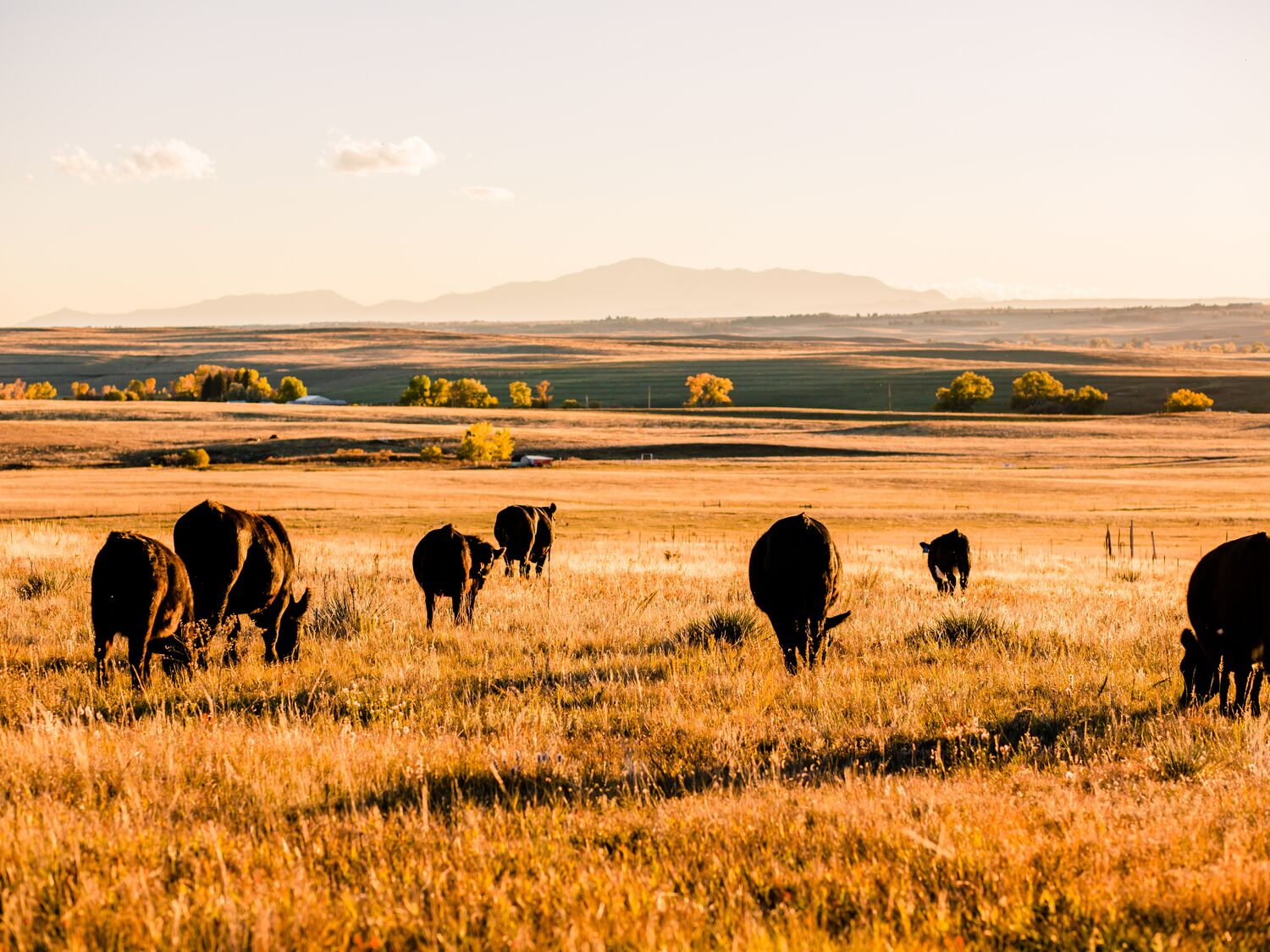
Cattle Grazing at Sunset with Mountain View
Staff supporting Colorado policymakers and researchers explored how science can strengthen resilience across the state’s agricultural landscapes and highly variable climate.
From the snow-fed headwaters of the Rockies to the windblown plains of the southeast, Colorado’s climate is as varied as its landscapes. That diversity has long shaped the state’s agricultural range and practices, and now it defines some of its greatest challenges.
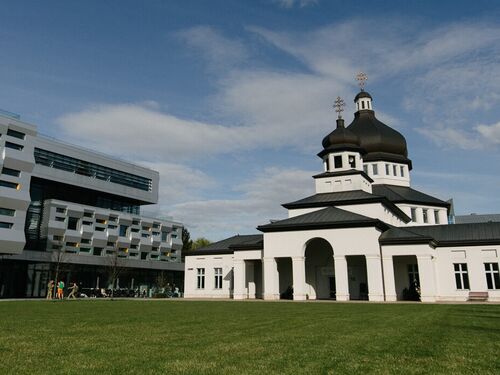
At Colorado Crossroads: Resilient Agriculture in a Changing Climate, held October 15, 2025, at Colorado State University’s new Spur Campus in Denver, researchers, agricultural producers, and state legislative and agency staff came together to explore how science can help the state’s agricultural industry adapt to rapid environmental change.
The event was organized by the National Academies’ Climate Crossroads initiative, in partnership with Colorado State University’s Climate Hub at Spur and the Institute for Science & Policy at the Denver Museum of Nature & Science. Together, they hosted a day-long training program for connecting science and decision-making, part of a growing series of regional engagement activities from the National Academies.
Through expert presentations, small-group discussions, and producer perspectives, participants learned about the best available climate resources within and across the state and examined how science can serve as a bridge between agricultural resilience and effective public policy.
“This event is a great representation of why the Climate Hub exists—to make our state’s science more accessible to those that need it through partnerships and dialogue,” said Veera Mitzner, Director of the CSU Spur Climate Hub. “We’re bridging research and real-world needs,” drawing on the resources and mission of CSU to serve Coloradans.
A Climate of Contrasts
Few places experience such dramatic climate variation as Colorado: the temperature difference between the state’s warmest plains and coldest peaks is greater than that between Miami and Reykjavík. This geographic diversity creates distinct microclimates, each with its own mix of vulnerabilities to heat, drought, wildfire, and flooding.
Scientists from the Colorado Climate Center, the office of the state climatologist, shared observational data that showed the state is warming across all seasons, with snowpack declining, heatwaves intensifying, and precipitation patterns shifting in uncertain ways. “A normal year may be the least normal thing we can experience,” noted Peter Goble, Assistant State Climatologist.
Yet participants also noted that Colorado’s deep legacy of data and collaboration—from long-standing state climate monitoring to new community partnerships—positions it to lead in adapting to those changes.
As some hazards, including heat waves, droughts, and wildfires, become more frequent and intense due to warming—“we’re here to help,” said Russ Schumacher, State Climatologist and Director of the Colorado Climate Center. With origins in supporting agriculture across the state, the Colorado Climate Center now produces monthly climate summaries and provides freely accessible tools and resources to help put current climate conditions in historical context.
Everything Comes Back to Water
Water underpins every conversation about Colorado’s resilience. As population growth, warming, and extreme weather reshape the timing and quantity of supply, demand from agricultural, municipal, and residential users is intensifying.
Speakers emphasized that science-informed collaboration—from basin-level modeling to local water efficiency planning—is critical to sustaining Colorado’s shared water future. But the challenge isn’t just physical scarcity; it’s also policy complexity, as water rights, incentives, and urbanization lead to fully or over-allocated supplies in many river basins in the American West.
“Where western water policy meets climate change, it’s a collision of 19th century water law, 20th century infrastructure, and 21st century population growth,” said Brad Udall, Senior Scientist at the Colorado Water Center. Opportunities for agricultural resilience in this context come from creative ways to share water—for example, a water trust—crop switching practices, and ensuring Tribes have a more prominent seat at the table in exploring water policy solutions.
Resilience in the Soil and on the Range
Across sessions on soil systems and rangeland management, a shared theme emerged: Colorado’s resilience already lives in the ingenuity of its producers.
Farmers and ranchers described adapting to shifting seasons, testing cover crops and regenerative practices, and experimenting with new technologies—from precision conservation tools to virtual fencing. They are building resilience from the ground up, often with limited resources and increasingly uncertain returns.
“We’re gambling a lot more than we ever have… You never know how much rain you’ll get the coming spring,” said Norm Dinis of Empire Dairy. “Farmers are used to gambling but this is getting scary.”
Soil scientists noted that healthy soils are a cornerstone of both climate adaptation and mitigation, storing water and carbon while stabilizing yields. But adoption of these practices is constrained by fragmented incentives and insurance rules that reward short-term decisions over long-term outcomes.
Participants pointed to a mismatch between the abundance of tools available and the practicality of what producers actually need—and called for more alignment across technical, financial, and policy systems.
“The market rewards improving degraded land with better practices, rather than supporting land stewards who already use regenerative methods,” noted Lauren Gifford, Director of the Soil Carbon Solutions Center. A lot of factors like insurance contribute to how farms are actually managed. But there is enthusiasm among producers for sustainable practices. “They are the ultimate experimenters, researchers, and innovators, and we get the opportunity to learn from them,” said Meagan Schipanski, Professor in the CSU Department of Soil and Crop Sciences.
Bridging Science, Practice, and Policy
One of the most striking insights from the workshop was the recognition that Colorado already has many of the right pieces—robust research, strong institutions, engaged producers—but the connections among them could be strengthened.
Scientists discussed how advanced measurement campaigns, such as airborne missions that monitor greenhouse gases or air quality, can provide vital insights—but those data are most powerful when linked to what producers see and measure on the ground. Likewise, producers’ day-to-day experience offers real-time feedback that can sharpen and ground scientific work. Greater integration between scientific analysis and local experience can inform a more holistic approach to understanding and evidence-based practices.
Policy and decision-makers have a crucial role to play in linking these systems, aligning incentives and regulations so that climate-smart practices are both economically viable and environmentally effective.
As summarized by one of the event’s attendees: “Climate policy should build on a diverse portfolio of strategies, and improving adaptive capacity is perhaps more important than specific practice implementation.”
Looking Ahead
Participants shared their takeaways from the event, including ways they plan to put this new experience into practice moving forward, one commenting: “this will help me explain the financial impacts of climate, water, and other concerns” and another noting feeling “more prepared to understand some of the bills that may come through” and that “it's great to have people I can go to with questions.”
The conversations in Colorado underscored that resilience grows through connection—among researchers, producers, and decision-makers in addressing local climate challenges. Climate Crossroads will continue to foster these dialogues across regions, helping translate scientific understanding into shared action.
Acknowledgments:
This event was made possible through the support of the Waverley Street Foundation and the Platform for Agriculture and Climate Transformation (PACT). Thank you to the Colorado Crossroads Working Group for their guidance and support planning this event: Veera Mitzner, Max Neumeyer, Jordan Lambert, Russ Schumacher, Peter Goble, Allie Mazurek, Susan Delja, Bruno Basso, A.R. Ravishankara, Laura Lyon, and the rest of the National Academies staff team.