Freelance Journalist Sofia Quaglia Tells Nature’s Untold Stories
Feature Story
By Olivia Hamilton
Last update April 28, 2025
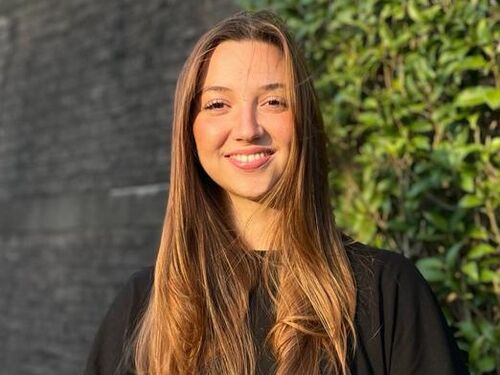
Courtesy of Sofia Quaglia
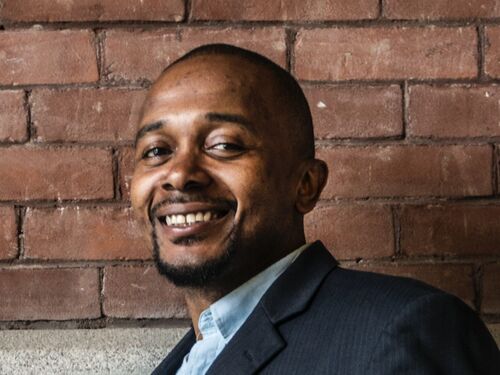
Sofia Quaglia is an award-winning freelance journalist writing about all things science and nature and how we talk about them. Her work regularly appears in the New York Times, National Geographic, New Scientist, the Guardian, the BBC, and more. She’s on a mission to visit the entire planet by spending each month in a different country, so she has been living on the road since 2021.
Quaglia was a 2023 award winner of the National Academies’ Eric and Wendy Schmidt Awards for Excellence in Science Communications, which honor exceptional science communicators, journalists, and research scientists who have developed creative, original work to communicate issues and advances in science, engineering, or medicine for the general public.
Quaglia mainly covers biodiversity — the variety of animals, plants, fungi, and even microorganisms like bacteria that make up our natural world — and focuses on how we know what we know, the limits of knowledge, and the way our own perspectives and practices create limits. Her travels around the world have led her to cover everything from fish with legs to cactus smuggling.
To celebrate Earth Month, we asked Quaglia about her experiences covering biodiversity, traveling the world, and her unique love of often-forgotten creatures.
What inspired you to focus your career on biodiversity?
Quaglia: Although I started my science journalism career as a science generalist, I found myself going back to stories about the natural world time and time again. I loved reporting on new medical discoveries, psychology, and groundbreaking technology because digging deep into these topics helps us understand ourselves and our society better. But I fell in love with reporting on the natural world because it reminds us that we’re not the only society that matters. The world doesn’t revolve around us. Thousands and thousands of mesmerizing creatures have inhabited this world for millions of years before us, evolving unique, mind-blowing ways to thrive.
Biodiversity can be a sprawling and complex topic. How do you decide which stories to tell — and how do you make them accessible to the general public?
Quaglia: Within the biodiversity beat, I cover a variety of topics. But there are a couple of trends — I love to tell stories about small, ugly, and unassuming creatures that people find gross and disgusting, but are actually crucial for the universe’s equilibrium. Worms, flies, cockroaches, bed bugs, ants, bees … you name it. It’s especially fun to highlight how these creatures are surprisingly complex. I also like to approach these stories with a lens of understanding how we know what we know about the natural world. How have our biases limited our ability to understand other animals? What are the consequences?
You’ve been working with digital and print media for a while. What inspired you to start sharing your stories on social media?
Quaglia: I have always resisted social media so much. I have never even used it for my interests. I never posted about friends, family, travel, or anything. More and more, though, I have been haunted by the idea that ruling out social media completely also meant ruling out an entire slice of readers who don’t regularly engage with traditional titles. I was worried I was undermining the very reason I do journalism: [that] everybody has the right to free, engaging, entertaining, educating information. Of course, my videos don’t have more than a couple thousand views each across platforms — much less than the peak reached by the legacy media I work for — but even if I’m reaching 10 people who wouldn’t have normally read my work, I think I can call it a success.
You’ve been living on the road since 2021, spending each month in a different country. How has that shaped your worldview and your approach to science journalism?
Quaglia: Traveling full time has been a completely life-changing experience. On an intellectual level, it has molded my values, priorities and worldview, and it has helped me reframe my values: What matters to me? Why? That feeds into what stories I decide to work on. On a practical level, traveling has allowed me to learn from experts and communities that I wouldn’t have normally had access to, and see with my own eyes so much of the natural world I report on. This gives depth and color to my stories.
Tell us about a recent story that excites you or that you think folks should know about. Why does it excite you and/or why is it meaningful?
Quaglia: My favorite story I’ve worked on this year is my BBC story about cactus smuggling. It’s a story about the case against a famous Italian plant collector who smuggled over 1,000 rare Copiapoa cacti out of the Chilean Atacama Desert, one of the driest places on Earth, to sell for profit on the European black market. His case set an interesting precedent for environmental law because the stolen cacti were repatriated to Chile, a first, and the defendant had to pay a fine aimed at specifically aiding cactus conservation. It’s as if he paid reparations to nature itself, which is a relatively novel concept in how we regulate biodiversity.
Are there specific environments or ecosystems that have left a lasting impression on you, personally or professionally?
Quaglia: I am a sucker for a soil story. More than half of the world’s biodiversity is living under our feet, and those small, ugly critters down there reign [over] some of the most crucial planetary functions. We should all be paying so, so, so much more attention to the soil. I also love reporting 2Imageaddexpandmore-dots Title ImageSelect media Include in anchor checkon the deep sea, as there is so much that we just do not know about what happens down in the abyss. There are hundreds of unique organisms that have evolved to live at freezing temperatures, insane pressure levels, and pitch-black darkness — they represent the extremes of life on Earth. And last but not least, the tropical jungle is my favorite place to go reporting. It is teeming with life, and I’ve never felt more alive than when trekking through the dense, humid tropical forests.
What’s next for you — whether in terms of stories, travels, or your broader mission as a science communicator?
Quaglia: I’ve been in South America for all of 2025 so far, and will be here mostly till the end of the year. Among other stories I want to do here, I’ll be reporting on the grasslands of Brazil, new spider species in Argentina, environmental activism in Uruguay, and rare species in the Galapagos. A beat I’d like to do more work in, though, is wildlife trade and illegal smuggling, like my recent BBC cactus story, so I’ll be trying to figure out what the next big stories are in that realm.