Exploration of the Seas: Interim Report (2003)
Chapter: Ocean Exploration as a Tool for Public Education
Voluntary Information Sharing
It is useful to encourage broad information sharing about ocean exploration initiatives, whether undertaken by the United States or by other nations. Such information sharing could include information about ongoing exploration programs, potentially available resources (including ships and scientists), proposals for exploration, and other pertinent information. The Committee recommends that IOC assist in communicating to participating governments the importance of cooperative ocean exploration efforts. The Committee also recommends that IOC consider convening an annual conference on ocean exploration, seeking advice from SCOR, POGO, and other interested entities as appropriate. Indeed, one option would be for IOC to cosponsor the recommended annual Ocean Exploration Conference with SCOR. The International Global Ocean Exploration Workshop held at IOC headquarters in May 2002 demonstrated great international interest, as well as capabilities, in ocean exploration. This interest was very broad and included both developed and developing countries.
OCEAN EXPLORATION AS A TOOL FOR PUBLIC EDUCATION
Ocean exploration provides rich images that capture the imagination of people of all ages (Figure 8). Interdisciplinary voyages of discovery present natural examples of science that are both engaging and relevant to our lives. It is only through collaborations between explorers and educators that the full educational potential of ocean exploration can be realized. These collaborations cannot be an after-thought, but must be fully integrated throughout the entire process of ocean exploration.
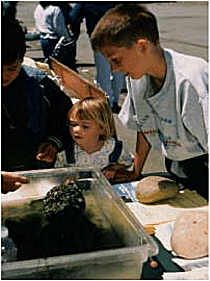
Figure 8. Educational exhibits allow for the public to experience ocean life (used with permission from Kip Evans, National Geographic Society).
Ocean exploration should provide a venue through which learning about our planet can become a lifelong endeavor. The challenge in achieving this is threefold:
-
to bring new discoveries to the public in ways that infuse exploration into their daily lives and capture the inherent human interest in the ocean;
-
to involve the global community in exploration of our final frontier; and
-
to develop and foster collaborations among scientists and educators in ocean exploration.
