Developments in Violent Extremism in the Middle East and Beyond: Proceedings of a Workshop—in Brief (2019)
Chapter: Developments in Violent Extremism in the Middle East and Beyond: Proceedings of a Workshop—in Brief
Proceedings of a Workshop
| IN BRIEF | |
July 2019 |
Developments in Violent Extremism in the Middle East and Beyond
Proceedings of a Workshop—in Brief
INTRODUCTION
Twenty-five scientists and analysts from the United States, Russia, France, and the United Arab Emirates (UAE) convened at a workshop at New York University Abu Dhabi (NYUAD) on April 1-3, 2019 to discuss recent developments and trends in violent extremism in a number of hot spots of the world. The U.S. National Academies of Sciences, Engineering, and Medicine (the National Academies), in collaboration with the Russian Academy of Sciences (RAS), the French National Council for Scientific Research (CNRS), and NYUAD organized the workshop. This gathering was the fourth workshop jointly sponsored by the National Academies and RAS since 2015 that has addressed the challenge of coping with violent extremism. Held in the immediate aftermath of the terrorist attack at the Al Noor Mosque in Christchurch, New Zealand, the workshop sent a strong message to the international community that individuals and groups with extremist views and access to weapons continue to be both an immediate and a long-term threat in many countries, even as ISIS and al-Qaeda are losing control over large areas of land in the Middle East.
The workshop began with a welcome by Alfred Bloom, vice chancellor of NYUAD. He noted the timeliness of the workshop on campus, as NYUAD was in the process of establishing an academic program on international peace studies. Each workshop participant then presented on relevant issues in his/her area of expertise. A general discussion underscored some of the highlights that were covered by the presentations and participants’ comments. Two Breakout Groups were then established, with their comments reported at a plenary session on the third day of the workshop. The workshop concluded with comments on the Breakout Groups’ reports and other observations on topics that deserved further consideration at future gatherings.
The following sections summarize the presentations by workshop participants. They document the concerns of speakers on the dimensions of violent extremism and the role of research in combatting extremism in the Middle East and beyond.
PRESENTATIONS BY WORKSHOP PARTICIPANTS
Historical Perspectives
Thomas Pickering, Hills and Company (USA). The Middle East, North Africa, and Extremist Violence. The Middle East presents a fertile field for both religiously inspired and secularly motivated groups pursing their ends with the use of physical force—violent extremism. Syria remains the most confusing state. There ISIS has played a significant role, though President Assad and his allies and opponents have continuously dominated developments. A domestic civil war has been complicated with Russia, the United States, Iran, Turkey, and Saudi Arabia among the principal players. While Syria has been sliding gradually toward a potential military victory, efforts continue in search of a negotiated solution. Yemen, while less in the public eye, remains similarly entangled with each side characterizing the opposition as violent extremists. Meanwhile, Libya is even more complex and is fraught with actions by Egypt and other outside players that have contributed to a domestic mess, which is difficult to unravel. In North and Central Africa the advances of ISIS

and Boko Haram have generated violent reactions from governments and observers in many countries. All the while, fragility exists in other parts of the region—Jordan, Lebanon, and Bahrain. Each in its own way has carried the burden of domestic disruption aggravated by the intrusion of non-local, and often violent, players.
Vitaly Naumkin, Institute of Oriental Studies (Russia). The Kurdish Problem and Struggle Against Extremism in the Middle East. The history of the Kurds, who have been known for tolerance and relatively low religiosity, is replete with tragic events. They have had historically complicated relationships with the titular nations in the states where they live. In Iraq, during the course of this decade, Islamist terrorists have targeted Kurds, especially Yezidis who are treated as infidels by ISIS and other terrorist organizations that have been killing Yezidi men, enslaving and raping women, and selling their children. In Syria, Kurdish militias (YPG) have been playing the major role in the struggle against jihadists as a part of the Syrian Democratic Forces. At the same time, the YPG and their political arm are considered terrorists by Turkey whose leadership views them as the main threat to the security of their country. This controversial interplay of different forces is a part of the political landscape in the Middle East where the Kurds—with a growing sense of national identity—will continue to play an important role in regional politics.
Policy to Prevent and Mitigate Violence
William Courtney, RAND Corporation (USA). U.S. Policy in Countering Violence. The U.S. government has adopted the term “preventing terrorism” to encompass the risks from both violent extremism and terrorism. After 9/11, the deaths of Americans from terrorism incidents at home and abroad averaged about 25 per year, hardly the “critical” threat presented by the U.S. government, but the danger of a rapid increase cannot be ignored. A recent RAND study concluded that the most effective government role against domestic threats is to support state, local, and nongovernmental efforts. U.S. efforts abroad have focused on ISIS and al-Qaeda, with the best international partners being organizations that can credibly refute violence, supremacism, and intolerance. A noteworthy challenge is dealing with the large number of foreign fighters leaving the battlefields in Syria and Iraq. Also, the displaced persons in Syria—particularly mothers and children—deserve special attention.
Ludmila Babynina, Institute of Europe (Russia). The Threat of Increased Violence in Northern Ireland in the Context of Brexit. If Brexit is implemented, the border between the UK and the Republic of Ireland will become the external border for the European Union. The restoration of the Irish border will disrupt the functioning of the Good Friday Agreement, which will affect the entire peace process in Northern Ireland. Although the Irish Republican Army (IRA) has disbanded with some of the former leaders becoming mainstream politicians, marginal extremist groups have remained in the region, ready to take advantage of an unstable situation. The “New IRA” claimed responsibility for a car bombing in January 2019 in the Northern Irish city of Derry/Londonderry and the foiled bombing attempt in London in February 2019. Also, while both sides have committed to keeping the border transparent, it will not be possible if the UK leaves the European Single Market and the EU Customs Union.
Kristian Alexander, Zayed University (UAE). Security, Extremism, and GCC Government Responses. Although the Gulf Cooperation Council (GCC) states are united by historical, cultural, and social bonds, they remain distinct entities with unique specificities and vulnerabilities. They have conflicting conceptualizations concerning Iran and the Muslim Brotherhood. Of particular importance has been the shift from inter-state wars toward conflicts with non-state actors that are focused on sectarian violence. The GCC states have become more proactive and assertive as regional powers with more expansive policy interests as oil prices fluctuate, and with the impacts of far-reaching economic and subsidy policy reforms. The UAE, in particular, enjoys proximity to many of the world’s expanding markets. It has a reputation of political stability and has not had a serious terrorist attack thus far.
Drivers of Violent Extremism
Scott Atran, University of Michigan and Oxford University (USA and UK). Violent Extremism and Sacred Values. The spread of transnational terrorism in tandem with the revival of parochial nationalism is fragmenting social consensus across the world. Governments and experts are struggling to understand how to get along with constantly polarizing conflict. Can social science help? What psychological and social factors operate to institutionalize and sustain extreme forms of group conflict, and what might be done? The moral and revolutionary aspects of transnational terrorism are significant. The psycho-social nature of the “devoted actor” versus the “rational actor” frameworks is important, focusing on the character of sacred values, identifying fusion and social network dynamics, and motivating and sustaining extreme violence. The psychology of “will to fight” is illustrated in behavioral and brain studies involving frontline combatants in the Middle East, militant supporters in North Africa, and radicalizing populations in Europe (Figure 1).
Glenn Schweitzer, National Academies of Sciences, Engineering, and Medicine (USA). Water Scarcity and the Rise of Violence. The relationship between access to water and violence is extensive.
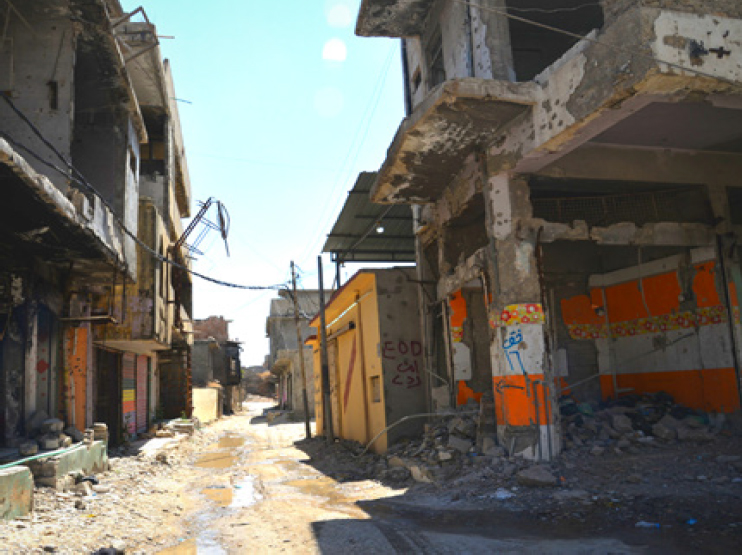
Source: From presentation by Scott Atran on violent extremism and sacred values.
Violence may be triggered by disputes over water rights, access to water, and/or scarcity of water. Interruptions of access may be used as a tool of violence, and loss of access to water at times follows the outbreak of violence. The interplay of water-related tensions with political, socioeconomic, environmental, and cultural factors often determines whether violence will result. About 1,400 new dams and water diversion projects with cross border impacts are planned or under construction world-wide. Pressures on limited water supplies are increasing, and climate change has been described as the ultimate threat multiplier (Figure 2).

Source: From presentation by Glenn Schweitzer on water scarcity and the rise of violence.
Birga Schumpe, NYUAD (UAE). The Psychology of Violent Extremism: Understanding the Quest for Adventure and Glory. The need for adventure and glory have often been mentioned to explain why so many people are drawn to extremism—especially among young people. While the quest for glory has been documented, empirical evidence for the attraction of excitement and adventure has yet to be reported in the literature. Several studies have shown that sensation-seeking mediates the relationship between the search for meaning in life and extreme behavior. Subsequent studies also indicated correlations between sensation-seeking and support for political violence. Very often it is not violence per se but rather excitement that attracts sensation-seekers, Schumpe and her colleagues successfully tested an intervention that mitigates support for political violence. Their findings showed that providing exciting yet peaceful alternatives such as membership in nonviolent groups can re-channel the sensation-seeking motivation into a pro-social direction (Figure 3).

Source: From presentation by Birga Schumpe on the psychology of violent extremism.
Ruslan Mamedov, Russian International Affairs Council (Russia). Shias, Sunnis, and Christians. What Are the Challenges for Iraqi Security? The establishment of al-Hashd ash-Sha'abi forces in Iraq changed the balance of power at the local territorial level across Iraq. Despite divisions within some confessional groups, the nature of al-Hashd has strategically strengthened the state. At the same time, this new approach carried with it many risks. The groups in control were not united and belonged to political forces with different agendas. Despite the contradictions, the relationship between al-Hashd and the state found legal form by including it in the country’s armed forces. Elements of Iraq’s security forces are not yet fully formed. Nevertheless, the new structure largely determines and influences the formation of the Iraqi security landscape and its statehood.
Radical Groups Beyond the MENA Region
Sara Zeiger, Hedayah (UAE). Developments, Challenges, and Messages in East Africa. With recent developments in East Africa, including the continuing threat of al-Shabaab combined with the drawdown of the African Union Mission in Somalia (AMISOM) troops to Somalia, East Africa remains a concern of the future of terrorism. To this end, some governments such as those of Somalia and Kenya have changed their counter-terrorism policies, including adding an element focusing specifically on countering violent extremism (CVE). Uganda and Tanzania are also in talks with international organizations to develop a CVE component to their strategy. In this context, several community-based initiatives aimed at countering the narratives of al-Shabaab are underway. Some of these efforts aim to strengthen opportunities for voicing structural grievances within the current system and avoiding the use of violence to create positive social change. Others harness the energy of youth to speak out against terrorism in their communities (Figure 4).

Sources: See www.counterextremism.com (Country reports on Tanzania); https://igadssp.org, reports on IGAD Center of Excellence and Regional Strategy.
Jocelyn Belanger, NYUAD (UAE), De-radicalizing Detained Tamil Tigers in Sri Lanka: Empirical Support for the 3N Model. Empirical evidence collected worldwide, including samples from various terrorist organizations, indicates that documenting the seriousness in achieving the Quest for Personal Significance (“to matter,” “to be respected,” “to be someone important”) enhances individual willingness to self-sacrifice in the name of a cause and engage in terrorism. On the other hand, data collected to assess the efficacy of de-radicalization programs, involving thousands of detained terrorists, suggest that the quest for significance can be turned around and redirected into a constructive direction, paving the way to conciliation, conflict resolution, pro-social behavior, and harmony in inter-group relations.
Valery Tishkov, Institute of Ethnology and Anthropology (Russia). New Tactics of International Terrorism in Russia and Central Asia. In March 2018, the Russian Minister of Foreign Affairs stressed that Central Asia occupies a special place amid Russia’s foreign policy priorities. Of particular concern is the increasing penetration of ISIS, primarily in the Northern Province bordering the Commonwealth of Independent States (CIS) countries. Supportive outposts are being created there where people from Central Asia, Russia, and other states undergo special training. This can be seen as a direct threat to regional and international security, which urgently requires intensive efforts to curb common threats. One analysis shows that the new tactics of ISIS, which are banned in Russia, pose a complex set of threats for regional security; and a coordinated counterpoint has not yet been found. The best countermeasures include building Eurasian integration, including (a) coordination of the activities of law enforcement agencies; (b) harmonization of regulatory frameworks; and (c) intensification of interactions between civil society institutions, religious and education institutions, and humanitarian organizations in all states of the region.
Kanchan Chandra, NYU New York and Abu Dhabi (USA and UAE). Why Ethnic Parties Crowd Out Armed Organizations in India. The role of political parties in providing non-violent outlets to armed violence is specific to patronage democracies, including India. In democracies that are not patronage-based, parties may remain important, but their platforms may matter more than the ethnicities of their leadership. In non-democratic states, institutions other than parties (e.g., militaries) may have better access to state authorities. Some ethnic parties can deter armed violence despite an extensive body of literature that suggests that ethnic parties have a destabilizing effect on democratic systems (i.e. ideological wars). Indeed, the framing of a civil war itself can have long-term consequences for the length of a war, the response of the state, the networks that are linked to the participants, and the lives of individuals who are involved.
Montassir Sakhi, University of Reims and University of Paris 8 Saint-Denis (France). Genesis of ISIS and Transformation of Iraqi and Syrian Societies During the Revolution and Civil War. Based on research in Morocco, Iraq, France, and the Turkey-Syria border area, the revolution in Syria and the American invasion of Iraq are examples of the formation of groups that chose governing in accordance with the structure of the State. These groups resorted to violence to establish territories with a perfect continuum in the form of a modern nation-state. Sakhi’s analysis focused on the symbolic struggles that took place inside ISIS. The militants who escaped the State advocated a utopian Islam based on law and bureaucracy. However, their struggle within the structure of ISIS failed. Therefore, the approach was to promote ISIS within the internal struggle of a revolutionary and non-revolutionary Islamic approach that derives legitimacy from modern political experience and translation from prophecy to ISIS theorists.
Nikolai Plotnikov, Institute of Oriental Studies (Russia). Extremism/Terrorism: Foreign Fighters in Syria as a Factor in the Duration and Violence of the Civil War. With the fall of ISIS, the threat of jihadism will not diminish as a new phase of activity begins. Foreign fighters are returning home with the goal of resuming terrorist activities in appropriate settings. Some are beginning to consider their own countries as enemy territories, with acts of terrorism occurring in Belgium, France, the UK, Libya, Turkey, Pakistan, Thailand, and Indonesia. Not only are returning militias engaged in illegal actions, but others have fallen under their influence, as has been the case in France and Germany. The return of foreign fighters is both a short-term threat and a long-term challenge. The dangers are increasing that they will not only survive but will also consider more sophisticated tactics of terror, such as use of biological weapons in cities.
Erin Miller, University of Maryland (USA). The Dynamics of Franchise Terrorism: The Islamic State and al-Qaeda. A large challenge in researching patterns of activity by perpetrators of terrorism is the heterogeneity of interrelated units of analysis. Individuals carry out terrorist attacks, sometimes in isolation but often in the context of groups, networks, organizations, and ideological movements. Understanding how these units interact is critical to developing theories and policies for counter-terrorism but requires comprehensive analysis of available data. In many ways fran-
chise terrorism transcends these units in important ways but can be difficult to study. Miller’s analysis investigates patterns of ISIS and al-Qaeda-related terrorism, evaluates different types of “membership” to the franchise, and compares patterns of expansion over time, tactics, and impacts (Figure 5).

Source: From presentation by Erin Miller on the Islamic state and Al-Qaeda. National Consortium for the Study of Terrorism and Responses to Terrorism. U.S. Department of Homeland Security.
Brian Dodwell, Combating Terrorism Center, U.S. Military Academy (USA). Understanding the Islamic State’s Relationship with Its Wilayat. The Case of Wilayat Khurasan. Dodwell assessed the nature of the relationship between the central leadership of ISIS and its far-flung provinces (in this case Wilayat Khurasan). It was based on primary source material captured during U.S. military operations in Afghanistan. Wilayat is doing everything possible to build its presence in Afghanistan in the image of the “caliphate” presented by ISIS in Iraq and Syria. It communicates regularly with the core and makes every effort to adhere to its standards. When it cannot, it generally is expected to answer for its failures. The nature and degree of communications, including high level discussions of strategic issues between senior leaders, are of particular interest. Also, communications across several key functional areas—including finance, media, and organization/governance—are quite informative.
Vassily Kuznetsov, Institute of Oriental Studies (Russia). Non-state Actors in the Middle East and North Africa in the Context of the Arab-Muslim Political Tradition: Case of Libyan Militia Groups. Field research during 2018 analyzed political activities of the major non-state violent actor in western Libya—the Revolutionary Brigades of Tripoli. Political leadership within the groups and biographies of brigade leaders are an important focus. Interactions between the militias and the official authorities of Tripoli are examined, as are the conceptions of the Libyan militia’s tribal nature and research ideology. In sum, the actions of the militia groups are considered within the framework of the state-building process in the Middle East. Three conceptual perspectives are suggested for further analysis.
Hosham Dawod, Center for Interdisciplinary Studies of Religious Facts (France). The Persistent Threat of the Jihadist Insurgency in Iraq. Benefiting from the financial and logistical support of various regional actors (in the Gulf States and Turkey), while taking advantage of the decline of the Iraqi armed forces in 2013-2014, ISIS was able to establish itself territorially in the west and north of Iraq as well as in the north-east and south of Syria. ISIS will continue in some form, despite its territorial collapse, with its local Sunni and Baathist imprints, which provide focal points for growing protests against corrupt political elites at all levels and criticisms of an economic crisis worsened by ineffective reconstruction. ISIS will continue to recycle war treasures into the Iraqi economy through front companies and numerous exchange offices.
Akhmet Yarlykapov, Institute of Ethnology and Anthropology (Russia). Russian Terrorist Networks in and Outside Russia after ISIS. What Is Next? In Russia there is a high level of radicalization, particularly among Muslim youth. Terrorists are becoming younger each year, and networks of Russian terrorists outside Russia remain a problem, primarily in the Middle East and particularly Turkey. To successfully combat them, a high level of cooperation among the countries of anti-terrorist coalitions is important. (Note: The author was not able to participate in the workshop in Abu Dhabi due to illness but submitted a paper for consideration).
Muhammad al-Ubaydi, Combating Terrorism Center, U.S. Military Academy (USA). Evolution of Sunni Jihadi Online Media Operations. Based on years of monitoring online activities of Sunni jihadi sympathizers and members of organizations that espouse the Sunni jihadi ideology, the following questions were addressed: How, when, and why did jihadist groups begin using social media? How does al-Qaeda’s online presence differ from that of the Islamic State? What particular events (including the Arab Spring, Syrian civil war, and intergroup rivalries) may have shifted the use of social media? Looking forward, what is the future of jihadists’ use of online space and how might the international community best prepare to combat such activities? (Figure 6).

Source: From presentation by Muhammad al-Ubaydi on evolution of Sunni Jihadi online media operations.
Farangiz Atamuradova, Hedayah (UAE). CVE Models and Challenges to Implementation: A View from the Field. The CVE cycle, developed by Hedayah, underlines the need to carry out a careful assessment before starting to design a program identifying the kind of intervention that is needed depending on the context and phase the individual is considering. The presentation addressed the importance of monitoring, measurement, and evaluation (MM&E) for CVE programs, covering challenges faced by project implementers as well as possible solutions to overcome issues. Hedayah’s MM&E is based on two main elements: the theory of change statement (TOC) and the evaluation framework. To assist CVE practitioners in conducting MM&E on CVE projects, Hedayah and its partner, Royal United Services Institute, developed a practitioner’s toolkit called MASAR. It is a mobile and desktop application designed to take an individual through a logical process of MM&E, highlighting important issues when implementing aspects of MASAR (Figure 7).

Source: From presentation by Farangiz Atamuradova, Hedayah, on CVE models and challenges to implementation: a view from the field.
Mohammed Hafez, Naval Postgraduate School (USA). Countering Extremism in Rebel Networks. Reflecting on experience in Iraq and Syria, mapping factional divides, and understanding how inter-rebel conflicts emerge can point to opportunities to build coalitions against national and transnational extremist elements engaged in civil conflict. Two underlying causes of rebel infighting in civil conflicts were explored: ideological divisions and power asymmetries. Rebel dyads that are ideologically distant and asymmetrical in power capabilities are more likely to fight with each other than pairs that are ideologically in isolation. The specific aspects of the groups, networks, organizations, and ideological movements are of course relevant. However, at times, franchise terrorism transcends these divisions in ways that are important to understand but difficult to study.
Naved Bakali, American University Dubai (UAE). Problematizing CVE Programming and Exploring Alternative Approaches. The threat of violent extremism has led to a number of state-sanctioned security programs. In 2015, the United Kingdom’s “Prevent Strategy” extended oversight concerning violent extremism by requiring teachers to report on behavior of pupils suspected of having trajectories directed to violent extremism. In examining developments related to “Prevent Strategy,” several issues have been considered: (a) community engagement linked to minority youth empowerment and constructive forms of political activism; (b) an educational examination and deconstruction of extremist ideology; and the examination of the theological underpinnings of al-Qaeda and ISIS. The third addresses how deviant practices are a radical divergence from traditional and mainstream Islamic theology. Educational programming that documents such divergence is important (Figure 8).

Source: From presentation by Naved Bakali on problematizing CVE programming and exploring alternative approaches.
TOPICS HIGHLIGHTED DURING BREAKOUT SESSION #1
The Role of Research
Individual participants in Breakout Session #1 suggested a number of possible topics for future research:
- Sources of Information on Radicalization
- Broadening availability of databases and summaries of existing research available to practitioners.
- Increased research on evolving regional dynamics and associated micro-level analyses.
- Role of Religion
- Religious doctrines including fundamental concepts and dialogues among religious and secular scholars.
- Comparison of religious tolerance, Koranic tolerance, and Islamic tolerance.
- Understanding the theology of jihad.
- Roles of mosques as producers of jihad or as defenders against jihad.
- Post-Islamic State World
- Future directions of ISIS. Will different groups come together where possible, and where will local dynamics prevent linkages? Will they work together, and why or why not?
- Possibility for regeneration of a terrorist structure, which could become an analog of ISIS.
- Counter-Terrorism Policies
- Comparative studies of counter-terrorism in different countries. Identification of successful practices. Overcoming competing definitions.
- Encouraging greater self-reflection in responding to terrorism. How ISIS views its adversaries and the most problematic aspects of the existing order. Do the actions of their adversaries reinforce their beliefs?
- Returnees: Particularly Women and Children
- Rehabilitation of children not recognized by states, local communities, or even families.
- Role of women and importance of cultural perspectives on fighting and suicide.
- Country studies concerning return of foreign fighters and families. Attitudes of local societies. Growth in right wing reactions and retribution to this return.
- Linkages among broad studies on migration.
- Research Methodology and Data
- Combining research data from different sources.
- Compilation of methodological approaches used by researchers in different countries.
- Successful and unsuccessful case studies and sharing of documentation.
- Other Research Topics of Interest
- New forms of violent extremism: neo-Nazi and hate speech.
- How Islamism and far-right extremism feed off each other.
- Impacts of local circumstances and local traditions on radicalization.
- Psychology of suicide bombers.
- Role of state institutions in maintaining order.
- Role of mercenaries who engage in terrorism primarily for money.
TOPICS HIGHLIGHTED DURING BREAKOUT SESSION #2
The Many Dimensions of Violent Extremism
Individual participants in Breakout Session #2 identified many dimensions of violent extremism that warrant further consideration:
- Overarching Challenges
- Acknowledging the differences between conflict and terrorism.
- Keeping in mind a variety of political/economic/social frameworks: (a) before, during, and after violence; (b) during rehabilitation and reconstruction; (c) when assessing ideological dimensions; (d) when assessing technical and/or financial assistance to be provided by governments or local communities; and (e) in recognizing failures of existing institutions.
- Reluctance of certain high-risk countries of concern to acknowledge that there is a risk due to governance problems. How have countries that have failed to recognize long-term governance shortcomings fared?
- Identifying countries that need better understanding impacts of interventions in delicate situations.
- Recognition that teachers are not police officers, and reporting to the police about incidents that are beginning to arise should at times be a last resort after considering other options.
- Taking into account the views of military commanders on the ground concerning future directions to reduce violence and bring calm to territories in turmoil. Being on the scene every day provides many opportunities to understand the details of what is happening, the motivating forces on all sides of confrontations, and steps to bring an end to conflict in the long term.
- Activities of Far-Right Groups
- Similarities between traditional CVE problems and issues concerning the far-right. The radicalization processes have common elements even though the content is different.
- The need to coin a term for the “far-right” which is neither left nor right.
- Avoiding responses to far-right extremism that fuel Islamist extremism.
- Moving beyond simply advocating general values/laws in dealing with far-right extremism, with adequate regard to their relevance to the specific situation.
- Mitigation and Countering Radicalization
- In many countries with returning foreign fighters, developing approaches for dealing effectively with both men and women returnees who had been radicalized.
- Taking advantage of the thousands of prisoners in Syria and Iraq to conduct surveys/interviews concerning radicalization/de-radicalization.
- Increased attention to how organizations become violent. Four common pieces to the puzzle are: (a) griev-
ances; (b) ideology; (c) networks (kinship, friendship, common need for meaning in life); and (d) enabling environments (guns, political rhetoric, interactional social media, ungoverned spaces, and training camps).
- Deepening what is known about rampant extreme nationalism. Are public education deficits in civics, economics, and politics major concerns?
- Studies of radicalization that adequately address cycles of extremism that reoccur.
- Increased work on identity formation. Hedayah has supported research on social and emotional learning and identity formation that highlights the sensitive 5-to-8 age range (upper end of basic language learning). UNESCO has also focused on identity formation.
- Identifying as early as possible groups that are moving in a direction towards violence, to deal with the period between prevention of violence and catastrophe (the intervention period).
- Recognizing that information warfare goes both ways. Propaganda from extremists about bombings and civilian casualties can be countered with success stories about effective cross-national cooperation, e.g., the joint humanitarian aid operational activities between France and Russia (the Istanbul event).
- Rehabilitation and Reconstruction
- Increasing the attention on traumatized people in the aftermath of violence, not just physical reconstruction. Failure to do so may lead to more violence. There is a widespread need to understand the entire process of human rehabilitation.
- More information on lessons learned from relevant past efforts to recover from crises, beyond reconstruction and rehabilitation.
- Greater emphasis on the interrelated concerns of (a) the surges in fighting in Iraq/Syria, and (b) fighters coming off the battlefield to go to other countries that lack resources to deal with their return.
- Increased attention to rehabilitation of youth in rebuilding states such as Iraq and Syria. In these and other-countries, there have been huge problems when children are separated from their families.
- A more complex understanding of the multiple paths to radicalization. Research has shown that most recruits have idiosyncratic reasons for joining the ranks of terrorist organizations. Young people are increasingly motivated to seek excitement in challenging local or global conditions while obtaining money for their efforts, e.g., but there is no single path to radicalization.
- Taking into account the need for more nuanced mental health facilities in addition to the requirements for health facilities within the traditional urban infrastructure.
- Learning from the experience in Chechnya directed to creating social networks in devastated areas—not just rebuilding facilities and reconstruction.
- Confronting the failure to deal with the whole rehabilitation problem in Syria/Iraq, which may involve drugs and street crime, and which is likely to perpetuate difficulties.
- The importance of improving rehabilitation programs where human rights violations have occurred due to capacity issues. Imperfect rehabilitation programs can be a starting point.
- Exploration of effective rehabilitation programs. For example, Kurdish women run a successful rehabilitation program in Syria that brings children to an environment for education, art, and sports that are dominated by internet presentations.
- Greater emphasis on media campaigns during rehabilitation, so the public knows that important work is underway.
- Interested Organizations
- More active involvement by the UN and appropriate regional organizations in considering intervention-related to violent extremism. At times they can provide a broader capacity and broader funding base than local institutions and individual governments.
- Exploration of the contributions of NGOs such as Hedayah that may be better positioned to provide guidance to groups involved in conflict than a government agency. Are there success stories in this regard?
LOOKING FORWARD
During the final plenary session, individual workshop participants identified a wide range of issues and topics related to future opportunities for international collaboration, with an emphasis on U.S.–Russian interactions.
Two overarching concepts to consider in developing the frameworks for future meetings involving U.S. and Russian specialists were suggested:
- Intersections in the study of Islamist and far-right extremists, including consideration of the following questions:
- What are common drivers and how can the study of Islamist violence inform the study of far-right violence? How can far-right extremists be prevented from building a transnational movement similar to the achievements of al-Qaeda and ISIS, and what can de-radicalization studies of Islamist movements teach us about de-radicalization of far-right extremists?
- How might Islamists and far-right extremists use violence to provoke one another and thereby increase their appeal in recruiting new members? Each side can deploy violence strategically to create a “clash of civilizations” that feeds their narratives of hate. Knowing how each side could provoke the other might suggest ways to avoid a spiral of escalations and make societies more resilient in the advent of extremist violence such as was seen in New Zealand.
- How might radical Islamists and far-right extremists build local and transnational alliances based on common narratives concerning anti-Semitism, anti-liberalism, and anti-government?
- U.S.–Russian cooperation in ensuring that ISIS does not rebuild its networks and capabilities, including the following possible activities:
- Coordinated stabilization and reconstruction in weakly governed states;
- Sharing information on returning foreign fighters and best practices in de-radicalization;
- Managing conflicts in regions that are attracting ISIS militants.
In addition, individual participants suggested the following possible areas for immediate cooperation:
- International attention is focusing on steps that are being taken in New Zealand following the attack on the Al Noor Mosque in Christchurch (Figure 9). Comments by Prime Minister Jacinda Ardern and steps taken by the government to limit access to dangerous weapons have set a positive tone for bringing together policymakers, scientists, and the general public in New Zealand and elsewhere.
- The basis for anti-immigrant sentiment, beyond the headlines, could be explored more thoroughly.
- An emphasis on drug control, and particularly the nexus of drugs and violent extremism, is overdue. A focus on Asia would be particularly informative.
- Greater attention on transforming recommendations into policy would be valuable, without losing the credibility of the academic underpinnings of such transformations. Policy officials want more context-specific, granular, regional, and country-level research findings that provide guidance for dealing with evolving local dynamics.
- Practitioners in field assessments and control activities of violent extremism should join the academics in future meetings. They could include officials associated with police activities and emergency/social services personnel.
- Holding future meetings closer to the locations where violent extremists are or have been entrenched would be useful, but some areas are simply off-limits due to the dangers of travelling to these locations. As an alternative, it may be possible to arrange meetings with de-radicalized terrorists in safe havens.
- Many operational documents prepared by extremist groups are now becoming available and they should significantly increase understanding of motivations for and methods of terrorist attacks. In addition, these documents are clarifying the approaches in using the internet and related media platforms for spreading messages of all types across large geographic areas.
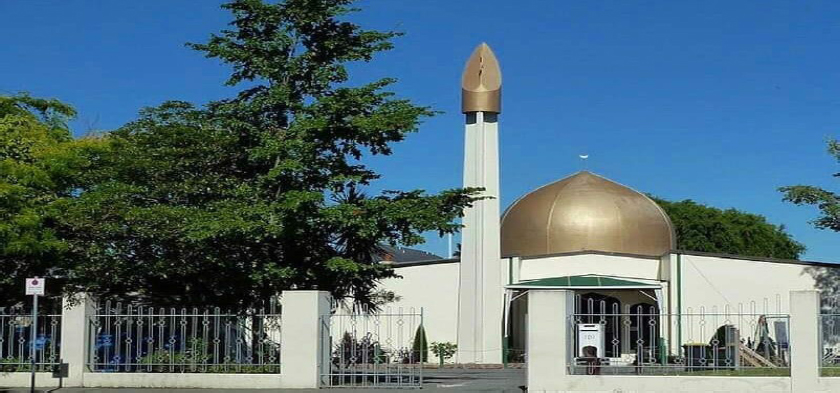
Source: Facebook/Masjid Al Noor.
- Algeria is currently at a crossroads in developing policies and programs to keep radical forces under control, and careful assessments of its developments are important.
- The many dimensions of the role and impact of social media should be a component of future conferences. While game-playing and tabletop exercises during conferences are often useful, the financial and technical support for organizing and carrying out such activities is substantial and may rule out the possibility of drawing on these approaches in future meetings sponsored by the National Academies and the RAS.
- While violent extremism continues to be an appropriate theme for U.S.–Russian interactions, the access of renegade groups to more dangerous military-style armaments and equipment deserves increased attention.
DISCLAIMER: This Proceedings of a Workshop—in Brief was prepared by Glenn Schweitzer and Flannery Wasson as a factual summary of what occurred at the meeting. The statements made are those of the rapporteurs or individual meeting participants and do not necessarily represent the views of all meeting participants; the planning committee; or the National Academies of Sciences, Engineering, and Medicine.
REVIEWERS: To ensure that it meets institutional standards for quality and objectivity, this Proceedings of a Workshop—in Brief was reviewed by Ruslan Mamedov, Russian International Affairs Council and Jeffrey Timmons, New York University, Abu Dhabi. Marilyn Baker, National Academies of Sciences, Engineering, and Medicine, served as the review coordinator.
SPONSORS: This workshop was supported by the Richard Lounsbery Foundation; the Carnegie Corporation of New York; and the National Academies of Sciences, Engineering, and Medicine.
For more information, visit http://www.nas.edu/pga/dsc.
Suggested Citation: National Academies of Sciences, Engineering, and Medicine. 2019. Developments in Violent Extremism in the Middle East and Beyond: Proceedings of a Workshop—in Brief. Washington, DC: The National Academies Press. doi: https://doi.org/10.17226/25518.
Policy and Global Affairs

Copyright 2019 by the National Academy of Sciences. All rights reserved.


