Scanning for New Evidence on the Nutrient Content of Human Milk: A Process Model for Determining Age-Specific Nutrient Requirements (2020)
Chapter: Appendix E: Data Abstraction Spreadsheet
Visit
NAP.edu/10766
to get more information about this book, to buy it in print, or to
download it as a free PDF.
Previous Chapter:
Appendix D: Revised Search Criteria
E
 Next Chapter: Appendix F: Committee Member Biographies
Suggested Citation:
"Appendix E: Data Abstraction Spreadsheet." National Academies of Sciences, Engineering, and Medicine. 2020. Scanning for New Evidence on the Nutrient Content of Human Milk: A Process Model for Determining Age-Specific Nutrient Requirements. Washington, DC: The National Academies Press.
doi: 10.17226/25943.
E
Data Abstraction Spreadsheet
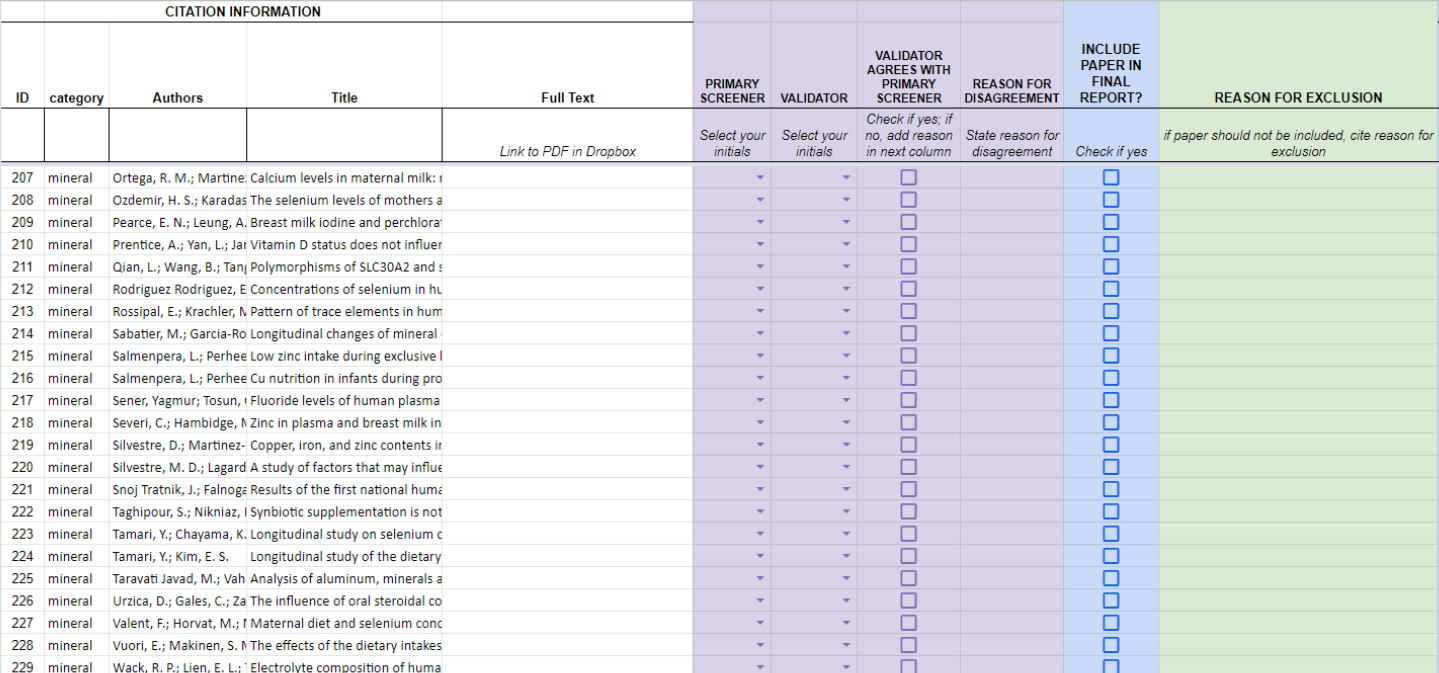
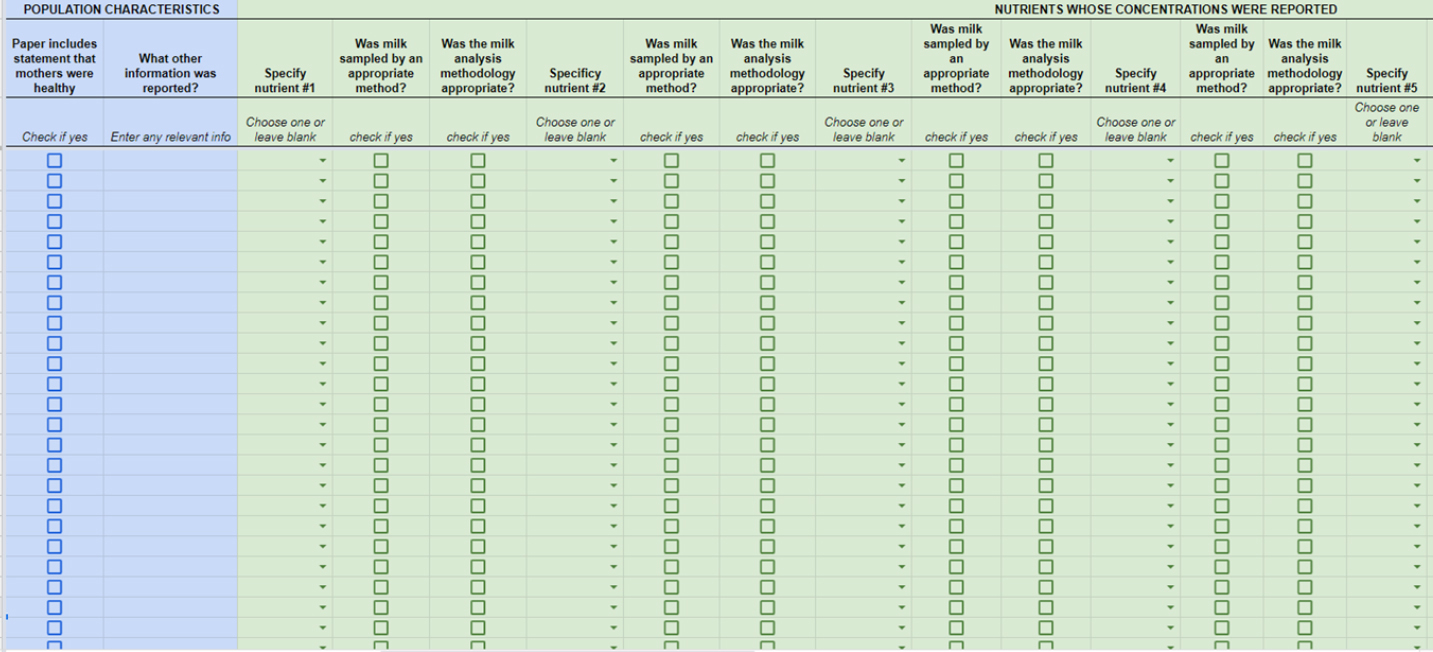
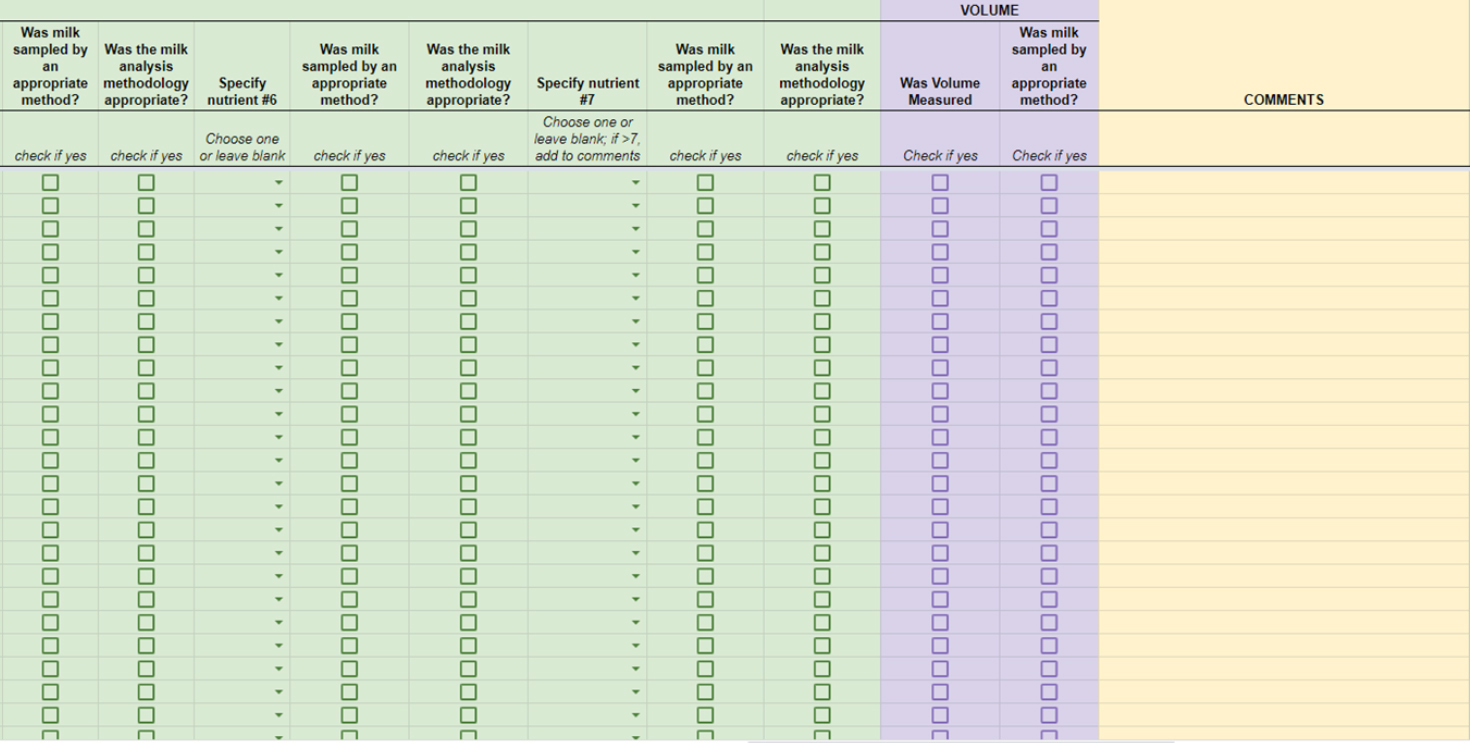
To facilitate the final screening and data abstraction process, the committee constructed an online spreadsheet using Google Sheets. A snapshot of this spreadsheet is provided below.
Suggested Citation:
"Appendix E: Data Abstraction Spreadsheet." National Academies of Sciences, Engineering, and Medicine. 2020. Scanning for New Evidence on the Nutrient Content of Human Milk: A Process Model for Determining Age-Specific Nutrient Requirements. Washington, DC: The National Academies Press.
doi: 10.17226/25943.
Suggested Citation:
"Appendix E: Data Abstraction Spreadsheet." National Academies of Sciences, Engineering, and Medicine. 2020. Scanning for New Evidence on the Nutrient Content of Human Milk: A Process Model for Determining Age-Specific Nutrient Requirements. Washington, DC: The National Academies Press.
doi: 10.17226/25943.
Suggested Citation:
"Appendix E: Data Abstraction Spreadsheet." National Academies of Sciences, Engineering, and Medicine. 2020. Scanning for New Evidence on the Nutrient Content of Human Milk: A Process Model for Determining Age-Specific Nutrient Requirements. Washington, DC: The National Academies Press.
doi: 10.17226/25943.
Suggested Citation:
"Appendix E: Data Abstraction Spreadsheet." National Academies of Sciences, Engineering, and Medicine. 2020. Scanning for New Evidence on the Nutrient Content of Human Milk: A Process Model for Determining Age-Specific Nutrient Requirements. Washington, DC: The National Academies Press.
doi: 10.17226/25943.

Suggested Citation:
"Appendix E: Data Abstraction Spreadsheet." National Academies of Sciences, Engineering, and Medicine. 2020. Scanning for New Evidence on the Nutrient Content of Human Milk: A Process Model for Determining Age-Specific Nutrient Requirements. Washington, DC: The National Academies Press.
doi: 10.17226/25943.

Suggested Citation:
"Appendix E: Data Abstraction Spreadsheet." National Academies of Sciences, Engineering, and Medicine. 2020. Scanning for New Evidence on the Nutrient Content of Human Milk: A Process Model for Determining Age-Specific Nutrient Requirements. Washington, DC: The National Academies Press.
doi: 10.17226/25943.

Suggested Citation:
"Appendix E: Data Abstraction Spreadsheet." National Academies of Sciences, Engineering, and Medicine. 2020. Scanning for New Evidence on the Nutrient Content of Human Milk: A Process Model for Determining Age-Specific Nutrient Requirements. Washington, DC: The National Academies Press.
doi: 10.17226/25943.

Subscribe to Emails from the National Academies
Stay up to date on activities, publications, and events by subscribing to email updates.