Mental Health, Wellness, and Resilience for Transit System Workers (2024)
Chapter: 2 Agency Interviews and Union Interview
CHAPTER 2
Agency Interviews and Union Interview
Introduction
As part of the research project, multiple virtual group interviews were conducted with a diverse set of transit agencies. Each agency gathered staff who were knowledgeable about the experiences of frontline workers and were able to discuss existing programs, policies, and tools that the agency had in place related to supporting workers’ mental health and wellness. The staff who participated in the agency interviews were not frontline workers themselves but rather those who managed or oversaw frontline workers. The types of staff included
- Direct managers or supervisors for frontline workers, such as street supervisors, dispatching managers, and other managers working in operational functions of transit agencies;
- Lead schedulers responsible for creating work schedules for operators;
- Trainers for frontline employees;
- Human resources (HR) managers;
- Union representatives; and
- Safety officers and transit police force commanders.
In addition to the interviews with transit agencies, there was one interview with a group of transit union leaders from around the United States. Similar questions were asked of the union representatives about the experiences of frontline transit workers and how transit agencies addressed these issues through policies and programs.
The following list includes some key observations from the interviews.
- Interviewees confirmed that many of the well-documented causes and stressors impacting transit workers’ mental health and wellness continue to be barriers and challenges. These include assaults and confrontations; PTSD from passenger events such as PUT incidents and suicides; split shifts and inconsistent work schedules contributing to poor nutrition and lack of sleep; extended periods of sitting and inactivity; lack of time for exercise; and lack of bathroom access.
- Additional causes and stressors for mental health and wellness include overall poor morale among frontline workers; feelings of loneliness and isolation; transit workforce shortages; introduction of a younger workforce and workers who are new to transit; and other cultural and diversity aspects of the workplace that can lead to conflict and miscommunication.
- The COVID-19 pandemic instilled a lot of fear and anxiety among frontline workers. Uncertainty around policies and communication contributed to their stress, in addition to the fear of exposure. As the United States continues to emerge from the pandemic, continued stress over exposure lingers. In addition, workers felt undervalued and unsupported during the height of the pandemic, and this continues to impact employee morale.
- More resources and a clear commitment from leadership are necessary for mental health, wellness, and resiliency practices to be successful and make a positive impact on frontline workers.
- Employees, unions, and leadership collaborating to develop and implement practices is critical for removing stigmas and gaining trust.
- Stigmas around mental health and confidentiality are still a barrier for some. From the top down, leaders need to demonstrate that it is acceptable, and even encouraged, to prioritize self-care.
- Better communication and marketing of existing resources are needed to increase the visibility and use of existing programs and resources; promotions should be designed with work locations, schedules, and working conditions of frontline employees in mind.
- More funding and staff resources are needed to address barriers and to develop, implement, and support programs aimed at improving mental health, wellness, and resiliency. This includes staff dedicated to implementing and monitoring holistic wellness programs.
- Agencies and union representatives expressed a need for more staff with mental health expertise (e.g., counselors and medical professionals) and a need for new training (e.g., trainings on de-escalation, sensitivity and empathy, and resiliency). Partnerships with specialized organizations could help bridge the gap in staff expertise.
- Increasing employee benefit offerings to better support and retain frontline workers is necessary. This includes incentivizing the use of wellness programming and finding ways to support staff in caregiving roles.
- Mentoring and supporting frontline workers is critical for their mental health and wellness as well as for retention. Programs to better support new workers throughout onboarding should extend beyond the initial training period. Specialized teams trained in de-escalation, mental health, and safety should be created to provide immediate and ongoing incident response.
- Agencies also noted a need to revisit operational policies and rethink how they can be modified to fit the needs of an evolving workforce. New policies and procedures should incorporate empathy and trauma-informed care in their design.
Interview Selection Approach
Transit agencies were identified as potential interview participants based on their responses to an interest form designed to assess their willingness to participate. The interest form was circulated in May 2022. Of those agencies willing to participate, 10 were selected, representing a cross section of agencies in
- Various geographies (rural, suburban, urban);
- Regions in North America (Northeast, Southeast, Midwest, Gulf, West Coast, and Northwest);
- Size (based on vehicles in maximum operation—small, medium, large);
- Mode (rail, light rail, bus, microtransit, and paratransit/demand-response);
- Union presence (unionized and nonunionized frontline workers); and
- Presence of programs, policies, or tools to address frontline employee mental health, wellness, or resilience.
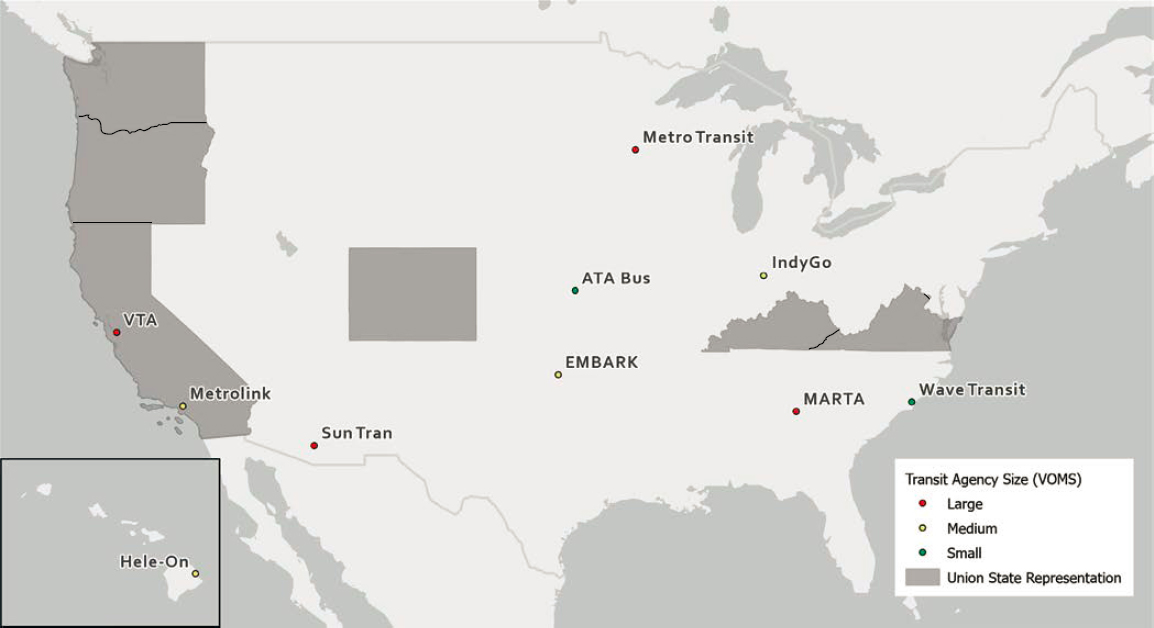
Potential agencies were contacted to schedule interviews and identify participants. In instances where the primary agency was no longer able to participate, backups were chosen from a secondary list. The agencies that were interviewed are shown in Table 2.1 and Figure 2.1.
At the request of the panel, one additional focus group session with frontline workers and two separate interviews with union representatives were conducted. These union leaders represented transit workers in a variety of modes across six states and the District of Columbia.
Defining Frontline Workers
Interviewees indicated that the definition of “frontline workers” extends far beyond people who operate transit vehicles. Frontline workers are staff that interact with the public, which can
Table 2.1. Interviewed agencies.
| Large (301 or more vehicles in max operations) | Medium (51–300 vehicles in max operations) | Small (fewer than 50 vehicles in max operations) |
|---|---|---|
| Metropolitan Atlanta Rapid Transit Authority (MARTA), Atlanta, GA | County of Hawai’i Mass Transit Agency (Hele-On), Hilo, HI | Flint Hills Area Transportation Agency (ATA Bus), Manhattan, KS |
| Metro Transit, Minneapolis/St. Paul, MN | Indianapolis Public Transportation Corporation DBA (IndyGo), Indianapolis, IN | Cape Fear Public Transportation Authority (Wave Transit), Wilmington, NC |
| Santa Clara Valley Transportation Authority (VTA), San Jose, CA | Metrolink, Los Angeles, CA | |
| Sun Tran, Tucson, AZ | Central Oklahoma Transportation and Parking Authority (EMBARK), Oklahoma City, OK |
include station agents; people who work with ticketing machines; fare inspectors; mechanics who may engage with the public while reporting on-site for vehicle or other repairs; customer service representatives; dispatchers; transit police; and other cleaning and maintenance staff. The age and education levels of frontline workers span a broad range—from 18 years to near retirement and from high school to higher levels of education, respectively. While demographic characteristics were diverse, many transit agencies noted that they have an aging workforce, particularly among vehicle operators. They also noted that since the pandemic, retirements have increased, forcing the agencies to hire younger workers more often.
Causes and Factors That Impact Mental Health
This section provides a detailed summary of factors that impact the mental health of frontline transit workers. The interviews consistently mentioned well-known, documented impacts on mental health and provided an opportunity to explore other factors that may not be as widely known or reported on (e.g., impact of balancing work with family care).
Well-Known, Documented Causes and Factors
Many factors that impact the mental health of workers are commonly associated with frontline transit work, such as
- Assaults and confrontations;
- PTSD from passenger events such as PUT incidents and suicides;
- Split shifts and inconsistent work schedules, which contribute to poor nutrition and lack of sleep;
- Poor communication between frontline workers and management;
- Not enough post-incident support;
- Not enough leadership transparency in decision-making;
- Extended periods of sitting and inactivity;
- Lack of time for exercise; and
- Lack of bathroom access.
The following subsections explore these well-known factors, introduce additional causes and factors, and explain interview findings about them in detail.
Assaults and Confrontations
Direct engagement with the public was often cited as a source of stress for frontline staff. Users of the transit system can become confrontational with operators, frontline staff, and each other, which can include physical altercations. Operators who are responsible for mentioning fare policies to riders can be met with aggressive reactions, but if they do not mention fares, they may face repercussions from their employers. One interviewee mentioned that their agency has a policy requiring operators to mention the existence of a fare, but it does not require them to enforce fare policy.
Furthermore, passengers may be experiencing mental health issues, homelessness, or substance use disorders. Transit agencies interviewed reported having more of this type of passenger since the COVID-19 pandemic, which has exacerbated frontline workers’ stress and increased the frequency of assaults and confrontations. It is difficult for frontline workers to engage with riders who may be experiencing a mental health crisis if they have insufficient training or experience.
When operators are running behind schedule, they may also be faced with irritated riders. This has increasingly been an issue because of ongoing operator shortages and cuts or reductions to service. Staff interviewed also noted that some riders who have regular contact with an operator may try to create ongoing conflicts that can escalate over time. These interactions can cause trauma to frontline workers.
PTSD
In addition to crashes, near misses, PUT incidents, attempted suicides, and deaths by suicide, frontline workers may experience or witness assaults, which can cause additional trauma. This is particularly acute in the case of operators, who may choose to leave the profession after witnessing these types of events on the job. Frontline workers need time to heal, which can be difficult given scheduling and staffing constraints.
Work Schedules
Many transit agencies interviewed were experiencing a labor shortage prior to the COVID-19 pandemic. During the pandemic, frontline workers were often the only employees at their agencies to work full-time and in person. These workers kept agencies moving and helped provide essential services to the public throughout the pandemic, while having to interact face-to-face with the public during the time of an airborne, highly infectious, and deadly pandemic.
This labor shortage has continued into the pandemic recovery period and has had far-reaching effects. The operator shortage means that operators are asked or mandated to increase their work hours. Because agencies and staff rely on seniority, newer hires are not able to select desirable schedules, which may impact recruitment and expansion of the operator pool. Interviewees noted that younger workers, especially those with children who are entering the transit industry for the first time, struggle with the variable shifts allocated to them due to their seniority status.
Route design and scheduling can also impact physical and mental health if layover locations are uncomfortable or schedules do not provide enough turnaround time. Some types of frontline workers do not receive a scheduled lunch break, while at some agencies, break time is cumulative (e.g., a half hour of break time may be composed of six five-minute layovers that may or may not actually happen, depending on real-time conditions). A growing and diverse workforce may also have requirements that remain unmet because they would necessitate complex schedule changes, such as observant Muslim drivers who need breaks to pray five times a day and workers who need agency calendars that observe non-Christian holidays.
Extended Periods of Sitting or Inactivity
Agencies discussed the physical demands of driving, which requires sitting for long periods of time with limited opportunities for exercise or movement, and the various physical and mental impacts of operating transit vehicles. The difficulty level of frontline work can vary based on the weather. One agency mentioned how operators may be subjected to varying and sometimes unpredictable weather conditions throughout the length of a shift, from sudden snow squalls to torrential downpours, making driving difficult and raising further on-the-job safety concerns beyond interaction with the public. Driving in areas with traffic congestion also impacts the mental and physical demands on operators—one agency mentioned that for people with commercial driver’s licenses (CDLs), trucking may be a more attractive option due to the type of driving involved (i.e., open roads and little need to interact with the public). Furthermore, operators are on their own most of the time, which can be isolating. One agency noted that their dispatchers do not have scheduled lunch breaks, which means they may sit at their desks for an eight-hour shift without being prompted to take a break or move around.
Lack of Exercise
Operators may choose to spend their layover time by stretching their legs and moving around, but how they spend their breaks is at their discretion. Poor weather may make operators less likely to want to spend time outside their vehicles to stretch or perform light exercises between trips. Time for movement may also be limited if routes are running late.
Lack of Bathroom Access
Almost all interviewees noted the lack of restroom access. In general, transit operators can only access facilities at the end of each run and during breaks. This lack of access can impact preexisting health conditions. During the COVID-19 pandemic, many of the usual places where operators accessed bathrooms during their layovers were closed or made inaccessible to the public. For frontline employees that do not have scheduled breaks, accessing a restroom may still be difficult, even when facilities are located on-site.
Other Factors Impacting Mental Health and Wellness
The interviews also discussed less familiar topics that impact frontline workers’ mental health and wellness, including work–life balance, other internal stressors related to the workplace, and external stressors that are not related to the workplace.
Work–Life Balance
Transit is a 24/7 job—employees may be expected or required to work nights, weekends, and holidays; work split shifts; or work overtime. The number of hours worked adds up, especially during the current workforce shortage. Meeting these scheduling demands while maintaining work–life balance is challenging for frontline workers. It is difficult to coordinate childcare, self-care, and other family care, especially if agencies are unable to accommodate time-off requests (both scheduled and unscheduled) given the industry’s labor shortage. Work schedules may also be inconsistent, which impacts quality of life and work–life balance, and new employees do not have the tenure to select more predictable work schedules. Long commute times may also result in too few hours for rest periods between shifts.
Other Internal Stressors
Interviewees described other internal stressors, which are factors that relate internally to the job and the agencies where they work. These factors include the frequency and quality of communication, especially when operators need critical, timely information about detours. Moreover, the staff of diverse agencies may have varying degrees of English proficiency, which can impact how operators and trainers interact with each other. Other interviewees discussed inconsistent communication from managers and how departmental morale impacts employees.
Some interviewees shared that frontline workers mentioned feeling lonely and isolated while performing their jobs in the field. Before the pandemic, agencies used to have gatherings or other activities at the yard or break rooms to develop a sense of community, but these stopped during the pandemic and are only recently restarting. Interviewees discussed a perceived “us vs. them” mentality between unions and agency management, which contributes to low morale and feelings of not being supported or understood, in addition to leadership’s lack of empathy for frontline employees. Both the transit agency staff and union representatives who were interviewed agreed that morale and conflict between agencies and unions were issues. Stressful events and other adverse work conditions also reportedly impact employee morale.
New operators may also experience additional stressors, including concerns related to driving incidents, point systems, feeling unprepared for the job, and a lack of support. One agency interviewee mentioned bullying that may take the form of experienced operators providing intentionally incorrect information or advice to new operators. In general, some operators mentioned that their agencies are having problems with rolling stock and other equipment failures, which impacts worker stress levels.
Some agencies purchase transit and use contractor operators. When an agency changes its contracted vendor, current employees may need to switch companies to keep their jobs. If they switch companies, they may lose established tenure or seniority and need to learn an entirely new set of protocols and procedures.
Poor morale was another topic of conversation. Agencies interviewed felt underappreciated by management and the public, compounded by more frequent issues with disruptive passengers. Employees at one agency expressed that their contributions were not taken seriously by a management team that believed anyone could do their jobs. Agencies interviewed noted the critical role that managers and supervisors can play in impacting their employees’ mental health.
External Stressors
Interviewees also discussed external stressors related to their lives outside of work. These include the provision of childcare and family care, being single parents while balancing the requirements of their jobs, and accessing healthcare. Access to childcare is particularly challenging for new operators who may have difficult work schedules. Some employees may not have equal access to healthcare if some individuals choose to be uninsured for financial or other reasons. Access to healthcare may be an overarching issue in the communities where workers live, and frontline and operator work schedules can make it difficult to access healthcare, take breaks, and exercise.
The high cost of living and lack of affordable housing were mentioned as stressors by one interviewed agency. Their frontline workers could not afford to live close to work, and they had long commutes from housing that was suitable for them and their families.
The COVID-19 pandemic produced various stressors. Employees worried about being infected and losing friends, family, and colleagues. Agencies were frequently short-staffed during outbreaks and tried to adapt to the changing course of the pandemic. One agency split employees for two shifts across buildings so that each building could be cleaned before the next shift came, but it weighed on employees to constantly bounce between two locations. Where possible, agencies instituted work-from-home policies, but not all employees could take advantage of them. Other employees abused work-from-home policies, which created animosity and stress among employees. At another agency, state-mandated COVID-19 sick leave (80 hours) further exacerbated the workforce shortage and led to absenteeism because people took all the leave they were given.
Impact of COVID-19 Pandemic on Mental Health
The COVID-19 pandemic profoundly impacted frontline transit workers. Seemingly overnight, these employees found themselves at the forefront of the United States’ response to a novel threat and responsible for transporting essential personnel to their places of work. This role left them vulnerable to infection at a time when it was unclear what, if any, measures effectively mitigated the spread of the virus. Understandably, frontline transit workers reported the emergence of new fears and anxieties associated with their duties; in addition to their routine stressors, workers were afraid of catching a potentially deadly virus and spreading it to their loved ones. Many workers confronted these fears when they contracted COVID-19; far too many also saw their fears intensified by the loss of coworkers, family, and friends.
Compounding this fear, several interviewees mentioned how uncertainty exacerbated their anxieties. Particularly early in the pandemic, rapidly changing restrictions and conflicting messaging from local, state, and federal health officials made it difficult for frontline transit employees to know what was being done to keep them safe. Other interviewees reported frustrations with the quality and consistency of contact tracing at their agency, which made them wonder if administrative failures were leaving them unnecessarily vulnerable.
In addition to the emergence of new fears and anxieties, the COVID-19 pandemic forced frontline transit workers to cope with exhausting, ever-changing logistical challenges. Despite newly limited transit service, the agencies interviewed almost universally reported issues associated with short staffing throughout the pandemic. Interviewees noted that a substantial number of employees resigned due to medical concerns or new demands in their personal lives (e.g., homeschooling their children), while the remaining workforce contended with further staffing issues associated with routine outbreaks. One agency reported that entire departments were out sick at times during the pandemic. Efforts to avoid such a situation had their own challenges—one
agency rotated shifts of train dispatchers through two different offices to limit the sharing of spaces and provide time for cleaning. However, this disrupted the day-to-day routines of these employees and complicated turnover between shifts by forcing employees to transmit notes from one location to another at the end of their shift, a task that would ordinarily happen collaboratively, in person. The pandemic complicated even routine challenges, such as finding a place to use the restroom; operators at one agency cited that the closure of gas stations and restaurants further limited the number of bathrooms that were available.
Beyond the fear and anxiety associated with infection and logistical challenges, low morale was cited more than any other impact of COVID-19 on frontline transit employees. Since workers were too frequently taken for granted before being dubbed essential workers and asked to work through a pandemic, many interviewees have become more aware that frontline workers believe their work is unappreciated. While countless factors likely contribute to this sentiment, the agency staff interviewed cited increasing demands of the job and a loss of community. A workforce shortage, exacerbated by rolling absences attributable to sickness, resulted in mandatory overtime for those available on any given day. Finally, the loss of coworkers and restrictions that prevented gatherings, from agency-sponsored potlucks to informal games of dominoes, impacted employee comradery and isolated employees from their support systems.
Many agencies also reported that conflict strained frontline workers’ well-being throughout the pandemic. When the TSA required masks on public conveyances, operators reported frequent conflicts with passengers who refused to comply with the mandate. In general, frontline transit workers felt that dealing with unruly passengers became a more regular occurrence during the pandemic. Other conflicts stemmed from within the agencies themselves; at several agencies, frontline workers reported feeling as though administrative staff were taking advantage of the opportunity to work remotely, which generated animosity. Subsequent perceived failures to adequately recognize the sacrifices of those working in person further strained relationships, resulting in conflict.
In contrast to the overwhelmingly negative experiences reported by many frontline transit employees, some interviewees highlighted positive moments. Frontline workers at one agency transported meals to seniors, which reportedly had positive impacts on their mental health. Similarly, some agencies reported that the implementation of policies and mitigations designed to keep workers safe (e.g., installing protective barriers and barring passengers from sitting in the first few rows) helped alleviate stressors.
Agency Barriers to Recruitment and Retention
In addition to the causes and factors mentioned earlier, agencies face a variety of other barriers to recruiting and retaining frontline transit workers. Causes and factors that impact mental health can also play a role in either retaining employees or preventing potential recruits from taking a position due to concern about the job’s impacts on their health.
Agencies and union representatives interviewed referenced certain safety concerns pertinent to recruitment and retention. These included concerns about contracting COVID-19 and working in a public-facing role during the pandemic; fear of being assaulted; the safety and quality of equipment being operated; concerns among women operators of driving at night; and concerns about being responsible for potentially hurting someone with the vehicle. In addition, multiple agencies and union representatives noted that the stress of interacting with members of the public could impact worker retention due to safety concerns.
Other working conditions—such as scheduling—can also be significant barriers to recruitment and retention, especially for newer workers who are often assigned the least desirable schedules.
For example, agencies report difficulty recruiting and retaining workers who are caregivers for family members, such as children or older adult relatives. Work schedule challenges faced by new workers include inconsistent schedules, split shifts, and weekend or late-night work.
As noted by agencies and union representatives, the job market and pay were the most frequently cited barriers to recruiting and retaining frontline workers. One agency noted that there are not enough people looking for jobs. Others noted that service work is not as attractive to younger generations, and driving a bus was perceived as a more prestigious position in the past. Uncompetitive pay was noted as the largest barrier to recruitment and retention. Despite recent increases in signing bonuses and pay, agencies still have trouble recruiting enough workers. Agencies noted that the lower pay in transit compared to higher pay offered at other jobs is a large contributing factor. The schedule for raises can also be a disincentive to work in transit, if raises are not scheduled frequently enough to be competitive.
Competing jobs in the transportation industry are another significant barrier. Many agencies offer paid CDL training, and some workers use this as an opportunity to receive their CDL and leave their agency—either to start their own business or apply for other jobs that require CDLs (i.e., jobs that are higher paying or less stressful than being a transit operator, such as trucking). Multiple agencies noted that driving a municipal trash truck, for example, requires a CDL and pays similarly to being a bus operator without having weekend shifts or difficult passengers.
Some agencies and union representatives also drew attention to successful recruitment and retention programs. One union local started a CDL training program at their union hall, which received high levels of interest and participation from the community. Agencies and union representatives noted that supporting workers through mentorship programs and clear career ladders that set a path for advancement could make a substantial difference in retaining workers. (For example, see the exemplary program from the Santa Clara Valley Transportation Authority [VTA] on training and mentorship profiled later in this chapter.)
Practices: Current and Proposed
Many contributing factors to poor mental health and wellness among frontline workers are rooted in policies, practices, and procedures of the workplace, as well as factors outside of work. While counseling and EAP services may directly address mental health and wellness, larger efforts to resolve root causes of stressors were the main outcome of the interviews with agencies and union representatives. The following practice summary includes direct and indirect solutions for improving mental health and wellness noted by transit agencies and union representatives. Some practices were already in place, while others were noted as in-progress or aspirational programs, policies, or practices that the interviewed officials thought would improve employees’ mental health and wellness.
The practices are organized into eight categories:
- Employee assistance programs,
- Wellness programs,
- Agency-provided health services,
- Communications and marketing of resources,
- Intervention training and support,
- Operations policies,
- Increased benefits, and
- Mentoring and peer programs.
Also included in this section are text boxes that highlight exemplary programs or initiatives undertaken by agencies.
Exemplary Practice: Using Technology to Connect Employees with Support
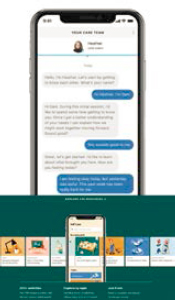
The Metropolitan Atlanta Rapid Transit Authority (MARTA) EAP includes numerous appbased services, including Ginger, which provides employees with roundtheclock, textbased emotional support coaching.
Exemplary Practice: Increased Access to Mental Health Services and Trained Professionals
The Santa Clara Valley Transportation Authority (VTA), in partnership with the Amalgamated Transit Union (ATU) Local 265, supplements their EAP with external resources that allow employees and their family members to work with therapists through a resilience center, located off agency property. These resources were established following a mass shooting at their Guadalupe Division facility, in collaboration with California State Senator Dave Cortese. VTA also hired a licensed psychologist to be onsite and support employees as they recover from the trauma caused by the mass shooting event.
Employee Assistance Programs
Employee assistance programs (EAPs) enable employees, and often their immediate family members, to quickly connect with a trained professional to address specific issues affecting their mental health or well-being. Generally, these programs offer a set number of counseling sessions per issue, per year. While specific resources vary considerably, EAPs generally offer a phone number (staffed around the clock) or website that serves as an initial contact for individuals in crisis, and most programs aim to connect clients with a mental health professional in less than 24 hours. For anyone who has dealt with the mental healthcare system, the benefit of an EAP is immediately evident; rather than attempting to navigate health insurance portals to call therapists who are not taking new patients, individuals quickly connect with professionals to address emergent issues. For frontline transit workers with irregular schedules, the ability to reach out at any time of day is even more critical.
All interviewed agencies offered EAPs, but resources varied by program. While the most robust EAPs were procured independently of any other employee benefits, some agencies offered a more limited EAP through employee health insurance. The most robust EAPs included in-person counseling for employees and their family members, though many EAPs focused on virtual services or limit services to employees only. Despite the association of in-person counseling with more robust programs, frontline transit workers appreciated the convenience of virtual services, as their schedules and working environment make it difficult or impossible to attend in-person sessions during business hours. Accordingly, some agencies prioritized the procurement of EAPs with considerable online resources, including mobile applications and websites for accessing services and learning about available resources. Recognizing the unique needs of many transit employees, who often function as both transportation professionals and de facto social workers, one transit agency interviewed is considering offering the same EAP that the municipality offers to first responders (i.e., police officers and firefighters) so it can increase the resources for operators and ensure the well-being of its employees.
Despite the broad availability of EAPs for frontline transit workers, interviewees suggested that the stigma associated with seeking mental health treatment deters individuals from utilizing their resources. Accordingly, while agencies are often aware of incidents that expose employees to trauma (e.g., PUT incidents), mandatory EAP referrals occur only under rare circumstances. The stigma further discourages resource use because employees often feel uncomfortable utilizing these services, believing that the agency will know they have done so. Although most agencies would encourage their employees to seek help with managing their stressors, a perception persists that this could earn them an unfavorable label or result in disciplinary action.
Communicating the existence of services offered through their EAP presents another challenge for agencies. While many agency employees may be readily reachable via email, frontline transit workers often do not have work email addresses, and those who do have them rarely use this means of communication. Accordingly, agencies must get creative in marketing these programs to the workers most likely to need their services. In addition to a robust website and a monthly newsletter that links employees to various resources, one
transit agency interviewed uses display kiosks located throughout the agency’s properties to advertise its EAP.
Exemplary Practice: Incentives for Wellness Program Participation
The Metropolitan Atlanta Rapid Transit Authority (MARTA) provides employees and covered spouses with up to $250 per person for completing biometric and cancer screenings, taking a total health assessment, and completing a lifestyle coaching session.
Wellness Programs
Wellness programs provide an opportunity for transit agencies to encourage their employees to engage in habits that promote health and well-being. While some agencies strongly incentivized employees to participate (e.g., by increasing health insurance premiums for those who do not participate or providing cash incentives based on certain behaviors), others offered programs on a strictly voluntary basis. These programs generally connected employees with wellness coaches, who can provide referrals to nutritionists and exercise guides. While some agencies employed a wellness coordinator, these programs may also be offered in coordination with local organizations (e.g., YMCA). Some of the most robust programs included weekly sessions with an on-site psychiatrist, who talks to attendees about well-being topics; to maximize participation, these sessions were held at varying times and locations.
Wellness programs deployed by the interviewed transit agencies often included educational programming, such as lunch-and-learns and virtual webinars. However, the use of these resources among frontline workers was markedly lower than workers in office settings at the agency.
Interviewees also reported challenges with the maintenance of these programs, especially if their agency did not have a wellness coordinator. At agencies with a wellness coordinator, employees reported that additional effort and resources to engage with employees were necessary for it to truly be successful.
Agency-Provided Health Services
Agency-provided health clinics offer employees convenient access to healthcare. Services may be offered for free to all employees and often to their families as well. On-site services reduce the need for frontline workers to travel off-site to other health facilities to receive care, especially if there are satellite services offered throughout the service area. (Employees may not necessarily start or end their day at a centralized building, such as a bus garage.) Services can include annual physicals, sick visits, wellness counseling and support, and other types of counseling and therapy. Providing more accessible healthcare services is one way that interviewed agencies noted they could better support the physical and mental well-being of their employees.
Exemplary Practice: On-Site Services
Indianapolis Public Transportation Corporation DBA (IndyGo) offers an onsite health clinic with clinical staff, including nurse practitioners and doctors who are available for appointments. Employees receive access to physicals and sick visits. The health clinic is free and open to all employees, even if they do not take part in the companysponsored health insurance. Employee family members who enroll in the employee’s companysponsored health insurance also use the clinic at no cost. IndyGo staff noted that the clinic provides a convenient way for employees to access health services because there is easy access at their workplace. In addition to the main clinic, IndyGo offers satellite locations throughout the city. Clinic hours vary to accommodate frontline workers’ shifts.
Communications and Marketing of Resources
Many transit agencies have a deluge of resources, which can be an overwhelming challenge for employees to navigate, especially if the resources are available in different locations. Some agencies distributed e-newsletters with information about resources or provided resources on intranets. However, some employees may not have access to these formats, or they might not have agency email addresses. Another agency had physical information kiosks throughout their properties. Agencies and union representatives acknowledged the challenges with communicating effectively and frequently about resources available to employees. Agencies want to facilitate the exchange of information about available resources with pared-down, quick reference guides and marketing campaigns aimed at informing staff of their options. One group of interviewees suggested developing a list of key contacts the size of a business card that frontline workers could keep in their wallets and easily refer to in case of an emergency.
Exemplary Practice: Creative Marketing
IndyGo’s “Toilet Talk” is a pamphlet on health and wellness topics displayed in restrooms behind plexiglass. The monthly flyers include information on where employees can go for support.

Exemplary Practice: Resiliency Center
Workers at VTA have access to therapists at a resiliency center provided by the county in collaboration with the ATU Local 265. While not an agencyprovided service, the center offers walkin support to employees and their family members. Connecting to county services that are not under the umbrella of their transit agency may make some employees feel more comfortable seeking support compared to EAPs.
Exemplary Practice: Critical Incident Response Teams
VTA reported employing a critical incident response team that includes police, safety personnel, and supervisors with specialized training to respond immediately in case of a major incident. The team supports frontline workers and helps guide workers and the public in responding to the incident.
Intervention Training and Support
Frontline workers face daily incidents (e.g., assaults, confrontations, riders with substance use issues, collisions, and near misses) that cause stress and trauma, and potentially require follow-up and documentation procedures. Agencies and union representatives noted that frontline workers—especially those who are new to the job—needed specialized, timely, and ongoing support. For traumatic incidents, such as PUT, passenger suicide, and assault, agencies expressed a desire to have specialized teams that could intervene quickly to provide support. This could range from on-site response by police and a supervisor to immediate psychological support from a trained counselor for particularly traumatic incidents. Agencies also noted that, even for less traumatic incidents, frontline workers may still need support from a mentor or supervisor to navigate the process following the incident. This person
would help workers understand what to do next, including how to access EAP resources, complete documentation or other procedural items, and go through the next steps in the process.
Training for de-escalation, resiliency, sensitivity, and working with passengers experiencing a mental health crisis were also noted by those interviewed. Frontline workers do not always feel equipped with the skills and tools needed to support the passengers and public they serve. However, agencies acknowledged that most frontline workers are dispersed, and delivering consistent and cohesive training is challenging, especially when agencies are experiencing workforce shortages.
Agencies noted that frontline workers, particularly maintenance and cleaning staff, were increasingly encountering people experiencing homelessness. Workers must engage with unhoused people in transit centers and stations as well as on vehicles. Those interviewed thought additional training could empower frontline staff to navigate the somewhat contentious encounters and connect individuals to other services. Also noted as potential solutions were establishing a partnership with a social services provider or having a trained support specialist who could be contacted by frontline workers to come on-site and assist the individual in need.
Exemplary Practice: Red Kite Project Resiliency Training
Metro Transit in Minneapolis partnered with the Red Kite Project to offer operators a threeday training on how to be resilient in their workplace. The training was confidential and allowed space for employees to freely discuss their challenges at work without fear of repercussions. The training also included deescalation tactics that operators can deploy in the field to mitigate passenger incidents.
Operations Policies
Work schedules were often noted as one of the biggest contributing factors to poor mental health and wellness among frontline workers, especially among operators. Agencies and union representatives shared a strong desire to improve work–life balance through policies and procedures that respond to and support frontline workers who feel isolated.
Modifying work-schedule practices and work selection (i.e., pick) were among the interviewees’ top discussion items. One agency described a pilot effort to design compressed work schedules,
Exemplary Practice: Lactation Van for Nursing Operators
To support nursing parents in the field, TriMet in Portland, Oregon, transformed paratransit vans into mobile lactation units that offer secure, comfortable, and convenient places to pump while completing a driving shift. Each van’s services are scheduled in coordination with nursing parents’ shift times so they can meet operators during scheduled breaks. Extraboard operators drive the vans to and from relief locations and may stand in while the nursing operator pumps. The program was established because the agency became aware that nursing operators were missing work and needed more support to be able to pump while at work. Feedback on the program has been very positive. The lactation vans are marketed to employees and used in recruitment.

allowing more days off for operators. This pilot included 4 shifts of 10 hours rather than a 5-day workweek. Another agency noted that they were shifting to a roster-style selection over a cafeteria-style selection so they could provide more cohesive work schedules with some time off on evenings or weekends. De-emphasis on seniority when it comes to selecting or picking work schedules for operators was also noted. Many agencies and unions use a seniority program to select work shifts, leaving the newest employees—who are generally younger and more likely to have childcare responsibilities—with the least desirable schedules. To the extent possible, the agencies interviewed suggested designing work schedules to provide consistent shifts by time of day. Agencies also cited decreasing reliance on split shifts and increasing the amount of layover and break time for operators as potential solutions to improve work schedules.
Several interviewees mentioned the importance of supporting frontline workers who are parents or caregivers. They suggested that agencies design work schedules that allow caregivers to continue working and provide additional accommodations to parents, such as support for people who are nursing.
Union and agency interviewees noted the importance of collaboration in addressing operations policies and procedures. When modifying existing or developing new standard operating procedures and policies, both the union and employees need to be directly engaged in the process. This can be done through a committee with joint participation from leadership and frontline workers or though other feedback mechanisms, such as surveys.
Exemplary Practice: Mental Health Benefits
VTA is piloting a program that provides three paid mental health days per year, no questions asked and without penalty (i.e., no points), for managing sudden trauma and stress.
Increased Benefits
Frontline transit employees interviewed mentioned several ways in which increasing benefits can alleviate the stressors associated with their work. For example, increasing paid time off mitigates the strain imposed by long and irregular hours. Providing sick time for employees who contract COVID-19 helps alleviate some of the anxiety associated with contracting prolonged cases. Mental health days provide ways of coping with the stressors commonly associated with their work. Childcare programs—either provided on-site or subsidized by the agency—as well as gender-agnostic programs that offer more parental leave or part-time/flexible work after having or adopting a child ensure that frontline transit workers with children do not face undue burdens simply because of their work. Finally, when possible, benefits need to be extended to family members of frontline transit workers (e.g., EAPs), as they also face unique stressors.
Exemplary Practice: Training and Mentorship for Retention and Advancement
VTA, in collaboration with ATU Local 265, established the Joint Workforce Investment (JWI) program, which provides training and mentorship to help ease new employees into their job and to provide opportunities for upward mobility and continual growth. New operators are each assigned a mentor, and there is a lead mentor in each yard who supervises the process. JWI also includes educational components and supports workers’ health and wellness, retention, and career longevity. The program has national and international recognition and is a success story for negotiation between labor and management.
Mentoring and Peer Programs
Programs for new hires aim to ease them into their job and provide necessary support and guidance. Many agencies have established mentorship programs, in which new operators are assigned a trained mentor during the training and onboarding process. Mentor duties may include spending the first day with a new operator on a ride-along, taking future ride-along trips, and remaining in constant contact through regular check-ins. Unions have played a large role in advocating for and establishing these programs. Labor and management may work together to review mentor applications and select candidates who would best fulfill the mentorship needs of new operators (e.g., based on expertise or personality). Agencies also offer peer-support programs, which are sometimes connected to an EAP.
Considerations for Developing Practices
When asked what agencies should consider when developing practices to address frontline workers’ mental health and wellness, many interviewees noted the need for collaboration in program and policy development. This includes engaging with employees as well as union and agency leadership. Employees felt that a top-down approach resulted in ineffective practices, at best, and fostered resentment from frontline workers when policies or programs were ineffective or did not adequately consider their needs and work environment. Collaboration on developing and implementing policies and programs was noted as a way to further build trust between leadership and employees.
More than one agency interviewed mentioned using a committee to develop or modify policies and programs. These committees—ideally staffed by agency leadership, union representatives, and frontline workers or their supervisors—provide a forum for collaboratively addressing the issues facing frontline workers through policy, tools, and programming. Most interviewees reported that agency leadership retains the final say on implementing or accepting recommendations from committees; however, leadership generally accepted such recommendations.
Another interviewee noted that their agency has started integrating trauma-informed perspectives into the development of their training program. Trauma-informed practices actively recognize the presence of trauma and acknowledge the role trauma may play when an individual is in certain situations.
Challenges and Gaps
While many of the agencies interviewed had exemplary programs in place, they acknowledged that not enough was being done to address the mental health and wellness of frontline workers. Several overarching challenges and gaps were identified, including access to information and services, EAPs, lack of expertise, union and work rule conflicts, leadership buy-in, and the overall need for resources and funding.
Equal Access
Multiple interviewees discussed the varying ways in which employees were treated by their agency. Overall treatment and access to resources varied by shift, job type, and location (e.g., employees working in offices at headquarters vs. workers based in garages). These differences were most apparent during the COVID-19 pandemic—while some employees were able to work from home, most frontline workers reported to work in person for most or all of the pandemic. This difference in treatment, combined with the specific risks of close public contact, had a significant impact on frontline worker morale.
EAPs
Not all EAPs are created equal. One agency mentioned that while it has an EAP, the level of service is inadequate. This agency stated that it left some employees scrambling to fill in the gaps (e.g., ensuring that mandatory drug testing was completed after an incident or responding to emergencies that would otherwise be discussed with an EAP counselor). The inefficient and inadequate EAP caused additional stress and work for other employees and made it difficult to access care in a timely manner. One agency mentioned that if any employees get into a physical altercation or fail to de-escalate a situation, they may have to undergo a mandatory referral process. This means the EAP counselor might require them to attend additional sessions before returning to the job, and employees have not always felt comfortable with these assessments.
Although most interviewees were familiar with EAPs and recognized that their agency had some marketing efforts, not all interviewees were aware of their agency’s offerings. This indicates a potential need for additional marketing and awareness. Interviewees also described concerns about using an agency-sponsored EAP. There is a perception that the topics and details discussed in counselor sessions or while using EAP services will be shared with the agency. Interviewees and union representatives discussed employees’ mistrust for anything that is associated with the agency, as well as employees’ concerns that information revealed in a session could be used against them or, worst case, cause them to lose their jobs or suffer other professional repercussions. One solution is to distribute information about community-based resources to staff, who can use these external resources to access assistance outside of their agency’s offerings.
Interviewees often addressed the stigma surrounding mental health and wellness, which also creates a barrier. Employees may not be able to access resources and information on their own if they are not aware of the types of resources available and how to access them. They may not feel comfortable reaching out to a supervisor or manager for more information. Scheduling constraints may also make it difficult for employees to utilize available resources. For example, if employees work extensive overtime, it can be difficult or impossible to find time to see anyone in person.
Expertise
Many interviewees said that employees felt they or others were insufficiently prepared for their jobs and expressed a desire for additional preparation and training across the board. Training could focus on incident response, de-escalation, and sensitivity or empathy training. Multiple agencies suggested having specialized staff for critical incident support teams. Frontline workers described the range of distressing encounters they may experience while performing their jobs (e.g., near misses, collisions, PUT incidents, and suicides) and the need for additional support. Many interviewees expressed their support for on-site counselors or access to other specialized experts to provide support.
Considerations Regarding Unions, Work Rules, and Scheduling
Increasing trust between represented employees, unions, and agencies is critical for building better relationships—conversations regarding concerns with EAPs and privacy highlighted a need for mutual trust between these key stakeholders. Some interviewees called for closer collaboration between unions and agency management.
In addition, interviewees noted that agencies need to revisit traditional approaches to work rules and scheduling practices to accommodate, attract, and retain a younger workforce that is new to transit. This included rethinking point systems, building work schedules to accommodate caregivers, and revisiting the use of seniority in work-schedule selection.
Leadership and Union Buy-In
Several agencies expressed that leadership buy-in is important for initiatives aimed at mental health, wellness, and resiliency. Interviewees believe that agency leadership buy-in is required to move the needle on these topics and to demonstrate that mental health and wellness are a priority across the workforce. Buy-in includes destigmatizing mental health assistance and ensuring that adequate resources are available. Agency management has a critical role to play in establishing a culture that supports mental health among all employees. One agency said that when their CEO emphasized addressing mental health and gave the chief of human resources the freedom and budget to roll out better processes, it demonstrated that leadership is championing mental health.
Resources and Funding
Funding was cited as the main impediment to implementing more robust health, wellness, and resilience programming. If agencies do not have in-house expertise, they would need to engage external providers at cost. If agencies do have in-house expertise, they may not have sufficient staffing to accommodate the mental health needs of their employees. As noted in previous sections, employees recognize when treatment across shifts, jobs, and working locations is unequal. Dedicating time and resources to mental health, wellness, and resiliency initiatives demonstrates an agency’s commitment to the frontline workforce.
Findings and Conclusions from Interviews
The interviews provided an opportunity to directly engage with transit agency and union leadership about the mental health and well-being of frontline transit workers. Interviewees confirmed many of the stressors identified in the literature, provided additional qualitative information about lesser-known stressors, and suggested possible strategies to improve the working environment. The following list contains key findings from the interviews with agency staff and union representatives.
- Interviewees confirmed that many of the well-researched causes and stressors impacting transit workers’ mental health and wellness are still relevant barriers and challenges. These include assaults and confrontations; PTSD from passenger events such as PUT incidents and suicides; split shifts and inconsistent work schedules, which contribute to poor nutrition and lack of sleep; extended periods of sitting and inactivity; lack of time for exercise; and lack of bathroom access.
- Additional causes and stressors that affect mental health and wellness include overall poor morale among frontline workers; feelings of loneliness and isolation; transit workforce shortages; the introduction of a younger workforce and workers who are new to transit; and other cultural and diversity aspects of the workplace that can lead to conflict and miscommunication.
- The COVID-19 pandemic instilled a lot of fear and anxiety among frontline workers. In addition to fear of exposure, uncertainty around policies and communication contributed to their stress. As the United States continues to emerge from the pandemic, ongoing stress over exposure lingers, as do feelings of being undervalued and unsupported during the height of the pandemic—all of which continues to impact employee morale.
- More resources and a clear commitment from leadership are necessary for mental health, wellness, and resiliency practices to be successful and make a positive impact on frontline workers.
- Collaboration in the development and implementation of practices is critical to removing stigmas and gaining trust between employees, unions, and leadership.
- The stigma around mental health and confidentiality is still a barrier for some who would benefit from seeking support. From the top down, leaders need to demonstrate that prioritizing self-care is acceptable and even encouraged.
- Better communication and marketing are needed to increase the visibility and utilization of existing programs and resources; promotion efforts should be designed with work locations, schedules, and working conditions of frontline employees in mind.
- More funding and staff resources are needed to address barriers and to develop, implement, and support programs aimed at improving mental health, wellness, and resiliency. This includes staff dedicated to implementing and monitoring holistic wellness programs.
- Agencies and union representatives expressed a need for more mental health expertise on staff (e.g., counselors and medical professionals) and the need for new training (e.g., trainings on de-escalation, sensitivity and empathy, and resiliency). Partnerships with specialized organizations could help bridge the gap in expertise on staff.
- Increasing the benefit offerings to better support, and ultimately retain, frontline workers is a must. This includes incentivizing the use of wellness programming and finding ways to support staff in caregiving roles.
- Mentoring and supporting frontline workers is critical for their mental health and wellness as well as for retention. Programs to better support new workers throughout onboarding should extend beyond the initial training period. Specialized teams who are trained in de-escalation, mental health, and safety should be created to provide immediate and ongoing incident response.
- Agencies also noted a need to revisit operational policies and rethink how they can be modified to fit the needs of an evolving workforce. New policies and procedures need to incorporate empathy and trauma-informed care in their design.


