Active Traffic Management Strategies: A Planning and Evaluation Guide (2024)
Chapter: 3 Enabling ATM

CHAPTER 3
Enabling ATM

The term “enabler” refers to something that makes it possible for a particular thing to be done (Cambridge University Press and Assessment 2023). An enabler in the context of active traffic management (ATM) refers to essential components, systems, or conditions that must be in place to make operational strategies for managing traffic feasible and effective. ATM encompasses a range of dynamic strategies aimed at optimizing traffic flow, reducing congestion, improving safety, and enhancing overall transportation efficiency. However, for these strategies to be successfully implemented, several fundamental elements need to be in place, serving as the foundation upon which ATM can operate optimally. This chapter delves into the high-level, holistic enablers, exploring how they contribute to the viability and success of ATM in the ever-evolving transportation landscapes.
Chapter Highlights and Objectives
This chapter outlines the foundational transportation infrastructure that can enable the development and deployment of ATM in a region or corridor. Many of the enablers are likely already part of an agency’s planning processes, its approach to TSMO, and other activities that address the challenges of complex operations. Thus, the application of these processes and enablers to ATM is a logical step in the evolution toward dynamic and proactive operations. The remainder of this chapter presents the following sections:
- Setting Up for ATM Success. A discussion on foundational agency needs when considering ATM, including institutional capability, planning tools for ATM, and planning processes for ATM operations.
- General Considerations. A review of general considerations, including balancing priorities, establishing partnerships, ensuring staffing needs and capabilities, and securing financing and funding—all of which facilitate the successful implementation of ATM within a region.
- Final Remarks. A summary discussion on the importance of enabling ATM for overall success.
- Chapter 3 References. A list of all references cited within the chapter.
Setting Up for ATM Success
The planning and development of ATM strategies require several key considerations and resources from the perspective of the transportation agency. One essential factor is institutional capability, which refers to the ability of an organization or agency to effectively plan, implement, and manage ATM strategies over the long term. This capability includes having the necessary tools and expertise for planning, such as traffic simulation models and performance measures; the ability to collaborate with other agencies and stakeholders; and the business processes and workforce in place to support ATM development, deployment, and operations.

Planning for operations is another critical aspect of implementing ATM because it involves developing procedures and protocols for responding to incidents and managing traffic flow in real time in a dynamic environment. Additionally, agencies need to consider various planning scenarios to effectively plan for ATM. Ultimately, a comprehensive approach to ATM planning and implementation can help improve safety, reduce congestion, and enhance mobility on roadways. The following sections provide a discussion on these specific agency needs that can help set the stage for successful ATM deployments that meet the overall mobility and safety goals and objectives for a region. While these considerations are not necessarily different from the considerations that an agency might address as part of a broader TSMO program, they represent a slightly different lens through which an agency might view ATM as a potential operational and/or safety solution. Through an objective-driven, performance-based approach to planning for TSMO, ATM can emerge as a viable strategy for implementation.
The Need for Institutional Capability
In the realm of complex transportation operations in which ATM resides, institutional capability plays a pivotal role in determining the efficiency, effectiveness, and overall success of various ATM strategies as well as the broader transportation system or network. Institutional capability refers to the collective capacity and competence of organizations, agencies, and stakeholders involved in planning, managing, and executing transportation activities. It encompasses a wide range of factors, including regulatory frameworks, governance structures, workforce expertise, technological infrastructures, and collaborative relationships. The ability of transportation agencies to coordinate, adapt, and innovate within the dynamic and multifaceted landscape of transportation is crucial for ensuring the safe, reliable, and sustainable movement of people and goods in an increasingly interconnected world.
ATM strategies offer innovative solutions to temporarily increase capacity during peak times of demand and can vary by complexity based on the capabilities of a transportation agency.
ATM is a significantly more integrated approach toward real-time operations than traditional TSMO and rests on a foundation of robust systems capability and management. The current reality of available funding, right-of-way constraints, and environmental impacts limit the ability of agencies to implement traditional capacity improvements, such as widening to add new lanes to meet increasing traffic demands. Thus, a significant shift is needed from the historic build and maintain mission of many organizations to a more formal, programmatic approach to operating facilities for improved travel time reliability, increased safety, and decreased congestion. ATM strategies offer innovative solutions to temporarily increase capacity during peak times of demand and are often lower-cost, quicker solutions that can be implemented within the existing right-of-way. The nature and complexity of ATM strategy operations can vary based on the capabilities of a transportation agency. Additional information on the stages of the active management continuum is provided in Chapter 2—“ATM Strategies.” The approach toward aggressively and proactively managing transportation systems and ATM specifically, is an important mission for many agencies.
Assessing Institutional Capability
Institutional capability maturity models (CMMs) can assist transportation agency managers with self-assessments of their organization’s development in six dimensions: (1) business processes, (2) systems and technology, (3) performance measurement, (4) culture, (5) organization and workforce, and (6) collaboration. Such tools can help guide the development of institutional architectures and a more formal systems operations and management program from which ATM strategies might emerge as viable operational alternatives (TRB 2015; Kimley-Horn and PB Consultants 2011; Parsons Brinckerhoff et al. 2011b; AASHTO 2023). More broadly, these
tools can be used by agencies to address the nontechnological challenges involved in creating a TSMO program. Moving TSMO activities and projects into mainstream agency practice is a key pathway to agency success in adopting and implementing ATM as a formal consensus-driven approach to identify the institutional barriers that prevent the successful implementation of operational strategies or programs. The levels of organizational maturity defined by the FHWA CMM, as shown in Figure 3-1, move from Level 1 with programs mostly champion-driven to Level 2 with some developed processes, then to Level 3 where performance is measured and programs are formally budgeted, and finally, to Level 4 where formal partnerships exist and performance-based improvements are the norm. The overall approach to assessing an agency’s capability is technology agnostic and focuses on processes, policies, concepts, and approaches to advancing the capability to support specific operational strategies and desired outcomes.
The FHWA Traffic Management Capability Maturity Framework (TM CMF) was developed from the AASHTO CMM (AASHTO 2023) and is structured around the four levels of organizational maturity for the six dimensions of capability. The TM CMF includes a self-evaluation tool for an agency to understand its current levels of capabilities (FHWA 2023d). Based on the level at which an agency resides for each dimension, the tool generates a list of actions that an agency can undertake to advance its capabilities to the next level. High-level capabilities in the six dimensions are certainly not a prerequisite for an agency to successfully deploy and operate ATM strategies, although, at a minimum, an agency should at least be on its way to Level 2. However, as an agency matures in these six dimensions to Level 3 and Level 4, it will be better equipped and more effective at proactively managing ATM deployments. For more information and links to the TM CMF and additional CMF tools for nonrecurring congestion, see Appendix D: Available Resources and Tools for ATM.
The six dimensions of institutional capability can be used to help agencies identify their current state of operation’s programs and provide guidelines for improved levels of program effectiveness.
The six dimensions of institutional capability, as described in Table 3-1, can help agencies identify the current state of their operation’s programs and provide guidelines for improved levels of program effectiveness. These dimensions represent the key areas where an organization’s capability will have a measurable impact on its ability to be operations-focused. From an ATM perspective, the dimensions serve as a good organizing framework for the agency. Assessment of the capability levels for an individual agency is straightforward and useful input for determining areas of improvement that will help ensure successful ATM operations.
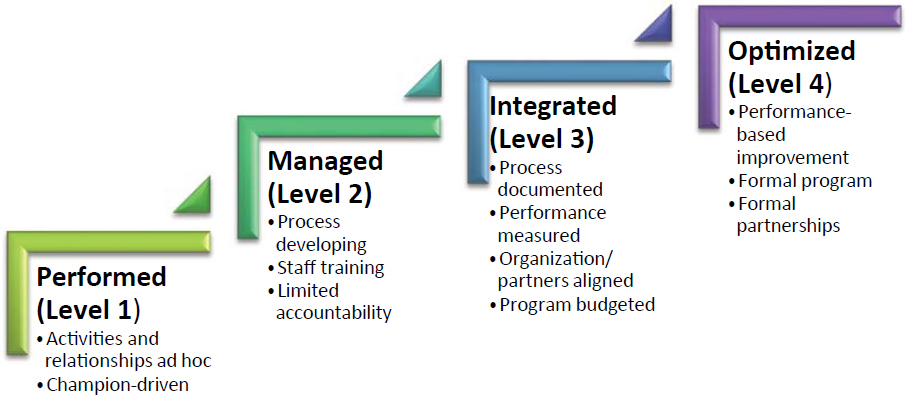
Table 3-1. Six dimensions of organizational capability maturity.
| CMM Dimension | Description |
|---|---|
 |
The planning, programming, agency project development processes, and other organizational aspects that govern various technical or administrative functions, such as training, human resource management, contracting and procurement, information technology, or agreements. |
 |
The use of appropriate processes for the design and implementation of systems to ensure that the needs of the region are appropriately addressed, systems are implemented efficiently, and interoperability with other systems is achieved. |
 |
The means of determining program effectiveness; determining how changes are affecting performance; guiding decision-making to demonstrate the extent of transportation problems to “make the case” for operations within an agency for decision-makers and the traveling public; and demonstrating what is being accomplished with public funds on the transportation system. |
 |
The appropriate combination of coordinated organizational functions and technically qualified staff with clear management authority and accountability to ensure efficient execution of processes supporting effective programs. |
 |
The combination of values, assumptions, knowledge, and expectations of the agency in relation to its institutional and operating context as expressed in its accepted mission and related activities. |
 |
The development and maintenance of a collaborative approach for TSMO that depends on the coordinated performance of each partner, such as law enforcement agencies (also necessary for successful ATM strategies). |
SOURCE: Adapted from FHWA 2023d.
Implementing ATM with Existing Resources
The outputs from an institutional capability assessment are likely to identify specific action areas agencies can focus on to mature the agency’s capabilities over time. Agencies with a very low level of capability in all areas of systems management and operations are probably not ready for a robust ATM deployment. However, an agency should not delay implementing ATM strategies just because it does not have Level 3 or 4 maturity in all categories. Rather, most agencies likely possess capabilities that are suitable to begin planning for ATM strategies at the same time they are building any lacking institutional capabilities. The takeaway is that an agency takes a realistic view of its capabilities and does not embark on a disproportionately complex ATM
deployment. Additionally, agencies can bridge major gaps by utilizing consultants until agency capabilities have matured.
Deploying ATM strategies will not necessarily require new or additional staff. Instead, agencies can plan, design, implement, operate, and maintain ATM strategies utilizing existing in-house staff and consultants. However, existing staff—planners, designers, construction staff, operations staff, and maintenance staff—will have to evolve and expand their skill sets to make the ATM deployment successful. This evolution may involve additional training courses and interaction with agencies that have already deployed ATM. Examples of this interaction are peer exchanges with deploying agencies via site visits of existing ATM deployments and webinars or workshops to gather best practices and lessons learned. Furthermore, those agency personnel responsible for project oversight need to be sufficiently skilled in good project management practices. Thus, enhancing organizational and workforce training can also help ensure an agency is prepared for ATM strategy deployment and operation.
Preparing for ATM Implementation
Various states and regions have undertaken more formal planning processes that have included ATM as a key strategy when planning for new or expanded freeway or arterial management systems.
ATM strategies incorporate various technologies and inherently require the engagement of various stakeholders in concept exploration, needs assessment, and coalition building for ATM. Additionally, some states and regions have undertaken more formal planning processes that have included ATM as a key strategy (or part of a broader set of objectives to address safety and mobility concerns). A variety of processes and related tools are typically used when planning for new or expanded freeway or arterial management systems, communications networks, traveler information systems, integrated corridor management systems, software, and ITS and technology-based transportation projects. While not necessarily required or needed for all ATM projects based on the level of complexity or risk, key considerations for preparing for ATM implementation could include the following:
- Systems engineering: A systems engineering analysis can help outline key system considerations, identify connectivity needs, and detail system technology options and alternatives. It might also be a required component for an ATM project, depending on the source of funds.
- ATM and the regional ITS architecture: ITS architecture is a valuable tool in planning for ATM because of the continuous updates and enhancements for technologies and service packages. The specific ATM strategies implemented will impact which service packages need to be added or updated in the current version of the regional ITS architecture. Together, service packages provide the overall service an agency is trying to obtain from a particular project.
- Concept of operations: A concept of operations addresses many important planning-level questions. It helps establish needs; documents existing systems and stakeholder roles and responsibilities; identifies priority ATM functions; and identifies longer-term requirements (such as maintenance) that can be integrated into budgeting, procurement, and implementation activities (Smith 2005). It can also build off discussions regarding the ITS architecture. In other cases, it can provide important input regarding updates needed to the regional ITS architecture and field and software design needs.

Practical Implementation Considerations
In addition to the big picture concept of systems engineering, the ITS architecture, and a concept of operations, practical agency implications exist that can be considered for implementing ATM. These considerations include but are not limited to integrating needs-based ATM into
Table 3-2. Practical implementation considerations.
| Topic | Implementation Considerations and Key Questions | Guide Link |
|---|---|---|
| Assessing Needs That ATM Addresses |
|
|
| Regional Planning and Suitability |
|
|
| Performance Management |
|
 |
| Operations and Maintenance |
|
 |
regional planning efforts, regional suitability, performance management, design considerations, and operations and maintenance. Table 3-2 summarizes these practical implementation considerations and contains links to other chapters where additional information can be found.
General Considerations
For ATM to be successful, agencies would need to consider a broad range of factors, many of which are less technical and more institutional in nature. They include but are not limited to regional priorities, partnerships, staffing, policies, programming and budgeting, and funding
and financing. The following sections provide insight into ways transportation professionals can ensure that ATM projects are feasible, sustainable, and adequately financed to meet the needs of the community. The information is not exhaustive, but it presents the major topics for consideration and offers some examples of how agencies have successfully approached ATM or related projects.
Balancing Priorities
Integrating ATM into formal regional or statewide plans often requires competing among multiple priorities for the respective transportation system, including safety improvements, capacity improvements, preservation priorities, and others.
Integrating ATM into formal regional or statewide plans often requires competing among multiple priorities for the respective transportation system, including safety improvements, capacity improvements, preservation priorities, and others. Typically, regional long-range transportation planning efforts involve public feedback regarding needs and priorities and must balance issues such as land use, economic forecasts, travel patterns, population, projected growth, and environmental considerations. As with general TSMO projects, ATM can be considered viable and cost-effective mobility and safety alternatives beyond capacity expansion.
Partnerships
Leveraging partners in the advancement of ATM strategies has been a successful way to develop financial and operational support for ATM. Successful partnerships have been developed between states, cities, MPOs, tolling authorities, public-private partnership (P3) entities, regional planning organizations, transit agencies, and other stakeholders. Emergency response and law enforcement agencies are also critical partners in the dynamic management of the network.
Leveraging partners in the advancement of ATM strategies has been a successful way to develop financial and operational support for ATM.
Partnerships come in many forms, from ad hoc task forces to legally constructed metropolitan entities to public-private projects. While many partnerships may be successful, the most successful over time are those with a more formal arrangement, typically a written agreement, which is binding in sum on the parties to collaborate and cooperate. Arrangements may vary from simple written agreements of mutual support and cooperation to much more formal agreements with operations protocols, shared planning processes, resource-sharing agreements, and financial commitments. Agreements also may establish protocols between roadway agencies and response agencies for implementing traffic incident management programs on a specific facility or multiple facilities, collecting and sharing data, constructing and operating joint operating facilities, or creating operating agreements where joint agencies share the operation of a facility. Some of the most successful partnerships include legal operating authority, dedicated resources, and governing boards. Houston’s TranStar, Vancouver’s TransLink, and the New York City region’s Transportation Operations Coordinating Committee (TRANSCOM) are examples of successful legally authorized partnerships (FHWA 2003).
Agencies that have strong TMCs typically have a variety of data-sharing agreements between them and other entities, particularly emergency response organizations. California, New York, Texas, Washington State, Ohio, Minnesota, Arizona, Virginia, Maryland, and Utah are just a few of the many agencies with a variety of data-sharing partnerships with others and some forms of partnership agreements and/or documents to ensure working-level relationships through standardized operating procedures. Another key in these partnerships is the institutionalization of senior-level relationships among key organizations. Policy agreements, interagency organizations, coordinated budget planning, and other processes ensure partnerships survive changes in leadership and should be periodically updated, requiring leadership involvement for approval.
These procedures are considered best practices for ensuring not only a good operational relationship but also for garnering support for funding at budget time. Partnerships are strengthened through the planning and programming processes and collaboratively working with partner agencies and public organizations (Brooke et al. 2004).
P3s for transportation projects include formal, legal agreements related to the design-build-operate components projects. Regional ITS architectures, regional transportation concept of operations documents, and other planning documents are necessary to the formation of these legal agreements, particularly as they relate to the operating agreements for the projects.
Operating performance standards and measures are also part of these documents. Recently, significant work has been done to document the effects of P3 projects and other nontraditional procurement practices on highway planning, environmental review, and collaborative decision-making. P3 projects should be considered at the earliest environmental review and project-planning stages and introduce consideration for tolling and other types of nontraditional financing (Parsons Brinckerhoff et al. 2015). Table 3-3 describes successful examples of partnerships that exist across the country that either have been or can be utilized for the potential deployment of ATM strategies.
Partnerships are vital to the programming and financing of ATM strategies. With the increased interest in improving safety, travel-time reliability, and reducing congestion, the projects where ATM strategies are most likely to be successful are employed in geographic areas with many operating agencies and other entities and stakeholders. Partnerships—formal and informal—are key ingredients in successful deployment.
Staffing Needs and Capabilities
Agency staff, including operations and maintenance employees, should be included in early discussions about ATM strategies. However, more comprehensive discussions and training are needed for agency employees closer to the deployment who may not be familiar with the functionalities of new systems.
Different levels of staff education and training must be considered. ATM strategies generally require more complex ITS that may be unfamiliar to agency planners, designers, construction personnel, and TMC operators. Staff education and training may first require peer-to-peer exchanges with other transportation agencies that operate similar ATM deployments. Key personnel from the deploying agency may want to contact other transportation agencies about sharing documentation, such as training materials and systems engineering documentation, such as concepts of operations and system requirements, operational policies and procedures, and lessons learned. Scheduling periodic teleconferences, webinars, or site visits for key agency personnel will allow the deploying agency to interact with operators familiar with the existing ATM deployment and become more comfortable with their own new ATM deployment.
Agency staff, including operations and maintenance employees, should be included in early discussions about ATM strategies, all with varying areas of education and training. ATM strategies generally require more complex ITS that may be unfamiliar to current staff.
Key personnel may use peer-to-peer exchanges to develop the detailed training courses and materials necessary to teach operators at the deploying agency TMC how to operate the new ATM deployment. Operators need to understand the capabilities of the new ATM deployment, how and when it is expected to operate, their role, and actions that are necessary for the most effective operations. An ATM deployment may include additional automated features that other ITS systems do not have or incorporate more complex data and decision-support-system responses. These features may not be intuitive to a junior operator and require more senior
Table 3-3. Example transportation agency partnerships in the United States.
| Name/Location/Partners | Overall Purpose | Key Collaboration Elements |
|---|---|---|
|
TRANSCOM: Over 100 local agencies (Brooke et al. 2004) |
Coordinate construction projects in the tristate area of New York, New Jersey, and Connecticut. |
|
|
Maryland’s Coordinated Highway Action Response Team (CHART): Maryland State Highway Agency (MDSHA); Maryland Toll Authority; Maryland State Police (MSP); federal, state, regional, and local partners (FHWA 2012b, Brooke et al. 2004) |
Agreements between the CHART agencies provide the resources necessary to effectively manage the transportation system. |
|
|
Metro Washington, DC Area: Maryland, Virginia, Washington, DC, etc. (Fairfax County, Virginia 2023) |
Coordinate real-time incident management with a regional operations group; part of the Metropolitan Washington Council of Governments. |
|
|
McConnell Public Safety and Transportation Operations Management Center: Virginia DOT (VDOT) and Fairfax County, Virginia (Fairfax County, Virginia 2023) |
Enable funding and construction of a facility that houses VDOT, Virginia State Police (VSP), Fairfax Police, Fairfax Fire, and County Emergency Management Center, as well as a Washington Metrobus operations facility. |
|
|
IH 625 Managed Lanes, Dallas-Fort Worth, Texas: Texas DOT (TxDOT) and LBJ Infrastructure Group (FHWA 2023a) |
LBJ Infrastructure Group will operate and maintain the facility for 52 years. |
|
|
Anton Anderson Memorial Tunnel: Alaska DOT, Kiewit Corporation, Hatch Mott MacDonald, and Broadspectrum (FHWA 2023b |
P3 project has been created as an operations and management concession contract ) (i.e., a fee-for-service contract). |
|
knowledge of the local transportation patterns and system. As such, an ATM deployment may necessitate a more structured mentoring and training program to formally provide junior operators with additional learned knowledge. Unlike traditional ITS systems, ATM deployments may require experienced personnel to monitor operations on a 24/7 basis; thus, it is important that a sufficient number of operations staff are adequately trained. For example, even though an ATM deployment may require more highly skilled personnel than traditional ITS, it is important that multiple individuals can operate the system in the event of staff absences or departures.
Personnel in the field, including maintenance staff, law enforcement, incident response teams, emergency management, and transit drivers, may benefit from safety training on a new ATM deployment, especially if it in any way impacts how they conduct their job duties. Depending on the type of ATM deployment, new communications protocols may be necessary between TMC operators and staff in the field, which will also require education and training. Finally, appropriate personnel need to be trained to monitor new ATM deployments to identify areas where changes could be implemented to improve operations.
Policy and Legal Considerations
When considering an ATM deployment, an agency will need to review relevant laws, regulations, and policies at the local, state, and federal levels to determine whether changes or additional policies are needed (FHWA 2012a; CH2MHill 2014). Specifically, this review would consider whether the planned ATM strategies fit within the existing legal and policy frameworks for the local agency. Issues could arise with the legality of VSLs and any associated requirements, automated enforcement, use of shoulders as a travel lane, and ramp metering. The legal authority to enforce ATM strategies should be assessed as well as the support from law enforcement and legislative parties to enforce the ATM techniques, which may be a bigger challenge than expected (CH2MHill 2014). In cases where supporting laws and policies are not in place, it may be necessary to gain the buy-in of higher-level agency stakeholders and elected officials before an ATM strategy can be deployed. It should also be noted that ATM strategies are part of the broader metropolitan transportation planning process. Federal surface transportation legislation requires MPOs to develop, with state and public transportation operators, long-range metropolitan transportation plans and transportation improvement programs (TIPs) using a performance-driven, outcome-based approach (CH2MHill 2014, FHWA 2013).
Programming and Budgeting
The competition for funding of transportation projects is fierce, given the constrained resources that are available. While each transportation agency may have somewhat different procedures and processes for planning, programming, and funding projects, all of them follow the federal processes. Once an agency has determined that ATM strategies fit within the overall goals and objectives of the region or state and are then part of either the long-range transportation plan (LRTP) or some other planning or program documents, those projects are in position to compete with other transportation needs for programming and funding.
Once an agency has determined that ATM strategies fit within the overall goals and objectives of the region or state and are then part of either the LRTP or some other planning or program documents, those projects are in position to compete with other transportation needs for programming and funding.
Programming is the process of selecting projects for funding. Programming identifies funding resources and establishes a financial framework for implementation. Programming occurs in conjunction with the long-range planning process and development of the LRTP for the state and MPO agencies. The culmination of the programming process is the completion of a short-range plan of priorities that commits funding for specific projects. MPOs must have a process to prioritize and select projects for inclusion in
this shorter-term TIP—generally a 4-year plan. State agencies are required to have a state TIP (STIP). Once ATM strategies are included in the TIP and/or STIP document, funds are identified and committed, and ATM projects are implemented. The final step for an agency is the development and publication of a financial document that sets out the projects and funding for each year of a multiyear financing plan (FHWA 2013).
Recognizing ATM strategies and operations planning efforts directly in the planning process has been shown across a wide variety of agencies to be the most important link to obtaining funding. Recognition techniques include using appropriate criteria, such as requiring ITS projects for funding to be in the regional architecture, as is required by the Hampton Roads MPO. Another recognition technique is to identify federally eligible funding sources that can be used for implementation. Also, in the performance-based planning and programming process, the use of system reliability performance measures as a part of more capacity-oriented metrics in the LRTP strengthens the chances for project selection in the programming process (Fontaine and Miller 2012).
As discussed previously, statewide and metropolitan planning processes now must include several performance-based measures and targets to be evaluated toward meeting nationally established goal areas. Other key steps include evaluating ATM strategies and prioritizing them to determine the best collection of projects to achieve the performance targets and overall objectives. Here, ATM strategies may be stand-alone projects or activities or part of other larger capital projects. However, when the agency does its prioritization or ranking process, ATM strategies must be a part of the LRTP or some other agency program document that is a part of the agency’s formal process for determining investment strategies and decision-making.
To be considered as a viable alternative to meeting regional goals and objectives, ATM strategies must be a part of the LRTP or some other agency program document that is a part of the agency’s formal process for determining investment strategies and decision-making.
Agencies vary widely in their programming processes. The North Carolina Capital Area MPO has a multicriteria point scoring system (points are awarded for local priorities, level of local funding match, compliance with the LRTP, project phases, prior funding, mode-effectiveness, and cost-effectiveness). A successful project scores in the top 50 percent of projects for that mode. At the New Jersey Transportation Planning Authority, a two-step prioritization process is used to ensure that the six policy goals of the agency are met. Scoring projects based on technical measures aimed toward meeting the defined goals is the first step of evaluation. Then, the Authority considers additional priority factors such as the feasibility of project delivery, funding availability, and project timing (FHWA 2013). The integration of ATM strategies into the performance-based planning and programming process of an agency provides the strongest evidence of the agency’s understanding and support for ATM strategies as a part of its overall transportation program.

Another aspect of improved programming and budgeting that should be considered is the institutional issues related to staffing and organizing for improved programming and budgeting functions. Poorly aligned organizational units and functions can affect program development and delivery. Significant research and resources have been devoted to developing an organizational capability maturity model to guide agencies in the development of their operations program. The model provides a step-by-step guide for improvements including changes in organizational structures, cultures, and staffing that can advance the ability of an agency to develop a fully mature transportation system operations and maintenance program (Parsons Brinckerhoff et al. 2011a). For guidelines on institutional organizational alignment, training, and development that might improve an agency’s programming and budget processes, the published research and accompanying web-based, agency self-assessment tool offer valuable tools and specific examples of methods and tools others have used (AASHTO 2023). Additional information related to agency self-assessment is discussed in Chapter 4—“Assessing the Suitability of ATM.”
Critical to programming, the STIP document must include all of the projects in the MPO TIPs (without changes) and in non-MPO portions of a state. A project in an MPO area must be included in the STIP; a state cannot decide to exclude something in an MPO TIP from the STIP. The TIP and STIP show all planned and actual obligations made to each project by funding type. TIP and STIP documents are required to be updated at least every four years, but most agencies update them yearly due to ever-changing funding fluctuations.
Financing and Funding Considerations
Understanding the categories of federal funding from which ATM strategies and projects are undertaken is the first step in matching eligible projects with funding. A variety of federal programs provide opportunities for financing ATM strategies, either alone or in combination with other activities or projects. Other revenue sources at state and local levels may also be available. Program managers should work closely with the agency’s programming and financial offices to best understand funding availability and eligibility requirements. Federal funding of ATM strategies or projects can come from a wide range of categories. All the ATM strategies covered in this guide are eligible for funding because they are directly related to improving travel-time reliability, congestion, and safety. While not exhaustive, Table 3-4 illustrates the types of systems and projects that could be funded via federal resources.
Table 3-4. Potential ATM systems and elements eligible for federal funding.
| Nature of Deployment or Installation | Potential ATM Systems |
|---|---|
| Installation and Integration of ITS Infrastructure |
|
| Capital Improvement Projects That May Include Eligible Operating Costs |
|
| Operating Costs and Expenses for Traffic Monitoring, Management, and Control |
|
The federal programming process has become much more flexible and streamlined over the past decade. As identified through this discussion, a wide variety of ATM-related activities and strategies and related supporting functions can be funded with federal dollars. Stated more simply, federal funding can be flexible in terms of its uses for planning, construction, maintenance, and operations. Most often, capital projects as well as operational-focused projects use a combination of several of these categories to fund projects by both state DOT and MPO programming staffs.
Innovative Finance Mechanisms
Project financing has become a much more complex endeavor given the fiscal constraints that agencies have faced due to reduced amounts of federal funds available from the Federal Trust Fund and declines in revenues coupled with reduced buying power in some states. To that end, the federal government and many state and other agencies have turned to the use of toll financing and a wide variety of other debt or credit assistance programs to further fund transportation projects. Most of the projects funded with this alternative funding mechanism have been large-scale capacity improvement projects that could not be financed through traditional means. At the same time, some of these projects have also included ATM strategies as a part of the traffic management system. For that reason, a brief discussion of these innovative finance programs is included in the guide.
The federal government and many state and other agencies have used toll financing and a wide variety of other debt or credit assistance programs to further fund transportation projects. Some projects using innovative financing have included ATM strategies as part of the traffic management systems.
The U.S. DOT’s Office of Innovative Program Delivery (OIPD) has a website that houses its program guidebook and other pertinent, detailed documents concerning the multiple types of assistance available through its programs. The OIPD is responsible for working with other agency finance staff on the use of these types of funds, and its website contains lists of all the projects that have benefited from innovative financing (FHWA 2023c).
Final Remarks
ATM is an approach that leverages real-time data, communications networks, and advanced technologies to optimize traffic flow on roads and highways. Overall, enabling ATM strategies within a region is essential for improving the transportation system’s performance and enhancing safety without a continual capacity-building program. By monitoring traffic conditions and dynamically adjusting to optimize capacity, ATM can prevent congestion and reduce travel time, as well as enhance sustainability through the reduction of emissions and fuel consumption. It must be understood, however, that the successful implementation of ATM strategies is not based solely on the technology deployment component. Significant other factors enable success in ATM, including an accurate assessment of agency capability, proper planning using a systems engineering process, partnerships, funding, and consideration of future operations and maintenance. Regional policies and laws that may govern the use of some strategies, such as VSLs, must also be considered.
Chapter 3 References
AASHTO (American Association of State Highway and Transportation Officials). (2023). Guide to Systems Operations and Management Improvement. http://www.aashtotsmoguidance.org. Accessed March 2023.
Brooke, K., K. Dopart, T. Smith, and A. Flannery. (2004). NCHRP Report 520: Sharing Information between Public Safety and Transportation Agencies for Traffic Incident Management. Transportation Research Board of the
National Academies, Washington, DC. https://nap.nationalacademies.org/catalog/13730/sharing-information-between-public-safety-and-transportation-agencies-for-traffic-incident-management. Accessed March 2023.
Cambridge University Press and Assessment. (2023). “Enabler.” Cambridge Dictionary. Cambridge, England. https://dictionary.cambridge.org/us/dictionary/english/enabler. Accessed October 2023.
CH2MHill. (2014). State of the Practice for ATM Feasibility and Screening Guidance. Technical Memorandum—Final Literature Review.
Fairfax County, Virginia. (2023). “McConnell Public Safety and Transportation Operations Center.” https://www.fairfaxcounty.gov/topics/mcconnell-public-safety-and-transportation-operations-center-mpstoc. Accessed March 2023.
FHWA (Federal Highway Administration). (2003). Regional Transportation Operations Collaboration and Coordination: A Primer for Working Together to Improve Transportation Safety, Reliability, and Security. U.S. Department of Transportation. Publication FHWA-OP-03-008. https://tmcpfs.ops.fhwa.dot.gov/cfprojects/uploaded_files/Regional%20Ops%20Collaboration.pdf. Accessed March 2023.
FHWA. (2012a). Active Traffic Management Guidebook, U.S. Department of Transportation. Publication FHWA-HOP-12-020.
FHWA. (2012b). ATDM Program Brief: Active Traffic Management. U.S. Department of Transportation. Publication FHWA-HOP-13-003. https://ops.fhwa.dot.gov/publications/fhwahop13003/fhwahop13003.pdf. Accessed March 2023.
FHWA. (2013). “MAP-21—Moving Ahead for Progress in the 21st Century: Performance Management.” U.S. Department of Transportation. https://www.fhwa.dot.gov/map21/factsheets/pm.cfm. Accessed March 2023.
FHWA. (2015a). “Organizing for ATM: Applying the Traffic Management Capability Maturity Framework.” U.S. Department of Transportation. Webinar #4 PowerPoint Presentation.
FHWA. (2015b). “Transportation Systems Management & Operations: Operating Cost Eligibility Under the Federal-Aid Highway Program.” U.S. Department of Transportation. http://ops.fhwa.dot.gov/travelinfo/resources/ops_guide.htm. Accessed March 2023.
FHWA. (2023a). “Innovative Program Delivery: LBJ Express/IH 635 Managed Lanes.” U.S. Department of Transportation. https://www.fhwa.dot.gov/ipd/project_profiles/tx_lbj_express.aspx. Accessed March 2023.
FHWA. (2023b). “Project Profile: Anton Anderson Memorial Tunnel.” U.S. Department of Transportation. https://www.fhwa.dot.gov/ipd/project_profiles/ak_anderson_tunnel.aspx. Accessed March 2023.
FHWA. (2023c). “Project Profiles.” U.S. Department of Transportation. https://www.fhwa.dot.gov/ipd/finance/project_profiles/. Accessed March 2023.
FHWA. (2023d). “Traffic Management Capability Maturity Framework Tool.” U.S. Department of Transportation. https://ops.fhwa.dot.gov/tsmoframeworktool/available_frameworks/traffic.htm. Accessed March 2023.
Fontaine, M., and J. Miller. (2012). Planning for Active Traffic Management in Virginia: International Best Practices and Implementation Strategies. Virginia Center for Transportation Innovation Research. Publication VCTIR 13-R1. https://vtrc.virginia.gov/media/vtrc/vtrc-pdf/vtrc-pdf/13-r1.pdf. Accessed March 2023.
Kimley-Horn & Associates, Inc., and PB Consult. (2011). SHRP 2 Report S2-L01-RR-1: Integrating Business Processes to Improve Travel Time Reliability. Transportation Research Board of the National Academies, Washington, DC. https://nap.nationalacademies.org/catalog/14510/integrating-business-processes-to-improve-travel-time-reliability. Accessed March 2023.
Parsons Brinckerhoff, Delcan, George Mason University School of Public Policy, and Housman & Associates. (2011a). SHRP 2 Report S2-L-06-RR-2: Guide to Improving Capability for Systems Operations and Management. Transportation Research Board of the National Academies, Washington DC. https://nap.nationalacademies.org/download/14513#. Accessed March 2023.
Parsons Brinckerhoff, Delcan, P. Tarnoff, and Housman & Associates. (2011b). SHRP 2 Report S2-L06-RR-1: Institutional Architectures to Improve Systems Operations and Management. Transportation Research Board of the National Academies, Washington, DC. https://nap.nationalacademies.org/catalog/14512/institutional-architectures-to-improve-systems-operations-and-management. Accessed March 2023.
Parsons Brinckerhoff, Nossaman L.L.P., and HS Public Affairs. (2015). SHRP 2 Report S2-C12-RW-1: Effect of Public-Private Partnerships and Nontraditional Procurement Processes on Highway Planning, Environmental Review, and Collaborative Decision Making. Transportation Research Board of the National Academies, Washington, DC. https://onlinepubs.trb.org/onlinepubs/shrp2/SHRP2prepubC12.pdf. Accessed March 2023.
Smith, B. (2005). Developing and Using a Concept of Operations in Transportation Management Systems. Federal Highway Administration, U.S., Department of Transportation. Publication FHWA- HOP-07-001. https://tmcpfs.ops.fhwa.dot.gov/cfprojects/uploaded_files/conops_tms_handbook.pdf. Accessed March 2023.
TRB (Transportation Research Board). (2015). “Strategic Highway Research Program (SHRP 2: 2006–2015) Focus Areas.” https://www.trb.org/StrategicHighwayResearchProgram2SHRP2/SHRP2FocusAreas.aspx. Accessed March 2023.


