Active Traffic Management Strategies: A Planning and Evaluation Guide (2024)
Chapter: Appendix E: Planning and Evaluating ATM Checklists
Visit
NAP.edu/10766
to get more information about this book, to buy it in print, or to
download it as a free PDF.
Previous Chapter:
Appendix D: Available Resources and Tools for ATM
ATM Institutional Capability
ATM Feasibility and Screening

Suggested Citation:
"Appendix E: Planning and Evaluating ATM Checklists." National Academies of Sciences, Engineering, and Medicine. 2024. Active Traffic Management Strategies: A Planning and Evaluation Guide. Washington, DC: The National Academies Press.
doi: 10.17226/27871.


Suggested Citation:
"Appendix E: Planning and Evaluating ATM Checklists." National Academies of Sciences, Engineering, and Medicine. 2024. Active Traffic Management Strategies: A Planning and Evaluation Guide. Washington, DC: The National Academies Press.
doi: 10.17226/27871.
ATM Institutional Capability
Assessment

 |
1—Performed | 1—Performed |
| 2—Managed | 2—Managed | |
| 3—Integrated | 3—Integrated | |
| 4—Optimized | 4—Optimized | |
 |
1—Performed | 1—Performed |
| 2—Managed | 2—Managed | |
| 3—Integrated | 3—Integrated | |
| 4—Optimized | 4—Optimized | |
 |
1—Performed | 1—Performed |
| 2—Managed | 2—Managed | |
| 3—Integrated | 3—Integrated | |
| 4—Optimized | 4—Optimized | |
 |
1—Performed | 1—Performed |
| 2—Managed | 2—Managed | |
| 3—Integrated | 3—Integrated | |
| 4—Optimized | 4—Optimized | |
 |
1—Performed | 1—Performed |
| 2—Managed | 2—Managed | |
| 3—Integrated | 3—Integrated | |
| 4—Optimized | 4—Optimized | |
 |
1—Performed | 1—Performed |
| 2—Managed | 2—Managed | |
| 3—Integrated | 3—Integrated | |
| 4—Optimized | 4—Optimized |
Suggested Citation:
"Appendix E: Planning and Evaluating ATM Checklists." National Academies of Sciences, Engineering, and Medicine. 2024. Active Traffic Management Strategies: A Planning and Evaluation Guide. Washington, DC: The National Academies Press.
doi: 10.17226/27871.
ATM Feasibility and Screening
Process
(Chapter 4—“Assessing the Suitability of ATM”)

 |
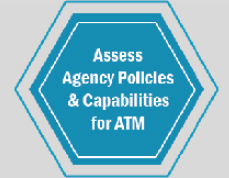
Ensure ATM supports regional goals. | |
| Identify relevant objectives for ATM. | ||
| Identify network to be analyzed. | ||
| Identify and collaborate with stakeholders. | ||
| Commence data collection. | ||
| Review recent literature. | ||
 |
Identify applicable ATM strategies in terms of network features, project scope, agency policies, and legal considerations. | |
| Ensure supporting institutional framework is in place. | ||
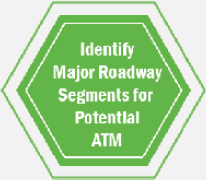 |
Determine level of transportation systems management and operations (TSMO) deployment along segments. Consider other TSMO strategies in lieu of ATM as appropriate. | |
| Identify major segments that will likely benefit from deploying ATM based on congestion, crash rates, bottlenecks, and other considerations. | ||
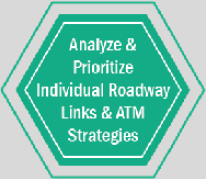 |
Analyze and prioritize individual links for ATM deployment. | |
| Identify appropriate ATM strategies for each link. | ||
| Combine strategies for each link and ensure compatibility across the network. | ||
 |
Consider key ATM cost factors. | |
| Perform high-level estimates of benefits and costs using available tools. |

Suggested Citation:
"Appendix E: Planning and Evaluating ATM Checklists." National Academies of Sciences, Engineering, and Medicine. 2024. Active Traffic Management Strategies: A Planning and Evaluation Guide. Washington, DC: The National Academies Press.
doi: 10.17226/27871.
ATM Goals and Objectives Selection Process
(Chapter 4—“Assessing the Suitability of ATM”)

 |
||
 |
||
 |
||
 |
||
Suggested Citation:
"Appendix E: Planning and Evaluating ATM Checklists." National Academies of Sciences, Engineering, and Medicine. 2024. Active Traffic Management Strategies: A Planning and Evaluation Guide. Washington, DC: The National Academies Press.
doi: 10.17226/27871.
ATM Regional Goals Checklist
(Chapter 4—“Assessing the Suitability of ATM”)

 |
Improve the safety of corridor travel. | |
| Maintain the level of safety on a facility. | ||
| (Other) | ||
| (Other) | ||
| (Other) | ||
 |
Increase mobility and accessibility by offering travel options. | |
| Provide additional facility capacity. | ||
| Improve congested roadways. | ||
| Improve accessibility to the transportation system. | ||
| (Other) | ||
| (Other) | ||
 |
Provide a reliable alternative. | |
| Increase the operational efficiency and reliability of the transportation system. | ||
| Support regional economic productivity and development. | ||
| (Other) | ||
 |
Provide a transportation system that can handle current and future demand. | |
| Minimize environmental impacts. | ||
| Preserve neighborhoods. | ||
| Maintain land use patterns. | ||
| (Other) | ||
| (Other) | ||
 |
Enhance the integration and connectivity of the transportation system. | |
| Modify travel demand. | ||
| Enhance alternative modes of travel. | ||
| (Other) | ||
| (Other) | ||
| (Other) | ||
 |
Preserve the transportation system. | |
| Optimizing existing capacity. | ||
| (Other) | ||
| (Other) | ||
| (Other) | ||
| (Other) |
Suggested Citation:
"Appendix E: Planning and Evaluating ATM Checklists." National Academies of Sciences, Engineering, and Medicine. 2024. Active Traffic Management Strategies: A Planning and Evaluation Guide. Washington, DC: The National Academies Press.
doi: 10.17226/27871.
ATM Regional Goals of ATM Strategies
(Chapter 4—“Assessing the Suitability of ATM”)

| Specific Regional Goal | Adaptive Ramp Metering | Adaptive Traffic Signal Control | Dynamic Junction Control | Dynamic Lane Reversal | Dynamic Lane-Use | Part-Time Shoulder Use | Queue Warning | Transit Signal Priority | Variable Speed Limits |
| Improve the safety of corridor travel. | X | X | X | X | X | X | X | X | |
| Maintain the level of safety on a facility. | X | X | X | X | X | X | X | X | |
| (Other) | |||||||||
| Increase mobility and accessibility by offering travel options. | X | X | X | X | X | X | X | X | X |
| Provide additional facility capacity. | X | X | X | X | |||||
| Improve congested roadways. | X | X | X | X | X | X | X | X | X |
| Improve accessibility to the transportation system. | X | X | X | X | X | ||||
| (Other) | |||||||||
| Provide a reliable alternative. | X | X | X | X | X | X | X | X | X |
| Increase the operational efficiency and reliability of the transportation system. | X | X | X | X | X | X | X | X | |
| Support regional economic productivity and development. | X | X | X | X | X | X | X | X | |
| (Other) | |||||||||
| Provide a transportation system that can handle current and future demand. | X | X | X | X | X | ||||
| Minimize environmental impacts. | X | X | X | X | X | X | |||
| Preserve neighborhoods. | X | X | X | X | X | X | |||
| Maintain land use patterns. | X | X | X | X | X | X | |||
| (Other) | |||||||||
| Enhance the integration and connectivity of the transportation system. | X | X | X | X | X | X | X | ||
| Modify travel demand. | X | X | X | X | X | X | X | ||
| Enhance alternative modes of travel. | X | X | X | X | X | X | X | ||
| (Other) | |||||||||
| Preserve the transportation system. | X | X | X | X | X | X | X | ||
| Optimizing existing capacity. | X | X | X | X | X | X | X | X | X |
| (Other) |
Suggested Citation:
"Appendix E: Planning and Evaluating ATM Checklists." National Academies of Sciences, Engineering, and Medicine. 2024. Active Traffic Management Strategies: A Planning and Evaluation Guide. Washington, DC: The National Academies Press.
doi: 10.17226/27871.
ATM Regional Objectives of ATM Strategies
(Chapter 4—“Assessing the Suitability of ATM”)

| Specific Regional Objective | Adaptive Ramp Metering | Adaptive Traffic Signal Control | Dynamic Junction Control | Dynamic Lane Reversal | Dynamic Lane-Use Control | Part-Time Shoulder Use | Queue Warning | Transit Signal Priority | Variable Speed Limits |
| Increase vehicle-carrying capacity. | X | X | X | X | X | X | X | X | |
| Increase person-carrying capacity. | X | X | X | X | X | X | X | X | |
| Increase goods-carrying capacity. | X | X | X | X | X | X | X | X | |
| Maintain free-flow speed. | X | X | X | X | X | X | X | ||
| Maintain or improve level of service. | X | X | X | X | X | X | X | X | X |
| Reduce travel time. | X | X | X | X | X | X | X | X | X |
| Increase trip reliability. | X | X | X | X | X | X | X | X | X |
| Improve express bus service. | X | X | X | X | X | X | X | X | |
| Minimize primary traffic crashes. | X | X | X | X | X | X | X | ||
| Reduce incident severity. | X | X | X | X | X | ||||
| Minimize secondary crashes. | X | X | X | X | X | X | |||
| Improve air quality from mobile sources. | X | X | X | X | X | X | X | ||
| Reduce fuel consumption. | X | X | X | X | X | X | X | ||
| Generate more uniform speeds in travel lanes. | X | X | X | X | X | X | |||
| Decrease headways between vehicles. | X | X | |||||||
| Promote more uniform driver behavior. | X | X | X | X | |||||
| Delay onset of freeway breakdown. | X | X | X | X | X | X | X | ||
| Reduce traffic noise. | X | X | X | X | X | ||||
| (Other) | |||||||||
| (Other) | |||||||||
| (Other) |
Suggested Citation:
"Appendix E: Planning and Evaluating ATM Checklists." National Academies of Sciences, Engineering, and Medicine. 2024. Active Traffic Management Strategies: A Planning and Evaluation Guide. Washington, DC: The National Academies Press.
doi: 10.17226/27871.
ATM Desired Data Types for Preliminary ATM Screening
(Chapter 4—"Assessing the Suitability of ATM”)

 |
||
 |
||
 |
||
 |
||
 |
||
 |
||
 |
||
 |
||
Suggested Citation:
"Appendix E: Planning and Evaluating ATM Checklists." National Academies of Sciences, Engineering, and Medicine. 2024. Active Traffic Management Strategies: A Planning and Evaluation Guide. Washington, DC: The National Academies Press.
doi: 10.17226/27871.
Selection of ATM Performance Measures
(Chapter 5—“ATM Performance and Data”)

 |
Travel Time | |
| Travel-Time Index | ||
| Transit Travel Time | ||
| Total Delay, Vehicles | ||
| Total Delay, Persons | ||
| Delay per Vehicle | ||
| Number of Transit Stops | ||
| Customer Satisfaction | ||
| Congested Travel | ||
| Congested Time | ||
| (Other) | ||
| (Other) | ||
 |
Planning Time Index (Traveler Information) | |
| Planning Time Index (Agency Activity) | ||
| Operating Speed Reliability | ||
| Transit Schedule Reliability | ||
| (Other) | ||
| (Other) | ||
 |
Throughput, Vehicles | |
| Throughput, Persons | ||
| Vehicle-Miles of Travel | ||
| Bottlenecks | ||
| (Other) | ||
| (Other) | ||
 |
Total Crashes | |
| Injury and Fatal Crashes | ||
| Overall Crash Rate | ||
| Injury and Fatality Crash Rate | ||
| Secondary Crashes | ||
| (Other) | ||
| (Other) | ||
 |
Number of Incidents by Type and Extent of Blockages | |
| Incident Clearance Time | ||
| Roadway Clearance | ||
| Lane-Hours Lost due to Incidents | ||
| First Responder Response Time |
Suggested Citation:
"Appendix E: Planning and Evaluating ATM Checklists." National Academies of Sciences, Engineering, and Medicine. 2024. Active Traffic Management Strategies: A Planning and Evaluation Guide. Washington, DC: The National Academies Press.
doi: 10.17226/27871.
|
Service Patrol Assists | |
| Clearance Time | ||
| On-Scene Time | ||
| Service Patrol Vehicles in Operation per Shift | ||
| (Other) | ||
| (Other) | ||
 |
Average Work Zone Delay | |
| Average Work Zone Duration by Type of Activity | ||
| Lane-Hours Lost due to Work Zones | ||
| Pavement and Bridge Condition | ||
| Percent of Hours Influenced by Weather | ||
| Extent of Highways Affected by Snow, Ice, Rain, or Fog | ||
| Special Events | ||
| Toll Rate or Usage Fee | ||
| Carpool Eligibility | ||
| Signal Timing Plans | ||
| (Other) | ||
| (Other) | ||
 |
(Other) | |
| (Other) | ||
| (Other) | ||
| (Other) | ||
| (Other) |
Suggested Citation:
"Appendix E: Planning and Evaluating ATM Checklists." National Academies of Sciences, Engineering, and Medicine. 2024. Active Traffic Management Strategies: A Planning and Evaluation Guide. Washington, DC: The National Academies Press.
doi: 10.17226/27871.
ATM Performance Measure Targets
(Chapter 5—“ATM Performance and Data”)

| Measure | Target Definition | Specific ✔ | Measurable ✔ | Achievable ✔ | Relevant ✔ | Timely ✔ |
Suggested Citation:
"Appendix E: Planning and Evaluating ATM Checklists." National Academies of Sciences, Engineering, and Medicine. 2024. Active Traffic Management Strategies: A Planning and Evaluation Guide. Washington, DC: The National Academies Press.
doi: 10.17226/27871.
ATM Performance Measure Data Needs
(Chapter 5—“ATM Performance and Data”)

 |
||||||
 |
||||||
 |
||||||
 |
||||||
 |
||||||
 |
||||||
 |
||||||
 |
||||||
 |
||||||
 |
||||||
 |
||||||
 |
||||||
 |
||||||
 |
||||||
 |
Suggested Citation:
"Appendix E: Planning and Evaluating ATM Checklists." National Academies of Sciences, Engineering, and Medicine. 2024. Active Traffic Management Strategies: A Planning and Evaluation Guide. Washington, DC: The National Academies Press.
doi: 10.17226/27871.
ATM AMS Data Needs
(Chapter 6—“Analysis, Modeling, and Simulation for ATM”)

 |
Facility Type | |
| Capacity | ||
| Segment Lengths | ||
| Number of Lanes | ||
| Roadway Curvature/Alignment | ||
| Lane Merge/Diverge | ||
| U-Turns | ||
| (Other) | ||
 |
Average Annual Daily Traffic | |
| Average Daily Traffic | ||
| Turning Volumes | ||
| Origin-Destination Table | ||
| Speeds | ||
| (Other) | ||
 |
Traffic Signal Control | |
| Other System Control Data | ||
| Ramp Metering Control | ||
| Transit Signal Priority Control | ||
| (Other) | ||
 |
Transit Route Stops | |
| Time-of-Day Schedule Data | ||
| Household Income Level Data | ||
| (Other) | ||
 |
Pretrip Information | |
| En Route Information | ||
| (Other) | ||
| (Other) | ||
| (Other) | ||
 |
Traffic Counts | |
| Speeds | ||
| Queue Lengths | ||
| (Other) | ||
| (Other) |
Suggested Citation:
"Appendix E: Planning and Evaluating ATM Checklists." National Academies of Sciences, Engineering, and Medicine. 2024. Active Traffic Management Strategies: A Planning and Evaluation Guide. Washington, DC: The National Academies Press.
doi: 10.17226/27871.
ATM AMS Analysis Levels
(Chapter 6—“Analysis, Modeling, and Simulation for ATM”)

| Adaptive Ramp Metering |  |
 |
|
|
| Adaptive Traffic Signal Control | |
--- | |
|
| Dynamic Junction Control | |
--- | --- | |
| Dynamic Lane Reversal |  |
|
--- | |
| Dynamic Lane-Use Control | |
--- | --- | |
| Part-Time Shoulder Use | |
|
--- | |
| Queue Warning | |
|
--- | |
| Transit Signal Priority | |
--- | |
|
| Variable Speed Limits | |
|
--- | |
 Intersection |
Sub-area |
 Regional |
||
Suggested Citation:
"Appendix E: Planning and Evaluating ATM Checklists." National Academies of Sciences, Engineering, and Medicine. 2024. Active Traffic Management Strategies: A Planning and Evaluation Guide. Washington, DC: The National Academies Press.
doi: 10.17226/27871.
ATM AMS Modeling Guidance
(Chapter 6—“Analysis, Modeling, and Simulation for ATM”)

| Adaptive Ramp Metering | Identify predeployment infrastructure needs, perform cost analysis | Use signal optimization to determine entry flow rates, storage space, and acceleration distance | Use ramp metering to regulate operational inflow during peak/off-peak hours |
| Adaptive Traffic Signal Control | Identify predeployment infrastructure needs, perform cost analysis | Help design roadway capacity, turning bays, storage lengths, and entry flow rates using algorithms (e.g., ALINEA) | Use adaptive traffic signal control to help reduce congestion levels on arterial corridors (through signal coordination); able to implement various adaptive traffic control algorithms |
| Dynamic Junction Control | Identify predeployment infrastructure needs, perform cost analysis, plan for special events and long-term work zones | Help design roadway capacity, part-time shoulder use, and work zone traffic flow | Use junction control to dynamically allocate lane access to increase capacity and decrease time-dependent closures |
| Dynamic Lane Reversal | Identify freeway/arterial emergency management, incident management, special events, and long-term congestion implications | Determine optimal location for when and where strategy is implemented and associated movable barrier/proper signage needs | Analyze how contraflow lanes impact traffic (i.e., increase throughput) at the corridor (arterial) and regional (freeway) level; requires coordination with police/roadway officials |
| Dynamic Lane-Use Control | Identify predeployment infrastructure needs, perform cost analysis, plan for special events and long-term work zones | Determine optimal locations for dynamic lane control signs mounted over traffic | Analyze how lane utilization impacts traffic flow; often used with variable speed limits |
| Part-Time Shoulder Use | Plan for incident management and managed lanes | Determine optimal ingress/egress locations and signage | Analyze traffic flow during peak periods, including how the shoulder traffic merges back into main lanes |
| Queue Warning | Identify predeployment infrastructure needs, perform cost analysis | Determine optimal locations for dynamic message signs | Broadcast message to alert motorists to queues or significant speed reduction areas |
| Transit Signal Priority | Identify predeployment infrastructure needs, perform cost analysis | Determine design and location of transit stops, transit-only lanes | Use transit signal priority to improve speed and reliability of transit service by giving preferential treatment at intersections |
| Variable Speed Limits | Identify policy-related questions regarding speed reduction limits and time-of-day implementation | Determine optimal locations for speed detectors | Determine whether variable speed limits improve flow through corridor |
Suggested Citation:
"Appendix E: Planning and Evaluating ATM Checklists." National Academies of Sciences, Engineering, and Medicine. 2024. Active Traffic Management Strategies: A Planning and Evaluation Guide. Washington, DC: The National Academies Press.
doi: 10.17226/27871.
This page intentionally left blank.
Suggested Citation:
"Appendix E: Planning and Evaluating ATM Checklists." National Academies of Sciences, Engineering, and Medicine. 2024. Active Traffic Management Strategies: A Planning and Evaluation Guide. Washington, DC: The National Academies Press.
doi: 10.17226/27871.
Abbreviations and acronyms used without definitions in TRB publications:
| A4A | Airlines for America |
| AAAE | American Association of Airport Executives |
| AASHO | American Association of State Highway Officials |
| AASHTO | American Association of State Highway and Transportation Officials |
| ACI–NA | Airports Council International–North America |
| ACRP | Airport Cooperative Research Program |
| ADA | Americans with Disabilities Act |
| APTA | American Public Transportation Association |
| ASCE | American Society of Civil Engineers |
| ASME | American Society of Mechanical Engineers |
| ASTM | American Society for Testing and Materials |
| ATA | American Trucking Associations |
| CTAA | Community Transportation Association of America |
| CTBSSP | Commercial Truck and Bus Safety Synthesis Program |
| DHS | Department of Homeland Security |
| DOE | Department of Energy |
| EPA | Environmental Protection Agency |
| FAA | Federal Aviation Administration |
| FAST | Fixing America’s Surface Transportation Act (2015) |
| FHWA | Federal Highway Administration |
| FMCSA | Federal Motor Carrier Safety Administration |
| FRA | Federal Railroad Administration |
| FTA | Federal Transit Administration |
| GHSA | Governors Highway Safety Association |
| HMCRP | Hazardous Materials Cooperative Research Program |
| IEEE | Institute of Electrical and Electronics Engineers |
| ISTEA | Intermodal Surface Transportation Efficiency Act of 1991 |
| ITE | Institute of Transportation Engineers |
| MAP-21 | Moving Ahead for Progress in the 21st Century Act (2012) |
| NASA | National Aeronautics and Space Administration |
| NASAO | National Association of State Aviation Officials |
| NCFRP | National Cooperative Freight Research Program |
| NCHRP | National Cooperative Highway Research Program |
| NHTSA | National Highway Traffic Safety Administration |
| NTSB | National Transportation Safety Board |
| PHMSA | Pipeline and Hazardous Materials Safety Administration |
| RITA | Research and Innovative Technology Administration |
| SAE | Society of Automotive Engineers |
| SAFETEA-LU | Safe, Accountable, Flexible, Efficient Transportation Equity Act: A Legacy for Users (2005) |
| TCRP | Transit Cooperative Research Program |
| TEA-21 | Transportation Equity Act for the 21st Century (1998) |
| TRB | Transportation Research Board |
| TSA | Transportation Security Administration |
| U.S. DOT | United States Department of Transportation |
Suggested Citation:
"Appendix E: Planning and Evaluating ATM Checklists." National Academies of Sciences, Engineering, and Medicine. 2024. Active Traffic Management Strategies: A Planning and Evaluation Guide. Washington, DC: The National Academies Press.
doi: 10.17226/27871.
Suggested Citation:
"Appendix E: Planning and Evaluating ATM Checklists." National Academies of Sciences, Engineering, and Medicine. 2024. Active Traffic Management Strategies: A Planning and Evaluation Guide. Washington, DC: The National Academies Press.
doi: 10.17226/27871.

Suggested Citation:
"Appendix E: Planning and Evaluating ATM Checklists." National Academies of Sciences, Engineering, and Medicine. 2024. Active Traffic Management Strategies: A Planning and Evaluation Guide. Washington, DC: The National Academies Press.
doi: 10.17226/27871.

Suggested Citation:
"Appendix E: Planning and Evaluating ATM Checklists." National Academies of Sciences, Engineering, and Medicine. 2024. Active Traffic Management Strategies: A Planning and Evaluation Guide. Washington, DC: The National Academies Press.
doi: 10.17226/27871.

Suggested Citation:
"Appendix E: Planning and Evaluating ATM Checklists." National Academies of Sciences, Engineering, and Medicine. 2024. Active Traffic Management Strategies: A Planning and Evaluation Guide. Washington, DC: The National Academies Press.
doi: 10.17226/27871.

Suggested Citation:
"Appendix E: Planning and Evaluating ATM Checklists." National Academies of Sciences, Engineering, and Medicine. 2024. Active Traffic Management Strategies: A Planning and Evaluation Guide. Washington, DC: The National Academies Press.
doi: 10.17226/27871.

Suggested Citation:
"Appendix E: Planning and Evaluating ATM Checklists." National Academies of Sciences, Engineering, and Medicine. 2024. Active Traffic Management Strategies: A Planning and Evaluation Guide. Washington, DC: The National Academies Press.
doi: 10.17226/27871.

Suggested Citation:
"Appendix E: Planning and Evaluating ATM Checklists." National Academies of Sciences, Engineering, and Medicine. 2024. Active Traffic Management Strategies: A Planning and Evaluation Guide. Washington, DC: The National Academies Press.
doi: 10.17226/27871.

Suggested Citation:
"Appendix E: Planning and Evaluating ATM Checklists." National Academies of Sciences, Engineering, and Medicine. 2024. Active Traffic Management Strategies: A Planning and Evaluation Guide. Washington, DC: The National Academies Press.
doi: 10.17226/27871.

Suggested Citation:
"Appendix E: Planning and Evaluating ATM Checklists." National Academies of Sciences, Engineering, and Medicine. 2024. Active Traffic Management Strategies: A Planning and Evaluation Guide. Washington, DC: The National Academies Press.
doi: 10.17226/27871.

Suggested Citation:
"Appendix E: Planning and Evaluating ATM Checklists." National Academies of Sciences, Engineering, and Medicine. 2024. Active Traffic Management Strategies: A Planning and Evaluation Guide. Washington, DC: The National Academies Press.
doi: 10.17226/27871.

Suggested Citation:
"Appendix E: Planning and Evaluating ATM Checklists." National Academies of Sciences, Engineering, and Medicine. 2024. Active Traffic Management Strategies: A Planning and Evaluation Guide. Washington, DC: The National Academies Press.
doi: 10.17226/27871.

Suggested Citation:
"Appendix E: Planning and Evaluating ATM Checklists." National Academies of Sciences, Engineering, and Medicine. 2024. Active Traffic Management Strategies: A Planning and Evaluation Guide. Washington, DC: The National Academies Press.
doi: 10.17226/27871.

Suggested Citation:
"Appendix E: Planning and Evaluating ATM Checklists." National Academies of Sciences, Engineering, and Medicine. 2024. Active Traffic Management Strategies: A Planning and Evaluation Guide. Washington, DC: The National Academies Press.
doi: 10.17226/27871.

Suggested Citation:
"Appendix E: Planning and Evaluating ATM Checklists." National Academies of Sciences, Engineering, and Medicine. 2024. Active Traffic Management Strategies: A Planning and Evaluation Guide. Washington, DC: The National Academies Press.
doi: 10.17226/27871.

Suggested Citation:
"Appendix E: Planning and Evaluating ATM Checklists." National Academies of Sciences, Engineering, and Medicine. 2024. Active Traffic Management Strategies: A Planning and Evaluation Guide. Washington, DC: The National Academies Press.
doi: 10.17226/27871.

Suggested Citation:
"Appendix E: Planning and Evaluating ATM Checklists." National Academies of Sciences, Engineering, and Medicine. 2024. Active Traffic Management Strategies: A Planning and Evaluation Guide. Washington, DC: The National Academies Press.
doi: 10.17226/27871.

Suggested Citation:
"Appendix E: Planning and Evaluating ATM Checklists." National Academies of Sciences, Engineering, and Medicine. 2024. Active Traffic Management Strategies: A Planning and Evaluation Guide. Washington, DC: The National Academies Press.
doi: 10.17226/27871.

Suggested Citation:
"Appendix E: Planning and Evaluating ATM Checklists." National Academies of Sciences, Engineering, and Medicine. 2024. Active Traffic Management Strategies: A Planning and Evaluation Guide. Washington, DC: The National Academies Press.
doi: 10.17226/27871.

Subscribe to Emails from the National Academies
Stay up to date on activities, publications, and events by subscribing to email updates.