Active Traffic Management Strategies: A Planning and Evaluation Guide (2024)
Chapter: 9 ATM Operations and Maintenance

CHAPTER 9
ATM Operations and Maintenance

Chapter Highlights and Objectives
Active traffic management (ATM) involves the use of technologies and systems to actively measure and monitor the traffic performance in a network and dynamically adjust how that network is used by travelers to maximize system throughput without negatively impacting safety. With ATM, operational decisions are made in real-time on a minute-by-minute basis based on current or forecasted conditions as opposed to a daily or hourly basis based on historical conditions. ATM relies heavily on automation to collect information about traffic performance and aid in decision-making and the information dissemination process. Because operational success relies so heavily on an agency’s ability to collect, process, assess, and communicate operational decisions in real-time, it is critical to ensure that the systems and technologies are operating at their optimum levels and are well-maintained.
This chapter provides an overview of the issues and factors affecting the operations and maintenance of ATM systems and technologies. The remainder of this chapter presents the following sections:
- ATM Operational Needs—An Operations Plan. Describes the importance of the concept of operations—developed at the project-planning phase—to actual operations once the system is deployed.
- Daily Operations and Performance Monitoring. Discusses the need for real-time monitoring and daily assessment of operational performance and the importance of standard operating procedures in ATM deployments.
- ATM Asset Management and Maintenance. Provides guidelines related to the maintenance of ATM deployments and discusses the state of good repair concept as it relates to ATM deployments and the different response, preventive, and emergency management strategies for different ATM strategies.
- Final Remarks. Summarizes the importance of operations and maintenance for successful ATM implementation.
- Chapter 9 References. Includes a list of all references cited within the chapter.
ATM Operational Needs—An Operations Plan
Good operations and maintenance begin at the project-planning phase with the concept of operations. Chapter 3 of this document discusses the benefits and key sections of a concept of operations. From an operations and maintenance standpoint, a critical component of the concept of operations is the operational scenarios. The operational scenarios describe how system stakeholders and operators interact with traffic management components to affect the performance
of a roadway during normal and stressed (failure) conditions. The scenarios allow stakeholders to understand all the different interactions and can support discussions on key elements such as operating responsibilities, functions that need to be managed, and roles and responsibilities. These descriptions provide the foundation on which agencies can build standard operating procedures for implementing active transportation management strategies (Parsons Brinckerhoff et al. 2008).
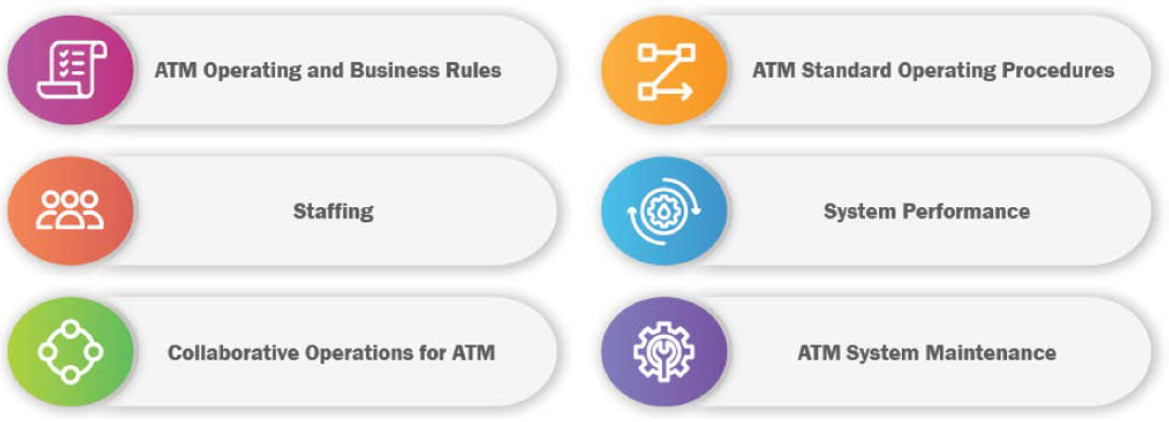
An operations plan serves as a blueprint for how an agency will operate its ATM or integrate ATM within its existing traffic management operating strategy. Several important decisions and considerations must be addressed at various stages of the planning, concept development, design, and implementation stages for ATM systems and technologies. Decisions and assessments on operations and maintenance needs should be part of each of these stages. When an ATM project approaches the actual operations stage, agencies should have already identified the resources, processes, and partnerships needed for successful operations and system maintenance. An operations plan is a tool that can formalize these decisions, as well as identify additional needs to support successful ATM operations and maintenance. An operations plan differs from a concept of operations, which articulates the ultimate vision of how an ATM system is desired to operate.
Figure 9-1 illustrates the key components of an ATM operations plan.
The following sections provide examples of each of these components and their benefits to ATM operations. System performance and ATM system maintenance are addressed in more detail in later sections of this chapter.
ATM Operating and Business Rules
Business rules help define the agreed-upon operations, decision-making, operating parameters, and operational strategies (Robinson et al. 2017). Ideally, these concepts are initially discussed as part of the planning and concept of operations phases and become more refined through the design, implementation, and early operations phases. In some instances, business rules may directly affect SOPs; in other instances, agency agreements or policies may need to be developed to formalize these rules. Business rules can be incorporated into system design (e.g., software algorithms that can adjust ATM strategies based on reaching certain thresholds) as well as the decisions and actions implemented by operations staff.
The Las Vegas I-15 ATM in Nevada provides examples of different business rules that were established that pertain to both system decisions as well as operational decisions. NDOT and the RTCSNV are partners in operations for a robust ATM on the I-15 corridor in Las Vegas. During system development, the NDOT and RTCSNV agreed that certain features of the ATM would be automated and built into the software. These automated features include speed harmonization and VSL adjustments. The agencies also agreed that certain features and functions of the ATM would be manual and require operator actions to implement. These manual functions include temporarily opening the HOV lane to all travel (such as when an incident blocks another lane) and activating the lane control signals and wrong-way driver alerts on freeway signs (Schilling and Gaisser 2023).
By defining automated functions, the agencies can build these capabilities into the ATM software. Manual functions may require additional processes to be defined in standard operating procedures. These manual processes may also require training to assist operators with making decisions on when and how to implement strategies.
ATM Staffing
ATM strategies can require highly complex decision-making and implementing advanced strategies beyond the strategies agencies currently operate as part of their freeway or arterial management systems. Decisions such as adjusting lane speeds, adjusting ramp metering rates, implementing dynamic lane control or reversal, or opening part-time shoulders can require engineering decision-making or approval by trained engineering professionals prior to initiating a strategy. Understanding the impacts of ATM strategies on staffing, particularly at the operations center, will allow agencies to examine if current staff will be sufficient, if new training is needed, or if new staff positions need to be created. This applies to in-house staffing as well as any strategies that involve contracted staffing. Additionally, maintenance needs and requirements for ATM systems and technologies may also require additional training or staffing to achieve desired levels of equipment performance.
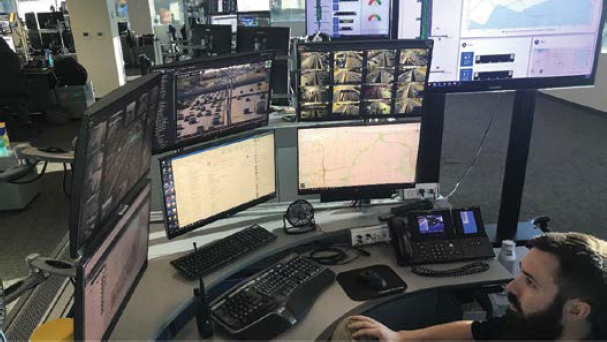
As part of the I-670 Smart Lane implementation in Columbus, Ohio, the Ohio DOT implemented a shoulder operations strategy using the median shoulder for eastbound traffic, VSLs, and LCSs across all lanes. This was the first implementation of ATM in Ohio and was intended to address frequent, recurring bottlenecks for eastbound traffic leaving the downtown Columbus area. The Ohio DOT recognized the need for a new staff position—an ATM specialist—who would have duties beyond the traditional TMC operator level and make decisions about activating shoulder operations, adjusting speeds, and implementing lane control signals (Athey Creek 2020). ATM specialists also have remote operating capabilities; if needs arise outside of the afternoon peak when ATM is typically activated, the specialist can address these needs even when not in the TMC (see Figure 9-2).
Because ATM may introduce some new operating and data analysis functions, both freeway and arterial agencies may need to evaluate current staffing roles, duties, and technical requirements to identify if new roles or new staff with different skills are needed. There are several emerging resources for transportation agencies that support the development of new job descriptions or the establishment of new roles.
One example is the Transportation System Management and Operations (TSMO) Workforce Guidebook, which was updated in 2019, to initiate a focus on building a next-generation workforce to support TSMO (Szymkowski et al. 2019). Recognizing that TSMO includes several advanced operating strategies that require new technical skills and capabilities, this guidebook provides agency resources for crafting new job descriptions, recruiting from nontraditional
(Source: Ohio DOT).
candidate pools, and implementing ongoing technical training programs to keep pace with evolving technology. ATM embodies many of these same needs.
The TSMO Workforce Guidebook is the cornerstone of a broader focus on TSMO workforce development needs. The National Operations Center of Excellence (NOCoE) continues to build resources and tools to support agencies in identifying new staffing needs as well as recruiting and training staff for advanced transportation operations and management skills. An emerging body of work and resources are available through NOCoE’s “TSMO Workforce Development” web page (NOCoE 2023). Professional staff positions that may be applicable to freeway and arterial agency ATM programs are shown in Table 9-1. Additional roles, such as equipment and system maintenance staff, service patrol drivers, and TMC operations staff are also applicable to ATM programs.
Collaborative Operations for ATM
While there are many examples of ATM implementations that are owned, operated, and maintained by a single agency and affect a single facility, ATM often requires direct and indirect involvement by more than just an operating agency. Understanding the scope of collaboration that may be needed, and from whom, is an important part of an overall ATM operations strategy. As a result, multiple internal and external groups may need to be involved in developing operating approaches, supporting ATM operation’s needs, or assessing the performance and impacts of an ATM strategy.
Opportunities for collaborative operations are ideally identified during the concept of operations stage of ATM planning. Operational scenarios can help identify many of the stakeholder interactions for different ATM strategies. Once ATM projects transition to operations, additional collaboration needs may arise.
Examples of collaborative operations for ATM include the following:
- Enforcement: ATM strategies such as VSLs (advisory or regulatory), lane closure systems, shoulder operations (see Figure 9-3), and dynamic HOV lanes may require support from law enforcement partner agencies to help promote both awareness and compliance for travelers. Without adequate enforcement, travelers may not see consequences for not adhering to dynamic changes in speed or lane use. Chapter 3 provides additional details and describes the role of law enforcement in many of these strategies.
- Multimodal operations: ATM strategies may affect how multiple modes are able to move through different facilities with specific ATM implementations. Traffic engineers need to
Table 9-1. TSMO staff positions applicable to ATM programs.
| Staff Position | Brief Description |
|---|---|
| Traffic Data Scientist/ Statistician | The traffic data scientist/statistician is responsible for extracting, organizing, integrating, analyzing, and communicating information obtained from a variety of traffic and/or toll data sources. The purpose of this role is to develop predictive analytics and performance measures, enhance the planning process, and enable data-driven decision-making. |
| Computer Engineer | This position is an engineering specialist that provides advanced engineering and technical guidance for computer systems to support ATM and other advanced transportation operations applications. This role collaborates with other technical staff for system compatibility, interoperability, and computer system operations and maintenance. |
| Artificial Intelligence Scientist | The artificial intelligence (AI) scientist supports next-generation AI/machine-learning-enabled solutions for traffic operations and management. This role requires knowledge of data and data management, analytics, emerging technologies, predictive capabilities, and knowledge of how these areas apply to transportation operations and management needs. |
| Telecommunications Engineer | This position focuses on the range of telecommunications capabilities and infrastructure needed to connect and support ATM and other ITS, including wireless and wireline capabilities, data network technologies and topographies, and security issues/needs for specific telecommunications infrastructure. |
| Data Management Specialist | The data management specialist is responsible for using a wide variety of information, knowledge, and tools to develop, modify, and administer databases used to store and retrieve data and to develop standards for handling data. |
| Visualization Specialist | The visualization specialist provides technical guidance, training, and support for various visualization tools, including augmented and virtual reality, data visualization, data analytics, and others. |
| Cybersecurity Engineer | The cybersecurity engineer addresses security risk assessments and develops cybersecurity protocols and policies to help ensure a resilient and secure data system and telecommunications network for ATM. |
| Systems Engineer | The systems engineer supports the development and analysis of engineering designs, specifications, and test plans. This role helps identify and align proposed technologies and equipment with industry standards and reviews new and emerging technology and software tools for potential deployment. |
| Transportation Systems Performance Manager | This role analyzes data from various systems and sources to extract trends and specific performance outcomes and helps use data to communicate ATM performance to a wide range of audiences. The transportation systems performance manager supports data-driven decision-making for operational decisions and investment decisions. |
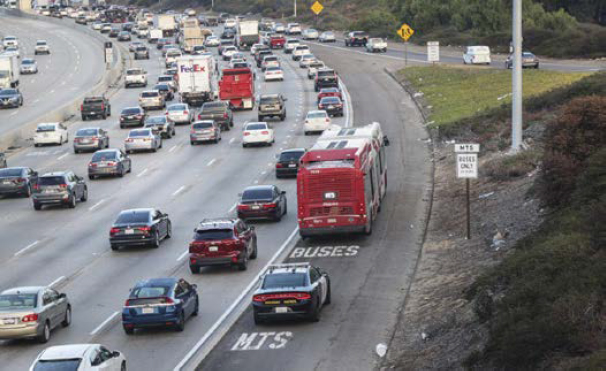
- understand the impacts of pedestrian signal operations on corridors with adaptive traffic control systems. Similarly, strategies such as transit signal priority could influence progression for other vehicles on corridors where this strategy is in place. Dynamic changes to HOV operations to allow non-HOV vehicles to use these lanes under certain conditions may affect transit performance. Establishing business rules for ATM operations should consider the range of potential multimodal impacts under different operating scenarios.
- Multiagency data sharing: Data from multiple agencies may be needed to support ATM operations, performance management, or system evaluation. Chapter 5 identifies several potential data types and sources that may be needed to support various ATM performance measures and assessments. Multiagency data for operations typically refers to real-time data, such as signal operations status on adjacent corridors, law enforcement computer-aided dispatch data for incident information, or transit schedule adherence data. ATM operations also can benefit from non-real-time data, such as planned or active work zone locations, planned special event information, or historical conditions and trends. Data-sharing agreements may need to be established to allow for the ATM strategy to integrate and use external agency data.
Additional potential collaborators for ATM may include the following:
- Contracted resources that support operations or device maintenance.
- System and software developers who support system maintenance.
- Non-law enforcement first responders such as fire, emergency medical services, tow operators, or hazardous materials teams.
ATM Standard Operating Procedures
Derived directly from the operational scenarios described in the concept of operation, SOPs document the actions and activities to be performed under different operating conditions. They can describe the steps, activities, and actions that both the system and the operators take to execute a response as well as how the operator interfaces with different elements of the ATM system while executing a response. SOPs can also document the state of different ATM devices when the system is at rest, upon activation, during operation, and during deactivation (i.e., returning to an at-rest or no-operation state). Other components of SOPs can include the following:
- Steps for troubleshooting and issue resolution.
- Chain of command for decision-making and approving changes to operating strategies.
- Contact lists for key stakeholders and system developers/providers.
- Links to supportive policies.
Implementing and refining SOPs can improve overall operations by encouraging consistency. SOPs can help identify process gaps and be updated to reflect any new operating approaches or strategies. ATM operations and maintenance functions can benefit from detailed SOPs. SOP compliance is an integral component of training and employee evaluation programs.
A key benefit of SOPs is the documented processes and procedures for using the ATM during specific operating conditions, such as traffic incident management, planned special events, inclement weather, emergency evacuation, construction and maintenance activities, and other special operating situations. The SOPs should also define how the system will operate when a failure exists with one or more of the ATM system components or subsystems. These failures could be because of equipment failures, loss of power, and/or loss of communication. Documented steps that operators can take to troubleshoot and diagnose issues, implement alternate or backup strategies, and initiate maintenance requests are all valuable components to SOPs. In some instances, systems can help automatically alert operations staff to offline devices,
Table 9-2. SOPs for WSDOT’s ATM system under failure conditions.
| Scenario | Action |
|---|---|
| All DMSs at the display group fail due to a localized failure. | The message for that display group will not be shown. |
| All DMSs at two or more adjacent display groups fail. | Continue using the remaining display groups in the system. |
| Side-mounted DMS (SMS) at a display group fails. | The message for that SMS will not be shown. |
| Variable dynamic message sign at a display group fails. | The message for that variable message sign will not be shown. |
| All LCSs except one at a display group fail. | Use operable LCSs. |
| Communication from the TMC to the sign fails. | The sign(s) should revert to the preprogrammed message after an adjustable interval of time. |
| Communication between the controller and the sign fails. | If the controller cannot control the sign, the sign will remain as is until maintenance switches the power off. |
| Power fails. | All signs go blank. |
SOURCE: WSDOT 2009.
malfunctioning equipment, or time-outs. These requirements need to be built into software and other systems to enable alerts and notifications.
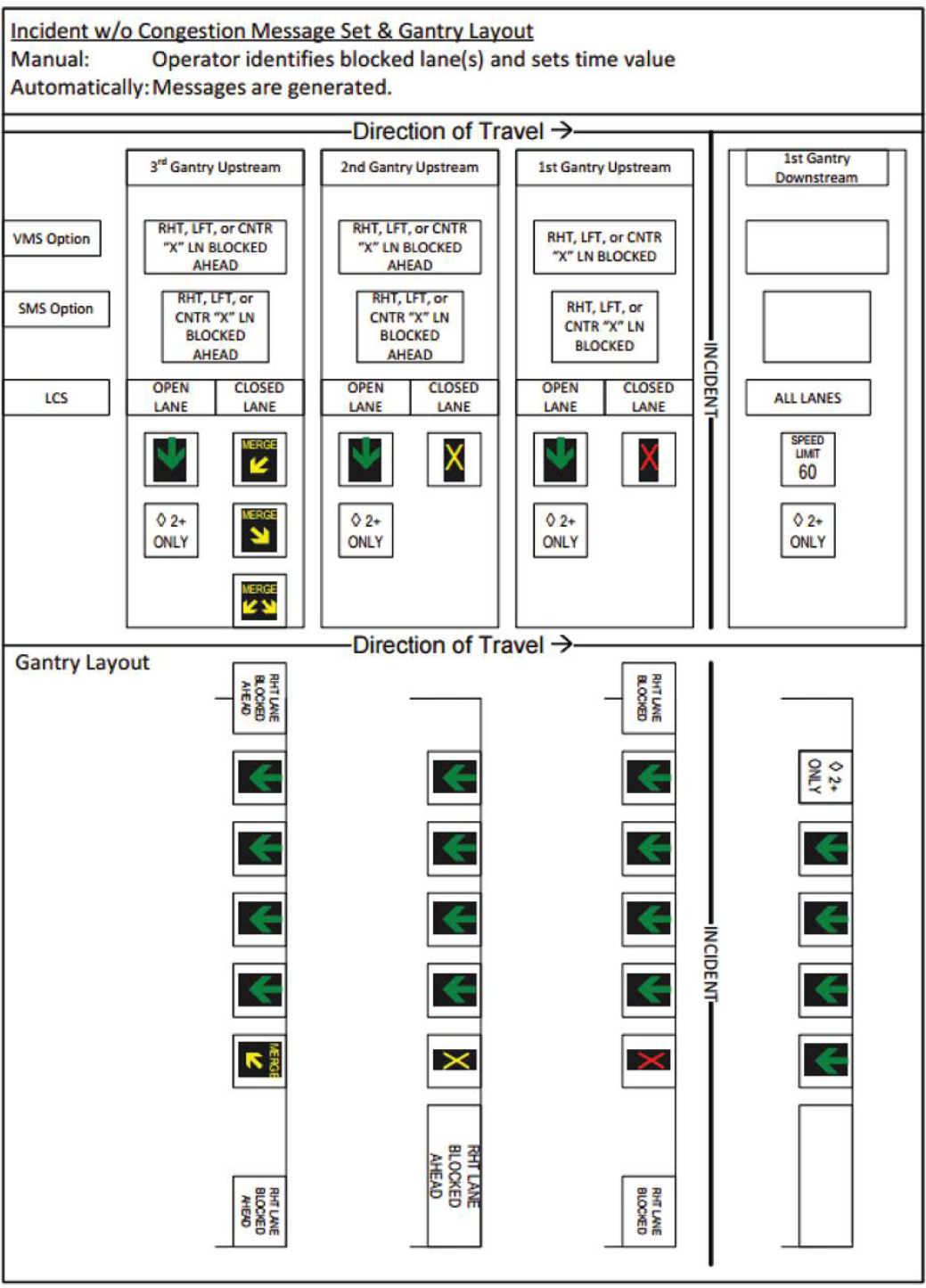
Table 9-2 provides example SOPs for WSDOT’s ATM system under failure conditions. Figure 9-4 provides example SOPs for operating WSDOT’s ATM system during incident conditions.
Daily Operations and Performance Monitoring
ATM involves dynamically applying and adjusting traffic management strategies in response to current, measured travel conditions; the ability to monitor and in some instances predict performance is a critical element of ATM. Performance monitoring is an ongoing internal process where system conditions and performance are examined and evaluated using data collected through devices and equipment installed in the field. Performance monitoring provides the data needed in the decision-making process. For performance monitoring, detection and monitoring systems are generally used to indicate the current operating state of the system and to identify potential operational problems and situations (e.g., traffic incidents) that need to be addressed by operators. For example, in the dynamic pricing concept, travel conditions are continually monitored to ensure that travel speeds and congestion levels remain at target thresholds (e.g., 45 mph). When systems detect that target thresholds are no longer being achieved (either actually or as projected), toll prices are automatically adjusted to reduce the demand for the facility. As operations in the toll lanes either improve (or are projected to improve), toll prices are lowered to allow more vehicles the opportunity to use the facility. This process of dynamically raising and lowering toll prices relies on infrastructure to constantly monitor the performance of the facility.
Performance Monitoring Versus Performance Evaluation
Performance monitoring differs from performance evaluation. Performance evaluation is a process—usually done post hoc and on a project level—in which collected data are analyzed
to quantify or justify the deployment of an entire system. Performance evaluation is generally an aggregation of cumulative effects of multiple management events over an extended period. Many of the outputs and outcomes of the monitoring process can be used as input in the overall evaluation process.
Chapter 5 presented several ATM performance measures that generally correspond to a performance evaluation context. As noted in Chapter 5, real-time operations performance monitoring and overall performance evaluation (and the supporting measures) will often draw from the same data sources; the major difference is the temporal context in which those data are used. Real-time performance monitoring for operations relies on up-to-the-minute data to influence operations decision-making and strategy implementation in real time.
Real-time performance monitoring for operations relies on up-to-the-minute data to influence operations decision-making and strategy implementation in real time.
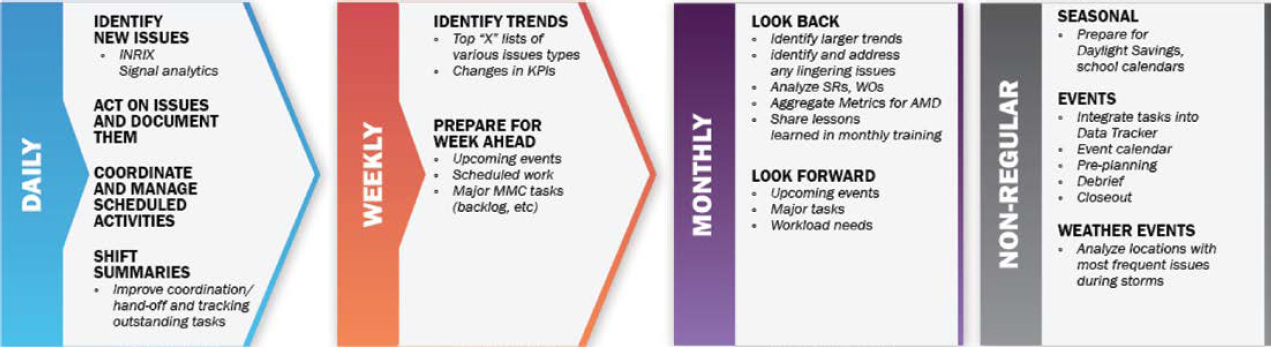
Agency managers may review performance activities and outcomes on a daily basis. By reviewing the outcomes of the past day’s events, agency operators can learn trends in performance over time and fine-tune the deployment of management strategies. On a more micro level, ATM system performance can be monitored and reviewed throughout a specific event or throughout a single day to assess any immediate adjustments that might need to be made. This process allows agencies to adjust deployment thresholds and fine-tune management strategies. The City of Austin, Texas, built its work processes around the structured monitoring of key performance indicators, with important considerations at the daily, weekly, and monthly levels (Figure 9-5). This approach helps City staff be better informed about system priorities, identify issues early, and develop mitigation strategies or necessary changes.
As discussed in Chapter 5, it is important for agencies to track the daily variation in travel conditions on the managed facility and the corridor. A primary focus of ATM is the reduction in travel-time variation. Freight shippers, transit operators, and commuters in general place a high premium on reliability and consistency of travel; deviations from the norm in terms of travel times can be a significant cause of traveler frustration.
In some cases, agencies may want to monitor performance by individual mode. For example, monitoring transit travel times, travel-time reliability, and on-time performance may be important to ensure that transit service is not negatively impacted by some ATM techniques. Likewise, it is important to collect performance data for trucks and other commercial vehicles for those ATM strategies that are focused on freight movement. The reader is referred to Chapter 5 for more information on performance measures for ATM.
Visualizing Operational Performance
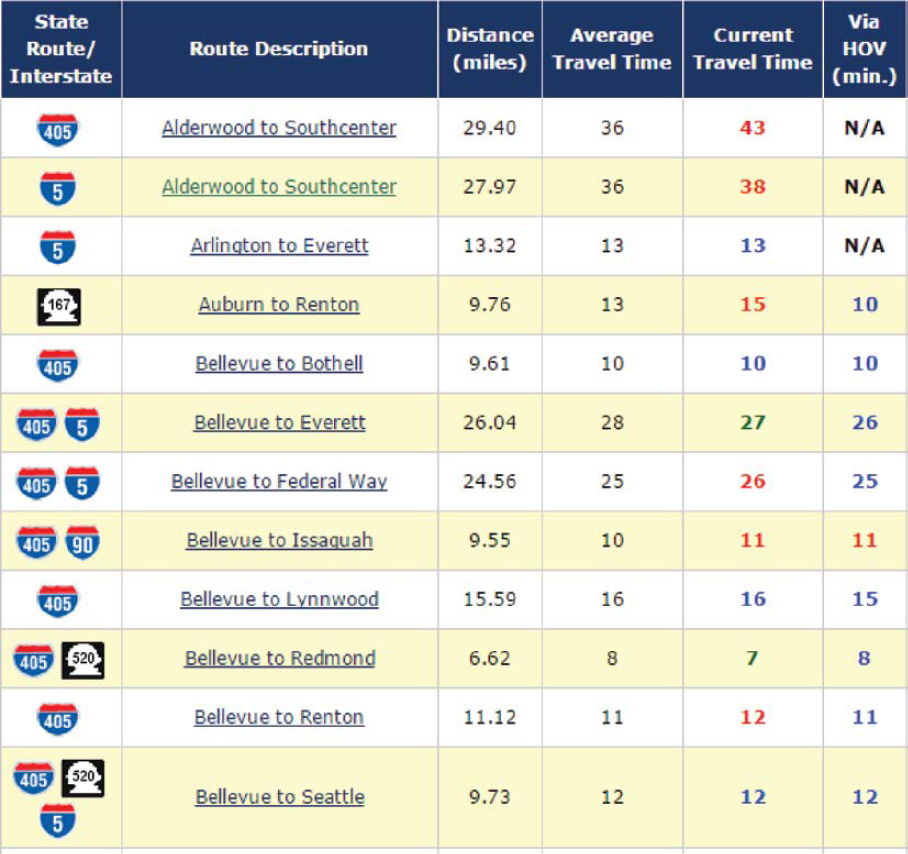
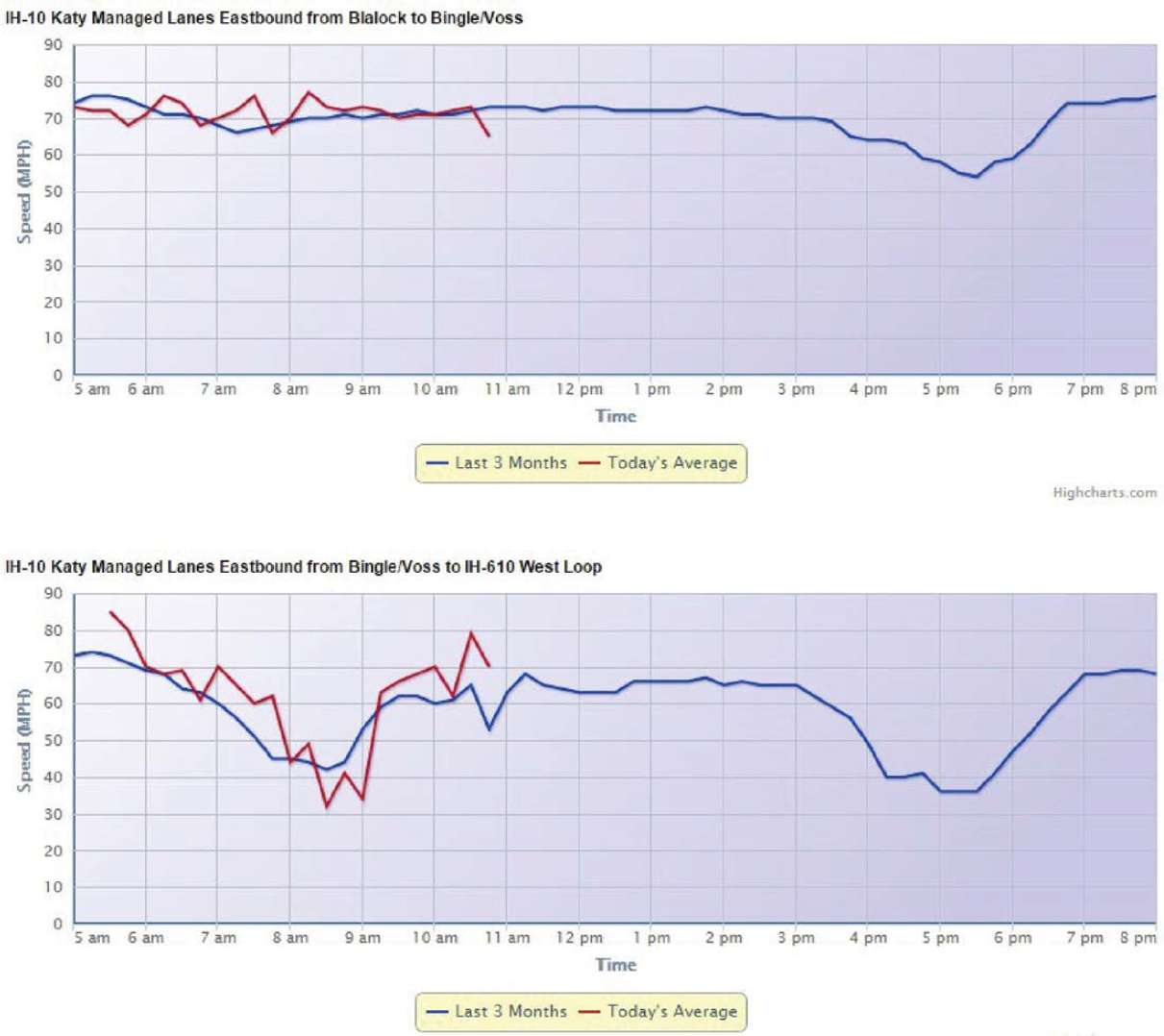
Dashboards are a common tool used by some agencies to present travelers with information on the current conditions of travel in a region or to inform operations staff of current operations and trends. These dashboards frequently compare the current conditions to expected or historical conditions for the same time of day. Figure 9-6, Figure 9-7, and Figure 9-8 provide examples of performance monitoring used by agencies in the United States.
Adaptive Ramp Metering
For adaptive ramp metering, activation will be based on thresholds for volume on the freeway, storage length on the ramp, occupancy of the freeway and ramp segments, and forecasted bottlenecks on freeway segments. A preset logic will determine the threshold frequency, time span of strategy activation, and other factors. For adaptive ramp metering, volume (vehicle throughput) and delay (vehicle-hours) will be used in the short term to evaluate the operational effect of the strategy, and the thresholds will be adjusted accordingly.
For example, the Minnesota DOT (MnDOT) established its occupancy or metering rate algorithm by incorporating factors such as maximum wait time for ramp, queue storage capacity for ramp, and delay on the mainline. The agency multiplies each ramp factor by a predefined maximum percentage of allowance [e.g., target wait time = α(%) × maximum wait time for ramp]. By analyzing the current volume and delay, the maximum percentage of allowance can be adjusted to enhance the strategy.
Long-term performance monitoring will analyze traffic parameters including VMT, travel-time index, and overall crash rate on a quarterly or annual basis. This analysis will determine the weight and effectiveness of the strategy in achieving the operational objectives. If required, further research will be conducted to tailor the design and execution of the strategy to meet the objectives.
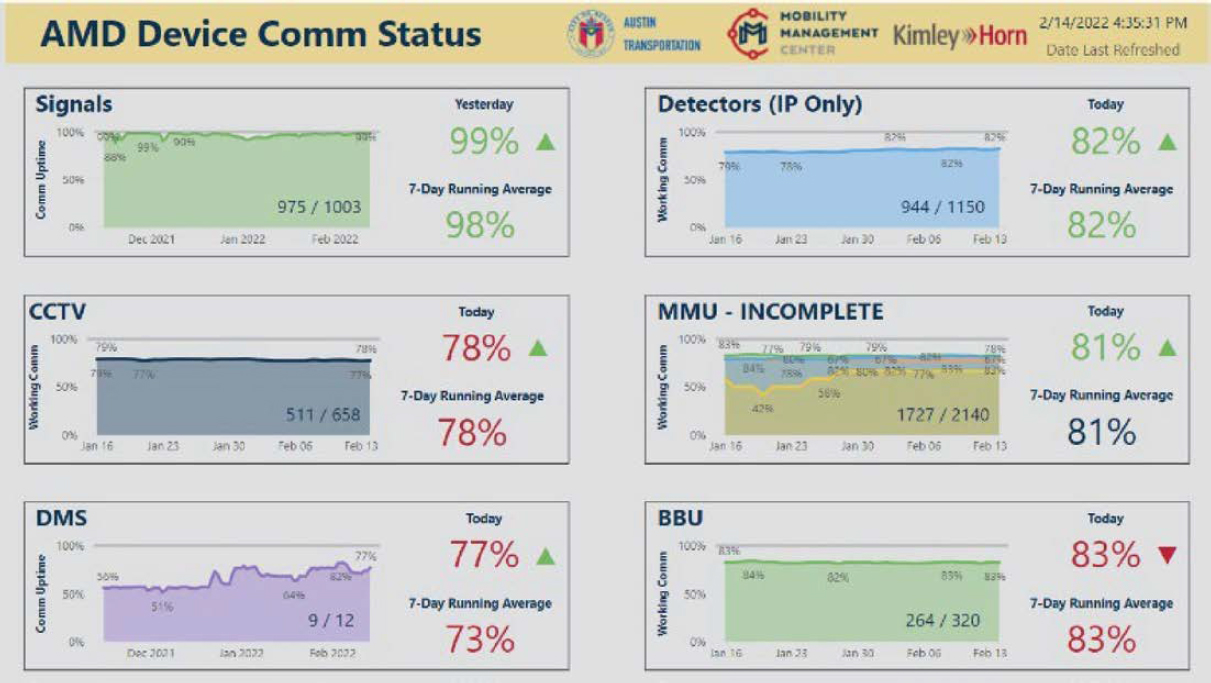
Note: MMU = Malfunction Management Unit; BBU = Battery Backup Unit.
Dynamic Merge/Junction Control
In most cases, the dynamic merge/junction control strategy will be activated based on the occupancy and speed thresholds upstream on the freeway. This strategy can be evaluated in the short term by comparing traffic parameters such as the speed and delay. Consistency in speeds over the freeway segment and change in delay over the analysis period would capture the smoothness of the flow. This evaluation would provide insight into maintaining a smooth flow on the mainline. Any changes in the occupancy thresholds would be performed based on the effects of the strategy on speed and delay during the period of interest. Thus, the operating thresholds could be changed based on the short-term performance monitoring.
Performance evaluation analyzes parameters such as secondary crashes, overall crash rates, and VMT. This evaluation would consider the effects of strategy design and execution in achieving its operational objectives, including reducing incidents due to merging, reducing aggressive driving, and maintaining a smooth flow at the network level. Some agencies do adjust advisory sign spacing over the long term. Typical spacing between merge advisory signs ranges from 0.25 to 0.5 mi. This spacing is determined based on the visibility of the sign and the complexity of the road geometry.
Dynamic Lane Reversal
Short-term performance monitoring of dynamic lane reversal will include analysis of the trends of congested travel over a short period. If the trends indicate a negative effect, then the thresholds and hours of operation might be reassessed. Simulators may be used to test different scenarios before implementation. Generally, dynamic lane reversal installations are not adjusted
in the short term. Arterial installations are often configured to only handle weekday, peak-period commuter traffic. Freeway installations generally involve movable barriers that are used to handle peak-period traffic. The length of time required to change the configuration of movable barriers makes them less likely to be used to dynamically handle nonrecurring events (i.e., incidents).
Long-term performance monitoring will assess the percentage change in VMT and volume on a quarterly or annual basis. This will provide direction for any adjustments to the operation of the strategy. Sometimes, these reports can provide valuable input for simulation testing before execution.
Dynamic Lane-Use Control
In general, the operating technique for dynamic lane-use control will be manual; the effectiveness of this strategy relies mostly on the reaction time to the incident or event. Therefore, short-term performance monitoring would primarily look for delays or congested travel to adjust the spacing of lane control signs and improve the reaction time.
In their dynamic lane-use control system, WSDOT operators receive an automated alert for both the occurrence of an incident to activate sign control and the clearance of an incident (i.e., alert closure) to deactivate sign control.
Long-term performance monitoring will review incident reports to evaluate the percentage change in overall crash rates, secondary crashes, incident clearance times, and lane-hours lost due to incidents. This exercise will guide the design and execution team in adjusting incident reporting and activation methods, including possible locations of incidents, safe times to reopen a lane, and more.
In a separate example of long-term performance monitoring, WSDOT presented the impacts of ATM on crash rates over a 5-year period (July 2007 through September 2012) (WSDOT 2013). During this evaluation period, WSDOT reported a collision rate decrease of 4.1 percent along the I-5 ATM corridor compared to a collision rate increase of 2.4 to 4.4 percent along three non-ATM corridors. While this evaluation did not differentiate the effectiveness of any specific ATM strategy, the results showed the long-term effectiveness of the ATM strategies.
Dynamic Shoulder Lane
In general, dynamic shoulder lanes are activated based on the peak and off-peak traffic conditions and speed thresholds to reduce congestion-related delays. Dynamic shoulders can be an effective strategy for increasing capacity when demand is high, either during peak-travel periods or when special events or incidents impact travel lanes (FHWA 2019). To evaluate the effectiveness of this strategy, short-term performance monitoring of vehicle throughput is necessary. This monitoring will capture the throughput trends on a weekly or monthly basis and adjust the time of activation and speed thresholds.
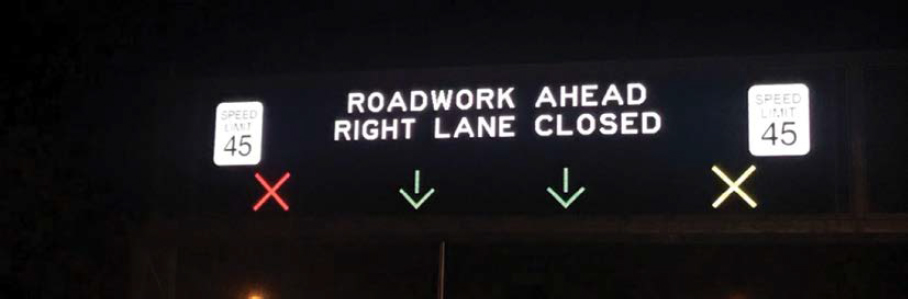
Many agencies have specific business rules for implementing flexible shoulder lanes and do not rely on automated systems alone. The Michigan DOT (MDOT) implements a flex lane on US-23 during a.m. and p.m. peaks on weekdays and will initiate flex lane operations during periods of heavy congestion and/or special events (e.g., Michigan State University football games). A 2021 evaluation of the US-23 flex lane system showed differences in volumes and traffic patterns with flex lane operations during different special events as well as during different weather conditions (Michigan State University 2021). The Ohio DOT does not have a specific or set time window for opening the shoulder on the I-670 corridor in Columbus. The need is identified based on travel conditions, typically during the afternoon peak. Prior to opening the shoulder to travel, the Freeway Service Patrol will conduct a drive-through to ensure there are no stalled vehicles or incidents blocking the lane (Figure 9-9).
To evaluate the effectiveness of dynamic shoulder lanes, long-term performance monitoring of vehicle-hours and VMT under and over predefined speeds will be necessary. This monitoring will provide key inputs to reassess the threshold algorithm and the effectiveness of shoulder lane management, particularly for agencies that use dynamic shoulder strategies.
Dynamic Speed Limits/VSLs
For short-term performance monitoring, vehicle speed and throughput trends will be compared on a daily, weekly, or monthly basis to improve the algorithm for dynamic speed limit activation. Simulators can be used to test different case scenarios before implementing the actual decisions.
Some state DOTs adopt the 85th percentile speed as their dynamic speed limit, while others (e.g., MnDOT) adjust thresholds based on deceleration rate. As part of its US-23 flex lane operations, the MDOT will post a 60-mph advisory speed on its VSL signs whenever the flex lanes are open, typically during peak a.m. and p.m. travel periods. Advisory speeds on US-23 adjust in 10-mph increments based on congestion detected by microwave vehicle detectors on the route (Michigan State University 2021). The Wyoming DOT (WYDOT) has operated VSLs on the I-80 corridor to reduce speeds during inclement weather. Recommended speed reductions typically came from the Wyoming Highway Patrol or WYDOT maintenance in the field, and speeds would be lowered by staff in the TMC. Wyoming has recently launched a pilot to semi-automate VSL signs in response to roadway sensors on a segment of I-80 (AASHTO 2022).
A long-term perspective for VSL performance monitoring would consider parameters such as congested travel, secondary crashes, and hours lost due to incidents or special events to understand the effects of existing execution in achieving the operational objectives of the strategy. These quarterly and annual performance monitoring exercises would provide key inputs including adaptability to speed changes and network level effects of speed changes.
Queue Warning
Queue warning systems generally will not involve short-term threshold adjustments. Operators will need to monitor the length of queue day-to-day to make sure queues are not forming outside the measured area. If the length of a queue increases beyond the measurement point, then adjustments must be made to the detection area.
Queue warning effectiveness can be evaluated by analyzing safety and delay parameters. For safety analyses, a long-term performance monitoring system will be most suitable for this strategy. Incident reports will provide insight into overall crash rates and secondary crashes on a quarterly and annual basis. Necessary adjustments will be made to thresholds for speed and occupancy. These scenarios can be tested in simulators to observe the response time and
distance requirements. For queue warning systems used in conjunction with work zones, delay and mobility performance analysis can help determine the effectiveness of the strategy.
Transit Signal Priority
Transit signal priority (TSP) involves a mostly automated system activated based on the recorded time stamps of the transit vehicles. For example, in Los Angeles, California, all buses and light-rail trains operated by Los Angeles Metro are equipped with a time-point based system that allows transit operators to track their position. This system is a set-and-forget type of system, which will have no adjustments in the short term. The prime reason is the advance availability of transit schedules and clearly defined logic.
Long-term TSP performance monitoring will observe the signal timing plans and evaluate the effect of TSP on general traffic. These signal plans will provide an estimate of added delay to the general traffic. Thus, necessary adjustments will be made to the time schedule of the transit vehicles, which is more adaptive to the current and forecasted scenarios. A simulator test can be performed to check the effectiveness of the adjustments.
Establishing Thresholds for Performance Monitoring and Management
Because ATM strategies require very robust data collection and data analytics, it is important that agencies account for these measures during the initial planning and design phases of the project. Thresholds used in ATM strategy management are often based on day-to-day experiences of the TMC operators and/or software developers who embed these thresholds in the system. Business rules can establish when certain criteria or thresholds are met. Strategies can then be implemented or adjusted. As more ATM strategies are deployed, it is critical that a more formal process for developing and adjusting these thresholds is in place to enable a systematic fine-tuning and adjustment of the parameters. Furthermore, it is important for the transportation agencies to include formalized evaluation and performance monitoring as part of their project and to publish the results for the use and benefit of other agencies.
Typically, deployment agencies’ use of data and performance monitoring during ATM strategy activation falls into the following two types of processes, which vary greatly as to the thresholds used.
- Automated systems: Data are automatically collected and applied to a set threshold to activate an ATM strategy. Few fully automated systems exist to reference in determining appropriate thresholds for activation and deactivation. Speed and occupancy of mainline detection is typically the fundamental data source for automated system alerting or decision-making.
- Manual systems: Data are collected or visual confirmation is acquired, and operators must manually make operational changes to their ATM applications. The processes are not automated other than potentially the data collection effort. Analysis of the data is largely done manually based on established business rules and is potentially dependent on the experience of the staff making decisions. ATM strategies that have been deployed to support weather events and most shoulder use applications are manual systems that rely on an operator to verify activity prior to manually changing a sign display. The data most used by operators in using manual ATM systems involve a combination of mainline speed detection, speed map displays (from probe data), or CCTV camera image monitoring.
Table 9-3 shows that each ATM application has a set of operational objectives and traffic parameters that deployment agencies have reported; these can be measured in real-time to assess current operating conditions. From the investigated deployment agencies, there are recommended operational strategies associated with the objectives.
Table 9-3. Strategies, data, and implementation processes.
| ATM Strategy | Operational Objectives and Traffic Parameters | ATM Strategy Threshold | Minimum Data Required | Implementation Process |
|---|---|---|---|---|
| Adaptive Ramp Metering | Maintain smooth flow of mainline, increase throughput without backing up arterial cross streets, and minimize wait times to get onto freeway. | Thresholds typically combine mainline occupancy, mainline volume, ramp queue length, and/or ramp storage length. For larger ramp meter systems with many along a single corridor, an adaptive system that interprets ramps upstream and downstream of the detected thresholds is effective. For smaller ramp meter systems with only a few along a single corridor, an adaptive system that interprets the local ramp traffic characteristics should suffice. | Occupancy, speed, and vehicle count (volume) | Automated |
| Dynamic Merge/Junction Control | Maintain smooth flow of mainline, reduce incidents due to merges, and reduce aggressive driver behavior. | Late merge applications should activate when occupancy is >15% and deactivate when occupancy is <15% or when average speed drops 5 to 10 mph below posted speed, with a minimum activation time of 5 minutes. Early merge applications should activate when occupancy is <5%. Traditional merge should occur when occupancy is 5% to 15%. | Occupancy and/or speed | Automated |
| Dynamic Lane Reversal | Allow existing capacity to better match traffic demand throughout the day. | Dynamic lane reversal should be considered for closures of ≥1 hour, with the threshold equal to twice the time it takes for the reversal to be activated. For example, if the reversal takes 1 hour, the reversal threshold should be at least 2 hours of closure time. | Major incident occurrence | Manual |
| Dynamic Lane-Use Control | Reduce crashes and improve safety. | Activation is operator-controlled based on visual confirmation of lane closure or system alert to close a lane. | Incident alert | Manual |
| Dynamic Shoulder Lane | Reduce vehicle density per lane and increase service volume capacity. | Speed shall be monitored along the mainline to warrant use of shoulder lanes to ease congestion. Operator should verify that no obstructions exist in the shoulder lane prior to opening. Where speed data are not available, time of day applications of this ATM strategy are effective and have been evaluated to be safe through proper signage and public education. | Speed of mainline detection | Manual—alerted by speed data; automated—alerted by time of day |
| Queue Warning | Reduce rear-end crashes and improve safety. | Detecting lowered speed should automatically populate upstream message signs to alert of queue forming ahead. | Speed and, potentially, occupancy | Automated |
| Transit Signal Priority | Allow more efficient bus movement through signalized intersections. | Transit schedule adherence should trigger transit signal priority feature along transit route. | Vehicle location and schedule adherence | Automated |
| Dynamic Speed Limits/VSLs | Increase speed, maximize throughput, decrease congestion, reduce secondary incidents, and reduce speed variation near an incident or weather event. | Activation is based on the 85th percentile speed posted upstream of slower speeds, adverse weather conditions, and/or alignment with other strategies such as flexible lanes or shoulder operations. | Speed and, potentially, occupancy; observations; pavement conditions (e.g., icy, wet) | Automated Manual |
ATM Asset Management and Maintenance
Traffic management systems are complex, integrated systems of hardware, technologies, and processes designed specifically to perform an array of functions of which ATM is but one component. Disruptions or failures in the performance of any one of these functions not only can impact traffic safety and reduce system capacity but also can lead to the traveling public losing faith in the information and guidelines provided on the transportation network. The problem is further complicated by the fact that today’s systems, subsystems, and components are often highly interdependent, meaning that a single malfunction can critically impact the ability of the overall systems to perform their intended functions.
Maintenance for ATM includes replacing worn components, updating or repairing supporting infrastructure, installing updated hardware and software, fine-tuning the systems, and anticipating and correcting potential problems and deficiencies. Maintenance includes the development and implementation of action plans for responding quickly, efficiently, and orderly to systemic failures. Maintenance may also require prioritizing responses to certain devices or system failures. As an example, many ATM strategies rely on robust and reliable detection to inform strategies, so any issues with vehicle detectors can impact adaptive strategies, VSLs, queue warning systems, and potentially other applications.
Maintenance needs would be considered at various stages of ATM planning, design, and implementation. Understanding maintenance needs, the agency’s available resources for maintenance, the agency’s ability to respond to emergency maintenance needs, and other considerations are an important part of the overall ATM planning and implementation processes. If new maintenance requirements emerge related to new technologies or the need to acquire additional staff resources, agencies may need time to staff up, develop training programs, or explore options such as maintenance contracts.
ITS Asset Management
Transportation agencies are placing increased emphasis on better managing assets across the full spectrum of transportation infrastructure. Asset management requirements are included as part of federal legislation [23 Code of Federal Regulations (CFR) Part 515], which defines asset management as follows:
A strategic and systematic process of operating, maintaining, and improving physical assets, with a focus on both engineering and economic analysis based upon quality information, to identify a structured sequence of maintenance, preservation, repair, rehabilitation, and replacement actions that will achieve and sustain a desired state of good repair over the life cycle of the assets at minimum practicable cost.
State transportation agencies are required to develop a Transportation Asset Management Plan (TAMP) for the National Highway System’s pavements and bridges. Currently, no similar requirement exists for ITS assets such as traffic signals, DMSs, cameras, or other technology infrastructure, nor is there a requirement for local agencies to develop TAMPs. The minimum information required in a TAMP for pavement and bridge infrastructure is also applicable to ITS assets if a state DOT chooses to include technology assets in its TAMP. The following eight elements from 23 CFR Part 515 can also be applied to ITS assets (McKay and Senesi 2022):
- Summary listing of assets.
- Life cycle planning.
- Asset management objectives.
- Measures and targets for asset condition.
- Risk management.
- Performance gap identification.
- Financial planning.
- Investment strategies.
ATM may include a variety of different types of assets that need to be managed and maintained, including signs and signal poles, signal heads, gantries, cabinets as well as technology-focused assets such as dynamic signage, detection equipment, communications infrastructure, and software. The technology elements of ATM require agencies to approach asset management and maintenance not only from the repair-and-replace perspective but also to consider the requirements when technology elements become obsolete. Some technologies may have shorter life cycles than traditional infrastructure. Processes should be in place to monitor the performance of the technology and device/system health to detect malfunctions or anomalies. Similarly, multiple technology components may have different life cycles. With multiple components
often working together to deliver an ATM strategy, unique considerations may exist for interoperability among components if one is replaced or upgraded. Specific technical skills also may be required to address repairing, replacing, or integrating technology assets.
Agencies may want to develop an approach for determining what constitutes an ATM asset and a strategy for tracking assets. Some agencies track the individual device, while other agencies track the individual components that make up a device (McKay and Senesi 2022). As an example, a traffic signal may be considered a single ATM asset, but several components support traffic signal operation, such as detection devices (in-pavement or nonintrusive), communications infrastructure, controller hardware, cameras, pedestrian signals, and the signal pole and mast arm. If an agency tracks a traffic signal as a single asset, it will need to determine how to address the individual components that make up the signal operations.
Understanding the relationship between ATM components and conventional roadway assets, such as pavement and bridges, will also help inform an agency’s asset management strategy, including whether to approach ATM asset management as a stand-alone activity or integrate it with the broader agency enterprise-wide asset management strategy (AASHTO 2023).
Agencies will need to determine how ATM assets are to be tracked and if new tools or methods are needed for ATM equipment inventories. Enterprise-wide systems for inventory and asset management software may be well suited to conventional roadway assets such as bridges, pavements, and static signage. The UDOT developed custom software to support ITS devices that displays the specific location of the device, contains information from routine checks, promotes enhanced data quality for inventory information, and helps UDOT to quickly identify trends and issues (NOCoE 2020).
Resources
The FHWA has developed several resources and publications that provide insights on ITS and technology asset management that are applicable to ATM technology components and traditional supporting infrastructure (FHWA 2023). Further, additional resources exist to help transportation agencies formulate an approach to managing and maintaining ATM assets along with examples of how state DOTs are including ATM and technology infrastructure into the broader agency TAMP. These principles and resources are also applicable to non-state DOT agency asset management programs.
Maintenance Management Strategies
Agencies may consider a range of different approaches to managing ITS assets. Three common approaches are presented in Table 9-4.
Agencies will need to determine their available resources to support all three types of maintenance activities; agencies can use in-house staff and/or supplement with maintenance contractors to address some or all of their ATM asset maintenance. Because many of the technology components that make up ATM systems are the same as the ITS devices agencies maintain, no separate ATM asset management group or strategy typically exists. The role and function might elevate the priority of certain ATM equipment maintenance needs. For example,VSL signs in need of maintenance or repair might constitute a high priority, immediate emergency response. Agencies will need to determine the appropriate threshold for maintenance response to ATM equipment failures or malfunctions.
Field Hardware
Field infrastructure devices should be designed to minimize the amount of time maintenance forces are required to work over travel lanes. Signs and other devices needed to execute an ATM
Table 9-4. Maintenance management approaches.
| Approach | Description | Considerations |
|---|---|---|
| Condition-Based Maintenance Management | Maintenance activities are scheduled based on regularly monitored performance. Typically used for assets with long life cycles. | Technology may not present many maintenance needs until equipment fails. |
| Interval-Based Maintenance Management | Maintenance activities are scheduled at specific time intervals based on an analysis of asset performance. Used for assets with short or long life cycles. | Relies on anticipated maintenance windows based on vendor/manufacturer recommendations or industry practice. Challenging to predict intervals for frequency of technology maintenance unless specific failures or issues are experienced. Different components or technology may have different recommended intervals. |
| Reactive Maintenance Management | Maintenance activities are performed in response to reported asset failures or events, such as a vehicle collision or component failure. | Requires repair/replacement to return service. |
SOURCE: Adapted from McKay and Senesi 2022.
response should be designed to be easily installed, removed, and replaced in a minimal amount of time and with minimal impacts to travel lanes. Special maintenance lifts and similar systems may be needed to expedite any movement of the signs. Additionally, the devices themselves should be selected to ensure high reliability and minimal maintenance to minimize replacement activities. Agencies may also consider providing backup power (via an uninterruptable power supply or redundant power) to minimize outages during power service interruptions.
Depending on the implementation, some ATM strategies and equipment will require special maintenance considerations. For example, in Seattle’s ATM deployment, each sign bridge (gantry) and cantilever structure must be inspected by the WSDOT Bridge Preservation Office. Because inspections are not permitted at night, these inspections must be done early Saturday or Sunday morning. This requirement translates to higher labor costs, and any maintenance of these structures may require multiple sessions of setting up and removing traffic control (AASHTO 2012).
In addition to keeping the display devices operating at optimum performance, many ATM deployments depend on data provided by traffic sensors to detect congestion and make real-time adjustments to operating parameters. Because of the effects misinformation can have on the algorithm performance, it is critical that the traffic sensor and CCTV systems associated with these deployments (e.g., adaptive ramp metering, VSLs, or dynamic shoulder operations) be maintained at a high level of performance.
ATM Software
Most agencies that are deploying an ATM system already have a traffic management central software system that they operate. As a result, these agencies are looking to integrate these new capabilities into their existing traffic management software. Some agencies have ATM operating systems separate from their advanced transportation management system operations.
A few agencies have personnel on staff who can add new functionality to their software systems; however, most agencies do not have these capabilities on staff and require assistance and support from software developers and vendors. Maintenance of control center software often requires unique software skills, and these requirements force agencies to use either their
original software vendor or another qualified contractor to add new ATM functionality. Many systems are migrating to cloud-based options, which allows for more flexible support by the system developers. Procurement processes and software contracts may include some level of warranty support for critical software and system needs. On-premises systems may require initial troubleshooting by TMC staff.
Maintenance Management Systems
Because of the added number of devices and the importance of maximizing efficiencies in maintenance operations, agencies are strongly encouraged to utilize a maintenance management system with their ATM deployments. Many enterprise-wide asset and maintenance management systems may not adequately support the asset tracking and management needs for ATM and ITS devices. Some agencies use a combination of custom tools, geographic information systems, spreadsheets, and databases.
The MDOT developed an asset management system to help the agency better manage its growing inventory of ITS devices, some of which are used for ATM implementations on key corridors throughout the state. Michigan’s ITS asset management database allows MDOT to track both inventory as well as maintenance activities because it is linked to a work order system. A reporting module also generates performance and condition reports for Michigan’s ITS assets. MDOT relied on a vendor to help establish the initial database and maintains the information through a combination of staff updates and new device capture during construction projects (NOCoE 2020).
ATM Maintenance Staffing and Training
Many agencies continue to experience issues associated with recruiting and retaining personnel with the requisite knowledge, skills, and abilities to maintain sophisticated hardware and software systems. While most agencies deploying ATM systems already have experience maintaining advanced traffic management systems, adding additional maintenance requirements associated with ATM systems can further stretch limited maintenance personnel and resources.
Because of the need to minimize the downtime associated with ATM devices, agencies may need to assess alternative methods for maintaining ATM devices. One alternative may be to use an outside contractor to defer some of the maintenance burden borne by existing staff. Many agencies use outside contractors to supplement regular staff and to stock specialized equipment as spare parts during emergencies.
Staffing
There are several advantages and considerations when developing a staffing strategy for ATM. Table 9-5 highlights the advantages and disadvantages of using both in-house and contracted services for different types of maintenance activities.
Training
The availability of properly skilled and trained staff throughout the life cycle of an ATM implementation is important to getting the most out of any ATM system and assuring that it meets its intended concept of operations throughout the system’s intended life cycle. Both in-house and outsourced operations and maintenance personnel require training not only on the detailed procedures for maintaining ATM-related devices but also on established business rules and agency safety and operations procedures. Resources should be allocated to provide training for new employees, training for existing employees on new technologies, and refresher courses for safety and other operational procedures.
Table 9-5. Advantages and disadvantages of using in-house versus contracted services for different maintenance activities.
| ATM System Element | In-House | Contracted Services | ||
|---|---|---|---|---|
| Advantages | Disadvantages | Advantages | Disadvantages | |
| Control Center | In-house system skills remove dependencies on possibly unstable businesses. Provides career path for employees. | Difficult to keep and reward competent programming staff. Long hours are unpopular. | Already has system knowledge and can more readily deal with software bugs. Wider skill range. Not subject to union restrictions. More flexibility in staffing choices. | Expensive; however, true cost comparisons need to include all costs (e.g., pensions, benefits). |
| Roadside and Field Equipment | Agency often owns much of the needed equipment. Can coordinate schedules with other agencies. | Requires a staff increase, which is sometimes institutionally unacceptable. Private contractors can be more responsive. | Reduces agency staffing needs. Provides wider range of skills. Can more readily operate outside of office hours. | Pricey, and the agency can lose some control over job priorities. Contractor needs real estate and plant. |
| Communications | In-house skills provide more job satisfaction for agency employees. | Difficult to keep and reward competent staff. Specialized equipment is expensive and used infrequently. | Has system knowledge and likely to be more timely in response. Can rent specialized services and equipment quickly. | Expensive. |
SOURCE: Vick and Sumner 2002.
The general types of training to be provided to staff include the following:
- Vendor-provided training: Involves having individual equipment vendors conduct on-site training on maintenance and operations specific to the equipment implemented with an ATM deployment. This training would be targeted primarily to those individuals responsible for providing maintenance and repairs of equipment, whether in-house staff or contracted maintenance staff. Help modules may also be available online through specific systems.
- Operations training: Involves hands-on training for operators and other personnel on the concepts, technologies, and procedures needed to operate and manage the implementation of ATM strategies. Maintenance troubleshooting can be addressed within the SOPs and developed in partnership with maintenance teams (in-house or contracted). Maintenance procedures, such as requesting trouble tickets, logging maintenance issues, and verifying maintenance has been completed can be integrated into the SOPs. Much of the operations training will be on-the-job.
- Training resources: Involves training on the general principles and practices related to ATM and other traffic management strategies. This training is generally targeted toward personnel responsible for managing operations and maintenance personnel. Several resources provide a range of trainings on various concepts and elements related to ATM, typically through a TSMO- or ITS-focused training program on topics such as data management and analytics, network design and deployment, operations performance measures, signal operations, and
- others. Training is available through a range of universities and organizations, including the following:
- National Highway Institute.
- Institute of Transportation Engineers.
- Consortium of ITS Training and Education.
- U.S. DOT ITS Professional Capacity-Building Program.
- ITS America.
Final Remarks
This chapter presents considerations for agencies as they shift from implementing ATM strategies to operating and managing a wide range of ATM strategies, systems, and technologies. Ongoing operations and management require staff with the technical skills to operate different elements of ATM as well as unique skills to maintain different ATM assets. Operations skills include actively managing both arterial and freeway systems that incorporate one or more ATM strategies, such as adaptive operations (for traffic signals and ramp meters), multimodal operations, and event-responsive operations (for incidents, closures, weather events, or other network impacts). In some instances, ATM systems can be configured to automatically adjust operational strategies, although these systems will still require skilled staff to assess the effectiveness of the adjusted strategy or fine-tune algorithms to improve how the system responds.
This chapter also presented case studies showing how some agencies have implemented new staff roles and positions to meet the needs for ATM operations as well as outlined potential future roles that apply to ATM. Staffing for ATM operations and maintenance can be addressed through in-house staff or by augmenting internal resources with contracted staff for functions such as TMC operations, device maintenance and management, and performance reporting.
Managing and maintaining assets are essential for agencies to gain the full benefit of their ATM investments. In many cases, ATM strategies may comprise multiple technologies or components, each with unique maintenance considerations and life cycles. Developing a strategy for managing ATM assets—whether combined with an agency’s asset management strategy for conventional assets (e.g., bridges or pavements) or as a separate activity—can benefit from tools that help an agency update ATM asset inventories and track ATM assets, including their performance, trends, and maintenance activities.
Finally, training is an integral part of workforce development for ATM operations and maintenance, whether for in-house staff or contracted staff supporting specific functions. A wide range of training options are provided through multiple channels and resources to support ongoing staff technical skill development.
Chapter 9 References
AASHTO (American Association of State Highway and Transportation Officials). (2012). Task Force Findings on National-Level Performance Measures. AASHTO Standing Committee on Performance Management, Task Force on Performance Measure Development, Coordination, and Reporting.
AASHTO. (2022). “Wyoming DOT Launches Variable Speed Limit Sign Test.” AASHTO Journal. https://aashtojournal.transportation.org/wyoming-dot-launches-variable-speed-limit-sign-test/. Accessed June 2023.
AASHTO. (2023). Transportation Operations Manual, 1st ed.
Athey Creek Consultants. (2020). Use Cases and Benefits of Active Traffic Management (ATM) Strategies: Final Report. ENTERPRISE Pooled Fund Study TPF-5 (359). Accessed October 2023. https://enterprise.prog.org/Projects/2020/ENT-ATM-Report-FINAL.pdf.
FHWA (Federal Highway Administration). (2019). Decision Support Framework and Parameters for Dynamic Part-Time Shoulder Use: Considerations for Opening Freeway Shoulders for Travel as a Traffic Management
Strategy. U.S. Department of Transportation. https://ops.fhwa.dot.gov/publications/fhwahop19029/fhwahop19029.pdf. Accessed September 2023.
FHWA. (2023). “Asset Management for Operations.” U.S. Department of Transportation. https://ops.fhwa.dot.gov/program_areas/ops-asset-mgmt.htm.
Houston TranStar. (2023). “Houston TranStar Speed Charts.” http://traffic.houstontranstar.org/speedcharts/. Accessed June 2023.
McKay, G., and C. Senesi. (2022). Applying Transportation Asset Management to Intelligent Transportation System: A Primer. Publication FHWA-HOP-20-047. Federal Highway Administration, U.S. Department of Transportation. https://ops.fhwa.dot.gov/publications/fhwahop20047/. Accessed September 2023.
Michigan State University. (2021). Evaluation of an Active Traffic Management System with Part- Time Use of the Inside Shoulder. Publication SPR-1706. https://www.michigan.gov/mdot/-/media/Project/Websites/MDOT/Projects-Studies/US-Route/US-23-Flex/US23-Flex-Final-Report.pdf?rev=ec5248017b0a46bb8afa33e6970381b0&hash=E729FFAA1B83E3BBCF47E7205F6167EF. Accessed October 2023.
NOCoE (National Operations Center of Excellence). (2020). NOCoE Asset Management Peer Exchange Proceeding Report. https://transportationops.org/publications/nocoe-asset-management-peer-exchange-proceeding-report. Accessed September 2023.
NOCoE. (2023). “TSMO Workforce Development.” https://transportationops.org/workforce. Accessed June 2023.
Parsons Brinckerhoff, Televent Farradyne, and Jacobs Carter Burgess. (2008). Active Traffic Management Concept of Operations. Urban Corridors Office, Washington State Department of Transportation.
Robinson, E., M. Motamed, D. Newton, K. Olyai, and L. Bedsole. (2017). Elements of Business Rules and Decision Support Systems Within Integrated Corridor Management: Understanding the Intersection of These Three Components. Federal Highway Administration, U.S. Department of Transportation. Publication FHWA-HOP-17-027. https://ops.fhwa.dot.gov/publications/fhwahop17027/fhwahop17027.pdf. Accessed June 2023.
Schilling, R., and T. Gaisser. (2023). “ATM System Presentation.” Presentation to the Nevada Department of Transportation and the Regional Transportation Commission of Southern Nevada’s Freeway and Arterial System of Transportation (FAST) Division.
Szymkowski, T., S. Ivey, A. Lopez, P. Noyes, N. Kehoe, and C. Redden. (2019). Transportation Systems Management and Operations (TSMO) Workforce Guidebook. Contractors’ final report for NCHRP Project 20-07/Task 408. https://transportationops.org/sites/transops/files/TSMO%20Workforce%20Guidebook%20NCHRP.pdf. Accessed June 2023.
Vick, I., and R. Sumner. (2002). Guidelines for Transportation Management Systems Maintenance Concept and Plans. Federal Highway Administration, U.S. Department of Transportation. Publication FHWA-OP-04-011. http://ops.fhwa.dot.gov/Docs/TMSMaintCptandPlans/toc.htm. Accessed June 2023.
WSDOT (Washington State Department of Transportation). (2009). Active Traffic Management Standard Operating Procedures: I-5, SR-520, I-90, Version #6.
WSDOT. (2013). Active Traffic Management Report. https://app.leg.wa.gov/ReportsToTheLegislature/Home/GetPDF?fileName=ATM%20Report%20January%202013_4e6795ed-fd51-41f6-9e9a-9a674cfd61c5.pdf. Accessed October 2023.
WSDOT. (2023). Seattle Metropolitan Area Travel Times. www.wsdot.wa.gov/travel. Accessed March, 2023. (Note: The table is a previous format for displaying travel times on the WSDOT travel web page).


