Identifying Future Drinking Water Contaminants (1999)
Chapter: Committee Report: A Conceptual Approach for the Development of Future Drinking Water Contaminant Candidate Lists
Committee Report
A Conceptual Approach for the Development of Future Drinking Water Contaminant Candidate Lists
Americans drink billions of gallons of tap water each year, usually with little or no thought about its origins or safety. While this unquestioning faith has been largely justified in this century through advances in water treatment and source water protection efforts, chemical, microbiological, and other types of contaminants still occur in drinking water supplies. The presence of such contaminants, as well as more than two dozen documented outbreaks of waterborne disease that occur, on average, each year, constitute a reminder that unprotected and contaminated drinking water can still pose real health risks (NRC, 1997). Continuing public health vigilance is necessary to ensure that drinking water contaminants, especially new and emerging ones, are identified and that their health risks are appropriately addressed.
The Safe Drinking Water Act (SDWA) Amendments of 1996 substantially changed the way in which new drinking water contaminants are identified and regulated. Under these amendments, every five years the U.S. Environmental Protection Agency (EPA) must develop a list of currently unregulated priority contaminants that may pose risks in drinking water. Subsequently, EPA must decide whether or not to regulate at least five of those contaminants. In March 1998 (EPA, 1998a), EPA published the fast of these lists, known as the Drinking Water Contaminant Candidate List (CCL).
In support of these new requirements, EPA asked the National Research Council (NRC) for assistance with three of its tasks under the SDWA amendments:
- developing a scientifically sound approach for deciding whether or not to regulate contaminants on the current and future CCLs,
- identifying emerging drinking water contaminants and creating a database to support future decision-making on such contaminants, and
- developing a scientifically sound approach for creating future CCLs.
In response to EPA's request, the NRC appointed the Committee on Drinking Water Contaminants in 1998. The committee consists of 14 volunteers with expertise in water treatment engineering, toxicology, public health, epidemiology, water and analytical chemistry, risk assessment, risk communication, public water system operations, and microbiology.
The committee's first report, Setting Priorities for Drinking Water Contaminants (NRC, 1999), addresses the first of the three topics above: it recommends a decision framework and related criteria for making decisions regarding regulation, research, and data collection for contaminants on current and future CCLs. This volume addresses the second and third topics. The individually-authored papers that follow this committee-authored report were presented at a December 1998 workshop focused on the most recent information available on new and emerging chemical and microbiological drinking water contaminants, treatment technologies, and related databases. This committee report recommends a conceptual process and related criteria for the development of future CCLs. Due to the limited time available for the committee to meet and prepare this report, the level of detail of the recommendations is limited.
Limitations Of The First CCL Development Process
In the Federal Register notice accompanying publication of the first draft CCL, EPA noted that the "first CCL is largely based on knowledge acquired over the last few years and other readily available information, but an enhanced, more robust approach to data collection and evaluation will be developed for future CCLs" (EPA, 1997a). Several public commenters on the aft CCL also noted the need for a more systematic and scientifically defensible approach for selecting contaminants for future CCLs (EPA, 1998b). Chapter 4 of the committee's first report (NRC, 1999) summarizes the development of the first CCL in detail. Based on this review, several limitations of the fast development process can be identified.
First, EPA used separate approaches to evaluate chemical and microbiological contaminants. All microbial contaminants included on the first CCL were identified by a group of experts that qualitatively evaluated a list of potential microbiological contaminants prepared by EPA, as well as other microorganisms identified during deliberations, according to a series of baseline criteria. The baseline criteria were: (1) the organism's public health significance, (2) known waterborne transmission of the organism, (3) occurrence of the organism in source water, (4) effectiveness of current water treatment methods in controlling the organism, and (5) adequacy of analytical methods for detecting the organism (NRC, 1999). In contrast, EPA relied extensively on culling existing lists of chemicals to identify potential chemical drinking water contaminants for inclusion on the first draft CCL.
Second, all potential chemical contaminants that were initially considered for inclusion on the CCL were taken directly from 10 (later reduced to 8) existing lists of chemicals produced by various regulatory programs within EPA and from stakeholder groups. This list of 391 chemicals was then narrowed to 50 chemicals and chemical groups using pre-defined screening criteria. This approach, while useful for developing a CCL in a short time period, is like "looking under the lamp post" because it overlooks potential chemical contaminants not previously identified through inclusion on one of the selected lists. For example, the first CCL development process did not collect and evaluate data on radionuclides, most degradation products of known contaminants, or even all classes of commercial chemicals (such as
pharmaceuticals). While the contaminants listed on the current CCL certainly merit consideration, a broader approach to CCL development potentially could identify higher risk contaminants.
Finally, in the selection of chemical contaminants for inclusion on the first CCL, EPA evaluated health effects and occurrence data on chemical contaminants sequentially rather than simultaneously. Specifically, EPA eliminated all contaminants from its list of 391 chemicals that did not meet either of two multi-component criteria specifying potential for occurrence in drinking water (see the committee's fast report). Any contaminant that met either of the occurrence criteria was subsequently evaluated for any evidence or suspicion that it may cause adverse health effects in exposed persons. An affirmative finding to any of eight health criteria resulted in the contaminant's inclusion on the CCL. By evaluating occurrence before any evaluation of health effects data could take place, EPA may have inadvertently excluded potential chemical contaminants associated with adverse health effects that are important even if known occurrence of the contaminant is limited.
Due to these limitations of the first CCL development process, the committee contends a new type of screening process should be used to identify and evaluate a broader universe of microbiological, chemical, and other types of potential drinking water contaminants in order to provide a more objective list of contaminants of concern.
Identifying and Selecting Contaminants for Future CCLS
If resources were unlimited and if information were perfect, an ideal CCL development process would include the following features:
- It would meet the statutory requirements of the SDWA Amendments of 1996, including requirements for consultation with the scientific community and opportunities for public comment.
- It would start by identifying the entire universe of potential drinking water contaminants prior to any attempts to rank or sort them.
- It would consider risks from all potential routes of exposure to water supplies, including dermal contact and inhalation as well as ingestion.
- It would use the same identification and selection process for microbial, chemical, and all other types of potential drinking water contaminants.
- It would have mechanisms for identifying similarities among contaminants and contaminant classes that can be used to assess potential risks of individual contaminants.
- It would result in CCLs containing only contaminants that, when regulated, would reduce disease, disability, and death, and it would exclude contaminants that have few or no adverse effects on human health (e.g.,
- contaminants entirely removed or detoxified through conventional drinking water treatment methods).
However, EPA's resources are constrained, no comprehensive list of potential drinking water contaminants exists, and there is a paucity of data on occurrence or health effects for the vast majority of potential contaminants. Thus, an ideal CCL selection process cannot be achieved at this time. However, there are practical steps that EPA can take to move in the direction of such an ideal. In this regard, the committee believes that EPA can and should develop and use a process that:
- starts broadly, using existing lists of potential drinking water contaminants, supplemented by readily available information;
- considers microbiological, chemical, and other types of potential contaminants in a common selection process;
- takes advantage of structure-activity relationships to help overcome deficiencies in health effects and occurrence data;
- expands the knowledge base over time;
- uses simple criteria, supplemented by expert judgment, to initially cull the candidates to a preliminary list; and
- employs a prioritization scheme, again supplemented by expert judgment, to identify final candidates for inclusion on a CCL.
The conceptual approach for developing future CCLs that the committee envisions for EPA is a two-step process, as shown in Figure 1. Under this two-step approach, the "universe" of potential contaminants, derived from a wide
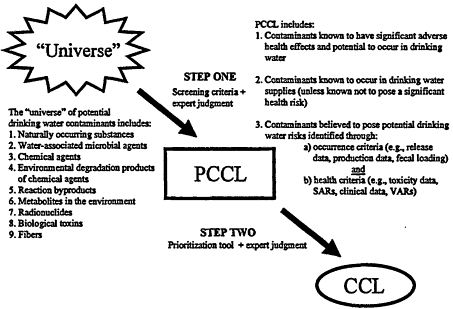
Figure 1
Conceptual two-step process for developing future CCLs.
variety of sources, would be combined and culled using simple criteria and expert judgment to prepare a "preliminary CCL" (PCCL). Next, the PCCL would be processed, using more information in conjunction with a quantitative screening tool and expert judgment, to prioritize which contaminants should be listed on the CCL to drive research and regulatory efforts equally. The process would be repeated for each CCL development cycle to account for new data and potential contaminants that inevitably arise over time. In addition, all contaminants that have not been regulated or removed from the existing CCL would be automatically retained on each subsequent CCL.
A Broad Approach
The committee identified 9 major drinking water contaminant categories (with 12 subcategories) that comprise the range of substances and microbes that should be evaluated for inclusion on future CCLs. These are listed in Table 1, along with examples of contaminants in each category. The total number of contaminants in this universe is likely to be close to 100,000, given that the Toxic Substances Control Act (TSCA) inventory of commercial chemicals alone includes about 72,000 substances.
Lists exist for some categories of potential drinking water contaminants; for others, no lists exist. The committee recommends that EPA consider the categories and subcategories of potential contaminants listed in Table 1, starting with lists that are available and information that is readily obtainable to supplement them. The committee also recommends that EPA develop a strategy for filling the gaps and updating the existing databases and lists of contaminants (e.g., through the National Drinking Water Advisory Council or panels of experts) for future CCLs. The strategy should be developed with public, stakeholder, and scientific community input.
Adherence to these recommendations would result in EPA considering expanded numbers and types of potential contaminants, in comparison to those considered for the first CCL (EPA, 1997a).
As an integral part of the CCL development process, the committee recommends that the lists be combined in a consolidated database that provides a consistent mechanism for recording and retrieving information on the contaminants under consideration. The chemicals database of the Interagency Testing Committee is an example of such a database. The database should be structured to accommodate microbial pathogens, mixtures of agents, and other types of potential contaminants that are not necessarily defined by a unique chemical formula. Such a database can function as a "master list" that contains a detailed record of how the PCCL and CCL were developed, as well as providing a powerful analytical tool for the development of future CCLs. The database should be prepared, maintained, and updated in open cooperation with the public, stakeholders, and the scientific community.
TABLE 1
Universe of Potential Drinking Water Contaminants
|
Category |
Examples |
|
Naturally occurring substances |
Arsenic, hydrogen sulfide |
|
Microbial agents |
|
|
Naturally occurring agents in water |
Legionella, toxic algae |
|
Agents associated with human feces |
Enteric viruses, coxsackie B viruses, rotavirus |
|
Agents associated with human and animal feces |
Enteric protozoa and bacteria, Cryptosporidium, Salmonella |
|
Agents associated with human and animal urine |
Nanobacteria, microsporidia |
|
Agents associated with water treatment and distribution systems |
Biofilms, Mycobacterium |
|
Chemical agents |
|
|
Commercial chemicals |
Tetrachloroethene, liquid fuels |
|
Pesticides |
Atrazine, alachlor |
|
Pharmaceuticals |
Estrogen, diclofenac (antirheumatic), carbamazepine (antiepileptic), chloramphenicol (antibiotic) |
|
Cosmetics |
Musk xylenes, boron |
|
Food additives |
Propylene glycol, dyes |
|
Water additives, including impurities |
Aluminum |
|
Water treatment and distribution system leachates and degradates |
Vinyl chloride |
|
Environmental degradation products of chemical agents |
Dichlorodiphenyldichloroethylene, trichloroacetic acid |
|
Reaction byproducts |
Polycyclic aromatic hydrocarbons, 2,3,7,8-tetrachlorodibenzodioxin, trihalomethanes |
|
Metabolites in the environment |
Metabolites of pharmaceuticals (e.g., clofibric acid, fenofibric acid) |
|
Radionuclides |
Tritium, uranium, strontium-90 |
|
Biological toxins |
Mycotoxins, aflatoxins |
|
Fibers |
Asbestos |
As the database is expanded, estimates can be used to address important gaps in health effects and occurrence data, based on structure-activity relationship (SAR) models for chemical contaminants and virulence-activity
relationships (VARs) for microbial agents1. EPA regularly develops and uses SARs to review thousands of new chemical premanufacture notices each year.
Culling the Universe to Create a PCCL
As a starting point, the PCCL should automatically include all substances and microbes known to cause significant adverse health effects (regardless of exposure route) that could occur in drinking water, as well as those with demonstrated occurrence in drinking water supplies (unless they are known not to pose a significant health risk). A PCCL should also include all substances that may pose a drinking water risk based on their potential for occurrence and health effects. The committee leaves EPA to define and apply such terms as "known," "significant," and "demonstrated," taking into consideration that the PCCL is intended to be inclusive rather than exclusive.
Tables 2 and 3 list examples of existing and planned relevant sources of information for potential (primarily commercial) chemical contaminants with known health effects and demonstrated occurrence in drinking water, respectively. Table 4 summarizes this information for water-associated microbial pathogens. In this regard, the committee strongly urges EPA be proactive in identifying and regulating emerging microbiological drinking water contaminants; waiting until after major waterborne disease outbreaks occur is an inadequate and ineffective means to prevent future outbreaks and protect public health.
The databases for chemicals shown in Tables 2 and 3 will generate a large list of substances—too large to be included on the PCCL in its entirety. Therefore, EPA will need to develop methods to rapidly cull from these databases a shorter list of chemicals for inclusion on the PCCL. The committee envisions that the PCCL would contain on the order of thousands of substances.
The committee recommends that such culling be based upon simple objective criteria, supplemented by expert judgment. For example, because environmental occurrence data for the vast majority of these chemicals are lacking, and because collecting enough monitoring data to fill this void would be far too expensive and time consuming, the committee recommends that EPA consider a simple production cutoff approach to narrow the universe of commercial chemicals. A practical cutoff value to use might be 100,000 lbs. (45,350 kg) That is, any commercial chemical produced in quantities below 100,000 lbs./year (45,350 kg/year) should be dropped from consideration for the
PCCL, unless otherwise included based upon health effects concern. Such a cutoff would produce a list of a few thousand chemicals, based on data currently
TABLE 2
Examples of Existing and Planned Information Sources for Chemicals Known to Cause Adverse Health Effectsa
TABLE 3
Examples of Existing and Planned Information Sources for Identifying Chemicals with a Demonstrated Occurrence in Drinking Water Supplies
|
Name |
Responsible Agency or Organization |
Notes |
|
National Contaminant Occurrence Database |
EPA |
First operational version must be completed by August 6, 1999 |
|
Unregulated Contaminant Monitoring Rule |
EPA |
First list of |
|
National Ambient Water-Quality Assessment Program |
U.S. Geological Survey (USGS) |
Contaminant monitoring data for surface and ground water |
|
Comprehensive Environmental Response, Compensation, and Liability Act Information System |
EPA |
Contaminant data for Superfund sites |
|
Toxic Substances Control Act Inventory and Updates |
EPA |
Production volumes and sites for industrial chemicals |
|
Permit Compliance System |
EPA |
Information on municipal and industrial wastewater discharge |
|
Environmental Monitoring and Assessment Program |
EPA |
Monitoring information for air, ground water, surface water, biota, and soil contaminants |
|
National Human Exposure Assessment Survey |
EPA |
Surveys designed to assess human exposure via multiple pathways (food, water, air, dust) |
|
SOURCE: Adapted from EDSTAC, 1999. |
||
 30 contaminants must be completed by August 6, 1999
TABLE 4
Examples of Existing and Planned Information Sources for Water-Associated Microbial Agents with Demonstrated Occurrence in Drinking Water Sources or Causing Adverse Health Effects
|
Name |
Responsible Agency or Organization |
Notes |
|
National Waterborne Disease Outbreak Database |
Centers for Disease Control and Prevention (CDC), EPA |
Catalogs reported waterborne disease outbreaks since 1920 |
|
National Notifiable Diseases Surveillance System (NNDSS) |
National Center for Health Statistics (NCHS) in the CDC |
Compiles U.S. statistics on diseases. Reported cases are summarized by type of disease, reported month, state, age, and race in some cases. The data represent only clinically identified cases and case ratios (cases to total population) or incidence rates that are most often reported annually. |
|
National Ambulatory Medical Care Survey |
NCHS/CDC |
Conducted in 1990, the survey provided data from office-based physicians through examination of patient records and gave an indication of the number of persons who seek a physician and are diagnosed |
|
National Hospital Discharge Survey |
NCHS |
Begun in 1988, the survey assesses the number of patients treated in hospitals |
|
National Mortality Followback Survey |
NCHS |
Represents about 1 percent of U.S. resident deaths |
|
National Animal Health Reporting System |
U.S. Department of Agriculture Animal and Plant Health Inspection Service, Veterinary Service, and Centers for Epidemiology and Animal and Animal Health |
A pilot project begun in March, 1998, it will include all 50 states reporting on disease cases in commercial livestock (cattle, sheep, swine, poultry, fish) |
|
State Department of Health Data |
By state |
Generally, state health departments report cases of disease by county |
|
Name |
Responsible Agency or Organization |
Notes |
|
Land use data and mapping (e.g., sewage discharge, number of farms/heads of livestock, septic tanks, storm water drains) |
USGS, states |
|
|
FoodNet data |
CDC |
Provides data on incidence of diseases associated with key enteric bacteria |
|
Gen Bank |
Indiana University and others |
Internet-based database with information on gene sequences for key microorganisms |
collected under TSCA (Carol Farris, EPA, personal communication, 1999).
One key database that can provide such chemical production information is the TSCA chemical inventory. This database of more than 72,000 commercial chemicals in commerce is updated every four years with production data on nonpolymeric organic chemicals produced or imported by facilities in greater than 10,000 lbs./year (4,535 kg/year) quantities. Such data are invaluable for identifying commercial (nonpesticide, nonpharmaceutical, nonfood-additive) organic chemicals in production above 100,000 lbs. (45,350 kg). If EPA expands these updates to include inorganic chemicals or to include information on chemical uses, as it has been considering, such data could be the basis for refined criteria for culling the list of potential contaminants for inclusion on the PCCL.
A second way to cull the list of potential contaminants would be possible if EPA expands the reporting requirements for the Toxics Release Inventory (TRI—the best database available on releases and transfers of toxic chemicals from manufacturing facilities). EPA has expanded this list frequently, and expanded TRI data can be used as part of an improved basis for culling the list.
A third mechanism for EPA to use in shortening the list of potential chemical drinking water contaminants for inclusion on the PCCL could use a screen based on health effects data, when available, and SAP scores, when not. As previously noted, EPA has developed and used SAR scores for thousands of chemicals as part of its TSCA program. The development and use of microbial VARs would also greatly assist the evaluation of microbial pathogens with little or no occurrence data for inclusion on a PCCL.
As a fourth mechanism for culling the list, the committee envisions exclusion criteria for the PCCL based upon knowledge or reasonable expectation that there is little or no chance of a particular substance or microbe occurring in drinking water supplies.
In applying any or all of these criteria, the committee again urges EPA, when in doubt, to err on the side of safety and include the contaminant on the PCCL. However, the committee emphasizes that the development of a PCCL should not require extensive data collection and analysis or drive monitoring or research activities.
The committee recommends that all aspects of the PCCL development process should be made accessible to the public (e.g., posted on the Internet and published in the Federal Register) and should include the review and input of the scientific community. Further, whatever form EPA's future CCL development process takes, it must continue to comply with the relevant statutory requirements of the SDWA Amendments of 1996. For example, EPA must still consider, but not be limited to, certain substances referred to under the Comprehensive Environmental Response, Compensation, and Liability Act and substances registered under the Federal Insecticide, Fungicide, and Rodenticide Act (EPA, 1997).
Generating the CCL from the PCCL
To help narrow the PCCL to a manageable number of contaminants that can be considered for regulation, EPA should develop a single, quantitative tool that can be used to evaluate and prioritize all types of potential drinking water contaminants. However, the committee emphasizes that no tool can completely replace the critical role of expert judgment in the contaminant selection process for the CCL, particularly for contaminants that lack health effects and occurrence data. Thus, the committee recommends that EPA reserve a number or percentage of slots on the CCL for contaminants that are listed on the CCL based solely or primarily on expert judgment.
While the main purpose of the CCL is to identify contaminants that in the future may require regulation in public drinking water supplies, the CCL also should help to drive the research required for future regulatory decisions. Future CCLs should be designed to include a significant portion of contaminants that drive research on health effects, analytical detection and identification methods, water treatment methods, and occurrence monitoring, as well as contaminants that are nearly ready for regulatory decisions. Although the precise number of contaminants included primarily for research purposes is a policy decision that EPA must make, the committee suggests a roughly equal division on the CCL between contaminants that are ready for regulatory determination and those for which additional research and monitoring need to be conducted. This recommendation is consistent with EPA's partitioning of the first CCL into equivalent future action ("next step") categories (EPA, 1998a). The prioritization tool that EPA develops to help prepare the CCL should be able to help identify contaminants that are ready for regulatory decisions and those requiring additional research and monitoring.
Characteristics of an Ideal Prioritization Tool
Any quantitative prioritization tool for the development of a CCL should be as simple as possible. The committee strongly recommends that no factors or components (e.g., measures of occurrence or health effects) of the tool should be weighted in any way (even through expert judgment). In its previous review of hazard ranking schemes (NRC, 1999), the committee found that most weighting factors were qualitatively, or at best semi-quantitatively, derived and applied. Further, they were usually used without adequate justification or rationalization and acted to obscure the overall ranking scheme. Thus, even if thoroughly documented, the use of weighting measures at this stage of the CCL process may be considered as arbitrary. In contrast, simplicity in tool design and use lends itself to transparency and helps to improve public and other stakeholder understanding of the development process. Adherence to this basic guideline should help dispel or minimize any perception or accusations of "black box" decision-making.
The prioritization tool should not only be able to function quickly, properly, and consistently when addressing contaminants with data gaps, it should also help identify data gaps. The tool should not be static and unchanging. Rather, it should be continually updated and improved as more experience is gained in its use.
The committee further recommends that any prioritization tool should be subjected to validation and scientific review prior to use. For example, the tool's performance could be benchmarked by evaluating regulated contaminants with extensive occurrence and health effects data and whose drinking water risks are well established.
No matter what type of tool is developed, its results will be associated with some amount of (probably unquantified) uncertainty. For this reason, the committee emphasizes that the use of any such tool should err on the side of being inclusive.
Review of Existing Hazard Ranking Approaches
The committee re-examined the 10 existing chemical contaminant prioritization schemes reviewed in the previous report (NRC, 1999) with regard to their suitability for identifying and selecting contaminants for the development of future CCLs; these are listed in Table 5. (Refer to the previous report for further information concerning the development, characteristics, and uses of these ranking schemes.) As noted in the previous report, there are no formal schemes for ranking water-associated microbial agents. Therefore, all of these approaches are severely limited in their ability to evaluate nonchemical potential drinking water contaminants.
TABLE 5
Re-examined Contaminant Prioritization Schemes and Sources
|
Contaminant Prioritization Schemes |
Sourcea |
Contaminant Prioritization Function |
|
Cadmus Risk Index Approach |
Cadmus Group (Cadmus Group, 1992) |
Drinking water contaminants |
|
American Water Works Association (AWWA) Screening Process |
AWWA (RCG et al., 1993) |
Drinking water contaminants |
|
Proposed Regulation Development Process |
AWWA, National Association of Water Companies, Association of Metropolitan Water Agencies, and Association of State Drinking Water Administrators (Cook, 1998) |
Drinking water contaminants |
|
Waste Minimization Prioritization Tool |
EPA Office of Solid Waste and Emergency Response and Office of Pollution Prevention and Toxics (EPA, 1997) |
All potential environmental contaminants |
|
Section 4(e) of Toxics Substances Control Act |
Interagency Testing Committee (Walker and Brink, 1989; Walker, 1991, 1995 |
All potential environmental contaminants |
|
State of California Safe Drinking Water and Toxic Enforcement Act of 1986 (Proposition 65) |
California Environmental Protection Agency (OEHHA, 1997) |
All potential environmental contaminants |
|
Hazard Ranking System |
EPA (CFR, 1997) |
Hazardous waste sites |
|
Comprehensive Environmental Response, Compensation, and Liability Act Priority List of Hazardous Substances |
Agency for Toxic Substances and Disease Registry and EPA (ATSDR, 1996) |
Hazardous materials |
|
Sediment Contaminant Inventory Hazard Analysis of Releases Inventory |
EPA Office of Science and Technology (EPA, 1996) |
Sediment contaminants |
|
Pesticide Leaching Potential |
EPA Office of Pesticide Programs (Wolf, 1996) |
Pesticides |
|
a Agency, industry, or act responsible for the development of the specific ranking scheme. SOURCE: Adapted from NRC, 1999. |
||
In the first report, the committee stated that while none of these schemes was appropriate for making decisions about regulating contaminants already on the CCL, they might be appropriate for use in generating future CCLs. In re-examining the 10 schemes for potential use in CCL development, the committee considered four issues:
- Can the tool evaluate the full range of drinking water contaminants?
- Does its method for determining exposure potential include indicators of occurrence (e.g., reported releases under TRI) in drinking water sources?
- Does it determine toxicity potential based on human, not ecosystem, effects?
- Does it account for and integrate exposure and toxicity potential?
Seven schemes were quickly removed from further consideration because they did not meet these four criteria. The Hazard Analysis of Releases and Pesticide Leaching Potential schemes were eliminated because they are limited to sediment contaminants and pesticides, respectively. The Hazard Ranking System was eliminated because it ranks hazardous waste sites and not individual contaminants. The California Safe Drinking Water and Toxic Enforcement Act of 1986 (Proposition 65) process was eliminated because it is a largely qualitative approach and relies on extensive expert judgment throughout the entire process. The screening process prepared for the American Water Works Association (AWWA) was eliminated because it is extensively dependent on subjective judgment and is not appropriate for screening large numbers of contaminants. The Regulation Development Process was eliminated because it is an unpublished position paper that does not prioritize drinking water contaminants. The Comprehensive Environmental Response, Compensation, and Liability Act approach for hazardous substances was eliminated due to its complexity and unconventional methods for characterizing exposure and toxicity potential.
The committee further re-evaluated the Cadmus Risk Index, the Interagency Testing Committee (ITC), and the Waste Minimization Prioritization Tool (WMPT) approaches due to their design qualities and their greater level of applicability to prioritizing drinking water contaminants.
Cadmus Risk Index Approach.
The Cadmus approach was developed as a health-risk-based methodology for ranking a candidate list of drinking water contaminants (Cadmus Group, 1992). In this approach, a risk index is derived to identify and prioritize chemicals that pose a potential threat in drinking water. The risk index is based on the following chemical parameters: quantity produced, quantity released to water, persistence in water, frequency of detection in water, and toxicity to human health. Thus, this scheme incorporates both toxicity and exposure criteria.
In brief, an overall risk index for each chemical is computed by multiplying all the chemical parameters in conjunction with weights assigned to each parameter. This sum is then multiplied by a human health risk value and another weighting factor. This scheme is generally easy to use and integrates both exposure and health risks into an overall risk index. However, many factors (e.g., weighting values) of the scheme are determined qualitatively. In addition, the ranked list of chemicals at the back of the Cadmus report indicates that many of the chemicals originally compiled for prioritization were not evaluated by this scheme because they were missing a critical data element.
Conceivably, this approach could be modified for future use in evaluating and prioritizing potential contaminants from a future PCCL to create a CCL. However, it would need to be adapted to enable it to evaluate and prioritize all types of drinking water contaminants (microbial as well as chemical) and to identify and address data gaps. The use of qualitative weighting factors would need to be eliminated.
Interagency Testing Committee Approach.
The ITC was established in 1976 under TSCA to screen and recommend commercial chemicals and chemical groups for priority testing and potential rulemaking to control their use in the United States. The ITC has developed and used three chemical selection processes to screen and identify chemicals for priority testing consideration (Walker and Brink, 1989; Walker, 1991, 1995). For the purpose of this report, the committee focused on the current approach.
At present, the ITC uses a system, the Substructure-Based Computerized Chemical Selection Expert System, that relies on computerized processes to simultaneously integrate effects and exposure information. In brief, chemicals from sources of environmental monitoring data and with substructures with the potential to cause adverse health (or ecological) effects are assigned codes, and these values are used to select chemicals with environmental exposure and adverse effects potential. Those chemicals with no or low effects potential or low or no exposure potential are removed from the list and may be reconsidered as new effects and exposure potential data become available. This list of chemicals is then screened using a minimum production-importation ceiling to select chemicals for further evaluation. A quantitative algorithm is then applied for scoring chemicals for potential adverse effects, potential exposure, and production volume. Information profiles are developed on those chemicals with high scores that are subsequently reviewed at an ITC chemical selection workshop. At the workshop, chemicals are selected for in-depth review based on consensus decisions.
The ITC approach of combining quantitative, automated sorting of chemicals (often with little or no effects or occurrence data) with expert input is advantageous in that it allows a large number of chemicals to be considered while still allowing for use of expert judgment. While this approach is well established and demonstrably useful for evaluating large numbers of commercial chemicals, it would have to be extensively modified to include types of potential drinking water contaminants other than commercially produced chemicals. Its transparency and simplicity of design and use would also need to be improved.
Waste Minimization Prioritization Tool.
WMPT was developed as a priority-setting tool in response to the Waste Minimization National Plan (a program that focuses on reducing the generation and subsequent release to the environment of the most persistent, bioaccumulative, and toxic chemicals in hazardous wastes) by the EPA's Office of Solid Waste and Office of Pollution Prevention and Toxics (EPA, 1997b). The contaminant pool considered is the TSCA inventory list, which includes many but not all contaminants of concern in drinking water. The determination of exposure potential is based on the contaminant's bioaccumulation potential and persistence or production and release data. While persistence, production, and release data are relevant for assessment of exposure potential for drinking water contaminants, bioaccumulation potential is not because it applies to animals other than humans. The determination of toxicity potential includes indicators of both human and ecosystem toxicity, the latter of which is not relevant for drinking water contaminants. The prioritization scheme is based on a score that combines toxicity and exposure severity scores.
WMPT is not directly applicable to drinking water contaminants because some elements of its prioritization scheme (bioaccumulation potential and ecosystem toxicity) are irrelevant for drinking water contaminants. Furthermore, because it is not intended solely for water contaminants, it contains no measures of mobility and retention in water. Nonetheless, the committee was positively disposed to WMPT because of its simplicity, transparency, careful justification and documentation, and use of a "binning" approach. A binning or "fence line" scoring approach involves comparing the quantitative value for a given chemical data element against predefined high and low threshold values, termed fence lines. A major advantage of a binning approach is that it groups data into similar bins and avoids the false sense that such data are highly precise.
This scheme could conceivably be used as a tool for prioritizing PCCL drinking water contaminants for future CCLs if modified to be specifically applicable to all types of potential drinking water contaminants. It also would have to specifically evaluate and prioritize contaminants according to appropriate indicators of exposure and toxicity, such as measures of mobility and retention in water, but not ecosystem toxicity or bioaccumulation potential.
In summary, by modifying the Cadmus Risk Index, ITC approach, or WMPT, EPA could create a quantitative or semi-quantitative tool to help narrow the list of contaminants for inclusion on the CCL. The committee recommends that EPA analyze these tools carefully, using the guidelines set forth above, to determine which could be most easily adapted for this purpose.
Conclusions And Recommendations
EPA's first CCL was prepared in a short time period to meet the statutory requirements and mandated time line of the SDWA Amendments of 1996. For chemicals, the approach used ad hoc contaminant Occurrence and health effects criteria suggested by the National Drinking Water Advisory Council Working Group on Contaminant Identification and Selection and readily available sources of potential contaminant information. For microbiological contaminants, the approach relied on the recommendations of a panel of experts who qualitatively evaluated individual microorganisms according to a series of five baseline criteria. In short, the overall approach was limited by "looking under the lamp post" for relatively few types and numbers of drinking water contaminants compared to the universe of potential contaminants. The contaminants included on the first CCL merit consideration, but a broader approach to contaminant selection could identify higher-risk contaminants. The first CCL is nonetheless a very useful list of contaminants that should help EPA set priorities for future drinking water research, monitoring, and guidance development, especially if evaluated in accordance with the decision framework that was recommended in the committee's first report (NRC, 1999).
To improve the process for developing future CCLs, the committee recommends the following conceptual approach and related steps:
- EPA should develop a two-step process for creating future CCLs. In this process, a broad universe of potential drinking water contaminants (see Table 1) is examined and then narrowed to a preliminary drinking water contaminant candidate list (PCCL) using simple screening criteria and expert judgment. Then, the PCCL is narrowed to a CCL using a quantitative screening tool in conjunction with expert judgment.
- EPA should be as inclusive as possible in narrowing the universe of contaminants (perhaps on the order of 100,000 substances) down to a PCCL. The committee envisions that a PCCL would contain on the order of thousands of potential drinking water contaminants of all types for subsequent evaluation, prioritization, and culling to a CCL.
- As a start, a PCCL should contain all substances and microbes that are known to cause significant adverse health effects (regardless of exposure route) and have the potential to occur in drinking water and those demonstrated to occur in drinking water supplies (unless they are known not to pose a significant health risk). A PCCL should also include all substances that may pose a drinking water risk based on their potential for occurrence and health effects.
- Preparation of a PCCL should not involve extensive collection or analysis of data, nor should it drive research or monitoring activities. However, the committee recognizes that it will be necessary to develop and use screening criteria (e.g., production values of commercial chemicals) to shorten the list of contaminants for a PCCL.
- Development of a PCCL should begin as soon as possible to support the development of the next CCL; the PCCL should be available for public and other stakeholder input (especially through the Internet) and should undergo scientific review.
- A new PCCL should be generated for each CCL development cycle to account for new data and potential contaminants.
- As an integral part of the CCL development process, the committee recommends the use of a comprehensive database that provides a consistent mechanism for recording and retrieving information on all the contaminants under consideration. A well-designed relational database can function as a "master list" that contains a detailed record of how the PCCL and CCL were developed, as well as providing a powerful analytical tool for the development of future CCLs.
- To help identify commercial chemicals that might pose risks in drinking water, EPA should consider exercising its authority under TSCA to collect production and import data on both organic and inorganic chemicals by use category.
- To assist in the evaluation of microbial pathogens, it also may be useful to identify common mechanisms of pathogenicity among contaminants in order to include them on future CCLs. An approach analogous to chemical SARs for microorganisms does not currently exist, but EPA should develop such a prioritization tool for microbial contaminants through use of gene data banks and with the cooperation and support of other federal and state health organizations.
- Preparation of a CCL from a PCCL will require collection and evaluation of all available health effects and occurrence data for each substance on the PCCL. To cull a list of thousands of potential drinking water contaminants of all types to approximately a hundred for inclusion on the CCL, EPA must combine expert judgment equally with a single prioritization tool that can be used to evaluate any type of PCCL contaminant.
- EPA should develop a prioritization tool to help narrow the PCCL to a CCL. The tool should be kept as simple as possible and be developed with regular public and other stakeholder input. Ensuring transparency throughout its development and avoiding "black-box" decision-making are critical steps. The tool should be validated using contaminants with extensive health effects and occurrence data and well-established risks. The tool must be able to identify and effectively address data gaps for each contaminant. Following a re-examination of 10 existing chemical hazard ranking schemes, the committee concluded that none was directly suitable for developing a CCL from a PCCL. However, 3 of the schemes (Cadmus, ITC, and WMPT) contain features that would be suitable for CCL development and could conceivably be adapted for this purpose.
- EPA should reserve a number of contaminants or a percentage of the CCL for contaminants that are listed based solely or primarily due to expert judgment. EPA must also retain the ability to remove contaminants from inclusion on a CCL based on expert judgment.
- The CCL should consist of roughly equal numbers of contaminants ready for regulatory decisions and those requiring further research to drive such efforts equally. This recommendation is consistent with EPA's partitioning of the first CCL into equivalent future action categories.
- Regardless of what process is adopted by EPA to develop future CCLs, the committee strongly recommends that all contaminants that have not been regulated or removed from the existing CCL (and future CCLs) should be automatically retained on each subsequent CCL for reevaluation.
As in the previous report, the committee recognizes that the need for policy judgments by EPA cannot and should not be removed from any CCL development process. In making these decisions, EPA should use common sense as a guide and err on the side of public health protection.
References
ATSDR (Agency for Toxic Substances and Disease Registry). 1995. 1995 CERCLA Priority List of Hazardous Substances That Will Be the Subject of Toxicological Profiles & Support Documents. Agency for Toxic Substances and Disease Registry, U.S. Department of Health and Human Services.
Cadmus Group. 1992. Development of a Priority Pollutants List for Drinking Water. Prepared for EPA, Office of Ground Water and Drinking Water. Washington, D.C.
CFR (Code of Federal Regulations). 1997. The Hazard Ranking System (Appendix A to Part 300). 40 CFR Ch. 1, pp. 108-210.
Cook, P. 1998. A proposed regulation development process for the drinking water program: Recommendations to EPA from AWWA, NAWC, AMWA, and ASDWA. National Association of Water Companies (unpublished report).
EDSTAC (Endocrine Disruptor Screening and Testing Advisory Committee). Final Report: Volume I. August 1998.
EPA (U.S. Environmental Protection Agency). 1996. The National Sediment Contaminant Point Source Inventory: Analysis of Facility Release Data. First Draft. EPA/823/D/96/001. Washington, D.C.: EPA, Office of Science and Technology.
EPA. 1997a. Announcement of the Draft Drinking Water Contaminant Candidate List; Notice. Federal Register 62(193):52194-52219.
EPA. 1997b. Waste Minimization Prioritization Tool Beta Test Version 1.0: User's Guide and System Documentation. Draft. EPA/530/R/97/019. Washington, D.C.: EPA, Office of Solid Waste and Emergency Response and Office of Pollution Prevention and Toxics.
EPA. 1998a. Announcement of the Drinking Water Contaminant Candidate List; Notice. Federal Register 63(40):10274-10287.
EPA. 1998b. U.S. EPA Response to Comment Document: Draft Drinking Water Contaminant Candidate List. Washington, D.C.: Office of Ground Water and Drinking Water.
NRC (National Research Council). 1997. Safe Water From Every Tap: Improving Water Service to Small Communities. Washington, D.C.: National Academy Press.
NRC. 1999. Setting Priorities for Drinking Water Contaminants. Washington, D.C.: National Academy Press.
OEHHA (Office of Environmental Health Hazard Assessment). 1997. Procedure for Prioritizing Candidate Chemicals for Consideration Under Proposition 65 by the 'State's Qualified Experts'. Sacramento, Calif.: Office of Environmental Health Hazard Assessment, California Environmental Protection Agency.
RCGet al. 1993. A Screening Process for Identifying Contaminants for Potential DWPL Listing and Regulation. Prepared for the American Water Works Association. Denver, Col.
Walker J. D. 1991. Chemical selection by the Interagency Testing Committee: Use of computerized substructure searching to identify chemical groups for health effects, chemical fate and ecological effects testing. The Science of the Total Environment 109/110:691-700.
Walker J. D. 1995. Estimation methods used by the TSCA Interagency Testing Committee to prioritize chemicals for testing: Exposure and biological effects scoring and structure activity relationships. Toxicology Modeling 1(2):123-141.
Walker J. D., and R. H. Brink. 1989. New cost-effective, computerized approaches to selecting chemicals for priority testing consideration. Pp. 507-536 in Aquatic Toxicology and Environmental Fate: Eleventh Volume, G.W. Surer II and M.A. Lewis, eds. Philadelphia, Pa.: American Society for Testing Materials.
Wolf J. 1996. Pesticide Leaching Potential to Aid in Contaminant Selection. Memorandum to E. Washington. EPA, Office of Pesticide Programs. Washington, D.C.


