Science and Engineering Education and Workforce Program Area
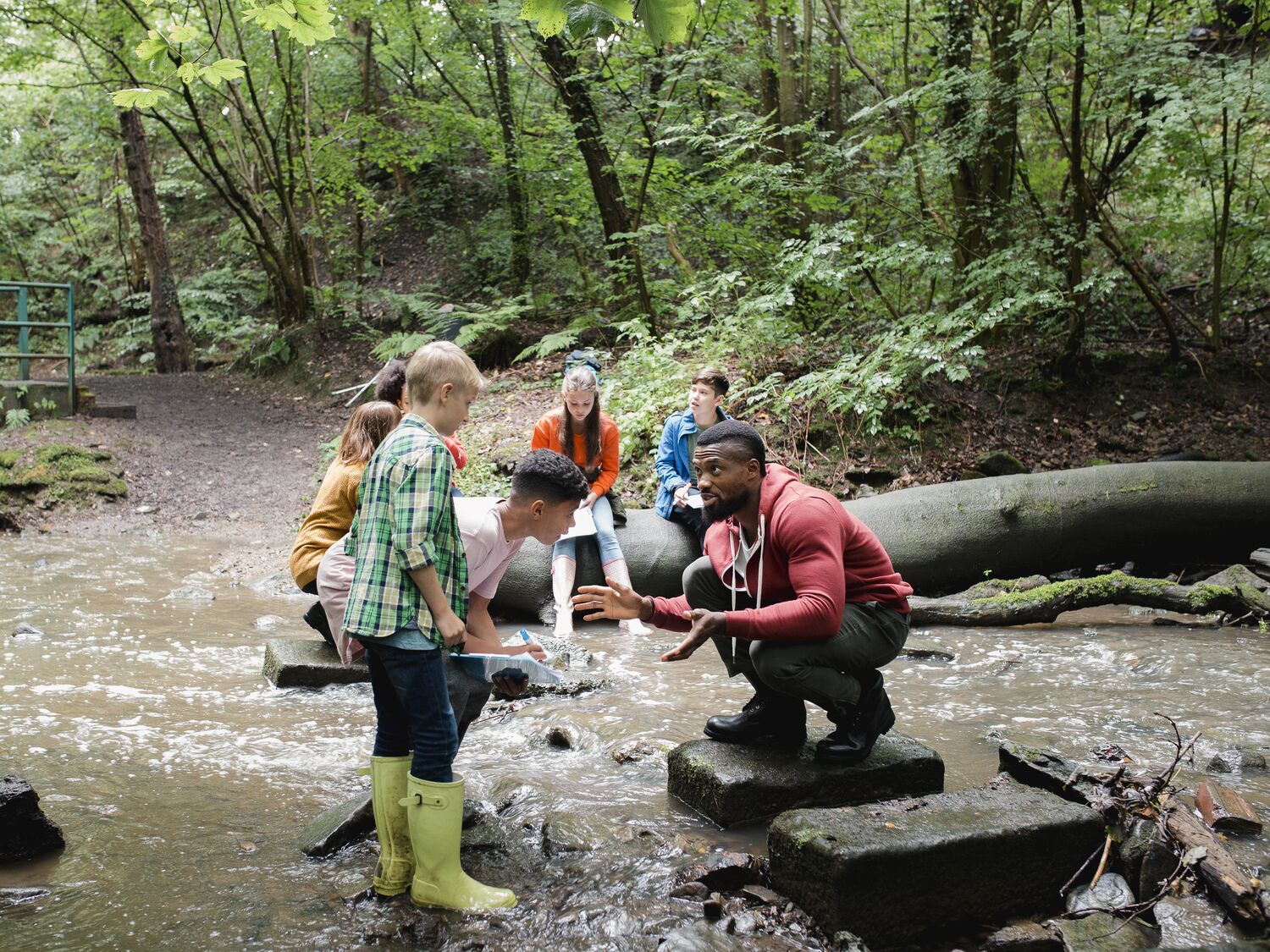
This program area advances evidence-based approaches to education, workforce development, and public engagement for people of all ages across all STEM-related fields. Our work leverages research and best practice related to teaching, learning, mentoring, communication, and institutional and systemic change.

In progress
News and Updates
Navigating the Turbulent Future of AI and Work
Feature Story
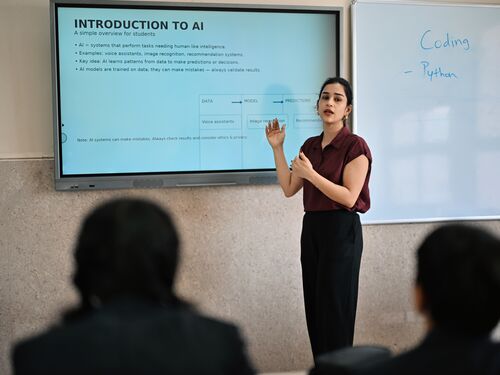
How is artificial intelligence affecting education and jobs, and what should young people study now to be employable in the future? A recent National Academies workshop explored these questions, along with how organizations can collaborate to steer AI’s use and impacts.
Integrating Data and Computing into K-12 Education Is Critical and Requires Coordinated Approach To Be Effective, Says New Report
News Release
Computing and data shape nearly every aspect of modern life. In recent years, efforts to expand data and computing education in K-12 settings have grown rapidly but unevenly. A new National Academies report offers a road map for state and local education agencies to integrate this content into school curricula and courses in a consistent manner.

Potential of Emerging Research Institutions To Be Explored at Upcoming National Academies Summit
Feature Story
Emerging research institutions — which by statute spend less than $50 million in federal research funding annually — are essential in STEM workforce development. In advance of a National Academies summit next week on reenvisioning the future of STEM research at ERIs, we spoke with summit co-chair Bobwealth Omontese to find out more about ERIs, their role in the broader research community, and what the summit is aiming to achieve.

Statement of Task
The Science and Engineering Education and Workforce program area brings together experts in formal and informal education, education research, education policy, workforce development, science communication, and the disciplines of science, mathematics, and engineering to strengthen the nation’s STEM capacity. Our work examines how people learn science, mathematics, and engineering across the life span and how education systems can prepare society to address challenges and embrace advancements and opportunities.
Through studies, workshops, and collaborations, we advance evidence-based strategies to improve teaching and learning, foster inclusion and access in STEM, and align education and workforce policies with the needs of research, industry, and government. Our portfolio includes several landmark science education reports, including A Framework for K–12 Science Education, which has shaped science education standards in 49 of 50 states.
Focus Areas
Subscribe for updates on projects, events, and publications related to education and workforce.
Drawing on expertise from a range of disciplines and professional backgrounds, our staff support the development, execution, and dissemination of our work. Their efforts help ensure that National Academies activities are rigorous, responsive, and positioned to inform education, workforce, and public engagement initiatives nationwide and internationally.
Our consensus study report, A Framework for K–12 Science Education, set a bold new direction for science teaching and learning in the United States. Since its release in 2012, the Framework and dozens of supporting reports, workshops, and convenings, have established the foundation for modern state science standards across nearly every U.S. state. It has catalyzed improvements in curriculum, instruction, assessment, and professional development — supporting better outcomes for students and enabling collaboration across districts and state lines.

Our program area features several boards, standing committees, roundtables, and action collaboratives that provide sustained leadership and engagement across the program area's portfolio. Volunteer experts help guide priorities, identify emerging challenges, and maintain connections to the research, education, workforce, and policy communities. These groups also create opportunities for ongoing collaboration among academia, industry, government, philanthropy, and practitioners, helping to accelerate the exchange of ideas and the implementation of evidence-based solutions.
Featured Ongoing Activities
Contributors
Our Current Work
Staff
Heidi Schweingruber
Lead
Ashley Bear
Kerry Brenner
Beth Cady
Samuel Crawford
Rian Lund Dahlberg
Kenne Dibner
Margaret Kelly
Lucy Oliveros
Lauren Ryan
Kait Spear
Amy Stephens
Tiffany E. Taylor
Jeena M. Thomas
Katie Wullert