Peer Review of the Federal Aviation Administration's Study of the Effects of Passenger Seat Width and Pitch on Airplane Evacuation Performance (2025)
Chapter: 4 Findings, Conclusions, and Advice
4
Findings, Conclusions, and Advice
Returning to the committee’s charge, the study’s Statement of Task calls for a review of the Civil Aerospace Medical Institute’s (CAMI’s) evacuation research project’s:
- goals and objectives;
- design, methods, and procedures, including how the study test group and seat dimensions tested were selected given the anthropometric makeup of air travelers and actual seat dimensions in commercial airplanes;
- conclusions and their support; and
- adherence to accepted scientific principles, including for human subjects research.
The task statement also calls on the committee to make recommendations, as appropriate, on the use of the CAMI project’s data and results. Based on the review in Chapter 3, which addresses the items above, the committee’s key findings and conclusions are summarized next. This is followed by advice on steps that CAMI and others may take in both the near and longer terms to draw more potential insights from CAMI’s work and to design future research that augments and builds on it.
FINDINGS AND CONCLUSIONS
The research project sought to determine whether changes in the pitch and width of passenger seats would affect an airplane cabin’s evacuation time,
considering both individual and total occupant evacuation times. Informed by previous evacuation research, CAMI investigators hypothesized that as long as a passenger can sit in a seat, its pitch and width should not significantly affect evacuation time for the cabin as a whole because the time spent by passengers queuing at the exit door and in the main aisle is greater than the time required for a passenger to exit the seat and seat row.
Relevance of Testing to Actual Seats in Airline Service
As a first objective in the design of the study, CAMI sought to establish the minimum seat dimensions (pitch and width) likely to be deployed in airline service, as necessary to inform the appropriate choice of seat dimensions for evacuation time trials. However, CAMI expressed this interest only indirectly by stating that its objective was to determine the percentage of the American population that would not be able to sit in transport airplane passenger seats at the currently narrowest and even narrower seat pitch and 17-inch seat width. Although not stated explicitly, the implication is that if too few travelers could sit in seats having a given seat pitch and width, then airlines would not deploy those seat dimensions and, thus, testing them in evacuation trials for safety implications would provide little value. Regulators, for instance, would not need to worry about the safety effects of seat dimensions and configurations that are impractical for airline service.
CAMI’s method for establishing practical minimum seat dimensions was to conduct pre-trial seat experiments on a sample of 775 people considered to be generally representative of the current U.S. population (and thus by inference, representative of U.S. air travelers generally) and to observe them trying to sit in a seat configured at the lowest seat pitch currently in use (28 inches) and a lower one (26 inches). Although the seat width tested (17 inches) was determined to be the lowest in common use based on survey information, CAMI did not test a narrower width in these seat experiments (known to be in service, i.e., 16 inch). Study participants were asked to sit in 17-inch-wide seats configured with 28-inch and 26-inch pitches. Because the 28-inch pitch is an actual seat dimension in airline service, the purpose of the experiment was to judge whether a lower seat pitch would be viable for airline service. Less than 1% of study participants (6 of 775) were determined to be unable to sit in the experimental seat having a 28-inch pitch based on the observation of researchers during the conduct of the experiment. By comparison, 8% of participants (62 of the 775) self-reported that they could not sit in the seat having a 26-inch pitch when asked to make this judgment in a post-experiment questionnaire.
It was necessary for CAMI researchers to confirm the ability of study participants to sit in the 28-inch seat pitch because it is currently the lowest pitch in airline service and, therefore, would need to be tested in the
evacuation trials. It is unclear, then, why CAMI chose to use a questionnaire as the method for judging the viability of the seat having a 26-inch pitch when the experiments were being observed and recorded on video so as to allow researchers to make this determination using objective criteria. Irrespective of whether the 26-inch pitch is indeed a deployable dimension, reliance on participants self-reporting about their ability to sit in the experimental seat, without decision criteria or subsequent video verification, is a questionable method for making this determination. The CAMI report also makes no determination of the minimum seat width associated with the “ergonomic minimum” seat dimension and configuration.
Adherence to Accepted Scientific Principles for Human Subjects Research
Having determined, based on seat experiment questionnaires, that too few people would be able to sit in seats having a 26-inch seat pitch for practical deployment, CAMI’s second objective was to determine the effect of a 28-inch seat pitch, in combination with seats having 16- and 18-inch widths, on individual and group evacuation times. To do this, CAMI designed evacuation trials that would use the same study test group that was formed to be generally representative of the U.S. public, and by inference the U.S. flying public, for the purpose of identifying the minimum practical pitch in the seat experiments. The safety hazards posed by live evacuation trials necessitated a study test group that prevented the use of higher-risk participants, causing CAMI to exclude pre-adults, people older than 60, and people with disabilities and other physical limitations.
The committee believes that CAMI’s decision to conduct evacuation trials that excluded higher risk individuals—and that would by necessity reduce the group’s resemblance to the U.S. flying public—was a reasoned precaution and consistent with accepted scientific principles for airplane evacuation research involving human participants. While some of the steps taken by CAMI to mitigate risk, such as the use of ramps with handrails instead of inflatable slides, might have allowed for some easement of age restrictions, others, such as the decision to motivate performance through added compensation, created risks that warranted precautionary measures. Nevertheless, the study test group skewed young, probably due to the ease of recruiting younger people relative to middle-aged people given the time requirements, physical demands, and levels of compensation. This outcome suggests that CAMI should have implemented more recruitment protocols intended to counter sampling biases that can arise from the way candidates are identified, approached, and respond to invitations to participate in the research.
Appropriateness of the Study Design
Given the policy interest in knowing whether changes in the average body size of Americans may be conflicting with reduced airplane seating dimensions, the committee would have expected a study design consisting of seat experiments aimed at revealing demographic, physical, and anthropometric characteristics that can affect a person’s ability to not only sit in a seat but also to exit a seat quickly in an emergency. Likewise, the committee would have expected evacuation trials that were designed to provide a compelling and robust “stress” test of the potential for body size and seat dimensions to have negative interactions that could affect safe evacuations.
Based on its study results, CAMI concludes that the narrowest seat dimensions currently found in transport airplanes should provide protection and not impede the evacuation of 99% of the American population. By implication, the remaining 1% of Americans would not be flying in a seat having these narrow dimensions because they could not fit in the seat, and thus CAMI assumes that 100% of passengers in airplanes are now protected. Based on the concerns raised about the study test group’s representativeness and the experimental methods used to assess seat fit, the committee questions the certainty of this statement along with the report’s omission of critical “body size maximums” that could make the current narrowest seating space more problematic should they become more prevalent in the public. In this regard, CAMI acknowledges in its report that even if passenger seat space remains unchanged, passenger size and shape may change enough in the future to become unfavorable to safe evacuation. The implication is that if increasing percentages of the passengers on flights have large body sizes in the future, this might lead to interactions by passengers with one another and with seat dimensions that slow evacuation time, which would be inconsistent with CAMI’s hypothesis that seat and row exit times are immaterial to evacuation flow. However, CAMI should have recognized that the demographic and physical profile of passengers on individual flights will not necessarily match the profile for the U.S. public or U.S. air travelers generally, and thus some flights today may already have these unfavorable conditions.
Using the same national-level survey data on the body sizes of Americans that is referenced in its report,1 CAMI could have calculated probability distributions for randomly sampled groups of 100 or 200 people (similar to the number of passengers that can be seated on a narrow-body airplane such as a Boeing 737 or Airbus 320) having higher-than-average percentages of individuals exceeding certain girth, weight, and height
___________________
1 The Centers for Disease Control and Prevention’s National Health and Nutrition Examination Survey (NHANES).
measurements. By recruiting study test groups based on these calculations—for instance, to form a group representative of a flight profile (in terms of body size variables) having a 5% likelihood—CAMI could have tested its hypothesis under more severe but still plausible conditions. At the very least, CAMI’s evacuation trials should have involved a study test group deliberately skewed to include more participants with larger body sizes, and ideally the trials would have been designed to treat body size measures as independent variables, manipulated along with seat width and pitch by varying the number and location of participants with large body sizes. The committee observes that CAMI’s own findings showing that body size characteristics (girth and knee-to-floor [KtF] distance) affected individual evacuation times suggest that such alternative study designs would have been desirable.
The committee believes CAMI can still obtain additional salient information from its research project through further data analysis and extraction of the results. While results from these additional analyses are unlikely to provide a sufficient basis in support of CAMI’s hypothesis that seat space is immaterial to evacuation performance, they may provide insight into ways that seat space could negatively affect evacuation performance. The information obtained could also provide insight into which additional new research is warranted and the scale of such research. In the section that follows, the committee recommends further analyses of the data already extracted by CAMI, all of which can likely be done quickly, as well as ideas for extracting additional relevant information from the raw video data collected.
ADVICE
The committee’s advice for the next steps, as offered below, is categorized and ordered regarding the time, effort, and resources required. Consideration is given first to steps CAMI should take to confirm its research findings and conclusions and look for additional insights that may be gleaned from further analysis of the data that have already been or can be extracted from the experiments. These steps are straightforward and could be implemented without much additional effort and resource requirements. After that, CAMI should look for opportunities to extract even more useful information from the data that have been collected, including additional data extraction from the video recordings. While doing so will require a devotion of effort, the large investment already made in the experiments justifies a commitment to mining all potentially relevant data collected.
Looking farther out, and perhaps beyond the time horizon of FAA’s current need to address the legislative directives, CAMI may want to consider the design and execution of additional small-scale experiments that would
augment the work that has already been done, inform computer modeling, and provide guidance and information relevant for future evacuation research, experimentation, and policy recommendations. The committee provides some ideas for research of this type, which are outlined below and detailed more in the addendum, but recognizes that CAMI may have other research priorities such that the ideas are offered as suggestions rather than as recommendations.
Recommended Analyses for Added Confirmation and Insight
- Identify all relevant information for participants that were excluded from the evacuation analysis (e.g., participant demographics and, where appropriate, trial data such as trial day, seating location, trial seat configuration, individual evacuation time, position in the exit queue) and reevaluate the resulting demographics of the participants that were actually used for each of the evacuation trials. The excluded participants should include the:
- 60 participants who were rejected prior to the start of the trial because they were not needed for the required number for the trials;
- First evacuee for each trial;
- Last 6 evacuees for each trial to accommodate the one trial that only had 54 participants; and
- 34 outliers who were removed due to exit times greater than three standard deviations.
- Reanalyze the individual evacuation times, with and without the excluded records (34 outliers and 48 first-out evacuees) to identify any evident relationships impacting individual evacuation time, as follows:
- First-out evacuees (who were likely unencumbered by congestion) considering seat location, demographics and anthropometrics, seat pitch, and seat width;
- Outliers regarding seat location, demographics and anthropometrics, seat pitch, and seat width;
- All records previously analyzed but adding back outliers;
- All records previously analyzed but adding back first-out evacuees; and
- All records previously analyzed but adding back all excluded records.
- For each aisle seat location in the trials, identify individual evacuation times of the seated participants considering seat pitch and width and participant demographic and anthropometric characteristics. Compare the times for each participant in the seat looking for relationships with the recorded variables. The reason for focusing on aisle seats is that their occupants would be less likely to be obstructed by others in the same row and others in the aisle, presenting fewer confounding factors.
- Plot cumulative exit curves (as in the example depicted in Figure 3-1) for trials involving each seating configuration. The plots should show the cumulative number of people evacuated on the vertical axis and their cumulative time on the horizontal axis. Examine differences in the curves for trials involving the same seat dimensions and configurations and determine if it is appropriate to produce an average curve for each seat dimension. Compare the average curves produced for the 28-inch, 32-inch, and 34-inch trials looking for variations that may warrant further exploration.
- Reexamine the total evacuation time to explore if there is a relationship between seat configuration and total evacuation time for the following selection of trials:
- Assuming that learning effects impact the results after the first or second trial, restrict the analysis to the results for the first and second trial for each cohort separately (i.e., trials where the participants are most naive) and compare (as illustrated in Appendix C).
- Repeat the analysis suggested in (a) but combine the data for the first and second trial from each cohort (as illustrated in Appendix C).
- Do not exclude the last six participants from each trial, but exclude data from the trials for day 1 and day 5 due to the shortfall in participants. This could be done for the entire dataset (i.e., all four repeat trials for each cohort) and for the reduced datasets suggested in (a) and (b).
- Examine the answers to the questionnaires administered in between the evacuation trials for potential additional insights into the effect of seat configurations on a person’s ability to exit a seat quickly and in relation to the person’s recorded demographic and anthropometric characteristics and seat location. The question “How easy was it to get out of your seat?” may deserve priority attention. In its report, CAMI acknowledged that it does plan to release future publications reporting the other collected data that
- were not directly related to the seat dimensions or anthropometric questions, including the responses to these questionnaires.2
- Report the demographic and anthropometric data for the 12 cohorts in the 48 trials and comment on the makeup of the participants in each trial—for example, how many participants with critical body size (e.g., girth, KtF) are included in each trial and the seating locations of these participants.
- Report the A and B dimensions (referring to the United Kingdom Civil Aviation Authority [UK CAA] report)3 for the seating configurations used in the seating and the evacuation trials and determine whether there is any correlation between these dimensions and individual and total evacuation time.
Recommended Data Extraction from the Current Study
To augment the current study, CAMI should use the existing videos from the experimental seat mock-up to collect additional data. While these videos only log subjects sitting in the middle seat of each seat pitch, researchers should record the time it takes for the participant to stand up from the seat as one piece of data. The time would be associated with the seat size and pitch, as well as the participant demographic information (see, for example, Table 4-1). CAMI should also note the participant’s ability or level of effort to get up from the seat. Another parameter that should be measured is the time required by each participant to move to the end of the row, all as a function of body size, seat pitch, and seat dimensions (see, for example, Table 4-1). Here again, researchers should observe and note the level of effort (using a scoring system) it takes for each participant to navigate to the end of the row: Do they exhibit limited strength or mobility issues? In addition, the distance traveled from the seat to the end of the seat row should be identified so that the average movement speed for each participant can be evaluated based on the measured movement time (which will be useful for modeling purposes). A third parameter that should be extracted is the time required by the participant to move from the end of the row into the aisle (see, for example, Table 4-1); however, the existing seat mock-up videos show that they would need to step down from a four-inch platform. These data may be useful for evacuation modeling.
___________________
2 See Weed, D. B., et al. (2021). Effects of Airplane Cabin Interiors on Egress I: Assessment of Anthropometrics, Seat Pitch, and Seat Width on Egress. https://www.faa.gov/sites/faa.gov/files/2022-04/Effects_of_Airplane_Cabin_Interiors_on_Egress_I.pdf.
3 United Kingdom Civil Aviation Authority. (2020). CAP 562: Civil Aircraft Airworthiness Information and Procedures, Leaflet 25-90 Minimum Space for Seated Passengers. https://www.caa.co.uk/publication/download/12181.
Similarly, CAMI should extract data from the existing videos of the evacuation trials to the extent possible given the recording quality and locations. Researchers should measure how long it takes for those individuals who enter the aisle unobstructed by others and so would be limited to participants in the aisle seats at the start of the evacuation when the aisle is not congested.
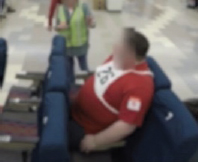
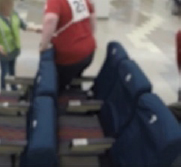
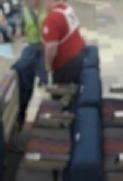
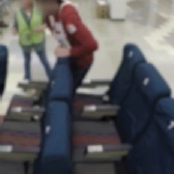
An example data analysis that could be conducted using information extracted from the videos recorded during the seat experiments is shown in Table 4-1. The analysis is based on video footage provided for day 3 and focuses on only two study participants as exemplars to demonstrate how large differences in seat row exit times can result as a function of body size.4 The first is participant 0326, who was excluded from the evacuation trials after researchers determined that that he could not fit within the seat (although he is recorded sitting). The second is participant 0356, who exhibits little difficulty exiting the seat.
Table 4-1 shows key times for the seat row exiting process, including:
- Start time: participant is seated and given the go command by the trial team.
- Standing time: time to stand in the seat position, measured from the start time.
- End of seat row time: time to reach the end of the seat row, measured from the start time.
- In aisle time: time to stand in the aisle (with both feet in the aisle), measured from the start time.
Recording these times could be useful for evacuation modeling analysis and for exploring the relationship among seat row exit time, body size, seat pitch, and seat width. Software tools are available for data analysts to move frame by frame through the video footage to accurately identify key events and associated times. The event times presented Table 4-1 are approximated but illustrative. For the trials involving 17-inch seat widths, they show how the time to enter the aisle varies from about 4.0 seconds for a person of slight build for a seat pitch of 28 inches to 8.9 seconds for a person of large build for a seat pitch of 26 inches.
Ideas to Consider for Small-Scale Studies
Nonhazardous anthropometric measurements and seat pitch mock-up tests are examples of data collection activities that could involve a wider range of participants and allow for more measured variables. Such data collection
___________________
TABLE 4-1 Key Times (Approximated) in the Seat Row Exiting Process Extracted from the Civil Aerospace Medical Institute Video (Day 3) for Two Participants
| Participant Number and Seat Pitch | Seated (Start Time) | Standing in Seat Position | End of Seat Row | In Aisle (End Time) | Time to Enter Aisle (in seconds) |
|---|---|---|---|---|---|
 |
 |
 |
 |
6.3 | |
| 28 inches | |||||
| Approx Time(s) | 0 | 2 | 6 | 7 | |
 |
 |
 |
 |
8.9 | |
| 26 inches | |||||
| Approx Time(s) | 0 | 2 | 7 | 9 |
 |
 |
 |
 |
4.0 |
| 28 inches | ||||
| Approx Time(s) | 0 | 2 | 3 | 5 |
 |
 |
 |
 |
5.9 |
| 26 inches | ||||
| Approx Time(s) | 0 | 2 | 5 | 6 |
NOTES: The times presented for each distinct event are intended to be illustrative. They are only approximate and measured using software that does not provide the fidelity required to make accurate measurements.
SOURCE: Videos can be found at https://rosap.ntl.bts.gov/view/dot/67194.
could be seen as less risky so that researchers could purposely bias the subject selection toward more overweight and taller people and could include participants under age 18 and older than 60 years of age. In addition to collecting anthropometric data that include all the static measures collected previously, researchers could also collect more dynamic anthropometric measurements, such as Timed Up & Go test, range of motion, flexibility, and balance.
As suggested above, researchers could measure how long it takes for individuals to maneuver into a row and sit down in a seat. Next, measure the time it takes for the individual to stand up, and then to make their way to the end of the row, and finally the time to exit the seat row into the aisle. This would be collected for all trial subjects at the different seat pitches, different seat widths, and for all seat locations individuals are placed (aisle, middle, or window). A more detailed description of data collection and analysis is provided below. These data would not only be useful for modeling purposes but could also be used to develop empirical relationships quantifying seat row egress times as a function of body dimensions and seat configurations. These empirical relationships could then be used to explore the impact of future projected body size changes on seat egress times for current seating configurations.
CAMI employed a seat mock-up consisting of three rows of older (1990s-era) aircraft seats, all at a 17-inch width. While using more modern seats in the simulated evacuation trials may have been cost-prohibitive, using newer seats for testing ergonomic minima for the mock-up seat pitches might be advisable, even if only comparing the results with the data collected using the older seats. For future experimental data collections, CAMI could invest in nine newer aircraft seats and create a newer seat mock-up of three rows with three seats each and then collect and analyze static and dynamic anthropometric data from a different sample of the population. Rather than using seat pitch/width, consider using A and B measures identified in UK CAA research.
Such experimental data collection can be important, including data collected from the small-scale studies described above, to support computational modeling for scenario evaluation. In this regard, it may behoove CAMI to continue to use targeted experimental trials to compile parameter data that will be needed for future modeling. Such data could then be used in modeling to run through multiple permutations. For example, models could include people that differ in body size seated in different cabin locations that would allow for the analysis of thousands of test cases. Computer modeling, for instance, could test a case in which only large passengers are seated in the aisle seats. While such a scenario could be considered a special case, it is also likely that larger passengers will opt for an aisle seat when available.
SUMMARY
The committee’s review focuses solely on the CAMI research project and FAA’s interest in understanding whether constrained seat space may impede evacuations for the purpose of informing FAA’s directives from Congress to specify minimum passenger seat width and seat pitch. The concern that underlies these directives is that seating space may be getting smaller as airline travelers are becoming larger in ways that may negatively interact with the seats to hinder evacuations.
The findings from this review suggest that CAMI’s research project does not provide the information needed for its proposed purpose. The project’s fundamental shortcoming is that it does not directly assess how seat width and pitch interact with passenger body size and type variables to affect evacuation performance, and especially for plausible scenarios in which the number and concentration of people with large body sizes on a flight may differ from the pattern for the flying public generally.
In the addendum that follows, more consideration is given to the design of future evacuation research that leverages data from experimental research for computer modeling analyses.
ADDENDUM
Ideas and Design Considerations for Future Evacuation Research
The stated objective of CAMI’s evacuation trials was to determine what effect, if any, various seat pitch and width configurations have on the time to evacuate an airplane. However, as the study committee found in this review, the research did not reveal the relationship between seat pitch/width and evacuation time in a generalizable manner, but specifically for the distributions of people examined.
More systematic efforts to address the research objective present many complexities as many interacting variables can affect evacuation performance in experimental trials as in real-world scenarios. It is thus essential to clearly identify which parameters are the control variables and which are independent variables. Base variables that are known to impact evacuation performance because they affect the way the evacuation unfolds (including the development of exit queues and their length and duration) include participant age, gender and mobility distribution, participant motivation and familiarity with the layout, exit type and location, aisle width, and presence and assertiveness of cabin crew. Accordingly, these base variables are control variables in the experimental trials.
In addition to these base variables, to address the specific research question it is essential to consider influential research-specific variables (i.e.,
independent variables). Such variables fall into three categories: (a) those that define seat dimensions and configurations (i.e., type, pitch, and size), (b) those that define population body size (e.g., girth, KtF, and weight) (and perhaps functional mobility) and the number of participants within each body size group, and (c) the seating location of participants within a given body size group. It is therefore necessary to determine how these independent variables impact individual and group evacuation performance.
A key component of evacuation performance is the evacuation time (i.e., dependent variable), and this can be either the total evacuation time for the group or individual evacuation times. The personal evacuation time can be determined based on four key times:
- Seat Row Exit Time: the time required for the participant to exit their seat row and enter the aisle. This is dependent on a number of parameters (independent variables), including the seat configurations (i.e., pitch and width), the participant seat location (i.e., aisle, middle, or window), participant body size (i.e., girth and KtF), the Seat Row Exit Time of the participants between the seat location of the participant, and the aisle and the congestion in the aisle in the vicinity of the seat row.
- Aisle Travel Time: the time required by the participant to travel down the aisle and either reach the exit assuming they encounter no exit queue or join the back of the exit queue. This is dependent on participant’s timed up and go, free walking speed, and congestion in the aisle, which is dependent on several factors including the Seat Row Exit Time for other participants.
- Exit Queue Time: the time spent in the exit queue before the participant reaches the exit. This is dependent on the number of participants in the queue when joined (which is dependent on the exit flow rate and the aisle flow rate) and when they join the queue, which is dependent on their Seat Row Exit Time and their Aisle Travel Time.
- Exit Negotiation Time: the time the participant spends passing through the exit.
Determining the impact of the independent variables of seat configurations and body size on individual and total evacuation time is complex because changing one of these independent variables (e.g., seat dimension) without exploring the range in the other independent variable (i.e., body size) may have no impact on evacuation time if the critical threshold in one of the independent variables is not reached. For example, a seat pitch of 28 inches may have no impact on evacuation time if there are insufficient participants with body sizes exceeding a critical value or if the participants
with critical body sizes are not seated in the critical seat locations. Furthermore, even if changes in seat configurations and/or body size negatively impacted one of these key times, it may have a positive impact on another key time and so cancel the effect on the individual and total evacuation time. For example, if a critical combination of seat and body size is reached for a particular participant, this may significantly increase their Seat Row Exit Time, delaying the time the passenger exits the seat row, but, at the same time, it reduces their Exit Queue Time because the exit queue is shorter once they join, resulting in no change to the individual or total evacuation time. Likewise, consider a situation where there is aisle congestion beside a particular seat row that persists for a period of time. In this case, a participant in the seat row arriving sooner or later to the end of the seat row makes little difference to the individual or total evacuation time as the participant cannot enter the aisle.
Thus, for a given set of control variables it is necessary to systematically modify the independent variables, one at a time, to develop an understanding of how independent variables impact evacuation performance. While the CAMI trials systematically explored the impact of one of the independent variables (i.e., seat dimensions), the other independent variables were not systematically modified and so it is not possible to determine the impact that seat dimensions and configurations, body size, and seating location of those with large body size have on evacuation performance.
Given the number and nature of independent variables, to correctly address the specific issue of whether seat configurations impact evacuation performance requires an impractically large number of experimental trials to be performed—for both narrow- and wide-body aircraft. However, the problem becomes more tractable if a combination of experimental trials and computer-based evacuation simulation is used.
Using this approach, the following research questions could be addressed with a combination of experimental trials and computer modeling.5
___________________
5 Examples of relevant research using computer modeling include the following:
Galea, E., et al. (2005). Report on Testing and Systematic Evaluation of the airEXODUS Aircraft Evacuation Model. https://www.caa.co.uk/our-work/publications/documents/content/caa-paper-200405.
Beben, M., Weed, D., and Breeding, L. (2024) Cabin Safety Information: Passenger Baggage Retrieval During Aircraft Emergency Evacuations. DOT/FAA/AM-25/04. Civil Aerospace Medical Institute, Federal Aviation Administration, U.S. Department of Transportation. https://doi.org/10.21949/1529678.
Galea, E., et al. (2025). Investigating the Expanded Use of Modelling and Simulation for Evacuation Certifications Using the airEXODUS Aircraft Evacuation Simulation Software. Office of Aerospace Medicine Technical Report DOT/FAA/AM-25/10. Washington, DC: U.S. Department of Transportation. https://doi.org/10.21949/1529685.
- How is Seat Row Exit Time related to seat configurations and body size (and possibly measures of functional mobility)?
This question could be addressed with an extensive series of seat row exiting trials like the ones conducted in the current study. The outcome of these trials would be a dataset that could be used in airplane evacuation modeling to quantify the time required by seated passengers of various body sizes (girth and KtF) to unbuckle their seat belts and stand, shuffle to the end of the seat row, and finally enter the aisle. The dataset should cover a range of seat configurations (both seat pitch and seat width).
- How is evacuation time for narrow-body and wide-body aircraft related to Seat Row Exit Time?
- For a given seat configuration, how is evacuation time related to body size?
- For a given seat configuration, what is the critical body size above which evacuation time is adversely impacted?
- For a given seat configuration, how many passengers with critical body size are required to significantly impact evacuation time?
- For a given seat configuration, which seating locations for passengers with critical body size significantly impact evacuation time?
- For a given seat configuration and number of passengers with critical body size, what seating allocation produces the least impact on total evacuation time and individual evacuation times.
These questions can be addressed using a suitably adapted airplane evacuation model incorporating the Seat Row Exit Time data from (1). Specific modeled combinations of independent variables could be verified with targeted experimental evacuation trials.
- Given the trend of increasing body size (girth and weight) in the U.S. population, how will these demographic changes impact evacuation performance and aviation safety in the future?
This question can be addressed using current projections of body size over time, the relationships established in (1) and results of the evacuation modeling described in (2).


