Inaugural Cohort of Biotechnology Regulatory Fellows Present Capstone Projects
Feature Story
By Kristin D’Amico
Last update August 19, 2026
The inaugural fellows of the National Academies of Sciences, Engineering, and Medicine’s Biotechnology Regulatory Fellowship Program recently completed their six-month residency in Washington, D.C. The fellowship was developed to help early-career professionals build an understanding of the evidence base needed to meet potential regulatory challenges presented by novel products of biotechnology.
Throughout the program, which was launched under the auspices of the National Academies’ Committee on Science, Technology, and Law (CSTL), the fellows participated in expert-led seminars and attended informational events inside and outside the National Academies, such as workshops, congressional hearings, and industry conferences. Fellows also met independently with subject matter experts from government, academia, and industry to not only understand the complex regulatory environment for the products of biotechnology but also identify the critical scientific questions that must be addressed to demonstrate that novel biological products are safe and effective.
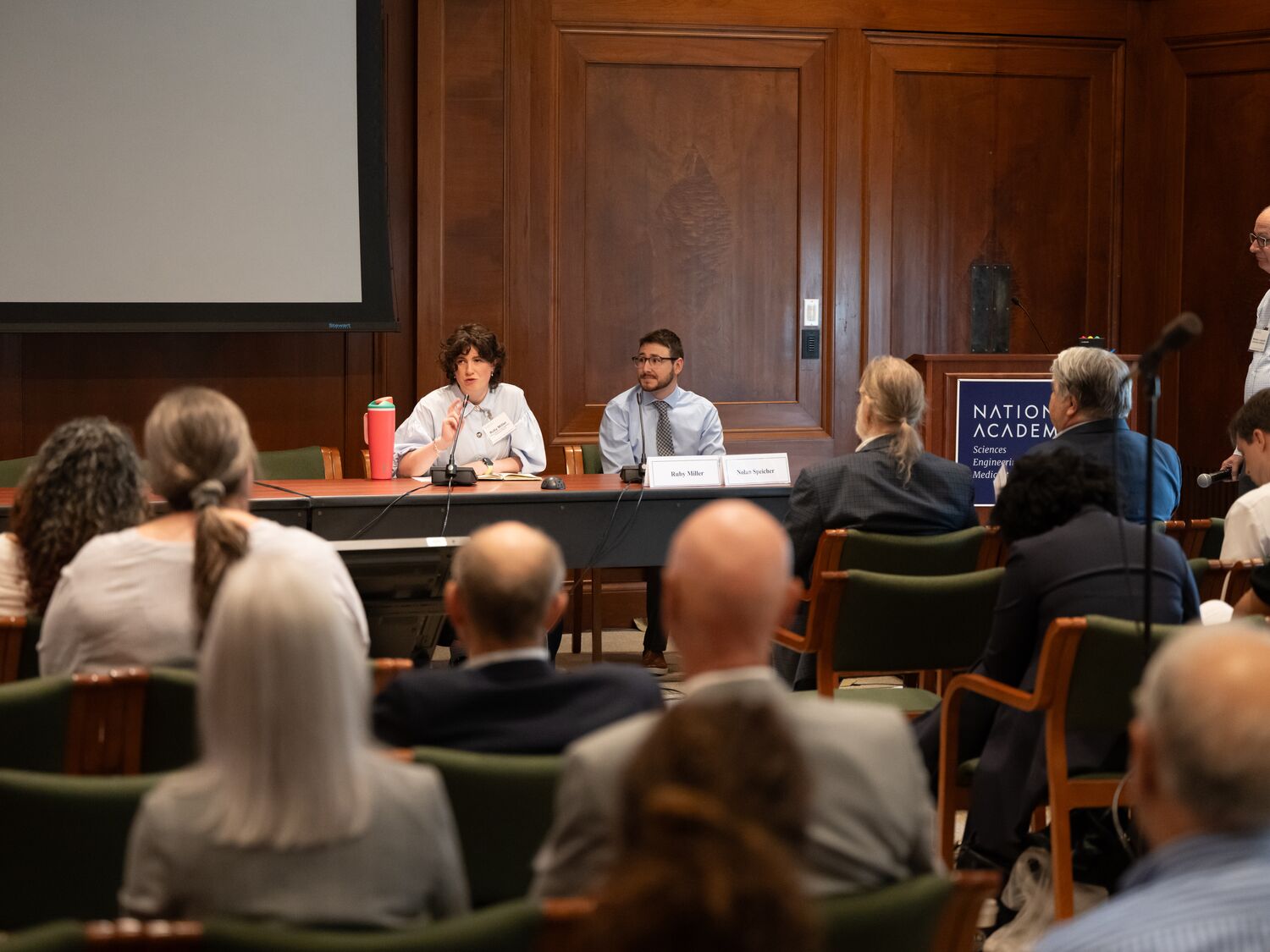
At the end of their tenure, fellows presented capstone projects before an audience of representatives from regulatory agencies, academia, industry, and the interested public. Their projects were designed to identify creative regulatory frameworks for cutting-edge products expected to emerge over the next several decades.
At the event, CSTL co-chair Martha Minow, 300th Anniversary Law Professor, Harvard Law School, said that the committee launched the fellowship for a simple reason: “There’s a need for improved understanding of future novel products amid the complexity of the United States’ biotechnology regulatory system.” The fellowship, she said, deepens CSTL’s long tradition of bringing people from science, engineering, and medicine together with members of the legal and policy communities for discussions about critical issues of mutual concern and providing a comprehensive, in-person professional development opportunity that cultivates the skills and knowledge needed to meet future regulatory challenges. The topics of the fellows’ presentations, Minow said, “could not be more timely or more compelling, and I am confident that the learning and connections we will see on display today will endure and improve lives and prospects for meaningful advances for years to come.”
The capstone presentations included topics such as:
what neural organoid models might reveal about the regulatory readiness of new approach methodologies (NAMs);
aligning competing incentives in gene therapy manufacturing to move the field toward a platform-based approach;
the scientific knowledge needed to assess microbial consortia products and policy, regulatory, and legal actions that could streamline the process of bringing microbial products to market;
whether genetic biocontainment mechanisms (i.e., genetic engineering approaches used to limit the spread and persistence of organisms and their DNA) should be engineered into microbes that are developed for environmental release before field trials and commercialization are permitted; and
how engineered microbes for environmental release demonstrate that certain emerging biotechnologies may require fit-for-purpose data governance infrastructure.
Michael J. Imperiale, Arthur F. Thurnau Professor of Microbiology and Immunology Emeritus, University of Michigan, and chair of the fellowship program’s advisory committee, said the hope is that the fellowship program will “foster a new generation of interdisciplinary leaders who are capable of integrating scientific discovery, risk assessment, and governance and [who] are primed to support efforts to ensure that emerging biotechnologies deliver innovative products and societal benefits while maintaining rigorous standards for safety and effectiveness.”
The application for 2027 fellowships is open until Aug. 31, 2026, at 11:59 p.m. EDT. For more information about the fellowship program and how to apply, visit the Biotechnology Regulatory Fellowship website.
Featured Project
Biotechnology Regulatory Fellowship Program
Fellowship/Professional Development Program
Biotechnology Regulatory Fellowships are six-month, full-time, hands-on professional development fellowships structured to engage early career professionals in developing the evidence basis needed to meet future regulatory challenges presented by novel products of biotechnology. Fellows will identif...