How Innovation Could Reshape Chemistry by 2050
Feature Story
By Ron Warnick
Last update August 27, 2026
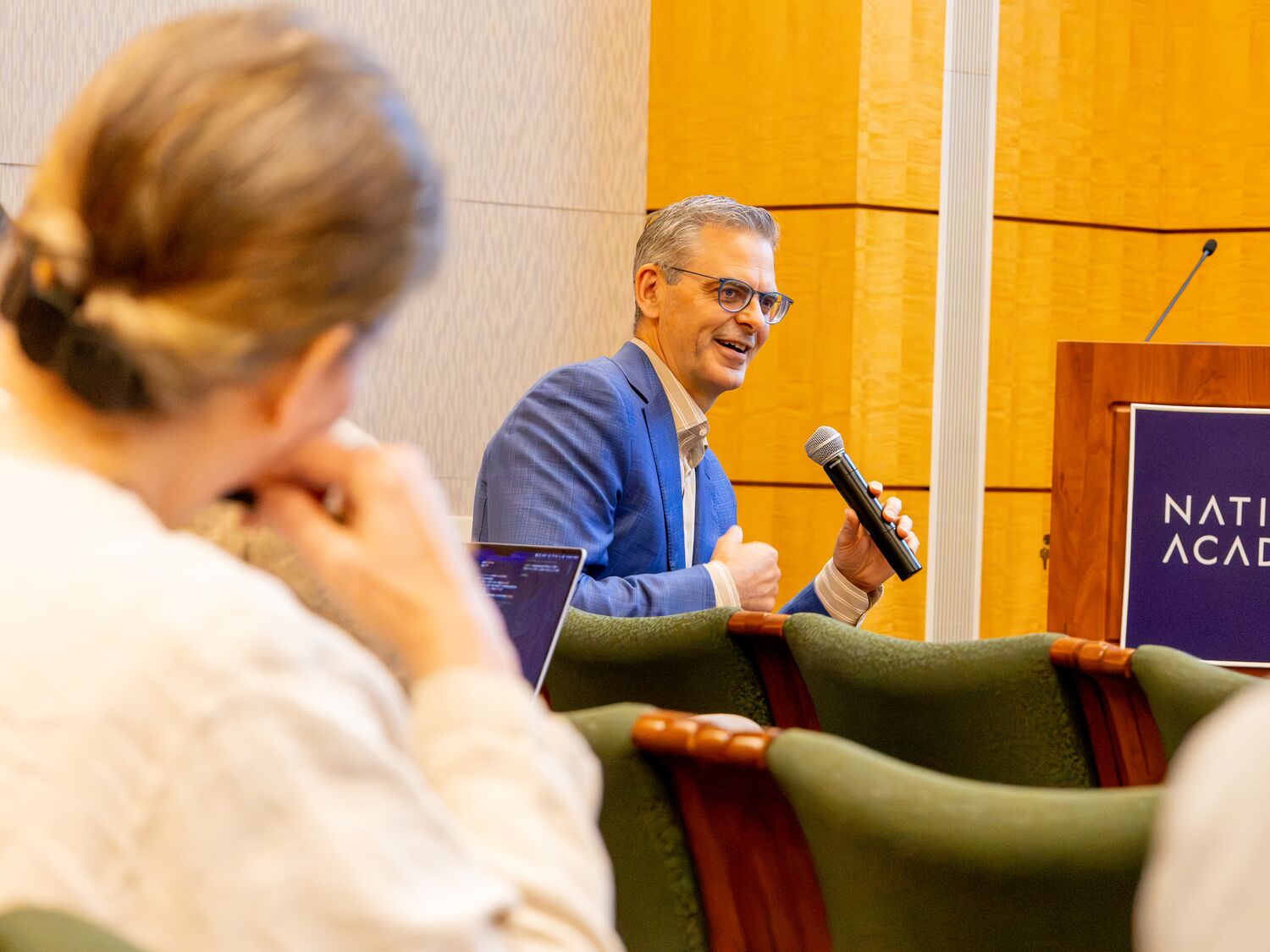
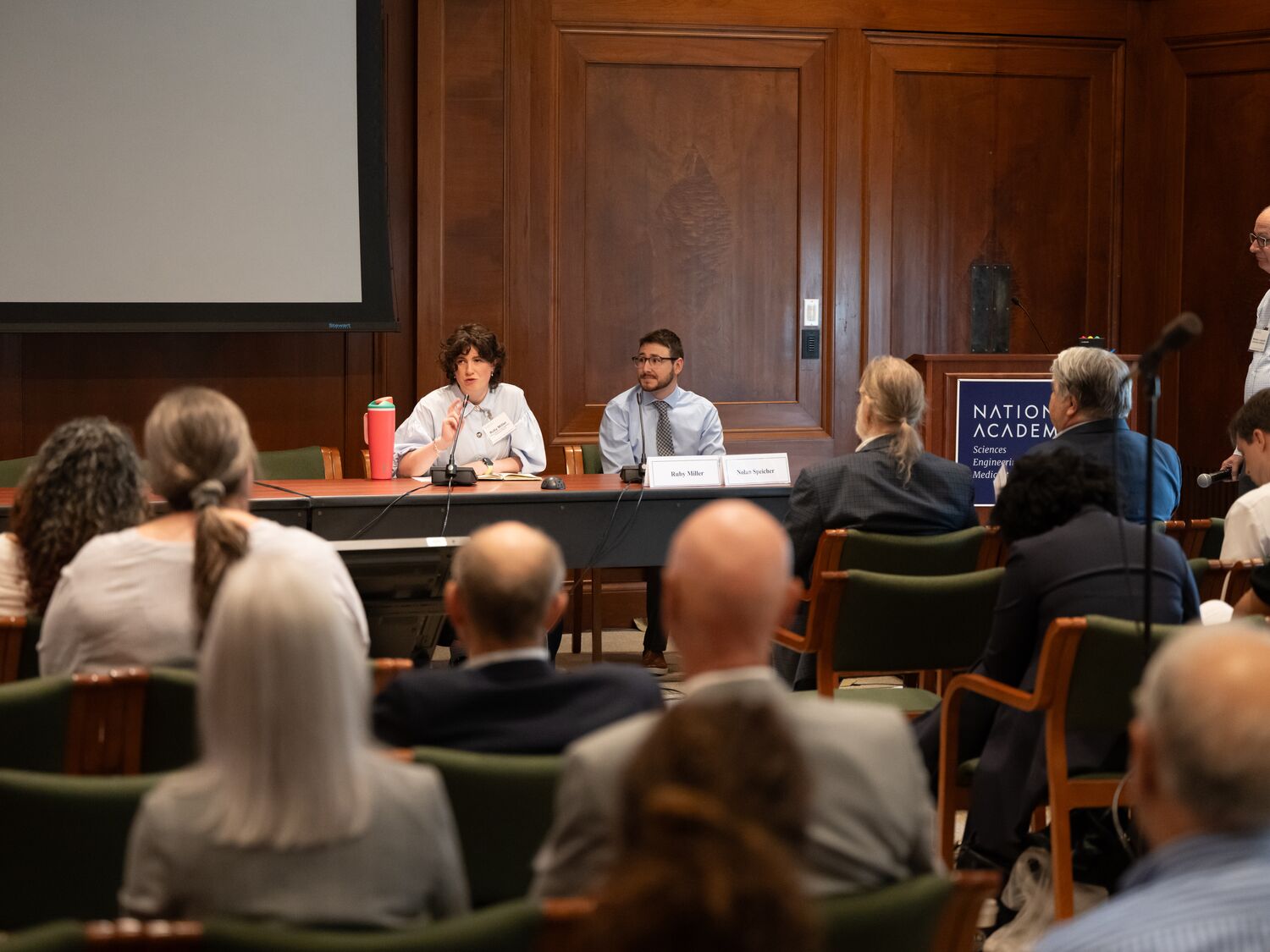
(photos by Thalía Romero)
Chemistry and chemical engineering are fundamental to technologies that could revolutionize energy production, computing, materials, and manufacturing over the coming decades. Realizing these opportunities will depend on decisions made well before 2050, including which scientific challenges researchers prioritize, where strategic investments could enable future breakthroughs, and how the chemical sciences community prepares for emerging capabilities.
At a recent workshop hosted by the National Academies of Sciences, Engineering, and Medicine, participants from academia, industry, and government came together to consider the future of the chemical sciences. Three areas in particular have the potential to transform chemistry and chemical engineering: energy, quantum computing, and materials and manufacturing.
Perspectives from across the chemical sciences community are needed to envision the decades ahead, including the research and investments that will be required.
“No one person is going to define the future of such a huge field, right? It’s going to take a lot of people with lots of different ideas,” said Nicola Pohl, Indiana University professor and former co-chair of the National Academies’ Chemical Sciences Roundtable, which organized the workshop.
“When you look at the history of technology and science — the threads of what happens now — you can trace back at least twenty-something years,” she said. “So, it might seem like it comes out of nowhere, but we know these things are going to have impacts over time.”
Advances in chemistry and chemical engineering will be important enablers of technologies such as fusion energy, batteries, quantum computing, and advanced manufacturing, participants agreed. At the same time, progress in these areas may create new capabilities for chemical research. Materials development will be particularly important to connect energy, manufacturing, and quantum technologies, especially as the pace of materials science continues to accelerate.
Participants also considered how advances across multiple areas could combine to create new possibilities for chemical innovation.
“If those two things happen — fusion [energy] and quantum computing — the opportunity for innovation will be arguably unmatched in human history,” said Martin Burke, professor at University of Illinois at Urbana-Champaign, former co-chair of the Chemical Sciences Roundtable, and a National Academy of Medicine member.
The workshop discussions also considered the potential negative impacts of emerging technologies and how chemistry and chemical engineering could help address them, including through more circular approaches that keep materials and chemicals in use for longer.
“I think it’s important that as we envision this future, we envision a future that can correct and learn from our past as well,” said Laurel Royer, founder, Carinalis Consulting and Research.
Participants also identified public engagement as an important opportunity — both to communicate the potential of developments in chemistry and chemical engineering and to identify and address public concerns as new technologies emerge.
Education and workforce development will need to keep pace with rapid changes. Preparing future scientists, engineers, and other workers will require anticipating new skills and forms of cross-disciplinary collaboration, even as the technologies, occupations, and industries continue to develop.
“It’s really a multifaceted challenge for workforce development,” said Thao Tran Dominy, associate professor at Clemson University. “It’s very tricky, because we need be able to better prepare our students for the job that doesn’t exist yet.”
Featured Event
Chemistry 2050: A Roadmap to the Future - A Workshop
Workshop
·Past
August 5 - 6, 2026