Is it true that everyone who should get a vaccine can get one?
Based on Science
Access to vaccines is still a problem for many people in all parts of the world. Many people still don't have access to life-saving vaccines.
Last update May 27, 2020

Lack of access to vaccines leads to 1.5 million preventable deaths each year.
Between 1974 and 2010, the percentage of people who got vaccines to prevent deadly diseases—including measles, polio, whooping cough, and tetanus—increased from less than 5% to 86%. These vaccines prevent about 4 million deaths every year.
But there are still millions of people around the world who do not have access to vaccines. One and a half million people die every year from illnesses that could have been prevented with a vaccine. And only 5% of children are fully vaccinated with the routine immunizations recommended by the World Health Organization.
Obstacles to accessing vaccines exist in all countries.
Cost, time conflicts, distance, and stability affect people’s access to vaccines in low-, mid-, and high-income countries.
A review of reasons parents in high-income countries did not get their children fully vaccinated included obstacles such as:
The cost of the vaccine
Difficulties in getting to the clinic at the times it was open
The clinic being in an inconvenient location
In the U.S., a study of low-income parents in northern Manhattan, New York, found that the most common reason that appointments for vaccines were missed was because of conflicts with child care, work, or competing appointments; however, in a different nationwide survey, an inability to take time off work and time conflicts were not associated with children being behind on their vaccinations. That survey found that children whose families moved often were less likely to be up to date with their vaccinations.
In a systematic review of vaccination rates in low- and middle-income countries, barriers to children getting all of the recommended vaccines included:
The cost of the vaccine
The distance people had to travel to get to the clinic and the money needed for transportation
The costs associated with parents missing work to get the child to a clinic
That review also found that families whose children were not vaccinated at all often lived in remote areas, had to travel a long distance to a clinic, or were living in places with armed conflict or civil unrest.
It is difficult to get vaccines to people in remote locations.
Vaccines must be stored at the proper temperature until they are given to people. If a vaccine dose gets too cold or too hot, it will not work. Maintaining the right temperature is difficult when a vaccine has to be transported a long way from where it is made to the people who need it. The majority of the world’s vaccine supply is made in high-income countries, so getting vaccine doses to people in remote areas of low- and middle-income countries means keeping them at the correct temperature for a long time and over great distances. This is expensive and difficult to do.
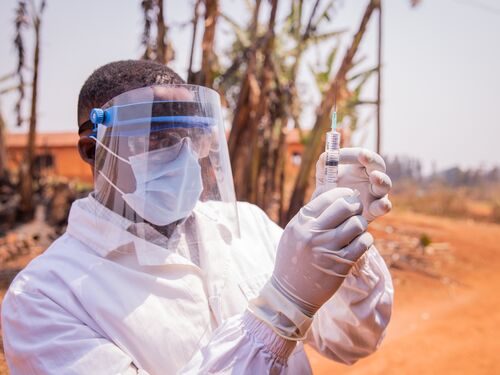
Most vaccines are given as a shot, so a needle and syringe along with the vaccine dose are required for every person getting a vaccine. This extra equipment, along with the need for someone who knows how to give a shot, presents another challenge in getting vaccines to the people who need them.
The development of vaccines that are not sensitive to temperature extremes and that can be delivered without the use of a needle would help increase access to vaccines in remote places.