Virginia Crossroads: Advancing Flood Resilience Across the Commonwealth
Program News
By Amanda Purcell
Last update August 27, 2026
Researchers, practitioners, and decision-makers convened to explore how science and collaboration can strengthen Virginia’s response to growing flood risks.
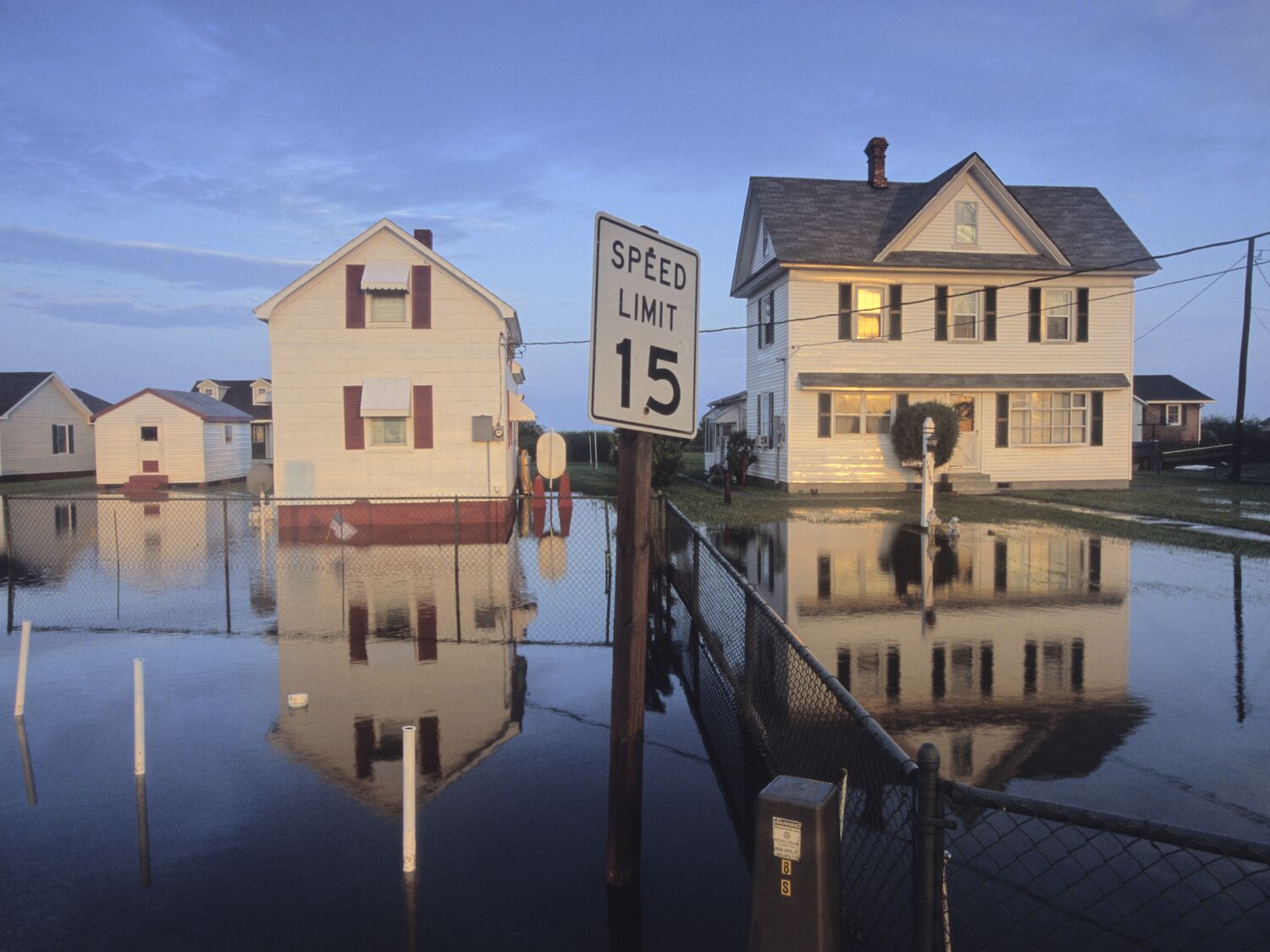
Across Virginia, water is both an asset and a growing source of risk. From tidal flooding along the coast to flash floods in mountain communities and stormwater challenges in rapidly developing cities, the impacts of flooding are intensifying and becoming more complex.
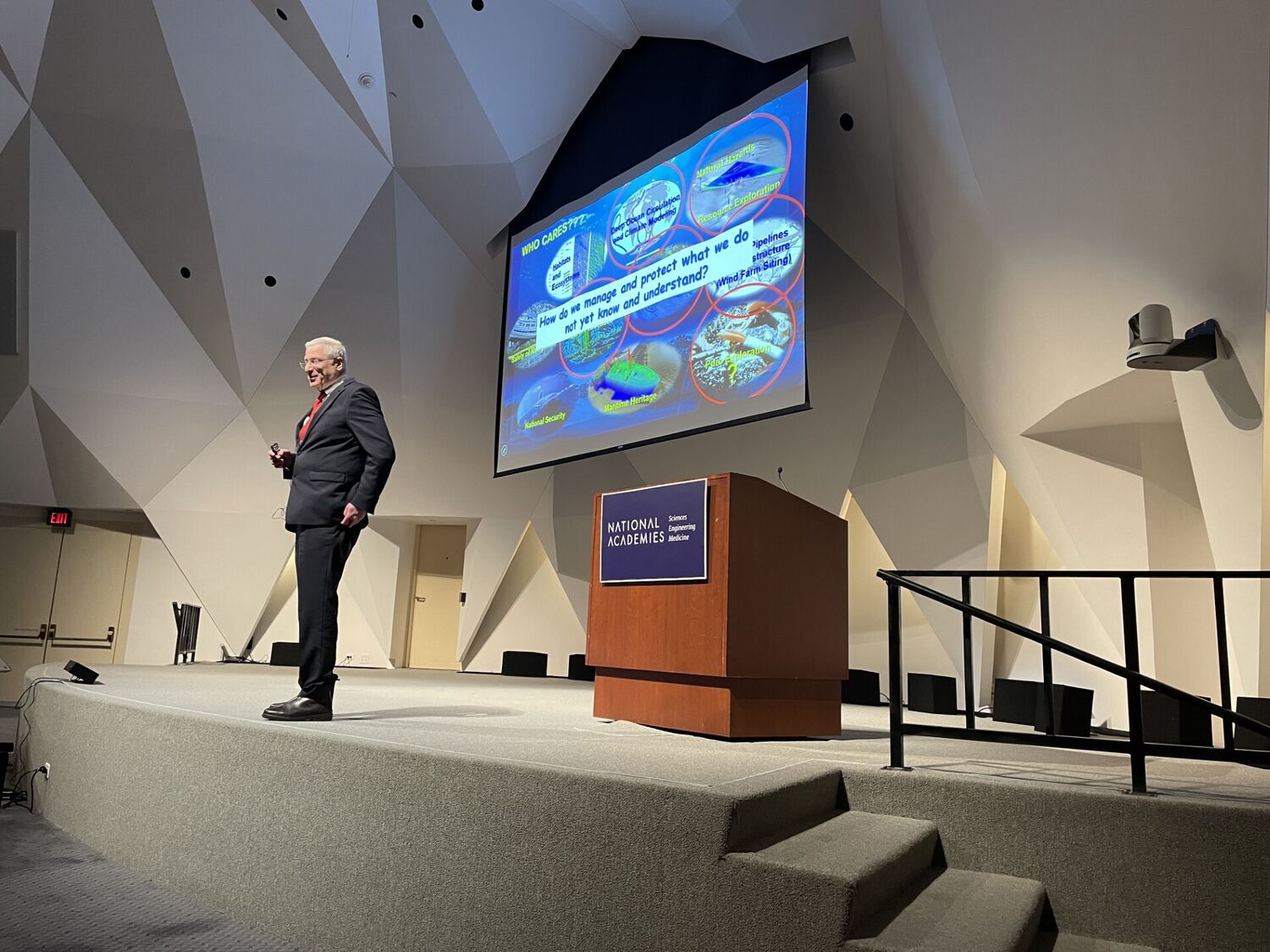
At Virginia Crossroads: Flood Resilience across the Commonwealth, held March 27, 2026, in Charlottesville, researchers, local and state officials, practitioners, and community leaders came together to explore how actionable science can support more effective flood resilience strategies. The event, hosted by the National Academies’ Climate Crossroads initiative in collaboration with the Virginia Academy of Science, Engineering, and Medicine (VASEM) and UVA Engineering, focused on translating data into decisions, sharing lessons from across the state, and building connections to support future collaboration.
Throughout the day, participants examined flood challenges across urban and rural contexts, explored emerging innovations, and reflected on how to better align science, policy, and practice in the face of increasing risk.
A Commonwealth Shaped by Water and Risk
Virginia’s geography creates a wide range of flood vulnerabilities. Coastal communities face sea level rise and recurrent tidal flooding; inland cities grapple with aging infrastructure and heavier rainfall; and rural and mountainous regions experience flash flooding that can devastate small communities with little warning.
Speakers emphasized that these risks are not abstract. “Climate impacts aren’t abstract; they’re deeply consequential for our communities, economy, and infrastructure,” Al Grasso, President of VASEM noted, highlighting the compounding effects of land subsidence, aging systems, and increasing storm intensity.
Across these varied contexts, a common theme emerged: flood resilience is not a single problem with a single solution. It is a complex, evolving challenge shaped by physical systems, social dynamics, and economic constraints.
From Data to Decisions in Urban Systems
In Virginia’s cities, flood risk is intensifying due to a combination of heavier rainfall, dense development, and legacy infrastructure. Panelists working in urban environments described the challenge of translating increasingly sophisticated data into practical, implementable solutions.
While advances in modeling and observational data have improved understanding of flood risks, turning that information into action remains difficult. Communities must navigate uncertainty, funding constraints, and long project timelines—all while risks continue to grow.
Participants also pointed to the importance of moving beyond traditional design approaches. Rather than designing for a single “best estimate,” practitioners emphasized the need for more flexible, robust strategies that can perform under a range of future conditions.
At the same time, success depends on more than technical solutions. Funding, workforce capacity, leadership, and community buy-in all shape what can be achieved. As Brian Batten of Dewberry noted, “There’s no single barrier—it’s a combination of many things.”
Distinct Challenges and Strengths in Rural Communities
Flooding in rural Virginia presents a different set of challenges. Limited financial resources, small staff capacity, and dispersed infrastructure can make both planning and recovery more difficult. At the same time, these communities often face highly localized and fast-moving hazards, such as flash flooding in mountainous regions.
Chris Bell, town manager of Damascus, described a recent flood event in his small town where water levels rose dramatically within minutes, overwhelming infrastructure and reshaping the landscape. In the aftermath, recovery relied heavily on local networks—neighbors helping neighbors—highlighting both the vulnerability and resilience of rural communities.
Panelists emphasized that rural areas should not be viewed simply in terms of “lower capacity,” but rather in terms of different assets and strengths. Strong social networks, local knowledge, and a deep connection to place all play a critical role in resilience.
Nature-based solutions also emerged as a key opportunity. Forests, wetlands, and riparian buffers can reduce flood impacts while providing additional benefits for water quality, ecosystems, and local economies. In many cases, maintaining and restoring these systems can be both cost-effective and widely supported, especially when aligned with landowners’ priorities.
Innovation Beyond Technology
The event’s final discussions focused on innovation, not just in terms of new technologies, but also new approaches to financing, policy, and collaboration.
Participants highlighted a growing ecosystem of tools and ideas, from real-time monitoring systems and machine learning applications to new insurance models and financing mechanisms. But innovation, speakers emphasized, is not just about developing new solutions—it is about integrating them into systems that work in practice.
“Integration” emerged as a central concept: integrating data with decision-making, infrastructure with natural systems, and planning across sectors and scales.
Equally important is the ability to move from pilot projects to broader implementation. While many promising solutions exist, scaling them requires coordination, sustained funding, and alignment across institutions.
Bridging Science, Policy, and Practice
Across all sessions, one insight stood out: Virginia already has many of the pieces needed to advance flood resilience, with its strong research institutions, growing data resources, engaged communities, and emerging funding mechanisms.
The challenge lies in connecting those pieces.
Participants pointed to the need for stronger linkages between scientific research and on-the-ground decision-making, as well as better alignment between funding programs, policy frameworks, and community needs. In many cases, the gap is not a lack of knowledge, but a lack of integration. “We have to put all these different components in one framework that helps with resilience,” Dan Medina of the City of Alexandria emphasized.
Building trust and relationships is central to this effort. Whether working with local governments, rural communities, or private sector partners, long-term collaboration is essential for translating knowledge into action.
Looking Ahead
The conversations in Virginia underscored both the urgency and the opportunity of flood resilience work. Risks are increasing, costs are rising, and difficult decisions about where and how to invest lie ahead.
At the same time, there is growing momentum. New funding programs, expanding data capabilities, and stronger cross-sector partnerships are creating pathways for more proactive and coordinated action.
As Medina reflected, the goal is not to eliminate flooding (an impossible task), but to learn how to live with water in ways that mitigate risk, protect communities, and sustain the systems people depend on.
Virginia Crossroads is part of a broader effort by the Climate Crossroads initiative to foster these kinds of conversations, bringing together diverse perspectives to explore how science can inform decisions and support resilient futures.
Featured Event
Virginia Crossroads: Flood Resilience across the Commonwealth
Symposium
·Past
March 27, 2026
9:00 AM - 4:30 PM (EDT)