Forum on Informed Investment, Technology, and Policy Pathways for the Electricity System and Interdependent Energy Infrastructure
The U.S. electricity system is undergoing a period of immense transformation – driven by the development of economical renewable energy resources across the economy and the rapid expansion of distributed technologies being connected to the grid. This Forum convenes leaders from across the electricity system to provide a trusted and balanced venue for information-sharing; gaining common understanding; and grappling with complex technical, economic, environmental, regulatory, policy, and societal changes prompted by grid modernization efforts.
Recently completed
News and Updates
As Electricity Demand Grows and Risks Increase, Experts Examine How the Grid Can Keep Up
Feature Story
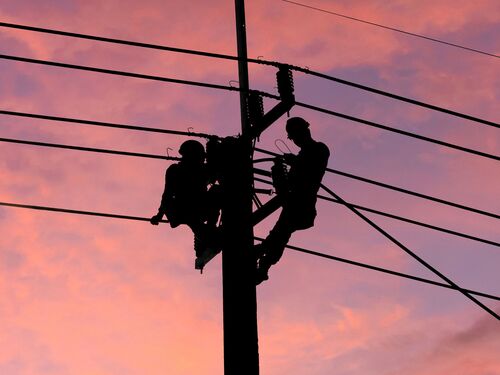
Electricity demand in the United States is increasing while the infrastructure needed to serve that demand is taking longer to build. In a series of webinars hosted by the National Academies Forum on Informed Investment, Technology, and Policy Pathways for the Electricity System and Interdependent Energy Infrastructure, experts pointed to a growing gap between how quickly new demand is emerging and how long it takes to expand generation and transmission systems.
Description
The National Academies will host a Forum to convene leaders in the electricity system from government, industry, academia, and nongovernmental organizations (including those representing consumers and impacted communities), providing a trusted and balanced space for information-sharing and gaining a common understanding of the goals and objectives of different actors in this space. The Forum will provide a venue for key actors in the electricity system to grapple with the complex changes prompted by the clean energy transition.
This Forum will discuss insights and suggested solutions that are arising from the many technical, economic, regulatory/policy, and societal needs prompted by these transformations in the electricity system. These transitions and their associated uncertainties include but are not necessarily limited to:
• Synergies and complications arising from concurrent changes across the electricity grid. These include the effects of decarbonization, renewables development, and other policies on the transmission system and the expansion of distributed technologies on the distribution system, as well as interactions between the convergent infrastructure systems (e.g., electricity and natural gas systems) which weave the energy system together.
• A changing resource mix and/or a shift to distributed energy system structures. These outcomes include maintaining an affordable and reliable grid which meets the needs of its users, and the ability for actors in the electricity system to navigate market forces to attain these outcomes.
• The effects of new and emerging technologies on system operation and accompanying levels of predictability. System operators and participants will increasingly need to determine their tolerable levels of uncertainty in investment and planning. Relevant dynamics include supply chain considerations, such as availability and cost of needed materials inputs, as well as the state of domestic capacity for manufacturing critical components for the grid. Technological advances also motivate changes in behavior, necessitating continued understanding of how participants (e.g., utilities, regulators, technology providers and vendors) in the system respond to incentives and insights offered from the social sciences on human dynamics in the electricity system. This includes how to ensure access to a reliable and affordable grid at the same time as consumers increasingly pursue individual generation and storage solutions
• How to bound risks and threats. The proliferation of distributed elements on the grid raises cyber and physical security implications, as well as complications arising from the entry of millions of communications, devices, and electrical connections to the grid and its users. These changes also motivate the need to understand levels of acceptable risk and uncertainties associated with system safety and reliability, as well as the grid’s ability to meet evolving resilience needs even as the electric system grows to provide increasing shares of the nation’s overall energy needs in buildings, vehicles, industry, and public services.

Contributors
Committee
Chair
Member
Member
Member
Member
Member
Member
Member
Member
Member
Member
Member
Member
Member
Member
Member
Member
Staff Officer
Sponsors
Department of Energy
Staff
Brent Heard
Lead
Rebecca DeBoer
K. John Holmes