Independent Assessment of Science and Technology for the Department of Energy's Defense Environmental Cleanup Program (2019)
Chapter: 3 Review and Assessment of Technologies and Alternative Approaches
3
Review and Assessment of Technologies and Alternative Approaches
This chapter addresses the second charge of the Statement of Task for this study (see Sidebar 1.2 in Chapter 1), which calls for
A review and assessment of the types of technologies and/or alternative approaches for the DOE-EM cleanup program that could
- Reduce long-term costs;
- Accelerate schedules; and
- Mitigate uncertainties, vulnerabilities, or risks, or otherwise significantly improve the cleanup program.
As noted in Chapter 1, this study charge calls for a future-focused review and assessment of technologies and alternative approaches that have the potential to substantially reduce cleanup program costs, schedules, and risks or uncertainties. Most of these technologies and alternative approaches are not available to be deployed in the Department of Energy’s Office of Environmental Management (DOE-EM) cleanup program today. The Advanced Research Projects Agency–Energy (ARPA-E)-managed breakthrough science and technology (S&T) development program called for in Recommendation C in Chapter 2 of this report is intended to spur development and deployment of such technologies and alternative approaches into the cleanup program.
It is not possible to make detailed predictions about future advancements in S&T development that will lead to new cleanup capabilities over the 50-year-plus projected lifetime of DOE-EM’s cleanup program.
Nevertheless, the committee judges that a focused and sustained S&T development effort could substantially improve DOE-EM’s cleanup capabilities in the future—just as past investments in S&T development by DOE-EM and others have produced the cleanup technologies being used today. Cleanup of the nuclear weapons complex is not simply an engineering problem; as discussed in Chapter 2, it requires substantial new investments in S&T.
The committee used its collective judgment and experience to identify examples of the kinds of technologies and alternative approaches called for in study charge 2. These examples are presented in Section 3.1. They are intended to be broadly illustrative of the types of S&T development opportunities and are not intended to be definitive. Section 3.2 illustrates, again by example, how these technologies and alternative approaches could be applied to some key DOE-EM cleanup challenges to reduce long-term costs; accelerate schedules; mitigate uncertainties, vulnerabilities, or risks; or otherwise significantly improve the cleanup program.
Some of the examples presented in Section 3.1 might become the focus of the ARPA-E-managed breakthrough S&T development program called for in Recommendation C in Chapter 2. However, the core thrust(s) of the ARPA-E program will be informed by the cleanup risk and uncertainty analysis called for in Recommendation A in Chapter 2 as well as DOE-EM’s S&T management process called for in Recommendation B in Chapter 2.
3.1 TECHNOLOGIES AND ALTERNATIVE APPROACHES
The technologies and alternative approaches in Finding 5 are posed as “change” or “action” statements. One can think of these statements as “knobs” that can be “turned” through a properly organized and focused S&T development and deployment effort to obtain the reductions in costs, schedules, and risks or uncertainties called for in study charge 2.
The examples of technologies and alternative approaches identified in Finding 5 are described briefly in the following subsections. The committee made no effort to assess the current status of these technologies and alternative approaches, judging that such an assessment was not needed to address study charge 2 and would add unnecessary length and detail to the chapter. These examples are intended to inform the design of the ARPA-E-managed breakthrough S&T development program identified in Recommendation C in Chapter 2, as noted previously in this chapter, and are not intended to constrain that design. The committee expects that DOE-EM and ARPA-E will undertake a detailed analysis of the usefulness, practicality, and current status of these technologies and alternative approaches as part of that design effort.
3.1.1 Change Chemistry at Bulk and Interfacial Scales
DOE-EM waste streams contain hazardous and/or radioactive elements in specific chemical forms, referred to as chemical species. The form of a species—for example, whether it is contained in a solid or aqueous phase—can greatly affect the ease with which that species can be removed from the waste stream for treatment and disposal. Systems for treating waste streams rely on chemical manipulations to isolate species of interest and facilitate their sequestration into waste forms suitable for storage or disposal. Chemical manipulations of waste in subsurface environments are also used to reduce the environmental mobility of contained species, essentially sequestering those species in place.
Many of the treatment systems used by DOE-EM today were designed more than a decade ago and employed the then-state of knowledge about chemical speciation. Scientific understanding of chemical speciation has advanced since then, particularly for complex chemical systems, but incorporation of that knowledge into new remediation approaches has lagged.
In addition, new foundational knowledge is needed for chemical speciation of contaminants in bulk solid phases; the interaction of these species at interfaces; and changes in speciation and interfacial interactions under
changing chemical conditions, including the effects of radiation damage and particle size diminution. Advancing the current understanding of chemical dynamics in bulk phases and at interfaces will likely enable the development of new remediation technologies, including advanced separations for treatment systems and in situ treatment approaches.
Some examples of potential future treatment technologies and approaches include
- Electrochemistry to modify chemical conditions, ranging from oxidation state changes of elements that are contaminants to in situ electrodeposition or vitrification;
- Interfacial control of reactivity leading to improved separations and/or sequestration;
- Understanding interfacial surface chemistries between suspended particulates to enable better rheology control in complex waste streams; and
- Use of biological processes to achieve oxidation state control of redox-sensitive contaminant species and to drive in situ sequestration.
3.1.2 Change Nuclear Properties
Much of the hazard associated with radioactive waste is derived from its elemental composition, isotopic composition, and molecular speciation. Some waste constituents are chemical hazards: for example, human exposure to uranium in drinking water can cause renal failure. Other waste constituents are radiation hazards: for example, external exposures to cesium-137 or internal exposures to plutonium-239 (e.g., through inhalation), depending on the amount, can cause acute health effects such as radiation sickness or long-term health effects such as cancer. Altering the number of protons and/or neutrons in the radioactive nuclei of waste constituents can reduce their chemical and radiation hazards. The alteration process is referred to as transmutation.
The feasibility of transmuting spent nuclear fuel and radioactive waste to reduce the need for long-term disposal has been examined by the National Academies (NRC, 1996) and other organizations.1 Several barriers currently exist for applying these technologies to DOE-EM radioactive waste streams, including separation inefficiencies and high infrastructure and cost
___________________
1 For example, DOE sponsored a program beginning in fiscal year 2000 to evaluate accelerator systems for transmuting long-lived nuclear waste stream constituents (Van Tuyle et al., 2002).
requirements. However, new tools are under development that have the potential to overcome some or all of these barriers.2
Some examples of potential treatment and technologies include
- High-efficiency and -specificity separations technologies to isolate radioactive constituents of interest from complex waste streams; and
- Low-cost, high-efficiency compact accelerators, plasma-based centrifuges, and/or lasers, for transmuting the separated radioactive constituents.
3.1.3 Change Human Involvement
Many DOE-EM cleanup activities are inherently dangerous. For example, retrieving and processing high-level radioactive waste from underground tanks and decontaminating and demolishing highly contaminated equipment and facilities require intensive manual labor and have the potential to expose workers and members of the public living near DOE-EM sites to industrial, chemical, and radiation hazards.
Minimizing the need for direct human involvement in hazardous cleanup activities can lead to reduced worker risks and improved cleanup efficiencies. Some examples of such technologies and alternative approaches include
- Remote systems/robotics, coupled with artificial intelligence (AI), to reduce the need to place humans in dangerous environments;
- Advanced person–machine interfaces that would allow workers to perform hazardous tasks remotely; and
- Augmented reality/virtual reality (AR/VR) to inform planning and to practice execution of particular cleanup actions. A building information model—a three-dimensional view of a structure or facility to show all systems as installed—is an example of a VR environment.
3.1.4 Change Interrogation Approaches
Interrogation approaches are means for remotely characterizing important properties of waste streams and/or contaminated facilities without
___________________
2 For example, lasers are being investigated for use in making medical isotopes through transmutation reactions (see MIT Technology Review, 2011), and pulsed lasers are being investigated for transmuting nuclear waste (see Hirlimann, 2016). Most of this work is being carried out outside of the United States.
the need for physical sampling and analysis. An example of such an approach is microwave or electrical impedance tomography combined with advanced data manipulation and analysis to measure properties of subsurface environments.
Interrogation approaches have several potential applications in the DOE-EM cleanup program. For example, they could be used to image and understand the movement of contaminants in subsurface environments without drilling numerous groundwater monitoring wells. They could also be used to characterize the interiors of underground waste tanks and their contents without having to retrieve and analyze physical samples. Such approaches could transform the DOE-EM cleanup program through better-informed cleanup decisions, reduced worker risks, and reduced cleanup times and costs.
Some examples of interrogation approaches include
- Mobile, autonomous sensor systems deployed on drones that are capable of operating in extreme (i.e., high-radiation and aggressive chemical) environments;
- In-line sensor systems that enable on-the-fly monitoring of waste processing streams in extreme environments;
- Advanced data analysis systems that enable the fusion of disparate data sets;3
- Electrical resistivity of subsurface environments enabled by low-power wireless sensor networks;4 and
- Stand-off spectroscopic analyses using vibrational technologies such as LIDAR and Raman techniques to provide chemical information in extreme environments.
3.1.5 Change Modeling and Visualization Approaches
Approaches for modeling and visualizing physical and chemical phenomena are being rapidly and dramatically transformed by increases in data availability and computational power, combined with advances in algorithms and new data visualization methods. Data-driven modeling approaches that merge multiple disparate data sets are increasingly being used to supplement process-based modeling approaches and uncover correlations and relationships among complex phenomena, for example, environmental
___________________
3 Disparate data sets are made up of data that are unalike in character and therefore cannot be easily integrated. Subsurface groundwater monitoring data and climate monitoring data are examples of disparate data sets.
4 For example, the E4D system created by the Pacific Northwest National Laboratory uses three-dimensional electrical resistivity and spectral induced polarization data for subsurface imaging and monitoring. See https://e4d.pnnl.gov/Pages/Home.aspx.
transport phenomena, that were previously hidden due to limited data availability. Advances in data visualization are also revealing correlations and trends that were hard to identify in the past. In general, so-called big data analytics are revolutionizing the way that industries, governments, and institutions are modeling problems and visualizing outcomes.
There is a continuum between modeling and visualization of small data sets using conventional statistical approaches and dealing with large and diverse data sets through rapidly evolving data science and artificial intelligence approaches. The latter approaches are expected to dominate in the near future and will bring new perspectives and efficiencies to decision making.
Advances in modeling and visualization have many potential applications in the DOE-EM cleanup program. Some examples for subsurface contaminant plume management include
- The merging of climate data and other remote-sensing data, monitoring well data and other subsurface sensing data, and visual inspections and observations to provide new or improved insights into complex flow and transport phenomena that affect contaminant plume behavior.
- The merging of subsurface observational and modeling data across all DOE-EM sites to reveal macrotrends, including the uncertainties associated with current modeling and predictive approaches.
- The merging of thermodynamic and dynamic (kinetic) approaches to understand and predict both equilibrium and nonequilibrium behaviors of contaminants.
- New four-dimensional (the three spatial dimensions plus the time dimension) visualization tools for subsurface groundwater contaminant plumes that include historical data as well as future projections. These could help all stakeholders visualize past and projected behaviors of plumes and reveal trends in cleanup progress under different remediation scenarios.
- Visualization of the structures of new materials that could be used for sequestering radioactive waste or for separating mixtures of radioactive materials.
Other examples relevant to decision making are provided in Section 3.1.7.
3.1.6 Change Disposal Pathways
DOE-EM’s cleanup activities are generating thousands of radioactive and hazardous waste streams. DOE-EM must identify a disposal pathway—that is, processes to treat each waste stream to make it suitable for disposal and a facility to dispose of the treated waste—for each waste stream. The majority
of DOE-EM’s current waste streams can be disposed of in near-surface engineered facilities, either at DOE sites or at commercial disposal facilities, with little or no treatment. However, near-surface disposal is not cost effective or environmentally protective for some waste streams, particularly those that contain radioactive constituents that are mobile in the environment.
There may be new disposal pathways for DOE-EM waste streams that are protective of human health and the environment but faster and less costly to achieve than current pathways. Some examples include
- Near-surface storage vaults to allow time for decay of waste streams containing short-lived radioactive constituents;
- Boreholes and deep-injection wells for disposal of short-lived, high-activity radioactive wastes;
- Pretreatment of waste streams to remove long-lived and/or environmentally mobile radioactive constituents that prevent disposal in near-surface engineered facilities;
- Low-temperature waste forms such as geopolymers, room-temperature ceramics, and composite cements to serve as durable alternatives to high-temperature waste forms such as glass and reduce volatilization of radioactive and hazardous constituents during processing; and
- New waste forms for stabilization of wastes that are mobile in the environment.
3.1.7 Change Decision-Making Approaches
Many of the challenges facing the DOE-EM cleanup program are sometimes referred to as “wicked problems.” They are multivariate in nature, containing many independent variables (e.g., cost, risk, regulatory acceptance) that interact in complicated ways. Conventional top-down decision-making processes applied to wicked problems often have unintended consequences. These generally occur either because the decision maker is focused on only one part of the problem, or because the decision maker does not recognize the complex interdependencies among the various parts of the problem.
New and/or improved decision-making tools can lead to improvements in the quality of decisions made by the cleanup program. Decision quality depends both on the information needed to inform decision makers and on decision-making processes that uncover—and resolve—the complex interplay among the various aspects of the decision. Some examples include the following:
- Scenario development, modeling, simulation, and visualization tools to test and communicate the impacts of decision alternatives
-
(e.g., through simulation and scenario development) on cleanup cost, schedule, and risk reduction;
- Decision tools to enable risk-informed prioritization of cleanup activities at individual and multiple sites and prediction of impacts of such prioritization on cleanup costs and schedules;
- Modeling and visualization tools that elucidate the impacts of individual cleanup decisions on the remaining DOE-EM cleanup scope;
- Collaborative decision-making tools to more effectively involve key stakeholders (e.g., state, local, and tribal governments) in cleanup decision-making processes, which could help to improve the quality and durability of cleanup decisions and increase stakeholder trust in those decisions;
- Convergence science to develop new frameworks for more effectively communicating relevant information to the diverse groups of stakeholders involved in the cleanup program; and
- Visualization tools to present scientifically based analyses to regulators to support requests for regulatory changes.
3.2 APPLICATION OF TECHNOLOGIES AND ALTERNATIVE APPROACHES
The DOE-EM cleanup program has been under way for almost 30 years; consequently, the scope of the cleanup mission is well established and the technical challenges for completing it are generally recognized. Many of the key challenges for completing the cleanup mission have been identified in previous National Academies reports (see Appendix B). Those reports provide the basis for the committee’s summary of nine key cleanup challenges, described below in no order of priority:
- Characterize and retrieve heterogeneous radioactive and hazardous wastes5 from large underground tanks without degrading tank integrity or the immediate surroundings.
- Stabilize residual tank waste and underground tanks in place.
- Improve the efficiency and effectiveness of in situ monitoring of physical and chemical conditions within and beneath underground tanks.
- Develop real-time capabilities for in situ analysis and modification of waste streams and processing approaches to reduce the need for batching and batch storage.
___________________
5 The term “hazardous waste” refers to solid and liquid wastes identified by the U.S. Environmental Protection Agency as having harmful effects on human health or the environment. A waste that contains both radioactive and hazardous components is referred to as a “mixed waste.”
- Separate long-lived and/or environmentally mobile radioactive constituents from waste streams.
- Rapidly, remotely, and safely characterize and remove radioactive contamination from equipment and buildings.
- Characterize and stabilize and/or retrieve contamination in the deep vadose zone.
- Remotely monitor the physical and chemical environments in waste disposal cells and surface and near-surface barriers.
- Monitor the locations and movements of subsurface contaminant plumes.
These cleanup challenges are briefly described in the following subsections. Table 3.1 shows by example how the technologies and alternative approaches described in Section 3.1 might be used to address these cleanup challenges.
The first five cleanup challenges focus on remediation of radioactive wastes stored in underground tanks at the Hanford and Savannah River Sites (see Figure 3.1 and Sidebar 3.1). Most of these wastes resulted from the chemical processing of irradiated uranium targets to produce plutonium for nuclear weapons. Smaller amounts of waste were also produced by other processes, for example, chemical processing of damaged research reactor fuel.
Cleanup of the waste tanks at Hanford and Savannah River is the largest cost driver at these sites: DOE-EM currently estimates that about $80 billion will be required to complete cleanup of the waste tanks over the next 30-plus years (see Figure 1.1). Moreover, retrieval and processing of tank waste have the potential to expose workers to both chemical and radioactive hazards and could pose public health risks today and in the future if not managed properly.
3.2.1 Characterize and Retrieve Heterogeneous, Highly Radioactive Wastes from Large Underground Tanks Without Degrading Tank Integrity or the Immediate Surroundings
Characterization of waste stored in underground tanks at Hanford and Savannah River is challenging because
- It is voluminous (~90 million gallons [~340 million liters]) and stored in a large number (~220) of tanks.
- It is heterogeneous, consisting of mixtures of liquids, crystallized salts, and solid sludge (see Figure 3.2).
- It is radioactive and hazardous and poses health and safety risks to workers.
TABLE 3.1 Examples of Three Applicable Change Knobs for the DOE-EM Cleanup Challenges
| Cleanup Challenge | Examples of Applicable Change Knobs |
|---|---|
| Characterize and retrieve tank waste |
|
| Stabilize residual tank waste and tanks in place |
|
| In situ tank monitoring |
|
| Analysis and modification of waste stream processing |
|
| Separate radioactive constituents from waste streams |
|
| Characterize and remove radioactive contamination from equipment and buildings |
|
| Characterize, stabilize, and/or retrieve deep vadose zone contamination |
|
| Monitor waste disposal cells and barriers |
|
| Monitor locations and movements of subsurface plumes |
|
DOE has been able to characterize a subset of its tank wastes by direct sampling; however, in many cases this process does not provide sufficiently representative samples to make waste processing decisions. More detailed characterization estimates are made by retrieving waste from the tanks, transferring that waste to batch tanks and blending it, and then sampling the blended waste and conducting detailed chemical, radiological, and rheological analysis. This process is costly and time intensive.
Retrieval of the waste stored in underground tanks at Hanford and Savannah River is also challenging because
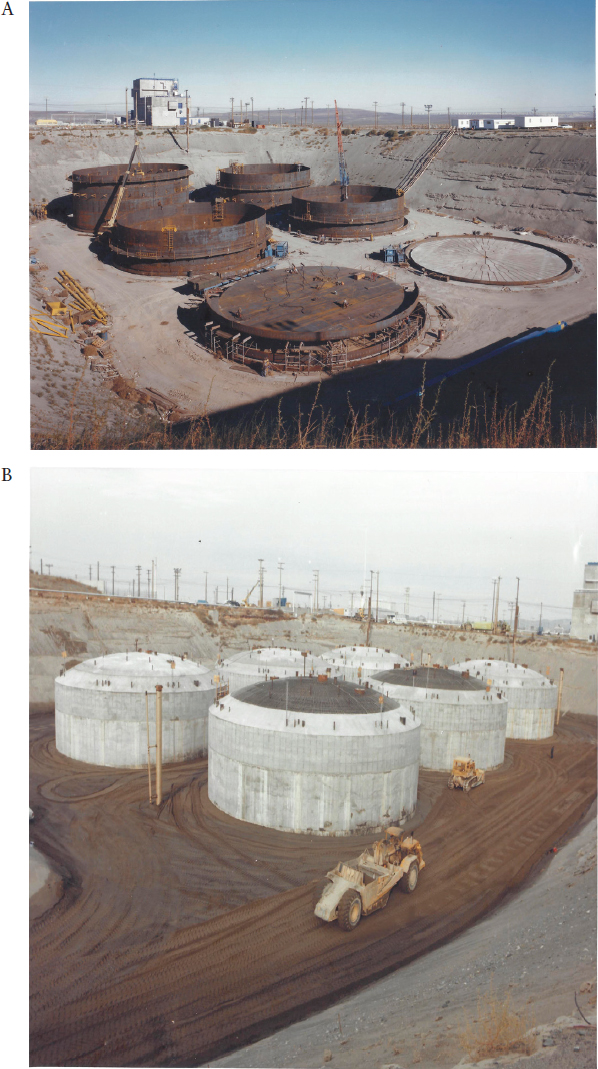
SOURCE: Department of Energy.
- The waste contains large volumes of nonpumpable solids.
- Access to tank interiors is limited by the small number and sizes of access ports, limiting both the size of equipment that can be introduced into the tanks and access to internal tank surfaces. Additionally, some tanks have internal structures such as pillars and cooling coils that further inhibit access and increase the difficulty of waste retrieval and tank cleaning.
- Tanks with single containments, especially tanks that are known or suspected to have leaked, could leak (additional) waste into the subsurface during retrieval operations.
DOE-EM has developed or adapted a number of technologies to characterize and retrieve tank waste. However, characterization and retrieval processes continue to be costly, time intensive, and hazardous to workers.
The technologies and alternative approaches described in Section 3.1 can be applied to improve the characterization and retrieval of waste from tanks at Hanford and Savannah River. These include, for example (see Table 3.1),
- Approaches for modifying tank waste chemistry to improve the ease and efficiency of retrieval and also to reduce water use during retrieval operations;

SOURCE: Department of Energy.
- Robotics and human–machine interfaces to reduce the need for direct human involvement in waste retrieval operations; and
- Interrogation approaches for in situ characterization of the physical, chemical, and radiological properties of tank waste and for in situ characterization of tank interiors after retrieval operations are completed.
3.2.2 Stabilize Residual Tank Waste and Underground Tanks in Place
DOE-EM plans to close the underground waste tanks6 at the Hanford and Savannah River Sites in place after waste retrieval operations are completed (see Sidebar 3.2). Eight of 51 tanks at the Savannah River Site have already been operationally closed as of late 2018 (DOE-EM, 2017b), and operations to close several more are under way. None of the 177
___________________
6 A tank is “closed” by removing waste to the extent practical and then filling it with specially formulated grouts that provide structural support and inhibit the migration of residual waste into the environment. See SRR (2016).
underground tanks at the Hanford Site have been closed as of late 2018. Once all of the tanks have been closed, the tank farms may be covered with engineered caps to reduce water ingress and inhibit physical access.
Technologies for stabilizing residual waste and tanks in place have, to date, been applied to tanks that lack complex internal structures. It is not clear how effective these technologies will be when applied to
- Leaking single-containment tanks,
- Double-containment tanks containing leaked waste between the inner and outer containments,
- Tanks with complex internal structures, and
- Tanks that contain relatively large amounts of unretrieved waste.
The technologies and alternative approaches described in Section 3.1 can be applied to improve the immobilization and/or encapsulation of residual waste in tanks after retrieval operations are completed. These include, for example (see Table 3.1),
- Approaches, including new processes and materials, for modifying the chemistry of residual tank waste to immobilize it in place;
- Models for estimating the long-term performance of tank closures at individual tank and tank-farm scales; and
- Tools for making risk-informed tank closure decisions to meet performance assessment goals.
These technologies and alternative approaches might allow DOE-EM to reduce the amount of waste that needs to be removed from damaged and/or hard-to-clean tanks while still meeting long-term safety and performance assessment goals.
3.2.3 Improve the Efficiency and Effectiveness of In Situ Monitoring of Physical and Chemical Conditions Within and Beneath Underground Tanks
DOE-EM monitors the conditions of its underground tanks through a number of means, including
- In situ measurements of tank waste temperatures,
- In situ measurements of tank liquid levels,
- In situ examinations of tank-wall and -floor conditions,
- Laboratory analyses of tank corrosion conditions using coupons of tank shell materials removed from the tanks at periodic intervals,
- Laboratory analyses of tank headspace gases to detect the products of chemical reactions in stored waste, and
- Laboratory analyses of soil samples collected from beneath tanks obtained by drilling (see Figure 3.3).7
The technologies and alternative approaches described in Section 3.1 can be used to improve capabilities to monitor the long-term effectiveness of tank closures. These include, for example (see Table 3.1),
- Instruments and sensors that can be installed in, around, and beneath operating tanks to provide continuous centralized monitoring of relevant conditions to reduce costs, time, and the need for direct worker involvement.
- Instruments and sensors that can be installed in tank closures—that is, within closed tanks and in overlying caps—to monitor physical and chemical conditions and to assess the effectiveness of closure
___________________
7 Limited to a small number of single-shell tanks at Hanford.
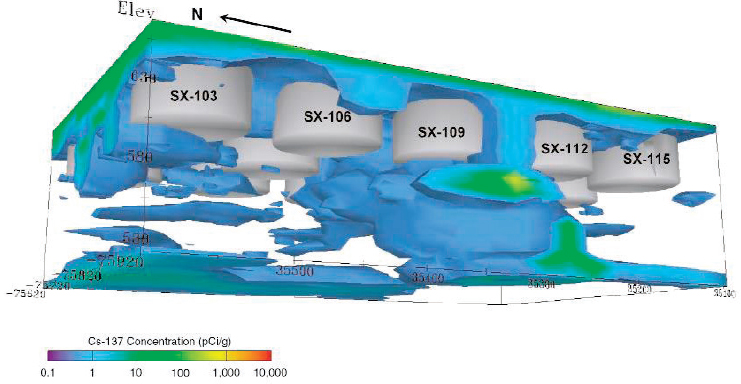
SOURCES: Taken from Figure 2.4 in NRC (2000). Graphic from the Department of Energy Richland Operations Office.
- Models that integrate the data collected from the instruments and sensors above to analyze the performance of operating tanks and tank closures with little or no operator intervention.
remedies. These instruments and sensors need to be capable of self-calibration and long-term operation and/or easy replacement.
3.2.4 Develop Real-Time Capabilities for In Situ Analysis and Modification of Waste Streams During Processing to Reduce the Need for Batching and Batch Storage
The current flowsheets for processing tank wastes at the Hanford and Savannah River Sites are based on batch processing principles. Waste is retrieved from one or more waste tanks and then moved to a “batch tank” for blending and physical, chemical, and radiological characterization. Such characterization usually involves the physical collection of one or more samples of waste for laboratory analysis. The waste remains in the batch tank until these analyses are completed, which presently can take days to weeks.
Once these analyses are completed, the waste in the batch tank is com-positionally modified as needed to meet processing flowsheet specifications. Adjustments are made by blending the waste in the batch tank with waste
from other tanks or by introducing additives to adjust the physical, chemical, and radiological properties of the waste batch. Then additional waste samples may need to be drawn from the batch for laboratory analysis. The waste in the batch tank is moved to the next stage of the processing flowsheet only after it meets flowsheet processing specifications.
The technologies and alternative approaches described in Section 3.1 can be applied to reduce the time and cost of processing tank wastes by introducing real-time capabilities for in situ analysis and modification of waste streams during processing. These include, for example (see Table 3.1),
- Approaches for rapid modification of waste stream chemistry to meet processing specifications;
- Sensors for rapid in situ measurement of process-critical physical, chemical, and radiological properties of the waste; and
- Modeling and visualization tools for making real-time waste-form performance predictions for given waste stream compositions.
3.2.5 Separate Long-Lived and Environmentally Mobile Radioactive Constituents from Waste Streams
Some DOE-EM waste streams contain long-lived and/or environmentally mobile radioactive constituents that are difficult to remove by current waste processing approaches and may preclude their disposal in near-surface engineered facilities. Three such constituents are tritium (hydrogen-3), technetium-99 (Tc-99), and iodine-129 (I-129), which have half-lives of about 12.3 years, 211,000 years, and 15.7 million years, respectively. All three isotopes were produced in DOE’s plutonium production reactors at Hanford and Savannah River, and tritium occurs as a groundwater contaminant at both sites. DOE-EM identifies Tc-99 and I-129 to be risk drivers in DOE’s performance assessment for near-surface disposal of low-activity waste at Hanford and Savannah River.8
Tritium is difficult to remove from groundwater because it exhibits chemical behaviors similar to that of naturally occurring hydrogen isotopes (protium [hydrogen-1] and deuterium). Tritium removal technologies such as distillation and electrolysis are unsuitable for treating large volumes of contaminated groundwater because of the required time and energy inputs.9 Consequently, DOE-EM’s strategy for remediating tritium contamination
___________________
8 Rodrigo V. Rimando, Jr., Director, Technology Development Office, DOE-EM, October 19, 2018, briefing to the committee.
9 The Fukushima Daiichi nuclear accident has spurred the development of more efficient technologies for removing tritium from contaminated groundwater. To the committee’s knowledge, none of these technologies have progressed to commercial availability.
in groundwater is to delay (where feasible) its discharge into surface waters to provide time for radioactive decay.
T c-99 and I-129, along with other fission products and transuranic isotopes, are present in tank wastes at Hanford and Savannah River. These wastes are being processed to produce two waste streams, a high-level radioactive waste stream and a low-activity radioactive waste stream. The flowsheet used to produce these two waste streams preferentially partitions the cationic fission products (e.g., cesium, strontium) into the high-level radioactive waste stream, which will be disposed of in a yet-to-be-sited-and-constructed federal repository. Fission products that exist as anionic species, including T c-99 (T cO4–) and I-129 (IO3–), remain in the low-activity waste stream destined for onsite disposal. These species are more mobile in the environment than cationic fission products because soils generally have low anion-exchange capacities.
The technologies and alternative approaches described in Section 3.1 can be applied to separate and disposition environmentally mobile radioactive constituents from waste streams. These include, for example (see Table 3.1),
- Technologies for transmuting radionuclides to reduce their environmental hazards;
- Approaches for rapid and real-time characterization of waste streams to identify and separate environmentally mobile constituents;
- Processes and materials for separating or sequestering mobile radionuclides;
- Materials for immobilizing environmentally mobile radionuclides in existing or new waste forms; and
- Approaches for treating large volumes of groundwater to remove tritium.
Technologies for separating and transmuting radionuclides have potentially wide application to many DOE waste streams, particularly waste streams that contain radioactive constituents that cannot be disposed of in near-surface engineered facilities because of their hazard. These technologies are not yet ready for deployment in the DOE-EM cleanup program because of technical barriers and high implementation costs. However, it is not inconceivable that such technologies could become available over the expected multidecade life of the cleanup mission.
3.2.6 Rapidly, Remotely, and Safely Characterize and Remove Radioactive Contamination from Equipment and Buildings
There are hundreds of chemically and radioactively contaminated facilities across the DOE complex. These facilities include analytical laboratories, plutonium production reactors, and materials production facilities; the latter include massive “canyons” at the Hanford, Idaho, and Savannah River Sites that were used to reprocess uranium targets to recover plutonium (see Sidebar 3.3). The contamination includes both chemicals (e.g., solvents
and metals) and radioactive materials (a wide range of isotopes and material forms) and occurs as
- Residual waste in process lines, tanks, filters, and drains;
- Contamination on equipment and facility surfaces; and
- Contamination and residual waste within and under building foundations.
Deactivation and demolition (D&D) (or disposition10) of these contaminated facilities are major cost and schedule drivers in the cleanup program: DOE estimates that it will cost about $74 billion and take about 50 years to complete facility D&D (see Figure 1.1). These estimates do not include the surplus and obsolete facilities that DOE-EM may receive in the future from DOE’s National Nuclear Security Administration, Office of Nuclear Energy, and Office of Science.
Current approaches for facility D&D are labor intensive, time consuming, and produce large volumes of contaminated waste that must be dispositioned in near-surface engineered facilities. DOE-EM is applying robotics and remote systems in some facility cleanups (see Figure 3.4), but workers still perform most of the characterization and decontamination work manually. This work is physically difficult, particularly when performed in protective gear, and can be dangerous.
The technologies and alternative approaches described in Section 3.1 can be applied to improve the efficiency, effectiveness, and safety of D&D activities across the DOE complex. These include, for example (see Table 3.1),
- Smart autonomous robots to reduce and/or eliminate the need for manual labor in facility D&D;
- Technologies for rapid in situ characterization of radioactive and chemical hazards in equipment and facilities; and
- Technologies for removing contamination from equipment and facilities to minimize radioactive and hazardous waste volumes and allow recycling or productive reuse of building equipment and materials.
3.2.7 Characterize and Stabilize and/or Retrieve Contamination in the Vadose Zone
The vadose zone comprises the unsaturated portion of the soil column between the ground surface and groundwater table. This zone ranges in
___________________
10 For example, DOE-EM may cover its large canyons with caps rather than demolishing them.
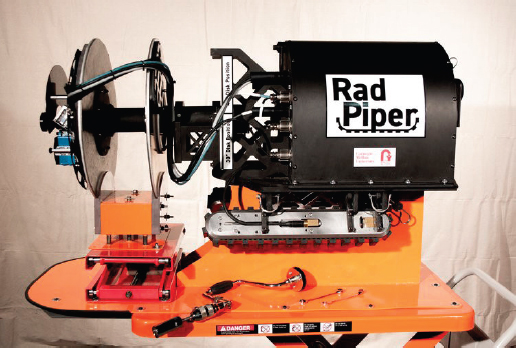
SOURCE: https://www.radpiperrobot.com.
maximum thickness from about 90 meters at the Hanford Site to about 240 meters at the Idaho Site (NRC, 2000, Table 2.2). The vadose zones at these sites contain radioactive and chemical contaminants that were intentionally discharged and/or accidently leaked into the ground (see Figure 3.5). Characterizing and retrieving or stabilizing this waste in situ is technically challenging, particularly when it is located below practical excavation depths (typically 10–20 meters).
Contaminant transport in the vadose zone is controlled by fine-scale heterogeneities in hydrological and geochemical properties, including porosity, permeability, pH, and redox potential. Characterizing and modeling this heterogeneity to predict contaminant distributions has met with limited success. Moreover, even when contaminant distributions in the vadose zone are known, recovering contaminants, or stabilizing them in situ by modifying subsurface hydrological or geochemical properties, is challenging, particularly for metals and radioisotopes that are distributed in large subsurface volumes.
The technologies and alternative approaches described in Section 3.1 can be applied to better characterize, stabilize, and/or retrieve contamination in the vadose zone. These include, for example (see Table 3.1),
- Approaches for manipulating in situ subsurface properties, especially geochemical and hydrological properties, to stabilize vadose zone contamination in place;

SOURCE: U.S. Department of Energy’s Office of River Protection.
- Interrogation technologies to characterize hydrological and geochemical properties of the vadose zone; and
- Improved modeling and visualization of contaminant fate and transport in the vadose zone.
3.2.8 Remotely Monitor the Physical and Chemical Environments in Waste Disposal Cells and Surface and Near-Surface Barriers
Large quantities of chemical and radioactive wastes will remain at DOE sites after the cleanup mission is completed. DOE is building near-surface waste cells at all of its large sites (and at many smaller sites) to dispose of cleanup-related materials—including, for example, contaminated soil, contaminated equipment, facility demolition debris, and waste streams that have been treated for near-surface onsite disposal. Moreover, DOE may construct engineered caps (see Sidebar 3.4) over portions of its sites that will not be completely cleaned up—including, for example, tank farms, contaminated facilities that are not cost effective to demolish (e.g., canyons), and other contaminated areas that cannot be practically or cost-effectively remediated.
Engineered cells are designed to maintain the waste in a structurally stable configuration to prevent its out-migration, whereas engineered caps are designed to prevent water intrusion and inhibit intrusion by plants and animals. These engineered structures must function as long as the waste remains hazardous, that is, over many hundreds to some thousands of years. Regular surveillance and maintenance of these structures will be required to ensure that they continue to function as designed.
Surface monitoring of these structures will likely be effective for identifying gross maintenance needs but probably not effective for detecting small internal structural changes that could signal incipient losses of function. In situ monitoring of geophysical, geochemical, and/or hydrological conditions within the structures might be necessary to detect these small internal changes. For example, small changes in tilt within the structure might indicate the initiation of differential settling, or small changes in electrical resistivity might indicate the initiation of water intrusion. Such changes could occur well before visual or gross structural failure of the engineered structure.
The technologies and alternative approaches described in Section 3.1 can be applied to better monitor the physical and chemical environments in waste disposal cells and surface and near-surface barriers. These include, for example (see Table 3.1),
- Smart sensors for autonomous, continuous, and centralized in situ monitoring of engineered structures to detect incipient losses of function.
- Models that link functional changes in engineered structures to their geophysical, geochemical, and/or hydrological properties.
Decision tools to monitor sensor outputs and provide predictions of functional losses. These sensors must be cost effective, self-calibrating, and have long operational lives or be easily replaceable.
3.2.9 Monitor the Locations and Movements of Subsurface Contaminant Plumes
Groundwater contamination is a pervasive problem across the DOE complex. Groundwater contaminants include solvents, metals, and radionuclides that were intentionally discharged or accidentally leaked into the ground during site operations. Records of discharges and leaks are generally poor to nonexistent.
These contaminants have in some cases migrated through the unsaturated zone to mix with moving groundwater to form contaminated water volumes, or plumes, having dimensions ranging from less than a square kilometer to more than 100 square kilometers (see Figure 3.5). The plumes migrate with the groundwater and can travel offsite or discharge into surface waters. The plume may continue to be fed by contaminant source areas, the locations of which may be poorly known.
Monitoring the locations and movements of contaminant plumes usually currently requires the installation of boreholes into and through the contaminated groundwater volume. The boreholes are sampled periodically to assess changes in contaminant concentrations. Sampling is carried out by personnel in the field and is labor intensive. Dozens of boreholes may be required to monitor a single plume.
The technologies and alternative approaches described in Section 3.1 can be applied to better monitor locations and movements of subsurface contaminant plumes. These include, for example (see Table 3.1),
- Smart sensors for autonomous, continuous, and centralized in situ monitoring of locations and movements of contaminant plumes—and that reduce the need for direct human involvement in monitoring processes.
- Decision tools to monitor sensor outputs and provide predictions of plume locations and movements. These sensors must be cost effective, self-calibrating, and have long operational lives or be easily replaceable.
This page intentionally left blank.


