Roots and Trajectories of Violent Extremism and Terrorism: A Cooperative Program of the U.S. National Academy of Sciences and the Russian Academy of Sciences (1995-2020) (2022)
Chapter: 1 Ethnic Conflicts within Russia
1
Ethnic Conflicts within Russia
Better press coverage should be given to the life and activities of Chechens in Chechnya and outside its borders as part of the Russian community. Representation of them as noble savage people should be halted, showing instead how Chechens are building their lives and fighting against bandits. Special attention is warranted for coverage of entrepreneurial activities of the Chechens, which are both successful and useful for the country. Support for this sort of activities should also be provided by the authorities at various levels. Chechnya is a test of the new Russia’s ability to correct its own tragic mistakes and respond to external threats. If we pass this test, peace will come to the Chechen Republic; and this means to all of Russia as well.1
– Perspective of 80 Russian and Chechen scholars and policy officials at a conference in Moscow, 2000
The world at large has much to gain from better knowledge of causes, constraints, means of termination, methods of prevention, and processes of ethnic conflict settlement with regard to the violence in Chechnya and elsewhere. Superior knowledge of the situation would have a supremely practical advantage. It would improve the capacities of responsible specialists, officials, participants, and third parties to anticipate the consequences of alternative policies, and even to design creative nonviolent ways of settling conflicts.2
– Global view of ethnic relations by American Academician Charles Tilly, 2003
In some circumstances, ethnicity and religion are used in a competitive struggle for resources and power. The preservation of cultural diversity in a country’s population and establishment of peaceful relations between different groups are complex but necessary for building a stable society. We need to have an adequate understanding of the role that ethnic and religious factors play in society and to develop and implement an effective state policy for maintaining cultural diversity.3
– Importance of ethnic and cultural diversity by Russian Academician Valery Tishkov, 2005
OVERVIEW OF INTER-ACADEMY COOPERATION IN ADDRESSING ETHNIC ISSUES
In February 2000, the Russian Academy of Sciences (RAS) unexpectedly proposed to the National Academy of Sciences (NAS) that the two academies undertake a joint program that addressed conflicts in multiethnic societies. The program would emphasize lessons learned in Chechnya and future approaches in reducing turmoil throughout the Caucasus region of Russia, while also addressing ethnic conflicts in other areas of the former Soviet Union. The NAS promptly agreed to join the RAS in bringing together well-qualified and influential scholars and practitioners in the two countries for carrying out this challenging endeavor.4
The ensuing program received high priority not only within the two academies but also within several U.S. foundations that provided financial support for collaborative NAS-RAS efforts to address ethnic conflict. Social scientists in both countries with extensive experience in addressing ethnic unrest in various areas of the world participated in a series of interrelated activities over a period of more than 7 years. Scientists who had moved to Moscow from Grozny in Chechnya in the wake of increasing violence in the Caucasus were also asked to play key roles in the analyses and search for approaches to reducing ethnic hostilities. Box 1-1 identifies the many inter-academy activities that were carried out.
At the outset of collaboration in addressing ethnic challenges, the NAS team quickly recognized that a group of researchers at the Institute of Ethnology and Anthropology in Moscow was among the best informed and most influential scientists focusing on turmoil in Chechnya. Also, the Institute of Sociology had a strong team of researchers devoted to ethnic problems in Russia. It was clear to all that this topic had become a core security issue
as the new Russia adjusted to deep-rooted political challenges at home and abroad. As to available analyses of the chaos in Chechnya and other turbulent areas, the Kona Statement that was prepared in 1994 at a retreat in Hawaii by a group of leading American, Russian, and East European ethnologists had become a particularly important document in academic circles in Moscow when addressing ethnic relations within Russia (see Appendix A).
As noted in Box 1-1 and discussed throughout this chapter, this new inter-academy cooperative program involved a variety of activities. In addition to reviews of published papers on dealing with ethnic relations in many areas of the world, the participants ploughed new ground. Joint analyses of specific troublesome issues by small teams of Russian and American scientists were undertaken. They prepared individually authored papers and institutional publications based on meetings and workshops in Moscow, Rostov-on-Don, and Sochi within the framework of the new effort. Consultative visits by Russian and American scientists to several municipalities in
the North Caucasus, to Kazan, and to Nizhny Novgorod provided access to local perspectives. A few small innovative field projects centered in Chechnya helped transform theory into practice. A multifaceted workshop in Washington, D.C., brought together perspectives of core concerns. Finally, an international workshop in Helsinki offered fresh perspectives of experts from Europe and the Middle East as well as researchers from the United States and Russia whose experiences challenged and then supported the views of core members of the overall program team.
For several additional years, the two academies continued their collaboration in developing frameworks for follow-on activities. However, additional NAS-RAS activities within these frameworks were not carried out due to changes in priorities of potential financial sponsors. A particular disappointment was the loss of interest of the NATO-Russia Council in providing financial support for an ambitious extension of the program to address increasingly difficult ethnic challenges throughout Europe. This initiative was supported by the U.K., French, and Russian governments. However, at the staff level of the council, the proposal seemed too complicated to implement under the sponsorship of NATO, since many members of the council consistently questioned the intentions of Russian organizations.
SIGNIFICANT ANALYSES AND FINDINGS
At a capstone workshop in Washington, D.C., in 2003, NAS and RAS specialists reported their findings on developments in Chechnya and several other “hot spots” in Russia. The conclusions were based in large measure on the early activities identified in Box 1-1. In a report that was strongly supported by well-known ethnologists and political scientists from the two countries, the findings called for 10 research themes to be given priority by government funding organizations in Washington and Moscow that were interested in such analytical efforts.5 At the same time, other nongovernmental institutions that supported social science researchers and analysts in fields of broad international interest were invited to join the effort. The themes were as follows:
- Studies of social processes with examination of how groups and conflicts are defined and how participants align themselves along religious, political, racial, and regional lines.
- Investigations of social processes that move ethnic conflict into or out of violent forms of struggle.
- Analyses of how political entrepreneurs, violence specialists, and dealers in contraband promote and inhibit transitions between violent and nonviolent forms of struggle.
- Studies of how combinations of different forms of governmental authority and population compositions promote or inhibit acute conflicts associated with ethnic groups.
- Compilations of extensive and comparable catalogs of conflict events before, during, and after the collapse of the Soviet Union.
- Detailed investigations of the effectiveness of interventions in ethnic conflicts.
- Carrying out of complementary comparative studies of social changes in localities and regions to identify precipitants of serious conflicts and to look closely at the inhibition, mitigation, and termination of conflicts.
- Analyses of varying state policies for protection, recognition, representation, and repression of ethnic minorities.
- Impact of legal systems on the extent and character of ethnic conflict.
- Effects of changes in the forms of communications—such as the impact of changes in access to television and to the internet—on ethnic mobilization, conflict, violence, and conflict resolution.6
Associated with the centrality of this list of priorities were insightful observations of developments in Chechnya by Valery Tishkov, the director of the Institute of Ethnology and Anthropology. For example, he underscored the following challenges:
Words can be very important components of violence. Armed conflict in Chechnya started with the legitimization through verbal expression and introduction of such slogans as national revolution and national self-determination as well as statements about nation-killing and Russian imperial domination. Some works by Chechen authors, numerous publications by Russian historians, and nationalist brochures from other parts of the former Soviet Union portraying a heroic Chechen history and calling for correction of past injustices contributed to the outbreak of violence. Scientific conferences involving prominent leaders of the liberation movement aired not only mythical versions of the past but direct appeals to complete the mission of liberation.
It is important to determine the point wherein all these words are transformed into bullets, although the link between verbal insults and direct violence is often rather peculiar. As a rule, those who put forward ethnic-related appeals or develop moral or ideological justifications rarely join in the fight themselves. Fighters are recruited from different groups. Most often they are recruited from among young men in rural areas or on urban margins. That is the situation with numerous jihads, liberation attacks, revolutions, and other collectively violent movements. Different players, often changing the very nature of these appeals, will relay academic and other calls to action. With the escalation in violence, initial slogans are not only transformed beyond recognition, they quite often are simply forgotten.7
VIEWS FROM THE REPUBLICS AND BEYOND
At the outset of the project, an inter-academy workshop in Rostov-on-Don attracted researchers from eight republics located in the Caucasus region. They made more than a dozen well-prepared presentations on ethnic rumblings in their regions and their difficulties in accepting the increasing number of edicts on conciliation published in Moscow. It seemed clear from remarks by the workshop participants that nationalism was replacing religious commitments as the basis for complaints from the region. Almost all participants bemoaned problems in adjusting to the politically charged economic policies and practices within their boundaries. Some objected to Kremlin-decreed changes in governance practices, while others reported favorably on many governmental modifications and clarifications in addressing ethnic-related complaints that they considered long overdue.8
Regional officials, in a separate meeting with the NAS and the RAS specialists, persuasively argued that their efforts to promote equality throughout the region were constantly undermined by policies emanating from Moscow. While the central government in principle promoted economic development from farming to generation of nuclear power, there were limits on the initiatives that could be influenced by local perspectives. A particularly sensitive issue was the personal interests of members of the leadership in the republics and the compilation of excessive wealth by local organizations or individuals who were not moving forward in lockstep with the policies of the federal government.9
At that time, an important issue that began to resonate throughout Russia and remained a frontline issue for many years concerned the process for selecting the governor for each region—either appointment by the Kremlin or, alternatively, selection by the local population. The policy was changed several times, and only in 2016 did the Kremlin stop the switching of its position and decreed that decisions on appointments of governors would be made in Moscow. The one exception that then became and remained the law for the indefinite future proclaims that the governor of Chechnya will continue to be locally elected and will control all security forces, including the 30,000 military and KGB personnel, who had been stationed in the republic for many years.10
Later, during the explorations in various regions, American scientists visited Nizhny Novgorod to discuss the ethnoreligious accord adopted in the Volga Federal District. This accord provided an important window for understanding the diversity of ethnic conflicts and approaches to reducing conflicts in Russia. The widely publicized program of the district identified many challenges in reducing animosities.
Another venue for exploring interfaith challenges in Russia was in the city of Kazan, with a population of 1.2 million people. This capital of the Republic of Tatarstan is located in the heartland of Russia. When the specialists from the two academies visited, local animosity toward Kremlin policies was continuing to reflect the growing importance of ethnic groups. There were three particularly divisive challenges. Fortunately, practical solutions toward conciliation were underway in each of the areas set forth below:11
- On the economic front, the leadership of the Tatars bitterly contested the policies emanating from Moscow that gave the Russian government control over all of the income from extraction of the oil resources within Tatarstan. Republic officials considered that the oil belonged to Tatarstan—not to Russia. As interethnic violence continued to erupt on many fronts over the economic health throughout the republic, the Kremlin agreed to allow the republic to have a carefully negotiated percentage of revenues associated with the extraction and sale of oil on Tatarstan territory. This action went a long way to bringing internal calm throughout the Tatar community.
- A second issue was the dispute over the language to be used in secondary schools—Russian or Tatar or even English as the primary language. During the visit to Kazan by members of the NAS
- team involved in the inter-academy program, it appeared that the language issue had been resolved, at least in the most prosperous areas of the city. A visit to one of the premier high schools confirmed that classes in this school were being offered in one or more of the three languages, with the families of the students permitted to choose the languages that they preferred. At the school—and reportedly at other selected schools—students were able to take a few courses in English, particularly in science for which there were available textbooks in English. Other courses such as history and social sciences were usually conducted in either Russian or Tatar. This system seemed to be working well, as many of the students became trilingual.
- Regarding the language issue at the university level, where Russians filled many of the professorial posts, there was considerable resistance to allowing courses to be offered in the Tatar language. At Kazan State University, the situation did not seem complicated, with professors arguing that it was ridiculous to teach science courses in Tatar when all of the books were in Russian or English. Still other professors were trying to accommodate the advocates of teaching in Tatar to the extent possible, arguing that job competitions often called for fluency in the Tatar language.
Another area of concern was Dagestan, and particularly the region along the coast of the Caspian Sea. Terrorism was becoming a common practice of the opposition in confronting the local government that had made deals with their neighboring countries for the transportation of oil resources from the Caspian Sea. A symposium on this issue was organized in Moscow by the RAS, at a time when explosions disrupting pipelines were common occurrences. The project involved specialists from the United States, Russia, and Dagestan. The RAS published a much-needed book documenting activities in Dagestan, drawing heavily on the symposium.12
Near the end of this phase of the inter-academy program, the NAS and the RAS organized a workshop in Finland to obtain broader international insights into violent extremism that was resulting in loud alarms throughout the Middle East and Europe. Some participants were particularly interested in the recruitment incentives used by ISIS and other radical groups in the search for foreign fighters from Chechnya and Europe. Three Russian participants made important comments that clarified arguments they set forth at home. These comments included the following observations:
- A Russian specialist on developments in the Caucasus and Central Asia pointed out that the extremism of the North Caucasus Wahhabists was an enormous problem that could not be resolved by force. Neither could it simply be settled through discussions, since the ideology itself does not allow for any negotiation with atheists. In the dangerous view of this sect, a state built on “human” laws should be destroyed. Only divine laws should prevail in the world. At the same time, some Muslim radicals considered Western democratic tendencies a good idea, giving them an opportunity for an honest struggle to convince the populations of the righteousness of their vision of further social development. Of course, extremists consider democracy to be an evil human invention, fundamentally harmful inasmuch as it does not conform to clear divine regulation of the social order. He urged removal of the social basis for the extremists through economic development, increased living standards for the population, and establishment of normal dialogs involving the region’s Muslim community.13
- Next were the following comments from a Russian expert on the Middle East and North Africa. Despite obvious failures in economic, technological, and material development throughout the Muslim world, there had been a powerful expansion of Islam—from South Africa to the banks of the Volga, the Rhine, and the Thames and across the United States. How does Islam attract new converts? Maybe by a lack of hierarchism and widespread egalitarianism, which lends dignity and respect to the followers of the religion. Perhaps by its hospitality, which is more widespread among Muslims than in most societies. Is the attraction its institutionalized charity system, which supports the poor? Like other religions, Islam advocates unachievable ideals. But the goals exist. By quoting phrases out of context from the Koran, as well as from the Gospels and the Bible, one can explain anything.14
- The third commentator had unfettered access to closely protected Russian literature on extremism. He asserted that a major part of the political elite recognized the corruption and inefficiency of law enforcement agencies. Reforms should not be limited to firing employees who apply their own extremist views in their daily work. Reforms should be introduced in a manner that at least changes the atmosphere, if not the ideology, within law enforcement agencies, and in particular the attitudes toward migrants. With regard to
- education, he concluded that the younger generation receives no humanist education, while young teachers are particularly receptive to leftist ideology. There are alternatives to the approaches of capitalist societies, including humanist ideas in education programs as an important strategic task.15
MONITORING OF ETHNIC RELATIONS
Also of considerable interest was the design and implementation of a national ethnic monitoring network that operated in many regions of Russia and in several areas of neighboring countries beginning in 1994. The network, which is described in Appendix B, galvanized interest of local officials and researchers throughout many regions of the country to improve understanding of the roots of ethnic anxieties that could lead to violence. The Institute of Ethnology and Anthropology has coordinated the network that monitors ethnic relations across Russia and in other parts of the former Soviet Union. Signals of ethnic unrest have been used by local hosts who maintain the network as a basis for actions to prevent escalation of tensions. The actions have taken a variety of forms ranging from simple conciliatory discussions with aggrieved parties, to informal agreements resolving inappropriate actions, to pressure from local authorities to adopt more reasonable demands that could be settled informally or legally.
The results of dispute resolutions have been shared in general terms at scientific seminars with members of the network to evaluate the sociopolitical situations in their states or regions based on 46 indicators of potential turbulence in the following categories:
- Environment and Resources
- Demography and Migration
- Power, State, and Politics
- Economics and the Social Sphere
- Culture Education and Information
- Contacts and Stereotypes
- External Conditions
The findings of current surveys have been compiled and compared with data from previous years to determine the changing level of ethnic tensions in specific geographical areas over time. From its earliest days, this approach was repeatedly cited by specialists throughout Russia and neighboring
countries as a success story, since indicators that were shining red could attract attention of local authorities or interested nongovernmental parties such as the church to take early action and prevent escalation of disputes. The network compiled hundreds of examples of how early actions to resolve relatively minor disputes quelled hostilities before they erupted into difficult confrontations. This monitoring approach was adopted but modified by a few specialists facing similar challenges in other countries as they sought the levers to suppress the drivers of terrorism and to emphasize steps that could lead to harmony and understanding.
The world has changed in dramatic ways since back-of-the-envelope calculations were initially used in weighing evidence of ethnic harmony or disruption that was reported. But few will dispute the importance of continuous monitoring of ethnic-related aspirations in areas in turmoil. When such monitoring leads to efforts to predict and prevent conflict, support becomes widespread.
A MODEST PROJECT DIMENSION OF THE QUEST FOR CALM IN CHECHNYA
When the NAS was invited to join with the RAS in seeking roads to a reduction in violence, initially focused on Chechnya, there was no shortage of Russian and international academics who were prepared to write papers and present theories about steps to settle the rumblings among the population of Chechnya. But simply writing academic papers, however persuasive, and then organizing workshops to provide the basis for more papers were viewed by many as an inadequate response to the call from the RAS to join forces with the NAS in addressing on-the-ground realities in Grozny. On-the-ground activities to start the process of turning the society away from violence and onto the road for improved understanding and peace were desperately needed.
As a token start, the NAS committed $20,000 of internal funds to seed a few projects in Chechnya that offered hopes that life could improve in the wayward republic where nationalism had begun to replace religion as the basis for complaints.16 In retrospect, the limited amount of funds that became available, even with several modest supplements, was shockingly low. But at the time, the economic situation for the general population was very desperate, as many families were seeking money at any level by any means for survival.
The RAS and the NAS decided to focus the small collaborative program activities on the youth and on education. In September 2002, the academies convened a workshop in Sochi, which was attended by 10 educational leaders in Chechnya. They and 15 other participants from Russia, Europe, the United States, and Chechnya were well prepared to discuss the challenges of education, to review a new report by the United Nations Educational, Scientific and Cultural Organization (UNESCO) for revitalizing higher education in Chechnya, and as always to discuss the future of Chechnya more broadly. At the same time, the Chechen educators presented 15 proposals for small pilot projects in the battered territory.
The discussion of the draft of the UNESCO report was lively. While education officials in Moscow were well intended in working with UNESCO to prepare a report that recognized many of the unique aspects of changing approaches in Grozny, local educators from Chechnya were only marginally involved in the report preparation. Nevertheless, they welcomed new attention on the desperate situation.17
The report offered a vision of modern approaches to education, even in a war-torn republic. However, the difficulty in traveling on the proscribed path to realize the education goals was based in large measure on fantasy—a fantasy of availability of transportation to and from school, a fantasy that willing and able local teachers would always be available, a fantasy that education in Grozny would put them on the road to professional success, and a fantasy that children could be spared from the horrors of internal warfare.
However, within 3 days of workshop discussions the local educators had succeeded in adding a broad dose of reality to the road ahead. They were satisfied in their amendments to the draft of the UNESCO report. Highlighting the need for revision of the report was one of the most promising contributions on the road to reconstruction that the NAS and the RAS made during their 6 years of cooperation focused on Chechnya and surrounding environments.
Mini-Projects Focused on the Youth of Chechnya
Turning to the proposals for mini-projects, six were initially selected for support.18 They were as follows:
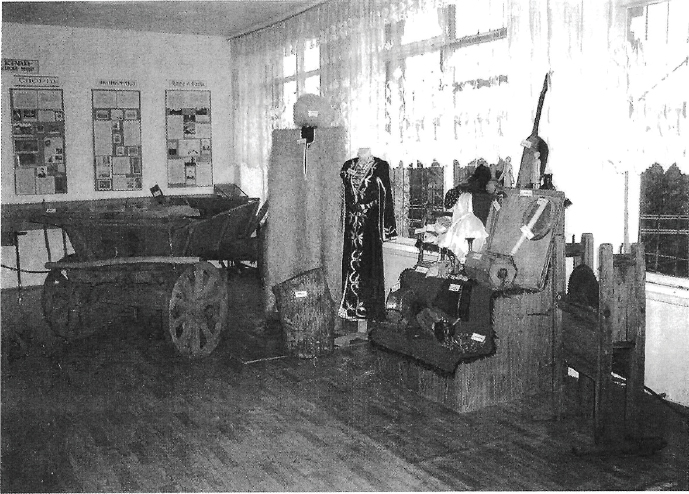
- Establishing a museum of local folklore for hosting regional folk festivals at Grozny Middle School No. 58. As this story began to emerge, teenage students cleared remains from the crumbling walls of a bombed-out building; and then several thousand dollars provided by the NAS were used to buy material for floors, walls, and ceilings of three rooms where artifacts reflecting the history of Chechens and the territory of Chechnya were to be on display. The artifacts contributed by local residents reflected lifestyles of the Chechen population over many decades. They included modest clothing, celebratory costumes and caps, hand tools and farm implements, and cookware and dining facilities, for example.
- Using distance learning in mathematics to improve the skills of pre-university students who lived in the highlands 10 and more miles distant from Grozny. However, the concept of independent learning combined with occasional interactions with teachers was not well understood. In short order, the absence of good communications and lack of adequate written material led to abandonment of this project.
- Organizing a student essay contest on approaches toward settling the conflict in Chechnya and priorities for reconstruction. Law students at Chechen State University prepared 10 original essays that were translated into English and distributed locally and internationally. While the essays contained interesting ideas, the appropriate officials for considering the suggestions were stretched so thin that they had little interest in giving credence to the views of “inadequately informed” students. Among the topics that were addressed were the following:
- Organizing Programs on Democratization of Society
- Ensuring the Security, Rights, and Freedom of Citizens
- Shaping International Public Opinion on the Situation in Chechnya
- Considering Captured Members of the Resistance not as Criminals but as Persons Seeking a Return to Peace
- Guaranteeing Personal Security for Recipients of Amnesty
- Discontinuing Arrests of Local Residents Who Looked like Chechens
- Recognizing Illegality of the Exile of Chechens en masse to Central Asia
- Preparing textbooks on Chechen literature for grades 10 and 11. Prominent scholars in Moscow and Grozny prepared books, with scripts too often based on their partisan views on the situation in Chechnya and with inadequate concern over different views on approaches to education.
- Establishing a job placement center at Chechen State University. Unfortunately, all available jobs were in locations where it was too dangerous to live.
- Equipping a sports hall for freestyle wrestling competitions linked to the physical education curriculum of Grozny Teachers College. According to Russian visitors who photographed activities at the college, this initiative was a resounding success. The limited NAS funds were used to buy mats and other equipment for wrestling matches for young men that provided an after school alternative to their roaming of the streets armed with Kalashnikov rifles.
THE IMPORTANCE OF ETHNO-RELIGIOUS DIALOGUES
In closing this chapter, it is instructive to cite the following axioms that highlighted the comments of forward-looking realists in Nizhny Novgorod. Individuals may be tolerant toward friends or persons close to them who are of a different faith or nationality, but they may be xenophobes and racists in a broader social environment (at work, in politics, or in creative work).
- Relying on dialogues and consensus is more difficult than engaging in rejection and hostility, for the latter requires no special efforts on personal development when it is connected with a limited outlook and ignorance.
- The most diverse forms of intolerance may exist and be manifested in democratic societies, and the task of the state and society is to prevent their extreme (including violent) forms, which threaten the foundations of social order and statehood.
- It is necessary to combat opponents of peace and supporters of violence not only with public condemnation campaigns but also with other effective methods such as public rejection, judicial
- prosecution, education, and even their inclusion in the systems of institutions of power and civil society.
- Efforts to establish ethno-religious harmony and prevent conflicts demand sacrifice and the best human qualities, but they may produce results only if carried out jointly and with the support of the state.
- Strong government and prosperous living conditions do not guarantee peace and harmony, and conflicts among representatives of the elite are more frequent and stronger than those among the common people. However, order and prosperity provide increased opportunities to avoid intolerance, violence, and conflicts.19
Additional comments on cooperation about ethnic challenges during later years are set forth in Chapter 5 and Appendix E.
NOTES
1. NRC (National Research Council). 2003. Conflict and Reconstruction in Multiethnic Societies: Proceedings of a Russian-American Workshop. Washington, DC: The National Academies Press, p. 194.
2. Ibid., Tilly, C., “Priorities for Research on Conflict in Multiethnic Communities,” p. 2.
3. Tishkov, V. 2004. Network for Ethnic Monitoring and Early Warning. Moscow: Institute of Ethnology and Anthropology, Russian Academy of Sciences, p. 3.
4. Op. cit., NRC, p. viii.
5. Ibid., p. 1–5.
6. Ibid.
7. Ibid., p. 38.
8. Ibid., p. 195–196 and staff notes during visit to Rostov-on-Don.
9. Ibid.
10. Ibid., observations supported by Professor Sufian Zhemukho, George Washington University (expert on developments in Caucasus), February 21, 2020.
11. Ibid., p. 201–208 and staff notes during visit to Kazan.
12. Institute of Ethnology and Anthropology. 2003. Symposium on International Views on Developments in Dagestan. Moscow: Russian Academy of Sciences.
13. Yarlykapov, A. A. 2006. “Radicalism and Extremism of Muslim Populations of the North Caucasus: Ideology and Practice,” in Proceedings of a Workshop: Roots and Routes of Democracy and Extremism, T. Hellenberg and K. Robbins, eds. Helsinki: Aleksanteri Institute, University of Helsinki, p. 183.
14. Ibid., Vassiliev, A., “Islamic Extremism as a Manifestation of the Crisis of Muslim Civilizations,” p. 46.
15. Ibid., Mitrokhim, N., “Non-Islamic Extremism in Contemporary Russia,” p. 168.
16. Schweitzer, G. E. 2004. Scientists, Engineers, and Track-Two Diplomacy. Washington, DC: The National Academies Press, p. 76.
This page intentionally left blank.


