Transforming Human Health: Celebrating 50 Years of Discovery and Progress (2022)
Chapter: Health Promotion and Disease Prevention: Measuring Progress to Improve Public Health
Health Promotion and Disease Prevention:
Measuring Progress to Improve Public Health

Health and wellness are more than just the absence of disease. They depend on health promotion and disease prevention efforts to address the dynamic and overarching nature of health and well-being. Many factors are involved, including socioeconomic status, race and ethnicity, social networks and support, work conditions, economic inequality, and social capital. Health promotion and disease prevention efforts have broadened to reflect this wide range of social and environmental influences.

1979
Establishing a Public Health Agenda
The 1979 publication of Healthy People: The Surgeon General’s Report on Health Promotion and Disease Prevention established the first nationwide public health agenda in the United States. For the first time, the report set quantifiable outcome measures to improve Americans’ health through health promotion and disease prevention efforts. A corresponding report in 1980, Promoting Health/Preventing Disease: Objectives for the Nation, established over 200 specific heath metrics to implement and then measure improvements over the next decade, with a focus on decreasing rates of chronic disease, preventable injury, and death. This landmark report helped Americans and health care providers better understand the complex and myriad determinants of health, laid out future research directions, and stimulated health promotion activities across sectors.

1984
U.S. Preventive Services Task Force
The U.S. Preventive Services Task Force was established in 1984 to improve Americans’ health by making recommendations pertaining to clinical preventive services (such as preventive screenings and medications or counseling services) based on the latest science. Consisting of an independent panel of national experts who operate on a volunteer basis, the task force produces an annual report to Congress identifying pressing research needs in preventive medicine based on the available scientific evidence. The report serves as a guide for researchers and funders focused on preventive health. In addition, the task force’s recommendations inform decisions made by the Centers for Medicare & Medicaid Services on the coverage of specific health services.

1984
Surveying Behavioral Risk
The Centers for Disease Control and Prevention (CDC) established the Behavioral Risk Factor Surveillance System in 1984. Its purpose is to collect annual data on use of preventive services, chronic health conditions, and health-related risk behaviors at the state, territorial, and local levels. The data are then used to inform health promotion activities. The data enable scientists and policymakers to interpret and monitor changes over time across a wide variety of indicators such as obesity, asthma, rates of immunizations, access to health care, injury, and cancer screening. Since the system’s inception, many countries have requested assistance from the CDC to establish their own versions of such systems.

1990s
Healthy People 2000
Establishing health objectives for the 1990s, the U.S. Department of Health and Human Services released Healthy People 2000. The report identified three general goals for the U.S. population: 1) increase the span of healthy life, 2) reduce disparities in health status among different populations, and 3) ensure access to preventive health care services for everyone. Notably, these goals place more of a focus on quality of life and high-risk populations than those developed earlier.

2010
A Roadmap for Community Change
In 2010, the Centers for Disease Control and Prevention, in partnership with a host of other federal agencies, developed MAP-IT (Mobilize, Assess, Plan, Implement, Track)—a generalizable structure virtually anyone can apply to implement community change at the local level. Government, community, and health care leaders, as well as everyday citizens, can use this roadmap to foster long-term change in their communities.

2010s
Healthy People 2020 and 2030
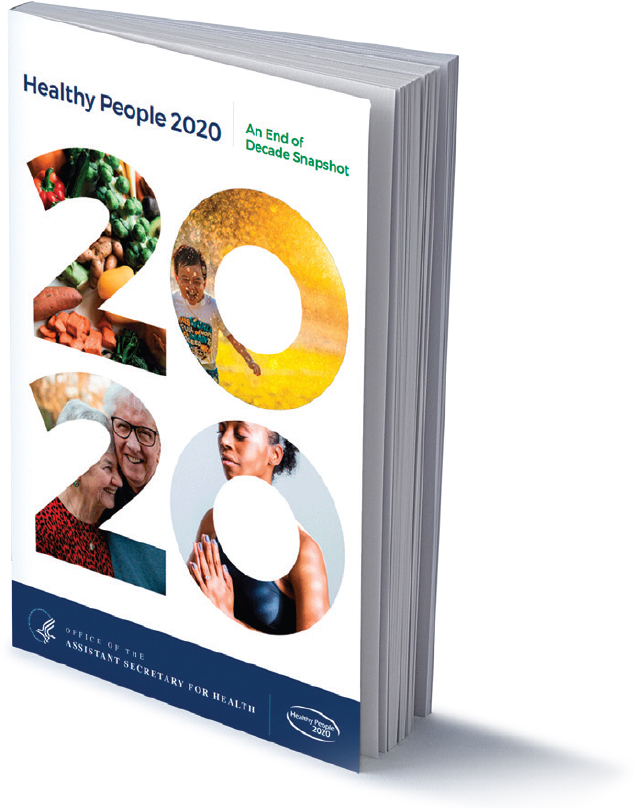
The U.S. Department of Health and Human Services issued Healthy People 2020, the fourth edition in the series, in 2010. The focus was “objectives for improving health,” and the report had four key goals: living longer without preventable disease or injury; attaining health equity and reducing disparities; fostering environments to promote health for all, both physical and social; and encouraging healthy behaviors and quality of life for people of all ages. Building on knowledge from past decades, Healthy People 2030 was released in 2020. The fifth edition in the series includes new objectives for this decade that address emerging health issues, including the opioid epidemic and adolescents’ use of e-cigarettes and flavored tobacco. Greater focus is also placed on social determinants of health and health literacy.
Health promotion and disease prevention will need to evolve to reflect the changing stressors and challenges of modern life. To cite just one example, tools that accurately measure health indicators could radically change the way patients monitor and manage chronic conditions, though issues such as data protection and privacy concerns will need to be addressed.


