Recently completed
Topics
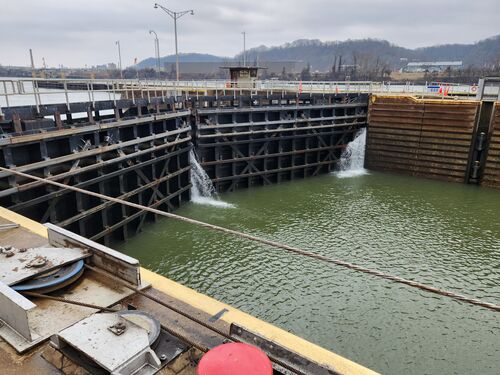
The study will identify key demands and challenges facing the U.S. Army Corps of Engineers (USACE) related to navigation and flood risk management assets; consider how innovative materials can support capabilities critical to meeting these demands and challenges; and make recommendations to inform strategies that USACE can pursue to further the development, demonstration, and deployment of promising materials in new and existing infrastructure.
Description
An ad hoc study committee will identify key demands and challenges facing the U.S. Army Corps of Engineers (USACE) related to navigation and flood risk management assets; consider how innovative materials (such as composites and high-performance concrete) can support capabilities critical to meeting these demands and challenges; and make recommendations to inform strategies that USACE can pursue to further the development, demonstration, and deployment of promising materials in new and existing infrastructure.
Among the kinds of demands and challenges that should be considered by the committee are the imperatives of ensuring that the nation's water resource infrastructure:
• Can be delivered and maintained in a timely and cost-effective manner;
• Functions efficiently and reliably with minimal down time and delay;
• Is resilient and capable of withstanding increasingly aggressive environmental conditions that risk premature degradation and catastrophic damage;
• Is durable for long service lives, including extended service lives for aging assets; and
• Creates fewer environmental impacts during construction, operations, repair, and maintenance.
The study committee will consider how innovative materials can contribute to meeting the challenges and demands by supporting capabilities such as:
• High strength and durability;
• Resilience to extreme conditions and events;
• Rapid deployment; and
• Low life-cycle emissions and energy use.
The committee will identify types and categories of advanced materials that hold promise, and in each case, will review the status of the material’s development and the extent to which their capabilities are understood and demonstrated. The committee will highlight critical gaps in understanding as well as factors that may be hindering development and deployment, including barriers arising from standards, common practices, and policies. In doing so, the committee will consider USACE’s research and development strategies to fill these knowledge gaps and overcome barriers to the development and use of innovative materials in water resources infrastructure.
As appropriate, the committee will make recommendations to inform strategies that USACE can pursue in concert with its partners in government, industry, and academia to further understanding of how innovative materials may be used and readied for deployment in water resources infrastructure.
Contributors
Committee
Chair
Member
Member
Member
Member
Member
Member
Member
Member
Member
Member
Sponsors
Department of Defense
Staff
Dylan Rebstock
Lead
Thomas Menzies
Lead
Blake Reichmuth
Michelle Schwalbe
Timothy Marflak
Erik Svedberg