Snapshots of Planning Practices (2025)
Chapter: Collaboration on Local Freight Delivery
SNAPSHOTS OF PLANNING PRACTICES:
COLLABORATION ON
LOCAL FREIGHT DELIVERY
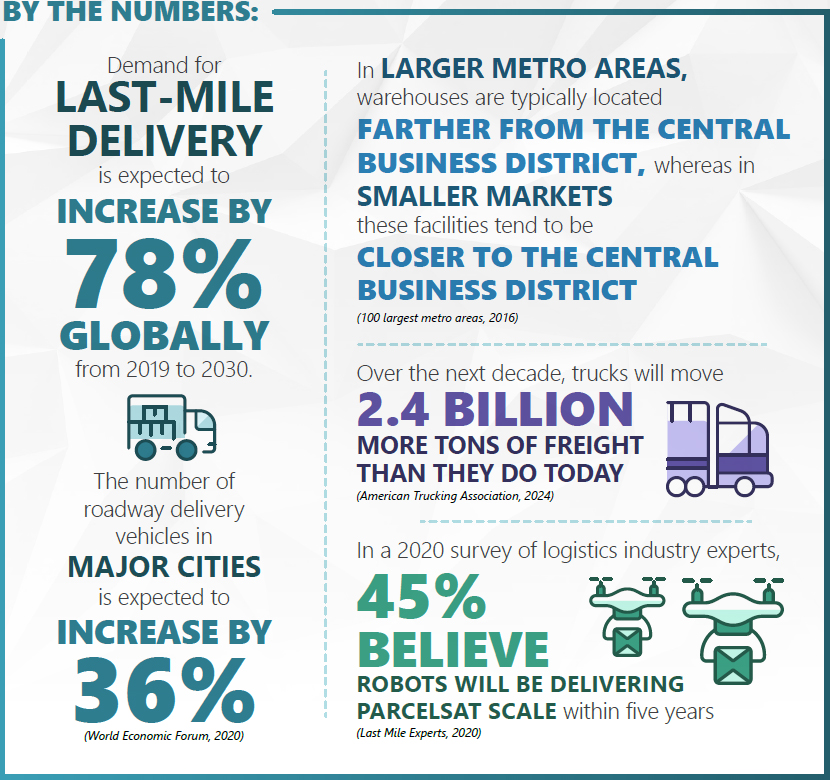
WHY COLLABORATE ON LOCAL FREIGHT DELIVERY?
Collaboration between agencies and the freight industry offers substantial benefits within local communities. By working together, they can achieve greater certainty in truck arrival times, reduce delivery times, minimize disruptions during peak hours, and lower delivery costs. Additionally, the use of targeted engineering and operations solutions to better accommodate freight can lead to more efficient and predictable operations while improving safety across all modes of transportation.
FOLLOW THESE LINKS TO LEARN MORE IF YOU ARE LOOKING FOR….
- Resources on beginning to collaborate among agencies on freight delivery →
- Key practices for beginning to collaborate among agencies on freight delivery →
- Resources for utilizing collaborations for innovation in urban freight delivery →
- Key practices for utilizing collaborations for innovation in urban freight delivery →
- Examples of what other DOTs are doing with urban freight delivery collaboration →
- Examples of what MPOs are doing with urban freight delivery collaboration →
SNAPSHOTS OF PLANNING PRACTICES:
AGENCY COLLABORATION | KEY PRACTICES
Different organizations might optimize their approach towards freight delivery collaboration by focusing on one or more levers of change within their organization. These levers of change – Organization, Workforce, and Partnerships; Data and Performance Management; and Policy and Program Design – are the organizing framework of these key practices. This structure is intended to offer practices in each area so that organizations can choose where to focus their energy and resources. The practices are divided into three categories: 1) “Designing” describes practices, examples, and resources relevant to agencies who are new to the topic area or setting up a new program, 2) “Enhancing” describes practices among agencies that are expanding or growing their efforts in a area and taking on increasingly complex aspects of the topic., and 3) “Advancing” describes practices, examples, and resources relevant to agencies that are innovating or establishing new practices in a topic area.
DESIGNING
Exemplary practices for agencies who are new to Agency Collaboration on Freight Delivery in Local Communities.
ORGANIZATION, WORKFORCE, AND PARTNERSHIPS:
Identifying champion within your organization for selected local delivery programs. These individuals or teams can lead outreach to transporters, small businesses, residents, and political representatives to explain and advocate for collaboration on local freight delivery (e.g., for an off-hours delivery program or expanded cargo bike program).
Engaging academic institutions as relevant to determine opportunities for partnerships.
Engaging early with the public and businesses to understand their perspective and existing interactions with freight delivery.
DATA AND PERFORMANCE MANAGEMENT:
Inventorying available freight delivery data, identifying key data sharing limitations (e.g., non-disclosure or sole source requirements), collecting and consolidating available data, and identifying gaps.
Analyzing available data to identify where freight activity conflicts with land uses and associated activities.
POLICY AND PROGRAM DESIGN:
Establishing a policy framework for local freight delivery planning. This policy could include goals/objectives, discussion of existing data gaps, key messaging (both internally and with partners and the public), mechanisms and processes for public involvement/input on projects, and model design principles or standards.
Exploring the feasibility of pilot projects to test out new and innovative approaches to local freight delivery or freight vehicle parking. Pursuing preliminary studies to assess freight conditions and/or collect data.
ENHANCING
Exemplary practices for agencies who are expanding or growing their work in Agency Collaboration on Freight Delivery in Local Communities.
ORGANIZATION, WORKFORCE, AND PARTNERSHIPS:
Institutionalizing relationships identified in the “Designing” phase (e.g., private sector freight carriers) by forming advisory committees or similar that meet regularly to discuss urban freight topics.
Considering opportunities to fortify stakeholder relationships and encourage collaboration by incorporating freight planning into existing long-range planning processes (e.g., the LRTP).
Expanding outreach to non-traditional partners (e.g. downtown districts, hospitality associations) to learn more about how freight delivery affects them.
Establishing mechanisms for coordination with Complete Streets staff to ensure that loading zones and other freight infrastructure needs are considered in project design.
DATA AND PERFORMANCE MANAGEMENT:
Formalizing a process for collecting, storing, sharing, and visualizing local freight delivery data (e.g., through use of online dashboards or mapping tools). ). In doing so, formally adopt data standards (e.g., the Open Mobility Foundation’s Curb Data Standard) as relevant.
Developing approach for solving for data gaps identified in “Designing” phase.
Adjusting data collection processes as needed to enable compliance with adopted data standards.
POLICY AND PROGRAM DESIGN:
Implementing and monitoring performance of pilot programs to test local freight delivery management and partnership strategies.
Building on local freight delivery policy frameworks to implement key messaging (internally and with partners and members of the public) and integrate model design principles and standards into project development processes.
ADVANCING
Exemplary practices for agencies who innovating and establishing new best practices in Agency Collaboration on Freight Delivery in Local Communities.
ORGANIZATION, WORKFORCE, AND PARTNERSHIPS:
Institutionalizing a holistic approach to local freight delivery management within the organization, including through creation of a dedicated team responsible for freight programs and partnerships.
Institutionalizing partnerships with freight providers, universities, member agencies, and other key stakeholders to collaboratively address local freight delivery management.
Leveraging analytical capabilities of academic partners for research and outreach. Utilize theses third party partners to engage freight carriers or other private operators that may be less likely to engage with a City, MPO, or DOT.
DATA AND PERFORMANCE MANAGEMENT:
Publicizing local freight delivery data in a publicly accessible portal format and using this data to quantitatively measure system performance and program effectiveness.
Outsourcing elements of data collection as needed (e.g., bringing on a contractor with specialized skills to collect the granular parking and traffic data needed for curb digitization).
POLICY AND PROGRAM DESIGN:
Using educational resources and/or financial incentives to drive local freight delivery behavior changes.
Pursuing funding to further advance local freight delivery management techniques when possible.
Making programs available for replication and use by other agencies.
GAPS AND FUTURE RESEARCH
How can agencies broaden data collection to better integrate e-commerce delivery, food service providers, and building service vehicles?
How should agencies approach curb permitting for contractors without City business licenses?
How might agencies further expand their partnerships with non-traditional stakeholders to enhancing freight planning?
What are the economic implications of curbside and freight management practices on local businesses? How can these be mitigated or leveraged?
SNAPSHOTS OF PLANNING PRACTICES:
AGENCY COLLABORATION | EXAMPLES
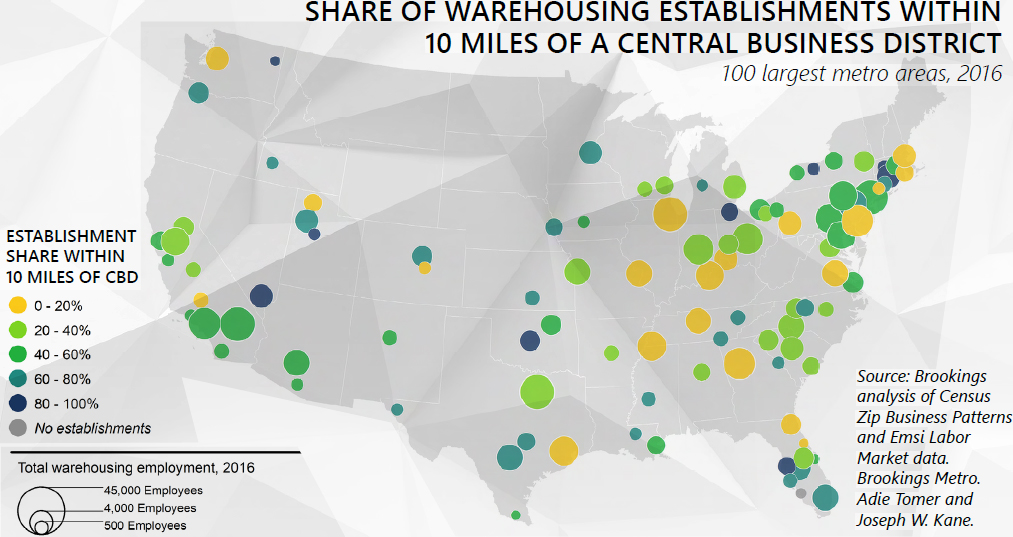
The transportation landscape of freight delivery in the United States is in a state of growth and evolution driven by the rise of e-commerce, characterized by shifting consumer behaviors and delivery demands. As demand changes, the freight industry requires a collaborative approach to navigate the complexities of the freight network and to prepare freight transportation for the future. This Snapshot identifies successful collaborations to address the growing demands of goods movement on transportation networks.
DESIGNING
Maricopa Association of Governments (MAG) is the MPO for the greater Phoenix region. One of MAG’s most pressing challenges related to local freight delivery involves truck parking availability. Within MAG’s member regions, there are diverse community and truck parking needs within the urban region. MAG has undertaken a few efforts to address this topic, including a Truck Parking Study in which MAG assessed the supply and demand for commercial truck parking throughout greater Phoenix. MAG released the findings of this study in their 2021 Regional Truck Parking Recommendations and Implementation Plan.
MAG also completed Freight Subarea Project Assessments in 2019 and 2021. These pinpointed engineering solutions to better accommodate trucks and freight while improving safety for all modes of transportation. The assessments included public outreach and engagement with stakeholder groups, including MAG contacts, member agencies, and freight companies.
Additionally, work has recently begun on an Urban Truck Parking Study and Plan, with completion expected in 2026. Looking ahead, MAG sees opportunities to collaborate with private developers, regional agencies, trucking associations, and state advocacy groups (including multimodal groups) on truck parking concerns.
ENHANCING
The Mid-America Association of State Transportation Officials (MAASTO) Truck Parking Information Management Systems (TPIMS) Project is a regional partnership involving eight states-Indiana, Iowa, Kansas, Kentucky, Michigan, Minnesota, Ohio, and Wisconsin- and multiple key stakeholders-MAASTO, Mid-America Freight Coalition, American Transportation Research Institute, Owner-Operator Independent Drivers Association, and Northeast Association of State Transportation Officials. This multi-year initiative aimed to enhance the efficiency, economic competitiveness, and safety of regional freight network through a multi-state Regional Truck Parking Information System while conforming with state and local freight plans. Locally, this partnership involves collaboration between rest stops (public and private), law enforcement maintaining agencies, and the freight carriers.

The project established a network of safe convenient parking areas while sharing real-time parking availability to truck drivers through dynamic signs, smartphone apps, and travel information websites. Since the project’s completion in 2018, the project is expected to generate $403 million in benefits by providing drivers with the opportunity to make smarter, more efficient parking decisions. This project was funded through a 25 million dollar federal TIGER grant and state matching funds.

The Tennessee Department of Transportation (TDOT) has worked in collaboration with the Thrive Regional Partnership and other interstate partners to develop the Freight Movement Along Freight Alley report. This report examines the future of freight flows and expansions in the 58-county Tri-State Region (Tennessee, Georgia, and Alabama). The recommendations include strategic collaboration among stakeholders such as local, regional, and statewide businesses, public officials, and more to ensure program success. The report also includes an inventory of public and private truck parking in the region via Truck Parking Locator Maps. The study is unique in that it captures freight patterns in both rural and urban areas, and its regional approach was successfully replicated by the Memphis MPO in their 2023 Mid-South Freight Flows & Industry Analysis.
ADVANCING
The New York City Department of Transportation’s (NYC DOT) implemented a 1.5-year Off-Hours Delivery Program (OHD) pilot in 2009, which included partnerships with 30 businesses that agreed to deliver during off-hours and install trackers on delivery vehicles to monitor traffic and delivery metrics. Since the initial pilot, NYC DOT expanded their collaborative efforts and institutionalized this program. In 2019, they reached the goal of engaging over 500 business locations and officially launched the program citywide. Two challenges in implementing the OHD program were noise concerns from the surrounding communities and financial incentives for businesses. In response to this issue, NYC DOT collaborated with the Department of Environmental Planning to release a noise reduction toolkit. In 2024, they began using $6 million in CMAQ funding to help small businesses with limited resources and infrastructure participate in the off-hour delivery program.

In 2023, the Urban Freight Lab, Open Mobility Foundation, and the Seattle Department of Transportation (SDOT) received a $2 million Strengthening Mobility and Revolutionizing Transportation (SMART) grant for curbside management digitization. Using the grant funding, the three groups launched Seattle Urban Freight Lab’s Last Mile Freight Curb Access Program, which seeks to digitize last mile urban delivery. More specifically, the goal is to understand performance data-driven pricing and curb literacy to investigate new designated commercial vehicle load zones (CVLZ) and the commercial vehicle permit (CVP).

The program is designed to change commercial vehicle driver behavior and promote responsible curb use by equipping drivers with real-time information, encouraging them to park legally and expedite deliveries. This partnership enables knowledge sharing and potential broader adoption of successful strategies, and, through this program, the agencies hope to turn their digital curb inventory into the national Curb Data Specification (CDS) standard. In this effort, the Urban Freight Lab provides in-depth research to support project development, and the organization serves as a third-party, neutral facilitator.
SNAPSHOTS OF PLANNING PRACTICES:
AGENCY COLLABORATION | RESOURCES
DESIGNING
USDOT’s Promising Practices for Meaningful Public Engagement offers examples of how to incorporate community voices into transportation decision-making.
TRB’s National Cooperative Freight Research Program (NCFRP) Report 14: Guidebook for Understanding Urban Goods Movement is designed to help facilitate decisions that accommodate and expedite urban goods movement while minimizing the environmental impact and community consequences of goods movement.
In 2015, the Florida Department of Transportation (FDOT) District 7 published Freight Roadway Design Considerations in response to a need for guidance in balancing the needs of safe and efficient truck movement with community livability concerns in communities where significant goods movement activity is needed.
ENHANCING
The University of Washington’s Urban Freight Lab offers a Tools and Resources page with toolkits and guidance on studying the parking behavior of commercial vehicles, documenting commercial vehicle occupancy within alleys, mapping locations and positions of private loading docks, and more.
The Environmental Protection Agency’s (EPA) Community-Port Collaboration Toolkit is designed to help communities and ports develop collaboration skills and to enhance understanding of stakeholders’ priorities and challenges associated with ports.
The California Department of Transportation (Caltrans) published a Port Freight Infrastructure Program Public Engagement Guide tailored to port and freight infrastructure. The guide identifies examples of stakeholder groups and reviews public engagement best practices related to freight.
ADVANCING
New York City DOT’s Urban Freight Initiatives report provides examples of the broad collaboration for the management of freight mobility alongside municipal and multi-State agencies, community, and industry partners, in planning, engineering, education, and enforcement.
The Environmental Defense Fund’s Report on Urban Freight Partnerships offers guidance on why urban freight stakeholder engagement is critical to the success of any effort to improve the sustainability of urban freight and provides guidance on developing an engagement strategy.
The Urban Freight Lab’s research page offers a range of timely urban freight research on emerging topics. For example, recent publications include “Walking and Parking Dynamics of Drivers: Analysis and Model Development for Sustainable Urban Delivery” and “Last-Mile Freight Curb Access: Digitizing the Last Mile of Urban Goods to Improve Curb Access and Use.”
The National Cooperative Highway Research Program (NCHRP) produces ready-to-implement solutions to the challenges facing transportation professionals. NCHRP is sponsored by the individual state departments of transportation of the American Association of State Highway and Transportation Officials (AASHTO), in cooperation with the Federal Highway Administration (FHWA). NCHRP is administered by the Transportation Research Board (TRB), part of the National Academies of Sciences, Engineering, and Medicine. Any opinions and conclusions expressed or implied in resulting research products are those of the individuals and organizations who performed the research and are not necessarily those of TRB; the National Academies of Sciences, Engineering, and Medicine; or NCHRP sponsors.


