Submission Period Now Open for the 2026 Eric and Wendy Schmidt Awards for Excellence in Science Communications; $640,000 To Be Awarded
News Release
By Olivia Hamilton
Last update March 2, 2026
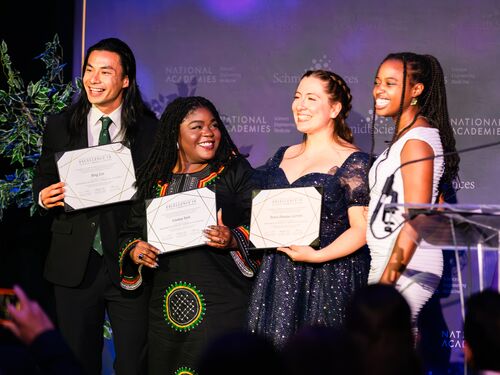
Presentation of 2025 awards on Nov. 14, 2025 (photo by David Asche Photography)
WASHINGTON — Submissions are now being accepted for the 2026 Eric and Wendy Schmidt Awards for Excellence in Science Communications, given by the National Academies of Sciences, Engineering, and Medicine in partnership with Schmidt Sciences.
This application cycle marks the fifth year of the awards, which honor exceptional science communicators, science journalists, and research scientists who have developed creative, original work that addresses issues and advances in science, engineering, and medicine for the general public.
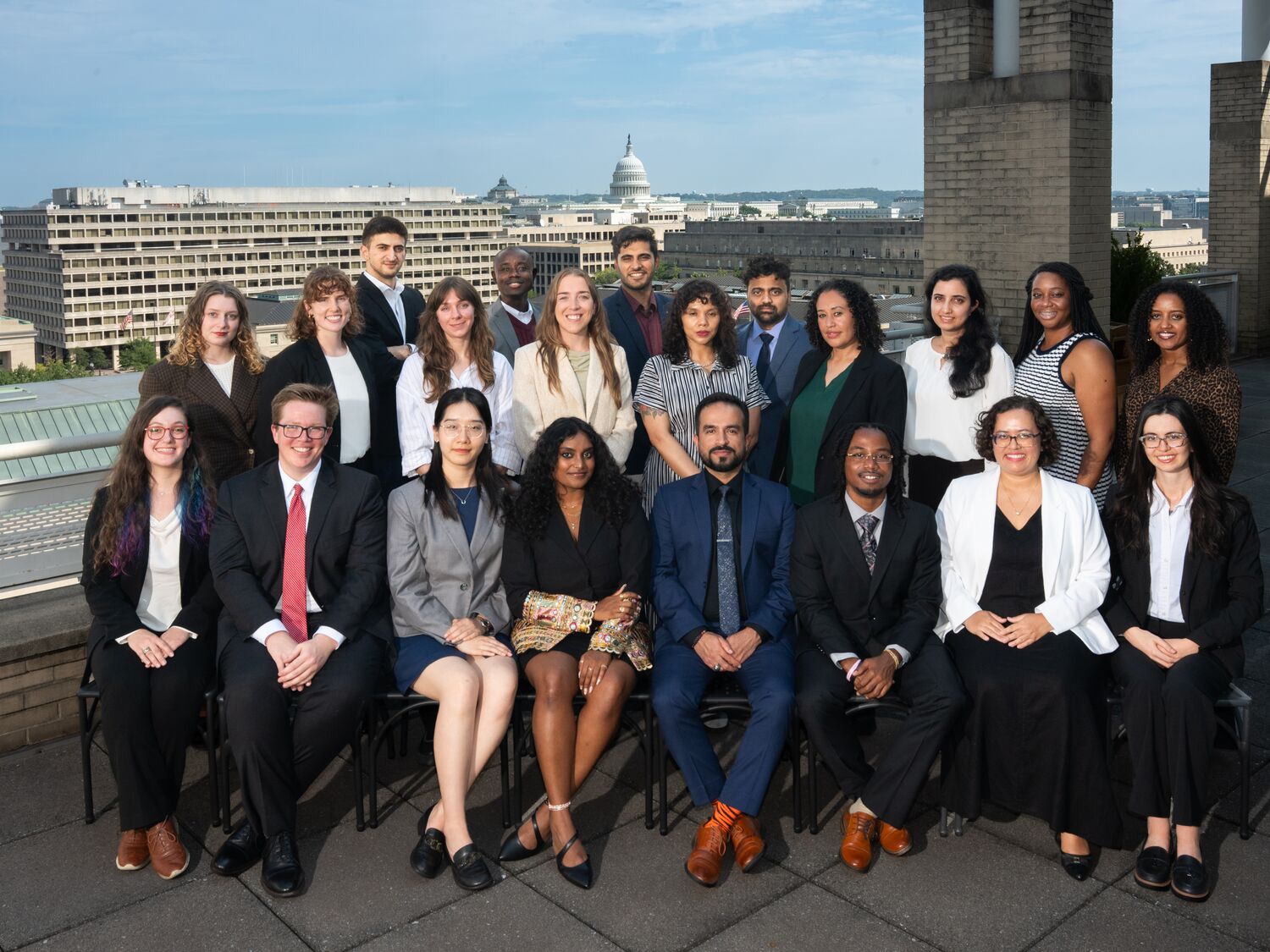
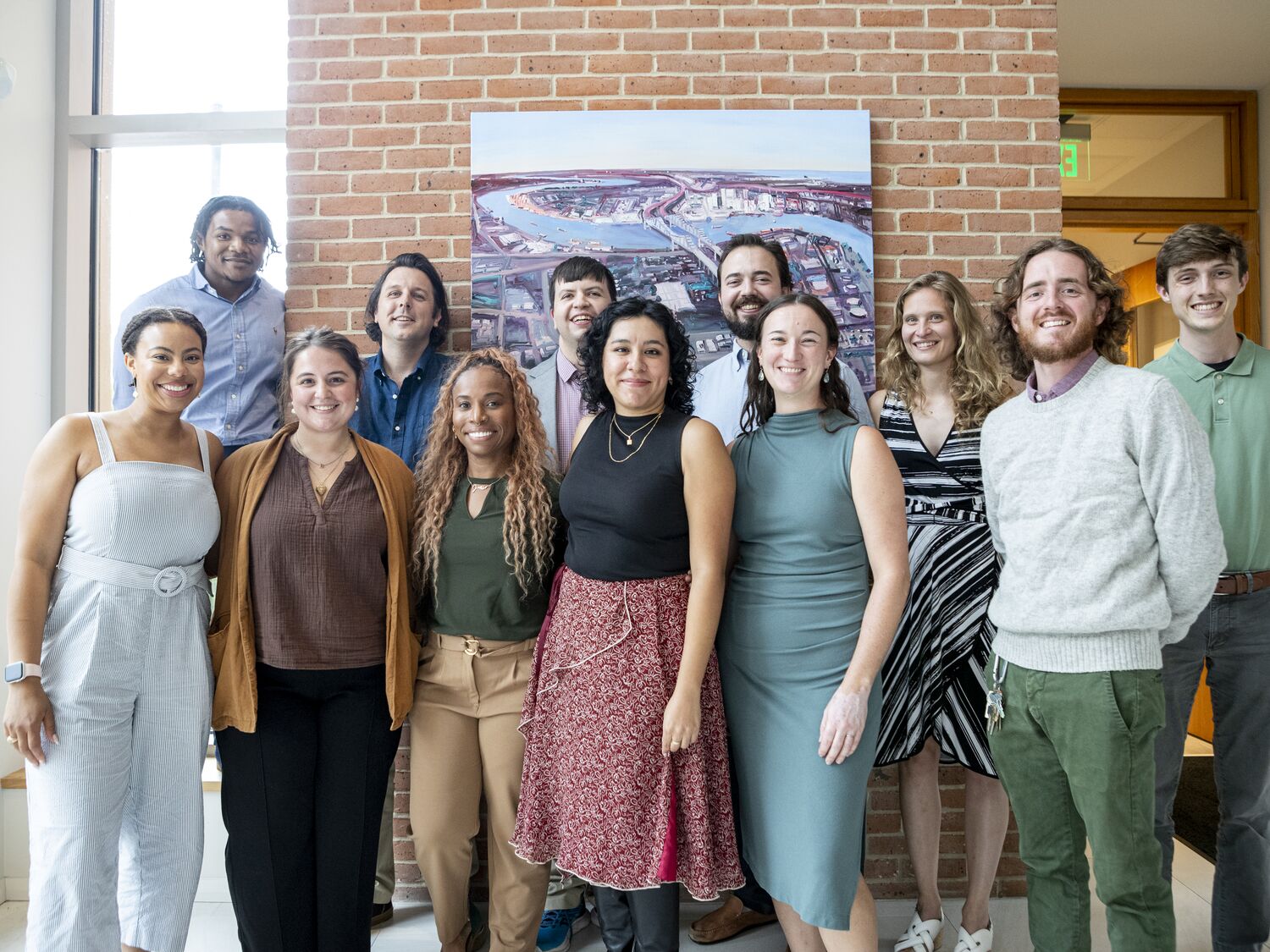
These prestigious awards not only recognize excellence in science communication but also strive to build a robust community of science communicators, science journalists, and research scientists. The program will support the community of award winners as they continue to demystify complex issues effectively, inspiring wonder and curiosity about issues that impact daily life and planetary well-being. Past awardees represent an extraordinary range of disciplines, storytelling approaches, and career stages, reflecting the breadth and impact of science communication honored by the program.
In 2026, the program will confer 24 awards totaling $640,000. These awards will go to individuals who were working at the front lines of science communication or journalism who have developed creative, original work that addresses issues and advances in science, engineering, or medicine for the general public, and who are in career stages or settings where the recognition could have a significant impact on their future career.
Schmidt Sciences will help foster the vibrant and expanding community of awardees by partnering with renowned journalistic institutions to provide ongoing training and professional development opportunities.
“Outstanding science communicators not only inform and educate, they also ignite our curiosity and inspire us to learn more about ourselves, our planet, and our universe,” said National Academy of Sciences President Marcia McNutt. “These awards recognize individuals whose creativity, clarity, and dedication help bridge the gap between research and the public, strengthen trust in science, and inspire the next generation. We are thrilled to recognize and reward excellence in science communications with these awards.”
“Science communication is essential infrastructure for a thriving society. Through our partnership with the National Academies, we are proud to support communicators, journalists, and researchers who translate complexity into clarity, strengthen public trust, and make science accessible to communities everywhere,” said James Ricci, director of science systems at Schmidt Sciences.
“Science communication is fundamentally about connection,” said selection committee chair Megan Ranney, dean of the Yale School of Public Health, C.E.A. Winslow Professor of Public Health, and professor of emergency medicine. “When researchers, journalists, and communicators engage communities with respect, clarity, and curiosity, they help ensure that science reflects people’s lived experiences and serves the public good. These awards celebrate those who build trust, spark dialogue, and make science a shared resource that communities can use to understand challenges and shape solutions together.”
Recognizing and developing a wide pool of science communicators
The awards in the following categories will be given to individuals who have developed creative, original work published or released in 2025 that explores issues or advances in science, engineering, or medicine for the general public. Eligibility in the following subcategories is determined by the individual’s professional status in 2025:
Nine Awards for Research Scientists will be split into three subcategories.
Graduate student researchers — was a master’s, M.D., or Ph.D. candidate practicing research in science, engineering, or medical fields
Early-career researchers — was a practicing researcher in science, engineering, or medical fields and was less than 10 years post-master’s, M.D., or Ph.D.
Later-career researchers — was a practicing researcher in science, engineering, or medical fields and was 10 or more years post-master’s, M.D., or Ph.D.
Nine Awards for Science Journalists will focus on three subcategories in science journalism.
Local/regional journalists — was locally/regionally based and developed journalism for publication that focused on local/regional issues and reported the effects of wider issues on a locality or region
Early-career journalists — had five years or less of professional experience developing journalism for publication
Freelance journalists — developed journalism for publication and was self-employed
Six Awards for Science Communicators will focus on two subcategories in science communication for individuals who addressed issues or advances in science, engineering, or medical fields and did not identify as a science journalist or practicing research scientist.
Independent communicators — produced science communication work independently, including freelance or contract work developed outside of an organization’s internal structure
Organizational communicators — produced science communication work as part of their role within an organization, using institutional resources or operating within its structure
In each subcategory, there will be one top award of $40,000 and two awards of recognition of $20,000 each. A total of $640,000 will be awarded.
Submissions will be accepted until April 3, 2026. Leading scientists and experts in all aspects of science communication and journalism — from the academic, nonprofit, corporate, and other sectors — will review the submissions and select the winners. The winners will be announced this fall. For more information, see https://www.nationalacademies.org/awards/excellence-in-communication/for-applicants.
The Eric and Wendy Schmidt Awards for Excellence in Science Communications are supported by Schmidt Sciences. Additional support is provided by the National Academy of Sciences’ W.K. Kellogg Foundation Fund and the Ralph J. and Carol M. Cicerone Endowment for NAS Missions.
About Schmidt Sciences
Schmidt Sciences is a nonprofit organization founded in 2024 by Eric and Wendy Schmidt that works to accelerate scientific knowledge and breakthroughs with the most promising, advanced tools to support a thriving planet. The organization prioritizes research in areas poised for impact including AI and advanced computing, astrophysics, biosciences, climate, and space — as well as supporting researchers in a variety of disciplines through its science systems program.
About the National Academies of Sciences, Engineering, and Medicine
The National Academies of Sciences, Engineering, and Medicine are private, nonprofit institutions that provide independent, objective analysis and advice to the nation to solve complex problems and inform public policy decisions related to science, engineering, and medicine. They operate under an 1863 congressional charter to the National Academy of Sciences, signed by President Lincoln.
Media Contacts:
Olivia Hamilton
Communications Specialist, Office of News and Public Information
The National Academies of Sciences, Engineering, and Medicine
ohamilton@nas.edu
Carlie Wiener
Director of Communications
Schmidt Sciences
cwiener@schmidtsciences.org