The Risks and Benefits of Synthetic Cells: Q&A with Peter Carr
Feature Story
By Sara Frueh
Last update July 7, 2026
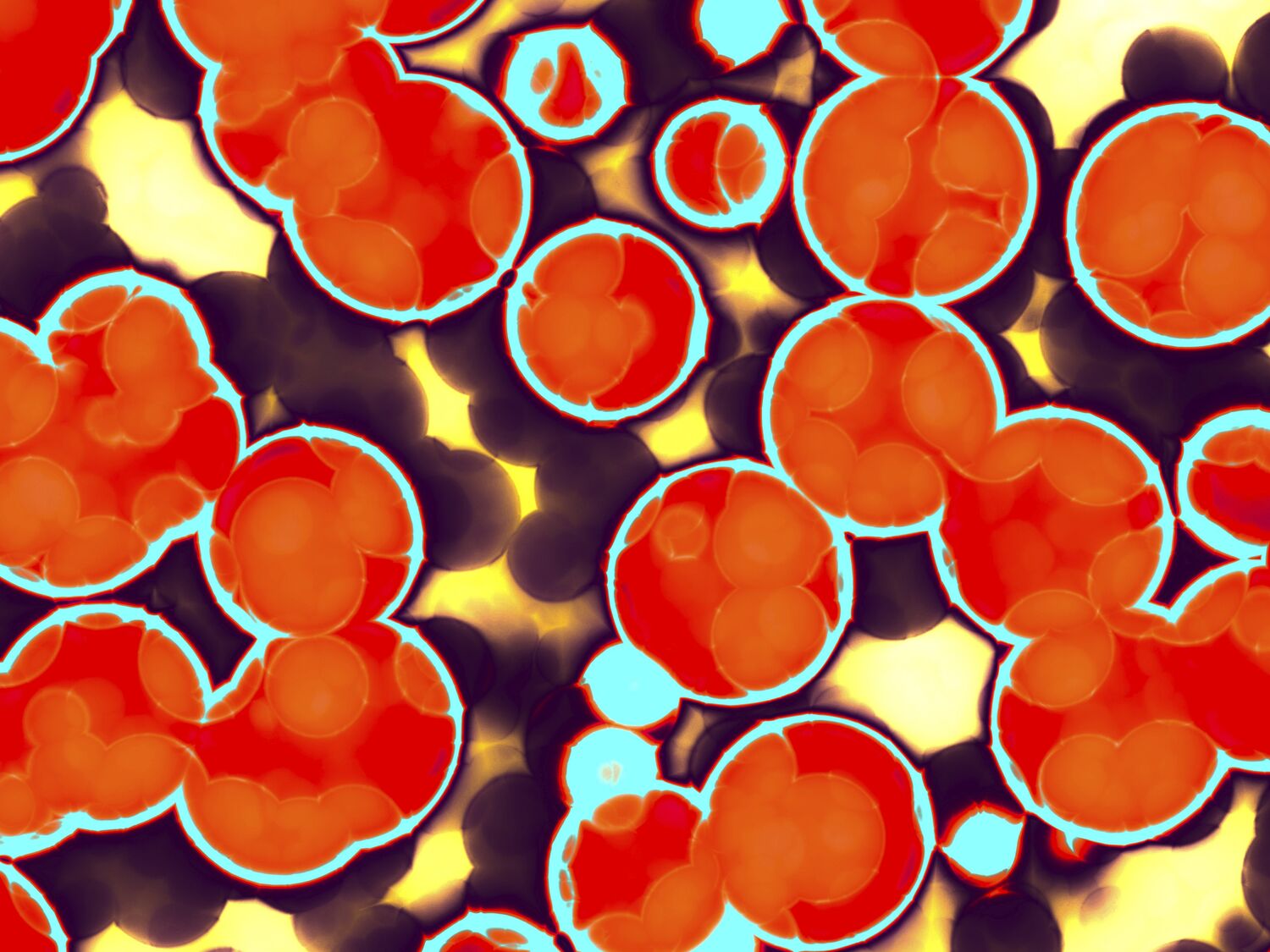
A team at the University of Minnesota announced recently that it synthesized simple cells that feed, grow, and reproduce — the latest advance in the rapidly growing field of synthetic cells, which was the topic of a recent report from the National Academies, Supporting Responsible Innovation of Synthetic Cells: Biosafety, Biosecurity, and Environmental Considerations.
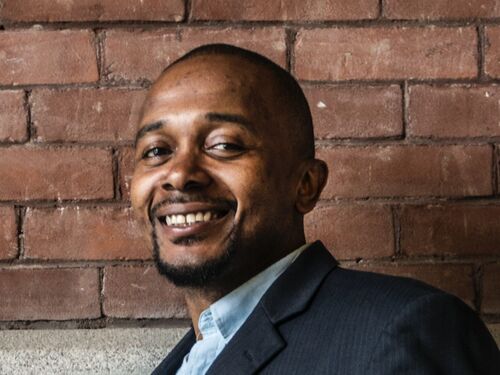
The 15-person report committee — which included experts in synthetic biology, biosecurity, bioethics, and other disciplines — was co-chaired by Peter Carr, a synthetic biologist and senior principal engineer at RTX BBN Technologies. Carr chatted with writer Sara Frueh about what synthetic cells are, their potential benefits and hazards, and how governance of this research should work.
Q: Let’s start with the basics: What are synthetic cells? And are they living or not?
Carr: Those questions are simple and complicated all at the same time. As my jumping off point, let’s think of a typical natural cell — what it is, and what it does. A naturally occurring cell is a little package, essentially its own self-contained unit. It’s got a wrapper around it, and it has a lot of very complicated chemicals inside. That combination of chemicals gives it all sorts of capabilities — it can eat, it can move, and it can reproduce — making more of itself.
Synthetic cells are similar self-contained units, except they’ve been constructed — part of them has essentially been built by somebody, and they share one or more features with living cells. They might have genetic material inside them, and the ability to reproduce. They might have a basic metabolism: the ability to turn some chemicals into others, using the enzymes that are inside. Often they are built from a combination of biological and synthetic materials.
Whether they are alive or not depends on particulars. There are some synthetic cells that are so simple that we definitely wouldn’t call them alive — they don’t have any DNA in them, and they don’t replicate. That’s on one end of the simplicity spectrum. On the other end — and no one has achieved this yet — researchers are seeking to build a cell from the ground up with all the necessary components, a functional copy of what otherwise would look like a natural cell. In those cases, the goal is for it to have all the same attributes of a natural cell, and therefore you would consider something like that alive.
In between those two ends of the spectrum, there’s a whole bunch of different possibilities. In our recent report, we use a series of eight case studies to illustrate different points along that spectrum.
Even more recently, the lab of Kate Adamala — one of our report co-authors — at the University of Minnesota shared their exciting results for a new synthetic cell that can grow, replicate its own DNA, and divide. It even demonstrates the potential to evolve. The capabilities of this synthetic cell really underscore key conclusions in the report about the need to better understand these new systems.
Q: Why do researchers want to create synthetic cells? What are the potential applications or benefits?
Carr: There are some motivations related to basic research — seeking to understand the fundamental recipe of life, what the minimum requirements are in order to have a living system. Other researchers have applications in mind in categories that include medicine, agriculture, and environmental monitoring and remediation. For example, one possible application that we discuss in the report is a synthetic cell designed for breaking down environmental contaminants — chemicals that you might find in a site designated by the EPA as a cleanup site — that could potentially help restore the site to a more natural balance.
Some versions of synthetic cells could be designed not to replicate so that they are easier to control, so you wouldn’t have as much concern about whether they would compete with the organisms that are already in that environment.
Q: That brings up the issue of risk, which your report also explored. What are some of the risks involved in creating synthetic cells and using them in the world?
Carr: To a very large extent, the potential harms from synthetic cells are very similar to what might one might be concerned about with other kinds of engineered organisms where their DNA has been modified in some way. So, some of those risks are that the cells would compete with natural organisms and disturb a balance in the environment. It’s important to note that presence doesn’t equal harm; just because something is in the environment doesn’t mean it’s causing a problem. But there is the potential for competition and an imbalance.
There are also concerns that people who work in pathogens research could accidentally make something more pathogenic and more dangerous. I’m not aware of people working in synthetic cells who are trying to create synthetic pathogens, but that’s a generalized concern in working with any kind of biotechnology-modified organisms, which would include synthetic cells.
So, there are questions of potential harms to an environment, potential harms to humans, and other potential harms that could be biological — such as things that could influence agriculture or animal health. Based on the evidence so far, the vast majority of potential risks from synthetic cells do not seem fundamentally different from those that are often considered for biotechnology in general, or for genetically modified organisms in general.
However, there is one particular type of synthetic cell which could be notably different in its risk level. It’s referred to as “mirror life,” and recently a group of prominent scientists came together to say that mirror life represents a different class of hazard than most genetic engineering does.
Q: Can you say more about that? What is mirror life, and why might it pose unique hazards?
Carr: The idea of mirror life is based on the concept that many of the molecules inside of a cell, including DNA and protein, have what’s called “handedness” to them. There are essentially two versions of many chemicals that could exist, and they’re mirror images of each other — just like my right hand is a mirror image of my left hand — but not exactly the same.
Nature chose to go with one version of that handedness for many crucial chemicals, like DNA and proteins. If scientists made a synthetic cell that used the opposite versions for its components — a cell that had the exact mirror image copies of all of those chemicals that are found in the natural cell — people have raised concerns about the potential impacts and outcomes. For example, the immune systems of humans and animals have not evolved to be on the lookout for mirror image versions, and so they may not be able to defend against a mirror-life bacterium. And there are concerns that that kind of organism would be able to compete with a leg up in natural environments, and therefore might disrupt natural environments.
Q: How good is our ability to even assess risk, when the science of synthetic cells is so fundamentally new? Can we foresee all of the potential harms, or is our ability to predict them limited in ways that we may not even be aware of?
Carr: That’s a really important question. One crucial area of conclusions and recommendations in our report has to do with the need for further study to try to understand both the “known unknowns” and potentially get at more of the “unknown unknowns.” A lot of effort has been spent in trying to imagine and predict what the potential risks and consequences and harms could be, and evaluating the probability of those, but because this is still so very new, there’s much that we can’t predict yet.
But there are a large number of possible experiments that one can do with earlier-stage, simpler synthetic cells that could help us evaluate the risk. I’ll give one example. Suppose you have a synthetic cell that does not replicate, but that still uses a little bit of DNA as part of its machinery to get something useful done, like breaking down a dangerous chemical in the environment. That little piece of DNA is unlikely to cause harm by sitting around, but because it’s an unusual, novel synthetic cell, we don’t know how long it’s going to sit around in the environment. So, it’d be nice to first do a controlled lab study, and then possibly a field study, to answer some questions: How long does it persist? Is there evidence that its DNA gets taken up by other organisms, and if it does, is there any observed or speculated problem that that might cause?
And so, we recommend that organizations that fund research work together to support research to understand the potential risks and the probabilities of these different outcomes.
Q: Who should weigh the potential risks and benefits in this research and make decisions — for example, deciding whether a particular type of research or application should go forward, and how it should go forward? Should it be researchers, regulators, Congress? How should governance work?
Carr: In the report we lay out a vision for how multiple stakeholders — Congress, agencies, universities, and researchers, among others — should work together to make those decisions and oversee this research. We call for engagement with the public that is not just one way, but is instead a dialogue, a two-way discussion. We ought to be concerned about the questions people have. Researchers and regulators should be informed about what people care about and how they might be affected, from a variety of perspectives — community, religious, ethical, and others. So, a complex network of people should be informing decisions about synthetic cells.
Who should make the decisions also depends a bit on which questions are being answered. Regulators and institutional review boards working with researchers should be making a significant number of those decisions. In the U.S., the regulation of biotech and related research is somewhat fragmented between entities like FDA, EPA, and USDA. There’s understandable history for why that’s the case, but what we want is something that is consistent across different agencies. The novelty of synthetic cells merits some adaptation and reinvention of how they are regulated and monitored. One of our recommendations is for an interagency synthetic cell working group — so that there can be communication and hopefully consistency across how those different relevant agencies would regulate the products of synthetic cell research.
Featured Publication
Supporting Responsible Innovation of Synthetic Cells: Biosafety, Biosecurity, and Environmental Considerations
Consensus Study Report
·2026
Synthetic cells represent a rapidly advancing frontier in engineering biology, offering new ways to understand living systems and developing innovative solutions across health, environmental management, agriculture, and manufacturing. Constructed from biomolecular components and designed to perform...
View details