Recently completed
Topics
In 2021, Navy personnel accidentally caused two fuel leaks at the Red Hill Bulk Fuel Storage Facility—a Navy-operated site on the island of O‘ahu. As a result, approximately 93,000 people, most affiliated with the Department of Defense, were potentially exposed to contaminated drinking water through their residence, workplace, or both. While engaging with affected community members, our expert committee will review the health risks associated with JP-5 exposure and make recommendations to the Department of Defense and the Department of Veterans Affairs regarding clinical follow-up for those exposed.
Introduction
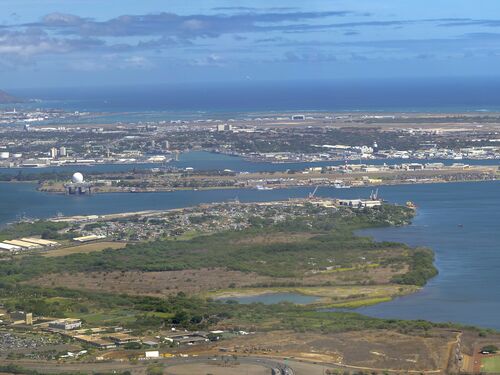
In 2021, U.S. Navy personnel accidentally caused two releases of kerosene-based aviation fuel (jet propellant 5, or JP-5) from the Red Hill Bulk Fuel Storage Facility on O‘ahu, Hawai‘i, contaminating the drinking water supply for Joint Base Pearl Harbor-Hickam (JBPHH) and the Āliamanu Military Reservation (ĀMR). This exposure impacted up to 93,000 individuals, disrupting their lives and, for many, resulting in acute and ongoing health concerns.
In response, the National Academies of Sciences, Engineering, and Medicine convened an expert committee to assess the scientific evidence for the potential health effects of JP-5, engage with affected communities to gain understand their experiences, and provide guidance to the Department of Veterans Affairs and the Defense Health Agency on clinical care and follow-up for those who were exposed.
Key takeaways
Key Recommendations
Key Recommendations
Background, Engagement, and Framework
Study Background
The Red Hill fuel releases resulted in the first large-scale contamination of a public drinking water system with JP-5—a complex fuel whose components can evaporate into the air—meaning exposures could be occur not only by drinking the water but also by breathing in vapors or through skin contact with the contaminated water.
Access to clean, safe drinking water is recognized by the United Nations as a fundamental human right, essential to the realization of all other rights. In the United States, this expectation is reinforced by the Safe Drinking Water Act, which requires the U.S. EPA to set enforceable standards for water quality. On U.S. military installations, service members and their families are promised stability and safety; Department of Defense[1] (DoD) policy and federal law require housing that is safe, habitable, and protective of health. In Hawai‘i, these expectations take on added significance because wai—fresh water—is central to both physical survival and spiritual well-being. For Native Hawaiians, water represents not just a source of life but a sacred trust; protecting it is a moral and ecological duty.
Constructed into the basalt ridge of Kapūkakī (Red Hill), the Red Hill Bulk Fuel Storage Facility has presented environmental and public health risks since its construction in 1943. The facility, consisting of 20 underground 12.5-million-gallon fuel storage tanks, is located 100 feet above O‘ahu’s Sole Source Aquifer (Figures 1 and 2). Over its operating history, the conditions of the facility have deteriorated because of corrosion and inadequate maintenance,[2] collectively releasing hundreds of thousands of gallons of fuel over its operating history.
[1] The committee recognizes that the Department of Defense now uses its original name, Department of War, as outlined in Executive Order 14347, Restoring the United States Department of War (September 5, 2025). The committee has chosen to use the term Department of Defense throughout this report for clarity and consistency, as that was the department’s official name at the time of the events described and when this study was initiated.
[2] The committee did not review the maintenance activities of the Red Hill Bulk Fuel Storage Facility, but an Office of Inspector General report determined that DoD officials did not effectively manage and oversee its operations, maintenance, and safety.
Committee Approach
The committee approached its charge with the understanding that effective clinical care in the wake of an error requires rebuilding trust and preventing future harm. The committee’s engagement with communities impacted by the Red Hill exposure provided critical knowledge and accounts of real-life experiences as well as essential context for the committee’s development of effective recommendations for patient-centered care.
For Native Hawaiians, Kapūkakī (Red Hill) is a wahi pana—a sacred place—and water (wai) represents life and responsibility. Contamination of the primary drinking water source for most of Oʻahu reduced trust in local and government institutions and confirmed, for many, enduring concerns about military activities and their environmental and cultural impact.
The committee formed a group of community liaisons and created in-person and virtual opportunities for public input. Fifteen liaisons—including active-duty service members, military families, civilians, Native Hawaiians, and other O‘ahu residents—informed staff of community perspectives throughout the study process. The committee held three public virtual listening sessions and two in-person public sessions at the O‘ahu Veterans Center; they also accepted written comments throughout the study process.
The committee developed a framework (Figure 3) supplemented by Native Hawaiian values such as kuleana (delegated authority and corresponding responsibility) and mālama ‘āina (care for the land).
Timeline of Release Events and Response
- May 6, 2021 During a fuel transfer, 19,377 gallons of JP-5 were spilled and then diverted into an overhead fire suppression system pipeline.
- Summer and fall of 2021 Total petroleum hydrocarbons in the oil range were detected in the Red Hill drinking-water shaft; two samples exceeded the action level.
- November 20, 2021 A vehicle struck the overhead fire suppression system, which caused the release the residual fuel from the May 6 spill.
- November 22, 2021 A Navy media release stated the Navy had stopped the release of “a water and fuel mixture” at Red Hill.
- November 27, 2021 The Navy received an initial complaint of a chemical smell in drinking water on JBPHH.
- November 28, 2021 The Red Hill drinking water shaft was shut down. Thousands of residents subsequently reported a chemical or fuel smell in the drinking water.
- November 29, 2021 A Navy media release told residents, “If chemical or petroleum odors are present, recommend avoiding ingestion as a cautionary measure.” A Hawai`i State Department of Health (HDOH) press release told Navy water system users to avoid using the water for drinking, cooking, or oral hygiene—and additionally bathing, dishwashing, and laundry if users detected a fuel odor. The Navy began flushing fire hydrants, which released the contaminated water to sidewalks and streets.
- December 2, 2021 The Army began offering relocation to residents in affected areas. Honolulu Board of Water Supply voluntarily shut down the Hālawa drinking-water shaft.
- December 3, 2021 The Navy’s ‘Aiea-Hālawa drinking-water shaft was shut down, leaving only one shaft operating for the JBPHH and ĀMR water systems. The Navy offered relocation to some residents in affected areas.
- Mid-December 2021 Cleanup and remediation activities began.
- March 7, 2022 The U.S. Secretary of Defense directed the permanent defueling and closure of the Red Hill Bulk Fuel Storage Facility.
- March 18, 2022 All zones met clearance criteria, and the HDOH lifted the drinking-water advisory.
- June 30, 2022 The Navy acknowledged the violation of the Public Notification Rule under the Safe Drinking Water Act, which required a public notice issuance within 24 hours after the Navy became aware that the JBPHH water system was contaminated with JP-5.
- March 2024 All bulk fuel was removed from the 20 underground tanks; the Navy Closure Task Force–Red Hill began closure of the facility.
- Ongoing The U.S. Environmental Protection Agency (EPA) and HDOH continue to supervise environmental remediation and site decommissioning at the former Red Hill Bulk Fuel Storage Facility, and the Navy continues to monitor the safety of the drinking water.
Conclusions
The Red Hill Fuel releases were a defining environmental health event for both Hawai‘i and the nation as a whole. The event demonstrated how water safety, public trust, and institutional integrity are intertwined. Recovery requires transparency, coordination, and sustained investment that is guided by aloha, pono, kuleana, and mālama ʻāina. This report provides an opportunity to strengthen emergency preparedness and stewardship of Hawaiʻi’s wai and to support the recovery of communities impacted by the releases at Red Hill.
For Native Hawaiians, water represents not just a source of life but a sacred trust; protecting it is a moral and ecological duty.
Full publication
Clinical Follow-Up and Care for Those Impacted by the JP-5 Releases at Red Hill
Consensus Study Report
·2026
In 2021, U.S. Navy personnel accidentally caused two releases of kerosene-based aviation fuel (jet propellant 5, or JP-5) from the Red Hill Bulk Fuel Storage Facility on O'ahu, Hawai'i, contaminating the drinking water supply for Joint Base Pearl Harbor-Hickam and the Aliamanu Military Reservation....
View details