Toward Sustainable Agricultural Systems in the 21st Century (2010)
Chapter: 4 Economic and Social Dimensions of the Sustainability of Farming Practices and Approaches
4
Economic and Social Dimensions of the Sustainability of Farming Practices and Approaches
The ability of different farming practices or farming systems to further sustainability can be evaluated across a wide range of potential dimensions, including food security, environmental, economic, and social outcomes, as noted in Chapter 1. In this chapter, the committee examines the concepts and science of agricultural sustainability in terms of the impacts of farming practices and approaches on economic security, food security, and community and social well-being. This chapter will summarize evidence concerning social and economic sustainability outcomes of various production and marketing practices at the farm level and at broader scales. It also will reflect on additional socioeconomic complexities tied to agricultural sustainability, including contribution of farming to community well-being, and food adequacy, food quality, and distributional equity issues. Following this overview, Chapter 5 uses a few system types to illustrate how various farming practices and approaches can be combined in a farming system to produce different sustainability outcomes. Social, cultural, institutional, and policy contexts surrounding agriculture often influence the sustainability of farming systems, and these factors are considered in more detail in Chapter 6.
Scientific evidence related to sustainable farming practices or farming systems in accomplishing the main socioeconomic goals associated with sustainability are presented here in three main sections. The first covers economic security at the farm level related to different production, marketing, and diversification strategies. Next the socioeconomic outcomes at the community level, including farm labor issues, community economic security, food quality, and access to food by different segments of U.S. society are presented. Last, food security and socioeconomic sustainability at a broader scale, are addressed, including issues such as food adequacy, quality, and safety.
ECONOMIC SECURITY OF SUSTAINABLE FARMING SYSTEMS
The viability of any farming system depends largely on its ability to contribute to the economic security of the key actors in the farm and food system. At the farm level, economic
security includes at least three important objectives that are addressed in this part of this chapter:
-
Ensure individual farm business viability.
-
Maintain farm household economic security.
-
Maintain or increase the quality of life for farm families and workers.
Ensuring that farm workers have economic security and fair labor conditions is another important goal at the farm level; however, labor issues (and farms’ contributions to community well-being) are discussed in the second part of the chapter.
At face value, most people would equate economic security with conventional measures of financial profitability, efficiency, and returns to various assets. Although those aspects are indeed critical components of the economic security of farm businesses, households, and communities, broader outcomes—such as having sufficient income to meet household needs, ensuring an adequate quality of life, minimizing risk, and treating people fairly—need to be considered. There are complex and varying linkages between economic performance of farming practices and systems, and broader economic well-being or security. The assessment of any individual farm’s economic performance might differ depending on the treatment of short-term versus long-term time horizons, acceptable levels of volatility and risk, and perceptions about different forms of economic rewards and tradeoffs between outcomes. There is often considerable variability in economic performance among farms that use similar technical and managerial production practices. Variations in economic performance could be a result of differences in biophysical conditions (such as soil type and weather), resource endowments, management ability, or local market conditions, rather than the types of farming practices themselves.
Financial returns to farming businesses reflect prices for farm inputs and outputs that are determined not only by market forces of supply and demand, but also by policy context. For example, national farm commodity support programs, public subsidies for certain types of conservation practices, and international trade rules all influence the costs of production and market prices for most important farm commodities. The development (or absence) of local institutions to facilitate direct producer-consumer markets is another example of the influence of collective institutions on the success of individual farm marketing strategies. Regional variability and short-term or long-term changes in policies, programs, or institutions affect farmers’ management decisions and influence the economic performance of many farming systems. Many of those broader contextual influences are discussed in Chapter 6.
The social context of farm production influences the economic viability of farming enterprises and farm households. The level of economic performance required to sustain the farm business depends, in part, on the personal goals and values, and on the consumption, life style, and level of income that is acceptable to the farmer or the household members (Gasson et al., 1988; Gasson and Errington, 1993). Access to nonfarming sources of income is another important factor (Mishra et al., 2002). The persistence of family-scale farming enterprises over the last 100 years has been attributed by many scholars to a willingness of such producers to accept levels of economic return that are below normal market rates (Friedmann, 1978; Bennett, 1982; Reinhardt and Barlett, 1989; Barlett, 1993). The organization and production practices adopted by individual farm businesses also can affect the economic security of hired farm workers, and conversely, the availability of labor can affect the economic outcomes and sustainability of the farm operation, as will be discussed in a later part of this chapter.
Recognizing those complexities, this chapter ’s overview will focus on the objectives associated with economic security as noted above: that is, farm business security, including production, marketing, and other diversification strategies, and quality-of-life issues that pertain to the sustainability of the operations (Figure 4-1).
Economic Security at the Farm Level
Strategies to improve economic security at the farm level include reducing production costs, increasing the value of farm products, and diversifying income streams. This section first addresses economic viability of different practices and systems associated with improving environmental performance of agriculture. It then discusses strategies for marketing and diversification that can improve economic security. The committee recognizes that those economic aspects are often interrelated with nonfinancial dimensions, which can also affect the sustainability of the farm business and are explored in later sections.
When the report Alternative Agriculture (NRC, 1989) was written, there was considerable skepticism that emerging alternative production systems—for example, organic farming, integrated pest management, or nonconfinement livestock farming—could be economically competitive with the dominant conventional farming practices. Since then, numerous case studies, enterprise-level and farm-level models, and farm accounting datasets have demonstrated that it is possible to realize economic gains and sometimes gain competitive advantages from the use of those alternative systems and other related practices. However, such gains and advantages are not guaranteed. (See the Sustainable Agriculture Research and Education website at www.sare.org for examples.) Rather than presenting a comprehensive summary of all of the relevant studies, illustrative examples are provided in this chapter to highlight key factors that influence economic outcomes for farm businesses.
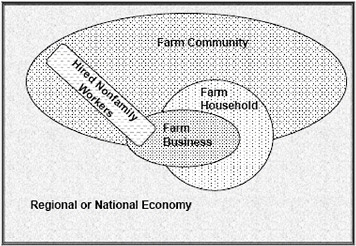
FIGURE 4-1 Levels of analysis for understanding economic security.
Economics of Production Practices That Can Improve Sustainability
This section highlights evidence related to the financial performance of some of the practices described in Chapter 3 for improving environmental sustainability—reduced-tillage systems, crop rotations, crop nutrient management strategies, and other conservation best management practices (BMPs). The committee notes that the financial performance of those practices depends not only on production costs, but also on the prices at which the products are sold. Production costs and prices are dynamic and depend on multiple factors including policies, market demand, and geographic location. Therefore, the illustrations of financial performance used by the committee are context dependent.
Conservation Tillage
As noted in Chapter 3, conservation tillage practices (including no-till and minimum tillage that disturbs 30 percent or less of the soil) have proven to be effective ways to reduce soil erosion. Conservation tillage has proven to be amenable to various scales of production, ranging from small to large operations, in a variety of crops. Huggins and Reganold (2008) noted the benefits and tradeoffs of no-till systems. The benefits include reduction of soil erosion, conservation of water, improvement of soil health, reduction in fuel and labor costs, reduction of sediment and fertilizer pollution in waterways, and sequestration of carbon. The tradeoffs are that transition to no-till from conventional tillage systems can be difficult, necessary equipment such as no-till seeders are expensive, no-till often increases reliance on herbicides, plants pests can shift in unexpected ways, more nitrogen fertilizer might be required initially, and increased ground cover might slow germination and reduce yields.
One of the main economic questions concerning no-till versus conventional tillage is whether the gains from reducing labor and fuel outweigh any reduction in yield. The economic results seem to vary by crop, region, and cropping system. Triplett and Dick (2008) surveyed several studies. In Iowa, conventional tillage had higher returns than no-till with continuous corn, but no-till systems were more profitable with a corn–soybean rotation. Yield stability was similar for the two systems. Similar results were obtained in another study conducted in Indiana and Ohio. In Mississippi, Martin and Hanks (2009) evaluated different types of tillage with crop rotations. Increasingly, farmers in that region are rotating cotton with corn. The highest net returns were found when cotton and corn rotations were combined with minimum tillage
In Washington State, under dryland conditions with low rainfall, a study noted the environmental advantages of the annual no-till rotation of winter wheat over the conventional tillage system with winter wheat and summer fallow in terms of the reduction in wind erosion and improvement in soil health (Schillinger et al., 2007). However, that study also found that the conventional tillage system was more profitable because of the lower yields associated with the no-till system. In terms of other small grains, Lankoski et al. (2006) found in Finland that no-till production of barley was more profitable than conventional tillage, but that conventional tillage systems were more profitable with wheat and oats. In Canada, Mohr et al. (2007) found that the highest returns for wheat–pea cropping systems were found on the “high soil disturbance seeding system” in the clay loam soil, but that the highest returns were found with the “low soil disturbance seeding system” in the loam soil.
There are other aspects to the economic decision to use no-till systems. Huggins and Reganold (2008) found that with the reduced labor associated with no-till systems, some farmers can almost double the acreage they farm with the same machinery complement. Others might pursue a better quality of life with their labor savings. Although yields might
be reduced with no-till systems in the short term, the Food and Agriculture Organization (FAO) concluded that yields over time with the no-till systems are likely be higher because of the improved soil health (FAO, 2008).
Another important question is whether non-herbicide-based no-till or minimum tillage methods can be effective and economical in organic systems. Because the majority of no-till farming systems in the United States depend on herbicide inputs as a means of controlling weeds, some sustainability analysts (and organic advocates) perceive this dependence as both an ecological and economic concern. The use of organic methods and no-till agriculture is an emerging area of research. Both researchers and farmers in the United States and in other countries have developed organic methods for conservation tillage that do not incorporate the use of herbicides. Using mulches (such as straw or crop residues), putting a transparent plastic cover over soil to solarize it (Law et al., 2008), crimping, rolling or mowing weeds to reduce competition, and growing particular varieties of cover crops that can outcompete weeds are a few examples (Chase and Mbuya, 2008). The committee is not aware of any economic analyses on those practices.
Crop Rotations
Corn–soybean rotations have been shown repeatedly to have higher net returns than continuous corn rotations as a result of reduced production costs (less fertilizer and herbicide input), although tillage practices and management inputs can affect comparative net returns (Katsvairo and Cox, 2000). Moreover, corn–soybean rotations exhibited significantly less risk of serious income declines over a 14-year study period; part of the risk reduction was the result of diversification inherent in any rotation, although some came from positive yield interactions between the two crops. Olmstead and Brummer (2008) found that adding alfalfa to Iowa farmers’ corn–soybean rotations can produce significant economic gains. They found that a simulated five-year rotation that included corn–soybean–oats/alfalfa–alfalfa–alfalfa would result in a 24 percent net income increase compared to a five-year rotation of corn–soybean–corn–soybean–corn, even if the row crops received farm support payments. However, they pointed out that commodity program incentives have served as a disincentive for producers to move toward forage crops in rotations. Zentner et al. (2002) found that including oilseed and pulse crops in rotations with grains contributed to higher and more stable net farm income in Canada.
Other studies have reported comparative economic disadvantages associated with some diversified crop rotations under current market conditions. For example, Kelly et al. (1996) simulated a range of tillage and crop rotation options in the Upper Midwest and estimated their economic and environmental impacts over a 30-year period. They found that no-till rotations provided the greatest estimated net economic returns, followed by a conventional corn–soybean rotation; net returns on the two cover crop rotations were lowest, although they generated significant environmental benefits. Jatoe et al. (2008) simulated the impact of introducing environmentally beneficial crop rotations into potato production systems in Canada and found that the most environmentally protective rotations required substantial reduction in gross margins to producers.
Cover Cropping
As with many farming practices for improving sustainability, the economic performance of cover cropping is difficult to quantify. A holistic assessment of the economic performance of cover cropping would include estimates of direct and indirect costs, cost savings provided by the practice, and increased income as a result of improved yield. Snapp et al. (2005) reviewed economic costs of cover cropping internal to farms. A direct cost of
cover cropping is establishment. The establishment cost is particularly high for leguminous cover crops—up to 10 times higher than that for grasses—because of the high seed costs and the large amount of seed necessary for establishment. Indirect on-farm costs of cover crops include hindering establishment of the succeeding cash crop as a result of slow warming of soil or delayed nutrient mineralization and unanticipated cover crop management problems that reduce the expected benefits. Another cost of cover cropping is the opportunity cost of income foregone from cash crops (Snapp et al., 2005).
Despite the aforementioned direct, indirect, and opportunity costs, cover cropping can provide many benefits that often lead to cost savings and improved productivity, including weed suppression and improved pest control. Indirect cost savings—as a result of improved soil fertility and overall improved health of the cropping system—accumulate over time and are difficult to quantify. Long-term economic analyses of the benefits and costs of cover cropping might provide valuable information to farmers and encourage adoption of such practices (Snapp et al., 2005).
Crop Nutrient Management Strategies
Nutrient input for crops usually accounts for 30 percent or more of total variable costs of production (Lu et al., 2000). Using on-farm nutrient sources such as green manure and animal manure could reduce input costs, but crop productivity might be compromised to some extent. Gareau (2004) conducted a meta-analysis of 120 studies to examine the economic profitability of using synthetic fertilizer versus cover crop-based or animal manure-based fertility treatments. The analysis suggests that conventional systems using commercial fertilizers had higher profits than organic systems using cover crop-based or animal manure-based nutrient management for most grain crops. Nonetheless, cover crop-based and animal manure-based nutrient management systems hold promise if they are used in an organic system, partly because of the price premium (Gareau, 2004).
Conservation Best Management Practices
A nutrient management plan is designed to balance plant nutrient requirements with purchased and on-farm nutrient inputs. A plan provides several benefits, including creating an optimum nutrient climate for plant growth, improving water quality, and improving farm profits by reducing inorganic fertilizer purchases (Maryland Cooperative Extension, 2009). Steinhilber (1996) noted that by giving nutrient credits to a preceding alfalfa crop, a farmer can save about $15–$30/acre in fertilizer costs from carryover nitrogen. A farmer can save $15–$30/acre in reduced inorganic fertilizer costs by giving credit to manure either applied in the previous year or in the current year.
However, not all farmers benefit equally from nutrient management planning. A crop farmer without any previous legume crops or application of organic sources of nutrients and who is already conducting soil testing and following accepted fertilizer recommendations might not save any fertilizer costs from a nutrient management plan (Steinhilber, 1996). A survey of 487 Maryland farmers showed that there can be biases in nutrient management planning (Lawley et al., 2009). Nutrient management plans were adopted more frequently by larger farm operations with grain and livestock and less on environmentally sensitive land. Biases also depended on who wrote the plan. Independent crop consultants tended to recommend increases in fertilizer uses. By comparison, farmers who were educated and certified to write their own plans recommended decreases in their own fertilizer use.
Poultry and dairy farmers in Virginia who are implementing nutrient management plans based on nitrogen and phosphorus can experience significant reductions in financial returns (Yang et al., 2000). Poultry litter (manure), in particular, is high in phosphorus. Re-
peated applications of poultry litter or dairy manure to the soil can raise the phosphorus levels of soil and cause runoff of phosphorus and reduction in water quality. A nutrient management plan based on nitrogen and phosphorus will limit the applications of manure or litter to the land because the phosphorus levels are too high. A farmer can incur significant costs in either reducing the herd or flock size, transporting excess manure or litter to different locations, or purchasing inorganic fertilizer to meet nitrogen requirements that could have been supplied by the manure that was shipped elsewhere.
The precision of fertilizer recommendations associated with nutrient management plans is also affected by weather and other variables during the growing season. Rajsic and Weersink (2008) compared ex ante recommendations of nutrient management plans with ex post analyses of optimal nitrogen application rates (based on actual field and weather conditions), and found that nutrient plans often recommend nitrogen application rates that are below optimum in Minnesota.
Precision Agriculture for Nutrient Management
Advances in technology have facilitated the development of farming equipment and management systems designed to apply agricultural inputs with greater precision, depending on site-specific soil and crop plant conditions (Zilberman et al., 2002). Most precision agriculture technology is based on Global Positioning Systems (GPS) that are used to map soil fertility levels, crop yields, and other indicators with a great deal of spatial accuracy (often within a few feet). That information can then be used to operate variable-rate application equipment that applies different amounts of agricultural inputs to specific parts of a crop field. Theoretically, precision agriculture systems can reduce use of unnecessary agricultural fertilizers, pesticides, water, or labor and thus minimize loss of nutrients and chemicals to the environment and improve farmers’ net economic returns (Batte, 2000). A number of experimental studies have reported gains in productivity, input use efficiency, and economic returns from the use of precision agriculture systems across a range of production environments (Khosla et al., 2008). While enthusiasm about the promise of precision agriculture remains high, adoption by farmers has not met with initial expectations. Explanations for low adoption include farmer uncertainty about economic benefits, risk aversion (which contributes to continued overapplication of inputs as insurance against crop failure), and the fact that some of the social benefits of the technology (for example, reduced losses to the environment) do not accrue as economic gains for producers (Napier et al., 2000; Zilberman et al., 2002).
A growing number of experimental and long-term field studies suggest that impacts and economic benefits of precision farming practices can be variable across time and space (Koch et al., 2004; Rider et al., 2006; Tozer and Isbister, 2007; Bachmaier and Gandorfer, 2009; Biermacher et al., 2009). The net present value of nitrogen and phosphorus management can be affected by spatial and temporal variability in carryover nutrient levels from previous crops, water availability, weed or pest pressure, and weather conditions, all of which lead to volatility in crop yields and economic returns (Bullock and Lowenberg-DeBoer, 2007; Lambert et al., 2007). Economic returns tend to be greatest when variability in soil conditions at the subfield level are high and the relative gains from site-specific management is increased relative to uniform application of farm inputs (Swinton and Lowenberg-DeBoer, 1998; Isik and Khanna, 2002; Robertson et al., 2008). Precision agriculture approaches that require investments in expensive machinery and equipment are more profitable on larger farming operations that can spread the fixed costs of precision agriculture technology across more acres (Fernandez-Cornejo et al., 2001; Godwin et al., 2003). Economic returns are also sensitive to market conditions for farm inputs and commodities. In general, the
higher the cost of farm inputs or farm commodity, the more likely precision agriculture will produce net economic gains (Khosla et al., 2008).
The profitability of many precision agriculture systems can be overestimated if uncertainties such as variable operating costs and other uncertainties inherent in cropping systems are not incorporated into economic models (Tozer, 2009). Several researchers have called for more long-term fundamental scientific research across a wider range of production environments to establish a more solid foundation for the design and management of precision agriculture systems (Isik and Khanna., 2003; Bullock and Lowenberg-DeBoer, 2007).
Integrated Pest Management
Field studies have shown that integrated pest management (IPM) can improve financial performance by reducing the cost of pesticide input, pest populations, and crop damage by pests. Trumble et al. (1997) compared two treatments of experimental celery plant-ings. The chemical standard treatment of nine applications of methomyl and permethrin were compared to an IPM program that included three or four applications of Bacillus thuringiensis, the need for which was determined by sampling insect populations for established thresholds. Both treatments resulted in less crop damage and better yields than the untreated control, but IPM had better economic returns than chemical treatment because of reduced input costs. Reitz et al. (1999) found similar results in field station trials and also conducted a commercial trial in collaboration with a celery producer in Ventura County, California. The IPM program that relied on biological control agents and rotations of selective, environmentally safe biorational insecticides (Bacillus thuringiensis, spinosad, tebufenozide)—applied only when pests exceeded threshold levels—resulted in 25 percent fewer pesticides used compared to the grower ’s program. The cost savings from reduced pesticide use were more than $250/hectare (Reitz et al., 1999).
Burkness and Hutchison (2008) compared the efficacy and economics of an IPM program that uses reduced-risk pesticides (that is, pesticides with minimal negative effects on beneficial insects) on basis of need determined by established threshold with a conventional grower-based program in cabbage production. They found that the IPM program was more effective in reducing pests and resulted in an average of 10.5 percent higher marketable yields than the conventional program. Although the IPM program did not reduce pesticide use in all years, the average pesticide use over four years was 24 percent lower in the IPM program than the conventional program. The lower pesticide expense and higher marketable yield on average resulted in higher average net returns (Burkness and Hutchison, 2008).
Few other articles examine the economics of pest management. A survey of articles on the topic from 1972 to 2008 shows that less than 1 percent of the articles include economic evaluations. Moreover, the economic analyses in at least 85 percent of the papers that included them were conducted by entomologists and not economists (Onstad and Knolhoff, 2009). Because economic performance can influence the rate of adoption of farming practices that improve sustainability, research on economic evaluations are important to the future of agricultural sustainability.
Business and Marketing Diversification Strategies
Diversification of crop and livestock enterprises represents an important component of many modern sustainable agricultural systems. However, there has been growing attention to efforts of some farmers to diversify their income by developing alternative agriculturally related enterprises and marketing strategies (Barbieri et al., 2008). Four types of farm busi-
ness and marketing diversification strategies that pertain to sustainability are discussed in this section: value-trait or niche marketing, direct marketing, agritourism and recreation, and diversification of income through value-added processing and off-farm income. Research suggests that all those types of diversification (and others such as contract service work) are increasing in importance in the United States (Hinrichs and Lyson, 1995; Barbieri et al., 2008), Canada (Smithers et al., 2008), Europe (van der Ploeg et al., 2000; McNally, 2001; Ilbery and Maye, 2007), Australia, and New Zealand (Guthrie et al., 2006). Broader diversification strategies are typically motivated by dissatisfaction with economic pressures and returns from conventional markets (Renting et al., 2003). Generally, such strategies can offer economic benefits to the extent that they employ underutilized farm assets, are complementary to existing farming practices, increase the farmer share of income from consumer spending on retail food products, or reduce reliance on generic farm commodities as a source of farm business income (McInerney, 1991; McNally, 2001; Barbieri et al., 2008). The attractiveness of various business and marketing diversification strategies to farmers also depends on such nonfinancial reasons as impacts on leisure time, pleasurable work, compatibility with farm and nonfarm work commitments of household members (Anosike and Coughenour, 1990; Barlas et al., 2001), and farm type, size, and location.
Value-Trait Marketing
Consumer concerns about the safety and quality of modern farming and food systems have led to the rapid growth of markets for “value-trait” food products that offer particular traits that these consumers value. Most notable has been the increase in the organic market, which has grown at a rate of approximately 20 percent per year since 1990. Other value-traits that have established niche markets include sale of “local,” “natural,” and “fair-trade” foods, as well as “free-range,” “pasture-raised,” and “hormone-free” livestock products (Pollan, 2006). Factors that contribute to the growth of the organic market and other niche markets include consumers’ preference and sustainability initiatives of large retailers. (See Chapter 6.)
Many farmers have recognized that emerging niche markets offer unique opportunities for diversifying farm business income and for differentiation in the market. The economic competitiveness of organic farming practices often depends on payment of price premiums by consumers seeking certified organic products. Farmers’ ability to tap into those niche markets can be an obvious way to improve the economic sustainability of the farm enterprise.
While higher prices for products are possible, participation in niche and value-trait markets can generate new costs and challenges for the producer, including learning and adopting new production practices, as well as spending more management time to understand and establish new market channels and to interact with consumers, transport products to market outlets, and ensure consistency in the quality and supply of their value-trait farm products (Lyson et al., 2008).
In many situations, the development of successful value-trait food chains requires collective action by larger groups of producers and consumers (Conner, 2004), or development of institutional mechanisms to establish standards and certification systems or to maintain the integrity of product labels in the marketplace (Hatanaka et al., 2006), as discussed further in Chapter 5.
Relatively small niche markets also have challenges in balancing supply and demand. When price premiums are high and entry into the market is easy, markets are at risk of becoming oversaturated, and competition among producers can erode price premiums, which has happened for some organic products. Similarly, economic downturns can result
in dramatic decreases in consumer demand for value-trait products if they are sensitive to price or income (Box 4-1). Moreover, producers who participate successfully in niche or value-trait markets generally need to be located relatively proximate to their consumer base, or at least close to a central processing or distribution facility that assists with marketing. Producers in more remote locations are likely to have fewer options to participate in value-trait food chains (Selfa and Qazi, 2005). In spite of the challenges, increasing numbers of producers are participating in the previously mentioned types of niche markets, in part because they prefer the market options over the intense competitive pressures and consolidation trends associated with mainstream market channels.
Direct Marketing
For various reasons, operators of small- and medium-sized farms have difficulty competing with large farms in the mainstream food marketing system. For example, they might be unable to provide sufficient quantities needed to fulfill the supply requirements of large corporate buyers, they might not be able to take advantage of economies of scale to reduce their production costs, and they are not likely to have the manpower or capital to meet criteria imposed by buyers to monitor compliance with increasingly complex food safety and quality standards (Hendrickson et al., 2001; Reardon et al., 2001). These difficulties motivate farmers to seek other venue for sales.
Many direct marketing approaches have been developed to meet the demand for value-trait products. Approaches to direct sales including the following:
-
Farmers’ markets.
-
Farm stands or “U-Pick” operations.
-
Community Supported Agriculture programs (CSAs).
-
Sales to institutional food service, such as “farm-to-school” programs.
-
Sales to local restaurants.
-
Sales to local grocery or specialty stores.
For many reasons, direct marketing can be a viable strategy to increase the economic sustainability of a farming system (Hinrichs and Lyson, 1995; Feenstra, 2002). Initially,
|
BOX 4-1 Impacts of Economic Recession on Organic and Local Food Markets Food products produced with organic practices or other farming practices for sale to niche markets have typically captured price premiums in the marketplace (Greene et al., 2009). Although those products are perceived by consumers to offer important traits, emerging niche markets might be particularly susceptible to changes in consumer disposable income associated with the spike in energy costs, credit crunch, and declining personal income levels associated with the economic recession that began in 2008 (Hills, 2008). Various sources provide mixed evidence about the impact of recent economic downturns on these markets. For example, analysis by the Nielsen Corporation in early 2009 suggested that growth in organic sales had stagnated (Nielsen News, 2009), and news reports suggested that organic dairy markets were negatively affected (Martin and Severson, 2008; Zezima, 2009). However, analysis by the Organic Trade Association suggests that organic sales continued to increase at double-digit rates in 2008 (OTA, 2009). Aside from the impacts of economic stress, the rise of private-label organic products provided by some grocery chains has reduced demand for some branded-label products, leading to lower market prices and reduced total dollar value of organic sales (Hills, 2008). |
direct marketing allows a farmer to build social ties with the people who consume their food (Hinrichs, 2000; Lamine, 2005). The farmer-consumer relationship is built on trust and mutual exchange that can be more secure and long-lasting than anonymous market transactions in the mainstream food system (Granovetter, 1985; Kirwan, 2004). As such, producers might gain more control over the prices they receive for their products and reduce annual price volatility. By cutting out the role of food processors and retailers, direct marketing allows farmers to capture a larger share of the end consumer ’s food dollar. Farmers engaged in direct marketing also report satisfaction in knowing the people who consume their food and feel that they are contributing to the well-being of their local community (Hinrichs, 2000; Smithers et al., 2008). In turn, consumers might benefit by knowing more about where their food comes from, might have access to food that is perceived as fresher and more healthful, and are able to better appreciate the contributions of farming to their local landscape and community (Sharp and Smith, 2003; Smithers et al., 2008).
Two of the most common forms of direct marketing used by U.S. farmers are sales to local consumers through farmers markets and CSA arrangements. The majority of farmers’ market vendors sell their products as organic, natural, or other value-trait products (Gillespie et al., 2007).
Although farmers’ markets and CSAs have grown dramatically in number and size over the past 10–20 years, those market approaches cannot always provide a sustained income to participating farm households (Feenstra et al., 2003; Varner and Otto, 2008). Many surveys consistently find that the vast majority of producers at farmers’ markets are relatively small-scale businesses that do not rely principally on farmers’ markets income to support their household, either because they rely on off-farm income or because they have other commercial farming ventures that generate more net income (Brown and Miller, 2008). Although the scale of economic opportunities for farmers might be limited at farmers’ markets, they have been an important opportunity for producers to develop business and marketing skills, and they play a major role in the creation of more localized food systems (Gillespie et al., 2007).
According to the U.S. Department of Agriculture (USDA-NAL, 2009), Community Supported Agriculture consists of:
[a] community of individuals who pledge support to a farm operation so that the farmland becomes … the community’s farm, with the growers and consumers providing mutual support and sharing the risks and benefits of food production. Typically, members or “share-holders” of the farm or garden pledge in advance to cover the anticipated costs of the farm operation and farmer ’s salary. In return, they receive shares in the farm’s produce throughout the growing season, as well as satisfaction gained from reconnecting to the land and participating directly in food production. Members also share in the risks of farming, including poor harvests due to unfavorable weather or pests.
The CSA concept was brought to the United States by Jan VanderTuin from Switzerland in 1984. CSA projects in Europe date to the 1960s, when women’s neighborhood groups approached farmers to develop direct, cooperative relationships between producers and consumers (Allen et al., 2006a). Two distinct types of CSAs have developed: (1) farmer-managed, subscription-based operations, which constitute 75 percent of all CSAs and (2) shareholder CSAs organized by a group of consumers, sometimes organized as not-for-profit organizations, who “hire” a farmer. The success of any CSA depends heavily on highly developed organizational and communication skills (Brown and Miller, 2008). Money raised by the sale of CSA shares is used as operating capital to finance farm production activities, and consumers typically receive weekly deliveries of fresh produce (and
occasionally meat and eggs) from the farmers. CSAs allow producers to lock in their prices and receive their income up front, and consumers share in the risks of variability in output due to weather or pest conditions.
CSA customers report numerous social, economic, and nutritional benefits from participation in the arrangement (Farnsworth et al., 1996; Ostrom, 2007). In several studies reported by Brown and Miller (2008), most CSA farmers mainly depend on income from their CSA shares and reported gross farm incomes that ranged from $15,000–$35,000 per year. However, financial analyses have found that CSA farmers often fail to cover their full economic costs and suggest that typical share prices would need to double or triple to be competitive with market rates of return (Sabih and Baker, 2000; Oberholtzer, 2004; Lizio and Lass, 2005). This result is supported by surveys in which the majority of CSA producers were not satisfied with their ability to cover their operating costs or provide sufficient compensation for their work on the farm, although most were still very satisfied overall with their decision to have CSAs (Lass et al., 2003; Tegtmeier and Duffy, 2005; Ostrom, 2007).
For many farmers, participation in farmers’ markets and CSAs is not well suited to their commodity mix or location, and there has been growing attention to intermediate-scale marketing mechanisms that allow farmers to sell their products directly to institutional consumers in local and regional markets (Lyson et al., 2008). Common approaches include direct sales to restaurants, schools, hospitals, and universities (Center for Integrated Agricultural Systems, 2001; Beery and Markley, 2007). Case study reports suggest that direct sales can be a significant source of income for small numbers of local farms, but that many logistical barriers must be overcome to expand the markets to larger groups of local farmers and institutions (Lawless et al., 1999; Kloppenburg and Wubben, 2001; Gregoire et al., 2005).
Some producers who are successfully engaged in market alternatives choose to diversify their marketing strategies, just as they often diversify their production strategies. Diversity in marketing enables them to take advantage of various market opportunities and avoid the risk of relying on one strategy alone—which can contribute to longer-term stability.
Agritourism and Fee Hunting
Agritourism is another strategy to diversify farm income (Nickerson et al., 2001; McGehee and Kim, 2004) and reduce economic risks (Che et al., 2005). Agritourism provides tourists with “genuine” rural products and experiences from farms while also supporting the agricultural enterprise. Weaver and Fennell (1997, p. 357) defined agritourism as “rural enterprises, which incorporate both a working farm environment and a commercial tourism component.” Data collected by USDA suggest that 2–3 percent of U.S. farms reported direct farm income from agritourism activities in 2002 (Brown and Reeder, 2007). Agritourism is more popular in Europe, where a third or more of farms engage in this type of activity (Evans and Ilbery, 1992; Bernardo et al., 2004) than in the United States. Most income from agritourism in the United States is generated from on-farm sales and activities (NEASS, 2002; Allen et al., 2006).
The potential benefits of agritourism include increasing farm profitability, keeping farmers on the land, enhancing environmental conservation and management, promoting rural artisanal products, supporting rural traditions and cultural initiatives, and enhancing rural and urban relations (Sonnino, 2004). It can potentially promote socioeconomic development of rural areas and illustrate the multifunctionality of farming. Agritourism has proven to be a viable income-generating strategy when the appropriate investments
are made and networks are formed, particularly when it is organized on a regional level (Whatmore and Thorne, 1998; Bender and Davis, 2000; Sonnino, 2004).
Fee hunting offers another potential source of farm income. In Texas, about 28 percent of farmland is leased for recreational hunting (USDA-ERS, 2005). Fee hunting could be an economic incentive for landowners to improve habitats for wildlife species, but not all landowners who offer fee hunting are actively managing their lands to provide habitats for wildlife (Ribaudo et al., 2008).
Off-Farm Income
Although most farms in the United States (and around the world) are essentially family businesses that rely mainly on farm family members for their labor force (Gasson and Errington, 1993; Hoppe et al., 2007), the majority of farm families also gain income from off-farm work. Nonfarm work or transfer payments are commonly used to supplement income from the farm business. USDA estimates that on 71 percent of U.S. farms, either the farm operator or his or her spouse works at an off-farm job. More than 90 percent of aggregate farm household income is from nonfarm sources, including off-farm wages and salaries, as well as transfer payments and investment income (Hoppe et al., 2007).
Some farm household members might enter into off-farm employment reluctantly, but positive benefits can be associated with the diversification of farm household income from nonfarm sources. For many farms, off-farm work is the only way to access affordable health care and retirement benefit plans (Bharadwaj and Findeis, 2007; Kennedy, 2009). Similarly, off-farm work experiences have been shown to increase exposure to new ideas and receptivity to innovative opportunities for emerging production and marketing practices in agriculture. Overall, having off-farm income sources can contribute significantly to the long-term stability of many farming households.
Quality of Life and Sustainable Farming System
Studies of the adoption of many farming practices and systems aimed to improve sustainability often emphasize the importance of qualitative impacts on the farm labor process and the farm family. Some farming practices and systems can provide opportunities to reduce unpleasant farm chores, and allow farmers to engage in diverse and varied types of work. For example, no-till farming practices are often preferred by farmers as much because of reductions in labor time and fuel use as for their conservation or economic benefits (Lithourgidis et al., 2005).
Although some practices or systems for improving sustainability require more time than conventional agriculture, it is not clear that the time investment in increasing labor and management decreases quality of life for farm households. Boerngen and Bullock (2004) found conventional farmers reported spending just over 3 hours/week “keeping up” with information about their production practices, while reduced-chemical and organic farmers reported a time investment of nearly 4 hours/week. The difference was found to be statistically significant, suggesting that chemical inputs and human capital might be economic substitutes. Farmers who adopted reduced-chemical practices reported a transition period of 1±2 years; during the transition period, they spent around 3 hours/week learning about reduced-chemical technology. Adopters of organic practices also reported a transition period of 1–2 years; during that period, they invested 5 hours/week learning about organic technology.
A pilot study in the United Kingdom also suggests that work on organic farms requires higher levels of human energy (or caloric) and effort expenditure—which might result in
physical stress in workers—than work on conventional farms (Loake, 2001). In a study that compares the self-reported well-being and welfare of migrant farm workers in the United Kingdom, the workers of organic horticultural farms reported the same level of health as their counterparts of conventional farm. Organic farm workers, however, were reported to be happier than conventional farm workers. Statistical analyses suggested that the workers’ happiness is correlated with the number and range of tasks performed each day (Cross et al., 2008). Practices that increase and contribute to wildlife habitat conservation—for example, buffer strips—have also been shown to increase quality of life of people who are working and living on or near farms, partly related to improved aesthetic attributes (Meares, 1997; Chiappe and Flora, 1998).
SOCIOECONOMIC ASPECTS OF SUSTAINABILITY AT THE COMMUNITY LEVEL
Farm Labor Conditions and Security
Labor conditions on the farm have rarely been the focus of analysis or attention even though social equity has always been considered one of the goals of sustainability. Few analysts have done systematic research or surveys to document labor benefits, practices, and trends of many farms in this sector. Despite the fact that many consumers are concerned about social justice in the agrifood system, such concrete social justice goals as the welfare of the farm labor force have rarely been considered and included (Allen, 2008). Among the farmers who expressed a deep desire to improve workers’ labor conditions, many of them expressed that they do not know how and cannot afford to do so (Strochlic and Hamerschlag, 2006). Many employers of farm workers perceive that they cannot afford to provide living wages, health insurance, and other benefits to employees (Shreck et al., 2006; Kandel, 2008).
The California Institute of Rural Studies conducted a study of 12 farms in California that are reputed for offering good labor conditions to create a road map on best practices on labor management (Strochlic and Hamerschlag, 2006). The study reported a range of no-cost or low-cost practices that can improve farm labor conditions. Other practices such as year-round employment, compensation, and fringe benefits have monetary costs to the farmers, but also yield benefits to them. Some of the best practices in the study are highlighted below. They are divided into practices that incur no or little costs and practices with not-so-trivial costs.
Practices that incur no or little costs:
-
Respectful treatment. Respectful treatment includes a broad range of issues such as a humane pace of work, respectful communication styles, direct communications between growers and workers, a healthy work environment, and a decision-making structure that recognizes the contribution of the workers.
-
Nontraditional benefits. Nontraditional benefits include personal loans and access to food on the farm.
-
Labor relations, communications, and decision making. Practices that foster good communications, such as employee orientation, regular meetings, and informal solicitation of advice, provide ways for workers’ representation and ways for them to participate in decision making. Good communications can also improve personal relations between growers and workers.
-
Health and safety issues. A healthy and safe work environment is among the factors that farm workers most appreciate. Farmers could limit the time spent on repetitive work that can incur physical ailment (for example, hand weeding).
-
Diversity of tasks. Workers appreciate the ability to switch between tasks several times a day. Diversity of tasks not only relieves workers from the boredom of doing the same task all day, but also reduces potential health problems associated with stoop labor or repetitive stress.
Practices that have nontrivial costs:
-
Compensation. Compensation includes, but is not limited, to wages. Other forms of compensation include pay increases, profit-sharing, over-time pay, and bonuses.
-
Year-round work. Because farm work is highly seasonal, there is a high rate of seasonal unemployment. Farm workers appreciate year-round employment that provides job security and a steady income.
-
Traditional benefits. Examples of traditional benefits include health insurance, holiday pay, vacation pay, and retirement plans.
As the researchers noted, “workers who are treated well and made to feel an integral part of the farm operation are more satisfied, more motivated and ultimately, more productive” (Strochlic and Hamerschlag, 2006, p. 2). Satisfied workers are more likely to stay on the job than dissatisfied ones, so that farmers who provide socially just labor conditions are likely to have high labor retention, reduced recruitment, and hence reduced training and supervision costs and high-quality work from farm workers. The committee is not aware of any study on whether some types of farms are more likely to adopt the best labor management practices than other types. Nonetheless, many of the best labor management practices listed above are not directly linked to any farming practices or approaches (with few exceptions such as year-round work, as some farming practices spread the work year-round so that the farmer is more likely to hire year-round labor than seasonal labor). In Schreck et al.’s (2006) survey, some organic farmers argue that fair and healthy labor conditions should be required by state or federal law for all farms.
Community Economic Security
One of the standards for evaluating the sustainability of a farming system is to examine the positive and negative impacts of farms on the economic security of their local community. This section summarizes scientific evidence for the community economic linkages associated with different types of farming systems.
Farming Practices for Improving Sustainability and Community Economic Security
Few empirical studies have been conducted on the social and economic impacts of improving farms’ sustainability on their local communities. In much of the public discourse on agricultural sustainability, farms that have improving sustainability as one of their specific goals have been assumed to be predominantly smaller (or family-labor scale) operations with a strong ethic of responsibility toward the local community and greater commitment to purchasing inputs locally (Lasley et al., 1993; Horne and McDermott, 2001; Earles and Williams, 2005; CAFF, 2009; Sustainable Table, 2009). As such, a shift away from conventional farming to farming systems that improve sustainability is assumed by some
analysts to reverse some of the local community economic declines linked to the growth of larger farms and more industrialized agriculture (Strange, 1988; Campbell, 1997). The counterargument is that reducing the use of commercial farm inputs and lower levels of output or productivity will create reduced economic spinoffs or net activity in the local or regional agribusiness economy.
The few empirical studies that consider whether farmers aiming to improve sustainability typically have different purchasing behaviors than conventional farmers have shown mixed results. Lockeretz (1989) found that lower-input systems contributed less per acre to the local economy than higher-input systems. Dobbs and Cole (1992) compared hypothetical net farm income and the effect on the local economy (including such backward linkage as economic impact on input supply firms and such forward linkages as economic impact on transportation, processing, and marketing firms) of five conventional farms in South Dakota if they were to convert to farms with improved sustainability (that is low-input or organic). They found that total net farm income would be higher on three out of five sustainable farms, but dropped to one out of five if organic commodity premiums were ignored. Meanwhile, sustainable farms generated notably smaller backward and forward linkages.
In their summary of a four-state study, Goreham et al. (1995) found that farmers who are committed to using natural fertilizers and cropping systems and no herbicide or commercial fertilizers were less likely to obtain goods and services locally. They also traveled farther and to larger communities to obtain goods and services for their farms. The low use of local goods and services was attributed to the fact that local businesses were less likely to be able to provide the inputs or markets for their particular production practices or commodities. However, they also found that those same farmers were more likely to purchase locally produced farm products and generate more total spending per acre on local farm products. They noted that the absence of a critical mass of producers that use similar farming practices to improve sustainability might prevent the development of viable local input providers or markets to service their farms.
A different assessment was reported by Ikerd et al. (1996), who simulated the effects of shifting Missouri farmland from the Conservation Reserve Program (CRP) to either conventional farming or a farming system that included crop rotations, intensive management of inputs, reduced tillage, and intensively managed, pasture-based beef production. They estimated that the latter farm generated more direct purchases of farm inputs and services, local farm businesses retained a higher share of farm economic activity, and the increased demand for farm labor and management associated with the practices listed above generated more net farm income and household consumption when compared to the conventional farming system. That study was conducted in the U.S. North Central and Great Plains regions, and the particular commodity mixes and trade patterns in those regions might affect the conclusions.
Potential linkages have been identified between the diversity and resilience of some farming practices or farming systems type and enhanced community economic security. For example, organic farms might be more resilient in the face of poor weather (Pimentel et al., 2005), leading to more consistent yields and farm income in periods of adverse climactic conditions than conventional farms. As discussed above, farm diversification (both in terms of crop rotations and integration of crop and livestock production) can spread out the risks of climate, pest, disease, or market condition changes associated with any particular commodity, and can thus potentially increase the stability of economic returns at the community level.
Civic Agriculture, Local Foods, and Community Economic Security
The research summarized above suggests that there are no simple or consistent relationships between the size, structure, or production practices of local farms and an area’s community economic vitality. Although farm production practices (in particular, input expenses) can be important sources of income for local businesses, the manner in which farm products are marketed can also have an impact on local community well-being and economic development. Specifically, the rise of local food marketing outlets such as farmers’ markets, CSAs, or direct sales to local restaurants has been linked to social and economic vitality in local communities (Kloppenburg et al., 1996; Feenstra, 1997; Hinrichs et al., 2004).
Lyson (2004) argues in favor of a “civic” agriculture, in which direct social and economic ties between local farmers, local businesses, and local consumers become the organizing principle of a local agrifood system. He asserted that “civic agricultural enterprises have a much higher local economic multiplier than farms or processors that are producing for the global mass market. Dollars spent for locally produced food and agricultural products circulate several times more through the local community than money spent for products manufactured by multinational corporations and sold in national supermarket chains” (Lyson, 2004, p. 62). A counterargument is that the money spent on locally produced food probably offsets money spent locally on other nonfood products; hence, the net effect of civic agriculture is uncertain.
Few empirical studies examine the local or community-level economic impacts of “civic” agricultural activities. Direct marketing between farmers and consumers is likely to increase the share of food dollars captured by farmers and minimize the leakage of local agrifood dollars to the mainstream (and highly vertically integrated) food processing and retailing industries (Brown and Miller, 2008). Several studies have estimated that farmers’ markets and CSAs can generate state-level economic impacts on the order of tens of millions of dollars and hundreds of jobs (Otto and Varner, 2005; Henneberry et al., 2008; Hughes et al., 2008). Others have documented increases in a wide range of ancillary local consumer spending activity among people who shop at downtown farmers’ markets that could multiply the local economic development impacts (Lev et al., 2003, 2007; Oberholtzer and Grow, 2003). However, it is not clear what proportion of local direct farm marketing activity is replacing income or employment opportunities from conventional retail food outlets (Brown and Miller, 2008). There is evidence that a more civic-oriented approach to marketing is more common among farmers who use farming practices for improving sustainability than among farmers who use conventional practices (MacRae et al., 2007).
Although significant in absolute terms, direct marketing represents a small share of total U.S. farm sales (or food purchases) and may not be large enough to generate major community- or regional-scale economic growth impacts (Gale, 1999). Results of the U.S. Census of Agriculture (USDA-NASS, 2009) suggest the total amount of direct farm marketing tripled between 1992 and 2007, to a total of more than $1.2 billion annually (Figure 4-2). However, the total represented just 0.4 percent of total U.S. farm sales, and the number of farmers reporting direct sales increased much more slowly over the same period of time (to roughly 6 percent of all U.S. farms). Even at the national level, few counties report direct sales as a significant fraction of their local agricultural activity. Census data indicate that only 24 U.S. counties (out of more than 3,000) reported direct sales in 2002 that exceeded 10 percent of total county gross farm sales, and in only 1 county did direct sales exceed 20 percent of total farm sales.
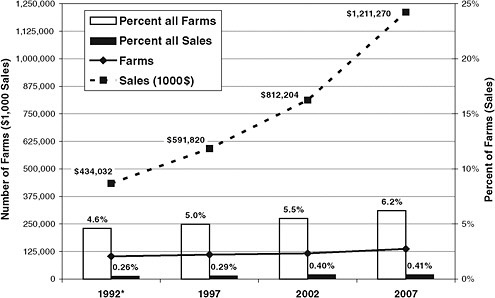
FIGURE 4-2 Importance of direct marketing of agricultural products in the United States, 1992–2007.
SOURCE: U.S. Census of Agriculture, 2007 (USDA-NASS, 2009).
Given the relatively small portion of local income and employment from agriculture in most U.S. counties, the direct effects of local food production currently are unlikely to serve as a major basis for local economic development, although economic multipliers might increase the total impact (Otto and Varner, 2005; Gillespie et al., 2007; Sonntag, 2008). The U.S. experience might not be representative of the potential of direct sales. Analysis of data from Europe (Renting et al., 2003) suggests that in some European Union countries (particularly France, Germany, and Italy), alternative food networks have become important components of rural development schemes. As localized food markets mature, however, there is an increasing concern that some of their distinctive benefits are being undermined by a gradual appropriation by mainstream food processors and retailers.
Community Well-Being
Various practices aimed at improving environmental sustainability can provide amenities and services that are seen as more attractive and desirable for well-being and quality of life for communities in general (Flora, 1995). Studies show that more diverse farm systems and diversified landscapes (for example, inclusion of noncrop vegetation) increase aesthetic attraction, provide more recreational opportunities for residents and tourists, and can help increase economic welfare. Practices that reduce surface runoff and improve surface water quality also increase aesthetic attraction. Deller et al. (2001) found predictable relationships between amenities, quality of life, and local economic performance, suggesting that diverse and integrated farming systems that contribute to natural amenities can increase quality of life for rural communities.
Direct marketing strategies link farmers with their local communities. Moreover, programs, such as farm-to-school programs, contribute to improving student nutrition, as noted by the National Farm to School Network (2009):
These programs connect schools with local farms with the objectives of serving healthy meals in school cafeterias, improving student nutrition, providing health and nutrition education opportunities that will last a lifetime, and supporting local small farmers. Schools buy farm fresh foods such as fruits and vegetables, eggs, honey, meat, and beans on their menus; incorporate nutrition-based curriculum; and provide students experiential learning opportunities through farm visits, gardening and recycling programs. Farmers have access to a new market through schools and connect to their community through participation in programs designed to educate kids about local food and sustainable agriculture.
FOOD SECURITY, SAFETY, QUALITY, AND OTHER SOCIOECONOMIC DIMENSIONS
This section summarizes important issues related to agricultural sustainability and food systems at a broader regional and global scale, concerning food security, food quality, and ecosystem services.
Satisfying Human Food, Feed, and Fiber Needs
As discussed in Chapter 1, satisfying human food, feed, and fiber needs is one of the sustainability goals in agriculture. Although practices for improving sustainability require taking some land out of production (for example, maintaining wetlands and riparian buffer strips), many farming practices for improving environmental sustainability do not compromise productivity and might even enhance yield (for example, cover cropping, crop rotations, and integrated pest management), as reported in Chapter 3. The determination of the production potential associated with various farming practices or systems at a regional or global level is actually a complex result of several interacting factors: production potentials (typical per acre crop yields or indicators of livestock feed efficiency and growth rates), land and input requirements, and biophysical resource qualities (Smil, 2000). Many studies have shown that with the right conditions and management, low-input and organic systems can have yields, productivity, and economic returns that are comparable to conventional systems (Liebman et al., 2008; Posner et al., 2008).
Sustainable Agriculture and Food Access
The sustainable agriculture and food system movement in the United States and abroad has long embraced the goals of sustaining the economic viability of farm producers, while also seeking to ensure that low-income and underserved populations can access affordable and quality foods (Allen, 1999). Access to sufficient food depends on the affordability and availability of food at the local retail level, which in turn relates to marketing and sales well beyond the farm gate. Because the committee focused on production, marketing, and sales at the farm, the discussion on improving food access is limited to practices in which farmers can participate. The most common efforts of improving food access have focused on direct marketing channels, such as farmers’ markets and CSAs. Strategies such as ensuring access to government nutritional programs by low-income customers (for example, the Supplemental Nutrition Assistance Program [SNAP, formerly the Food Stamp program], the Special Nutritional Supplemental Program for Women, Infants, and Children [WIC], and food banks), locating food outlets in low-income neighborhoods, encouraging growers
to donate excess food to needy families, and having higher-income customers subsidize lower-income households (Donald and Blay-Palmer, 2006; Guthman et al., 2006) have been used. Other innovative initiatives such as farm-to-school projects and the rapidly growing development of community urban gardens are helping to improve sustainable agriculture’s ability to deliver food to low-income populations in the United States.
Despite those initiatives, most direct marketing and value-trait food chains to date have predominantly benefited middle-income and upper-income households (Cone and Myhre, 2000; Kaltoft, 2001; Hinrichs and Kremer, 2002; Allen, 2004; Guthman, 2008). Although more than 20 percent of U.S. SNAP recipients have purchased food at a farmers market, those food purchases constituted only 0.02 percent of their total expenditures in 1997 (Ohls et al., 1999; Kantor, 2001). In the United States, access to food is primarily limited by insufficient financial resources (Nord et al., 2008); geographic distribution also limits the access of fresh produce in some cases (IOM and NRC, 2009).
Food Safety
Food safety concerns stem from the potential of contamination by pathogenic microorganisms and by agrichemicals. Although some practices that improve environmental sustainability could improve food safety (for example, reduced use of agrichemicals), others could increase the risk of microbial contamination (for example, the use of animal manure as fertilizer for crops).
Bacterial Pathogens in Natural Fertilizers and Irrigation Water
Use of animal manure as fertilizer recycles nutrients and can improve soil quality. However, if animal wastes are used in agricultural fields, the level of pathogens in the waste has to be controlled to reduce pathogen contamination of soil, surrounding water, and produce grown in the surrounding areas. Such food-borne pathogens as Escherichia coli O157:H7, Salmonella spp., and Campylobacter spp. might be present in livestock manure. Because animals could serve as a host reservoir for those pathogens, it is important to prevent contamination of animal products with fecal material and to reduce pathogen load (treat manure) prior to land application. Food crops consumed fresh or raw (such as fruits, vegetables, and nuts) might be susceptible to pathogen contamination. The California Leafy Green Marketing Agreement has identified best practices for soil amendments; raw manure or soil amendment that contain uncomposted, incompletely composted, or nonthermally treated animal manure are not to be applied to fields used for lettuce and leafy green production. If untreated manures were applied to fields intended for lettuce and leafy greens production, production of those crops would have to be delayed one year after the manure application (California Leafy Green Handler Marketing Board, 2008). Other key areas for potential contamination in the supply chain include transportation, processing, storage, or preparation, but they are not covered in this report.
Studies have shown that E. coli can persist in bovine feces (Wang et al., 1996; Elder et al., 2000) so that contamination of food products by bovine feces could be a vehicle for transmitting food-borne pathogens. The untreated or inadequately treated fecal matter could contaminate the soil, and the runoff water from the field could contaminate the irrigation water. Although competition with soil microorganisms and adverse environmental conditions can reduce the number of pathogens, the pathogens can survive in soil that is directly contaminated by fecal matter or indirectly contaminated by irrigation water for an extended period of time (Islam et al., 2004a,b). A study showed that E. coli O157:H7 can
survive in manure-amended soil for an extended period of time, even in conditions as dry as 1 percent moisture content (Jiang et al., 2002). That study, which examined the survival of pathogens at various manure-to-soil ratios and soil temperatures, provides useful information on manure-handling practices to reduce the risk of E. coli O157:H7 contamination in fresh produce grown in fields with manure-amended soil. Improper aging of untreated manure can significantly increase the risk of E. coli contamination in preharvest produce (Mukhejee et al., 2007).
Brinton et al. (2009) surveyed the occurrence and levels of fecal pathogens in organic matter compost that is ready to be sold in the market. They quantified several pathogens in market-ready compost from 93 nonsludge processing facilities and found that only 1 compost contained Salmonella. However, 28 percent of the compost had levels of fecal coliforms that exceeded sludge hygiene limits set by the U.S. Environmental Protection Agency. Statistical analyses suggest that the size of the composting facility is correlated to levels of pathogens and that large pile size and immaturity of compost might contribute to high levels of pathogens. Nonetheless, the study shows that organic compost that is hygienic by common standards can be produced (Brinton et al., 2009). As with manure application, compost application would not compromise food safety if best management practices are used. Composting manure would kill such pathogens as Salmonella and E. coli if done properly (Edrington et al., 2009).
The risk of pathogen contamination from manure or manure-based compost could be reduced substantially with proper aging of manure and careful processing of compost. Manure and compost applications can be used as nutrient management strategies without compromising food safety.
Irrigation water also can be a source of bacterial contamination, particularly if the irrigation well is exposed to farm animal or wildlife feces (Doyle and Erickson, 2008) or contaminated by runoff from manure storage. Spray irrigation has been shown to spread pathogens from contaminated water to lettuce more effectively than drip irrigation (Solomon et al., 2002). Periodic testing of irrigation for pathogens would help reduce the incidence of microbial contamination.
Fungal Pathogens
Some fungi that grow on plants produce mycotoxins that have known toxic carcinogenic effects on humans (Magkos et al., 2003). Concerns have been raised that reduced pesticide use could result in higher incidence of fungal infections and hence higher levels of mycotoxins in food products (Doyle, 2006). Doyle (2006) reviewed a number of studies and found that mycotoxin levels do not differ significantly between grain or grain products that were grown organically (hence, no synthetic agrichemical application) and conventionally. The level of mycotoxins showed significant year-to-year variations and depend largely on climatic variations, rather than level of pesticide use.
Pesticide Residue
Fruits and vegetables that are grown with reduced or no synthetic pesticides are expected to have little pesticide residue. Small amounts of pesticide residue, even in produce that were grown without pesticide, are unavoidable because farmers cannot control all external sources of contamination (for example, spray drift) (Magkos et al., 2003; Doyle, 2006). Integrating data from the Pesticide Data Program of USDA, the Marketplace Surveillance Program of the California Department of Pesticide Regulation, and private tests by
the Consumers Union, Baker et al. (2002) compared pesticide residue from foods in three market categories: organic, integrated pest management, and conventional. They found that produce from the conventionally grown category had the highest amount of pesticide residue. Organic produce had the lowest amount (about one-third that of conventionally produced fruits and vegetables) of pesticide residues and are less likely to contain multiple pesticide residues.
Food Quality and Nutritional Completeness
Producing quality food in terms of nutritional value and flavors is one of the objectives of satisfying human food needs. Along with food safety and price, nutrition and taste are among the values that consumers reported as most important to them (Lusk and Briggeman, 2009), even though taste and flavor attributes are partly subjective and difficult to measure and quantify. There are, however, studies that compare the nutritional quality of foods produced using different farming practices and systems. For example, Venneria et al. (2008) compared the nutritional characteristics, including fatty acids content, unsaponifiable fraction of antioxidants, total phenols, polyphenols, carotenoids, vitamin C, total antioxidant activity, and mineral composition, among genetically modified wheat, corn, and tomato crops and their nonmodified counterparts. Their study supported that genetically modified wheat, corn, and tomato crops are nutritionally similar to their non-modified counterparts. Abouziena et al. (2008) compared the total soluble solids of fruits and vitamin C content of fruits from mandarin trees grown under different weed suppression treatments. They found no significant difference in total soluble solids of fruits among treatments, and vitamin C content was only significantly lower in the unweeded control. Hargreaves et al. (2008) examined antioxidant and vitamin C content in raspberries grown with two different organic composts (ruminant and municipal solid waste compost and compost teas) and did not observe any significant differences. In general, nutritional characteristics of crops are influenced by a multitude of factors including climatic variations, geographic locations, soil quality, cultivar, farming practices, and time of harvest. Many studies showed large year-to-year variations in the nutritional content of crops (Hargreaves et al., 2008; Koudela and Petkikova, 2008). Therefore, the effect of farming practices on nutritional characteristics, if any, is likely masked by the larger variability as a result of the other factors. The food quality and nutritional completeness of organic crops are discussed in Chapter 5.
Next Generation of Farmers
Farmers are the key to the vitality and sustainability of agriculture. As of 2008, about 40 percent of U.S. farmers are 55 years old or older (USDA-ERS, 2009), and one-fourth are at least 65 years old. Older farmers and landowners who control more than one-third of all U.S. farm assets are staying in farming longer than previous generations. Improved health and technological advances in farming equipment allow farmers to work in older age than farmers of previous generations. Farming is becoming popular as a part-time retirement activity (Gale, 2002). Although the turnover of farm assets will be gradual, many U.S. farmers will retire over the next decade. The graying of the farm population has led to concerns about what might happen to the large amount of farmland owned and managed by older farmers when they retire.
Efforts have been initiated to support beginning and entering farmers as a strategy to ensure a diverse and viable farm sector. Beginning farmers are also valued because they
bring skill sets that complement traditional management and production technologies and can be a source of innovation and entrepreneurial activity (Ahearn and Newton, 2009). Programs that target beginner farmers include Future Farmers of America (FFA), which has more than 506,000 members across 50 states; 4-H, which has more than 6 million members in 50 states and 80 countries; the American Farm Bureau Federation Young Farmers and Ranchers Program; National Young Farmer Educational Association; International Farm Transition Network; American Farmland Trust; and Land Trust Alliance.
USDA provides financial assistance to beginning farmers and ranchers under its Direct Farm Ownership Down Payment Loan Program. The program provides retiring farmers the opportunity to transfer their land to future generations of farmers and ranchers. An individual requesting direct farm ownership assistance has to have participated in the business operations of a farm or ranch for at least three years, irrespective of whether the individual was the primary operator of the farm or ranch. Applicants are required to provide a down payment of at least 10 percent of the purchase price and meet all other direct farm ownership eligibility requirements to qualify for the Direct Farm Ownership Down Payment Loan Program. Critics of this program state that direct loan limits have not changed in years and have not kept pace with inflationary changes. More funding and better rates and terms are needed to encourage entry into farming (USDA, 2010).
Even with these programs, startup costs for farming is high and unaffordable for some. In addition, small-sized tracts of land that beginner farmers could afford are becoming increasingly rare. Beginner farmers who start out by renting land sometimes never have the opportunity to purchase farmland of their own because high land rental costs lower their profit margins. Contract farming requires large startup capital, and contract terms offer little long-term financial return or opportunities for young farmers to control and manage their own operation (Ahearn and Newton, 2009).
Some states have programs to link up retiring farmers with young aspiring farmers to meet their mutual needs and to preserve family farms. FarmLink and other similar programs maintain databases of retiring farmers and potential young farmers looking for an opportunity to gradually purchase or run a successful farming operation. Some states have created linking programs, but greater effort is needed at the federal and state level, as well as with farm associations and Cooperative Extension to train and support the next generation of farmers and provide access to farmland (DiGiacomo, 1996).
SUMMARY
The use of certain farming practices or systems is partly dependent on whether they provide reasonable economic returns. Yet, research on economic sustainability of farming practices and systems is sparse compared to research on environmental sustainability and productivity. Chapter 3 listed approximately 30 practices that can improve environmental sustainability, but the committee found economic studies on only a handful of those practices. Likewise, studies on social justice and community well-being related to farming practices and systems are lacking.
Conducting research on the social and economic performance of farming practices and systems is complicated by the fact that their economic “viability” is always influenced by the specific development and constellation of market and policy conditions. Similarly, social impacts or social “acceptability” of individual farms can be influenced as much by the behavior of key actors and the values of community members as by inherent qualities of specific production practices or farming systems. These complexities do not make research on social or economic sustainability impossible, but require a more extensive base
of research findings and more complex research designs to draw strong conclusions. Given those limitations, review of the scientific literature by this committee suggests several important conclusions:
-
The economic benefits of some farming practices accumulate over time as the farming system becomes more resilient. Long-term economic assessment of farming approaches would provide valuable information on economic sustainability of different practices.
-
Although such strategies as direct marketing, CSA, and agritourism help to promote farm products and diversify farm income, financial security at the farm level remains a concern because many farms in the United States rely heavily on non-farm sources of income.
-
Some practices for improving environmental sustainability also contribute to improving community well-being because they enhance the aesthetics of the community (for example, maintaining buffer strips).
-
Other social facets, such as farm labor conditions, can be improved irrespective of farming practices or systems used for production. Social sustainability can be improved by limiting the number of hours on repetitive tasks and allowing workers to switch between several tasks in a day.
-
Although some farmers reported that providing equitable wages and benefits to workers could be a financial constraint to their farms, some research and case studies have demonstrated the feasibility of designing production systems that are environmentally, economically, and socially sustainable. Hence, additional and sustained economic and socioeconomic research is necessary to complement the research on productivity and environmental sustainability and provide farmers with knowledge to design their systems to achieve the different sustainability goals simultaneously.
REFERENCES
Abouziena, H.F., O.M. Hafez, I.M. El-Metwally, S.D. Sharma, and M. Singh. 2008. Comparison of weed suppression and mandarin fruit yield and quality obtained with organic mulches, synthetic mulches, cultivation, and glyphosate. HortScience 43(3):795–799.
Ahearn, M., and D. Newton. 2009. Beginner Farmers and Ranchers. Washington, D.C.: U.S. Department of Agriculture Economic Research Service.
Allen, P. 1999. Reweaving the food security safety net: mediating entitlement and entrepreneurship. Agriculture and Human Values 16:117–129.
———. 2004. Together at the Table: Sustainability and Sustenance in the American Agrifood System. University Park: Pennsylvania State University Press.
———. 2008. Mining for justice in the food system: perceptions, practices, and possibilities. Agriculture and Human Values 25(2):157–161.
Allen, T., T. Gabe, and J. McConnon. 2006. The Economic Contribution of Agri-Tourism to the Maine Economy. Orono: University of Maine Department of Resource Economics and Policy.
Anosike, N., and C.M. Coughenour. 1990. The socioeconomic basis of farm enterprise diversification decisions. Rural Sociology 55(1):1–24.
Bachmaier, M., and M. Gandorfer. 2009. A conceptual framework for judging the precision agriculture hypothesis with regard to site-specific nitrogen application. Precision Agriculture 10(2):95–110.
Baker, B.P., C.M. Benbrook, E. Groth, and K.L. Benbrook. 2002. Pesticide residues in conventional, integrated pest management (IPM)-grown and organic foods: insights from three US data sets. Food Additives & Contaminants 19:427–446.
Barbieri, C., E. Mahoney, and L. Butler. 2008. Understanding the nature and extent of farm and ranch diversification in North America. Rural Sociology 73(2):205–229.
Barlas, Y., D. Damianos, E. Dimara, C. Kasimis, and D. Skuras. 2001. Factors influencing the integration of alternative farm enterprises into the agro-food system. Rural Sociology 66(3):342–358.
Barlett, P. 1993. American Dreams, Rural Realities: Family Farms in Crisis. Chapel Hill: University of North Carolina Press.
Batte, M.T. 2000. Factors influencing the profitability of precision farming systems. Journal of Soil and Water Conservation 55(1):12–18.
Beery, M., and K. Markley. 2007. Farm to hospital: supporting local agriculture and improving health care. Available at http://www.foodsecurity.org/F2H_Brochure.pdf. Accessed on September 10, 2009.
Bender, N.K., and N. Davis. 2000. Designing agricultural and nature-based tourism in Eastern Connecticut. In Small Town and Rural Economic Development: A Case Study Approach, P.V. Schaeffer and S. Loveridge, eds. Westport, Conn.: Praeger.
Bennett, J.W. 1982. Of Time and the Enterprise: North American Family Farm Management in a Context of Resource Marginality. Minneapolis: University of Minnesota Press.
Bernardo, D., L. Valentin, and J. Leatherman. 2004. Agritourism: if we build it, will they come? Paper read at 2004 Risk and Profit Conference, August 19–20, 2004, Manhattan, Kans.
Bharadwaj, L., and J.L. Findeis. 2007. Intrinsic and extrinsic motivations and participation in off-farm work among U.S. farm women Available at http://ageconsearch.umn.edu/bitstream/9850/1/sp07bh03.pdf. Accessed on September 15, 2009.
Biermacher, J.T., F.M. Epplin, B.W. Brorsen, J.B. Solie, and W.R. Raun. 2009. Economic feasibility of site-specific optical sensing for managing nitrogen fertilizer for growing wheat. Precision Agriculture 10(3):213–230.
Boerngen, M.A., and D.S. Bullock. 2004. Farmers’ time investment in human capital: a comparison between conventional and reduced-chemical growers. Renewable Agriculture and Food Systems 19(2):100–109.
Brinton, W.F., P. Storms, and T.C. Blewett. 2009. Occurrence and levels of fecal indicators and pathogenic bacteria in market-ready recycled organic matter composts. Journal of Food Protection 72(2):332–339.
Brown, C., and S. Miller. 2008. Community supported agriculture. American Journal of Agricultural Economics 90(5):1296–1302.
Brown, D.M., and R.J. Reeder. 2007. Farm-Based Recreation: A Statistical Profile. Washington, D.C.: USDA Economic Research Service.
Bullock, D.S., and J. Lowenberg-DeBoer. 2007. Using spatial analysis to study the values of variable rate technology and information. Journal of Agricultural Economics 58(3):517–535.
Burkness, E.C., and W.D. Hutchison. 2008. Implementing reduced-risk integrated pest management in fresh-market cabbage: Improved net returns via scouting and timing of effective control. Journal of Economic Entomology 101(2):461–471.
CAFF (Community Alliance with Family Farmers). 2009. The Community Alliance with Family Farmers advocates for California family farmers and sustainable agriculture. Available at http://www.caff.org/. Accessed on September 16, 2009.
California Leafy Green Handler Marketing Board. 2008. Commodity specific food safety guidelines for the production and harvest of lettuce and leafy greens. Available at http://www.caleafygreens.ca.gov/trade/documents/LGMAAcceptedGAPs06.13.08.pdf. Accessed on September 9, 2009.
Campbell, D. 1997. Community-controlled economic development as a strategic vision for the sustainable agriculture movement. American Journal of Alternative Agriculture 12(1):37–44.
Center for Integrated Agricultural Systems. 2001. Dishing up local food on Wisconsin campuses. Available at http://www.cias.wisc.edu/farm-to-fork/dishing-up-local-food-on-wisconsin-campuses/. Accessed on September 10, 2009.
Chase, C.A., and O.S. Mbuya. 2008. Greater interference from living mulches than weeds in organic broccoli production. Weed Technology 22:280–285.
Che, D., A. Veeck, and G. Veeck. 2005. Sustaining production and strengthening the agritourism product: linkages among Michigan agritourism destinations. Agriculture and Human Values 22(2):225–234.
Chiappe, M.B., and C.B. Flora. 1998. Gendered elements of the sustainable agriculture paradigm. Rural Sociology 63(3):372–393.
Cone, C.A., and A. Myhre. 2000. Community-supported agriculture: a sustainable alternative to industrial agriculture? Human Organization 59(2):187–197.
Conner, D.S. 2004. Expressing values in agricultural markets: an economic policy perspective. Agriculture and Human Values 21(1):27–35.
Cross, P., R.T. Edwards, B. Hounsome, and G. Edwards-Jones. 2008. Comparative assessment of migrant farm worker health in conventional and organic horticultural systems in the United Kingdom. Science of the Total Environment 391(1):55–65.
Deller, S.C., T. Tsung-Hsiu, D.W. Marcouiller, and D.B.K. English. 2001. The role of amenities and quality of life in rural economic growth. American Journal of Agricultural Economics 83(2):352–365.
DiGiacomo, G. May 1996. Investing in the future—retiring farmers pass on their land, stewardship. Farm Aid News and Views 4(5).
Dobbs, T.L., and J.D. Cole. 1992. Potential effects on rural economies of conversion to sustainable farming systems. American Journal of Alternative Agriculture 7(1/2):70–80.
Donald, B., and A. Blay-Palmer. 2006. The urban creative-food economy: producing food for the urban elite or social inclusion opportunity? Environment and Planning A 38(10):1901–1920.
Doyle, M.E. 2006. Natural and Organic Foods: Safety Considerations. A Brief Review of the Literature. Madison: University of Wisconsin, Food Research Institute.
Doyle, M.P., and M.C. Erickson. 2008. Summer meeting 2007. The problems with fresh produce—an overview. Journal of Applied Microbiology 105(2):317–330.
Earles, R., and P. Williams. 2005. Sustainable agriculture: an introduction. Available at http://attra.ncat.org/attrapub/PDF/sustagintro.pdf. Accessed on September 16, 2009.
Edrington, T.S., W.E. Fox, T.R. Callaway, R.C. Anderson, D.W. Hoffman, and D.J. Nisbet. 2009. Pathogen prevalence and influence of composted dairy manure application on antimicrobial resistance profiles of commensal soil bacteria. Foodborne Pathogens and Disease 6(2):217–224.
Elder, R.O., J.E. Keen, G.R. Siragusa, G.A. Barkocy-Gallagher, M. Koohmaraie, and W.W. Laegreid. 2000. Correlation of enterohemorrhagic Escherichia coli O157 prevalence in feces, hides, and carcasses of beef cattle during processing. Proceedings of the National Academy of Sciences of the United States of America 97(7):2999–3003.
Evans, N.J., and B.W. Ilbery. 1992. Farm-based accommodation and the restructuring of agriculture: evidence from three English counties. Journal of Regional Studies 8(1):85–96.
FAO (Food and Agriculture Organization). 2008. Soaring Food Prices: Facts, Perspectives, Impacts, and Actions Required. Rome: Author.
Farnsworth, R.L., S.R. Thompson, K.A. Drury, and R.E. Warner. 1996. Community supported agriculture: filling a market niche. Journal of Food Distribution Research 27(1):90–98.
Feenstra, G. 2002. Creating space for sustainable food systems: lessons from the field. Agriculture and Human Values 19(2):99–106.
Feenstra, G.W. 1997. Local food systems and sustainable communities. American Journal of Alternative Agriculture 12(1):28–36.
Feenstra, G.W., C. Lewis, C.C. Hinrichs, G.W. Gillespie, and D.L. Hilchey. 2003. Entrepreneurial outcomes and enterprise size in U.S. retail farmers’ markets. American Journal of Alternative Agriculture 18:46–55.
Fernandez-Cornejo, J., S. Daberkow, and W.D. McBride. 2001. Decomposing the size effect on the adoption of innovations: agrobiotechnology and precision agriculture. AgBioForum 4(2):124–136.
Flora, C.B. 1995. Social capital and sustainability: agriculture and communities in the Great Plains and the Corn Belt. Research in Rural Sociology and Development: A Research Annual 6:227–246.
Friedmann, H. 1978. World market, state, and family farm: social bases of household production in an era of wage labor. Comparative Studies in Society and History 20:545–586.
Gale, F. 1999. Direct farm marketing as a rural development tool. Rural Development Perspectives 12(2):19–25.
———. 2002. The graying farm sector. Legacy of off-farm migration. Rural America 17:28–31.
Gareau, S.E. 2004. Analysis of plant nutrient management strategies: conventional and alternative approaches. Agriculture and Human Values 21(4):347–353.
Gasson, R., and A. Errington. 1993. The Farm Family Business. Wallingford, UK: CAB International.
Gasson, R., G. Crow, A. Errington, J. Hutson, T. Marsden, and D.M. Winter. 1988. The farm as a family business: a review. Journal of Agricultural Economics 39:1–41.
Gillespie, G., D. Hilchey, C. Hinrichs, and G.W. Feenstra. 2007. Farmers’ markets as keystones in rebuilding local and regional food systems. In Remaking the North American Food System, C. Hinrichs and T. Lyson, eds. Lincoln: University of Nebraska Press.
Godwin, R.J., T.E. Richards, G.A. Wood, J.P. Welsh, and S.M. Knight. 2003. An economic analysis of the potential for precision farming in UK cereal production. Biosystems Engineering 84(4):533–545.
Goreham, G.A., G.A. Youngs, Jr., C. Hassebrook, and D.L. Watt. 1995. Community trade patterns of conventional and sustainable farmers. In Planting the Future: Developing an Agriculture that Sustains Land and Community, E.A. Bird, G.L. Bultena, and J.C. Gardner, eds. Ames: Iowa State University Press.
Granovetter, M. 1985. Economic-action and social-structure: the problem with embeddedness. American Journal of Sociology 91(3):481–510.
Greene, C., C. Dimitri, B.-H. Lin, W. McBride, L. Oberholtzer, and T. Smith. 2009. Emerging Issues in the U.S. Organic Industry. Washington, D.C.: U.S. Department of Agriculture Economic Research Service.
Gregoire, M.B., S.W. Arendt, and C.H. Strohbehn. 2005. Iowa producers perceived benefits and obstacles in mar-
keting to local restaurants and institutional foodservice operations. Journal of Extension 43(1): Article No. 1RIB1.
Guthman, J. 2008. Bringing good food to others: Investigating the subjects of alternative food practice. Cultural Geographies 15:431.
Guthman, J., A.W. Morris, and P. Allen. 2006. Squaring farm security and food security in two types of alternative food institutions. Rural Sociology 71(4):662–684.
Guthrie, J., A. Guthrie, R. Lawson, and A. Cameron. 2006. Farmers’ markets: the small business counter-revolution in food production and retailing. British Food Journal 108(7):560–573.
Hargreaves, J., M.S. Adl, P.R. Warman, and H.P.V. Rupasinghe. 2008. The effects of organic amendments on mineral element uptake and fruit quality of raspberries. Plant and Soil 308(1–2):213–226.
Hatanaka, M., C. Bain, and L. Busch. 2006. Differentiated standardization, standardized differentiation: the complexity of the global agrifood system. In Between the Local and the Global, Research in Rural Sociology and Development, T. Marsden and J. Murdoch, eds. San Diego, Calif.: Elsevier Press.
Hendrickson, M., W.D. Heffernan, P.H. Howard and J.B. Heffernan. 2001. Consolidation in food retailing and dairy: implications for farmers and consumers in a global food system. Available at http://www.nfu.org/wp-content/uploads/2006/03/2001%20heffernan.pdf. Accessed on March 23, 2010.
Henneberry, S.R., H.N. Agustini, M. Taylor, J.E. Mutondo, B. Whitacre, and B.W. Roberts. 2008. The economic impacts of direct produce marketing: a case study of Oklahoma’s farmers’ markets. Available at http://ageconsearch.umn.edu/bitstream/6785/2/sp08he08.pdf. Accessed on September 16, 2009.
Hills, S. 2008. Organic market shows signs of slowdown. Available at http://www.foodnavigator-usa.com/Financial-Industry/Organic-market-shows-signs-of-a-slowdown. Accessed on March 23, 2010.
Hinrichs, C., G. Gillespie, and G.W. Feenstra. 2004. Social learning and innovation at retail farmers’ markets. Rural Sociology 69:31–58.
Hinrichs, C.C. 2000. Embeddedness and local food systems: notes on two types of direct agricultural market. Journal of Rural Studies 16:295–303.
Hinrichs, C.C., and T.A. Lyson. 1995. Revisiting the role of state sector in the dual economy paradigm—assessing the effects of multiple work structures on earning. Social Science Quarterly 76(4):763–779.
Hinrichs, C.C., and K.S. Kremer. 2002. Social inclusion in a Midwest local food system project. Journal of Poverty 6:65–90.
Hoppe, R.A., P. Korb, E.J. O’Donoghue, and D.E. Banker. 2007. Structure and Finances of U.S. Farms: Family Farm Report, 2007 Edition. Washington, D.C.: U.S. Department of Agriculture.
Horne, J.E., and M. McDermott. 2001. The Next Green Revolution. Binghamton, N.Y.: Haworth Press.
Huggins, D.R., and J.P. Reganold. 2008. No-till: the quiet revolution. Scientific American 299:70–77.
Hughes, D.W., C. Brown, S. Miller, and T. McConnell. 2008. Evaluating the economic impact of farmers’ markets in an opportunity cost framework: a West Virginia example. Journal of Agricultural and Applied Economics 40(1):253–265.
Ikerd, J., G. Devino, and S. Traiyongwanich. 1996. Evaluating the sustainability of alternative farming systems: a case study. American Journal of Alternative Agriculture 11(1):25–29.
Ilbery, B., and D. Maye. 2007. Marketing sustainable food production in Europe: case study evidence from two Dutch labelling schemes. Tijdschrift Voor Economische En Sociale Geografie 98(4):507–518.
IOM (Institute of Medicine) and NRC (National Research Council). 2009. The Public Health Effects of Food Deserts. Workshop summary. Washington, D.C.: National Academies Press.
Isik, M., and M. Khanna. 2002. Variable-rate nitrogen application under uncertainty: implications for profitability and nitrogen use. Journal of Agricultural and Resource Economics 27(1):61–76.
Isik, M., and M. Khanna. 2003. Stochastic technology, risk preferences, and adoption of site-specific technologies. American Journal of Agricultural Economics 85(2):305–317.
Islam, M., M.P. Doyle, S.C. Phatak, P. Millner, and X.P. Jiang. 2004a. Persistence of enterohemorrhagic Escherichia coli O157:H7 in soil and on leaf lettuce and parsley grown in fields treated with contaminated manure composts or irrigation water. Journal of Food Protection 67(7):1365–1370.
Islam, M., J. Morgan, M.P. Doyle, S.C. Phatak, P. Millner, and X.P. Jiang. 2004b. Fate of Salmonella enterica serovar Typhimurium on carrots and radishes grown in fields treated with contaminated manure composts or irrigation water. Applied and Environmental Microbiology 70(4):2497–2502.
Jatoe, J.B.D., E.K. Yiridoe, A. Weersink, and J.S. Clark. 2008. Economic and environmental impacts of introducing land use policies and rotations on Prince Edward Island potato farms. Land Use Policy 25(3):309–319.
Jiang, X.P., J. Morgan, and M.P. Doyle. 2002. Fate of Escherichia coli O157:H7 in manure-amended soil. Applied and Environmental Microbiology 68(5):2605–2609.
Kaltoft, P. 2001. Organic farming in late modernity: at the frontier of modernity or opposing modernity? Sociologia Ruralis 41(1):146–158.
Kandel, W. 2008. Profile of Hired Farmworkers, a 2008 Update. Washington, D.C.: U.S. Department of Agriculture Economic Research Service.
Kantor, L.S. 2001. Community food security programs improve food access. Food Review 24(1):20–26.
Katsvairo, T.W., and W.J. Cox. 2000. Tillage × rotation × management interactions in corn. Agronomy Journal 92(3):493–500.
Kelly, R.H., I.C. Burke, and W.K. Lauenroth. 1996. Soil organic matter and nutrient availability responses to reduced plant inputs in shortgrass steppe. Ecology 77(8):2516–2527.
Kennedy, W. 2009. Missouri farmers face tough choices getting health insurance. Available at http://www.accessproject.org/adobe/press/July11Joplin.pdf. Accessed on September 15, 2009.
Khosla, R., D. Inman, D.G. Westfall, R.M. Reich, M. Frasier, M. Mzuku, B. Koch, and A. Hornung. 2008. A synthesis of multi-disciplinary research in precision agriculture: site-specific management zones in the semi-arid western Great Plains of the USA. Precision Agriculture 9:85–100.
Kirwan, J. 2004. Alternative strategies in the UK agro-food system: interrogating the alterity of farmers’ markets. Sociologia Ruralis 44(4):395–415.
Kloppenburg, J., and D. Wubben. 2001. Farm-to-school program provides learning experience. Available at http://www.cias.wisc.edu/wp-content/uploads/2008/07/rb74.pdf. Accessed on September 15, 2009.
Kloppenburg, J., Jr., J. Hendrickson, and G.W. Stevenson. 1996. Coming into the foodshed. Agriculture and Human Values 13(3):33–42.
Koch, B., R. Khosla, M. Frasier, D.G. Westfall, and D. Inman. 2004. Economic feasibility of variable rate nitrogen application utilizing site-specific management zones. Agronomy Journal 96:1572–1580.
Koudela, M., and K. Petkikova. 2008. Nutritional compositions and yield of sweet fennel cultivars—Foeniculum vulgare Mill. ssp vulgare var. azoricum (Mill.) Thell. Horticultural Science 35(1):1–6.
Lambert, D.M., J. Lowenberg-DeBoer, and G. Malzer. 2007. Managing phosphorus soil dynamics over space and time. Agricultural Economics 37:42–53.
Lamine, C. 2005. Settling shared uncertainties: local partnerships between producers and consumers. Sociologia Ruralis 45(4):324–345.
Lankoski, J., M. Ollikainen, and P. Uusitalo. 2006. No-till technology: benefits to farmers and the environment? Theoretical analysis and application to Finnish agriculture. European Review of Agricultural Economics 33(2): 193–221.
Lasley, P., E. Hoiberg, and G. Bultena. 1993. Is sustainable agriculture an elixir for rural communities? Community implications of sustainable agriculture. American Journal of Alternative Agriculture 9(3):133–139.
Lass, D., A. Brevis, G.W. Stevenson, J. Hendrickson, and K. Ruhf. 2003. Community supported agriculture entering the 21st century: results from the 2001 National Survey. Available at http://www.cias.wisc.edu/wp-content/uploads/2008/07/csa_survey_01.pdf. Accessed on September 10, 2009.
Law, D.M., V. Bhavsar, J. Snyder, M.D. Mullen, and M. Williams. 2008. Evaluating solarization and cultivated fallow for Johnsongrass (Sorghum halepense) control and nitrogen cycling on an organic farm. Biological Agriculture & Horticulture 26(2):175–191.
Lawless, G., G.W. Stevenson, J. Hendrickson, and R. Cropp. 1999. The farmer-food buyer dialogue project. Available at http://www.uwcc.wisc.edu/info/ffbuyer/toc.html. Accessed on September 15, 2009.
Lawley, C., E. Lichtenberg, and D. Parker. 2009. Biases in nutrient management planning. Land Economics 85(1): 186–200.
Lev, L., L. Brewer, and G. Stephenson. 2003. Research Brief: How Do Farmers Markets Affect Neighboring Businesses? Corvallis: Oregon State University.
Lev, L., G. Stephenson, and L. Brewer. 2007. Practical research methods to enhance farmers’ markets. In Remaking the North American Food System, C. Hinrichs and T. Lyson, eds. Lincoln: University of Nebraska Press.
Liebman, M., L.R. Gibson, D.N. Sundberg, A.H. Heggenstaller, P.R. Westerman, C.A. Chase, R.G. Hartzler, F.D. Menalled, A.S. Davis, and P.M. Dixon. 2008. Agronomic and economic performance characteristics of conventional and low-external-input cropping systems in the central corn belt. Agronomy Journal 100(3):600–610.
Lithourgidis, A.S., C.A. Tsatsarelis, and K.V. Dhima. 2005. Tillage effects on corn emergence, silage yield, and labor and fuel inputs in double cropping with wheat. Crop Science 45(6):2523–2528.
Lizio, W., and D.A. Lass. 2005. CSA 2001: an evolving platform for ecological and economical agricultural marketing and production. Available at http://www.nesawg.org/pdf/CSA_2001_report.pdf. Accessed on September 10, 2009.
Loake, C. 2001. Energy accounting and well-being—examining UK organic and conventional farming systems through a human energy perspective. Agricultural Systems 70(1):275–294.
Lockeretz, W. 1989. Comparative local economic benefits of conventional and alternative cropping systems. American Journal of Alternative Agriculture 4:75–83.
Lu, Y.C., K.B. Watkins, J.R. Teasdale, and A.A. Abdul-Baki. 2000. Cover crops in sustainable food production. Food Reviews International 16(2):121–157.
Lusk, J.L., and B.C. Briggeman. 2009. Food values. American Journal of Agricultural Economics 91(1):184–196.
Lyson, T.A. 2004. Civic Agriculture: Reconnecting Farm, Food, and Community. Medford, Mass.: Tufts University Press.
Lyson, T.A., G.W. Stevenson, and R. Welsh. 2008. Food and the Mid-Level Farm: Renewing an Agriculture of the Middle. Cambridge, Mass.: MIT Press.
MacRae, R.J., B. Frick, and R.C. Martin. 2007. Economic and social impacts of organic production systems. Canadian Journal of Plant Science 87(5):1037–1044.
Magkos, F., F. Arvaniti, and A. Zampelas. 2003. Organic food: nutritious food or food for thought? A review of the evidence. International Journal of Food Sciences and Nutrition 54(5):357–371.
Martin, A., and K. Severson. 2008. Sticker shock in the organic aisles. Available at http://www.nytimes.com/2008/04/18/business/18organic.html. Accessed on March 23, 2010.
Martin, S.W., and J. Hanks. 2009. Economic analysis of no tillage and minimum tillage cotton-corn rotations in the Mississippi Delta. Soil & Tillage Research 102(1):135–137.
Maryland Cooperative Extension. 2009. What Is a Nutrient Management Plan? College Park: Author.
McGehee, N.G., and K. Kim. 2004. Motivation for agri-tourism entrepreneurship. Journal of Travel Research 43: 161–170.
McInerney, J. 1991. A socioeconomic perspective on animal welfare. Outlook on Agriculture 20(1):51–56.
McNally, S. 2001. Farm diversification in England and Wales—what can we learn from the farm business survey? Journal of Rural Studies 17(2):247–257.
Meares, A. 1997. Making the transition from conventional to sustainable agriculture: gender, social movement participation, and quality of life on the family farm. Rural Sociology 62:21–47.
Mishra, A., H. El-Osta, M. Morehart, J. Johnson, and J. Hopkins. 2002. Income, Wealth and the Economic WellBeing of Farm Households. Washington, D.C.: U.S. Department of Agriculture Economic Research Service.
Mohr, R.M., D.A. Derksen, C.A. Grant, D.L. McLaren, M.A. Monreal, A.M. Moulin, M. Khakbazan, and R.B. Irvine. 2007. Effect of nitrogen fertilizer rate, herbicide rate, and soil disturbance at seeding on the productivity of a wheat-pea rotation. Canadian Journal of Plant Science 87(2):241–253.
Mukhejee, A., D. Speh, and F. Diez-Gonzalez. 2007. Association of farm management practices with risk of Escherichia coli contamination in pre-harvest produce grown in Minnesota and Wisconsin. International Journal of Food Microbiology 120(3):296–302.
Napier, T.L., J. Robinson, and M. Tucker. 2000. Adoption of precision farming within three Midwestern watersheds. Journal of Soil and Water Conservation 55:135–141.
National Farm to School Network. 2009. Farm to school. Available online at http://www.farmtoschool.org. Accessed on November 14, 2009.
NEASS (New England Agricultural Statistics Service). 2002. Vermont agritourism 2002. Available at http://www.nass.usda.gov/Statistics_by_State/New_England_includes/Publications/agtour04.pdf. Accessed on January 14, 2009.
Nickerson, N.P., R.J. Black, and S.F. McCool. 2001. Agritourism: motivations behind farm/ranch business diversification. Journal of Travel Research 40:19–26.
Nielsen News. 2009. Growth of organic sales slows with recession. Available at http://blog.nielsen.com/nielsen wire/consumer/sales-of-organic-products-dive-with-recession/. Accessed on August 26, 2009.
Nord, M., M. Andrews, and S. Carlson. 2008. Household Food Security in the United States, 2007. Washington, D.C.: U.S. Department of Agriculture Economic Research Service.
NRC (National Research Council). 1989. Alternative Agriculture. Washington, D.C.: National Academy Press.
Oberholtzer, L. 2004. Community Supported Agriculture in the Mid-Atlantic Region: Results of a Shareholder Survey and Farmer Interviews. Stevensville, Md.: Small Farm Success Project.
Oberholtzer, L., and S. Grow. 2003. Producer-Only Farmers Markets in the Mid-Atlantic Region: A Survey of Market Managers. Arlington, Va.: Winrock International.
Ohls, J.C., M. Ponza, L. Moreno, A. Zambrowski, and R. Cohen. 1999. Food stamp participants’ access to food retailers. Available at http://www.mypyramidforkids.gov/ora/menu/Published/SNAP/FILES/ProgramOperations/retailer.pdf. Accessed on March 23, 2010.
Olmstead, J., and E.C. Brummer. 2008. Benefits and barriers to perennial forage crops in Iowa corn and soybean rotations. Renewable Agriculture and Food Systems 23(2):97–107.
Onstad, D.W., and L.M. Knolhoff. 2009. Finding the economics in economic entomology. Journal of Economic Entomology 102(1):1–7.
Ostrom, M. 2007. Community supported agriculture: is it working? In Remaking the North American Food System, C. Hinrichs and T. Lyson, eds. Lincoln: University of Nebraska Press.
OTA (Organic Trade Association). 2009. U.S. organic sales grow by a whopping 17.1 percent in 2008. Available at http://www.organicnewsroom.com/2009/05/us_organic_sales_grow_by_a_who.html. Accessed on March 23, 2010.
Otto, D., and T. Varner. 2005. Consumers, vendors, and the economic importance of Iowa farmers’ markets: an economic impact survey analysis. Available at http://www.leopold.iastate.edu/research/marketing_files/markets_rfswg.pdf. Accessed on September 16, 2009.
Pimentel, D., P. Hepperly, J. Hanson, D. Douds, and R. Seidel. 2005. Environmental, energetic, and economic comparisons of organic and conventional farming systems. BioScience 55:573–582.
Pollan, M. 2006. One thing to do about food—a forum. Nation 283(7):16–17.
Posner, J.L., J.O. Baldock, and J.L. Hedtcke. 2008. Organic and conventional production systems in the Wisconsin Integrated Cropping Systems Trials: I. Productivity 1990–2002. Agronomy Journal 100(2):253–260.
Rajsic, P., and A. Weersink. 2008. Do farmers waste fertilizer? A comparison of ex post optimal nitrogen rates and ex ante recommendations by model, site and year. Agricultural Systems 97(1–2):56–67.
Reardon T., J. Codron, L. Busch, J. Bingen, and C. Harris. 2001. Global change in agrifood grades and standards: agribusiness strategic responses in developing countries. International Food and Agribusiness Management Review 2(3/4):421–435.
Reinhardt, N., and P. Barlett. 1989. The persistence of family farms in United States agriculture. Sociologia Ruralis 24:203–225.
Reitz, S.R., G.S. Kund, W.G. Carson, P.A. Phillips, and J.T. Trumble. 1999. Economics of reducing insecticide use on celery through low-input pest management strategies. Agriculture Ecosystems & Environment 73(3):185–197.
Renting, H., T.K. Marsden, and J. Banks. 2003. Understanding alternative food networks: exploring the role of short food supply chains in rural development. Environment and Planning A 35(3):393–411.
Ribaudo, M., L. Hansen, D. Hellerstein, and C. Greene. 2008. The Use of Markets to Increase Private Investment in Environmental Stewardship. Washington, D.C.: U.S. Department of Agriculture Economic Research Service.
Rider, T.W., J.W. Vogel, J.A. Dille, K.C. Dhuyvetter, and T.L. Kastens. 2006. An economic evaluation of site-specific herbicide application. Precision Agriculture 7:379–392.
Robertson, M.J., G. Lyle, and J.W. Bowden. 2008. Within-field variability of wheat yield and economic implications for spatially variable nutrient management. Field Crops Research 105(3):211–220.
Sabih, S.F., and L.B.B. Baker. 2000. Alternative financing in agriculture: a case for the CSA method. Acta Horticulture 524:141–148.
Schillinger, W.F., A.C. Kennedy, and D.L. Young. 2007. Eight years of annual no-till cropping in Washington’s winter wheat-summer fallow region. Agriculture Ecosystems & Environment 120(2–4):345–358.
Selfa, T., and J. Qazi. 2005. Place, taste, or face-to-face? Understanding producer-consumer networks in “local” food systems in Washington State. Agriculture and Human Values 22(4):451–464.
Sharp, J.S., and M.B. Smith. 2003. Social capital and farming at the rural-urban interface: the importance of non-farmer and farmer relations. Agricultural Systems 76(3):913–927.
Shreck, A., C. Getz, and G. Feenstra. 2006. Social sustainability, farm labor, and organic agriculture: findings from an exploratory analysis. Agriculture and Human Values 23(4):439–449.
Smil, V. 2000. Feeding the World: A Challenge for the Twenty-first Century. Cambridge, Mass.: MIT Press.
Smithers, J., J. Lamarche, and A.E. Joseph. 2008. Unpacking the terms of engagement with local food at the farmers’ market: insights from Ontario. Journal of Rural Studies 24(3):337–350.
Snapp, S.S., S.M. Swinton, R. Labarta, D. Mutch, J.R. Black, R. Leep, J. Nyiraneza, and K. O’Neil. 2005. Evaluating cover crops for benefits, costs and performance within cropping system niches. Agronomy Journal 97(1):322–332.
Solomon, E.B., C.J. Potenski, and K.R. Matthews. 2002. Effect of irrigation method on transmission to and persistence of Escherichia coli O157:H7 on lettuce. Journal of Food Protection 65(4):673–676.
Sonnino, R. 2004. For a “piece of bread”? Interpreting sustainable development through agritourism in southern Tuscany. Sociologia Ruralis 44(3):285–300.
Sonntag, V. 2008. Why local linkages matter: findings from the local food economy study. Available at http://www.sustainableseattle.org/Programs/localfoodeconomy. Accessed on May 20, 2010.
Steinhilber, P. 1996. Environmental protection can save the farm money. Paper read at Proceedings from the Animal Agriculture and the Environment, North American Conference, at Cornell University, N.Y.
Strange, M. 1988. Family Farming: A New Economic Vision. Lincoln: University of Nebraska Press.
Strochlic, R., and K. Hamerschlag. 2006. Best Farm Labor Practices on Twelve Farms: Toward a More Sustainable Food System. Davis: California Institute for Rural Studies.
Sustainable Table. 2009. Introduction to sustainability. Sustainable vs. industrial: a comparison. Available at http://www.sustainabletable.org/intro/comparison/. Accessed on September 16, 2009.
Swinton, S.M., and J. Lowenberg-DeBoer. 1998. Evaluating the profitability of site-specific farming. Journal of Production Agriculture 11(4):439–446.
Tegtmeier, E., and M. Duffy. 2005. Community Supported Agriculture in the Midwest United States: a regional characterization. Ames, Iowa: Leopold Center for Sustainable Agriculture.
Tozer, P.R. 2009. Uncertainty and investment in precision agriculture—is it worth the money? Agricultural Systems 100:80–87.
Tozer, P.R., and B.J. Isbister. 2007. Is it economically feasible to harvest by management zone? Precision Agriculture 8(3):151–159.
Triplett, G.B., and W.A. Dick. 2008. No-tillage crop production: a revolution in agriculture! Agronomy Journal 100(3):S153–S165.
Trumble, J.T., W.G. Carson, and G.S. Kund. 1997. Economics and environmental impact of a sustainable integrated pest management program in celery. Journal of Economic Entomology 90(1):139–146.
USDA. 2010. Farm loan programs. Available at http://www.usda.gov/documents/FARM_LOAN_PROGRAMS.pdf. Accessed on March 9, 2010.
USDA-ERS (U.S. Department of Agriculture Economic Research Service). 2005. Land use, value, and management: agricultural land management. Available at http://www.ers.usda.gov/briefing/LandUse/landmgmtchapter.htm. Accessed on February 10, 2010.
———. 2009. Farm household economics and well-being: beginning farmers, demographics, and labor allocations. Available at http://ers.usda.gov/Briefing/WellBeing/demographics.htm. Accessed on March 9, 2010.
USDA-NAL (U.S. Department of Agriculture National Agricultural Library). 2009. Community Supported Agriculture. Available at http://www.nal.usda.gov/afsic/pubs/csa/csa.shtml. Accessed on December 12, 2009.
USDA-NASS (U.S. Department of Agriculture National Agricultural Statistics Service). 2009. 2007 Census of Agriculture. Washington, D.C.: U.S. Department of Agriculture National Agricultural Statistics Service.
van der Ploeg, J.D., H. Renting, G. Brunori, K. Knickel, J. Mannion, T. Marsden, K. de Roest, E. Sevilla-Guzman, and F. Ventura. 2000. Rural development: from practices and policies towards theory. Sociologia Ruralis 40(4):391–408.
Varner, T., and D. Otto. 2008. Factors affecting sales at farmers’ markets: an Iowa study. Review of Agricultural Economics 30(1):176–189.
Venneria, E., S. Fanasca, G. Monastra, E. Finotti, R. Ambra, E. Azzini, A. Durazzo, M.S. Foddai, and G. Maiani. 2008. Assessment of the nutritional values of genetically modified wheat, corn, and tomato crops. Journal of Agricultural and Food Chemistry 56(19):9206–9214.
Wang, G.D., T. Zhao, and M.P. Doyle. 1996. Fate of enterohemorrhagic Escherichia coli O157:H7 in bovine feces. Applied and Environmental Microbiology 62(7):2567–2570.
Weaver, D.B., and D.A. Fennell. 1997. The vacation farm sector in Saskatchewan: a profile of operations. Tourism Management 18(6):357–365.
Whatmore, S., and L. Thorne. 1998. Nourishing networks. Alternative geographies of food. In Globalising Food. Agrarian Questions and Global Restructuring, D. Goodman and M.S. Watts, eds. London: Routledge.
Yang, X., D. Bosch, T. Nordberg, and M.L. Wolfe. 2000. Phosphorus-based nutrient management planning on dairy/poultry farms: implications for economic and environmental risks. Paper read at American Agricultural Economics Association Annual Meeting, July 30–August 2, Tampa, Florida.
Zentner, R.P., G.P. Lafond, D.A. Derksen, and C.A. Campbell. 2002. Tillage method and crop diversification: effect on economic returns and riskiness of cropping systems in a Thin Black Chernozem of the Canadian Prairies. Soil & Tillage Research 67(1):9–21.
Zezima, K. 2009. Organic dairies watch the good times turn bad. Available at http://www.nytimes.com/2009/05/29/us/29dairy.html. Accessed on March 23, 2010.
Zilberman, D., M. Khanna, and L. Lipper. 2002. Economics of new technologies for sustainable agriculture. Australian Journal of Agricultural and Resource Economics 41(1):63–80.