Enabling Technologies for Unified Life-Cycle Engineering of Structural Components (1991)
Chapter: APPENDIX A: CASE STUDY OF A METALLIC GAS TURBINE DISK
APPENDIX A
CASE STUDY OF A METALLIC GAS TURBINE DISK
This case study was conducted to compare results of an actual hardware experience with generic ULCE needs and concerns being considered by the committee. The high-pressure turbine disk of the F110 augmented turbofan engine was selected as a technically appropriate and timely example. It should be noted that the F110 engine represents the first application of the U.S. Air Force's Engine Structural Integrity Program (ENSIP) on any General Electric Company parts. This disk was one of these parts. ENSIP was not conceived as ULCE at the time but is similar in some respects.
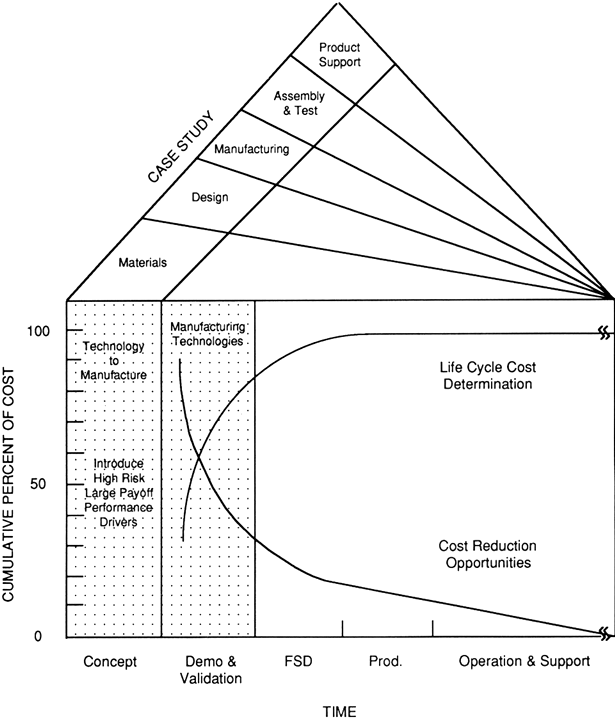
This case study was based on the experience gained by the various engineers involved with the design of this turbine disk; the division of that task is shown schematically in Figure A-1. The five standard life-cycle cost phases are shown on the horizontal axis, from concept to operation and support. The five dynamic engineering functional activities have been superimposed at the top of the sketch to create a three-dimensional image for representation of the total ULCE requirements. Materials development and characterization, as well as product design, are of necessity focused at the earliest life-cycle phases. To be most effective, the integration of manufacturing, assembly and test, and product support needs must also be addressed at this stage. The later this total view of the life cycle takes place, the less impact it has. A checklist (shown later) for the logical consideration of the details required was developed for each of the activities. As these lists were being constructed, the needs and concerns that were not fully addressed during the design effort for this particular turbine disk were recalled and recorded. Later in this case study they are compared to the critical issues defined by the ULCE committee.
The materials checklist (Figure A-2) recognizes that research and development of new materials almost always occurs ahead of the identification of a specific application. Nearly all performance improvements hinge on the advancements made in the increased capabilities of materials and the adequacy of characterization.
A. DEVELOPMENT PRIOR TO APPLICATION
-
TARGET PROPERTIES
-
OPERATING ENVIRONMENT
-
DESIGN CRITERIA
-
PHYSICAL & MECHANICAL PROPERTIES
-
NDE REQUIREMENTS
-
MATERIAL BEHAVIOR UNDERSTANDING
-
ALGORITHMS FOR ALLOY DESIGN
-
QUALITY PROGRAM IN PARALLEL
-
IMPROVEMENTS IN KNOWN MATERIAL LIMITATIONS
TOUGHNESS
FATIGUE LIFE
CORROSION RESISTANCE
-
FIELD AND INDUSTRY EXPERIENCE
-
PROCESSING SPECIFICATIONS
-
MELTING PRACTICE
-
CONVERSION
-
METALLURGICAL CHARACTERIZATION
-
INSPECTABILITY
-
DETAILED DATA GENERATION
-
STATISTICAL PROPERTY LEVELS
CRACK INITIATION & PROPAGATION
-
MATERIAL BEHAVIOR QUANTIFICATION
-
PRODUCIBILITY
-
INPUT MATERIAL AVAILABILITY
-
INPUT MATERIAL YIELD
-
HEAT TREAT
-
COATINGS
-
MACHINABILITY
-
INSPECTION
-
REPAIR
-
COMPUTER SYSTEMS
Figure A-2 Materials checklist.
The design checklist (Figure A-3) meshes the technical weapons systems performance requirements and the manufacturing and operational support concern. Here is where, in a unique, highly advanced weapons system, real innovation and creative risk are necessary if performance requirements are to be met and coupled with ULCE.
-
PERFORMANCE CRITERIA
-
EXPECTED OPERATING CONDITIONS
-
MATERIAL SELECTION
-
PROPERTY LEVELS
-
PERFECT MATERIALS VERSUS FRACTURE MECHANICS
-
PRODUCIBILITY & COST
-
INSPECTIBILITY
-
FIELD EXPERIENCE
-
MANUFACTURING EXPERIENCE
-
MECHANICAL & AERODYNAMIC DESIGN
-
DESIGN PRACTICES MANUAL
-
HISTORICAL DATA
-
FIELD EXPERIENCE
-
COMPONENT DEVELOPMENT INFORMATION
-
CHECKLISTS
-
COMPUTER AIDED DESIGN
-
INTERACTIVE GRAPHICS
-
RELATED DATA BASED-COMPUTER-AIDED ENGINEERING
COMPLETE STRESS ANALYSIS
THERMAL MECHANICAL STATIC AND DYNAMIC
-
ASSEMBLY & BALANCE
-
PRODUCIBILITY & COST
-
MAINTAINABILITY
-
REPAIRABILITY
-
SUPPORTABILITY
-
DESIGN TO COST
-
TEAM LEAD BY DESIGN ENGINEERING
-
FACTORS CONSIDERED
-
DESIGN REQUIREMENTS LIFE OBJECTIVES
-
COMPONENT TEST
-
DESIGN VERIFICATION
-
FIELD HISTORY EXPERIENCE
-
ENGINE TEST
-
FACTORY QUALIFICATION
-
FLIGHT FLEET LEADER PROGRAM
-
FIELD EXPERIENCE
-
MAINTAINABILITY
-
REPAIRABILITY
-
SUPPORTABILITY
-
FIELD EXPERIENCE
-
MONITORING CRITERIA
-
EASE OF MAINTENANCE
-
INSPECTION CRITERIA
-
REPAIR
DOVETAILS, BLADE RETAINERS, SEALS, DUCTS., ETC.
Figure A-3 Design checklist.
It is fundamental that a disciplined, monitoring, and measured capability of manufacturing be reflecting in the engineering design. The manufacturing checklist (Figure A-4) highlights the all-important requirement for consideration of producibility and cost.
A. MATERIAL DESIGN INPUT TO DESIGN ENGINEERING
-
AVAILABILITY
-
SECOND/ALTERNATE SOURCE
-
SUPPLIERS
CAPACITY/CAPABILITY
QUALITY HISTORYLONG TERM BUSINESS STABILITY
MANAGEMENT ATTITUDE FOR PROBLEM SOLVING
ACCEPTANCE OF OUR SPECIFICATIONS
-
COST
-
SUPPLIES
TECHNICAL STAFF DEDICATED TO COST REDUCTIONS
ATTITUDE FOR COST REDUCING & SHARING
PHYSICAL CAPABILITY TO REDUCE COST
''FLY TO BUY'' RATIO
-
SHOULD-COST EVALUATION
-
DEVELOPMENT FUNDING NEEDS
-
PRODUCIBILITY
-
SHOP CAPABILITIES
NEW PROCESSES NEEDED
MAJOR PROCESS CHANGES NEEDED
LACK OF EXPERIENCE/NEW DESIGN CONCEPTS
LACK OF EXPERIENCE/NEW MATERIALS
NEW HTO PROCESSES NEEDED
-
NEW FACILITIES TOOLING REQUIRED
-
DEVELOPMENT FUNDING NEEDED
-
EXPERIENCE
-
SPC DATA
-
MATERIAL CONVERSION HANDBOOK DATA
FORMABILITY
WELDABILILTY
MACHINABILITY
B. PRODUCIBILITY INPUT TO ENGINEERING
-
PROCESS CAPABILITY
-
SPC DATA
-
STACKUP ANALYSIS
-
AVAILABILITY RESOURCES
-
FACILITIES
PLANT & EQUIPMENT
-
TOOLING
-
RESEARCH & DEVELOPMENT
NEW PROCESSES
PROBLEM PROCESSES
MAJOR PROCESS CHANGES
NEW DESIGN CONCEPTS
NEW MATERIALS
-
SUPPLIER STATUS (ESTABLISHED VERSUS NEW)
-
PERSONNEL AVAILABILITY
-
TIME CYCLES VERSUS LEAD TIMES
-
DATUM SURFACE REQUIRED
-
COST TARGETS
-
REQUIRED DESIGN CHANGES
-
DEVELOPMENT FUNDS NEEDED
Figure A-4 Manufacturing checklist.
Historically, assembly and testing have taken their ordered position following the design and manufacturing steps necessary for the production of a successful weapons system. Figure A-5 lists many important items that should be given up-front attention. Assembly and test operations require unique considerations for the production cycle and adequate provision for product support.
A. ASSEMBLY
-
STACK-UP
-
RMS ANALYSIS VERSUS INVENTORY
-
MANUFACTURING DATUMS VERSUS BUILD DATUMS
-
DOUBLE DIMENSIONING
-
START THRESHOLDS
-
HISTORICAL PROBLEMS
-
PSC DATA
-
MRS DATA
-
TRENDING
-
SMALL ISSUES
-
MOCK-UP NEEDS
-
CAPACITY LIMITS
-
BUILD STANDS
-
TEST CELLS
-
BALANCE EQUIPMENT
-
GRIND EQUIPMENT
-
ETC.
-
UNIQUE REQUIREMENTS
-
MACHINE SUBASSEMBLIES
-
NON-INTERCHANGEABLE DETAILS
-
ELEMENT BALANCING
-
COST
-
SUBASSEMBLY CYCLES
-
INVENTORIES
-
MAJOR ASSEMBLY CYCLES
-
DEVELOPING EXPERIENCE
-
SYSTEM INTERFACES
B. TESTING
-
STANDARD TEST PLAN
-
VARIATION UNIQUE REQUIREMENTS IN RUN SCHEDULE
-
CYCLE TIMES
-
UNIQUE INSTRUMENTATION
-
UNIQUE TECHNIQUES
-
FORECASTED ACCEPTANCE RATES
-
FORECASTED PERFORMANCE MARGINS
-
TEAR-DOWN INSPECTION PLAN
-
RETEST PLAN
-
FACILITIES
-
CELL CAPACITY/CONVERSIONS
-
SPECIAL MOUNTING SYSTEMS
-
SPECIAL TOOLING
-
UNIQUE SLAVE HARDWARE
-
SAFETY EQUIPMENT
-
DEVELOPMENT PHASE LEARNING
-
COMPONENT INFANT MORTALITY
-
ANTICIPATED SPARES USAGE
-
OVERHAUL LIMITS (CAUTIONS)
-
SPECIFICATIONS FOR PREP-TO-SHIP
-
CONTAINER SPECIFICATIONS
-
UNIQUE PROBLEMS
Figure A-5 Assembly and testing checklist.
As shown in Figure A-6, product support requires attention in parallel with the other aspects of ULCE, and a comprehensive experience data base can be an invaluable aid to this up-front effort. Once the product reaches operational status, the collection of field experience and the knowledge gained of environmental conditions must be fed back to design engineering to continuously improve operational reliability and future designs.
A. MATERIAL SELECTION INPUT
-
EASE OF REPAIR
B. DESIGN REVIEW WITH FIELD ENGINEERING
-
LESSONS LEARNED FORM FAILURES
-
MAINTAINABILITY
-
REPAIRABILITY
-
SUPPORT IN THE FIELD
-
RELIABILITY
C. DEPOT MANUAL FOR MAINTENANCE
-
TEAR-DOWN & ASSEMBLY PROCEDURES
-
INSPECTION PROCEDURES
-
TEST AFTER OVERHAUL
-
METHOD OF DISTRIBUTION
-
LARGE MANUALS
-
MICROFILM
-
ISSUED PRICE TO FIELD OPERATION
-
EXPERIENCE FROM FACTORY TEST
-
REPAIRS DEVELOPED DURING FACTORY TEST
-
MODIFICATIONS ON QUARTERLY BASIS BASED UPON FIELD EXPERIENCE
D. MANUFACTURING QUALITY AUDIT REVIEWS
-
HELD AT MANUFACTURING SITE
-
DESIGN, QC PRODUCT SUPPORT
-
REVIEW MANUFACTURING & PROCESSING
-
COMMUNICATE FIELD PROBLEMS RELATED TO MANUFACTURING
-
QUALITY PROBLEMS REPORTED
-
QC INVESTIGATES
-
RETROFIT IN FIELD
-
QUALITY INTERFACES WITH ENGINEERING
MANUFACTURING, ASSEMBLY & TEST, AND PRODUCT SUPPORT
E. FIELD ENGINEERING
-
DESIGN RELATED FIELD PROBLEMS
-
AD HOC DESIGN REVIEW WITH ENGINEERING
-
ASSEMBLY & TEST FIELD PROBLEMS
-
AD HOC REVIEW
-
FIELD USES EXPERIENCE FROM FACTORY TEST TO HELP DEPOTS
-
FACTORY USES EXPERIENCE FROM FIELD TEST TO HELP FACTORY TEST
-
DOCUMENTATION OF FIELD HISTORY
-
REVIEW HIGH-TIME ENGINES (FLEET LEADER)
TRIGGERED BY FIELD ENGINEERING—COMPLETE TEAR-DOWN,
INSPECTION & LAYOUT OF COMPONENTS
-
400 COMPONENT TRACKING LIST
BY PART NUMBER & SERIAL NUMBER
COMPUTER RECORD OF HISTORICAL DATA (LESSONS LEARNED)
AVAILABLE TO FIELD ENGINEERING
Figure A-6 Product support checklist.
This turbine disk case study, undertaken to explore the completeness of the committee-defined ULCE critical issues, identified 18 needs and concerns that in retrospect would have aided the initial design effort. These needs and concerns were expressed by the engineers who had been involved with the design of the turbine disk:
-
Life-cycle engineering flexibility is often limited on critical components, driven by the state of the art to meet performance criteria. However, powder metallurgy development for this particular component was driven by producibility needs.
-
Expert systems to aid development of materials and processes design for specific property needs.
-
Improved understanding of material behavior and defect sensitivity (static and dynamic).
-
Understanding of inspectability of the various materials forms and sufficient knowledge of the process techniques to maximize capability.
-
Better processing to prevent material defects.
-
Surface enhancement techniques to negate effects of handling damage and surface defects.
-
Models to simulate fatigue and damage tolerance interaction to avoid need for physical mock-ups.
-
Models for establishing defect distributions.
-
Improved correlation of dynamic material characteristics with life predictions.
-
Enhanced inspection techniques to improve detection and characterization of defects (new and field parts).
-
Better cutting tools and shaping techniques.
-
Computer models of air flow and heat transfer in rotor cavities.
-
Correlation of fracture mechanics and low cycle fatigue.
-
Process capability data for all material (supplier) and shop manufacturing processes.
-
No proprietary suppliers or second sources.
-
Improved metrology systems for assembly.
-
Computer modeling to reduce performance testing.
-
Formal capture and use of field experience data.
Of the 18 case study items identified, each was associated with at least one of the four critical issues defined by the committee (Figure A-7). This case study, through these comparisons, supports the validity and completeness of the generic critical issues developed by the committee.
|
GENERAL CRITICAL ISSUES |
CASE STUDY ITEMS |
|
1. ULCE-DRIVEN DEVELOPMENT OF MATERIALS, PROCESSING, AND REPAIR METHODOLOGIES REQUIRES INTEGRATION OF R&D ACROSS DISCIPLINES. |
1-2-3-4-5-6-10-11-14-15-16 |
|
2. ADVANCED ANALYTICAL MODELING AND SIMULATION METHODS TO PREDICT ACTUAL COMPONENT MANUFACTURE, OPERATION, AND LOGISTICS DO NOT EXIST TO THE EXTENT REQUIRED. |
7-8-9-12-13-17 |
|
3. THE INFORMATION SYSTEM FOR AN INTEGRATED TEAM APPROACH TO ULCE IS INADEQUATE. |
14-17-18 |
|
4. THE ULCE TEAM WILL NEED TO MAKE KEY DECISIONS WHILE STILL OPERATING WITH INCOMPLETE INFORMATION. |
ALL |
Figure A-7 Generic critical issues versus case study.


