Previous Chapter: Suggested Readings
Suggested Citation: "Additional Images." National Research Council. 1991. A Safer Future: Reducing the Impacts of Natural Disasters. Washington, DC: The National Academies Press. doi: 10.17226/1840.

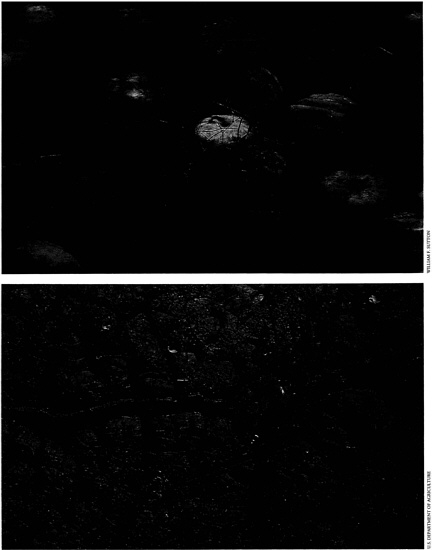
Too much or too little rain can have dramatically different effects that are equally destructive.

Suggested Citation: "Additional Images." National Research Council. 1991. A Safer Future: Reducing the Impacts of Natural Disasters. Washington, DC: The National Academies Press. doi: 10.17226/1840.

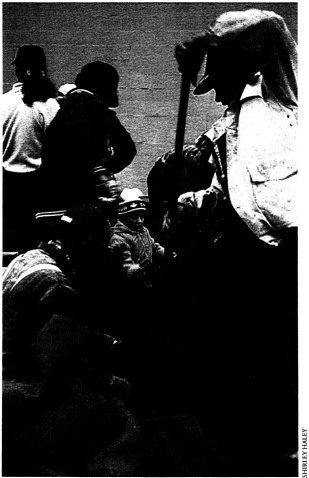
Volunteers of every age are put to work filling sand bags as the basic battle of man versus nature takes place yet again.
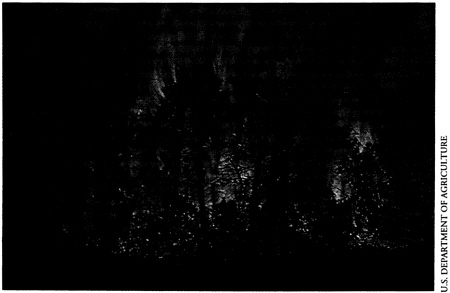
Forest fires are often in remote areas with difficult access where little can be done to limit damage. As natural events, fires clear areas for new growth to occur, but when the flames turn toward communities, areas housing endangered species, or historic locations, the losses can be devastating.
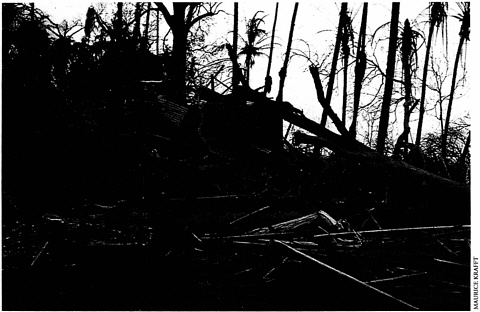
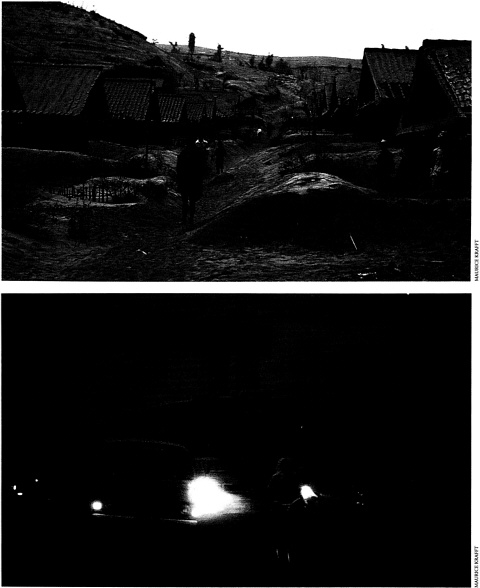
Livestock wanders through an abandoned village where trees and houses have collapsed from the explosive eruption of Mt. Colo (Indonesia) and from the weight of the ash.
Suggested Citation: "Additional Images." National Research Council. 1991. A Safer Future: Reducing the Impacts of Natural Disasters. Washington, DC: The National Academies Press. doi: 10.17226/1840.

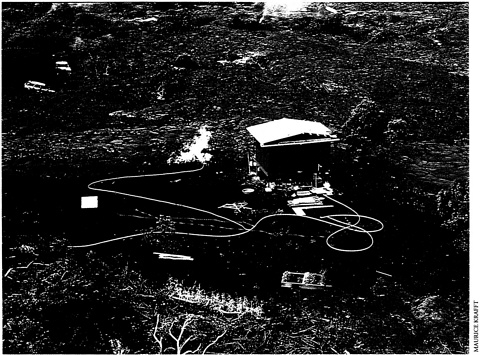
Urban or rural, similar events provoke similar reactions. In these two scenes, ashfall from impending volcanoes impedes the progress of refugees.

Suggested Citation: "Additional Images." National Research Council. 1991. A Safer Future: Reducing the Impacts of Natural Disasters. Washington, DC: The National Academies Press. doi: 10.17226/1840.

In an attempt to save the building and divert the lava flow, water is sprayed on the ground and the leading edge to cool and harden the lava.

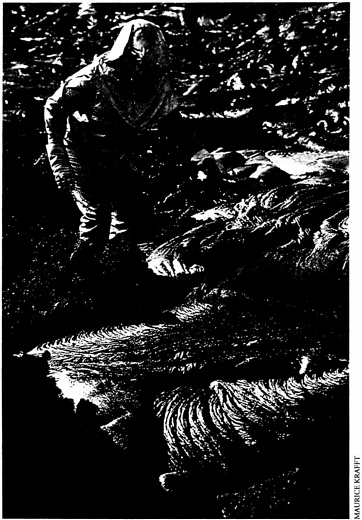
In a scene worthy of a science fiction movie, a researcher takes a variety of measurements from a flowing stream of lava.

Suggested Citation: "Additional Images." National Research Council. 1991. A Safer Future: Reducing the Impacts of Natural Disasters. Washington, DC: The National Academies Press. doi: 10.17226/1840.

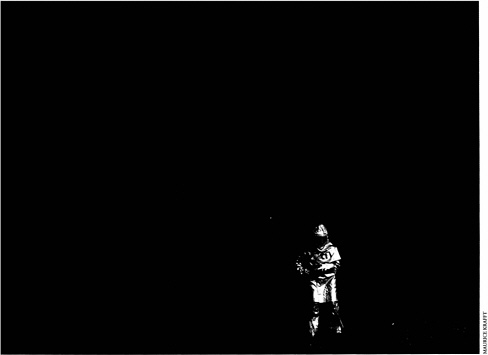
Wearing protective clothing and equipment, scientists try to learn from events in progress to further prediction and warning capabilities.
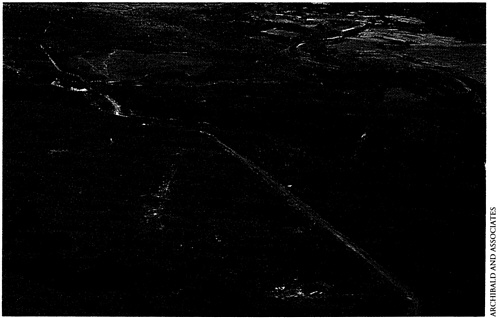
Controlling or predicting a wildfire is impossible, as shown by the “jumping” pattern of burn locations left behind. Note the burnedout house in the lower righthand corner.
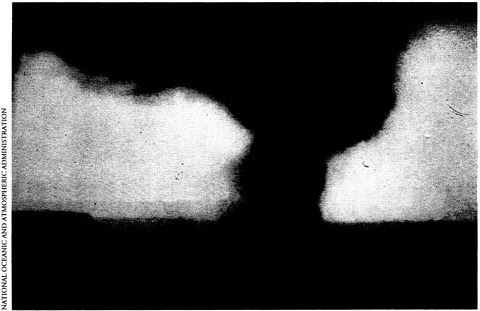
Suggested Citation: "Additional Images." National Research Council. 1991. A Safer Future: Reducing the Impacts of Natural Disasters. Washington, DC: The National Academies Press. doi: 10.17226/1840.

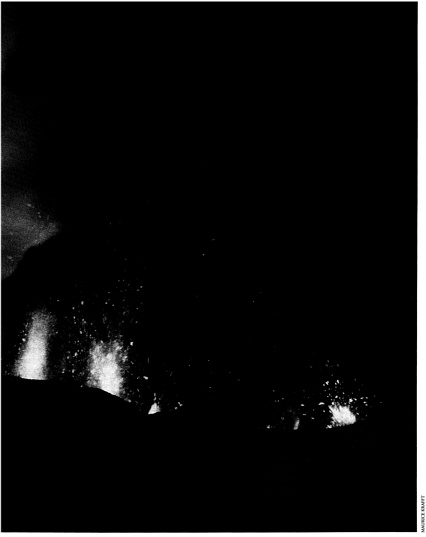
Fireworks of sparks and fountains of lava backlight an abandoned town in the path of a volcano's destructive eruption.

Suggested Citation: "Additional Images." National Research Council. 1991. A Safer Future: Reducing the Impacts of Natural Disasters. Washington, DC: The National Academies Press. doi: 10.17226/1840.

The sky turns eerie colors and local residents take cover as the funnel-shaped cloud of a tornado drops from the sky with windspeeds of more than 150 miles per hour.

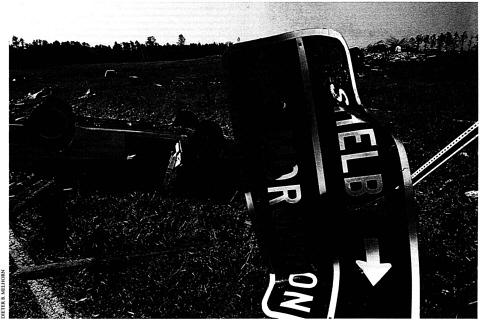
The twisted destruction left behind after a tornado can be scattered for miles from its point of origin.

Suggested Citation: "Additional Images." National Research Council. 1991. A Safer Future: Reducing the Impacts of Natural Disasters. Washington, DC: The National Academies Press. doi: 10.17226/1840.

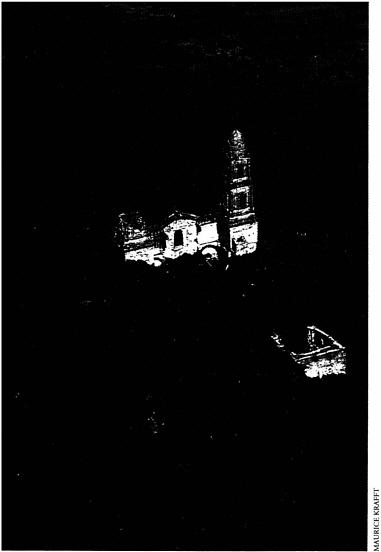
A whole village would be missing if not for stark steeple of the tallest building in the town as an erupting volcano buries everything in sight under lava and ash.
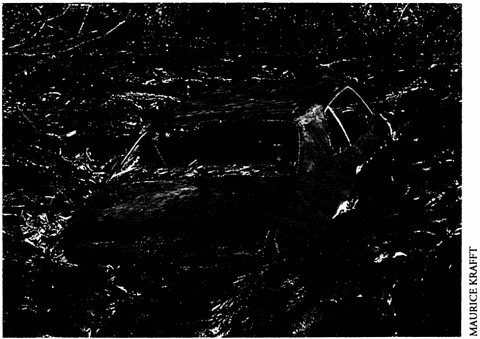
A black river of death stands frozen in time as lava hardens after dragging cars for miles along its heated steams.
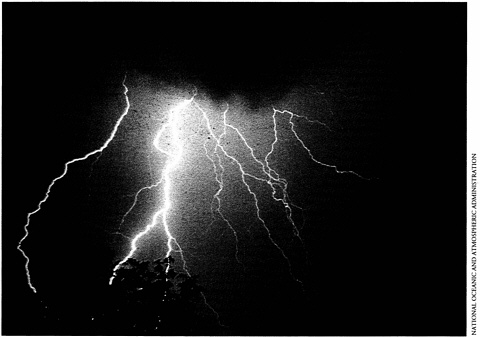
A single bolt of lighting can fork to strike numerous locations, igniting fires, downing utility lines, and causing other damage.

Suggested Citation: "Additional Images." National Research Council. 1991. A Safer Future: Reducing the Impacts of Natural Disasters. Washington, DC: The National Academies Press. doi: 10.17226/1840.
Page 69
Suggested Citation: "Additional Images." National Research Council. 1991. A Safer Future: Reducing the Impacts of Natural Disasters. Washington, DC: The National Academies Press. doi: 10.17226/1840.
Page 70
Suggested Citation: "Additional Images." National Research Council. 1991. A Safer Future: Reducing the Impacts of Natural Disasters. Washington, DC: The National Academies Press. doi: 10.17226/1840.
Page 71
Suggested Citation: "Additional Images." National Research Council. 1991. A Safer Future: Reducing the Impacts of Natural Disasters. Washington, DC: The National Academies Press. doi: 10.17226/1840.
Page 72
Suggested Citation: "Additional Images." National Research Council. 1991. A Safer Future: Reducing the Impacts of Natural Disasters. Washington, DC: The National Academies Press. doi: 10.17226/1840.
Page 73
Suggested Citation: "Additional Images." National Research Council. 1991. A Safer Future: Reducing the Impacts of Natural Disasters. Washington, DC: The National Academies Press. doi: 10.17226/1840.
Page 74
Suggested Citation: "Additional Images." National Research Council. 1991. A Safer Future: Reducing the Impacts of Natural Disasters. Washington, DC: The National Academies Press. doi: 10.17226/1840.
Page 75
Suggested Citation: "Additional Images." National Research Council. 1991. A Safer Future: Reducing the Impacts of Natural Disasters. Washington, DC: The National Academies Press. doi: 10.17226/1840.
Page 76
Subscribe to Emails from the National Academies
Stay up to date on activities, publications, and events by subscribing to email updates.